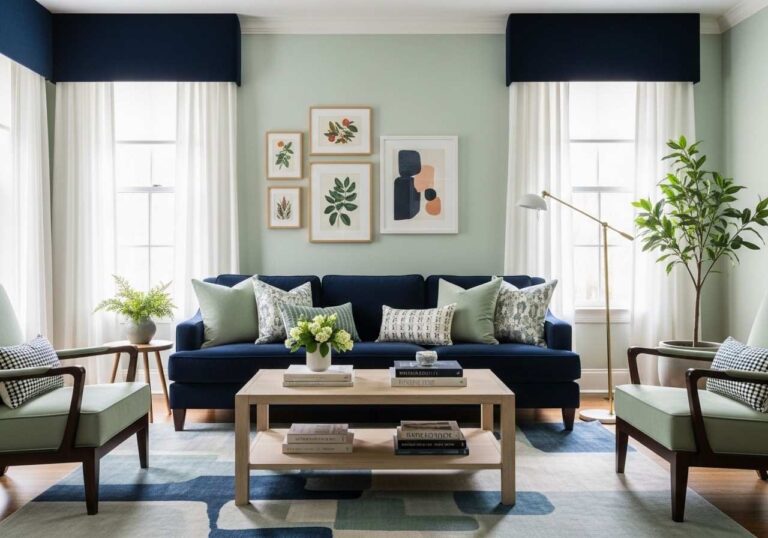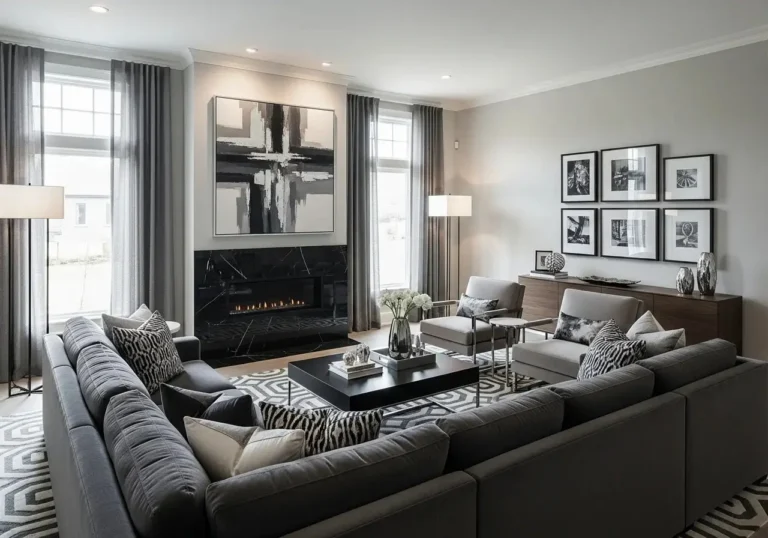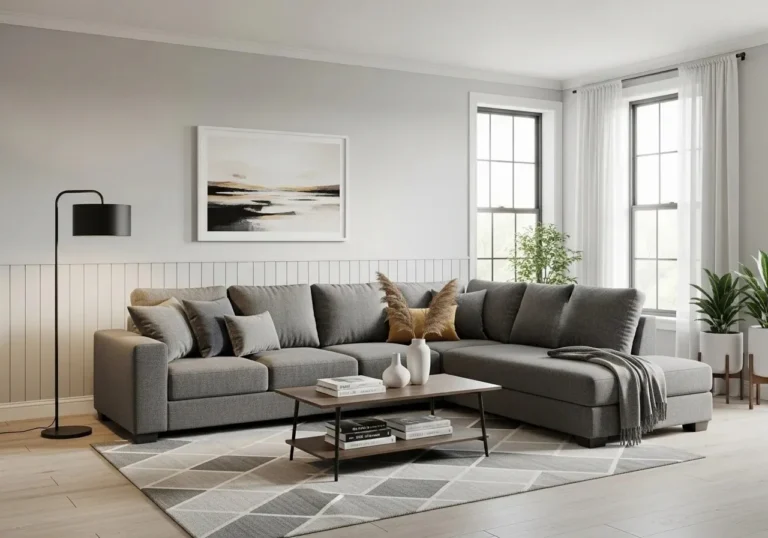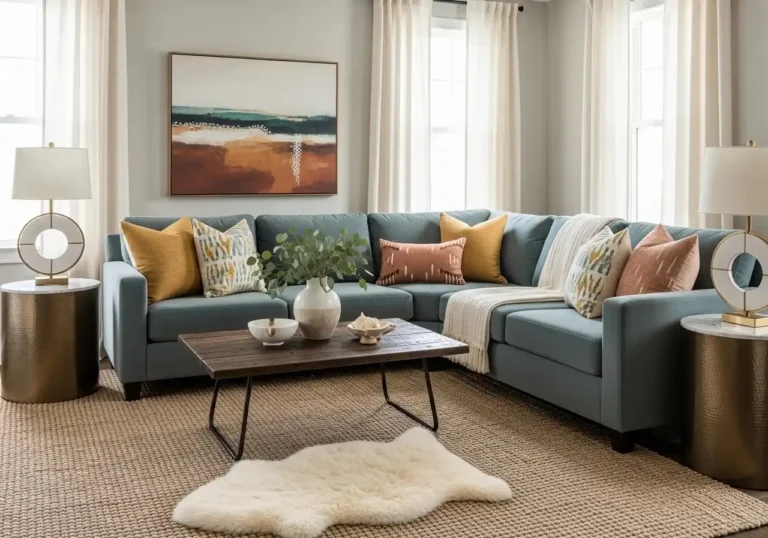
Long Living Room Ideas: 19 Smart Ways to Make Your Space Feel Balanced and Beautiful
Have you ever rearranged your living room over and over, yet it still feels awkward—like it’s either too empty in some spots or too crowded in others? Long living rooms can be surprisingly difficult to style. Everything ends up pushed against walls, leaving a space that feels more like a hallway than a place to relax. But the issue isn’t the shape—it’s how the space is used. These long living room ideas will help you turn that stretched layout into something cozy, functional, and visually balanced.
1. Divide the Room into Functional Zones
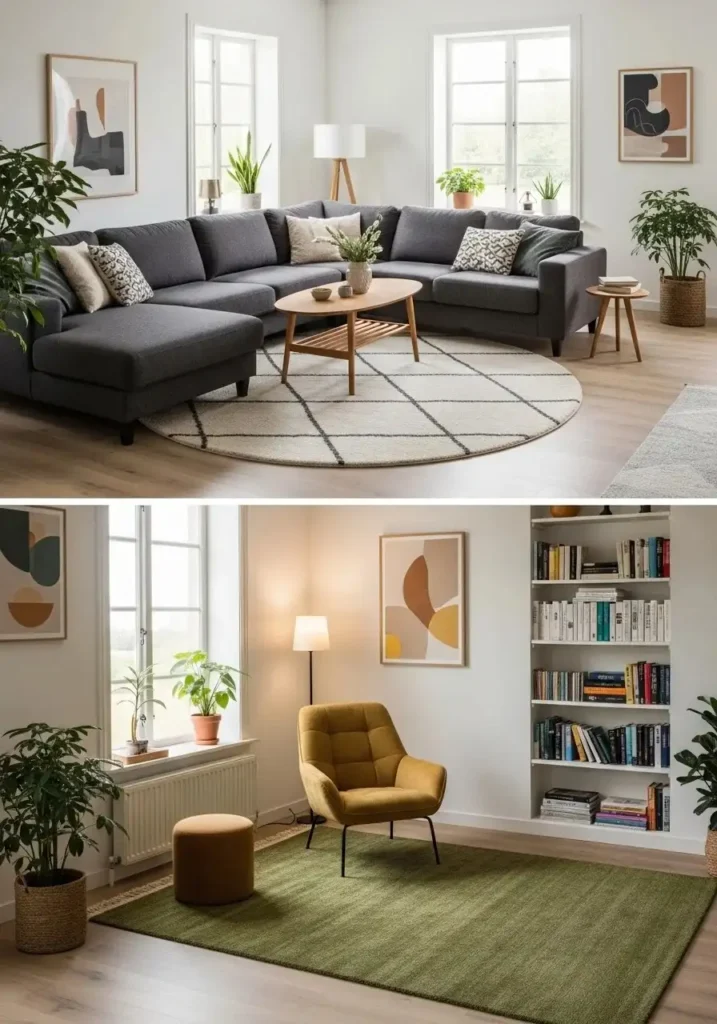
One of the easiest ways to fix a long living room is to stop treating it like a single space. Instead, divide it into zones—such as a main seating area, a reading corner, or even a small workspace. This instantly gives the room structure and purpose.
This works because your eyes naturally understand separate areas better than one long, undefined stretch. It makes the room feel intentional rather than awkward.
Tip: Use rugs or furniture placement to clearly define each zone without adding walls.
2. Use a Sectional Sofa to Anchor One Side
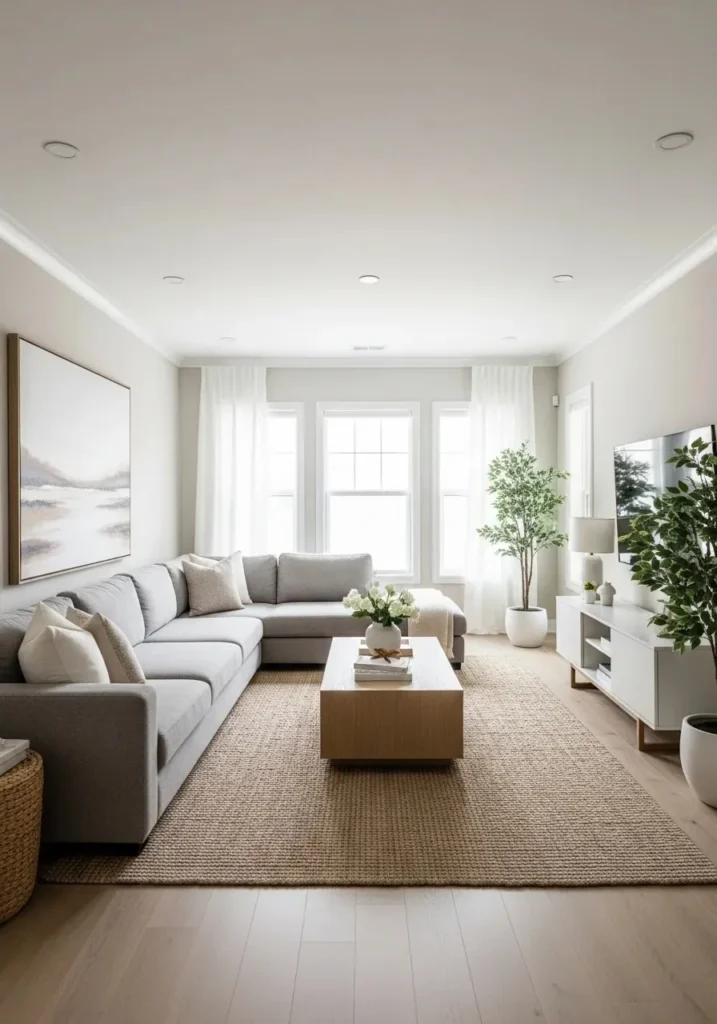
A sectional sofa is perfect for long rooms because it fills space without making it feel cluttered. Place it toward one end to create a strong, grounded seating area. This works because it visually “locks” one side of the room, making the rest easier to organize. It prevents that floating, disconnected feeling.
Tip: Choose a light or neutral-colored sectional to keep the room feeling open.
3. Create a Central Conversation Area
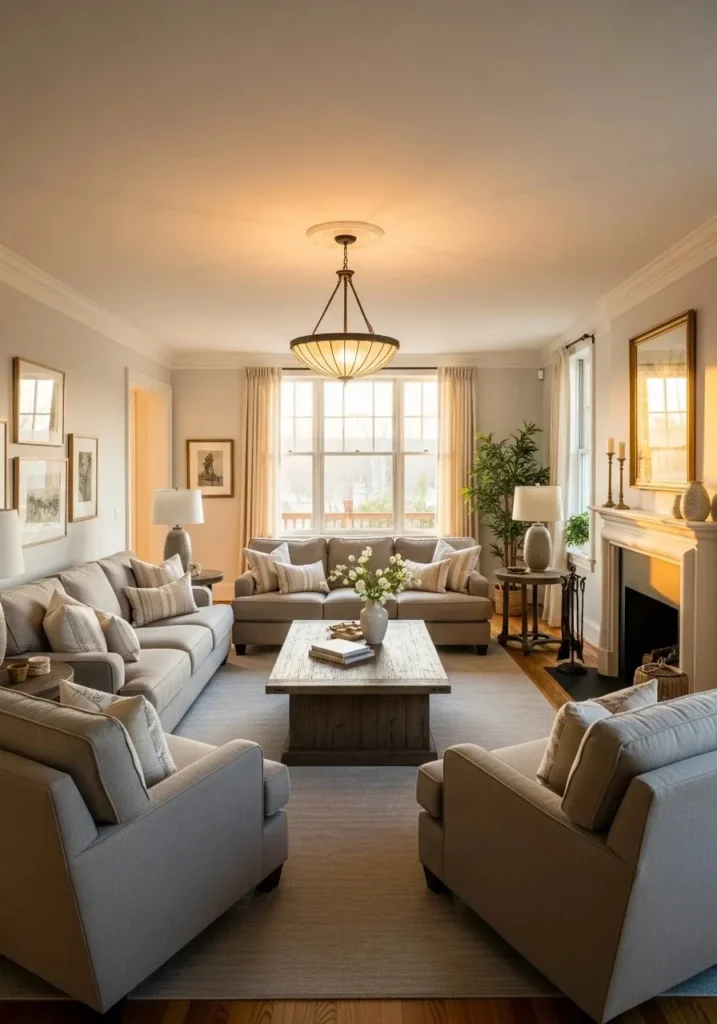
Instead of spreading furniture along the length, bring it inward. Arrange sofas and chairs to face each other, creating a cozy conversation zone in the center. This works because it shifts focus away from the length and toward interaction. The room feels more inviting and social.
Tip: Keep a coffee table within easy reach of all seating to tie everything together.
4. Add a Long Runner or Area Rug
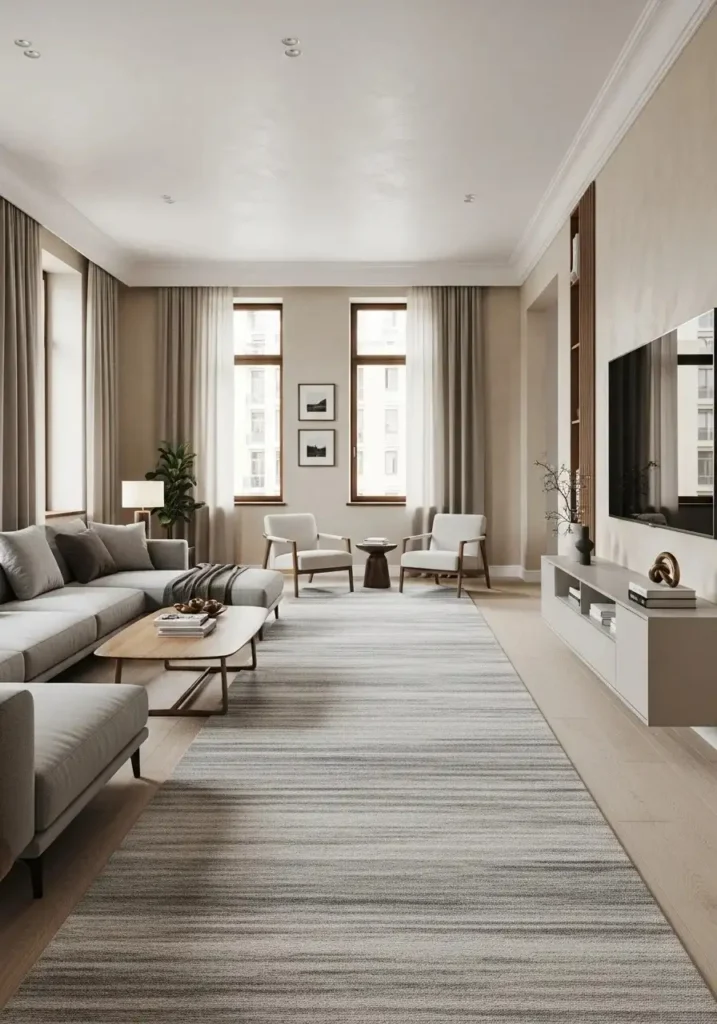
A long runner or rectangular rug helps guide the eye across the room while softening the layout. It connects different sections without making them feel separate. This works because rugs visually “ground” a space and reduce the empty, stretched look. They also add warmth and texture.
Tip: Stick to subtle patterns or neutral tones to keep the space calm and cohesive.
5. Use Lighting to Break Up the Length
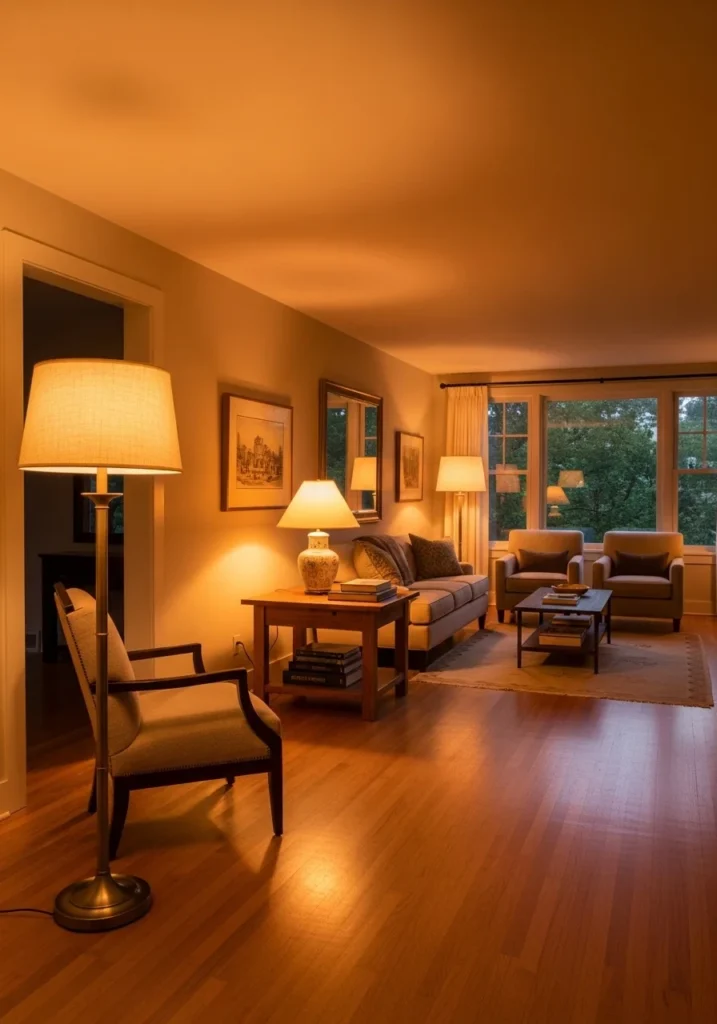
Lighting can completely change how your room feels. Use floor lamps, table lamps, or pendant lights in different areas to define each section. This works because light naturally creates focus points. Instead of one long space, you get multiple cozy spots.
Tip: Choose warm light bulbs to create a softer, more inviting atmosphere.
6. Pull Furniture Away from the Walls
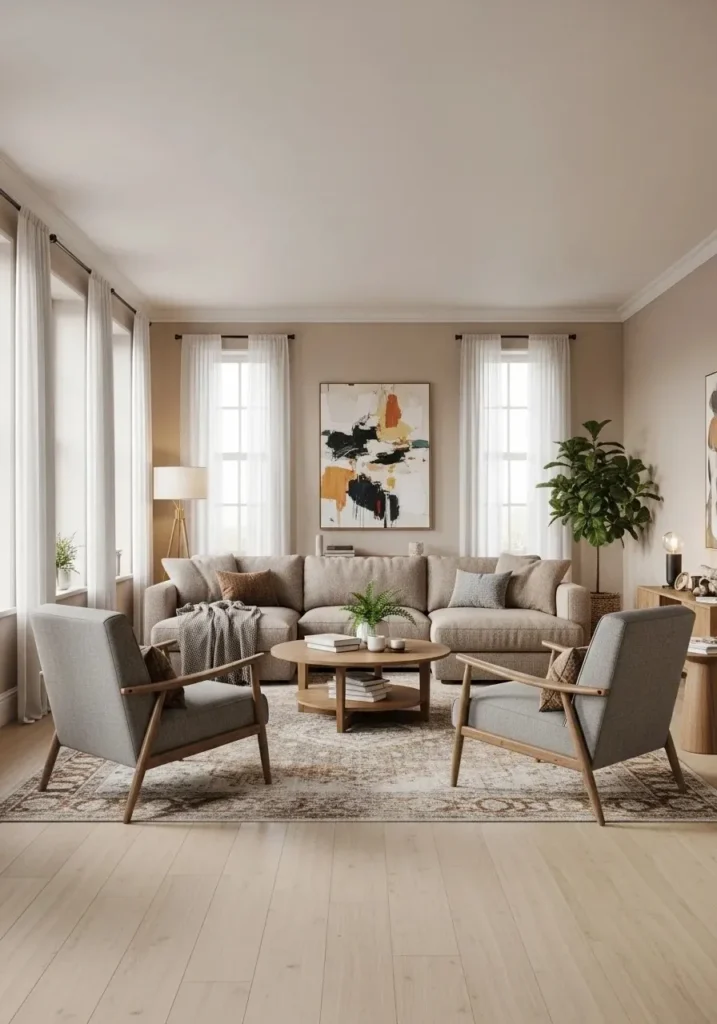
It might feel natural to push everything against the walls in a long room—but that actually makes it worse. Pull sofas and chairs slightly inward to create depth. This works because it avoids the “corridor effect” and makes the room feel more designed and intentional.
Tip: Even a small gap behind furniture can make a big difference visually.
7. Use a Console Table as a Subtle Divider
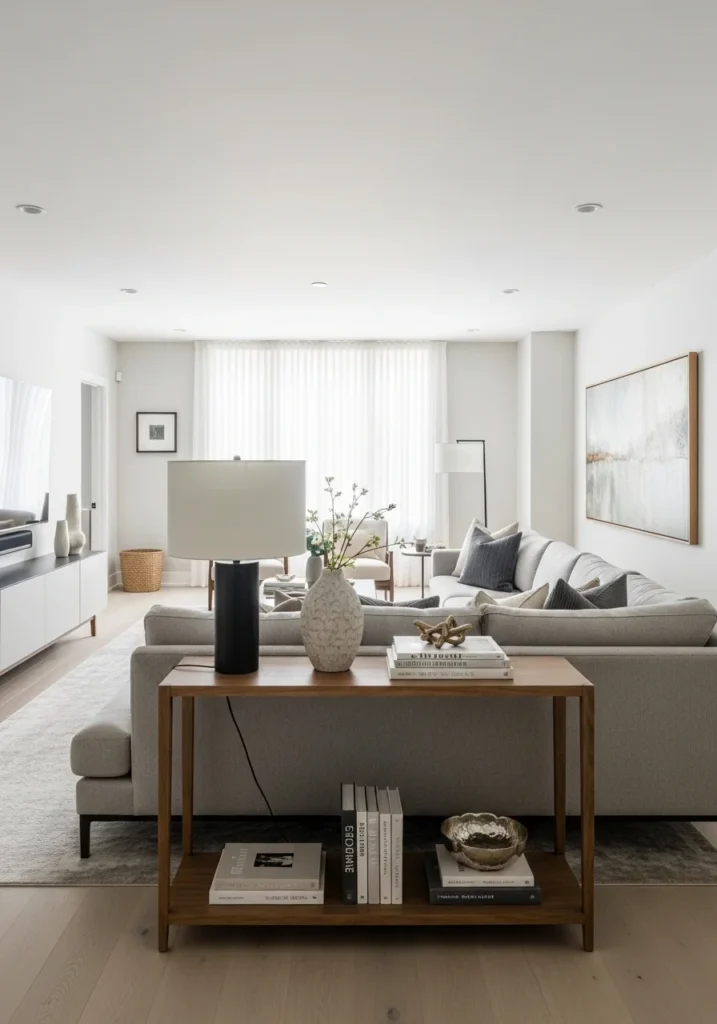
Placing a console table behind a sofa can help break the room into sections without blocking the flow. It’s both functional and stylish. This works because it creates a visual boundary while still keeping the space open and airy.
Tip: Style the table with a lamp, books, or a small plant to make it feel purposeful.
Read This Post Also: 19 Charcoal Couch Living Room Ideas That Feel Cozy, Modern, and Effortlessly Stylish
8. Balance Both Ends of the Room
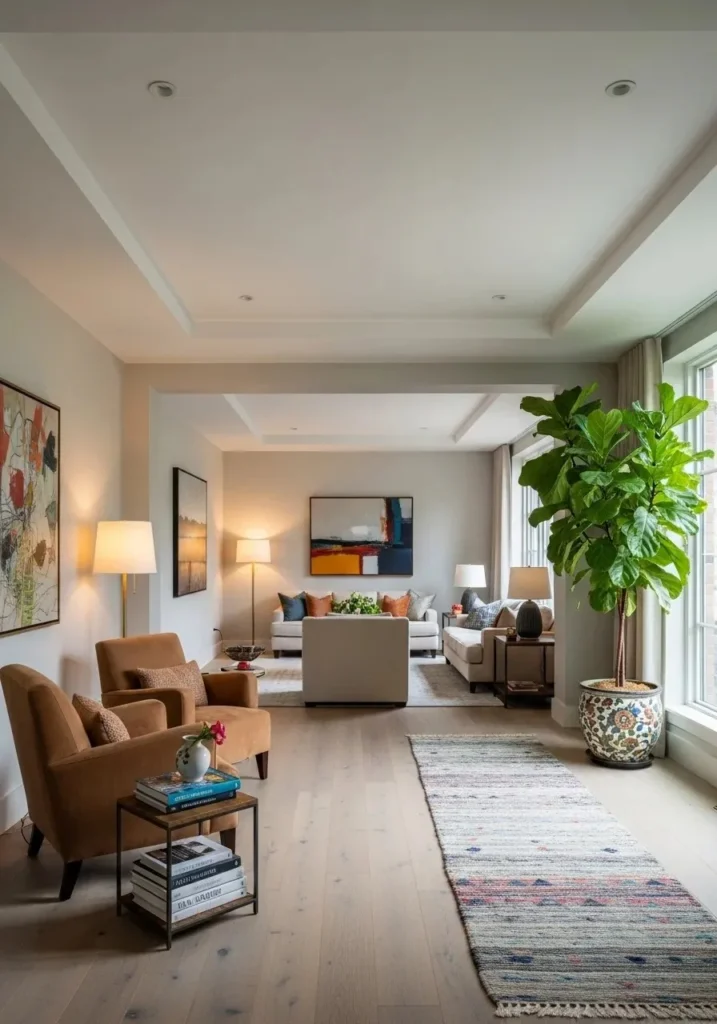
In long living rooms, one side often gets all the attention while the other feels empty. Make sure both ends are styled with intention. This works because balanced visual weight makes the entire room feel complete and harmonious.
Tip: Add a chair, bench, or even a plant to fill empty corners naturally.
9. Use Symmetry to Add Structure
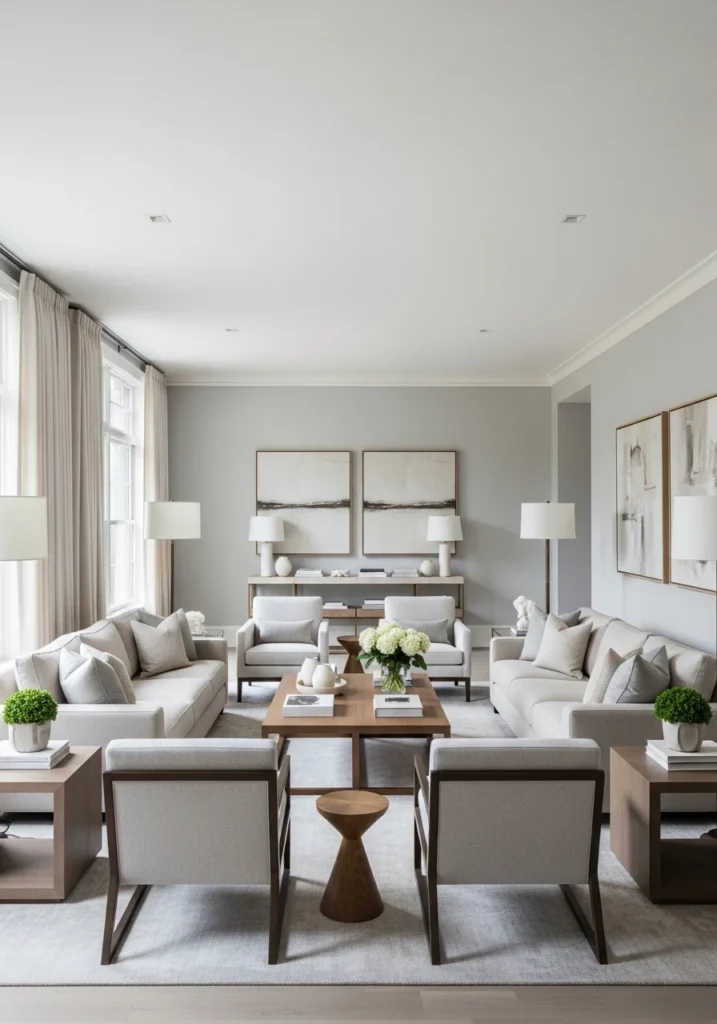
Symmetry can bring order to a long space. Think matching chairs, identical lamps, or evenly spaced decor elements. This works because your brain naturally finds symmetry calming and organized, especially in tricky layouts.
Tip: Use symmetry in one zone rather than the entire room to keep things interesting.
10. Anchor the Center with a Statement Piece
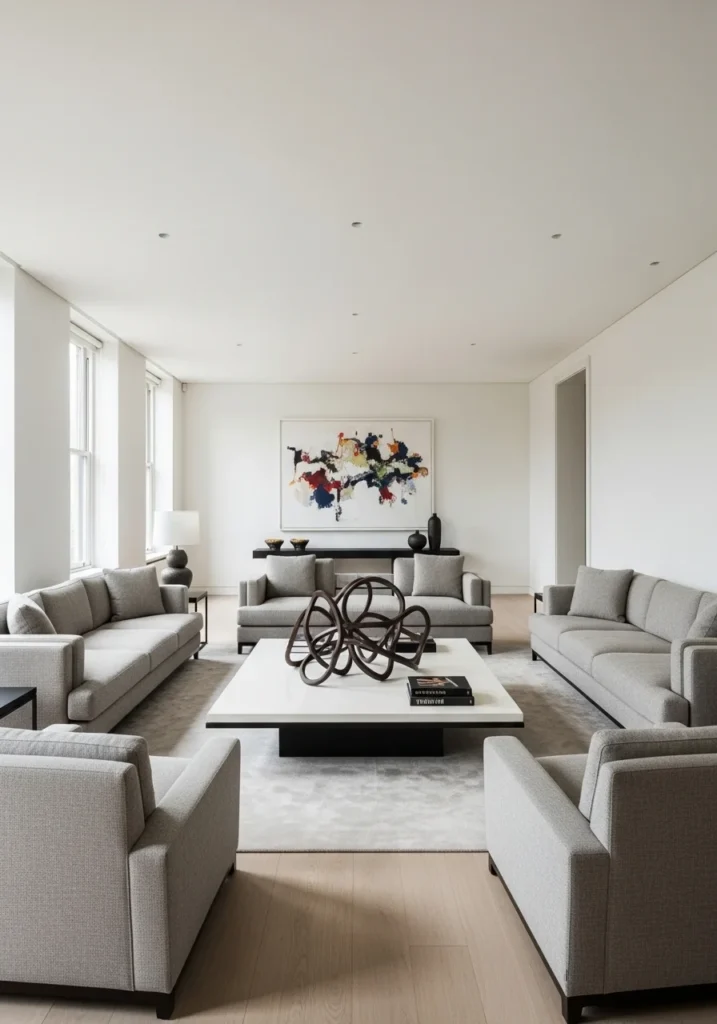
A strong centerpiece—like a bold coffee table, ottoman, or rug—can pull the whole room together. It draws attention inward instead of along the length. This works because it creates a focal point that grounds the space and makes everything feel connected.
Tip: Choose a piece with texture or shape to make it stand out without overpowering.
11. Create a Clear Walkway for Easy Flow
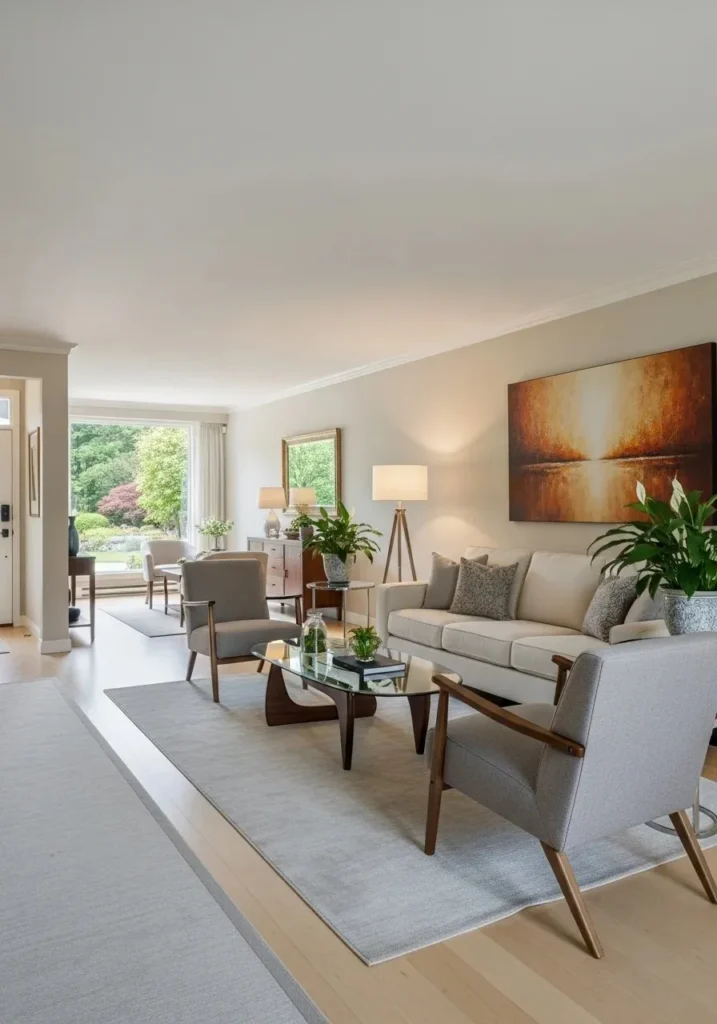
In a long living room, movement matters just as much as design. Create a clear walkway along one side so people can move comfortably without weaving through furniture. This instantly makes the room feel more functional and less cramped.
This works because it separates circulation space from relaxation areas. When walking paths are clear, the room feels intentional rather than cluttered. It also helps maintain a natural flow between zones.
Tip: Aim for at least 2–3 feet of open space for a comfortable walkway.
This Post Read Also: Gray and Black Living Room Ideas: 17 Stylish Ways to Create a Modern, Cozy Space
12. Layer Different Textures for Depth
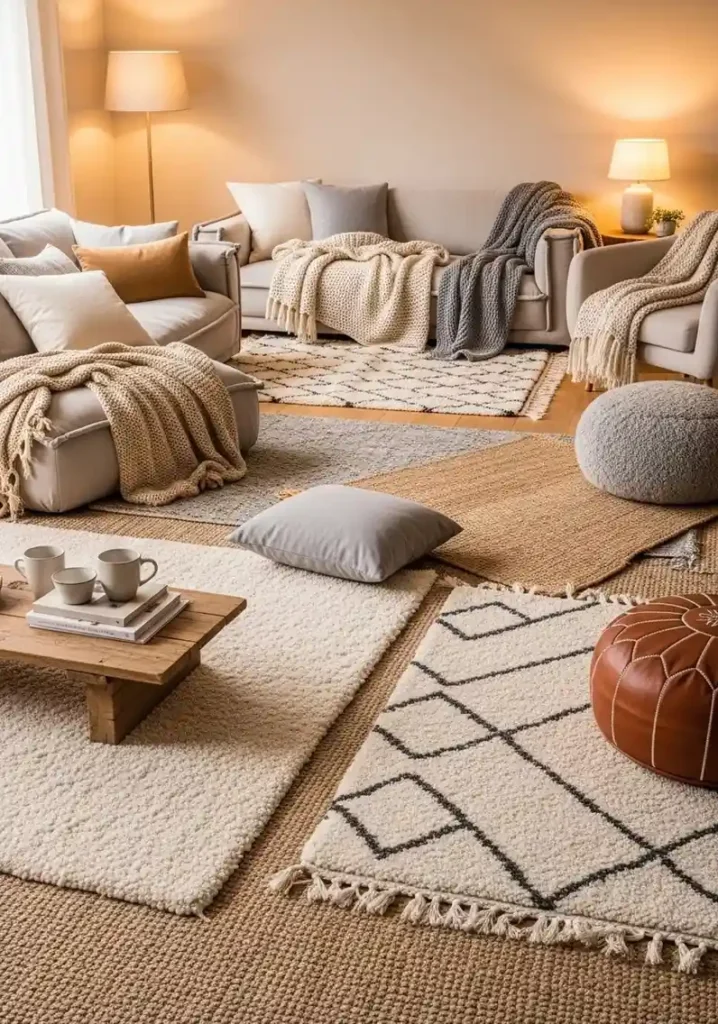
When working with a long space, texture becomes your best friend. Add layers through rugs, throws, cushions, and curtains to bring warmth and variety into the room.
This works because texture breaks up visual monotony and keeps the eye engaged. Instead of noticing the length, you notice the richness of the space. It also makes the room feel softer and more inviting.
Tip: Mix materials like linen, wool, leather, and wood for a balanced look.
13. Use Vertical Elements to Shift Focus
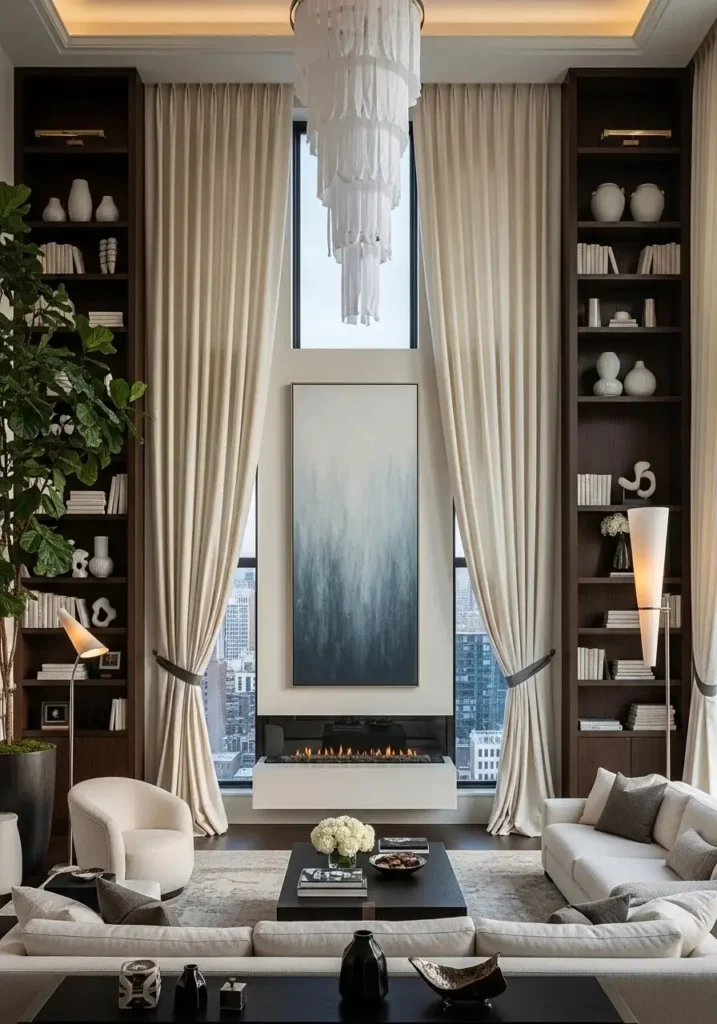
Long rooms tend to pull the eye sideways, which exaggerates their shape. Add vertical elements like tall bookshelves, long curtains, or oversized artwork to shift that focus upward. This works because it balances proportions and makes the room feel taller instead of longer. It visually changes how the space is perceived.
Tip: Hang curtains close to the ceiling to create a taller, more elegant look.
14. Install Built-In Shelving for Function and Style
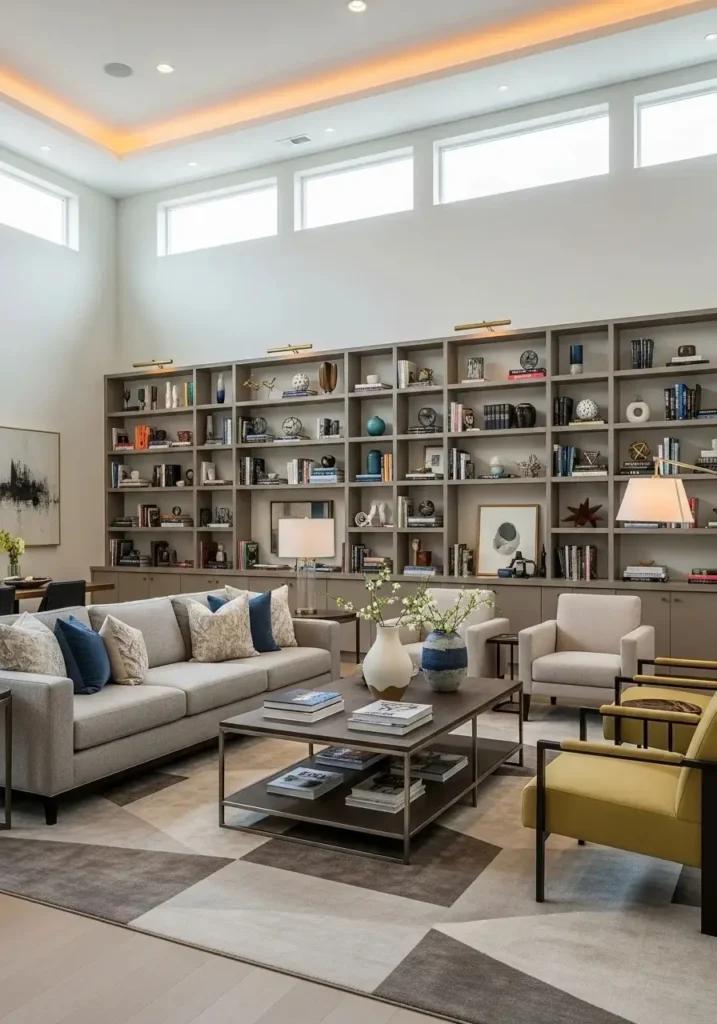
A long wall is the perfect opportunity for built-in shelving or storage units. These can hold books, decor, and personal touches while adding structure to the room. This works because it transforms empty wall space into something functional and visually appealing. It also helps organize the room without adding bulky furniture.
Tip: Keep styling simple and spaced out to avoid a crowded appearance.
15. Mix Furniture Sizes for Visual Interest
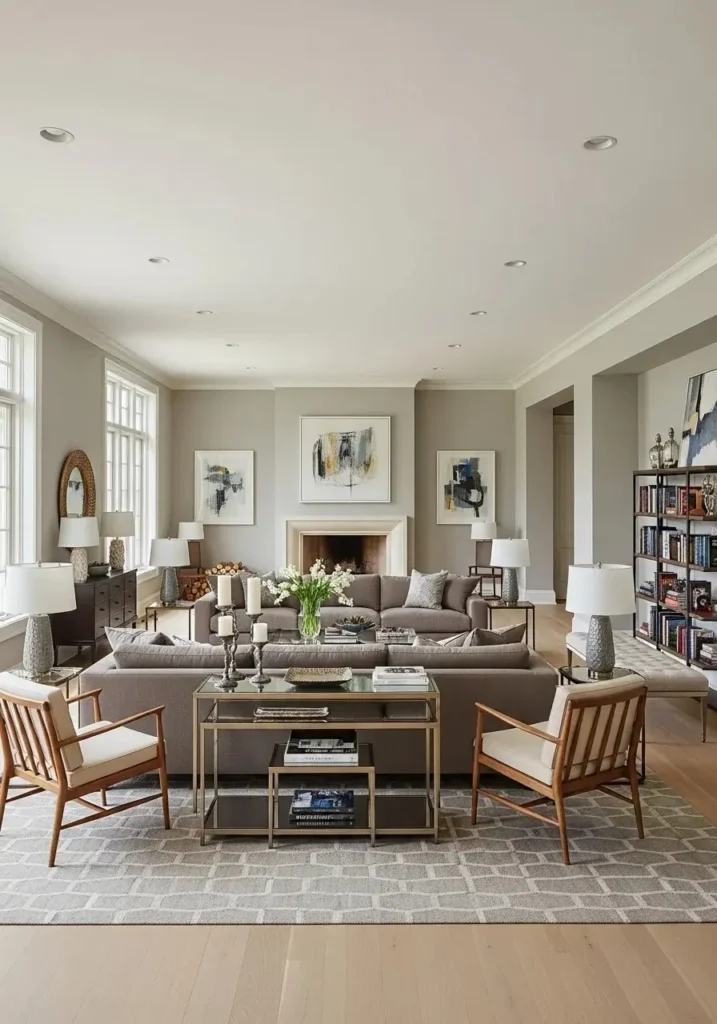
Using only large or only small furniture can make a long room feel repetitive. Instead, mix different sizes—like a large sofa paired with smaller chairs or stools. This works because variation creates rhythm and keeps the eye moving naturally around the space. It prevents the layout from feeling flat or predictable.
Tip: Balance is key—pair each large piece with at least one smaller element nearby.
This Post Read Also: Beige and Black Living Room Ideas: 17 Stylish Ways to Balance Warmth and Drama
16. Turn One End into a Cozy Corner
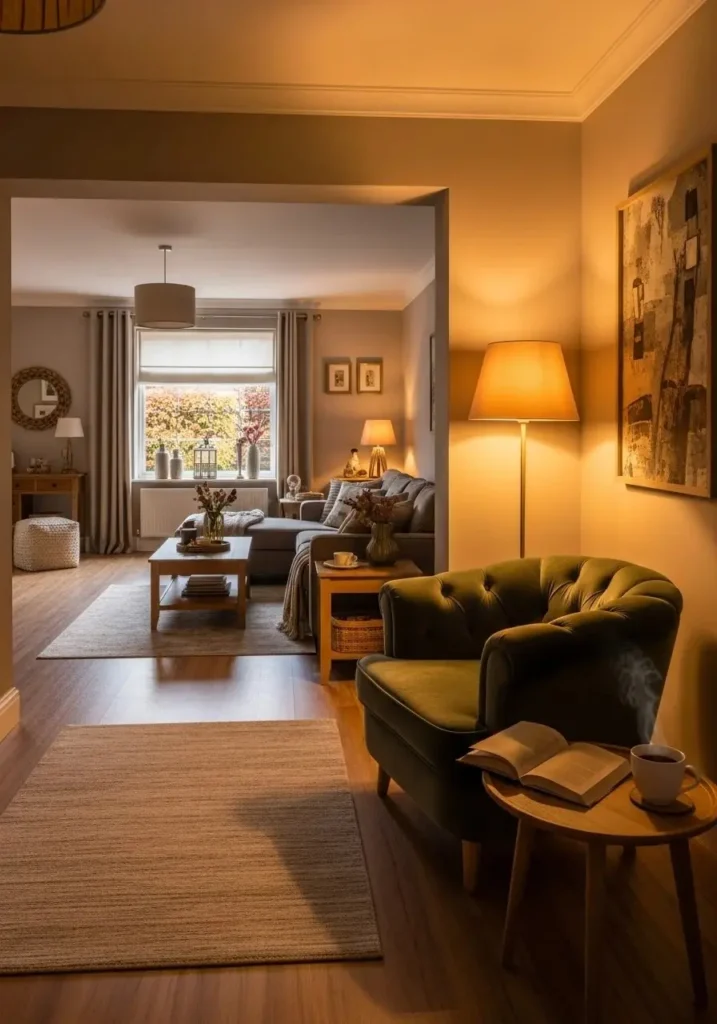
If one side of your long living room feels underused, turn it into a cozy corner. Add a comfortable chair, a small table, and a lamp to create a reading nook or relaxation spot. This works because it gives purpose to areas that might otherwise feel empty. It also makes the room feel more personal and lived-in.
Tip: Use a small rug to define the corner and make it feel like its own space.
17. Use Mirrors to Expand and Reflect Light
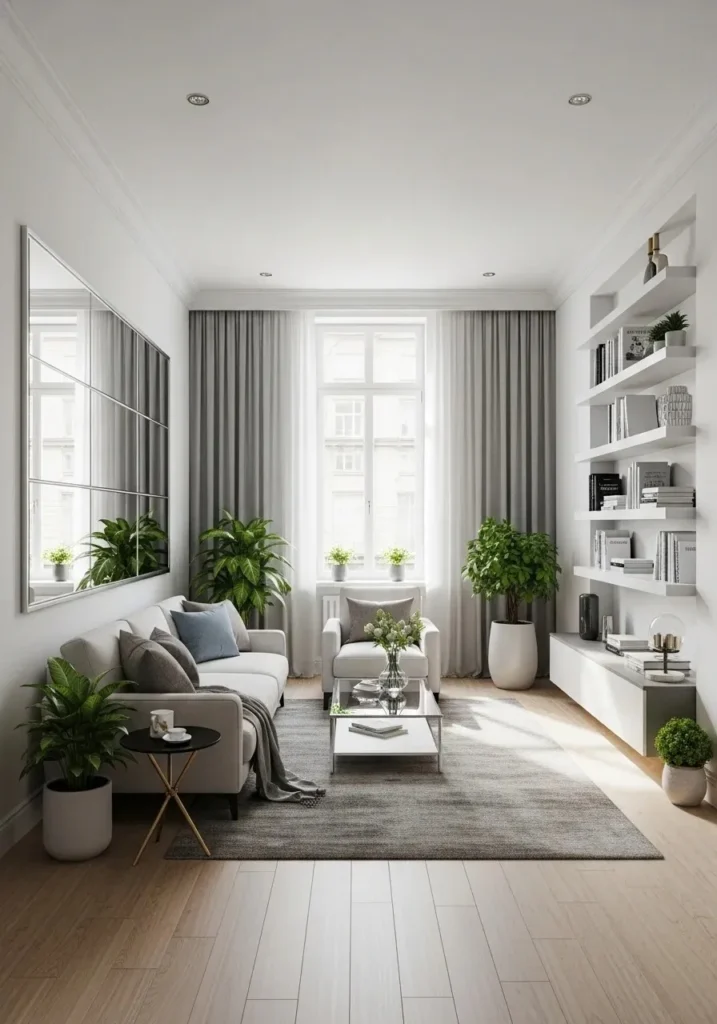
Mirrors are a simple way to make a long living room feel more open and balanced. Place them on walls to reflect light and visually widen the space. This works because mirrors bounce both natural and artificial light, making the room feel brighter and less narrow. They also add a sense of depth.
Tip: Position mirrors across from windows for the best light reflection.
18. Use Color to Subtly Define Zones
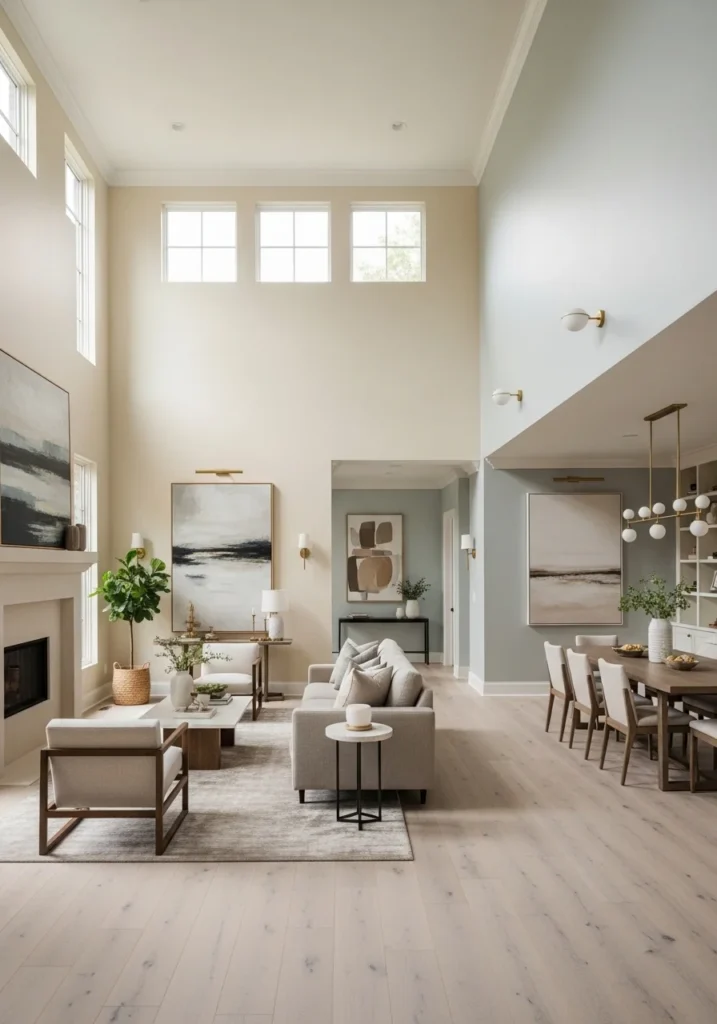
Instead of using physical dividers, you can use color to separate different areas of your living room. For example, slightly different tones or accent pieces can mark each section. This works because color creates visual boundaries without interrupting flow. It keeps the room cohesive while still giving each zone its own identity.
Tip: Stick to a consistent palette so the transitions feel smooth and natural.
19. Keep the Layout Flexible and Adaptable
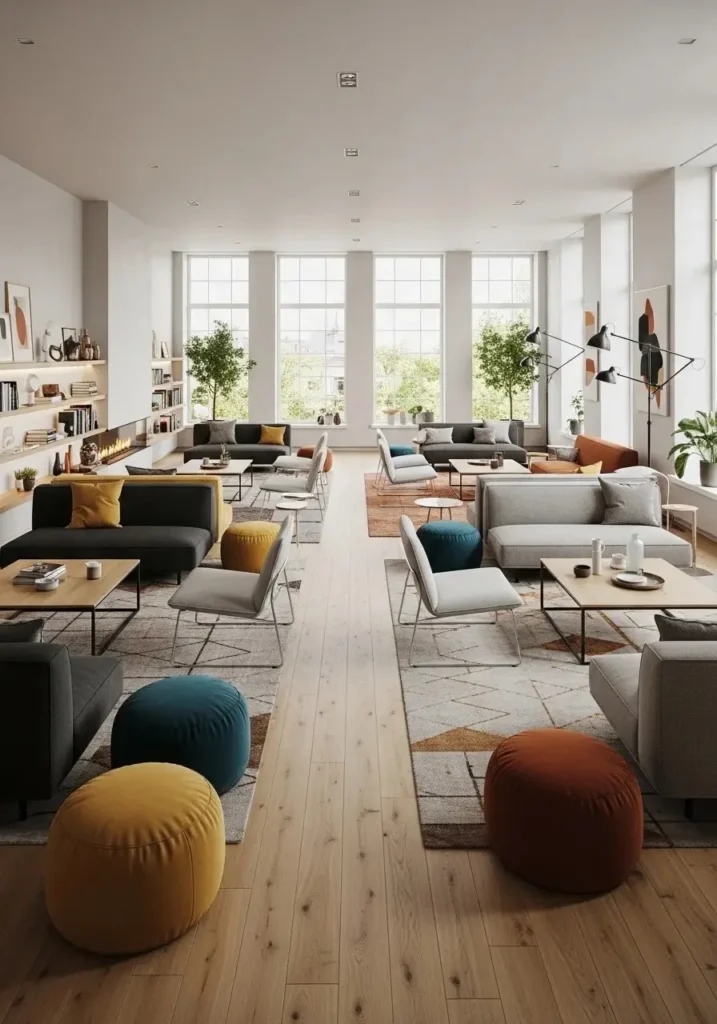
A long living room benefits from flexibility. Use movable furniture like lightweight chairs, poufs, or nesting tables that can easily shift when needed. This works because it allows the space to adapt for different activities—whether you’re hosting guests or relaxing alone. It keeps the room functional over time.
Tip: Choose pieces that are easy to move but still match your overall style.
Conclusion
Designing a long living room can feel challenging at first, but it’s actually an opportunity to create a space that’s both dynamic and functional. These long living room ideas show that the key isn’t filling every inch—it’s using the space thoughtfully. By creating zones, adding texture, improving flow, and balancing visual weight, you can transform a stretched layout into something warm and inviting. Take your time, experiment with what you already have, and adjust as you go. In the end, a well-designed living room isn’t about perfection—it’s about creating a space that feels comfortable, natural, and truly yours.