Living Room Divider Ideas: 16 Ways to Create Privacy and Style in One Space
Have you ever looked around your living room and thought why does this space feel off, even when everything is in place? Maybe the sofa looks fine, the decor is nice—but the room still feels scattered, like it’s missing structure. That’s the thing about open spaces: without clear boundaries, they can feel unfinished instead of free. The good news? You don’t need walls to fix it. These living room divider ideas will help you quietly shape your space into zones that feel intentional, comfortable, and actually work for how you live.
1. Open Shelving Divider
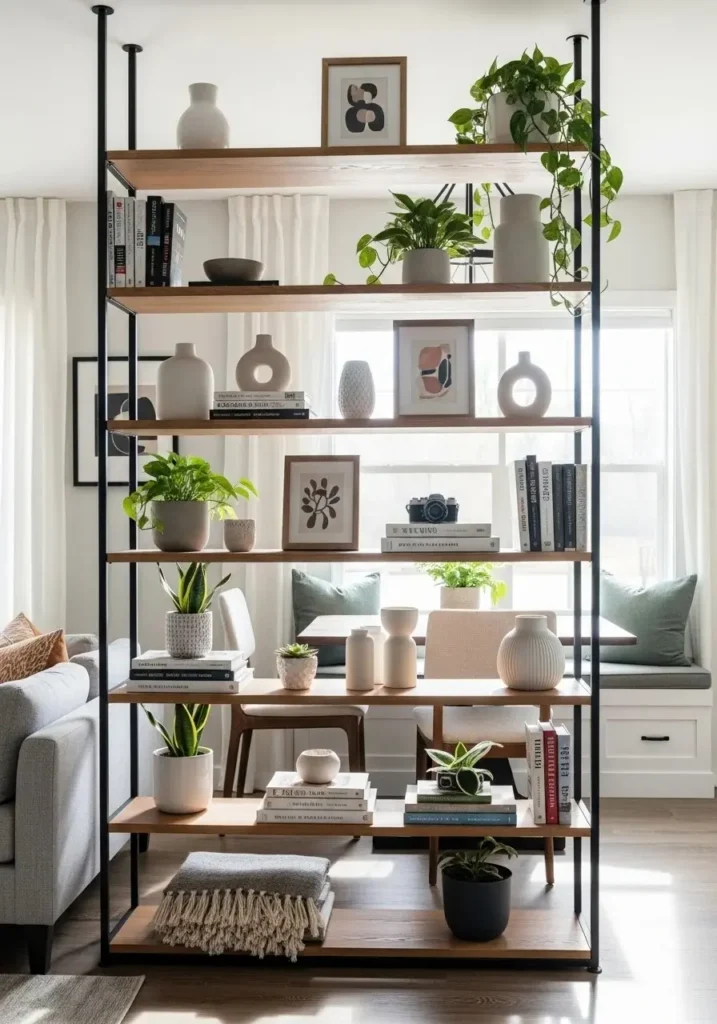
An open shelving unit is one of the easiest ways to divide a living room while adding storage. It creates a soft boundary between spaces without making the room feel closed off or heavy. You can style it with books, plants, or decorative objects to match your overall look.
This works because it keeps light flowing through the space while still defining separate zones. Instead of blocking the room, it enhances it by adding both function and visual interest.
Tip: Keep the top shelves lighter and less crowded to maintain an airy, uncluttered feel.
2. Sliding Barn Doors
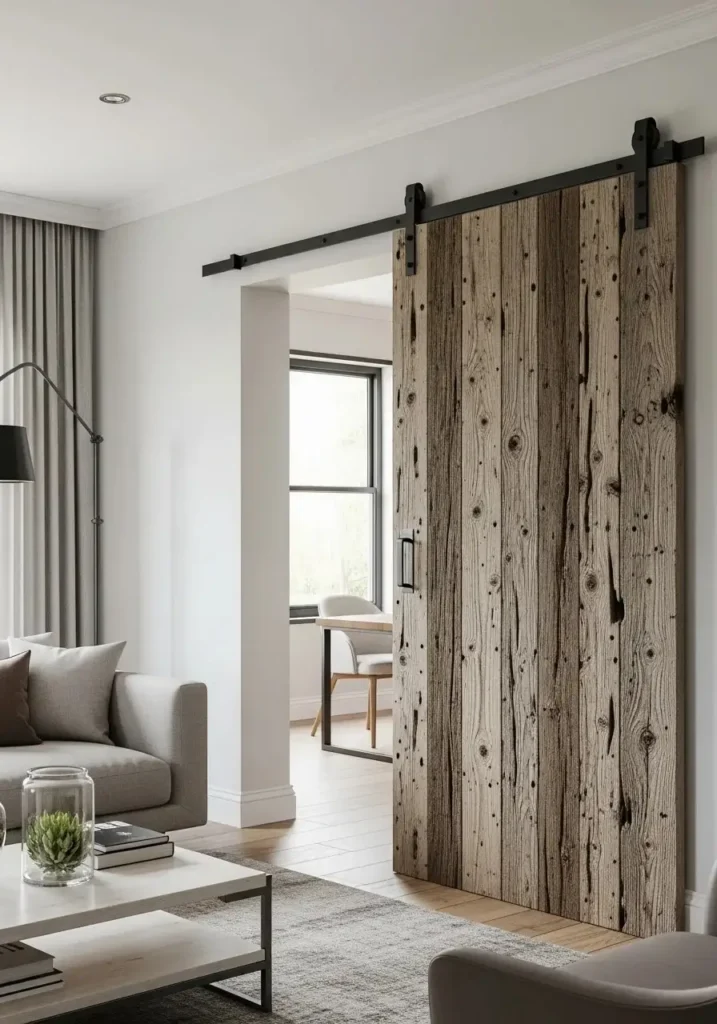
Sliding barn doors offer a flexible way to separate spaces when needed while still allowing openness. They can be closed for privacy or left open to keep the room connected.
This works because it gives you control over how your space functions throughout the day. It also adds a strong design feature that feels intentional rather than temporary.
Tip: Choose matte black hardware for a modern touch or natural wood for a warmer, rustic look.
3. Curtain Divider
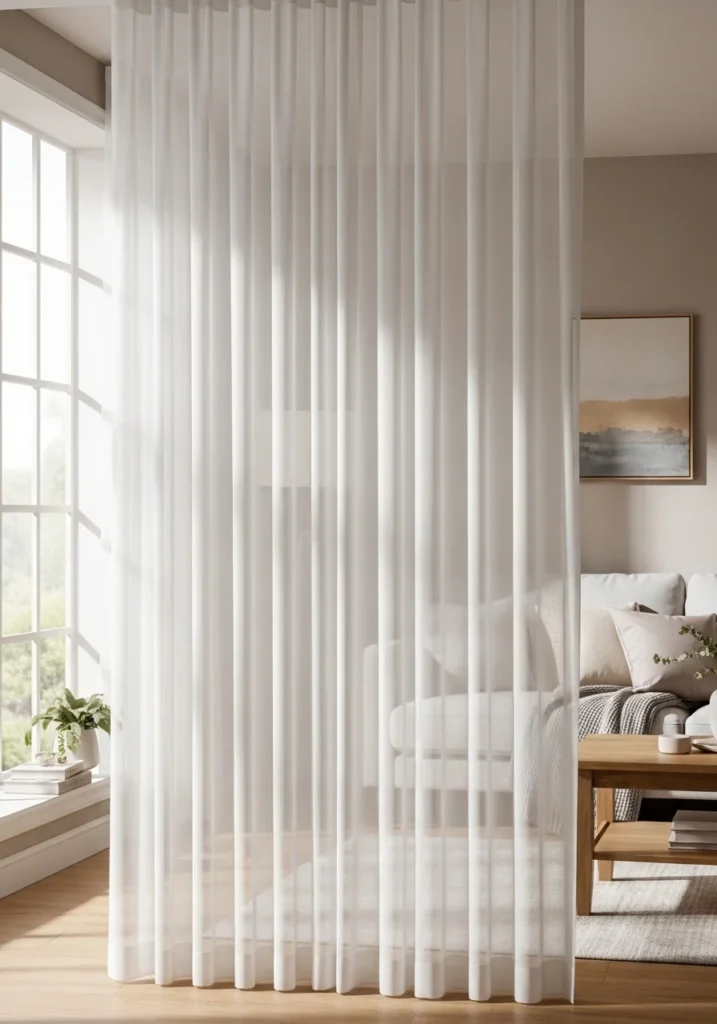
Curtains are one of the simplest and most affordable divider options. From sheer fabrics to heavier drapes, they can instantly create a soft boundary between areas.
This works because curtains add movement and texture, making the room feel layered instead of rigid. They’re also easy to adjust depending on how open or private you want the space to feel.
Tip: Install ceiling-mounted tracks to make the setup feel seamless and visually clean.
4. Glass Partition with Black Frames
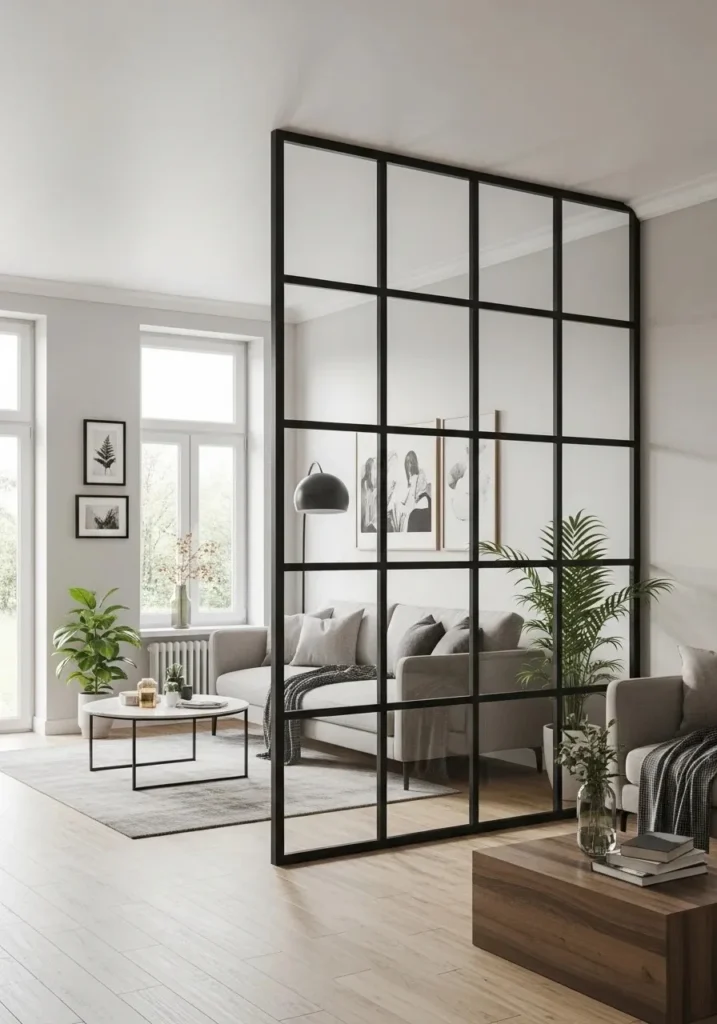
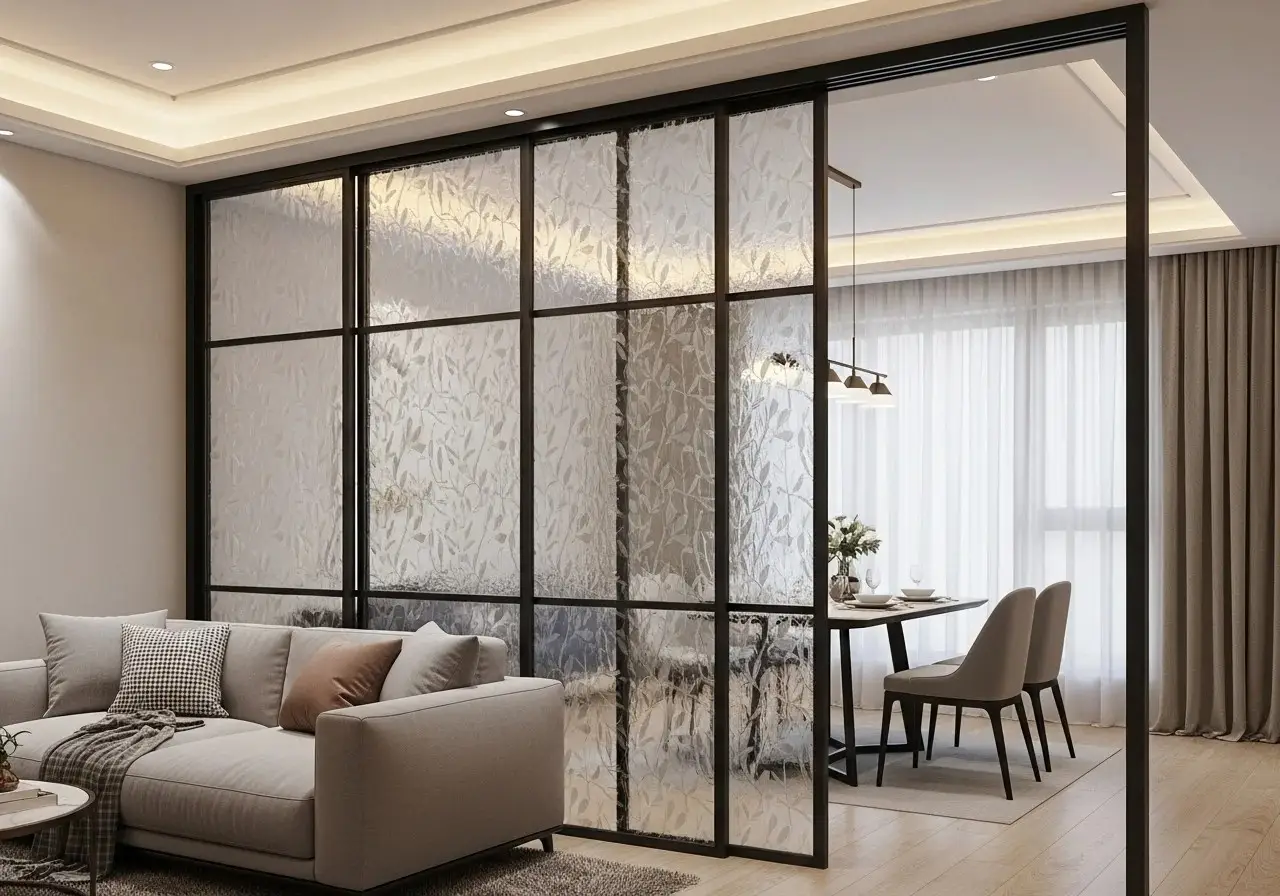
A glass partition with black frames creates a modern, structured look while still allowing light to pass through. It’s perfect for separating spaces without making them feel smaller.
This works because the transparency keeps the room bright and connected, while the black framing adds contrast and definition. It creates a clear boundary without visual heaviness.
Tip: Use frosted glass if you want more privacy without losing that open feel.
5. Tall Plant Divider
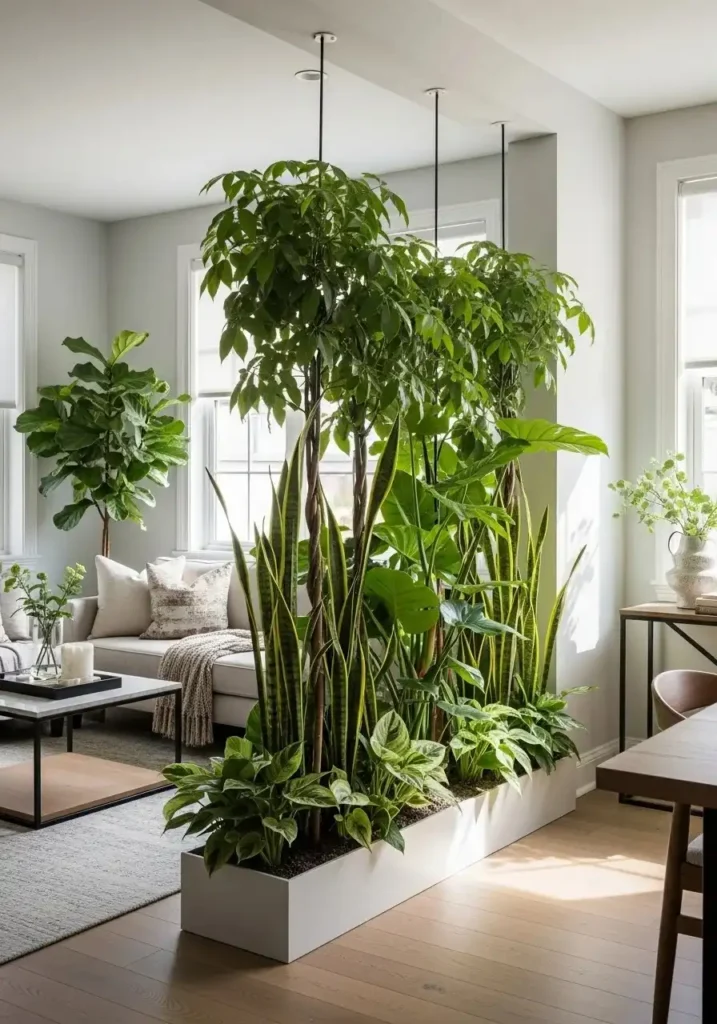
Using tall plants as a divider adds a natural and refreshing touch to your living room. Place a row of plants to gently separate different areas.
This works because greenery softens the space and introduces life, making the division feel organic rather than forced. It’s a great way to add texture without adding bulky furniture.
Tip: Mix different plant heights and leaf shapes to create a more dynamic, layered look.
This Post Also Amazing: Beige and Black Living Room Ideas: 17 Stylish Ways to Balance Warmth and Drama
6. Folding Screen
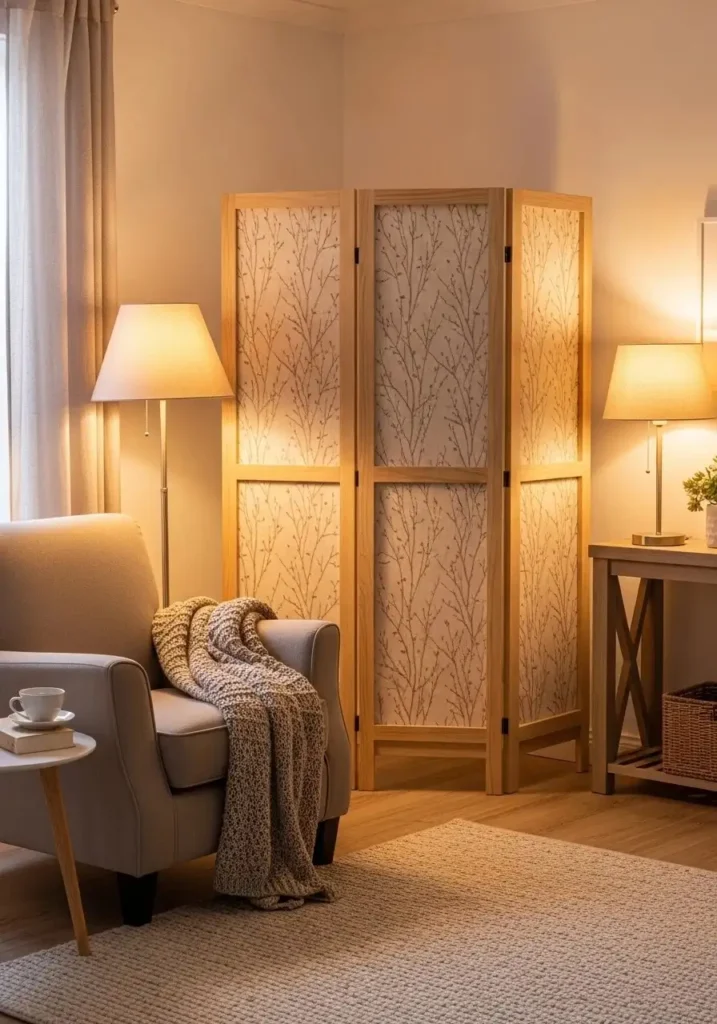
A folding screen is a classic solution that’s easy to move and adjust. It allows you to instantly create a separate area without any permanent changes.
This works because of its flexibility—you can reposition it whenever your needs change. It’s especially useful for small spaces or temporary setups.
Tip: Choose a screen with subtle patterns or light materials to avoid making the space feel too heavy.
7. Bookcase with Open Backs
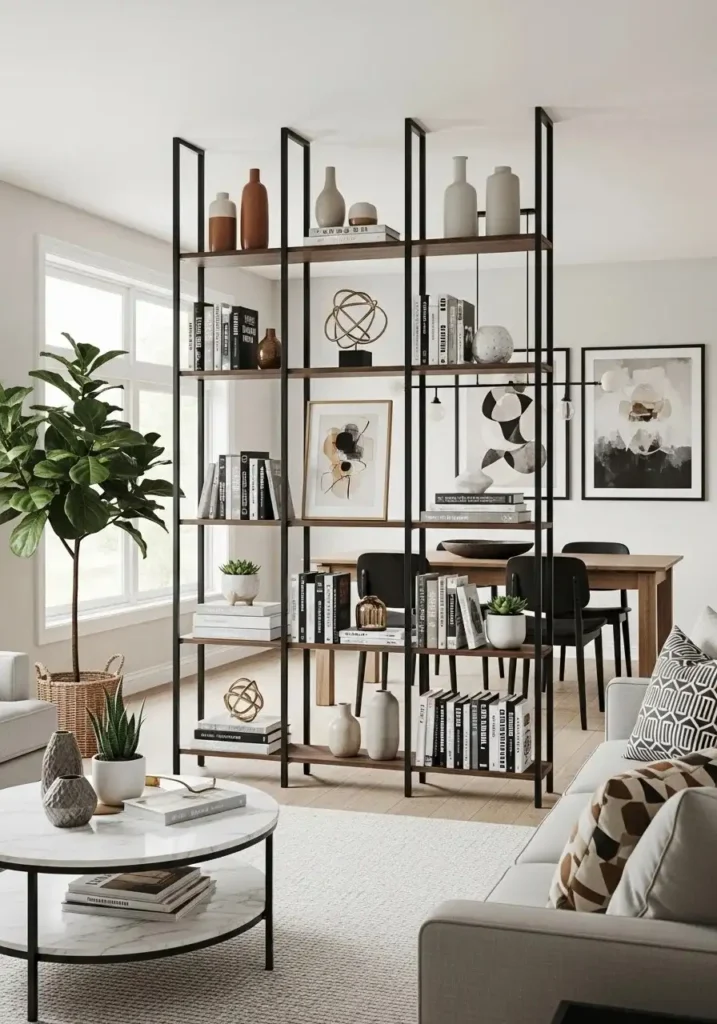
A bookcase with open backs works as both storage and a divider. It allows you to display items on both sides while keeping the room visually connected.
This works because it provides structure without closing off the space completely. It also helps organize your belongings while adding personality to your room.
Tip: Balance books with decorative items to keep the shelves from looking too crowded.
8. Half Wall with Countertop
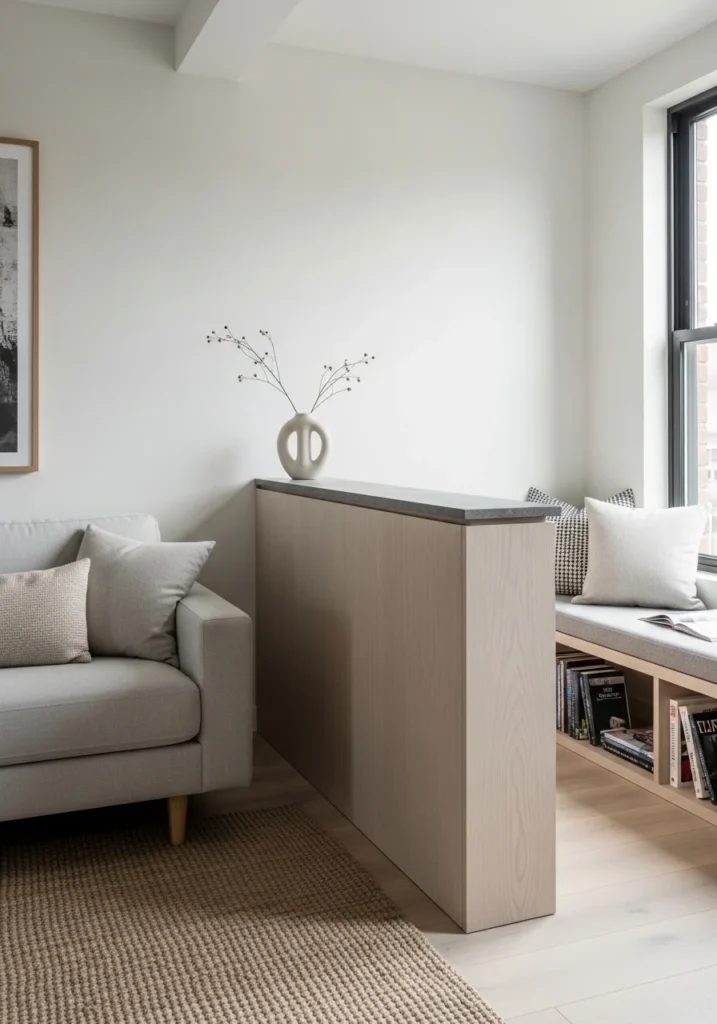
A half wall topped with a slim countertop creates a practical divider that can also be used for styling or daily activities. It separates areas while still keeping the room open.
This works because it combines function with design. The countertop adds usability, while the lower wall maintains visual flow. It’s ideal for creating subtle boundaries in open layouts.
Tip: Keep the countertop simple with a few decor pieces to avoid clutter and maintain a clean look.
9. Sofa Back Divider
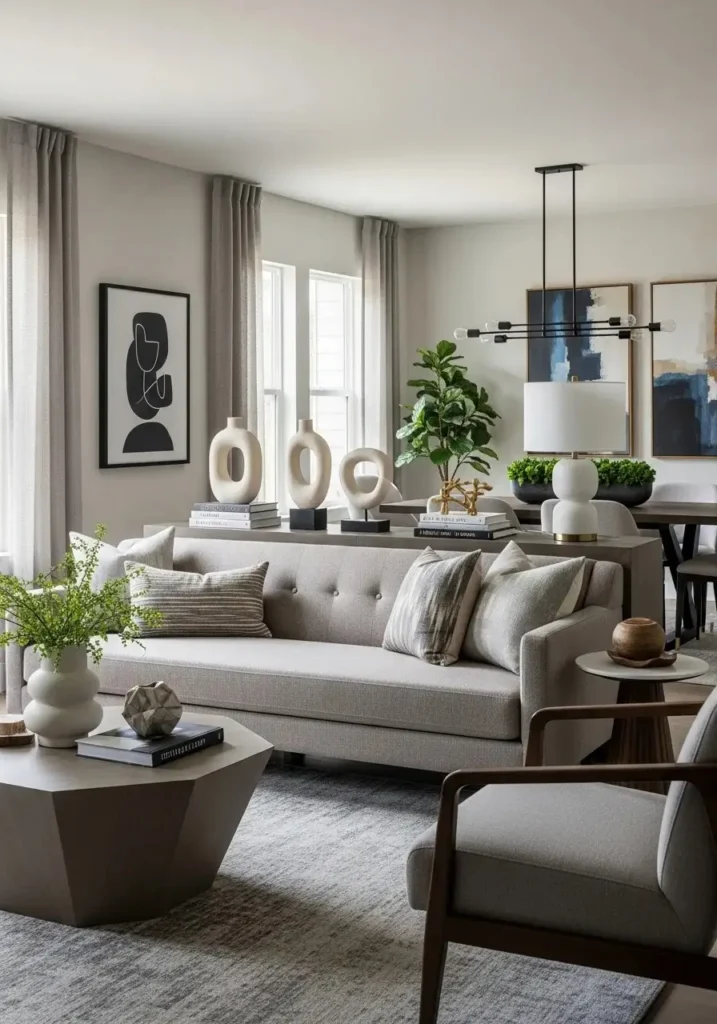
Positioning a sofa with its back facing another area is a simple yet effective way to divide your living room. It naturally creates two zones without adding extra furniture.
This works because the sofa already acts as a visual anchor. Turning it outward defines boundaries while maintaining flow and openness. It’s subtle but incredibly effective in long or open layouts.
Tip: Add a slim console table behind the sofa to enhance the separation and provide extra styling space.
This Post Also For You: Long Living Room Ideas: 19 Smart Ways to Make Your Space Feel Balanced and Beautiful
10. Wood Slat Divider
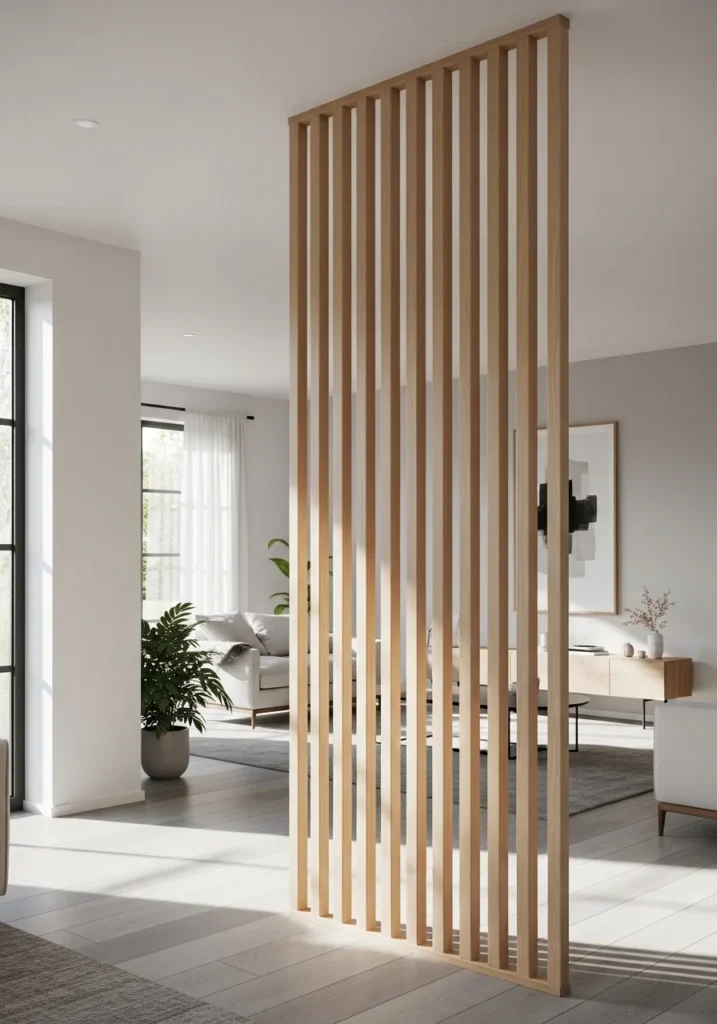
Vertical wood slats create a modern divider that feels both structured and airy. The spacing between slats allows light to pass through while still defining separate areas.
This works because it adds architectural interest without making the room feel boxed in. The vertical lines also draw the eye upward, making the space feel taller.
Tip: Stick to light or medium wood tones to keep the divider from feeling too heavy.
11. Hanging Pendant Divider
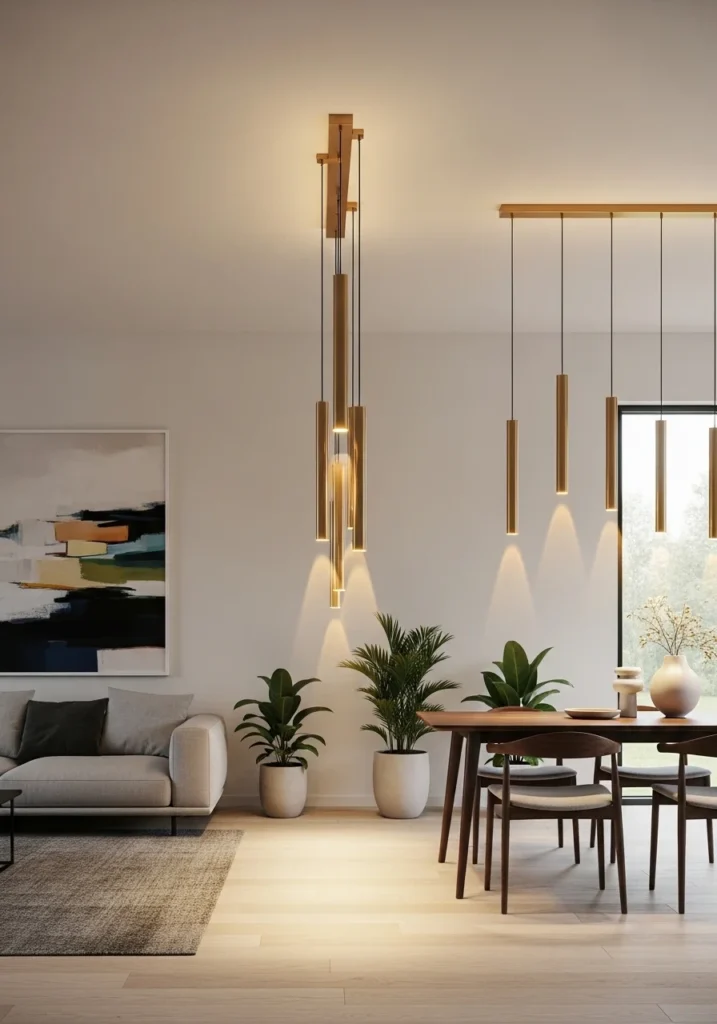
A row of pendant lights can act as a subtle divider between spaces. While not a physical barrier, it visually separates areas through lighting.
This works because lighting naturally draws attention and defines zones without taking up floor space. It keeps the layout open while still giving structure.
Tip: Hang pendants at consistent heights to create a clean, intentional look.
12. Area Rug Separation
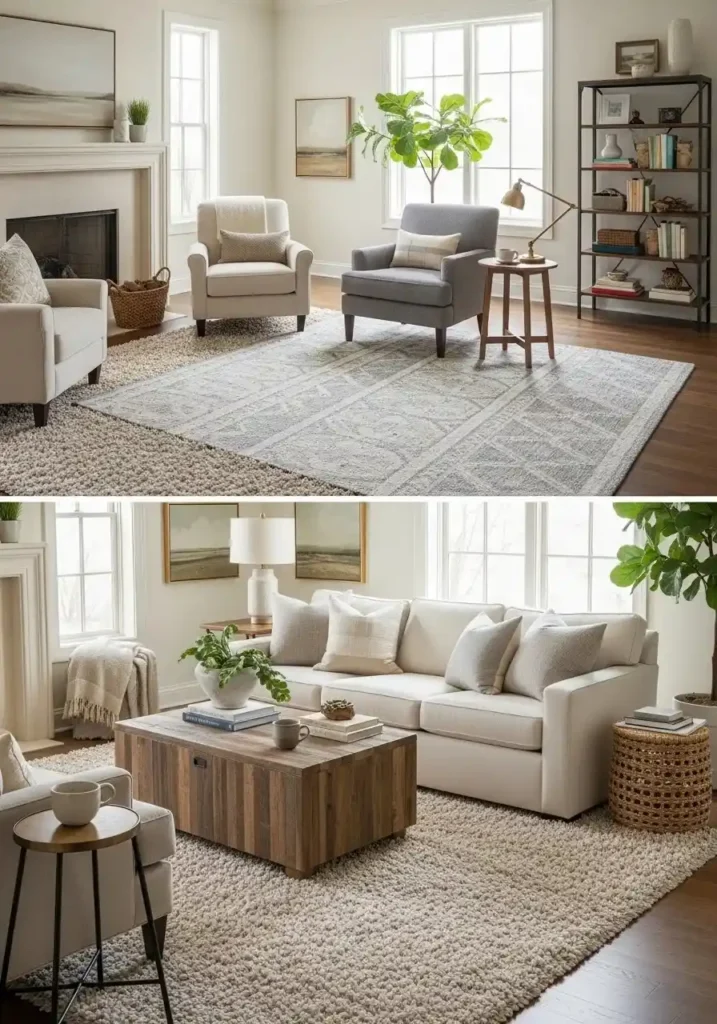
Using different rugs for different sections is a simple way to divide your living room. Each rug anchors its own zone, like seating or dining. This works because rugs visually ground furniture and signal where one area ends and another begins. It’s one of the easiest ways to organize an open space.
Tip: Choose rugs with similar tones or patterns to keep the overall design cohesive.
This Post Also Amazing: Beige Couch Living Room Ideas: 15 Ways to Style a Cozy & Elegant Space
13. Partial Wall with Cutouts
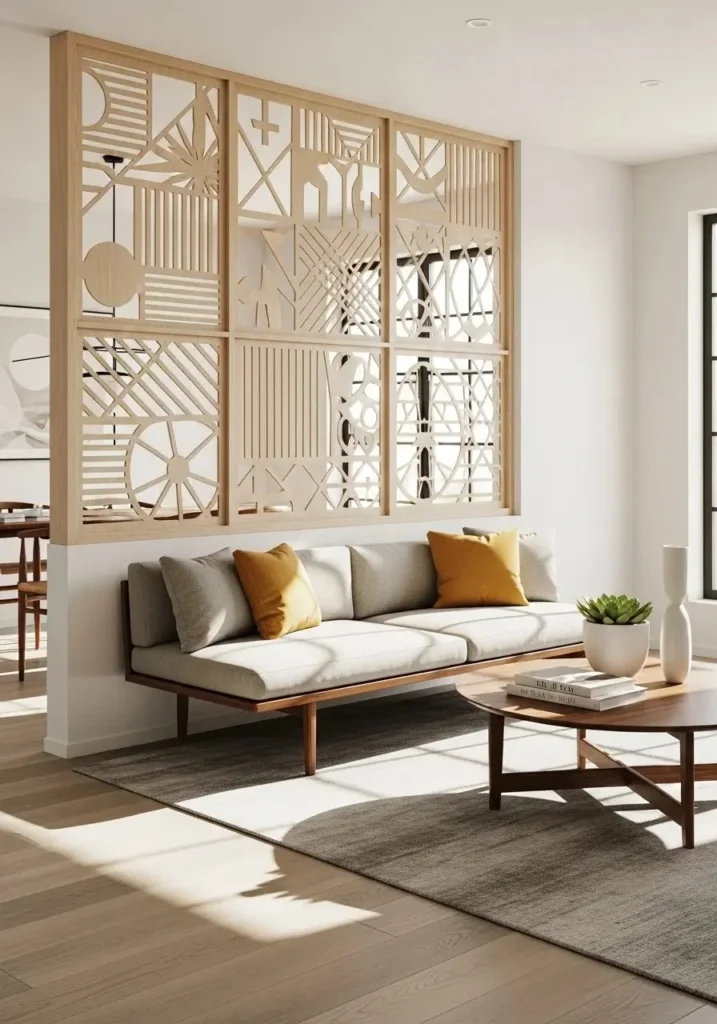
A partial wall with decorative cutouts adds both division and style. It separates spaces while still allowing glimpses through the openings. This works because it creates a structured boundary without feeling solid or closed. The cutouts add texture and visual interest, making the divider feel like a design feature.
Tip: Keep the design simple to avoid making the wall look too busy.
14. Sliding Glass Panels
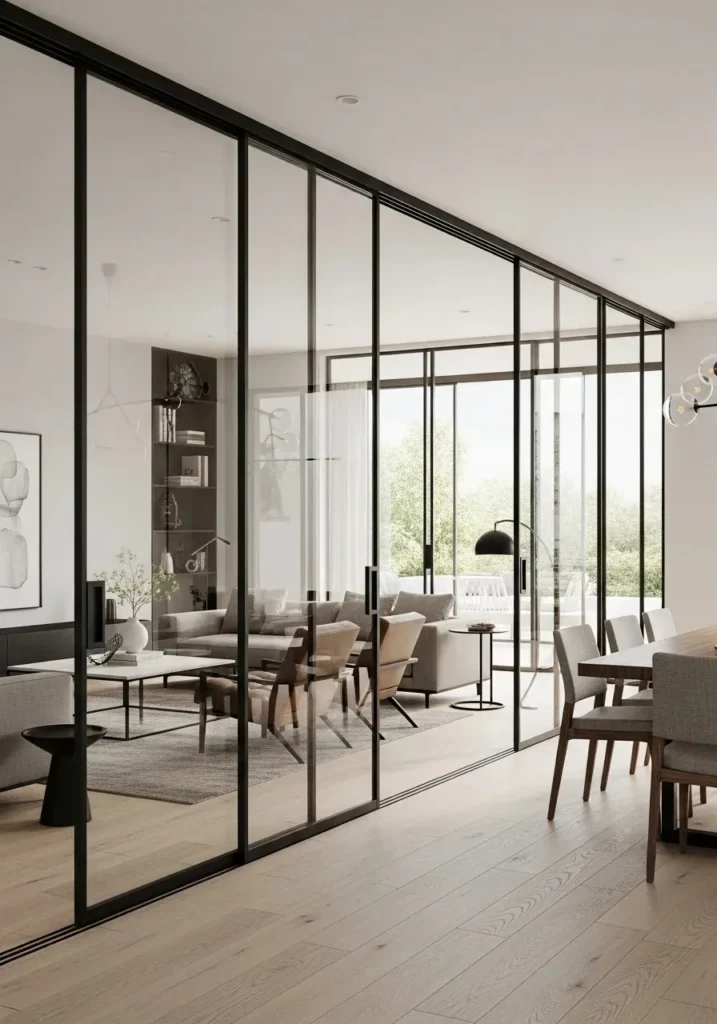
Sliding glass panels offer flexibility and a sleek, modern feel. They can be closed for privacy or opened to maintain a connected layout. This works because glass keeps the room bright while still providing separation when needed. It’s perfect for spaces that need both openness and functionality.
Tip: Use soft curtains alongside the panels for added warmth and privacy when desired.
15. Curtain and Rod Combo Divider
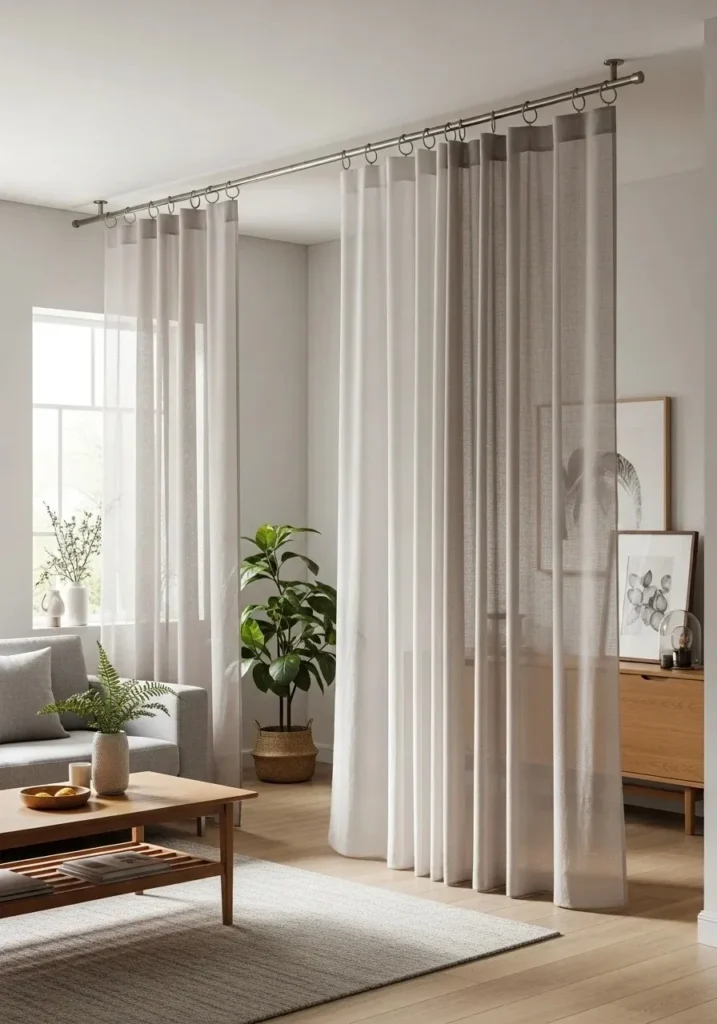
A curtain and rod setup is an easy DIY solution for dividing space. It allows you to open or close off areas depending on your needs. This works because it adds softness and movement, making the space feel more relaxed and layered. It’s also one of the most budget-friendly options.
Tip: Choose neutral or light fabrics to keep the room feeling airy and spacious.
16. Multi-Level Platform Divider
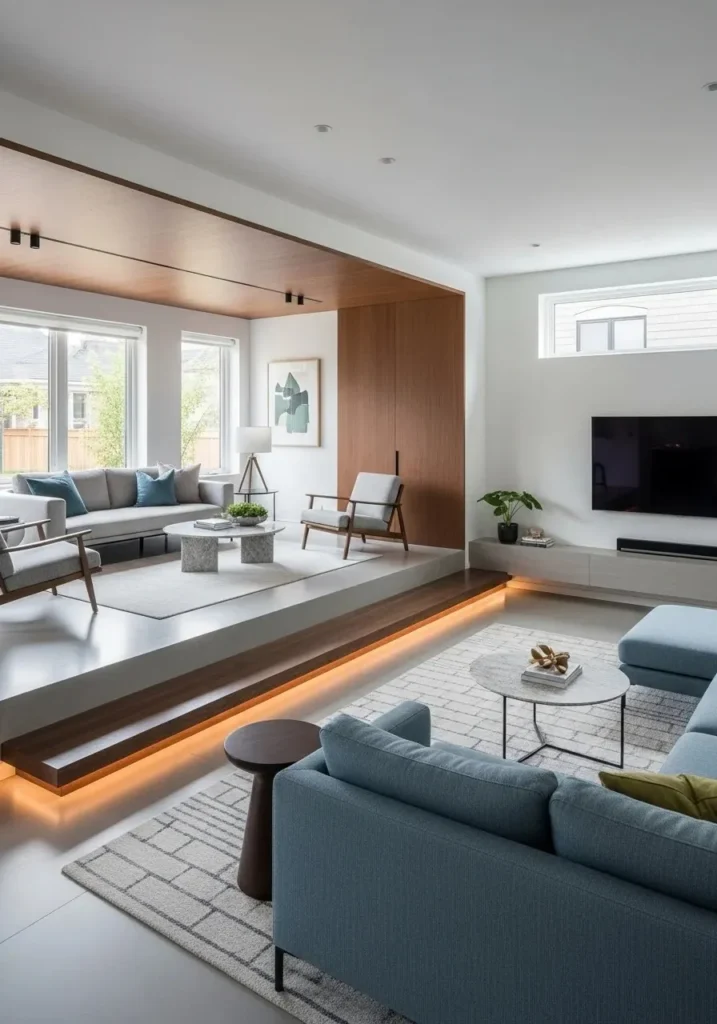
Creating a slight elevation difference, like a raised platform for one section, can act as a subtle divider. It visually separates areas without adding walls. This works because level changes naturally define spaces while keeping everything open. It adds depth and a unique design element to your living room.
Tip: Use similar flooring materials to maintain a smooth and cohesive look.
Conclusion
Dividing your living room doesn’t mean closing it off or making it feel smaller—it’s about giving the space purpose and flow. These living room divider ideas show how simple changes, from furniture placement to creative structures, can transform how your room feels and functions. Whether you prefer soft solutions like curtains or more defined options like shelving and panels, the key is finding what works for your lifestyle. Start small, experiment with layouts, and focus on balance. When each area feels intentional, your living room naturally becomes more comfortable, organized, and enjoyable to spend time in.