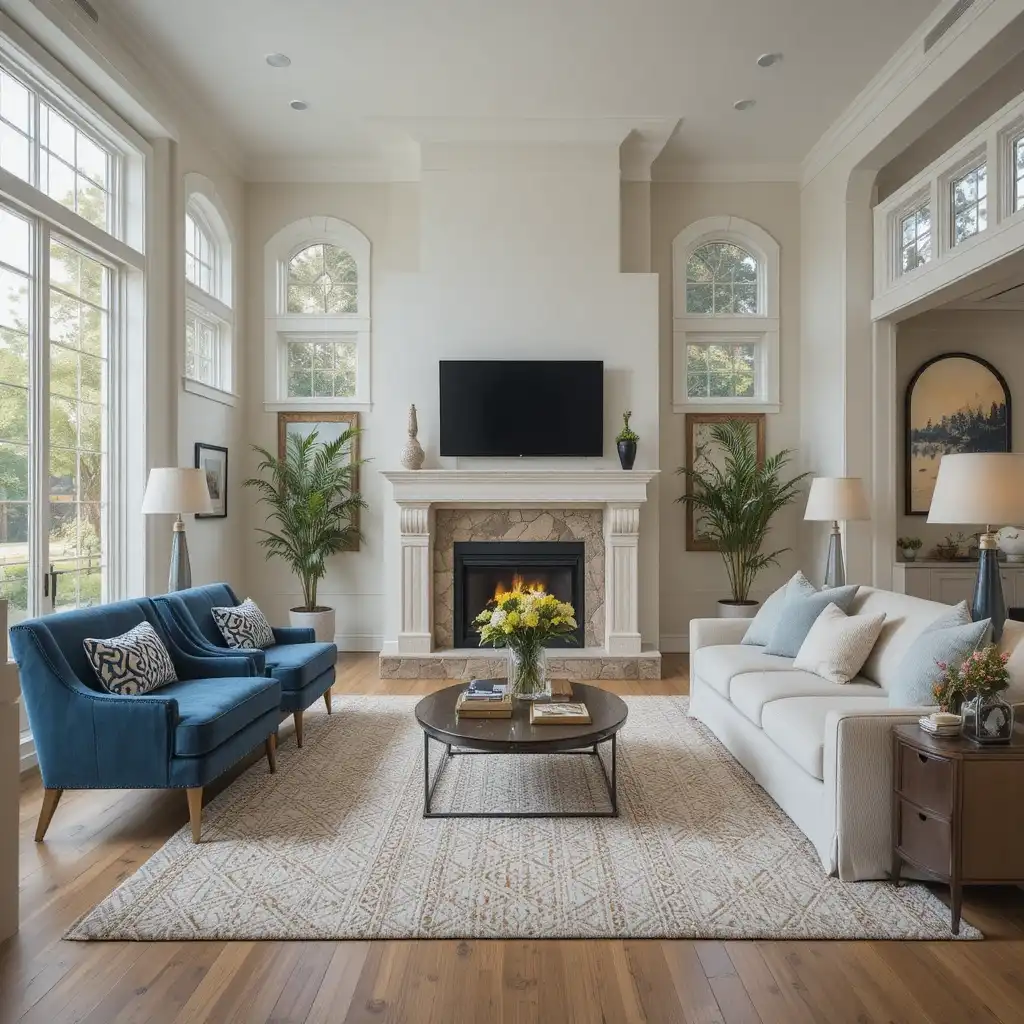
Living Room with Fireplace: 15 Smart Design Ideas
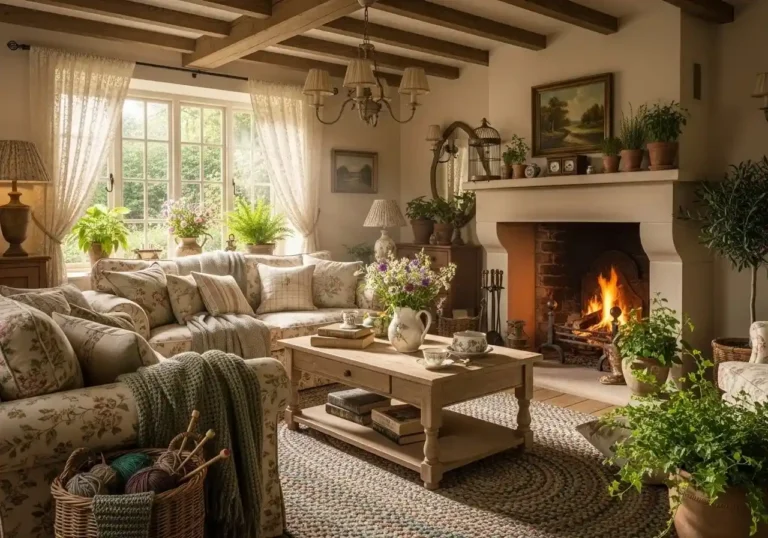
A living room with a fireplace can either feel like the coziest spot in your home—or the most awkward one to arrange. The difference usually isn’t the fireplace itself. It’s how you design around it.
If you’ve ever struggled with furniture placement, empty wall space above the mantel, or a room that feels unbalanced, these ideas will help you think clearly and design with confidence.
1. Make the Fireplace the Natural Focal Point
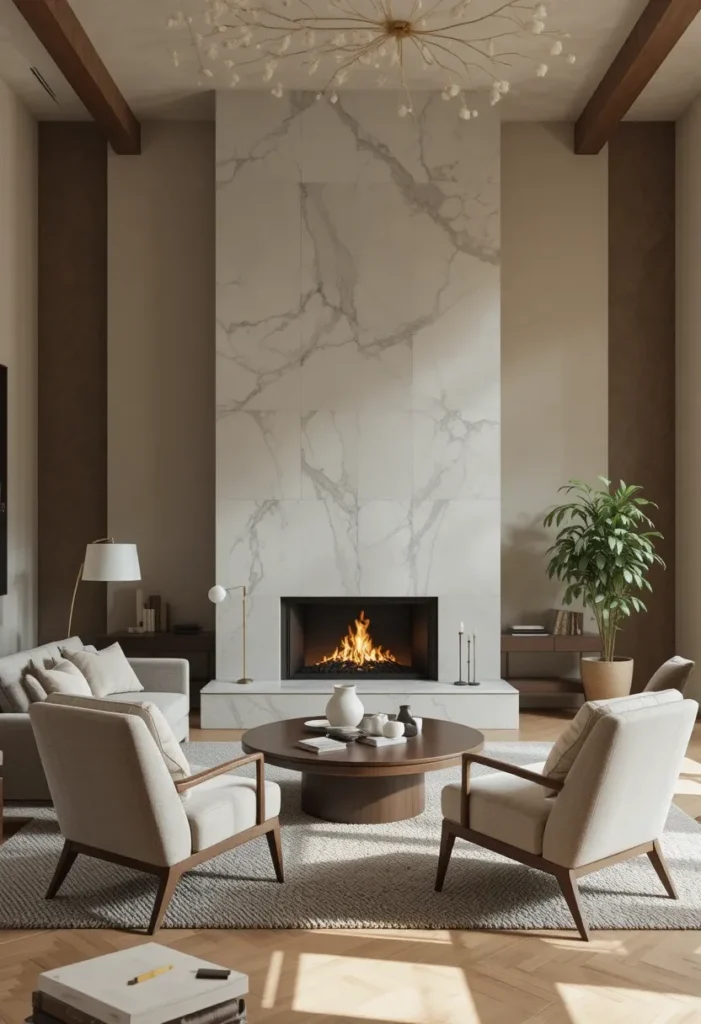
This simply means arranging the room so the fireplace feels intentional, not accidental.
It works because fireplaces naturally draw the eye. Fighting that usually creates visual tension.
Practical tip: Position your main seating so at least one sofa or pair of chairs faces the fireplace directly. Even if you also have a TV, let the fireplace anchor the layout first.
2. Balance the Mantel Properly
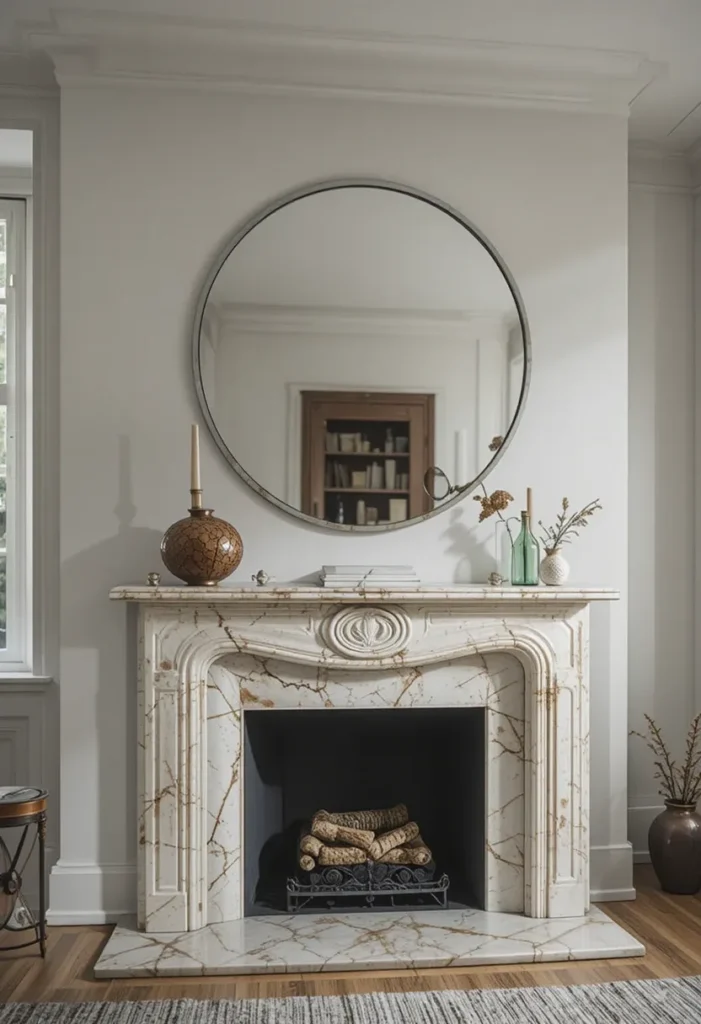
An empty mantel can feel unfinished. An overcrowded one feels chaotic.
It works when decor feels layered but breathable. Balance is more important than symmetry.
Practical tip: Start with one anchor piece (a mirror or artwork), then add two smaller items of different heights. Step back and remove one thing if it feels busy.
3. Use Built-Ins to Frame the Fireplace
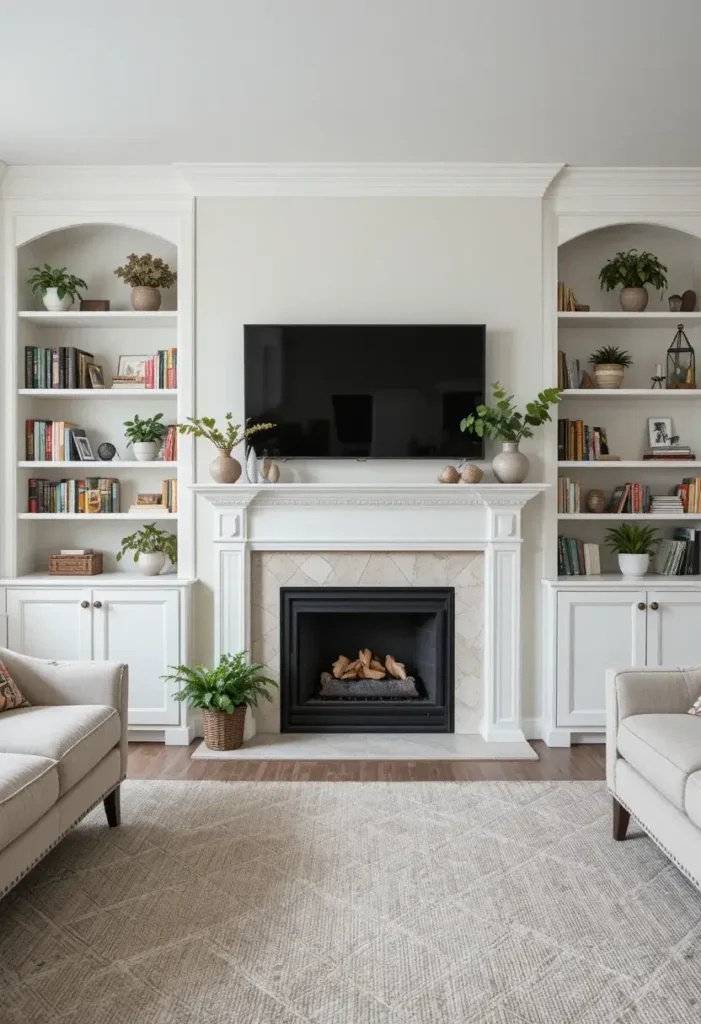
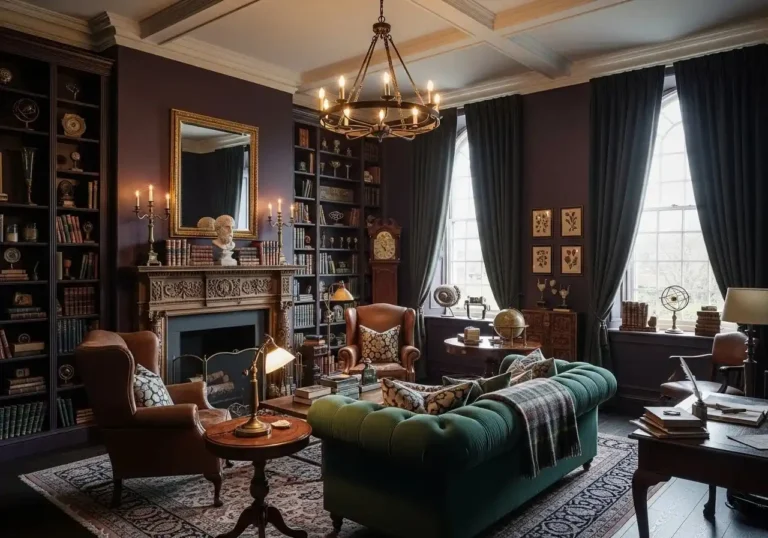
Built-in shelves or cabinets on either side create structure.
They work because they visually widen the fireplace wall and add storage without clutter.
Practical tip: Keep shelves about 60% decorated and 40% open space. Too many objects make the fireplace disappear instead of stand out.
4. Choose the Right Rug Size
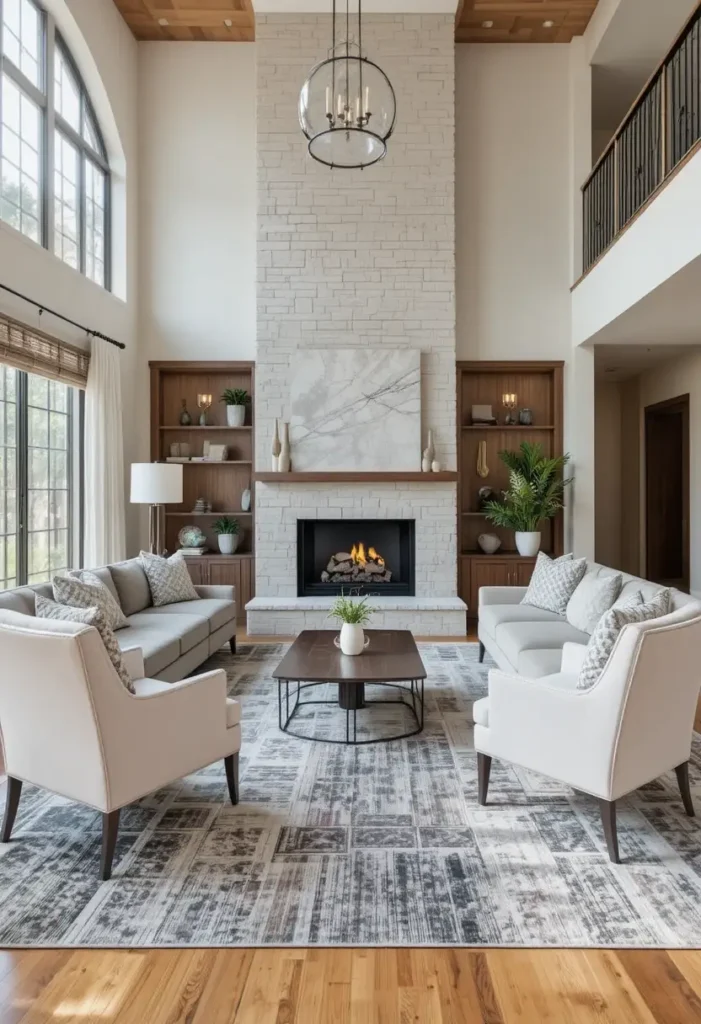
Many living rooms with fireplaces feel “off” because the rug is too small.
It works when the rug connects all major furniture pieces into one zone.
Practical tip: The front legs of your sofa and chairs should sit on the rug. If it’s floating in the middle, the room will feel disconnected.
Also Read This Blog: Luxury Living Room: 13 Thoughtful Ideas to Elevate Your Space
5. Layer Lighting Around the Fireplace
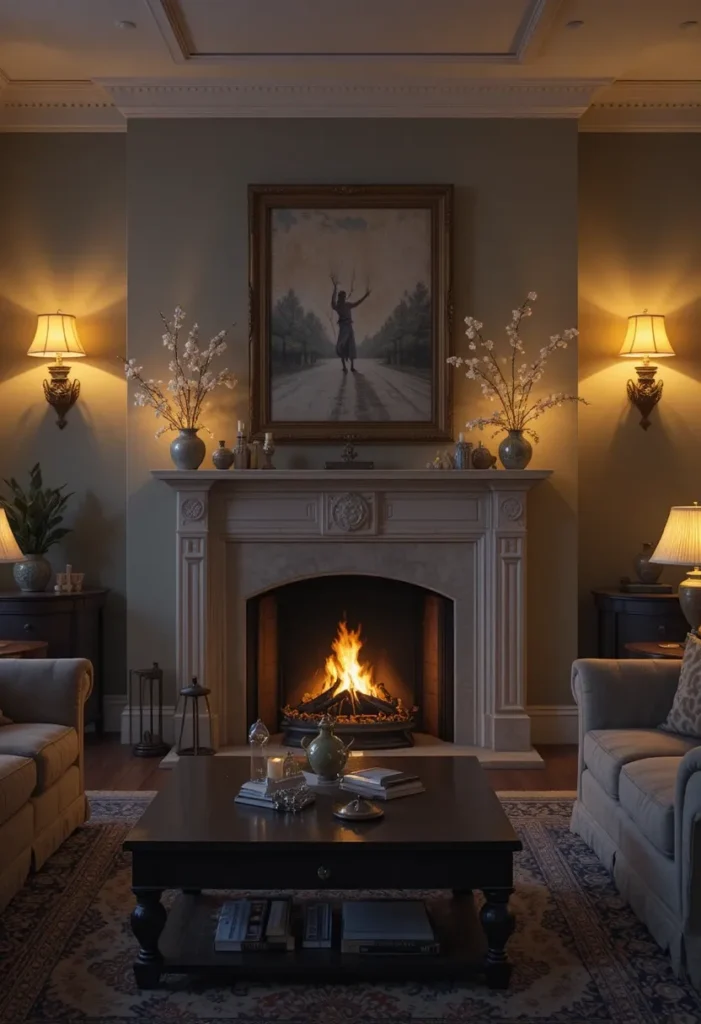
Relying only on overhead lighting makes the fireplace feel harsh.
It works when you create soft layers—lamps, sconces, and natural light.
Practical tip: Add table lamps on side tables near seating and, if possible, wall sconces flanking the fireplace for a warm evening glow.
6. Keep TV Placement Thoughtful
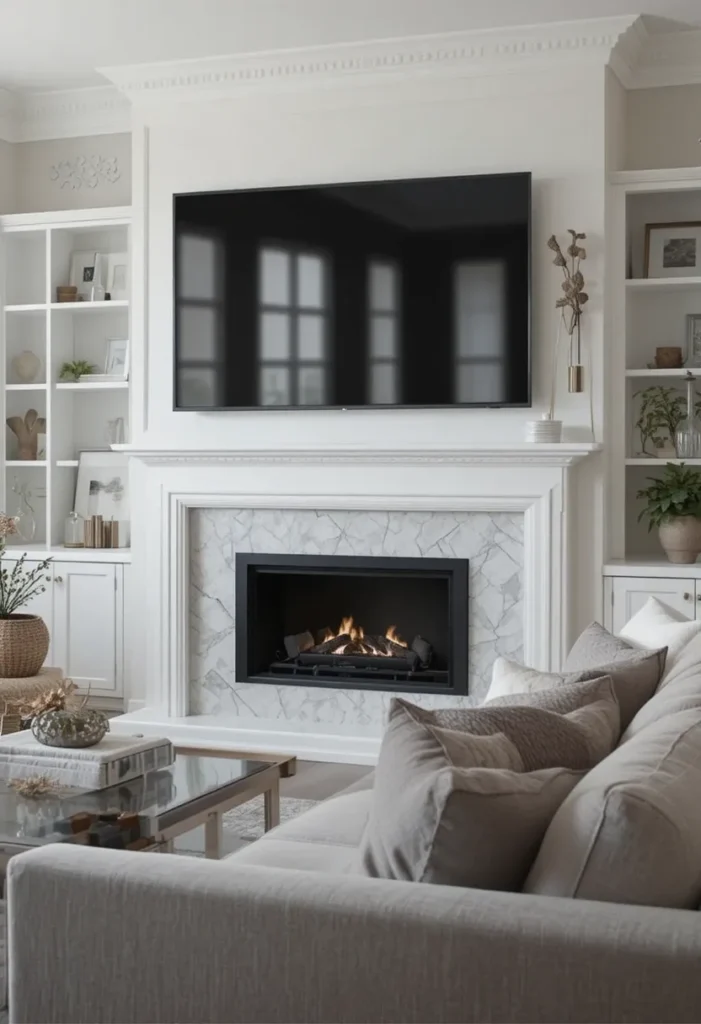
This is where many people feel stuck. Should the TV go above the fireplace?
It works only if proportions are right and viewing height is comfortable.
Practical tip: If mounting above the fireplace, ensure the mantel isn’t too high. If it is, consider placing the TV on an adjacent wall and keeping the fireplace purely decorative.
7. Add Texture Through Materials
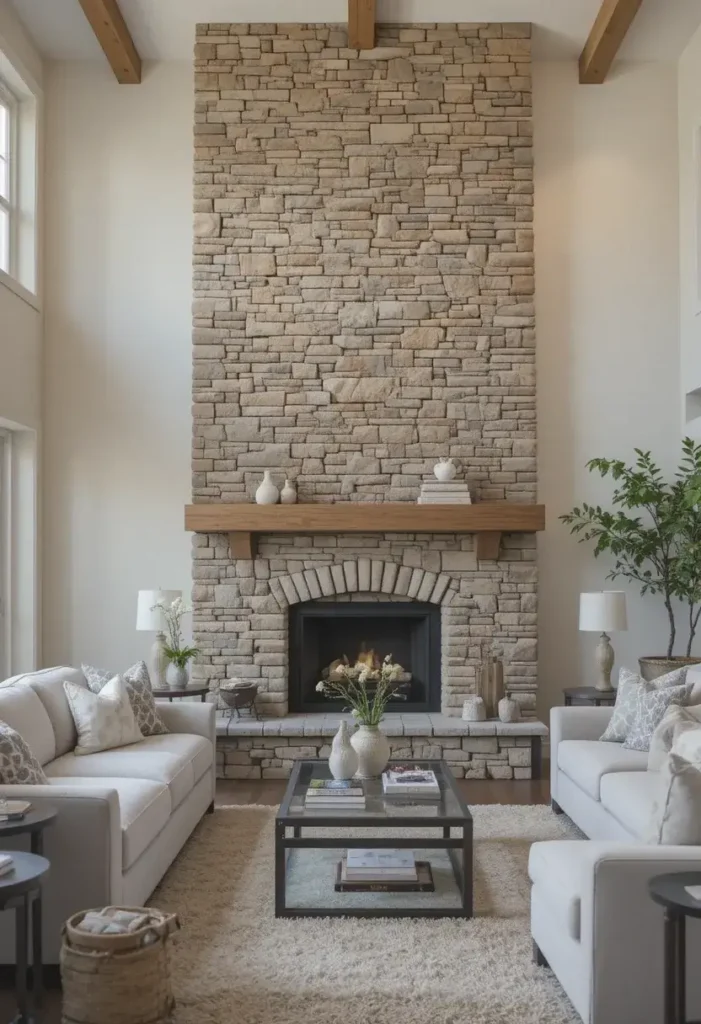
A fireplace wall can look flat if everything is smooth drywall.
It works when you introduce texture—brick, stone, wood paneling, or even limewash paint. Texture creates depth without needing extra decor.
Practical tip: If renovation isn’t possible, try a textured wallpaper or a wood mantel beam to add warmth.
Also Read This Blog: 15 Living Room Remodel Ideas That Actually Improve How the Space Feels
8. Create Conversation Seating
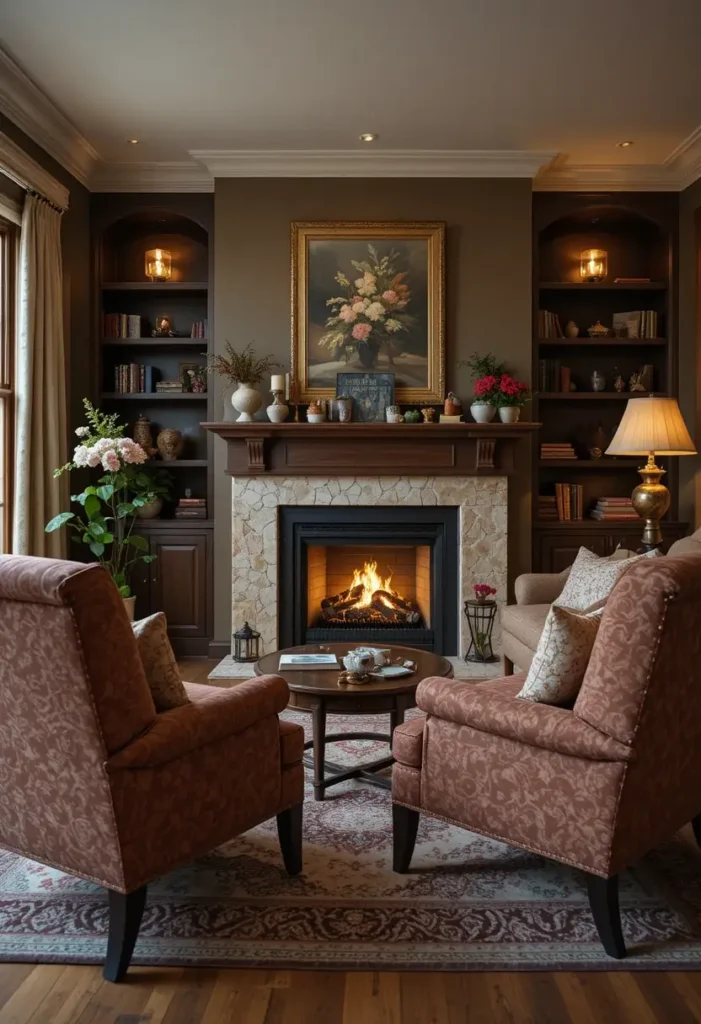
Sometimes furniture gets pushed against walls, leaving a large empty center.
It works better when seating feels intimate and connected to the fireplace.
Practical tip: Pull chairs slightly inward. Angle them toward both the fireplace and each other. It will instantly feel more inviting.
9. Don’t Ignore the Hearth
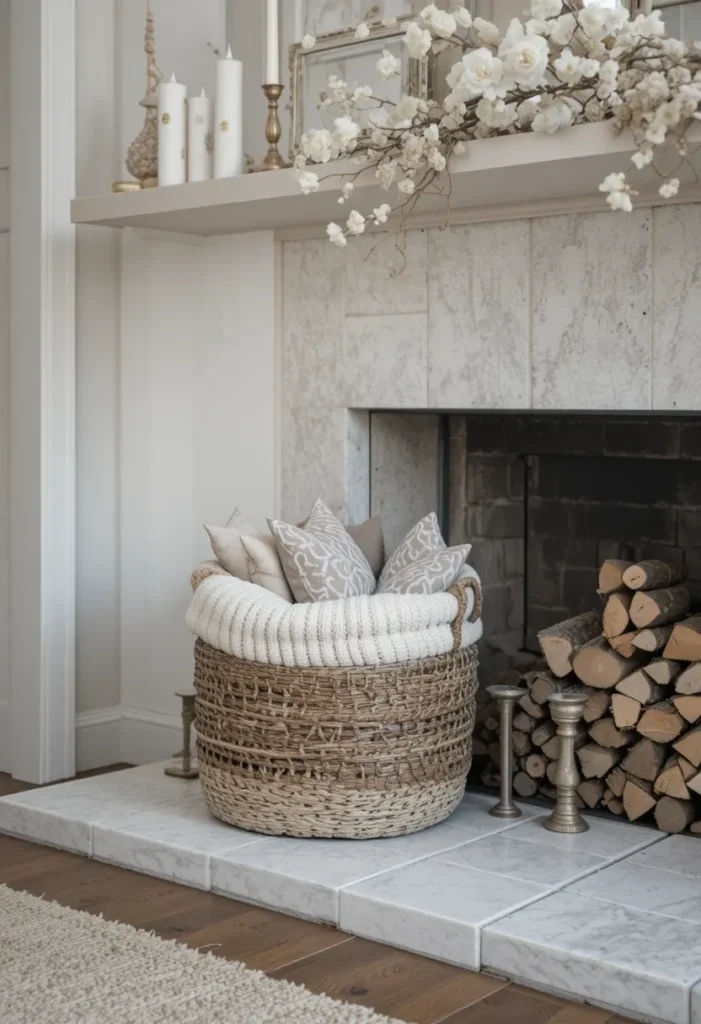
The hearth is often treated like dead space.
It works when you treat it as part of the design. A styled hearth makes the fireplace feel intentional even when it’s not in use.
Practical tip: Add a basket with cozy throws, stacked logs (real or decorative), or a low tray with candles.
10. Use Color to Highlight the Fireplace Wall
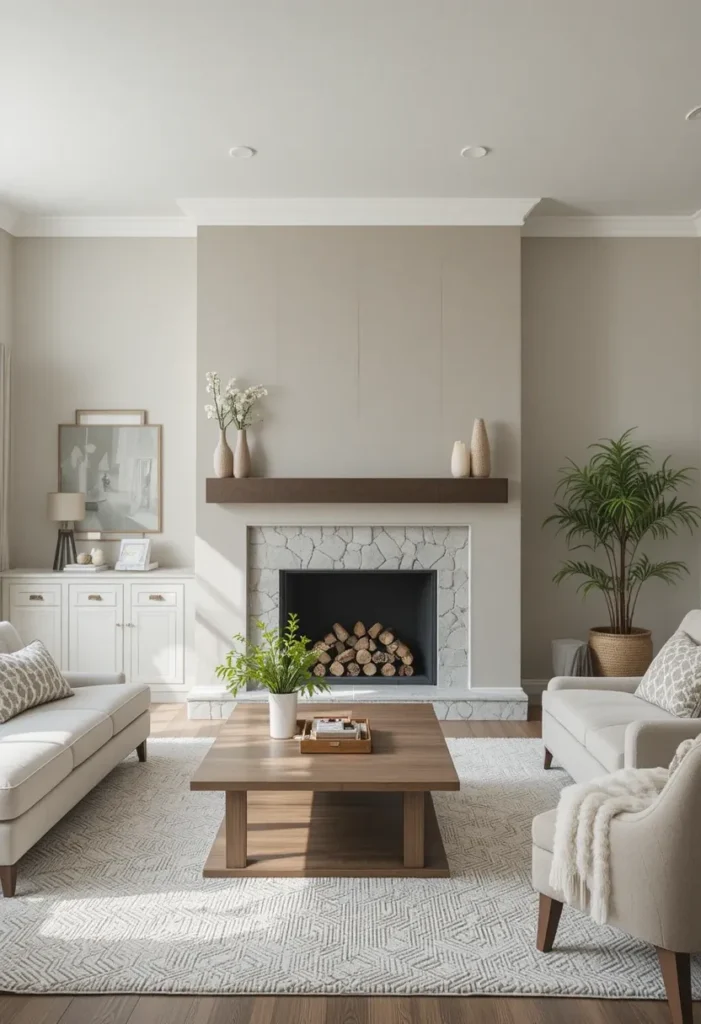
If everything is painted the same color, the fireplace can disappear.
It works when you subtly contrast the fireplace wall with the surrounding space.
Practical tip: Paint the fireplace wall one shade darker or use a soft accent color. Avoid extremely bold colors unless the rest of the room is very minimal.
Also Read This Blog: 14 Living Room Designs That Blend Style, Comfort & Everyday Life
11. Keep Proportions in Mind
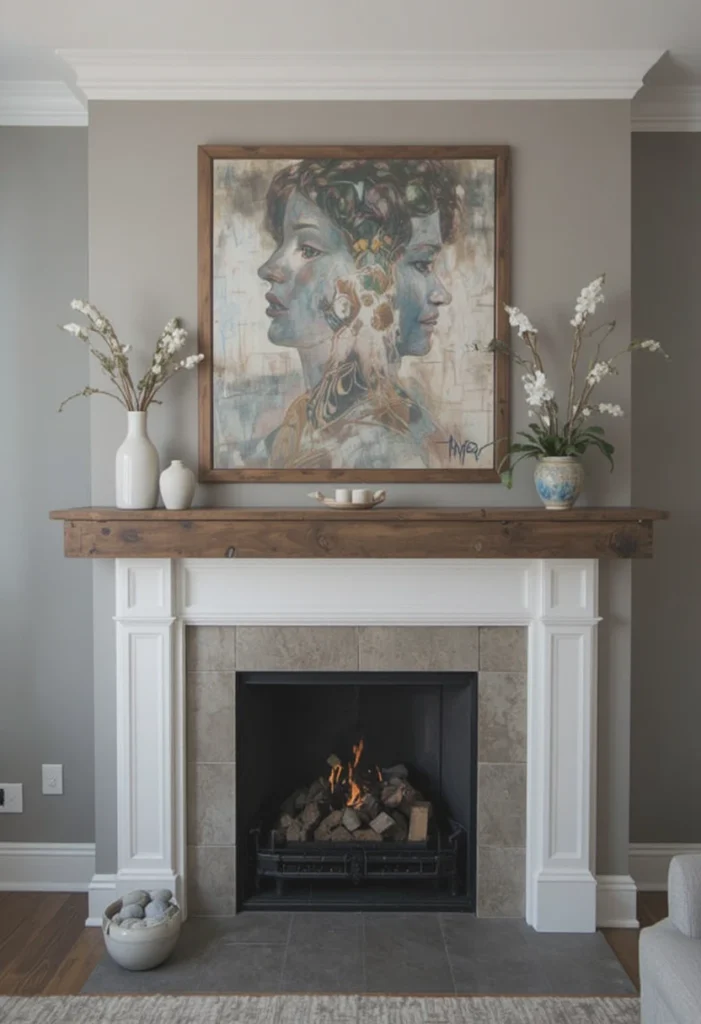
A tiny mirror over a large fireplace looks awkward. So does oversized art in a small room.
It works when decor matches the scale of the fireplace and wall.
Practical tip: Artwork above the mantel should generally be about two-thirds the width of the mantel for balanced proportions.
12. Soften the Space with Curtains
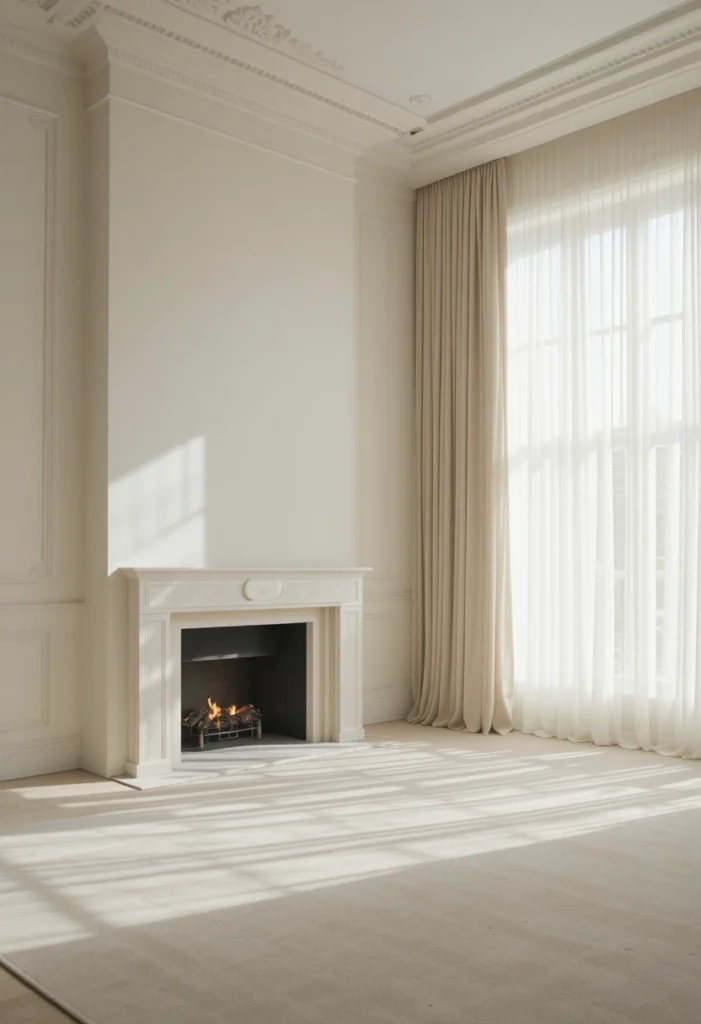
Many living rooms with fireplaces feel rigid because windows are left bare.
It works when curtains add height and softness to the space.
Practical tip: Hang curtain rods closer to the ceiling, not directly above the window frame. This makes the entire room—including the fireplace wall—feel taller.
13. Blend Modern and Traditional Elements
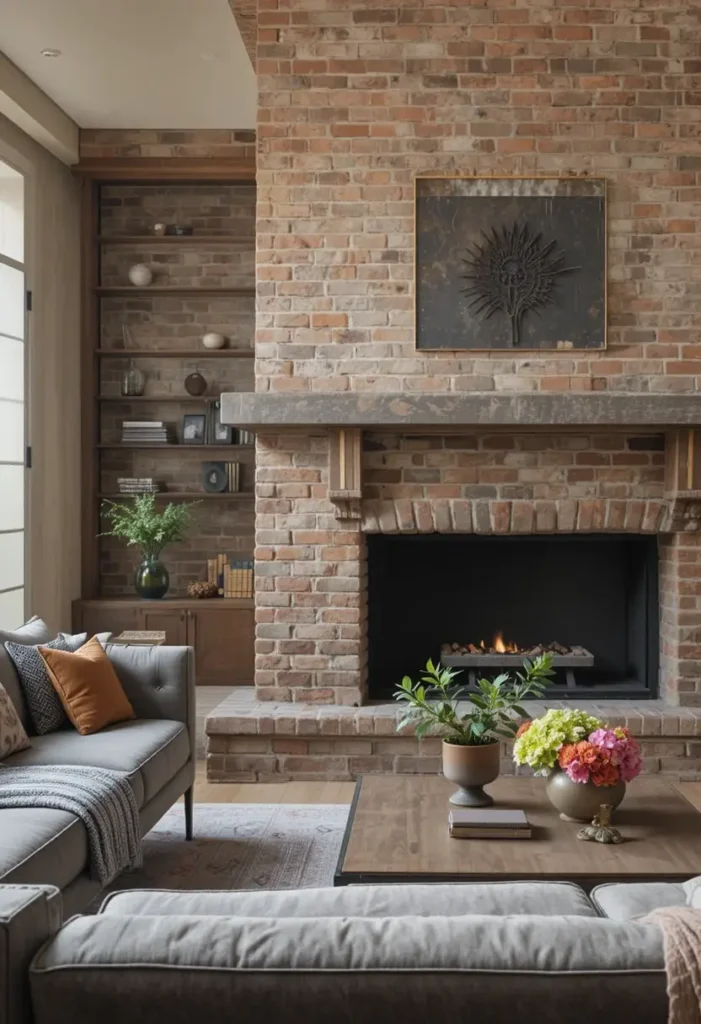
Fireplaces often feel traditional, especially brick or stone ones.
It works beautifully when you mix styles instead of matching everything exactly.
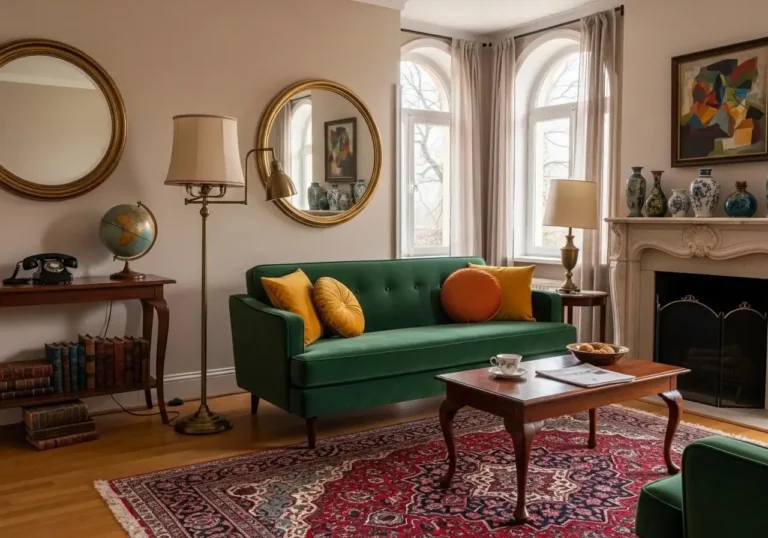
Practical tip: Pair a traditional fireplace with modern furniture, or style a sleek fireplace with vintage accessories. The contrast adds personality.
Also Read This Blog: 13 Built-In Shelves Living Room Ideas to Organize and Beautify Your Space
14. Avoid Overcrowding with Furniture
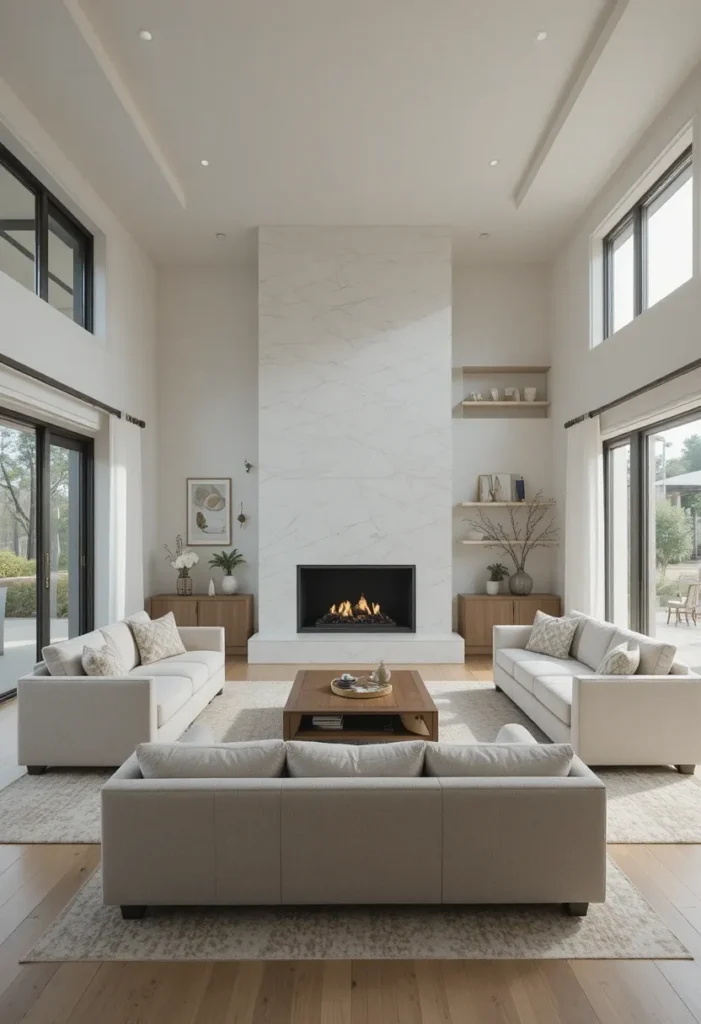
It’s tempting to fill every corner, especially in larger rooms.
It works better when there’s breathing space around the fireplace and seating. Crowding makes even a big room feel smaller.
Practical tip: Leave at least 18 inches of walking space around furniture. If you’re constantly squeezing past chairs, remove one piece.
15. Make It Functional Year-Round
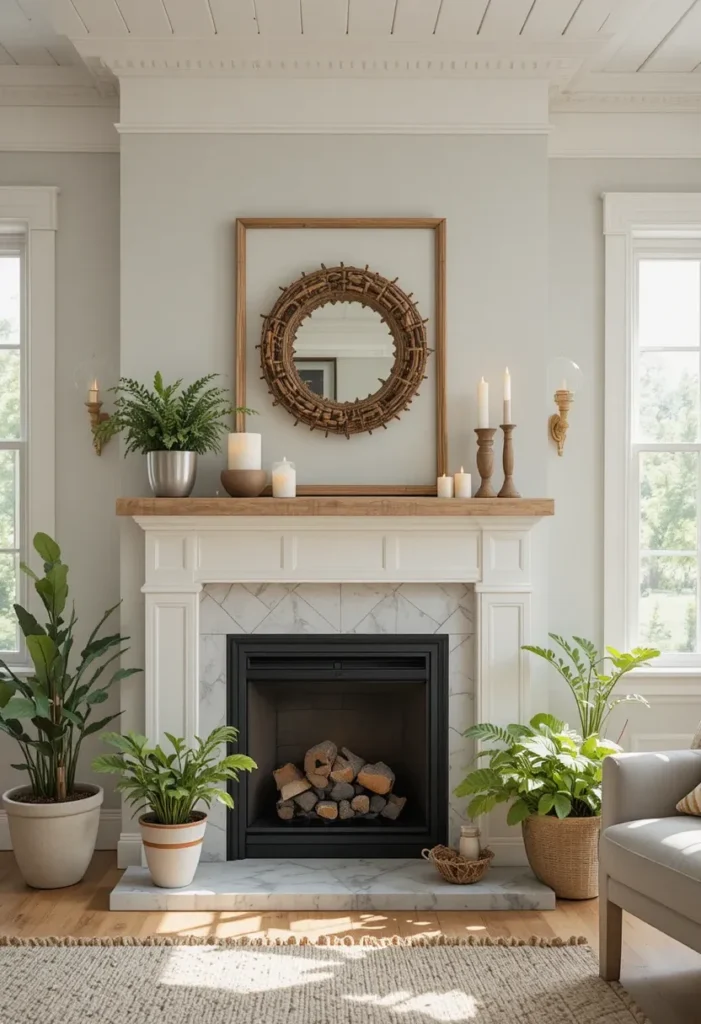
Some people only think about the fireplace during winter. Then it feels forgotten the rest of the year.
It works when the space feels useful in every season.
Practical tip: In warmer months, style the fireplace with candles, plants, or stacked books. If it’s non-working, consider adding a decorative screen or lanterns inside for visual interest.
Conclusion
When designing a living room with a fireplace, the goal isn’t perfection. It’s clarity.
Think about how you actually use the room. Do you gather there at night? Watch movies? Host friends? Your layout and styling should support real life, not just look good in theory.
Most common mistakes—tiny rugs, furniture pushed against walls, overcrowded mantels—are easy to fix once you notice them. Start with one change. Rearrange a chair. Edit the mantel. Add a lamp.
Small adjustments often make the biggest difference.
A well-designed fireplace living room doesn’t feel staged. It feels balanced, comfortable, and quietly inviting. When you walk in and instinctively want to sit down—that’s when you know you’ve done it right.