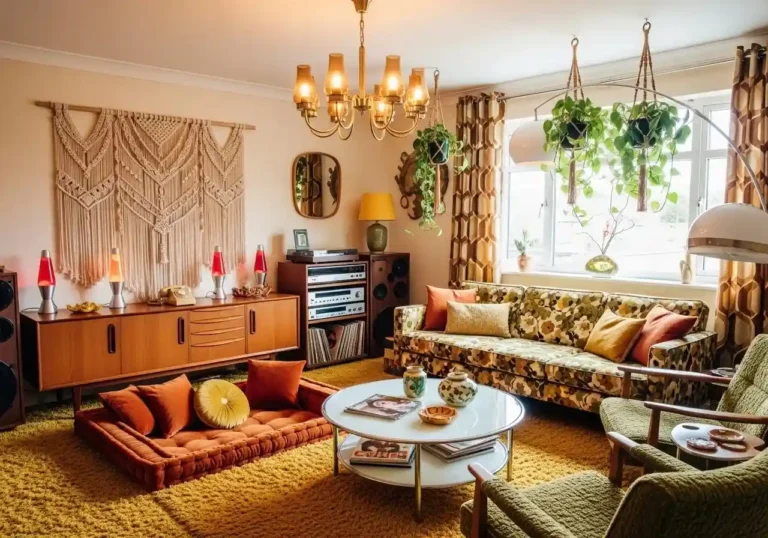
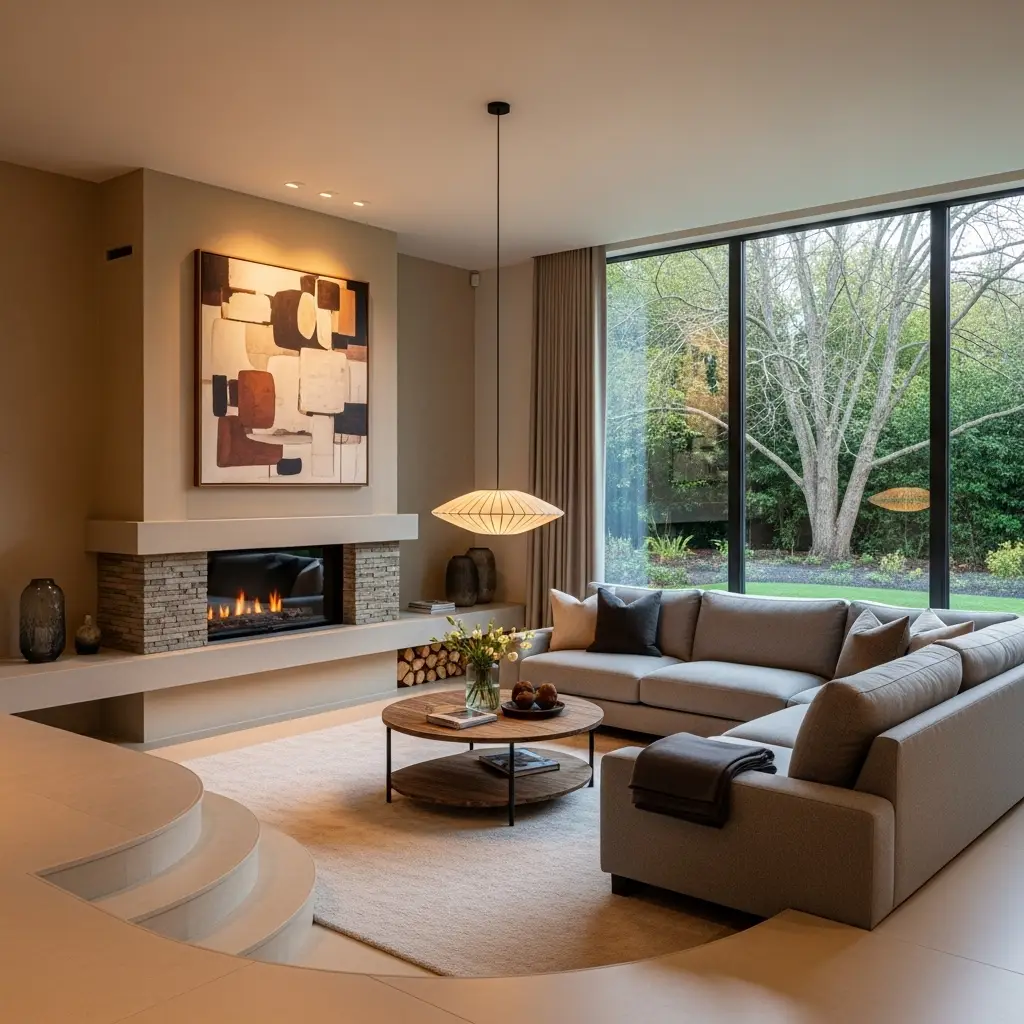
Sunken Living Room: 20 Thoughtful Ideas to Design a Cozy Conversation Pit
A sunken living room instantly makes a home feel layered and intentional, creating natural separation without adding walls. By lowering the seating area just a few steps, you introduce intimacy and architectural interest in a subtle way. However, without thoughtful planning, it can feel awkward or impractical. The difference between cozy and uncomfortable often comes down to proportions, lighting, and layout choices that truly support how you live — and that’s exactly what the next 20 ideas will help you get right.
1. Choose a Comfortable Drop Height
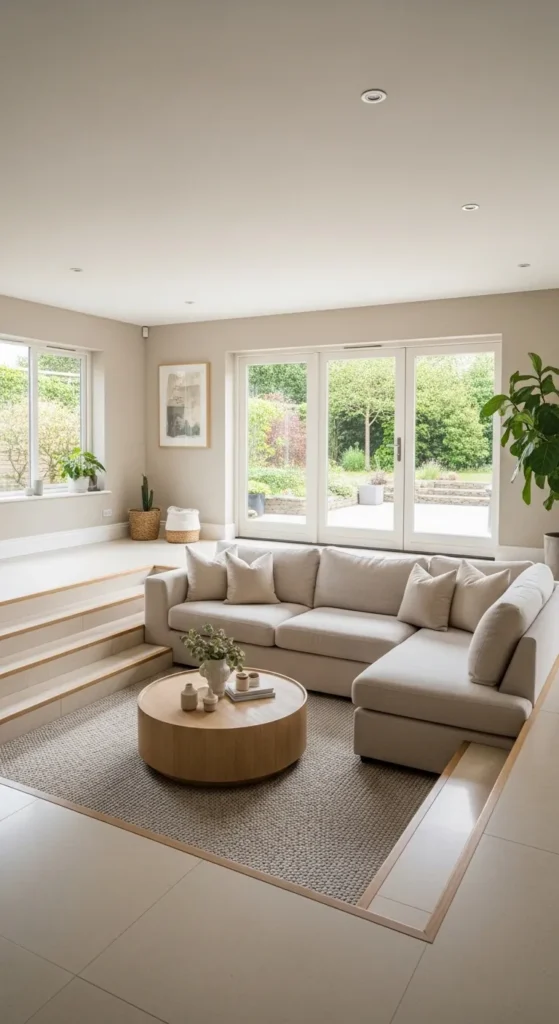
A sunken living room is defined by a lowered floor, usually one to three steps below the main level. The depth determines how the space feels.
It works because the change in level creates psychological separation, making the area feel special without closing it off.
Tip: Aim for a 14–20 inch drop for comfort and safety.
Mistake to avoid: Going too deep. Large drops can feel dramatic but may disrupt conversation flow and create safety concerns.
2. Clearly Define the Step Edge
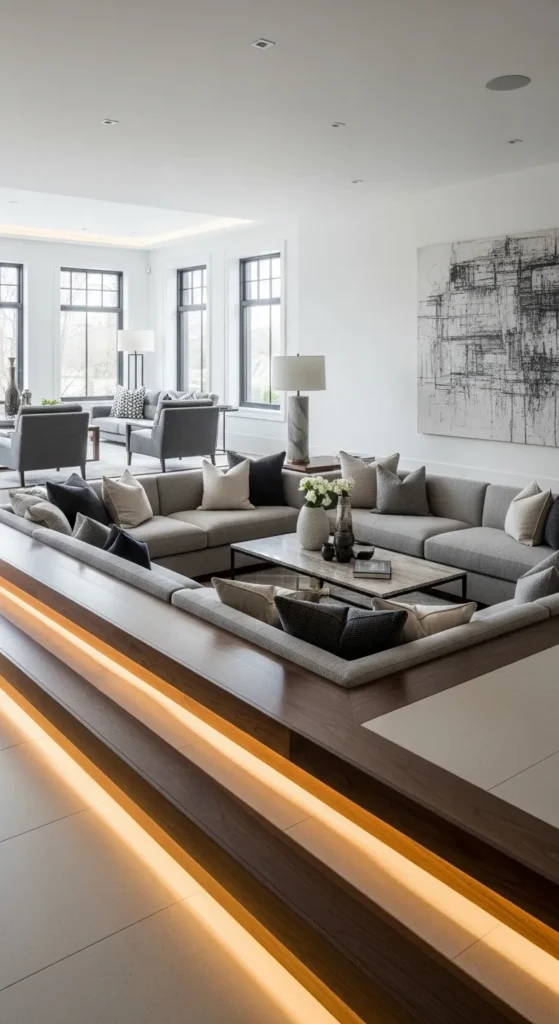
The transition between levels should be visually obvious. This can be done with contrasting materials, trim, or subtle lighting. Defined edges work because they help guests instinctively understand where the level changes.
Tip: Use a slightly darker wood or tile border along the edge.
Common mistake: Blending both floors too closely in color, which increases tripping risk.
3. Design Wide, Inviting Steps
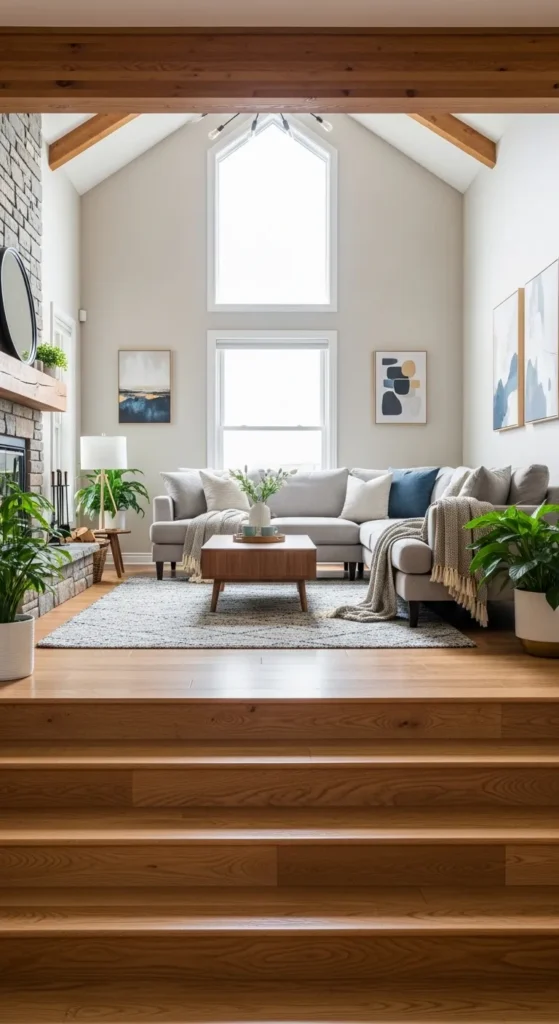
Steps are more than functional — they shape the first impression of the space. Wide steps feel welcoming and allow multiple people to enter comfortably at once.
Tip: Keep steps shallow and broad rather than narrow and steep.
Avoid overly tall risers, which make movement awkward and uncomfortable, especially for children or older family members.
4. Use Built-In Seating for Structure
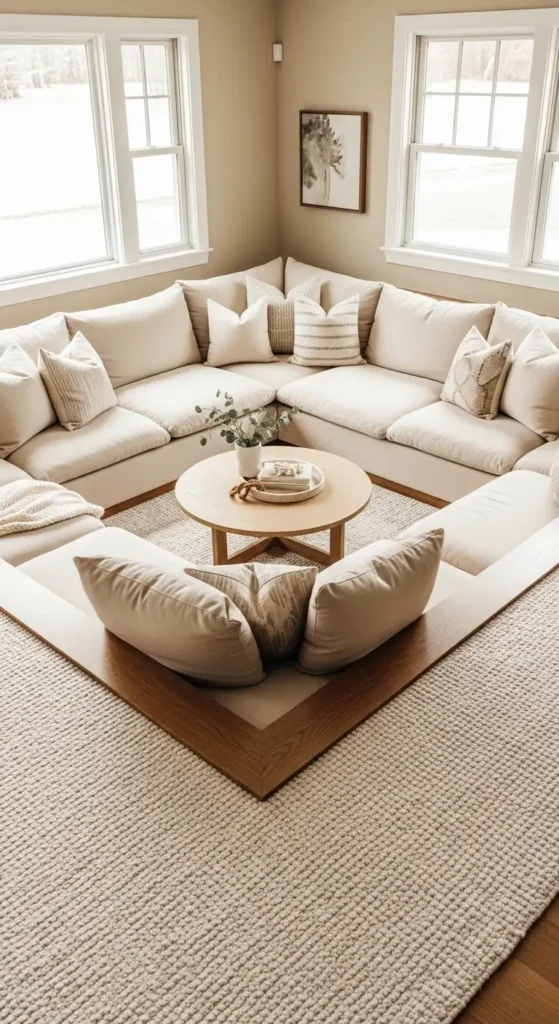
Built-in benches or wraparound sofas are classic features of sunken living rooms. They define the perimeter and maximize seating. It works because built-ins make the space feel intentional and architectural.
Tip: Add hidden storage beneath the seating for blankets or board games.
Mistake: Forgetting cushion depth. Seats that are too shallow or firm quickly become uncomfortable.
5. Anchor Everything with a Large Rug
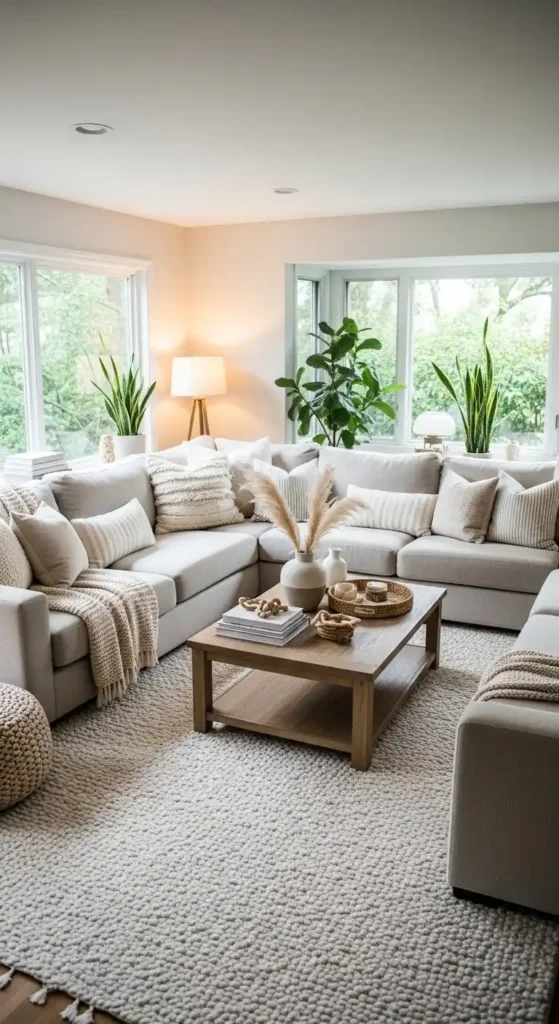
A rug helps visually gather furniture within the lowered zone. It works because layering texture inside an already lowered area reinforces the feeling of a defined room within a room.
Tip: Choose a rug large enough for all major furniture legs to sit on it.
Mistake: Using a small rug that floats in the center and breaks visual cohesion.
Also Read This Blog: Living Room with Fireplace: 15 Smart Design Ideas
6. Layer the Lighting Thoughtfully
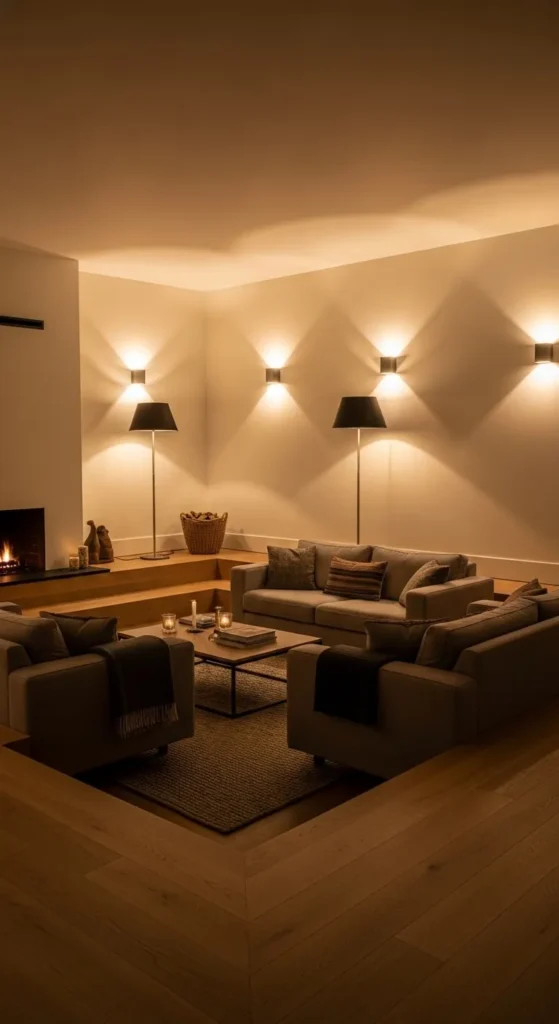
Sunken spaces naturally sit lower than overhead light sources, which can cast shadows. Layered lighting — including floor lamps, sconces, and table lamps — softens those shadows and adds warmth.
Tip: Install dimmers to adjust brightness depending on time of day.
Avoid relying only on recessed ceiling lights, which can make the area feel flat and cold.
7. Keep Sightlines Open
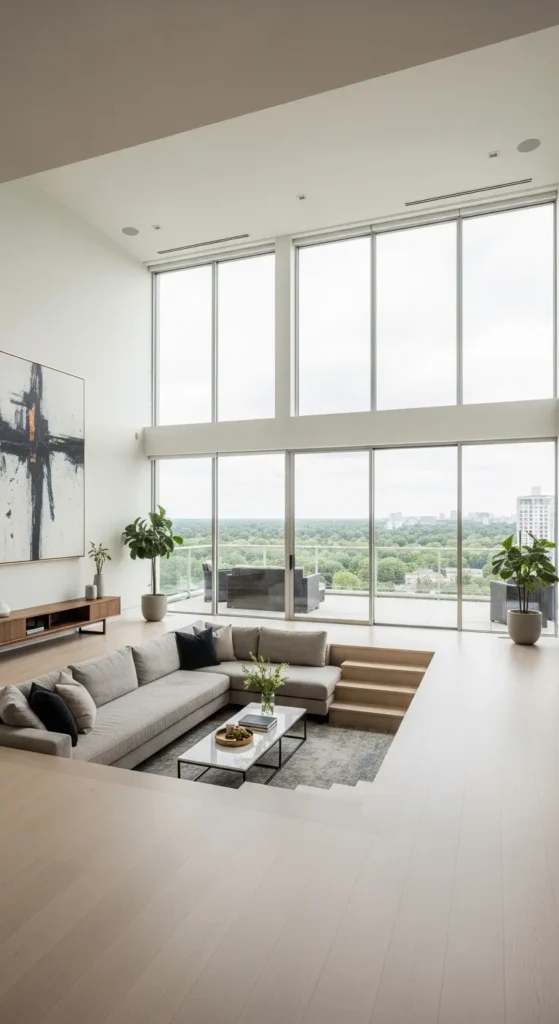
A sunken living room should feel connected to the rest of the home, not hidden. Low-profile furniture helps maintain open views to windows and adjacent spaces.
Tip: Choose sofas with lower backs and avoid bulky shelving around the perimeter.
Mistake: Placing tall cabinets at the edge, which blocks light and makes the area feel boxed in.
Also Read This Blog: Open Layout Living Room Dining Room: 15 Ideas to Design Your Space
8. Embrace Soft, Cozy Materials
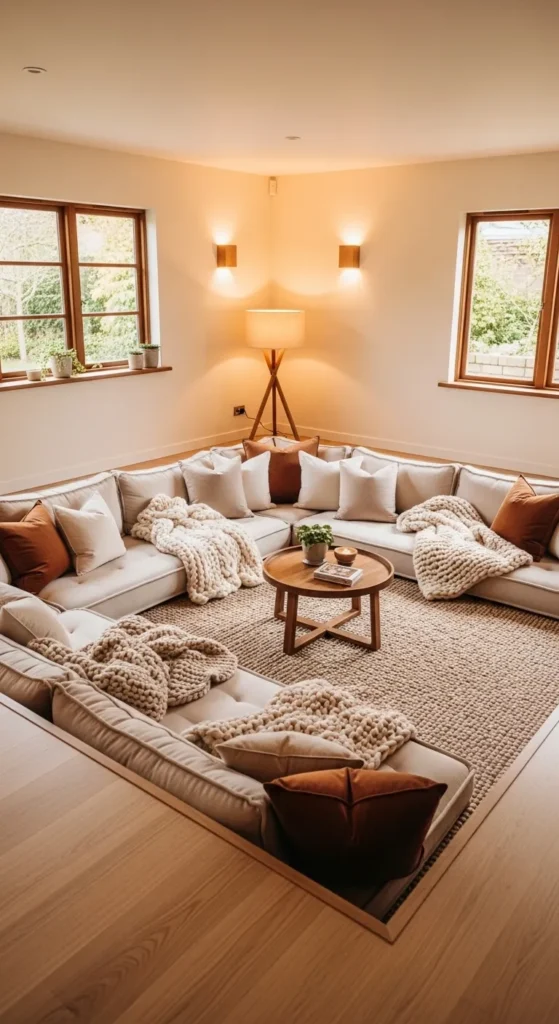
Because the space is naturally intimate, texture enhances its comfort. Layered fabrics like linen, velvet, or chunky knits make the area feel inviting and relaxed.
Tip: Mix two to three textures rather than matching everything exactly.
Avoid overly sleek leather or hard finishes everywhere — too many smooth surfaces can make the room feel cold.
9. Balance Ceiling Height with Vertical Elements
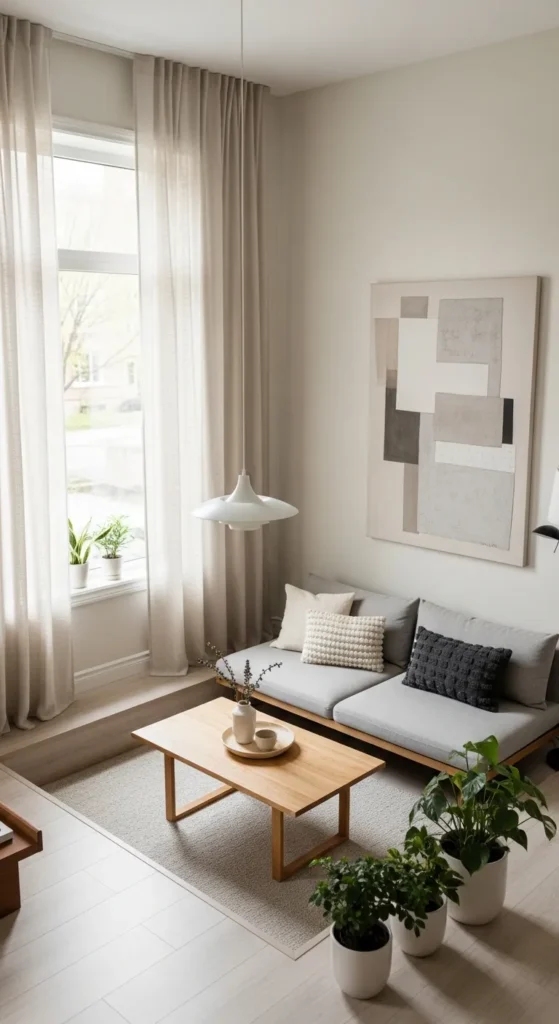
If the ceiling isn’t especially high, lowering the floor can create a compressed feeling. It works best when you draw the eye upward to balance the drop.
Tip: Hang curtains closer to the ceiling line and incorporate tall plants or artwork.
Mistake: Painting the ceiling dark in a room that already feels low, which intensifies heaviness.
10. Arrange Seating for Conversation First
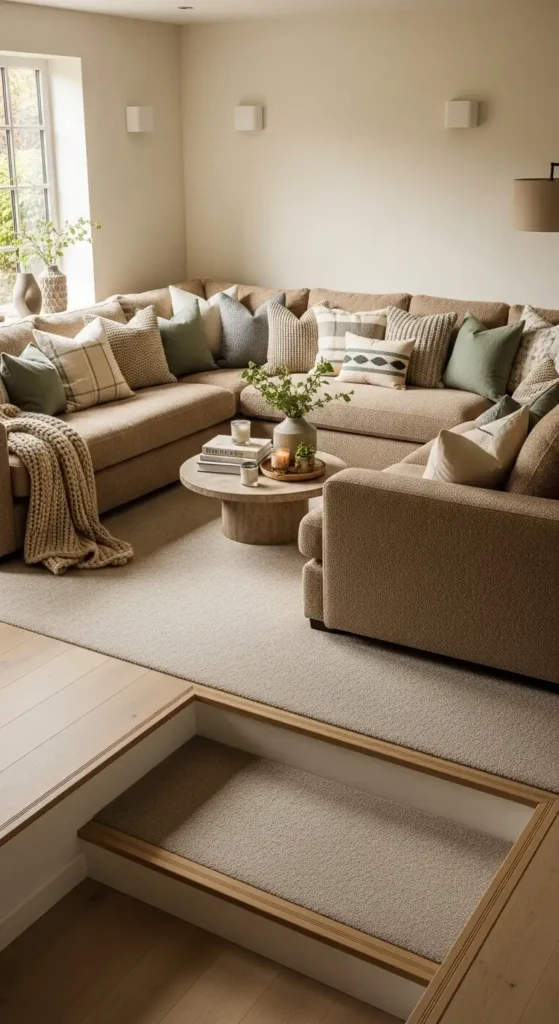
The original purpose of a sunken living room was connection. Seating should encourage face-to-face interaction. Inward-facing arrangements make conversations natural and inclusive.
Tip: Arrange sofas in a U-shape or square rather than lining everything along one wall.
Common mistake: Orienting all furniture toward the television. While a TV can exist, the layout should still support easy conversation.
11. Add a Central Coffee Table That Grounds the Space
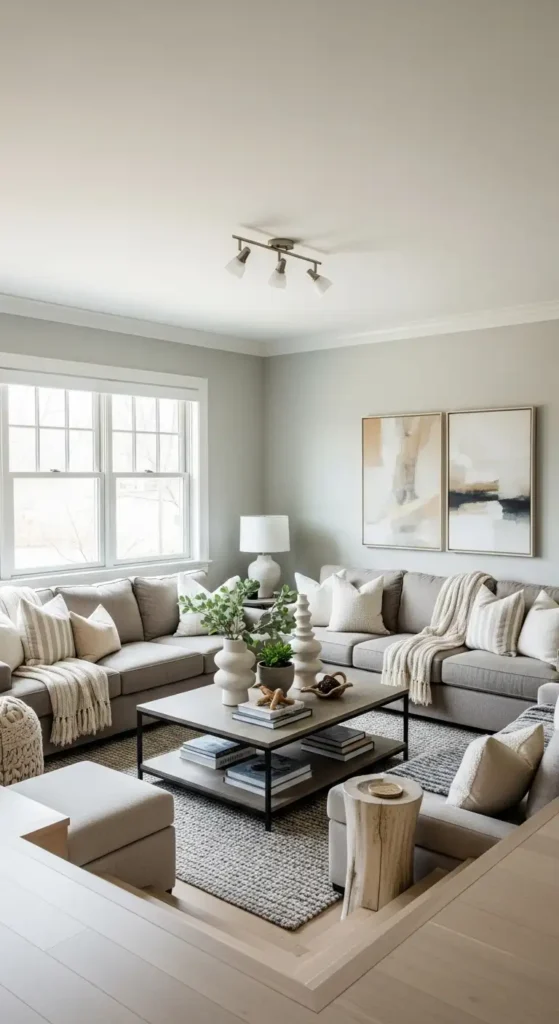
A sunken living room naturally draws people inward. A central coffee table strengthens that pull and anchors the seating arrangement.
It works because it gives everyone a shared surface for drinks, books, or decor, reinforcing the “conversation pit” feeling.
Tip: Choose a table proportional to the seating — large enough to reach from every seat.
Mistake to avoid: Picking a tiny table that looks lost in the lowered space or one with sharp corners that interrupt flow.
Also Read This Blog: Living Room Kitchen Open Concept: 15 Ideas to Design Your Space
12. Consider a Subtle Railing for Safety
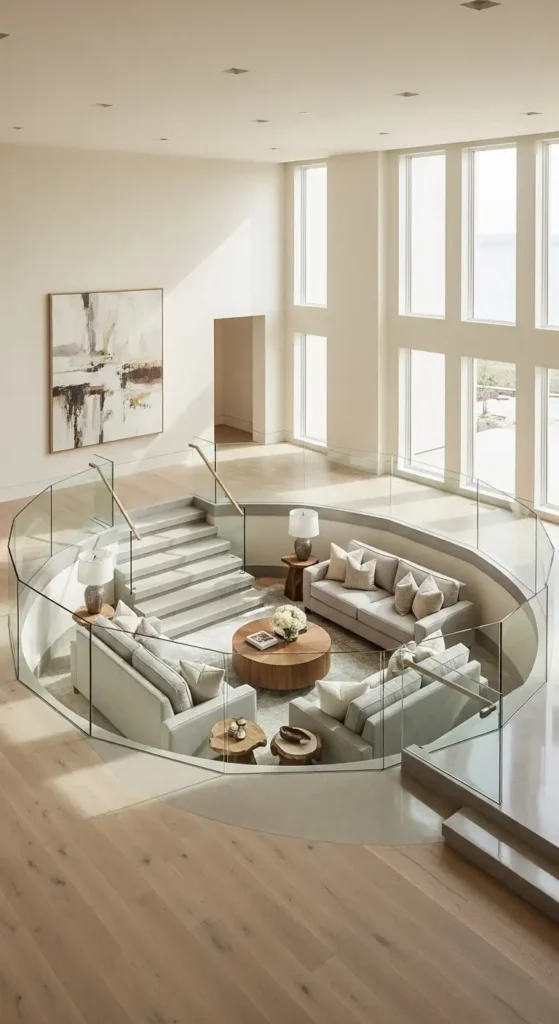
In open-concept homes, a discreet railing or half-wall can define the drop without closing it off. This works especially well in family homes, adding safety without sacrificing openness.
Tip: Use glass panels or slim metal rails to keep sightlines clear.
Common mistake: Installing bulky barriers that make the space feel like a separate room rather than a connected feature.
13. Use Flooring to Reinforce Warmth
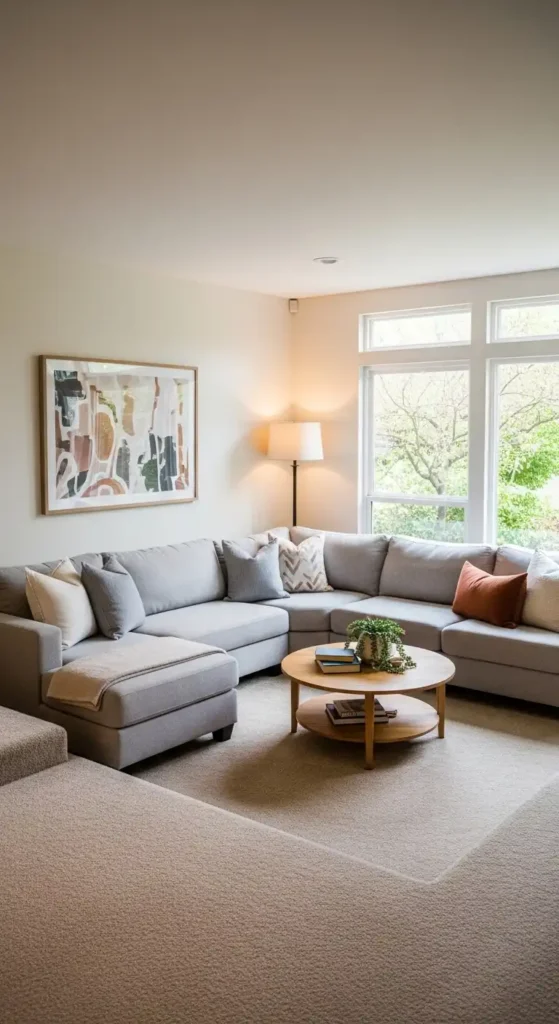
The flooring inside the sunken area should feel slightly softer or warmer than the surrounding space. It works because the lowered zone is meant to feel comfortable and inviting.
Tip: Consider carpet, engineered wood with a rug, or cork flooring for warmth.
Mistake: Using cold tile or polished stone without enough soft layering — it undermines the cozy atmosphere.
14. Create a Focal Point That Feels Balanced
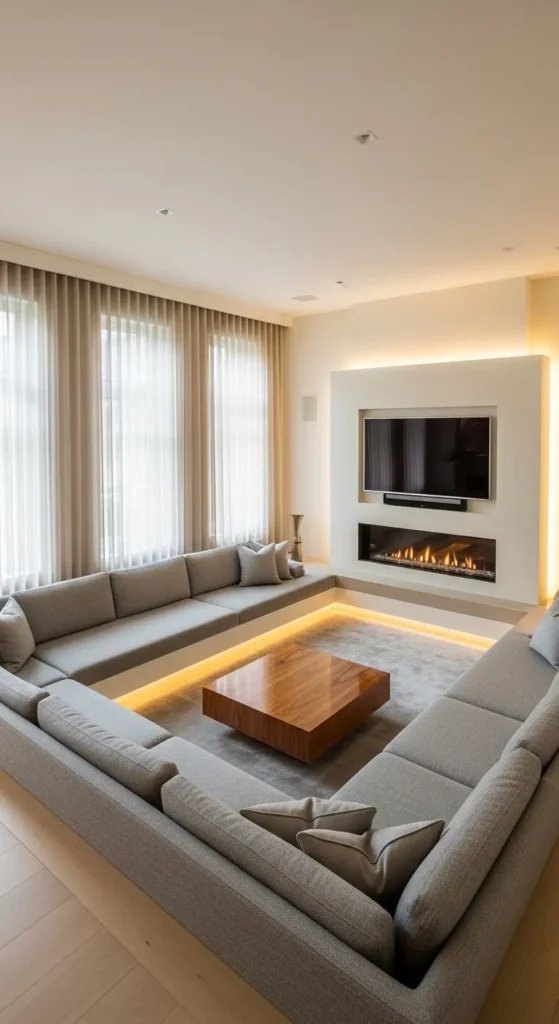
Every living room needs a focal point — a fireplace, a large window, or a thoughtfully placed media unit. In a sunken layout, the focal point should feel proportionate to the depth.
Tip: Keep fireplaces or built-ins aligned with the lowered floor level.
Avoid mounting a television too high above the upper floor line, which creates awkward viewing angles.
Also Read This Blog: 16 Accent Chairs for Living Room: 16 Ideas to Add Style and Function
15. Keep Furniture Low and Streamlined
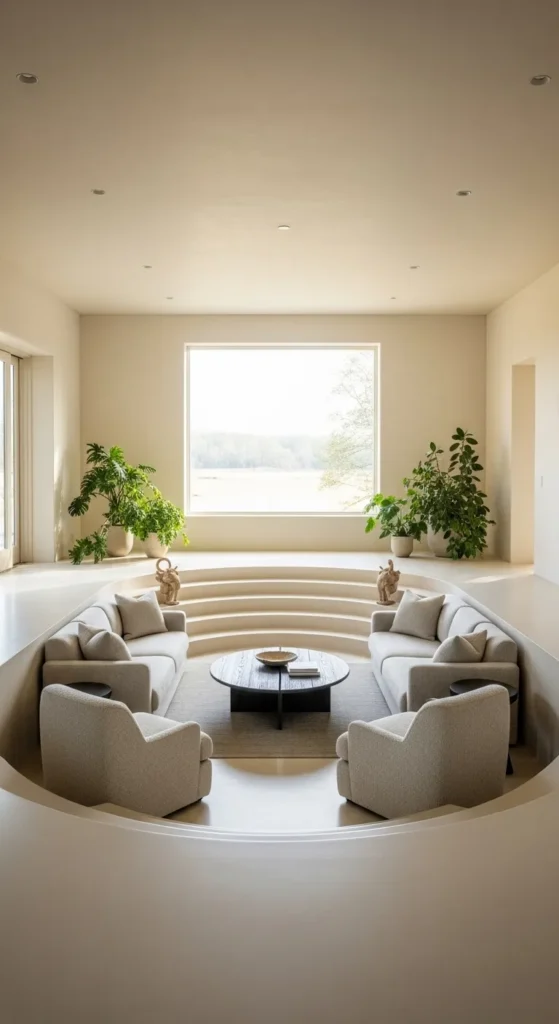
Because the space already sits lower, tall furniture can visually crowd it. Low-profile sofas and chairs maintain openness and help the area feel relaxed rather than heavy.
Tip: Look for pieces with visible legs to create a lighter visual footprint.
Mistake: Choosing oversized recliners or high-back sectionals that block light and sightlines.
16. Make Transitions Feel Natural
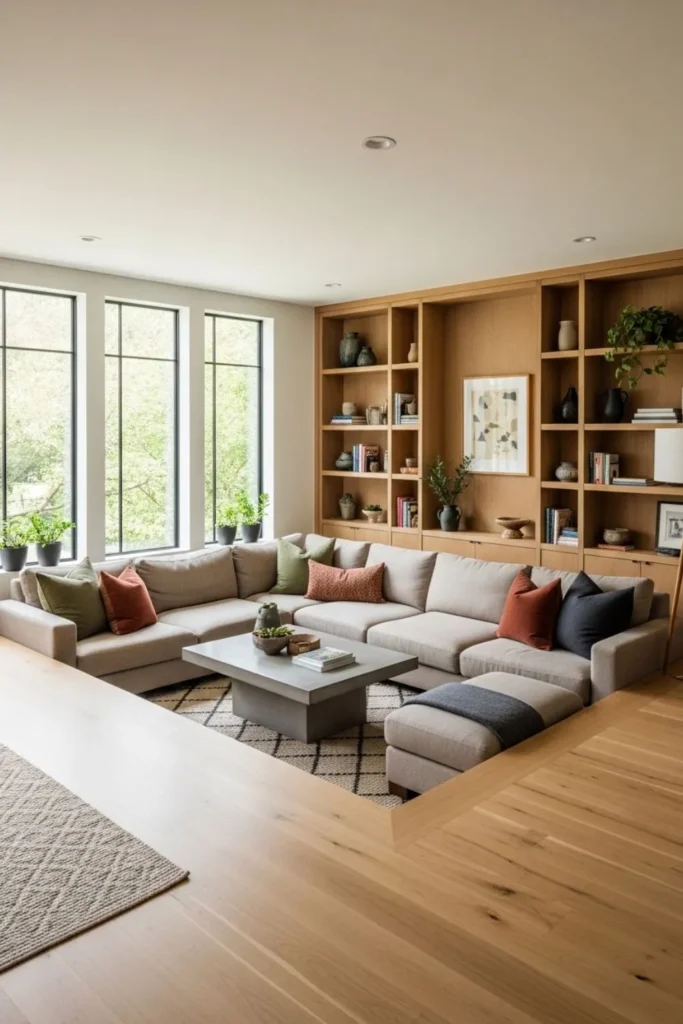
The surrounding space should flow gently into the sunken area. Abrupt material or color changes can feel disconnected. It works best when there’s harmony between levels.
Tip: Repeat at least one element — color, wood tone, or fabric — in both spaces.
Common mistake: Treating the sunken living room as a completely different design style, which makes it feel visually isolated.
17. Plan for Acoustic Comfort
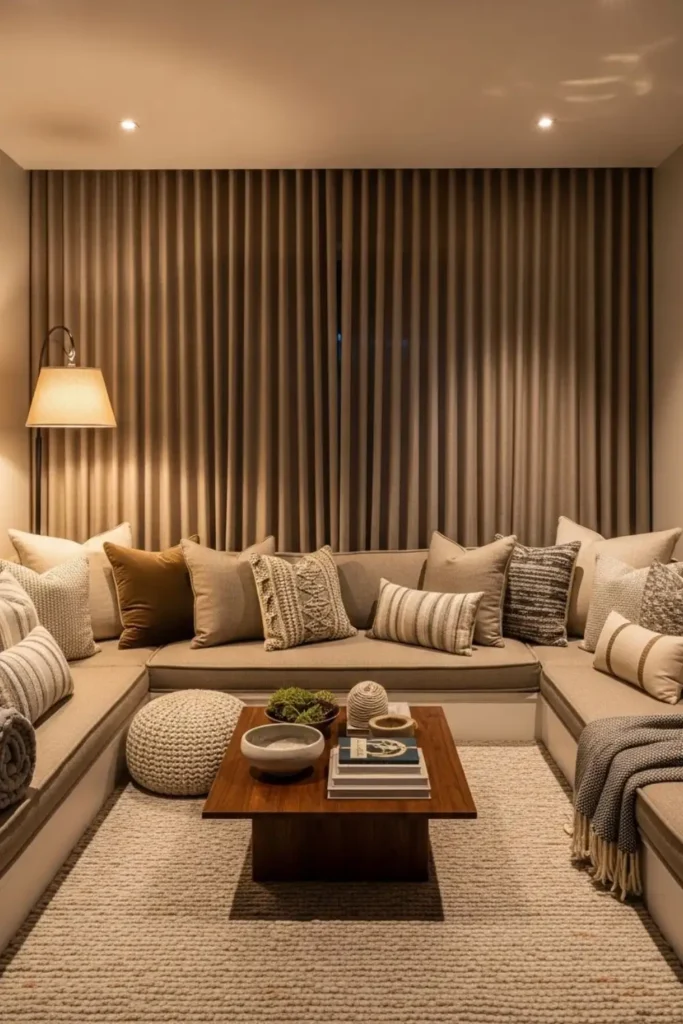
Lowered spaces can sometimes trap sound, especially in open-plan homes. Soft furnishings absorb noise and keep conversations comfortable.
Tip: Add upholstered seating, thick curtains, and layered textiles to soften echoes.
Mistake: Leaving the area too minimal with hard surfaces everywhere, which makes the space feel louder than expected.
Also Read This Blog: 16 Paint Colors for Living Room That Feel Warm, Stylish, and Timeless
18. Think About Long-Term Accessibility
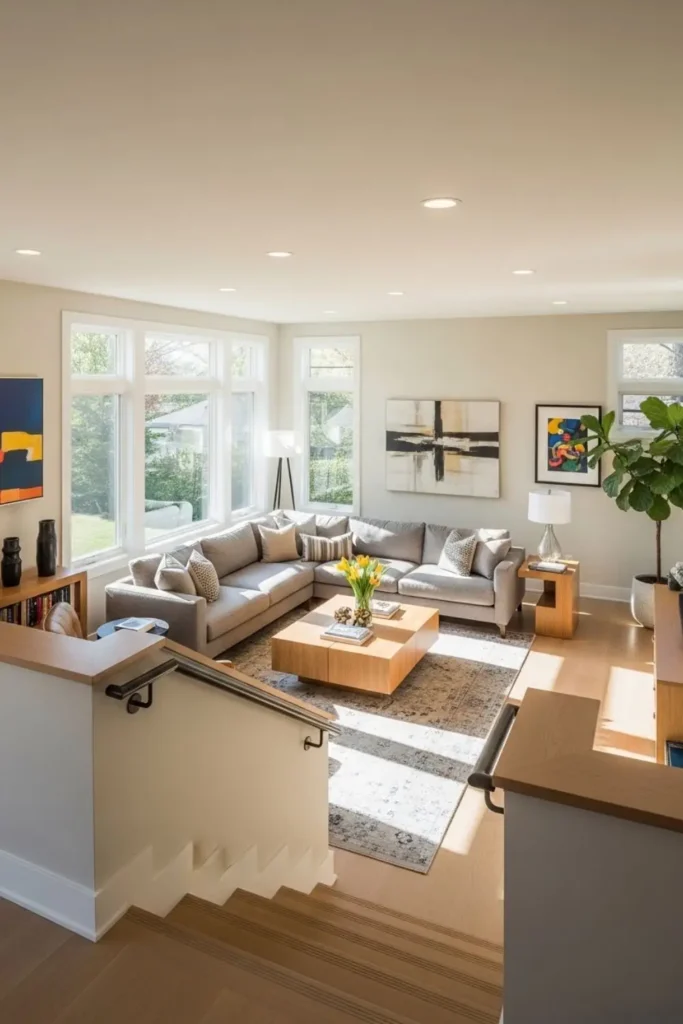
Sunken living rooms are beautiful, but mobility needs can change over time. Considering accessibility early prevents future frustration.
Tip: Ensure at least one wide, easy-to-navigate entry point with sturdy hand support if needed.
Mistake: Designing only for aesthetics without thinking about aging family members or guests.
19. Use Decor to Emphasize Intimacy
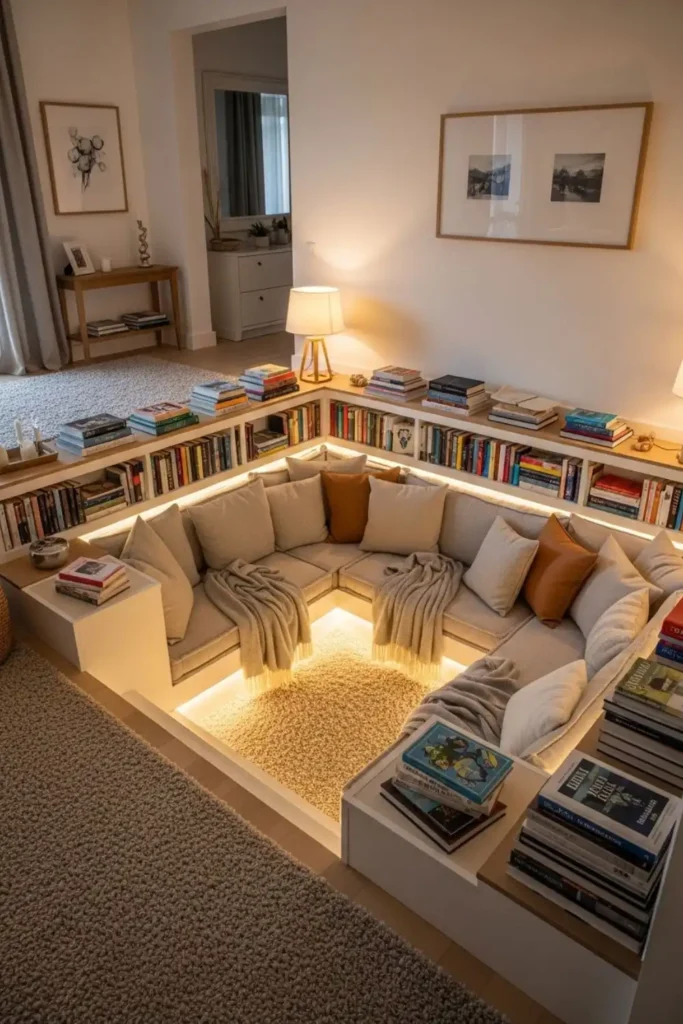
Decor inside the sunken space should feel slightly more personal and relaxed than the surrounding area. This works because the lowered design already signals “gather here.”
Tip: Add books, soft lighting, and layered cushions that encourage lingering.
Avoid over-decorating with fragile or overly formal pieces that discourage comfortable use.
20. Keep Proportions Balanced with the Rest of the Home
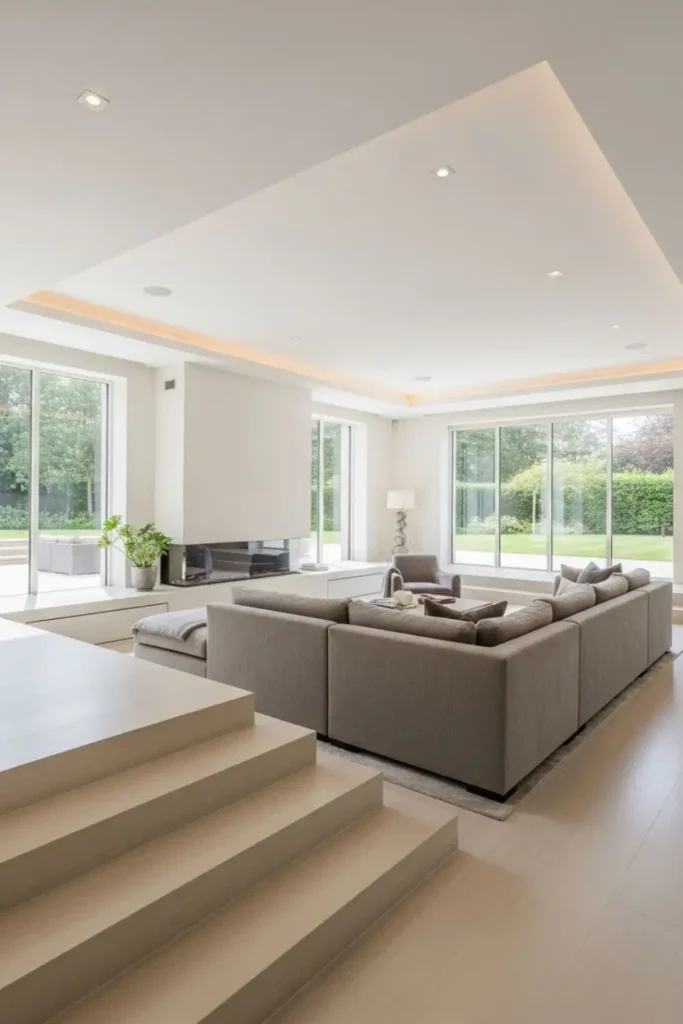
A sunken living room should enhance the home’s architecture, not overpower it. It works best when the size of the lowered area feels proportionate to the overall room.
Tip: Leave enough walking space around the upper perimeter so traffic flows smoothly.
Common mistake: Making the sunken zone too large, which reduces circulation space and makes the upper level feel cramped.
Bringing It All Together
A well-designed sunken living room feels intentional, warm, and naturally social. The level change adds architectural interest, but the success of the space depends on thoughtful details — safe transitions, balanced proportions, comfortable seating, and layered lighting.
When each element works together, the sunken living room becomes more than a design feature. It becomes the place where conversations linger, guests gather, and everyday life feels just a little more connected.