Accent Walls in Living Room: 15 Stylish Ideas That Actually Work
A plain living room can feel unfinished, even when the furniture is beautiful. Accent walls in living room spaces solve that problem by creating a clear focal point. They add depth, contrast, and personality without requiring a full renovation. If you’ve ever felt like your room looks “flat” but you’re not sure why, the right accent wall can quietly fix that.
Here are 15 practical ideas to help you choose one with confidence.
Bold Paint Color Accent Wall
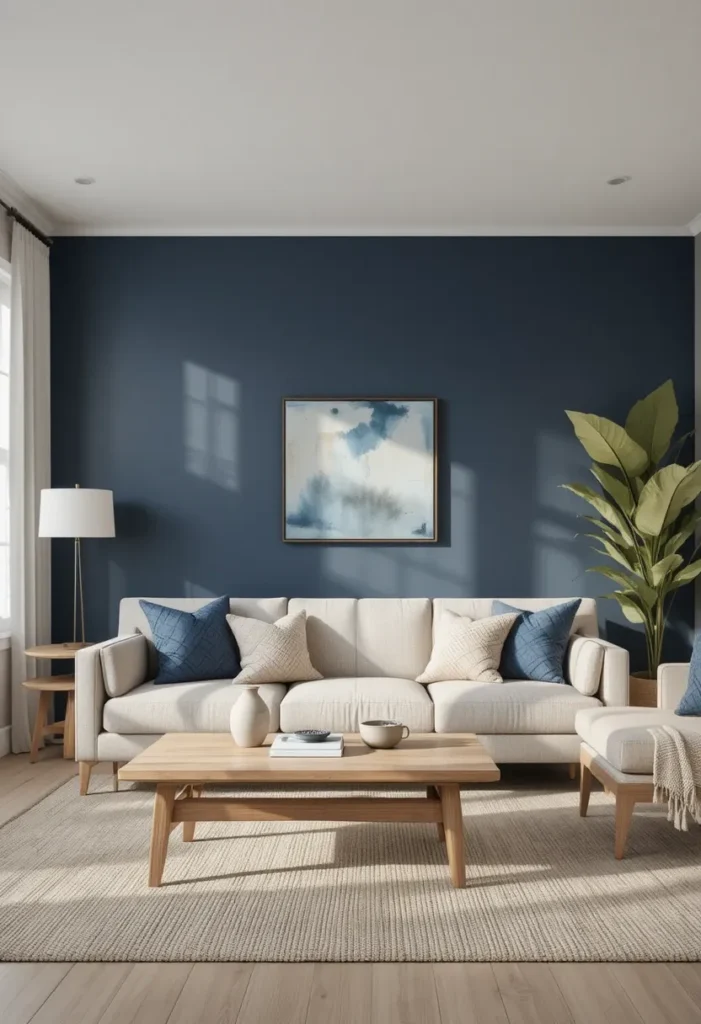
This is the simplest version of accent walls in living room design: painting one wall a deeper or contrasting color. It works because it immediately draws the eye and gives the room structure. Instead of everything blending together, one wall becomes intentional.
It’s especially effective behind a sofa or TV unit. That placement naturally supports a focal point and prevents the color from feeling random.
Tip: Choose a shade already present in your decor, even subtly. Avoid picking a trendy color that clashes with your flooring or furniture.
Soft Neutral Contrast Wall
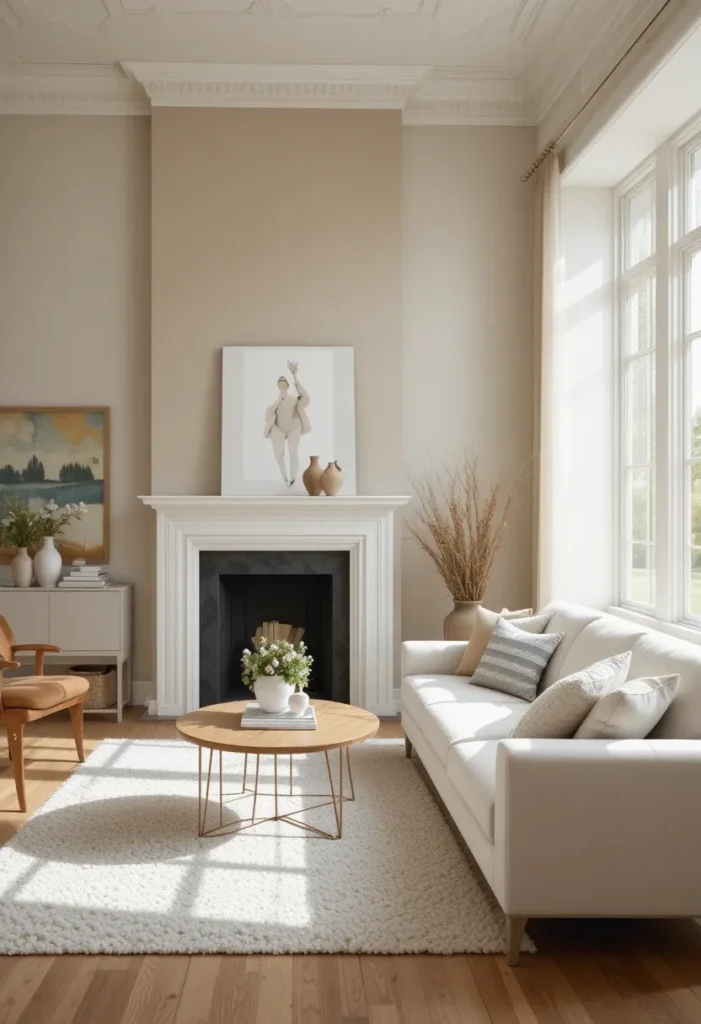
Not every accent wall needs drama. A slightly darker beige, greige, or warm taupe can add dimension without overwhelming the room. This works well if your space already feels calm and you want subtle depth.
Soft contrast creates layers. It makes white trim and lighter furniture stand out gently.
Tip: Test paint samples in daylight and evening light. Subtle tones shift more than you expect, and lighting changes everything.
Vertical Wood Slat Wall
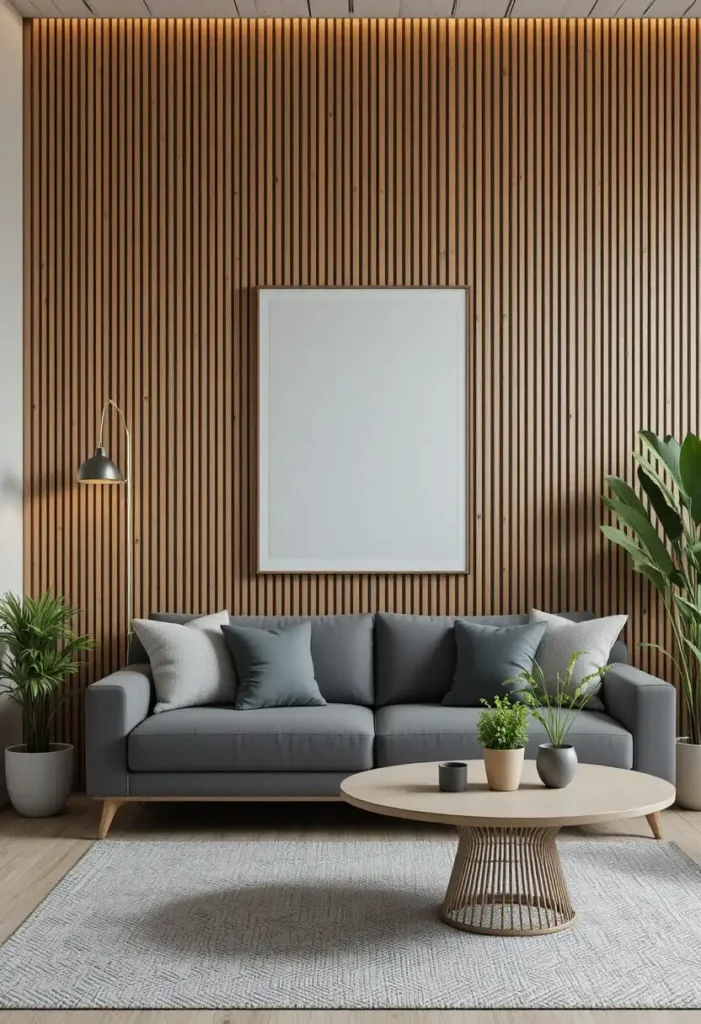
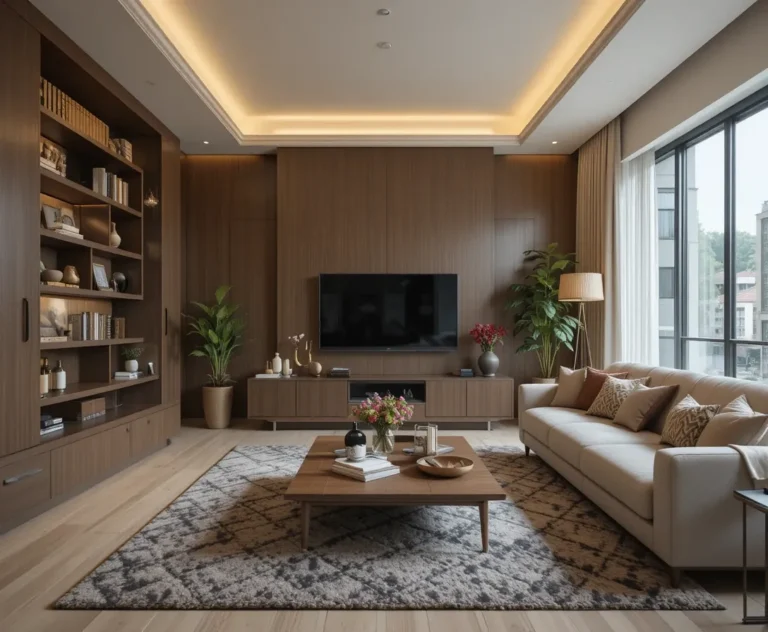
Wood slats add texture and warmth while keeping a modern feel. They work because vertical lines visually lift the ceiling, making the room feel taller.
This idea fits especially well in contemporary or Scandinavian-inspired spaces.
Tip: Keep spacing even and choose wood tones that match your flooring undertones. Mixing warm and cool woods can feel unintentionally mismatched.
Shiplap or Paneling Accent Wall
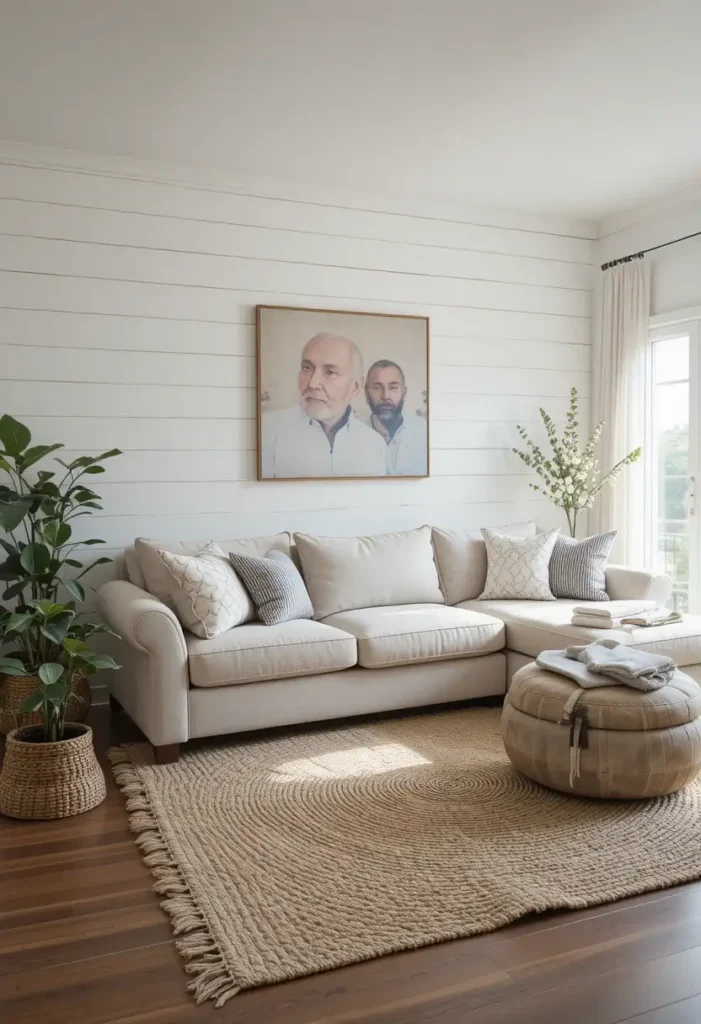
Paneling adds architectural detail to otherwise flat walls. It works because it introduces structure and subtle shadow lines that create depth.
This is ideal if your living room feels too plain but you don’t want bold color.
Tip: Paint the paneling the same color as the wall for a refined look. Contrast trim only if you want stronger definition.
Also Read This Blog: 15 Living Room Remodel Ideas That Actually Improve How the Space Feels
Stone or Faux Stone Feature Wall
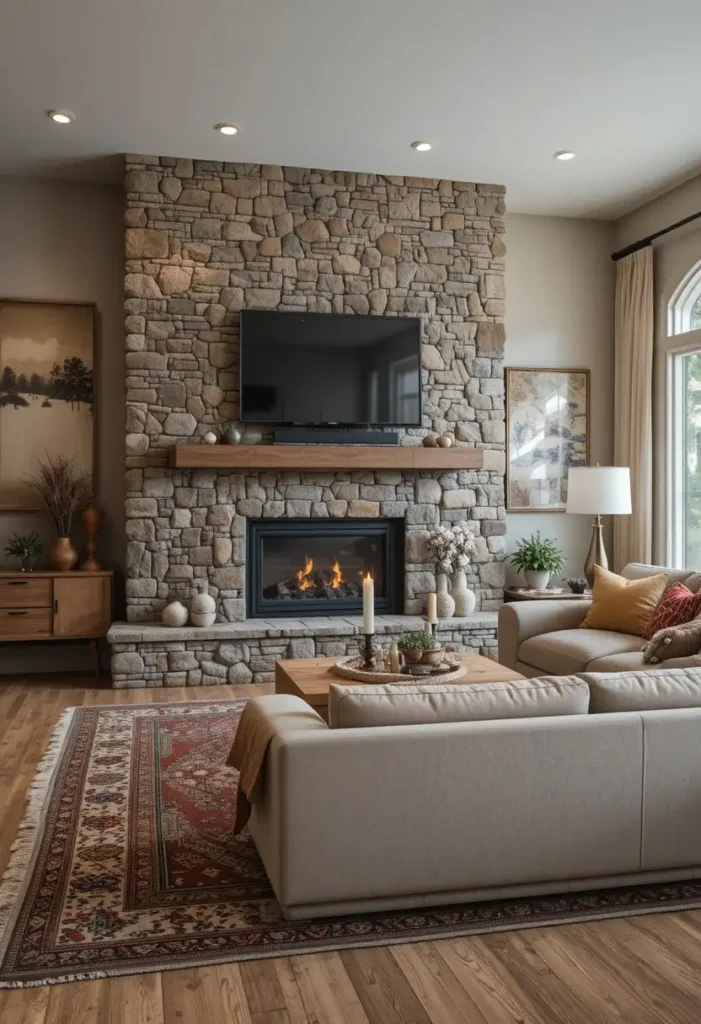
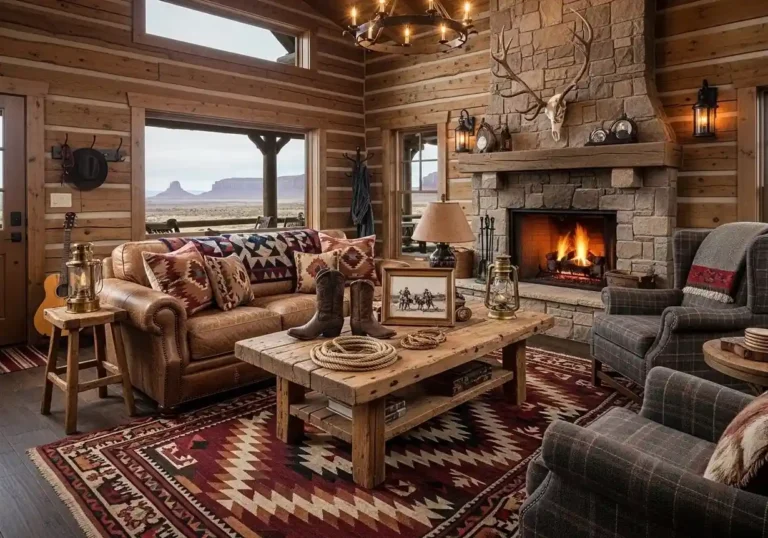
A stone accent wall creates a grounded, cozy feeling. It works well around fireplaces or as a TV backdrop because it naturally draws attention.
Texture is the key here. Even faux stone can feel convincing if installed carefully.
Tip: Balance heavy stone with soft textiles like rugs and curtains. Too many hard surfaces can make the room feel cold.
Wallpaper Accent Wall
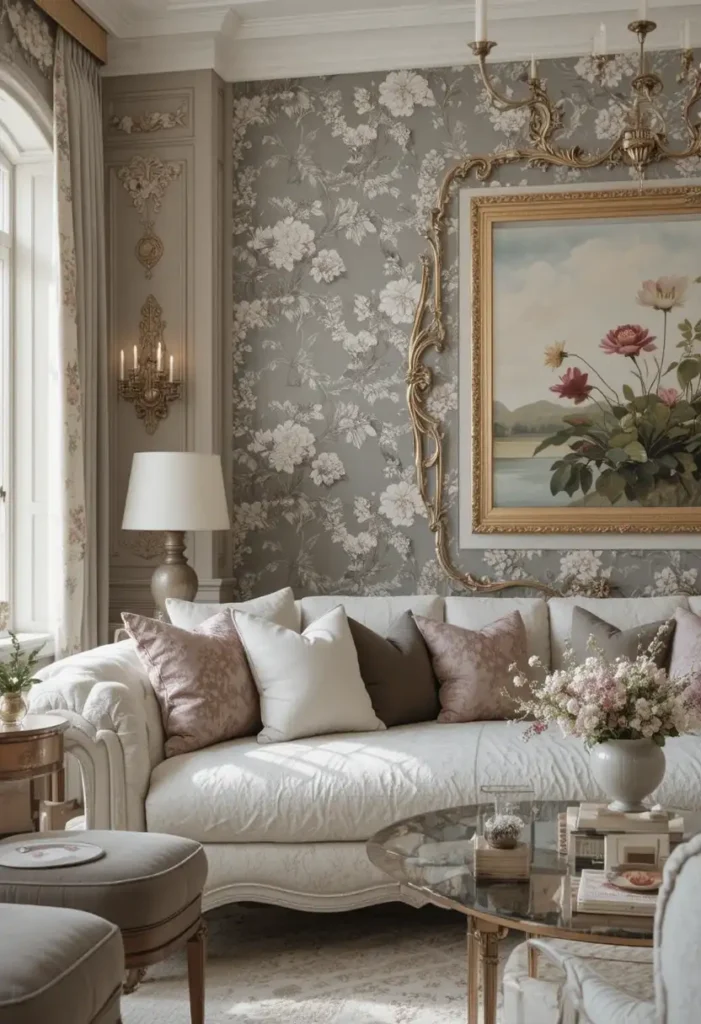
Wallpaper allows pattern without committing to all four walls. It works because it adds personality and movement in a contained way.
Floral, geometric, or abstract prints can transform a plain living room instantly.
Tip: Avoid overly busy patterns in small rooms. Large-scale designs often feel cleaner than tiny repetitive prints.
Dark Moody Accent Wall
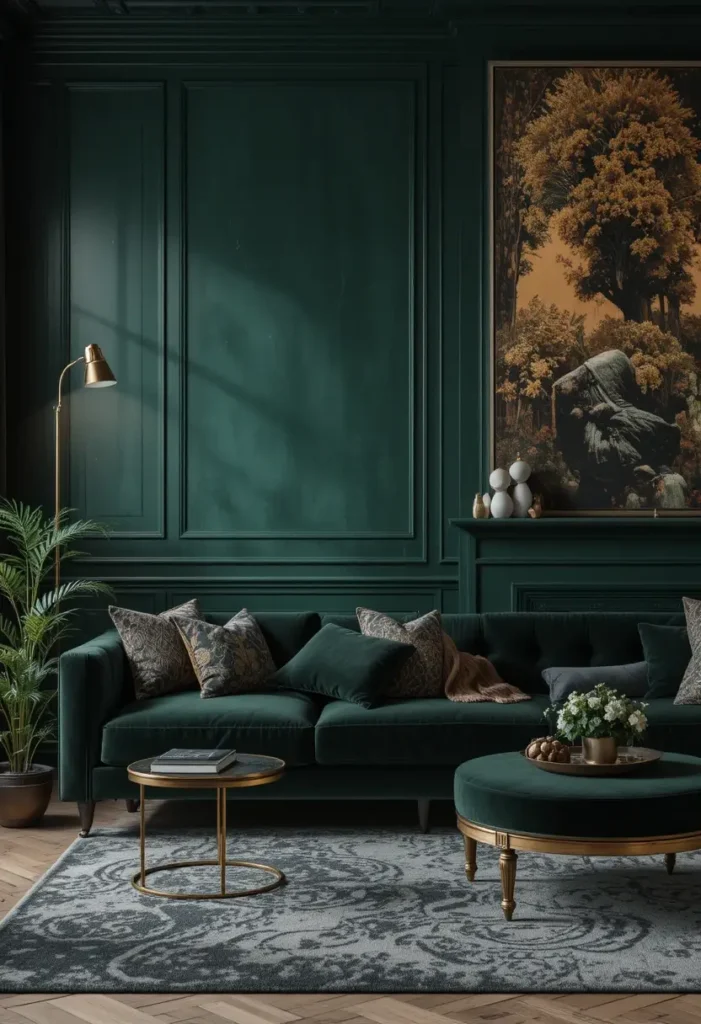
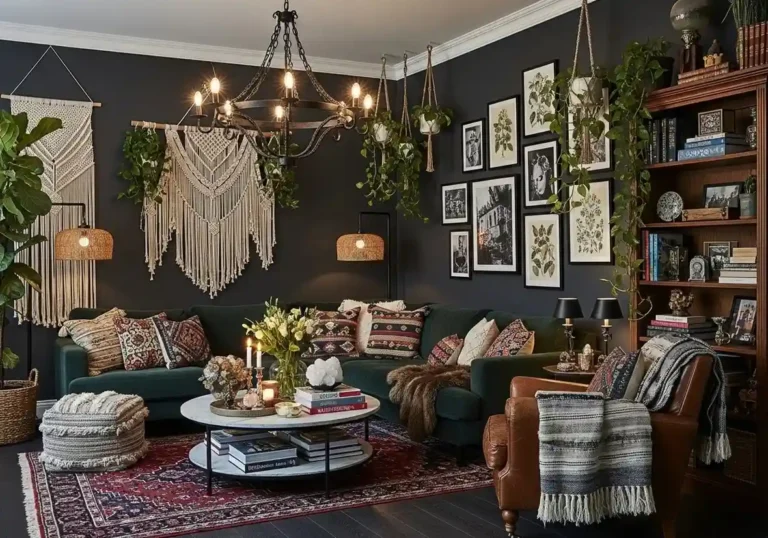
Deep navy, charcoal, or forest green creates drama and intimacy. This works especially well in larger living rooms that feel too open or empty.
Dark colors visually pull the wall inward, making the space feel cozier.
Tip: Make sure the room has enough lighting. Without good lighting, dark walls can look flat rather than rich.
Built-In Shelving Accent Wall
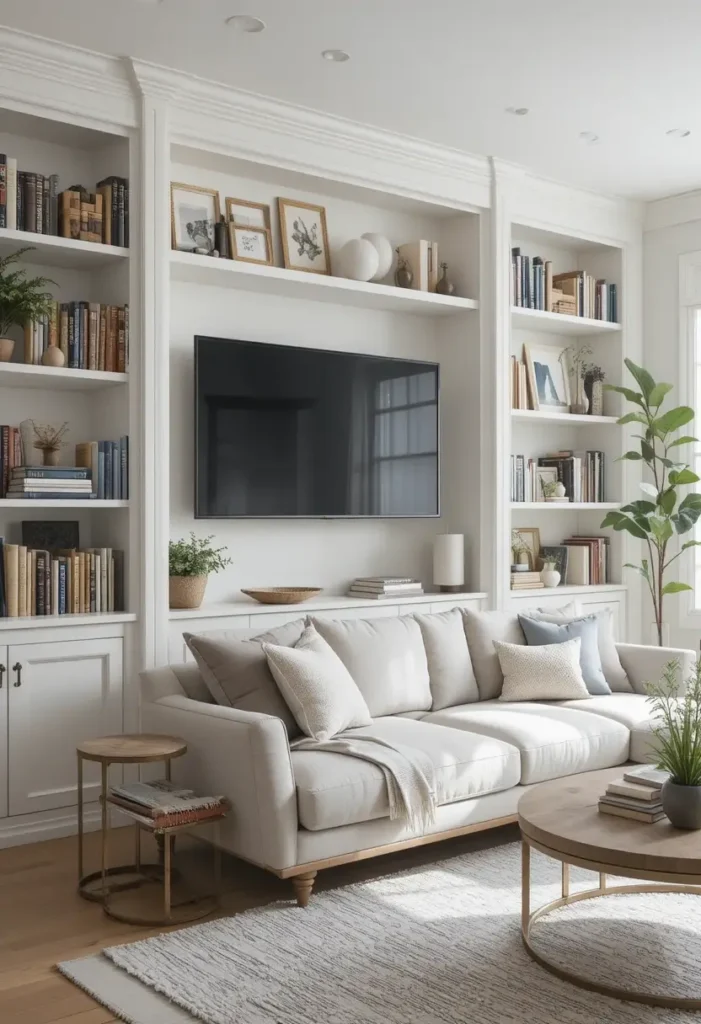
Built-ins turn a wall into both storage and design. They work because they combine function with visual structure.
Books, decor, and plants add layered interest while keeping clutter controlled.
Tip: Leave some empty space on shelves. Overstyling makes the wall look chaotic instead of curated.
Also Read This Blog: Area Rugs in Living Room: 15 Ideas to Transform Your Space
Fireplace-Centered Accent Wall
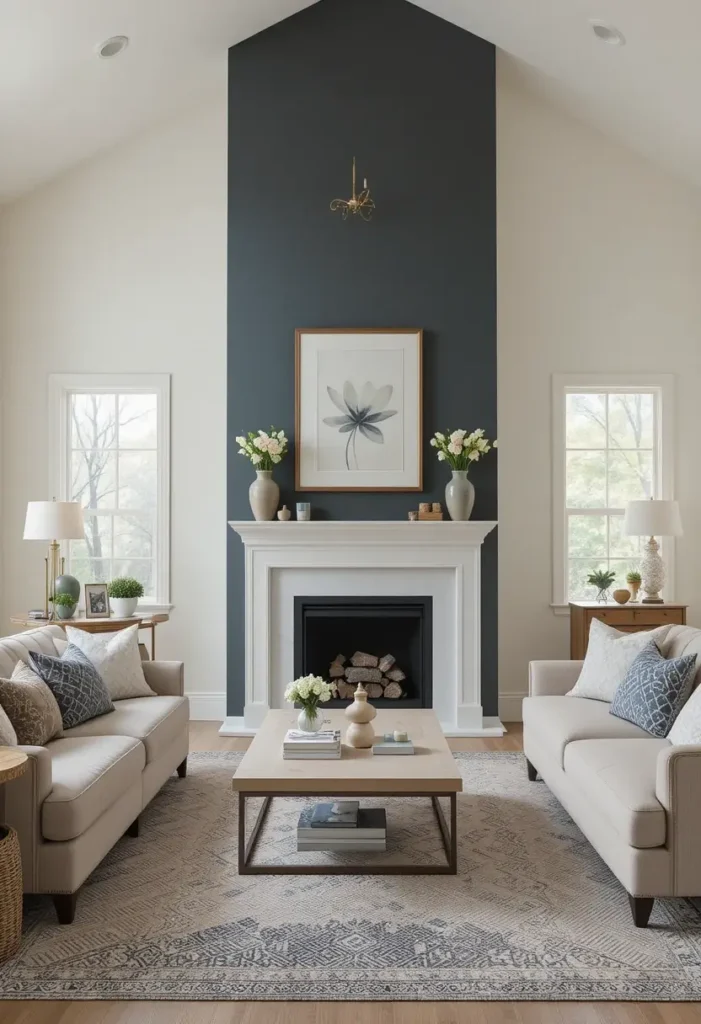
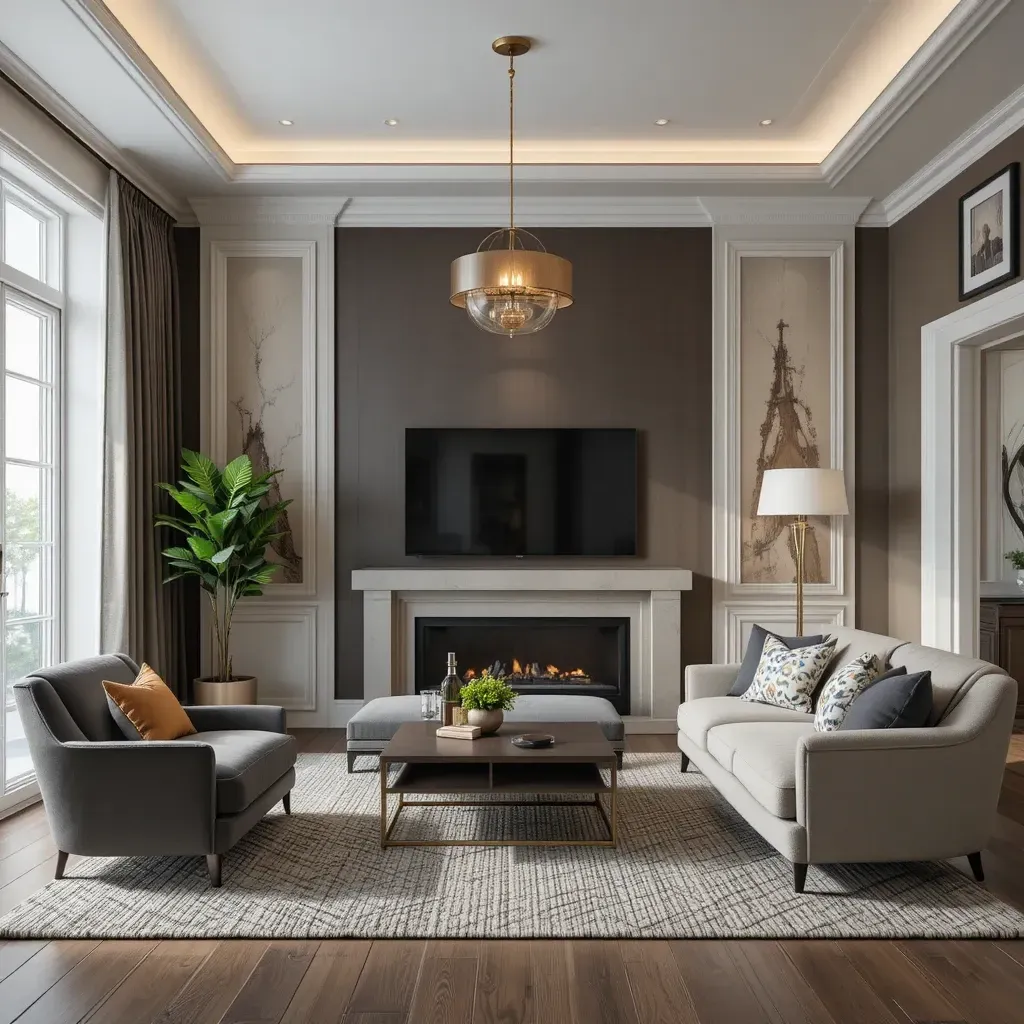
If you have a fireplace, make it the natural focal point. Accent walls in living room layouts often work best when built around existing architecture.
Paint, stone, or paneling can frame the fireplace beautifully.
Tip: Keep decor around the mantel simple. The wall treatment should enhance the fireplace, not compete with it.
Two-Tone Painted Wall
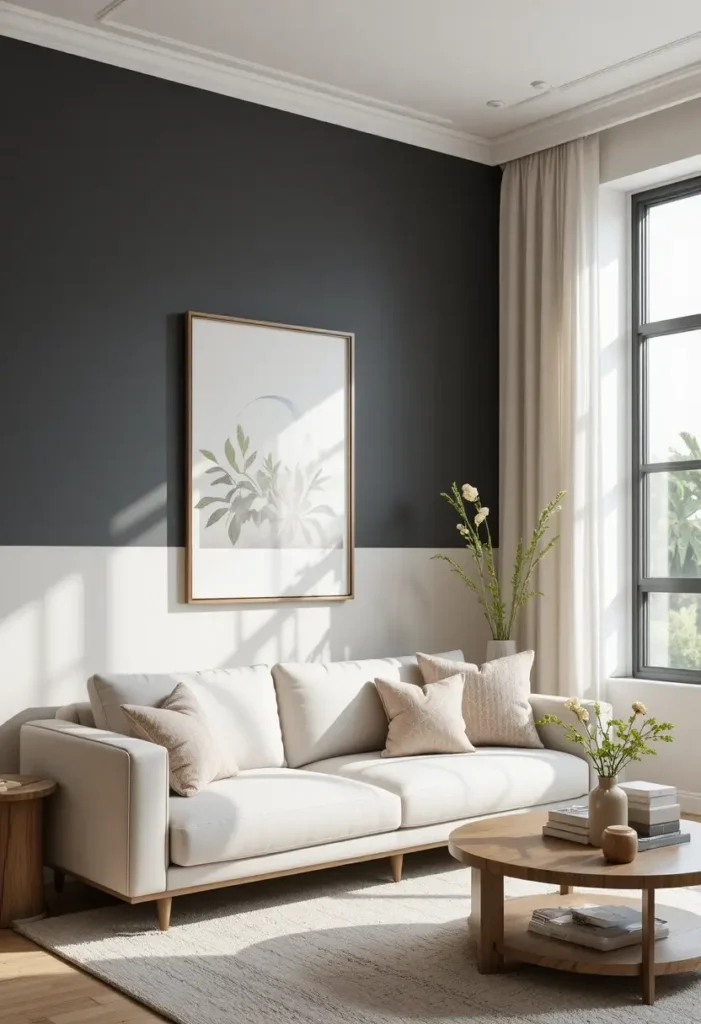
A two-tone wall uses color blocking, usually darker on the bottom and lighter on top. It works by visually anchoring the space.
This is helpful in rooms with high ceilings that feel too open.
Tip: Keep the dividing line clean and level. Even slight uneven lines become very noticeable.
Also Read This Blog: Luxury Living Room: 13 Thoughtful Ideas to Elevate Your Space
Gallery Wall Accent
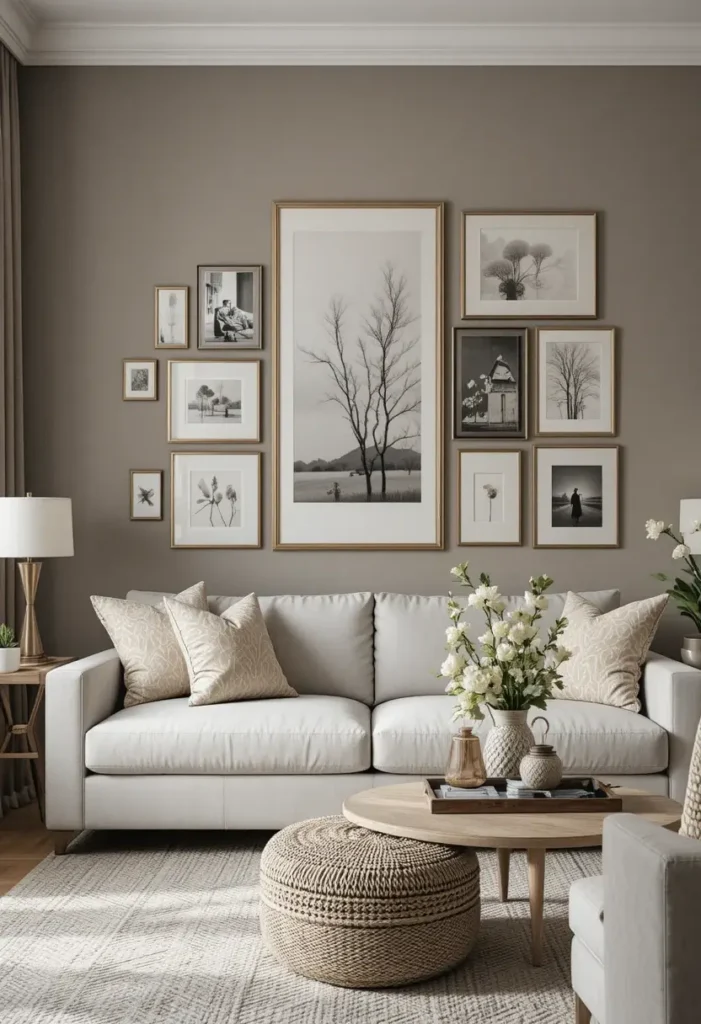
Instead of changing the wall itself, create impact with art. A well-arranged gallery works because it adds personality and tells a story.
It’s flexible and easy to update over time.
Tip: Lay frames on the floor first to test layout. Random hanging without planning often looks messy.
Textured Plaster or Limewash
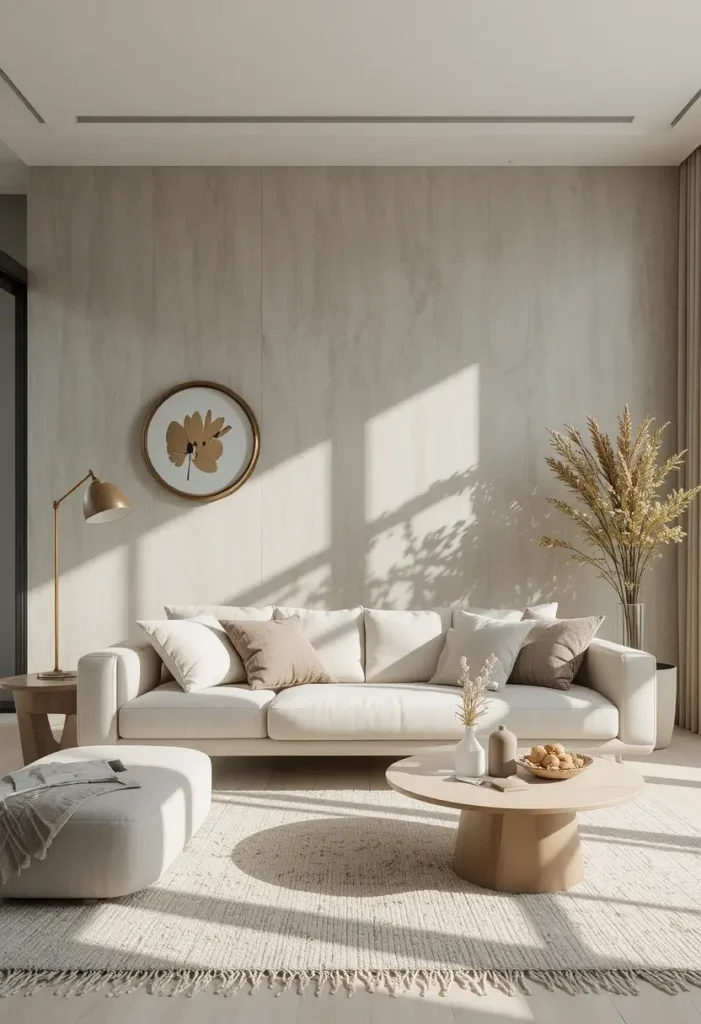
Textured finishes add softness and movement. They work because light hits them differently throughout the day.
This creates subtle depth without bold color or pattern.
Tip: Practice on a sample board first. Application technique changes the final effect more than many expect.
Also Read This Blog: Wall Decor for Living Room: 12 Thoughtful Ideas That Actually Work
Brick Accent Wall
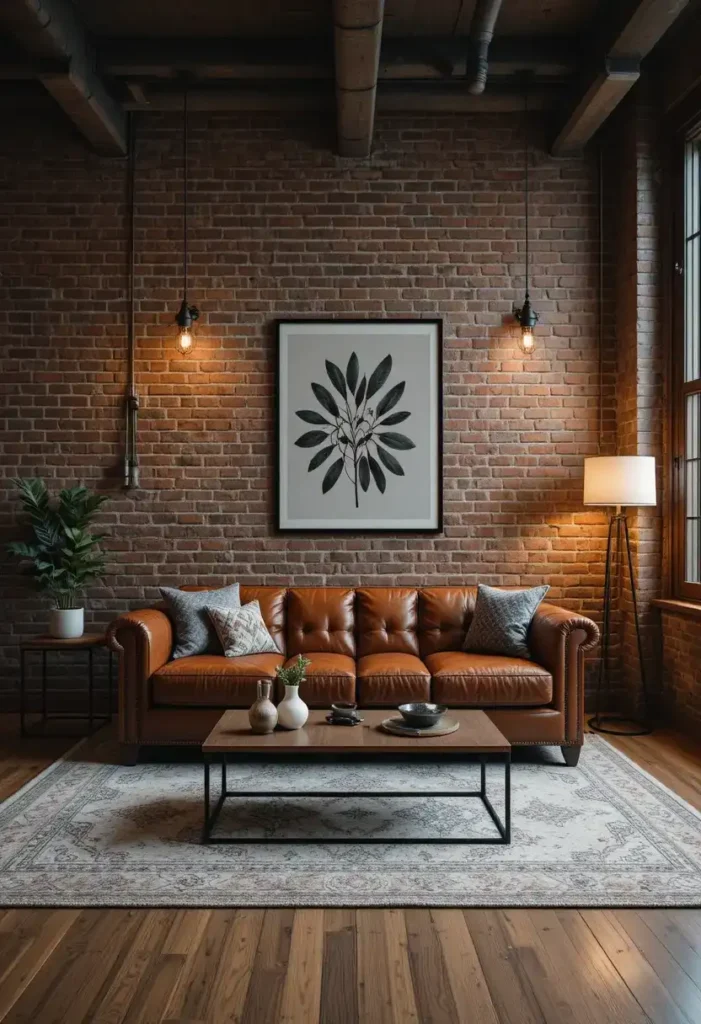
Exposed brick, real or faux, adds character and warmth. It works particularly well in industrial or transitional spaces.
The texture naturally contrasts with smooth furniture and modern lighting.
Tip: Seal real brick properly to reduce dust and protect it from staining.
Mirror Panel Accent Wall
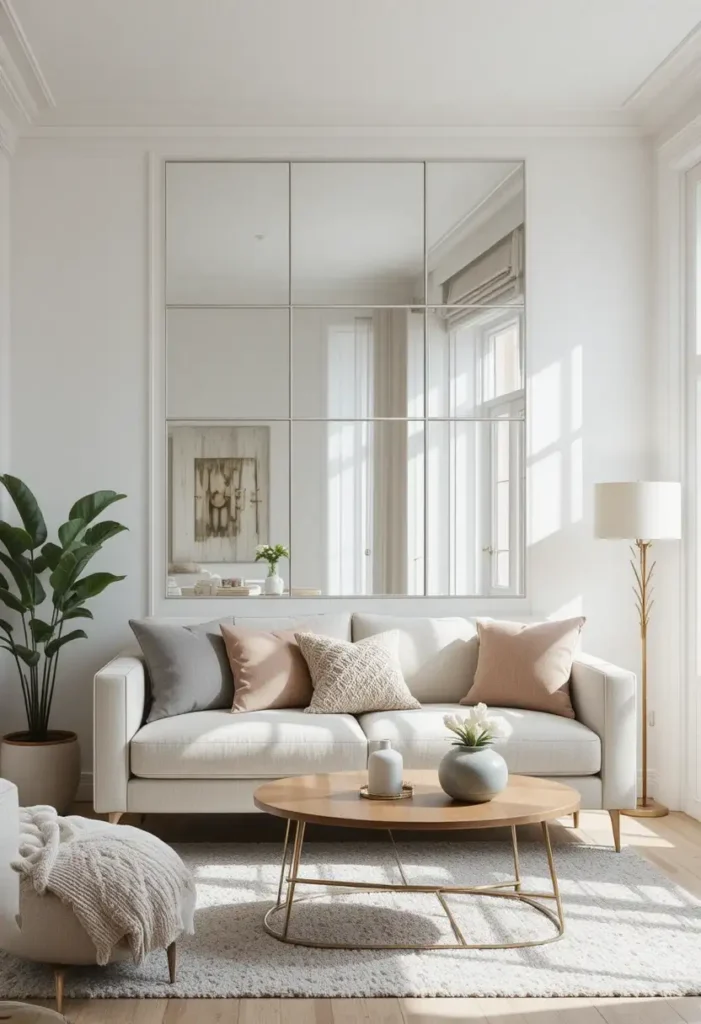
Mirrors can act as an accent while reflecting light. This works especially well in smaller living rooms that feel tight.
The reflection creates the illusion of space and brightness.
Tip: Use framed or paneled mirror sections rather than one large sheet to avoid a commercial look.
Accent Wall with Lighting Features
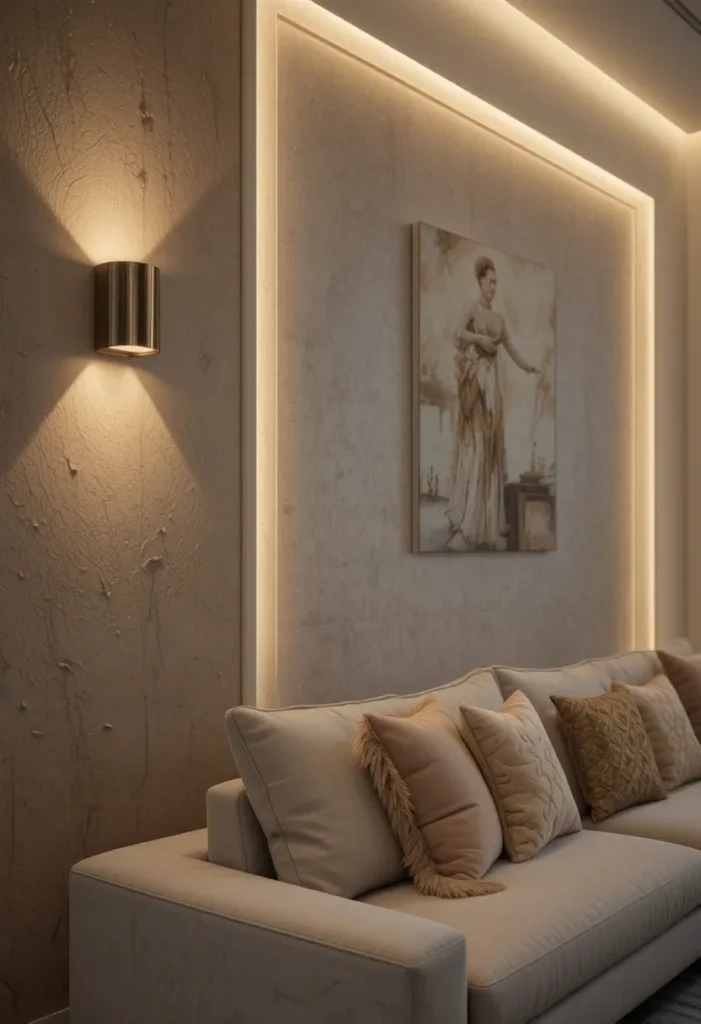
Adding wall sconces, LED strips, or picture lights enhances any accent wall. Lighting works because it highlights texture and creates atmosphere.
Even simple paint looks more intentional when thoughtfully lit.
Tip: Install warm lighting rather than cool white. Warm light makes accent walls feel inviting instead of harsh.
Conclusion
Accent walls in living room spaces aren’t about decoration for its own sake. They create structure, depth, and intention. The key is choosing one idea that supports your room’s layout rather than competing with it.
Start by identifying your focal point. Then choose color, texture, or material that enhances it. When done thoughtfully, an accent wall doesn’t overpower the room. It quietly brings everything together and makes the space feel complete.