Toy Storage for Living Room: 16 Smart Ways to Keep Things Tidy Without Losing Style
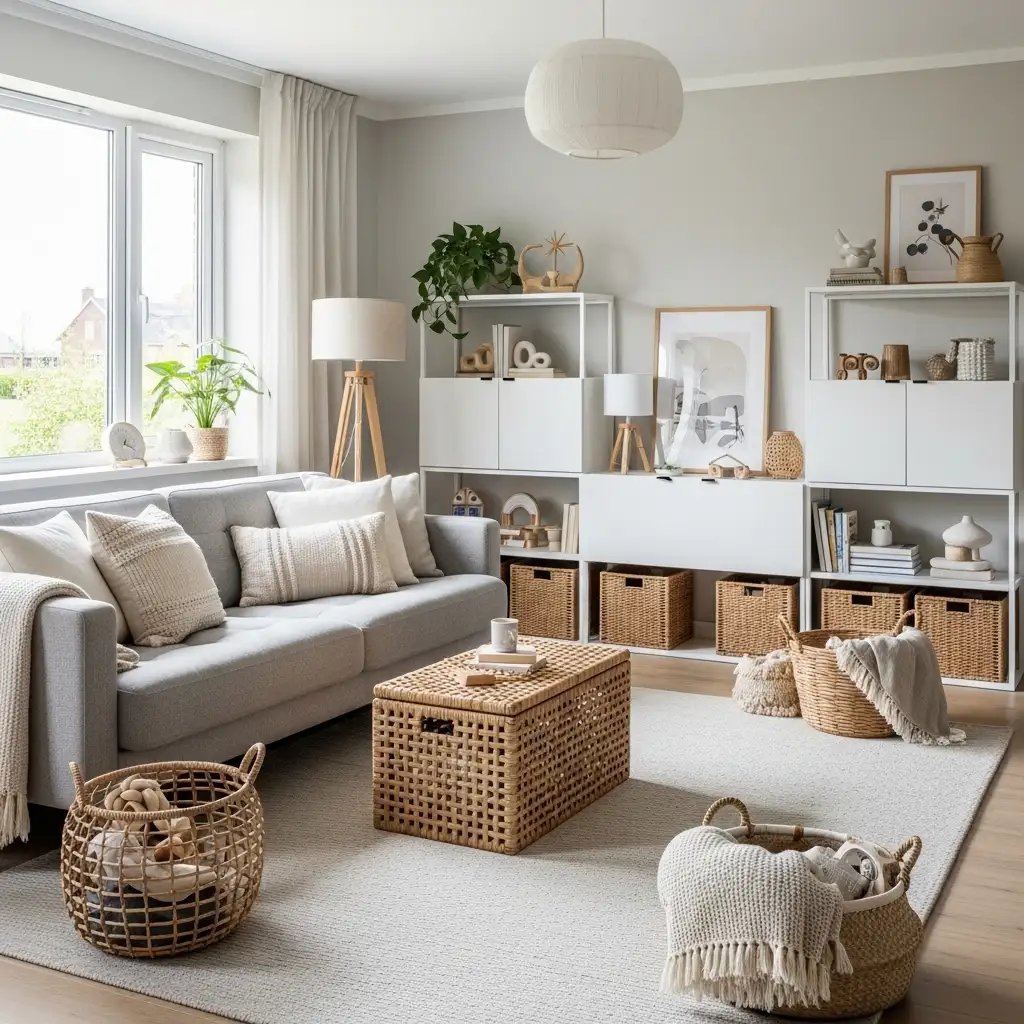
Living rooms are meant to feel calm and welcoming, but when toys start spreading across the floor, that balance quickly disappears. If you share your main living space with children, you already know the daily reset can feel endless. The good news is toy storage doesn’t have to look plastic, bulky, or out of place. With thoughtful solutions, you can keep toys accessible for kids while maintaining a space that still feels like your home.
1. Use Decorative Baskets That Blend In
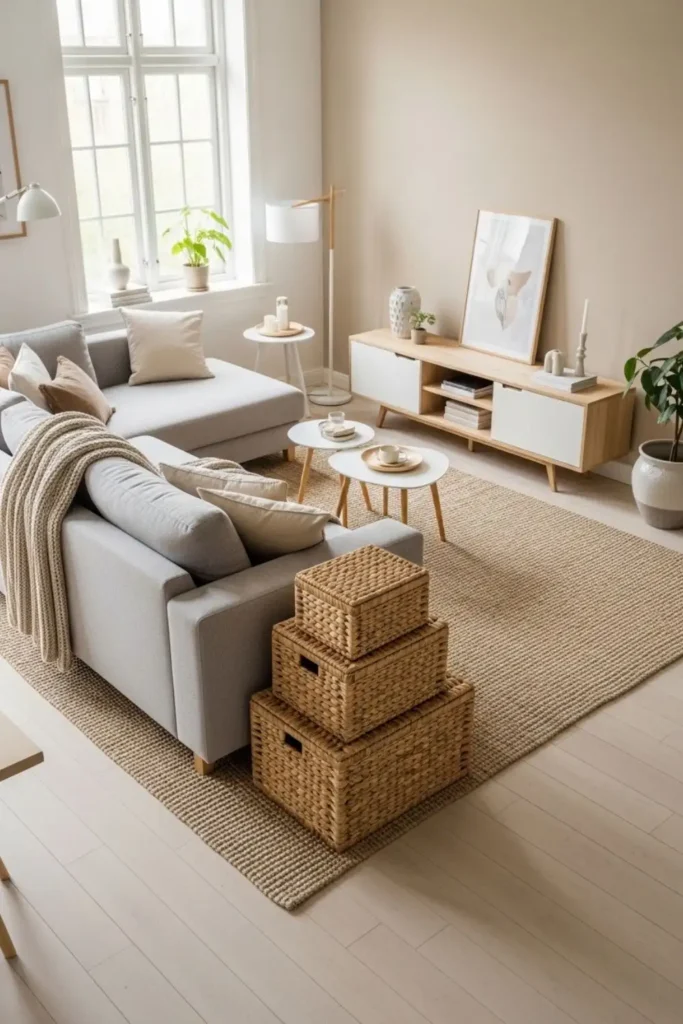
Decorative baskets are one of the simplest toy storage solutions. They look intentional while hiding everyday clutter.
This works because baskets soften a space visually. Woven textures, neutral fabrics, or structured canvas bins feel like décor instead of storage.
Tip: Choose two or three matching baskets to keep things cohesive.
Common mistake: Buying too many small baskets. Fewer, larger ones reduce visual clutter and make cleanup faster.
2. Choose a Storage Ottoman with Hidden Space
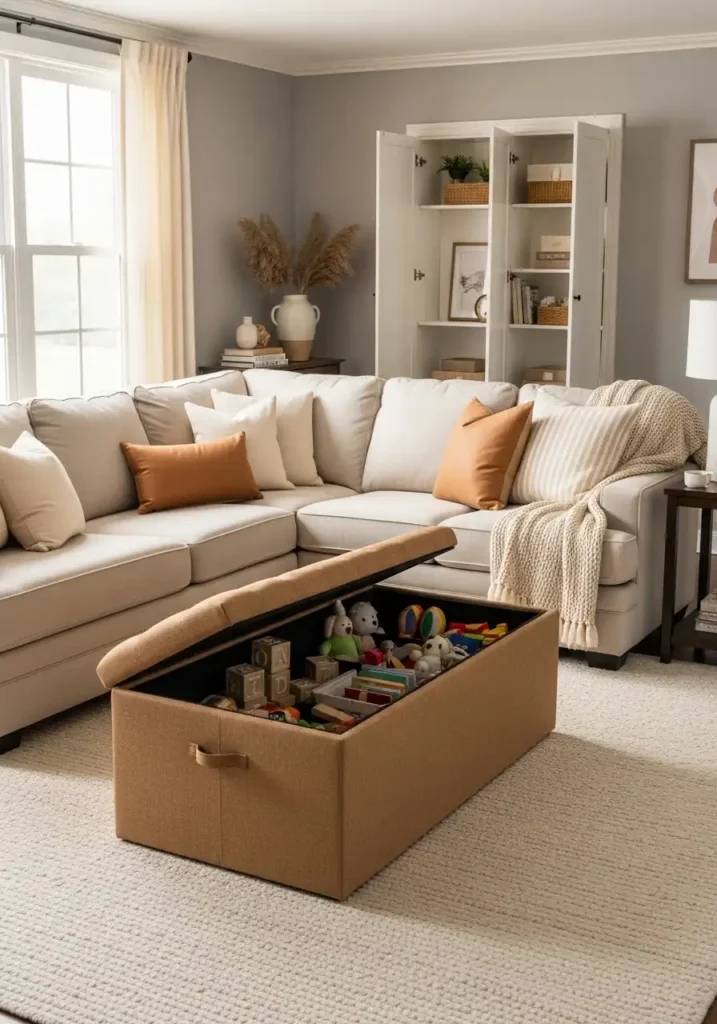
A storage ottoman functions as seating, a footrest, and hidden toy storage all in one. It works because it keeps toys completely out of sight while adding comfort to the room.
Tip: Use it for high-rotation toys like blocks or cars so cleanup is quick.
Mistake: Overfilling it. When it’s packed tight, kids can’t access toys independently.
3. Add a Low, Stylish Cabinet with Doors
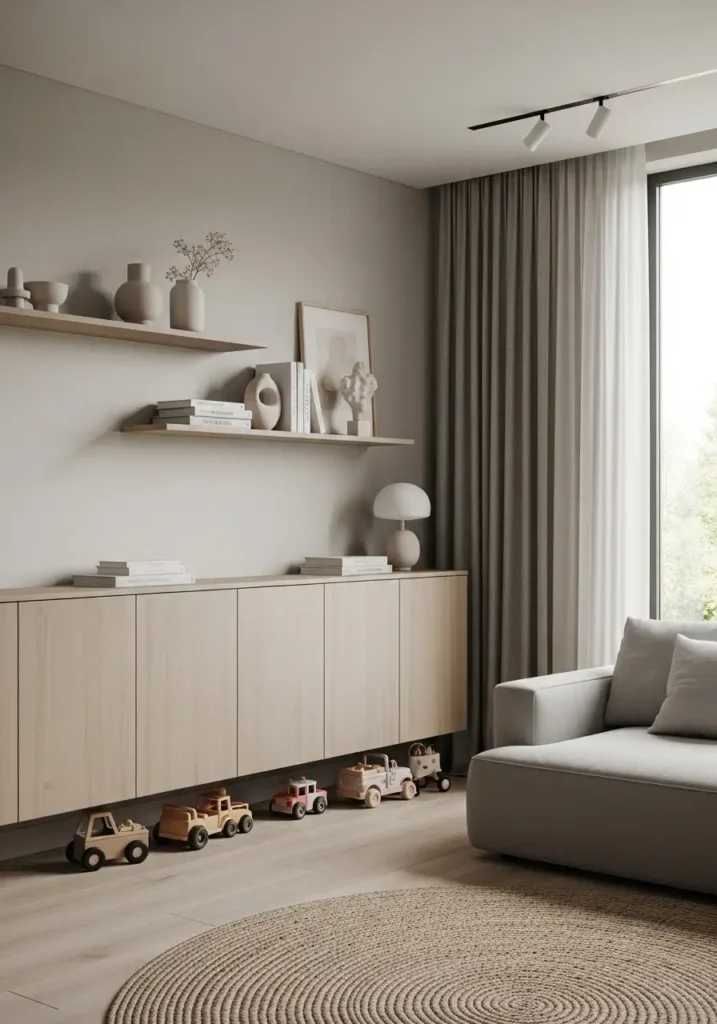
A closed cabinet offers full visual control. Once the doors are shut, the room instantly feels tidy. This works especially well for living rooms that double as adult spaces in the evening.
Tip: Use bins inside the cabinet to separate puzzles, art supplies, and figurines.
Avoid open shelving without baskets — exposed toys can quickly look chaotic.
4. Use Built-In Shelving with Bins
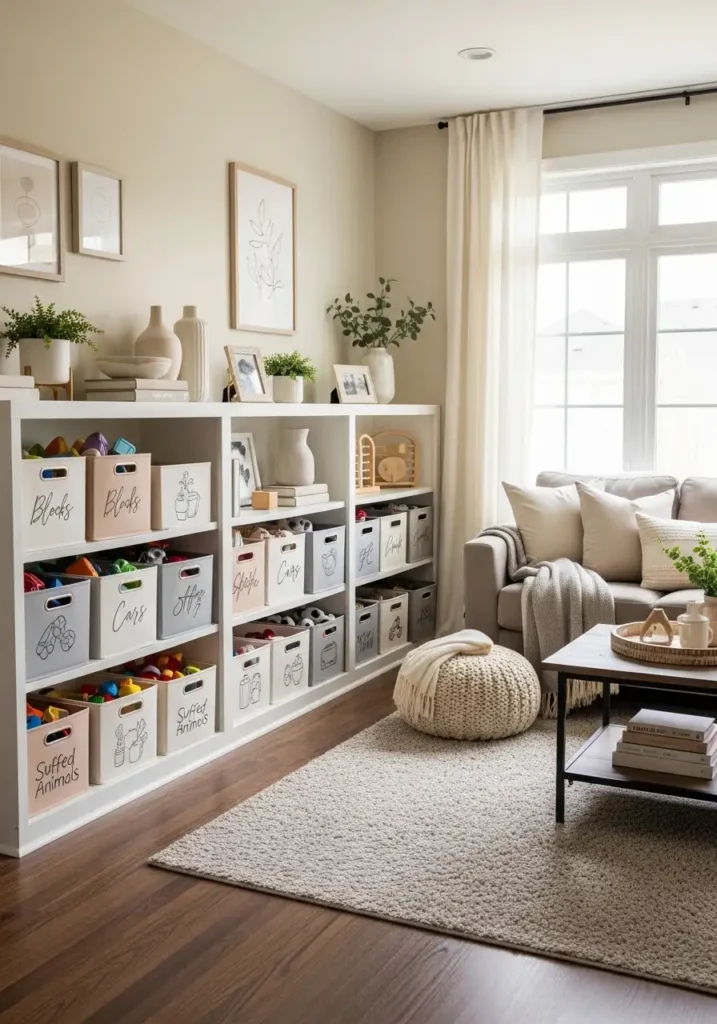
Built-ins create structure, and adding uniform bins keeps everything organized. It works because repetition makes storage feel intentional rather than improvised.
Tip: Label the inside of bins (not the outside) to maintain a clean look.
Common mistake: Mixing too many bin styles and colors, which makes shelves look busy.
5. Incorporate a Toy Chest with Soft Edges
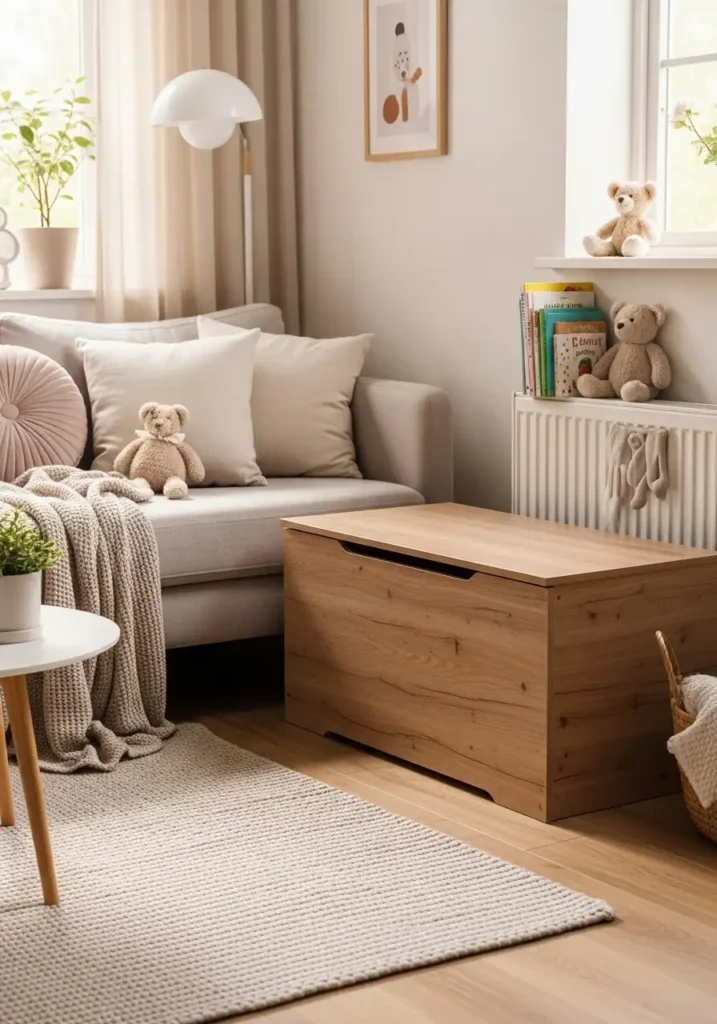
A toy chest is classic for a reason. It holds larger items and encourages kids to clean up independently. It works because it centralizes toys in one defined location.
Tip: Choose a soft-close lid to prevent pinched fingers.
Mistake: Using it as a dumping ground without occasional sorting. Regular decluttering keeps it manageable.
6. Rotate Toys Instead of Storing Everything
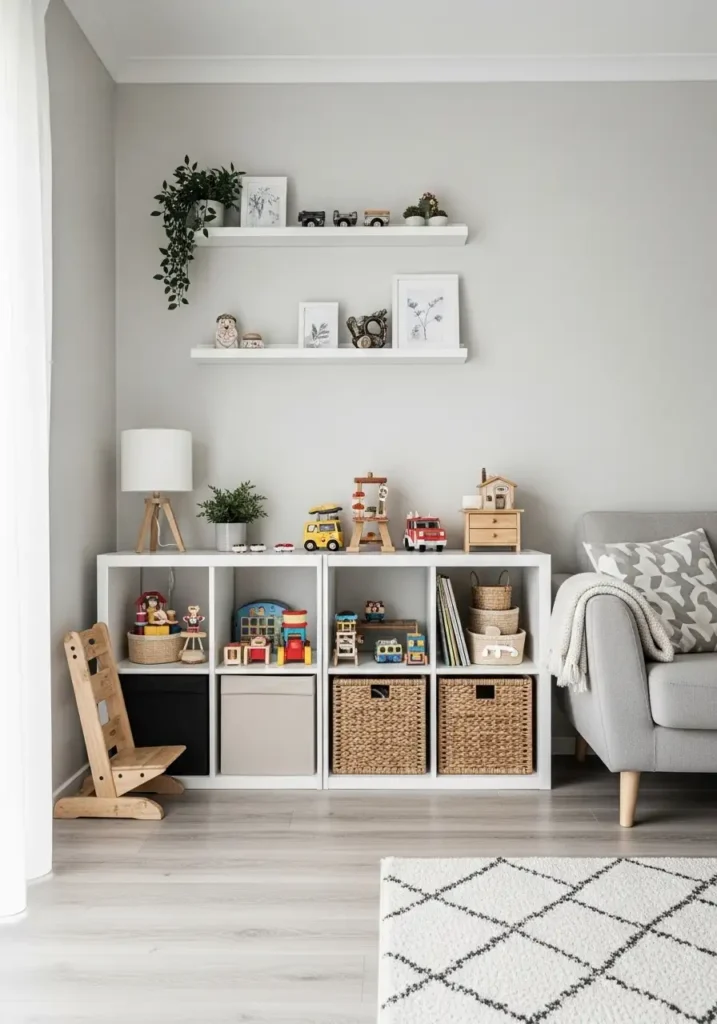
Sometimes the problem isn’t storage — it’s volume. Toy rotation means keeping some toys stored elsewhere and swapping them every few weeks. This works because fewer visible toys mean less mess and more focused play.
Tip: Store extra toys in labeled boxes in a closet and rotate monthly.
Common mistake: Rotating too often. Give kids time to fully enjoy what’s available.
7. Create a Defined Play Corner
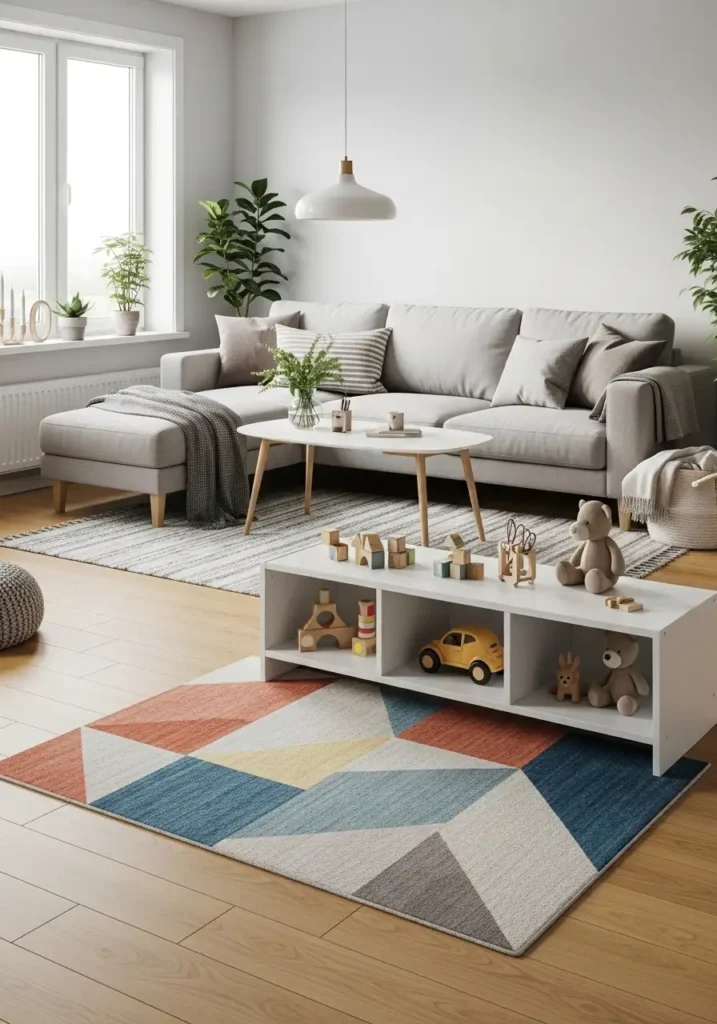
Rather than letting toys spread throughout the room, define one area as the “play zone.” It works because boundaries naturally contain mess. A rug, small shelf, or floor cushion can visually mark the space.
Tip: Keep storage solutions within arm’s reach inside that zone.
Mistake: Making the play area too large, which defeats the purpose of containment.
8. Use Coffee Tables with Drawers
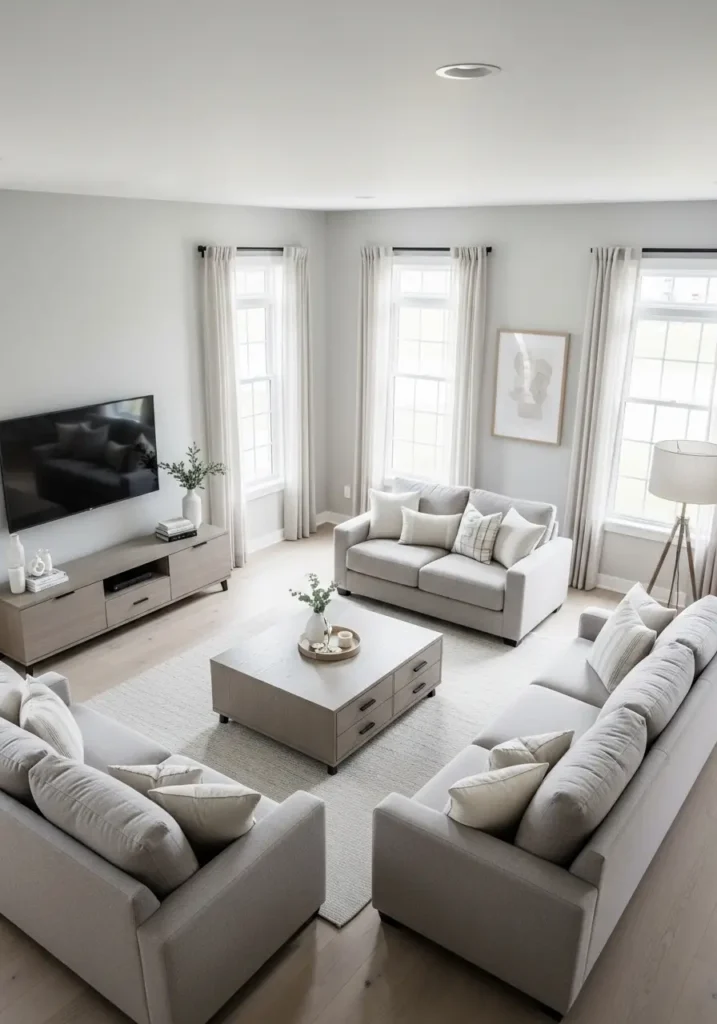
A coffee table with built-in drawers offers hidden storage right at the center of the room. From the outside, it looks like a normal piece of furniture. It works because it keeps everyday toys close but completely out of sight when not in use.
Tip: Store smaller items like crayons, cards, or action figures inside divided containers.
Common mistake: Filling drawers with random items. Keep categories simple so cleanup stays quick and realistic.
9. Add a Slim Console Behind the Sofa
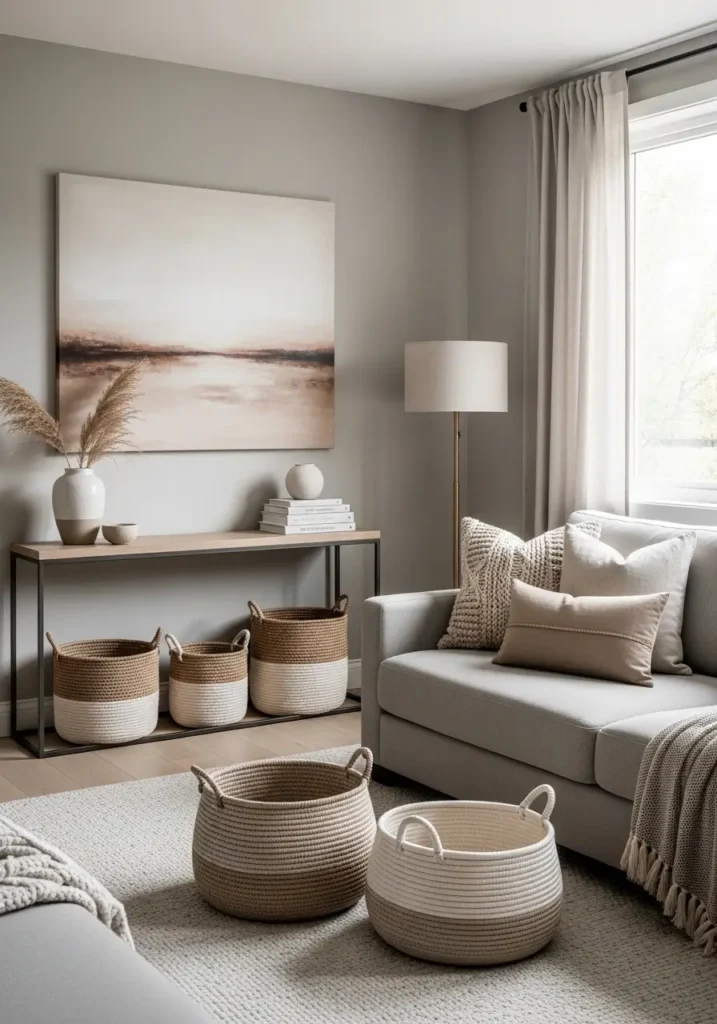
A narrow console table behind the sofa can double as subtle storage when paired with baskets underneath. This works because it uses overlooked space without making the room feel crowded.
Tip: Choose matching baskets that slide neatly under the table for a clean look.
Mistake: Leaving toys loose under the console. Without containers, it quickly looks messy instead of organized.
10. Choose Lidded Storage Bins
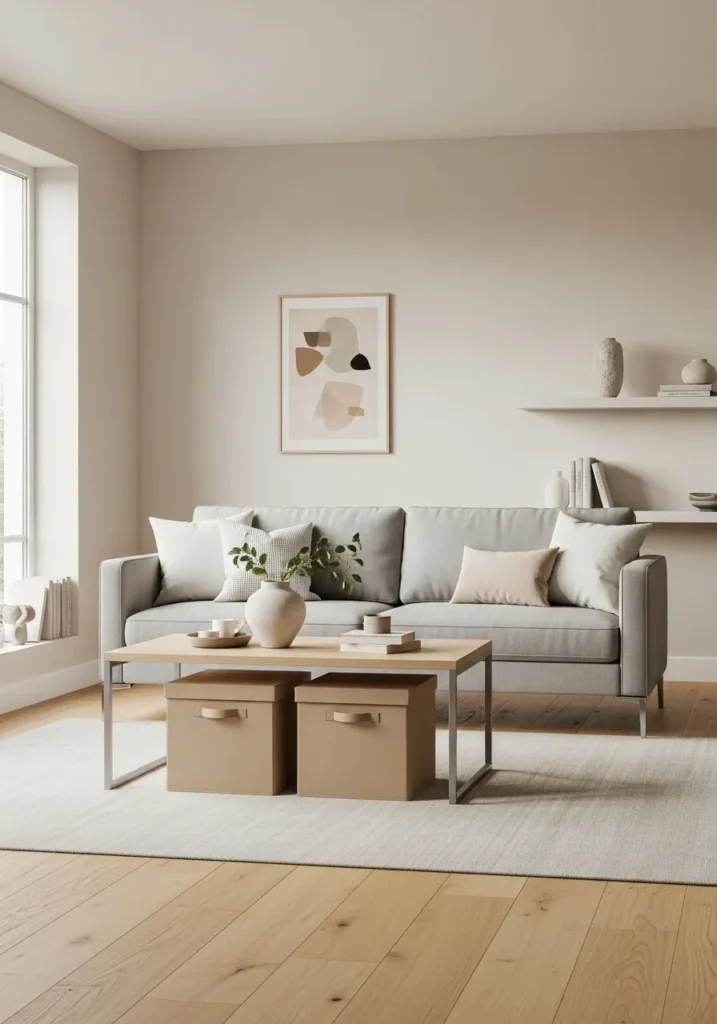
Lidded bins instantly reduce visual clutter. Even if the inside isn’t perfectly sorted, the room feels calmer once the lids are closed. It works especially well in open-plan homes where the living room is always visible.
Tip: Stick to neutral tones that complement your existing décor.
Common mistake: Transparent bins in main living areas. They expose clutter and defeat the purpose of visual calm.
11. Install Floating Shelves Higher Up
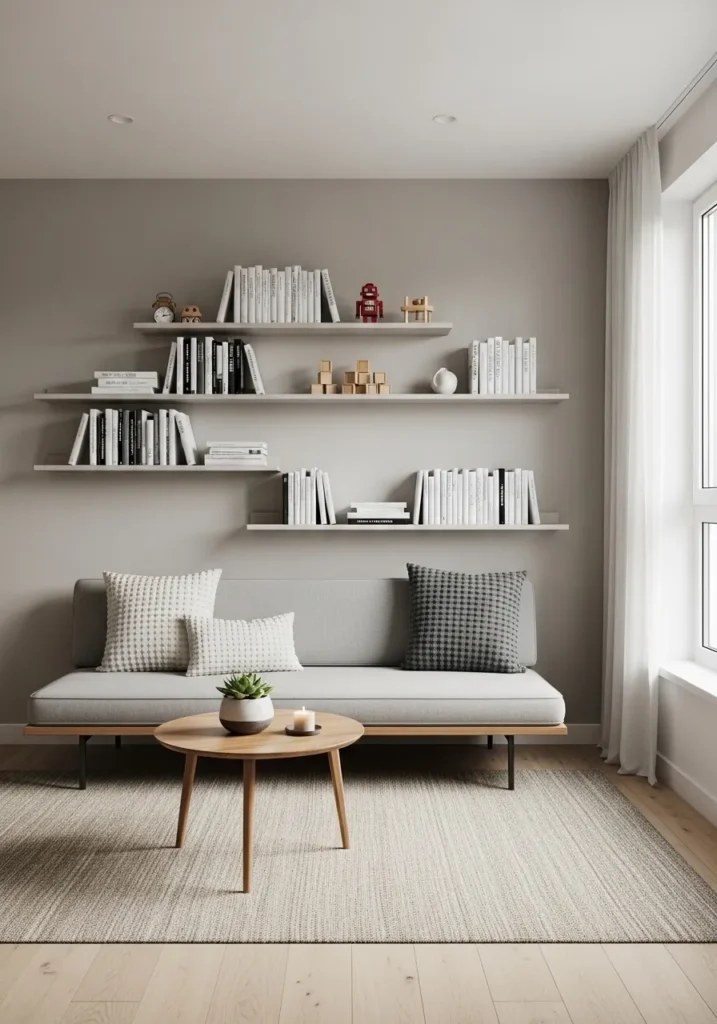
Floating shelves placed higher on the wall are ideal for displaying a few favorite toys or books while keeping most items out of reach. It works because vertical storage frees up floor space and makes the room feel lighter.
Tip: Rotate displayed items occasionally to keep things fresh.
Mistake: Overloading shelves. Too many objects create visual noise and make dusting difficult.
12. Use a Sideboard for Dual Purpose Storage
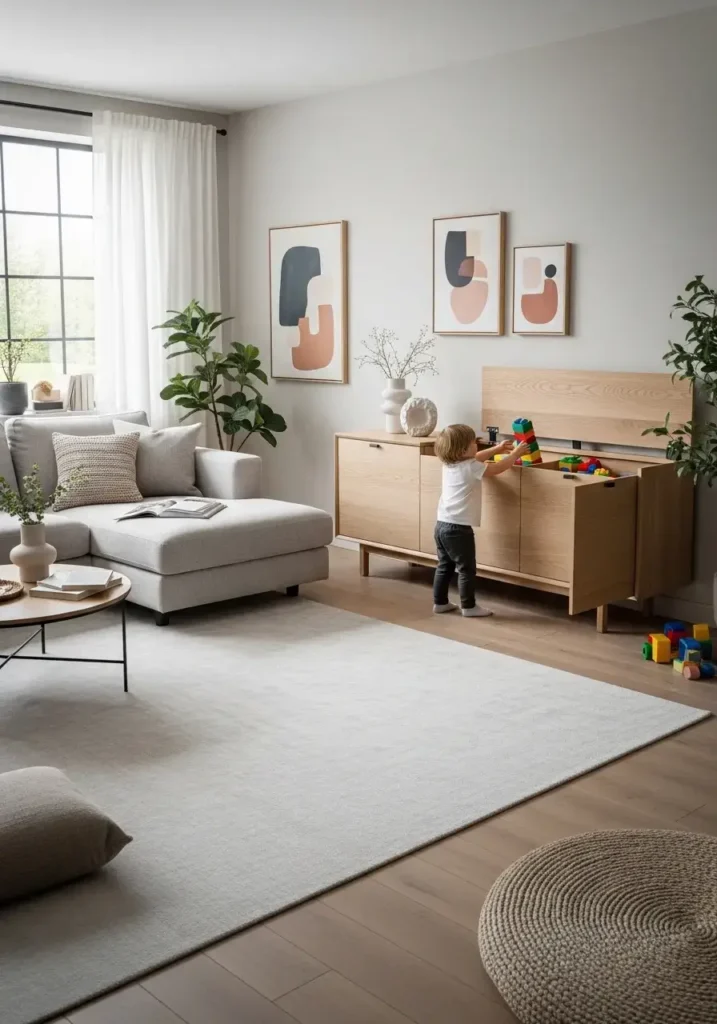
A sideboard can hold dinnerware, electronics, or board games — and still leave room for toy bins inside. This works because it blends adult storage with kid-friendly function in one piece.
Tip: Dedicate one section specifically to toys so they don’t spill into every compartment.
Common mistake: Mixing fragile items with toys. Keep breakables separate to avoid daily stress.
13. Opt for Stackable Crates
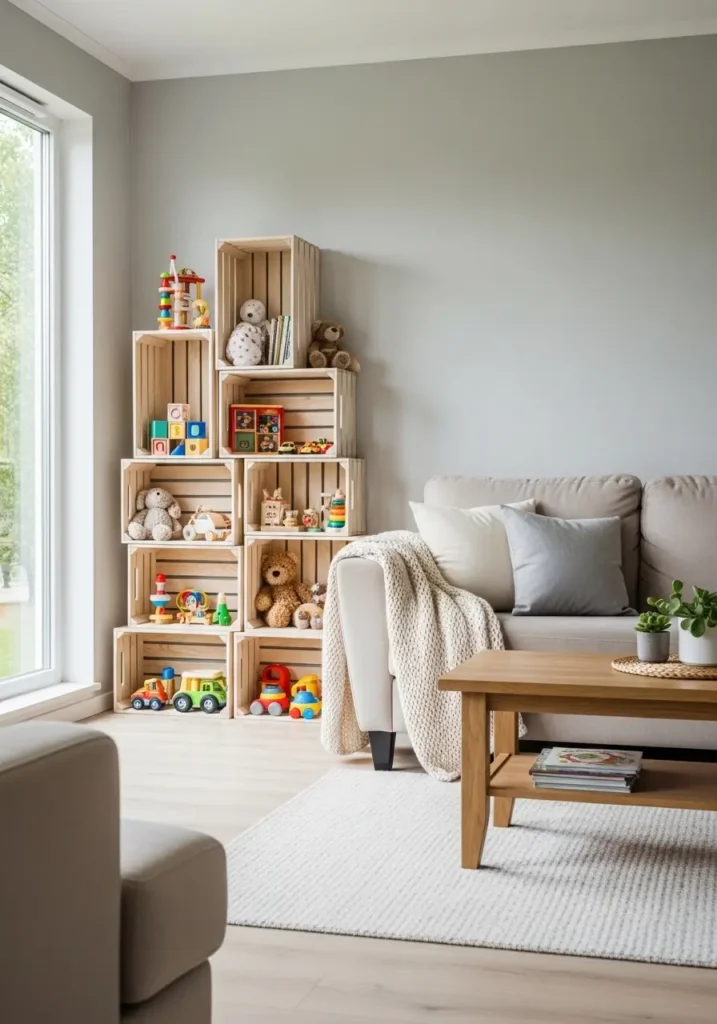
Stackable wooden or fabric crates allow you to adjust storage as toy collections grow or shrink. It works because flexibility makes long-term organization easier.
Tip: Keep stacks low enough for children to reach safely.
Mistake: Stacking too high, which can topple over or make cleanup frustrating for little hands.
14. Keep a Daily Reset Basket
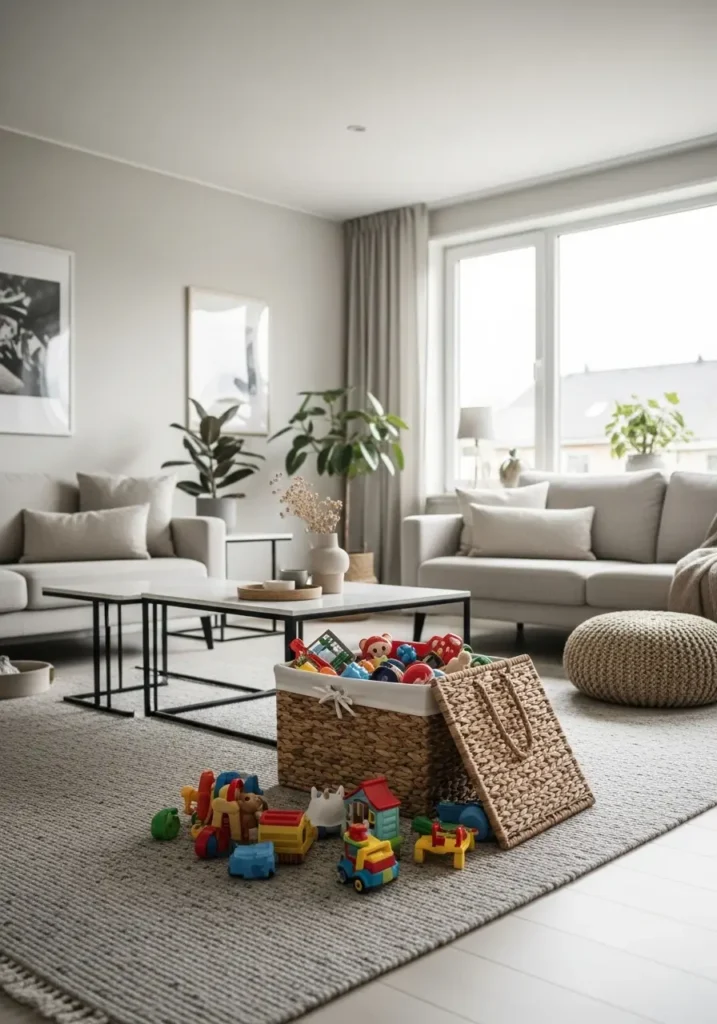
A simple open basket designated for “end-of-day reset” can make tidying feel manageable. It works because it simplifies cleanup into one easy habit rather than multiple sorting tasks.
Tip: Do a quick five-minute reset each evening with your child.
Common mistake: Letting the basket overflow for days. Empty it regularly to prevent clutter from building up again.
15. Store Large Toys in Covered Floor Baskets
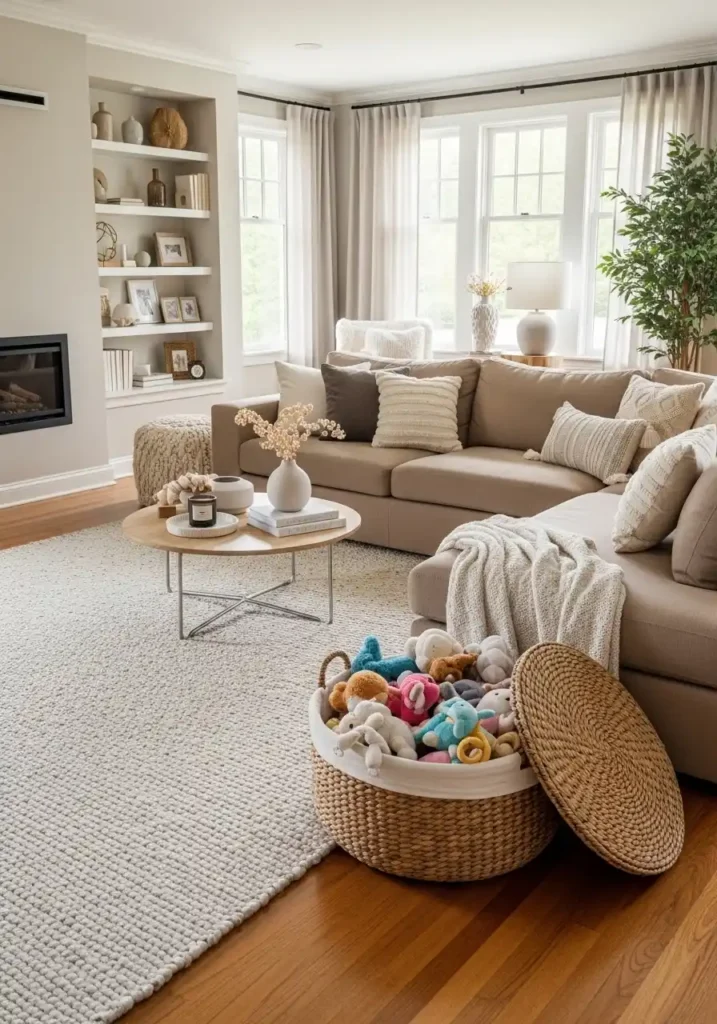
Large floor baskets are perfect for bulky toys like stuffed animals or building blocks. It works because oversized containers reduce the need for perfect folding or sorting.
Tip: Choose baskets with soft sides so they’re safe and easy to move.
Mistake: Using too many small containers instead of one large one, which makes cleanup slower and more complicated.
16. Reassess and Edit Regularly
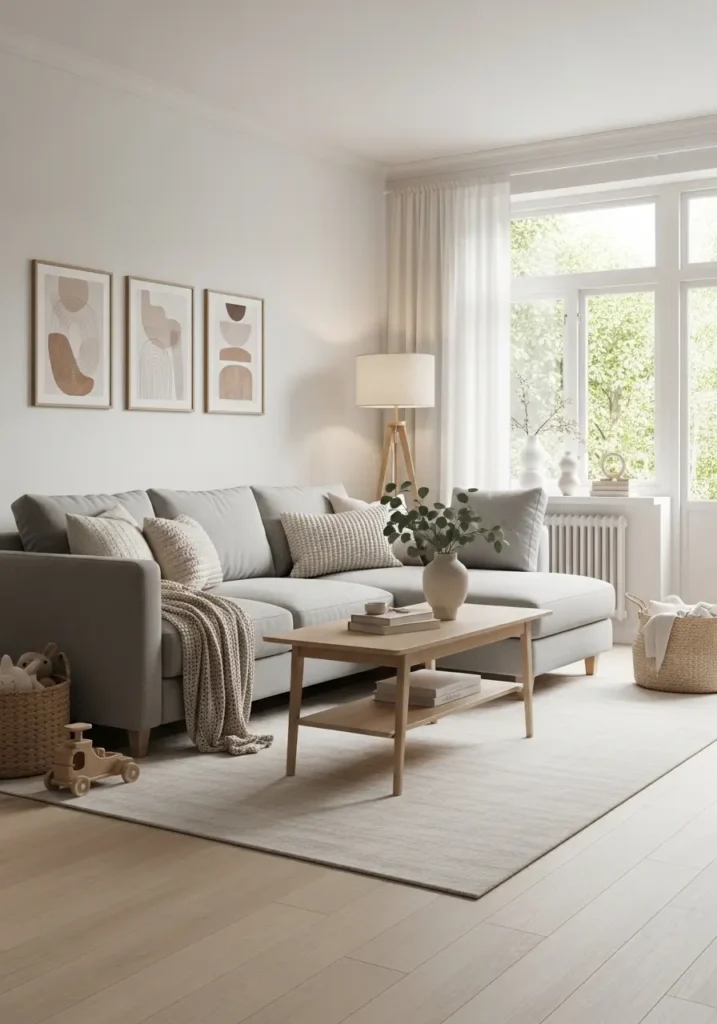
No storage system works long term without occasional editing. Toys accumulate quickly, especially in shared living spaces. It works because reducing volume makes every other storage solution more effective.
Tip: Set a seasonal reminder to donate or store toys your child has outgrown.
Common mistake: Holding onto everything “just in case.” Thoughtful decluttering keeps your living room feeling like a space for everyone, not just the toys.
Conclusion
Creating toy storage in the living room isn’t about hiding childhood — it’s about finding balance. With the right mix of hidden storage, defined zones, and regular editing, your space can feel calm without becoming restrictive. The goal isn’t perfection. It’s a system that supports daily life while keeping your home welcoming for both kids and adults.
FAQs
How do I hide toys quickly?
Use large baskets or ottomans for fast cleanup.
How often should I declutter toys?
Every 3–4 months works well.
Can toy storage still look stylish?
Yes, choose neutral, furniture-style pieces that blend naturally.