
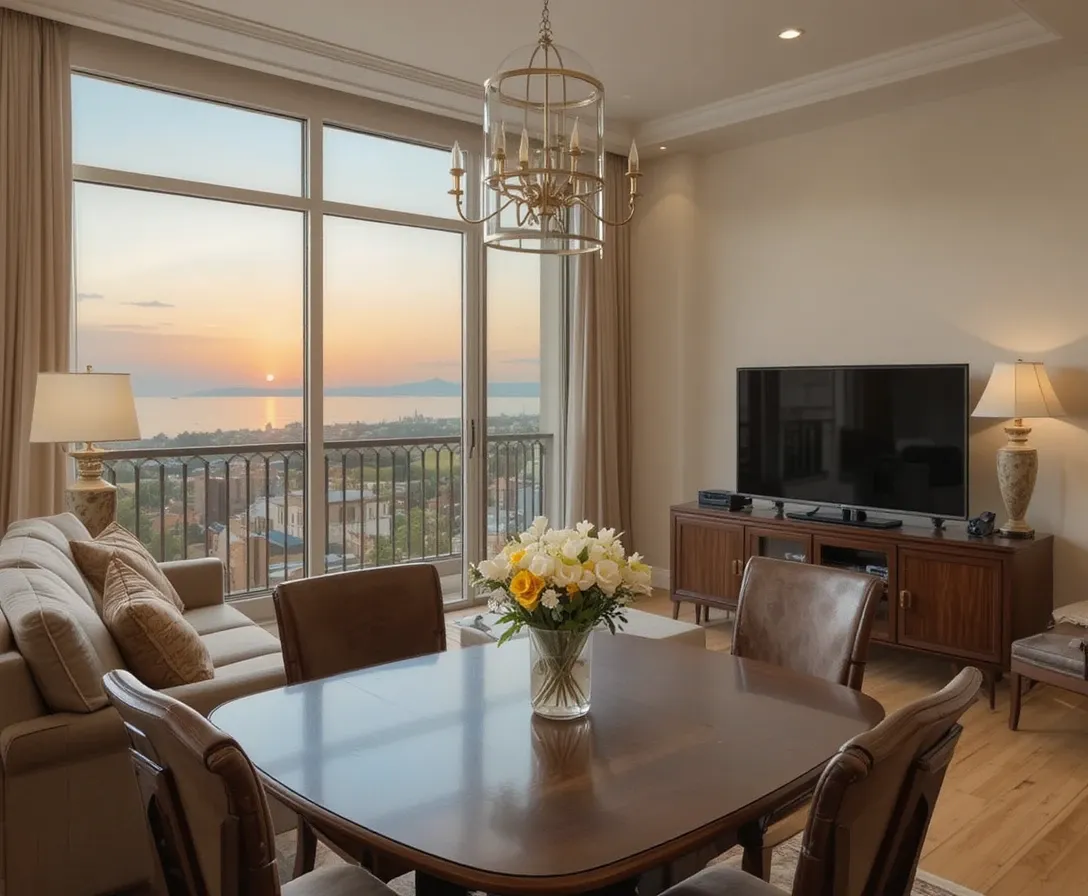
Living Room Dining Room Combo Layout Ideas for a Functional Space
When a living room and dining room share the same space, the biggest challenge is making it feel organized rather than awkward. People often worry that the room will feel crowded, mismatched, or confusing to use. A good living room dining room combo layout solves those concerns by giving each area a clear purpose while still feeling like one cohesive space.
Below are 14 practical, experience-based layout ideas that help you create flow, balance, and comfort—without overthinking every decision.
1. Define Each Area by Function First
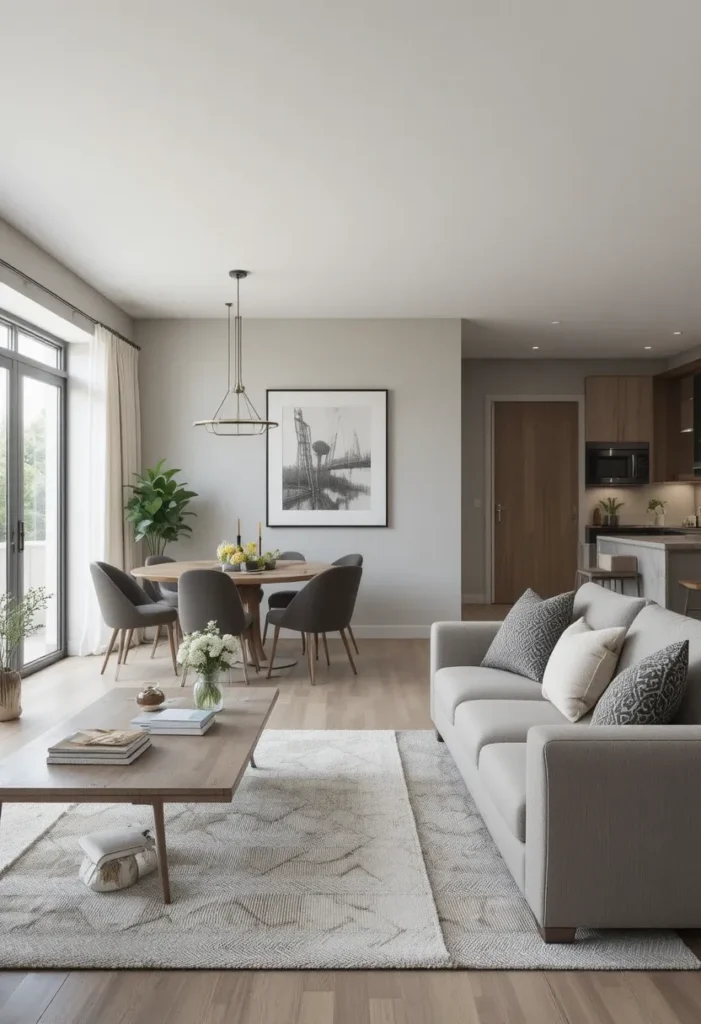
Before thinking about furniture style or decor, be clear about what happens in each zone. The living area is usually for relaxing and conversation, while the dining area is for meals and gatherings.
This works because clarity prevents overlap. When each zone has a clear role, the room feels intentional rather than improvised.
A practical approach is to decide where people naturally sit and where meals realistically happen, then build the layout around those habits.
2. Use Furniture Placement as Invisible Dividers
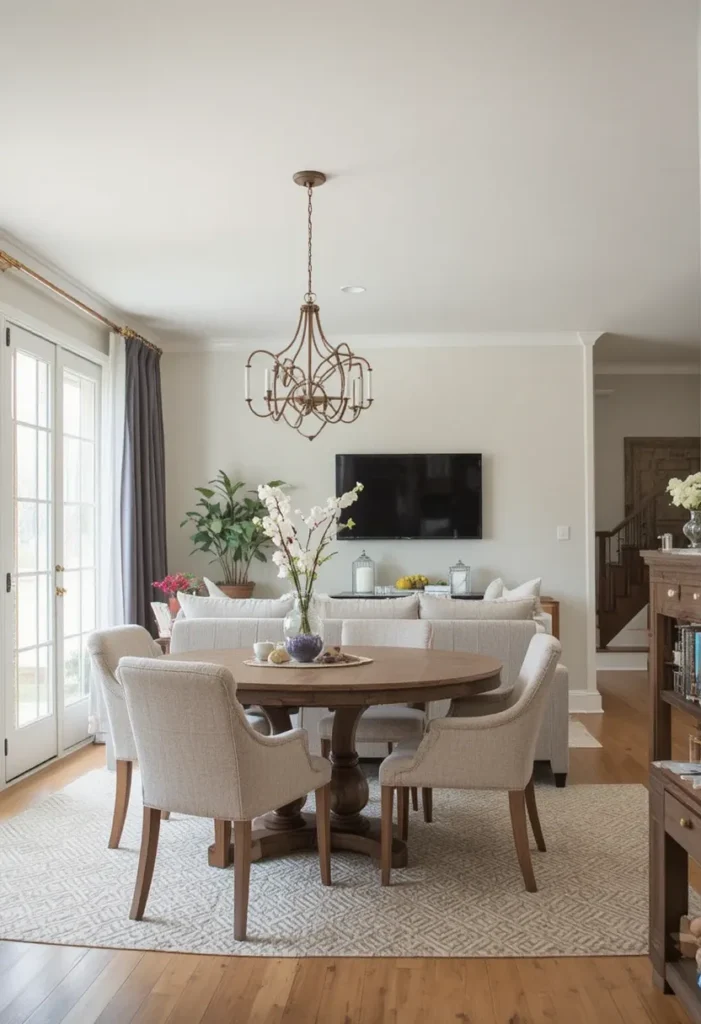
You don’t need walls to separate spaces. Sofas, dining tables, and sideboards can quietly define zones.
This works because the human eye reads furniture groupings as boundaries. A sofa back facing the dining area clearly signals where one space ends and the other begins.
A common mistake is leaving too much empty space between zones. Light separation is enough—gaps don’t need to feel dramatic.
3. Anchor Each Zone With the Right Rug
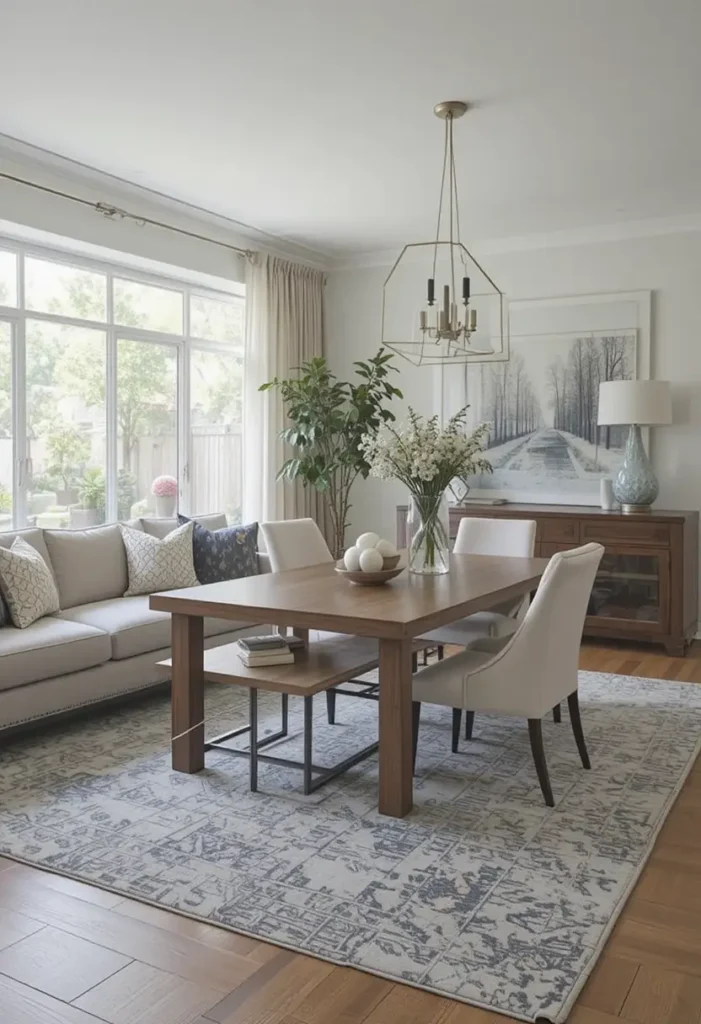
Rugs are one of the easiest ways to organize a combo layout. One rug under the seating area and another under the dining table instantly define zones.
This works because rugs visually “ground” furniture, making each area feel complete on its own.
Make sure rugs are sized correctly. A rug that’s too small can make the room feel disjointed instead of organized.
4. Keep a Clear Walkway Between Spaces
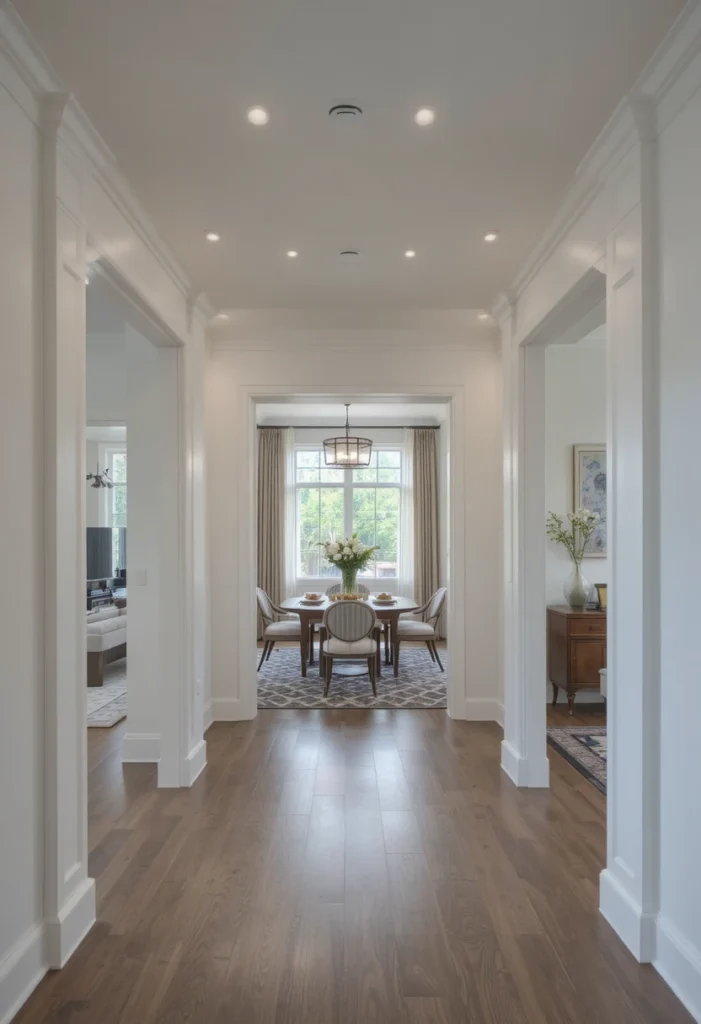
Traffic flow is often what makes or breaks a living room dining room combo layout. People should be able to move between areas without squeezing or zigzagging.
This works because clear pathways reduce visual clutter and daily frustration.
A practical tip is to leave at least a comfortable walking width between major furniture pieces, especially near the dining table.
5. Choose a Dining Table That Fits the Room
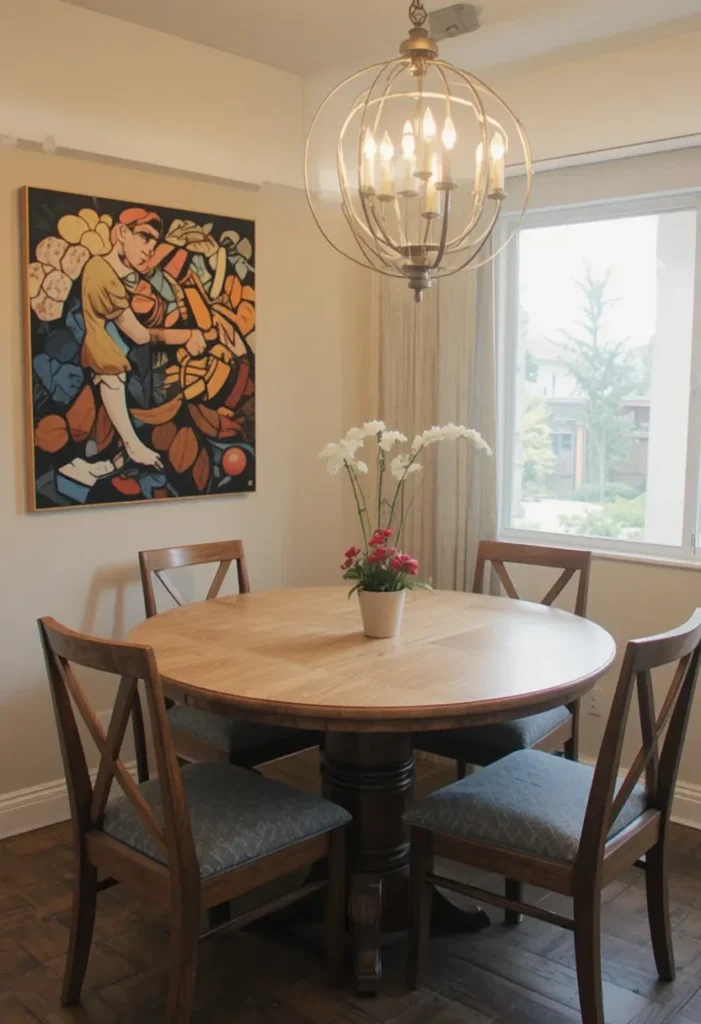
In shared spaces, oversized dining tables are a common mistake. They dominate the room and leave the living area feeling cramped.
This works when scale is respected. A table that fits the space allows both zones to breathe.
If space is tight, consider a round or extendable table. These offer flexibility without permanently taking over the room.
6. Align Furniture With the Room’s Natural Shape
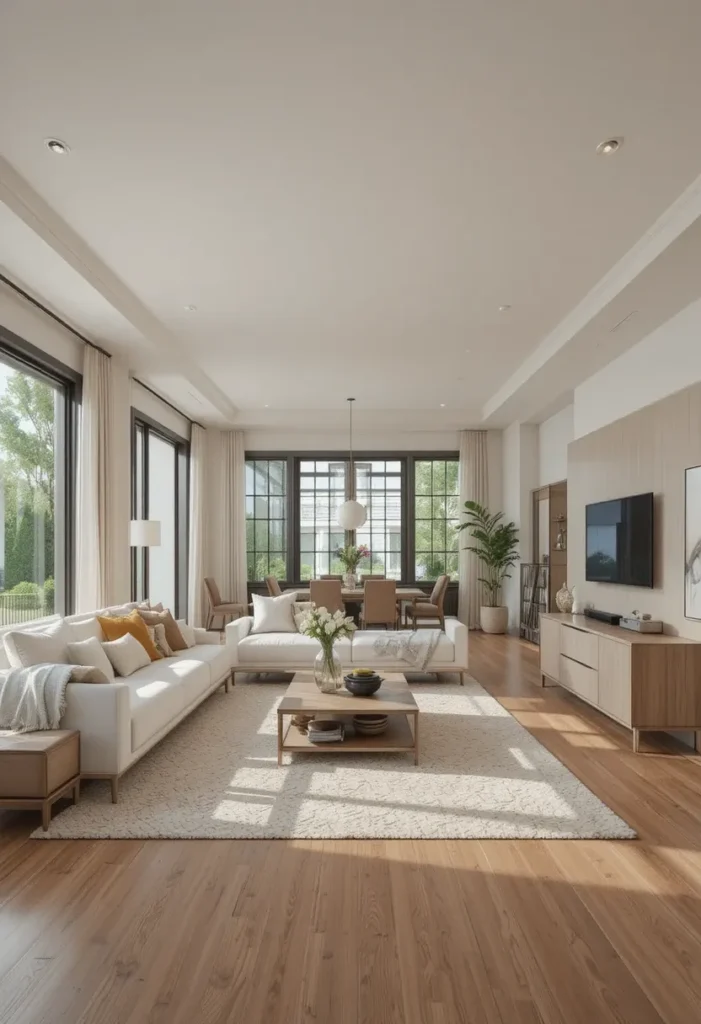
Rooms often suggest their own layout if you pay attention. Long rooms work well with zones placed end to end, while square rooms benefit from side-by-side layouts.
This works because it follows the architecture rather than fighting it.
A helpful exercise is to look at window placement and wall lengths. Let those guide where each zone naturally belongs.
Also Read This Blog: 14 Living Room Designs That Blend Style, Comfort & Everyday Life
7. Use Lighting to Reinforce Each Zone
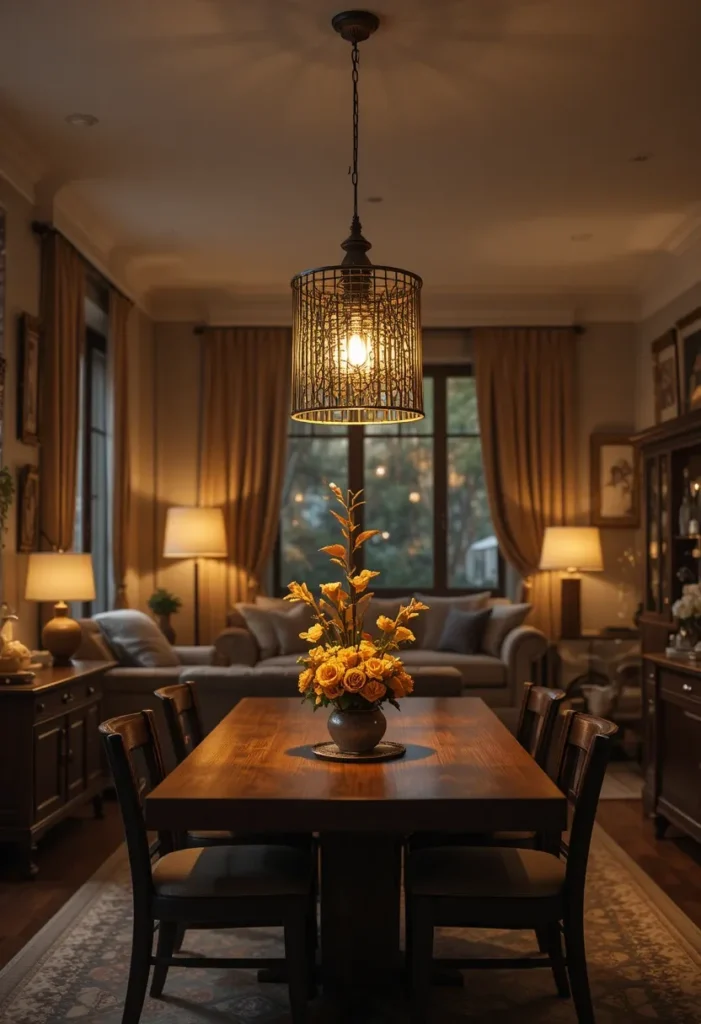
Lighting is a subtle but powerful layout tool. Different light sources help each area feel distinct while still connected.
This works because light directs attention. A pendant over the dining table and softer lighting in the living area create natural separation.
Avoid using only one overhead light for the entire space. That often flattens the room and removes definition.
8. Stick to a Cohesive Color Palette
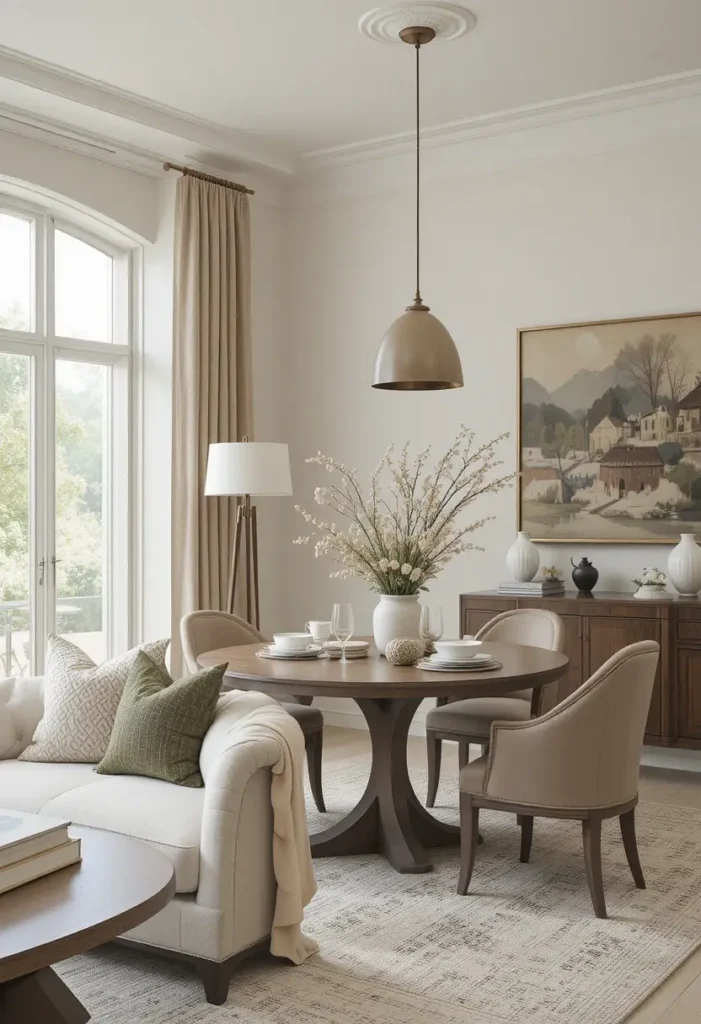
A shared space needs visual harmony. Too many competing colors can make the layout feel chaotic.
This works when one main palette flows through both areas, with small variations for interest.
You might repeat the same neutral base while using different textures or accent shades to gently distinguish zones.
9. Use Storage Pieces as Soft Boundaries
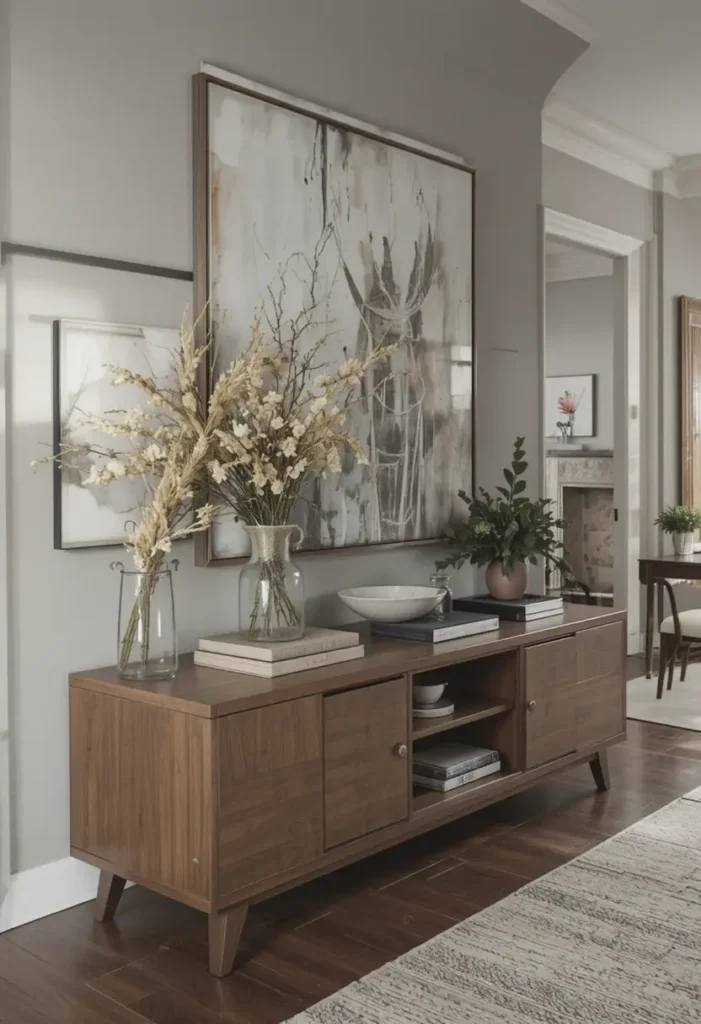
Sideboards, consoles, and low cabinets can act as functional dividers between living and dining areas.
This works because they provide structure without blocking light or sightlines.
A common mistake is using tall shelving that cuts the room in half. Lower pieces keep the space open and balanced.
10. Match Visual Weight Across Zones
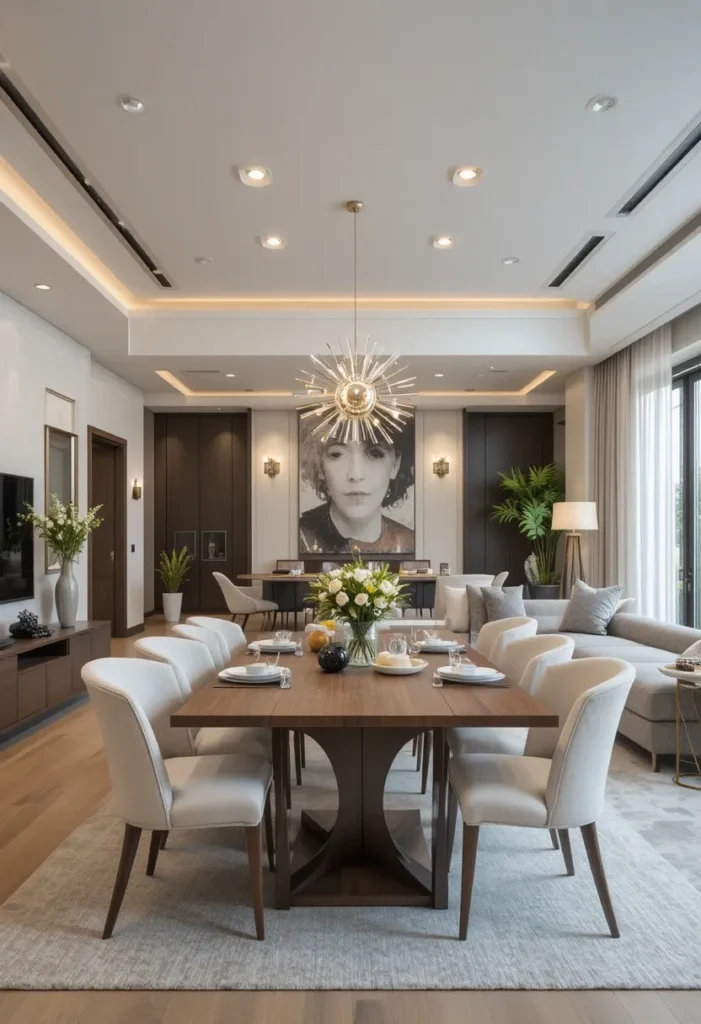
Balance matters more than matching furniture styles exactly. If one area feels heavy and the other feels sparse, the room feels off.
This works because the eye seeks equilibrium. Similar visual weight on both sides creates calm.
If your dining set is visually bold, keep living room furniture lighter—or vice versa—to maintain balance.
Also Read This Blog: 14 Farmhouse Living Room Ideas to Create a Cozy, Stylish Space
11. Let One Zone Take the Lead
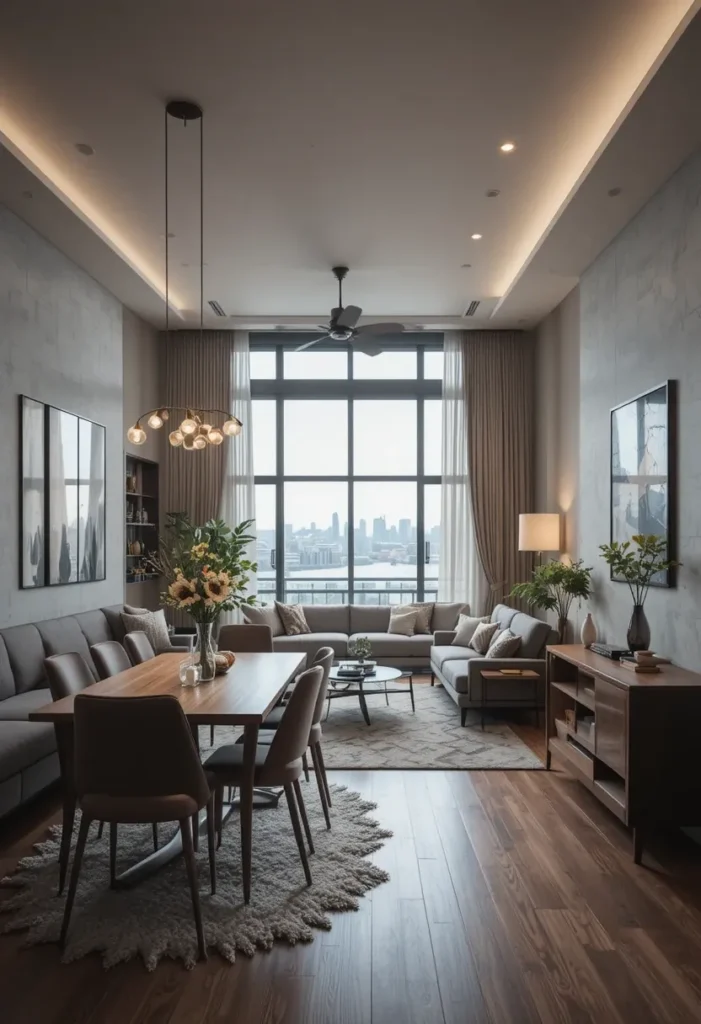
Not every combo space needs equal emphasis. Decide which area is used more often and let it guide the layout.
This works because priorities simplify decisions. The secondary zone supports the main one instead of competing with it.
For example, if you rarely host formal dinners, a compact dining area can comfortably support a more generous living space.
12. Avoid Pushing Everything Against the Walls
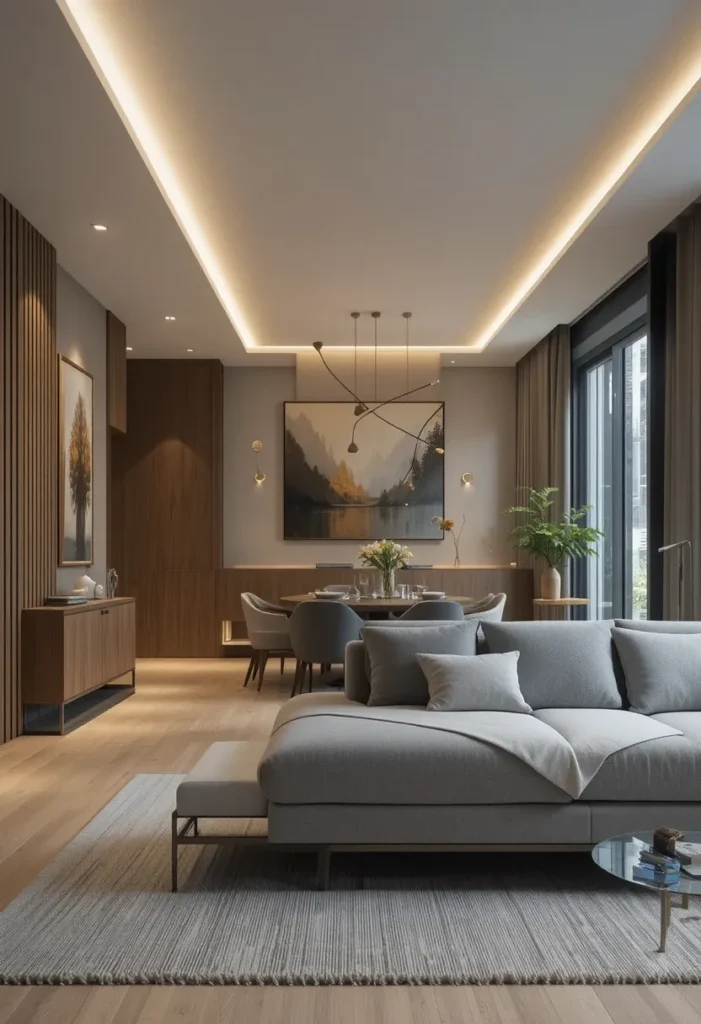
It’s tempting to line furniture along walls to “save space,” but this often backfires.
This works better when furniture floats slightly inward. It creates defined zones and better flow.
Even pulling a sofa a few inches off the wall can dramatically improve how the space feels.
13. Use Repetition to Create Unity
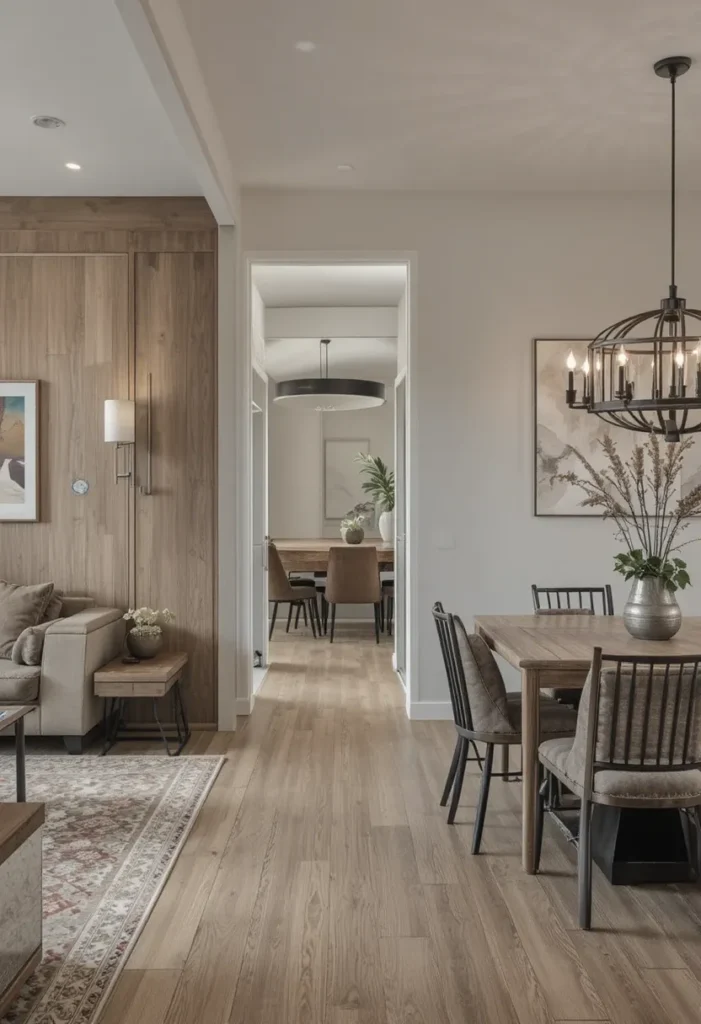
Repeating materials, shapes, or finishes across zones ties the space together.
This works because repetition creates visual rhythm. It helps the room feel designed rather than pieced together.
For example, matching wood tones or repeating metal finishes subtly connect the living and dining areas.
Also Read This Blog: 15 Living Room Remodel Ideas That Actually Improve How the Space Feels
14. Adjust Over Time Instead of Forcing Perfection
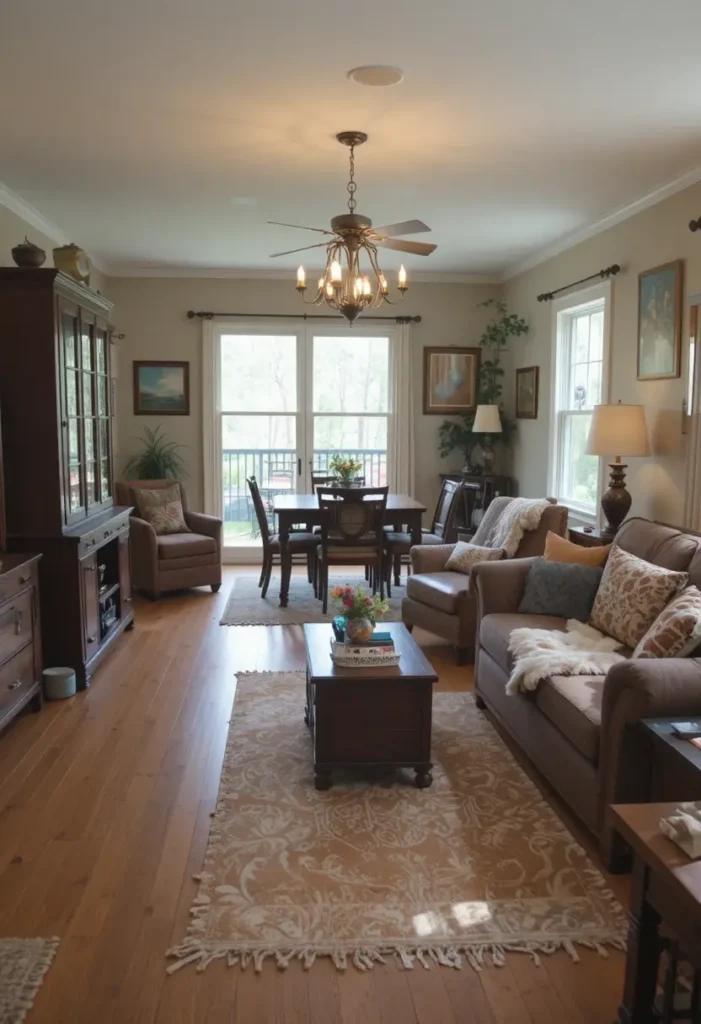
Combo layouts often need fine-tuning. What looks good on day one may need adjustment once you live in the space.
This works because real life reveals what layouts can’t. Daily movement and habits expose issues early.
Give yourself permission to shift furniture, adjust spacing, or rethink zones as needed. Flexibility leads to better results.
15. Add Flexible Seating Options
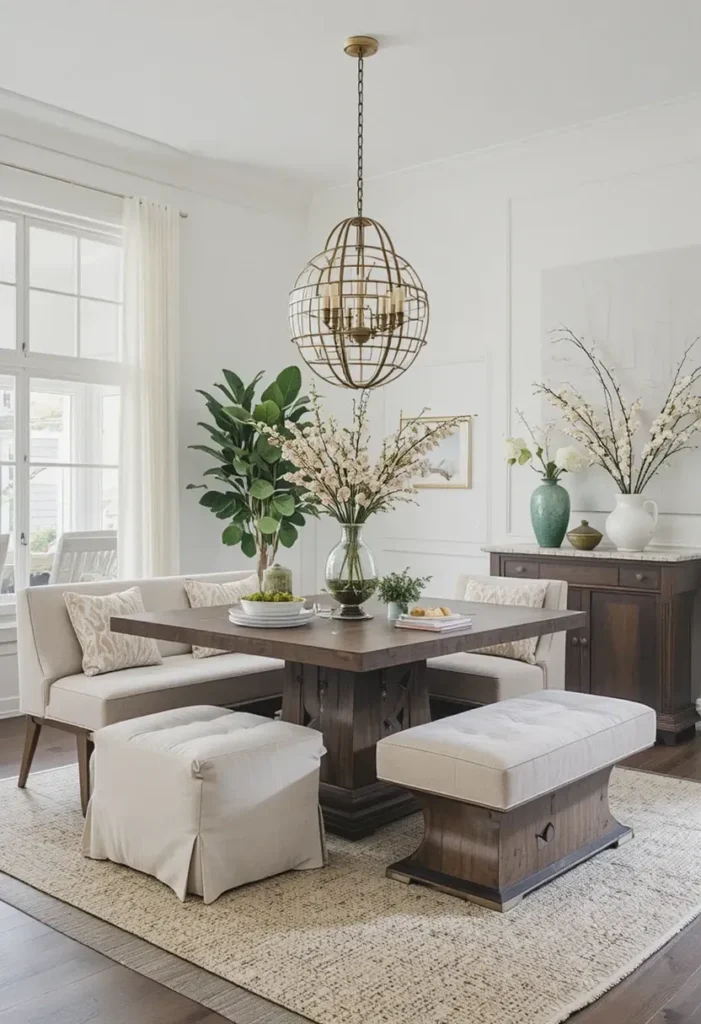
In a combo space, people often need extra seating for guests or casual gatherings. Flexible pieces like ottomans, benches, or small stools can adapt to either the living area or dining area as needed.
This works because it provides versatility without permanently taking up space. You can easily move these pieces where they’re needed most.
A practical tip is to choose lightweight, stackable, or tucked-away options so the room stays uncluttered when they’re not in use.
Conclusion
A living room dining room combo layout doesn’t have to feel confusing or crowded. When you focus on function, flow, and balance, the space naturally organizes itself. Thoughtful furniture placement, clear zones, and realistic expectations make shared spaces feel comfortable and intentional. With a calm, step-by-step approach, you can create a layout that works smoothly for everyday life—and feels good to be in.

2 Comments