
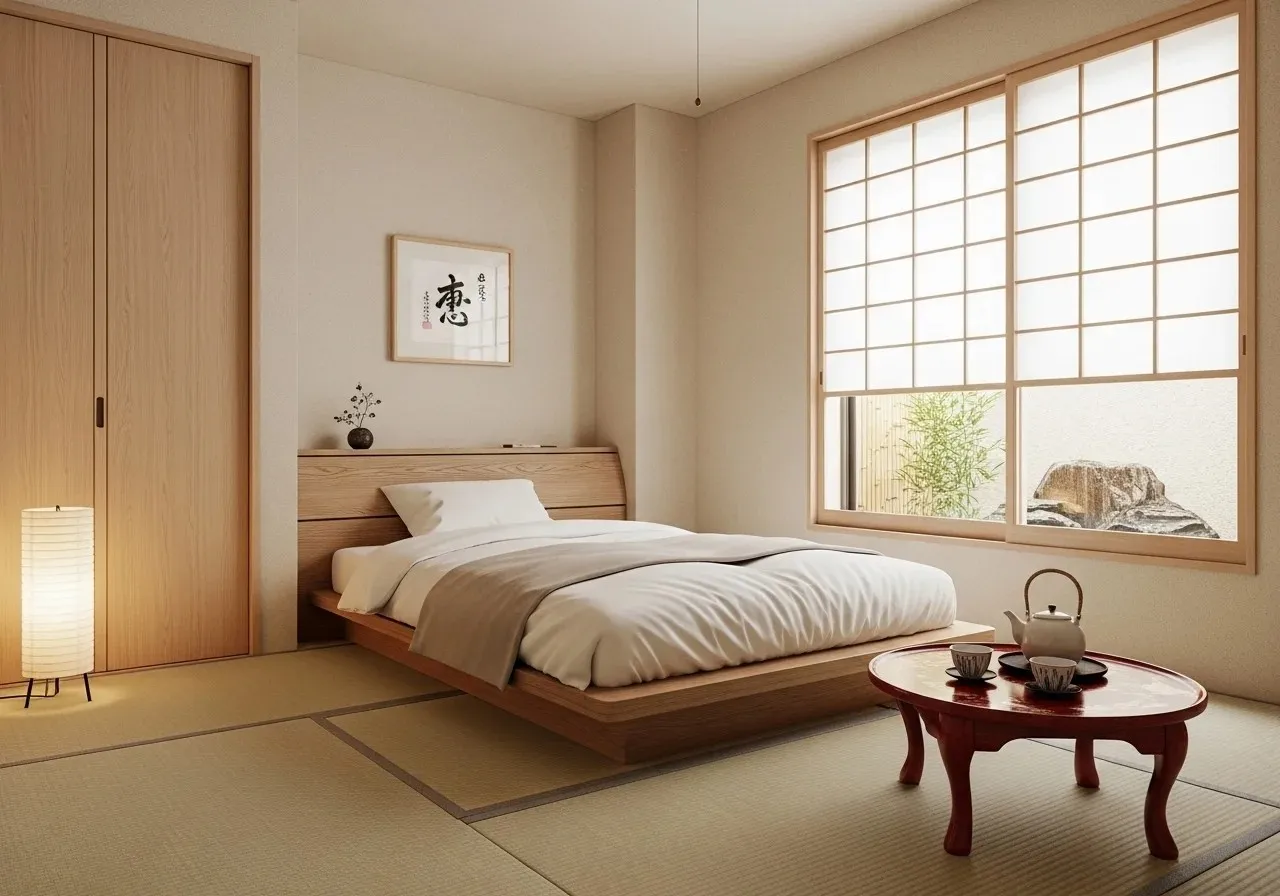
16 Japanese Bedroom Ideas for a Calm, Minimal, and Zen Space
Imagine stepping into your bedroom and feeling an instant sense of calm, balance, and focus. But if your room feels cluttered, chaotic, or overly busy, it can affect your sleep, mood, and even your creativity. Japanese bedroom design is all about simplicity, natural materials, and serene spaces that encourage relaxation and mindfulness.
These Japanese bedroom ideas bring minimalism, harmony, and elegance into your space. Whether you love traditional tatami floors or modern Japanese-inspired furniture, these ideas help you create a bedroom that feels peaceful, cozy, and visually soothing.
1. Low Wooden Platform Bed
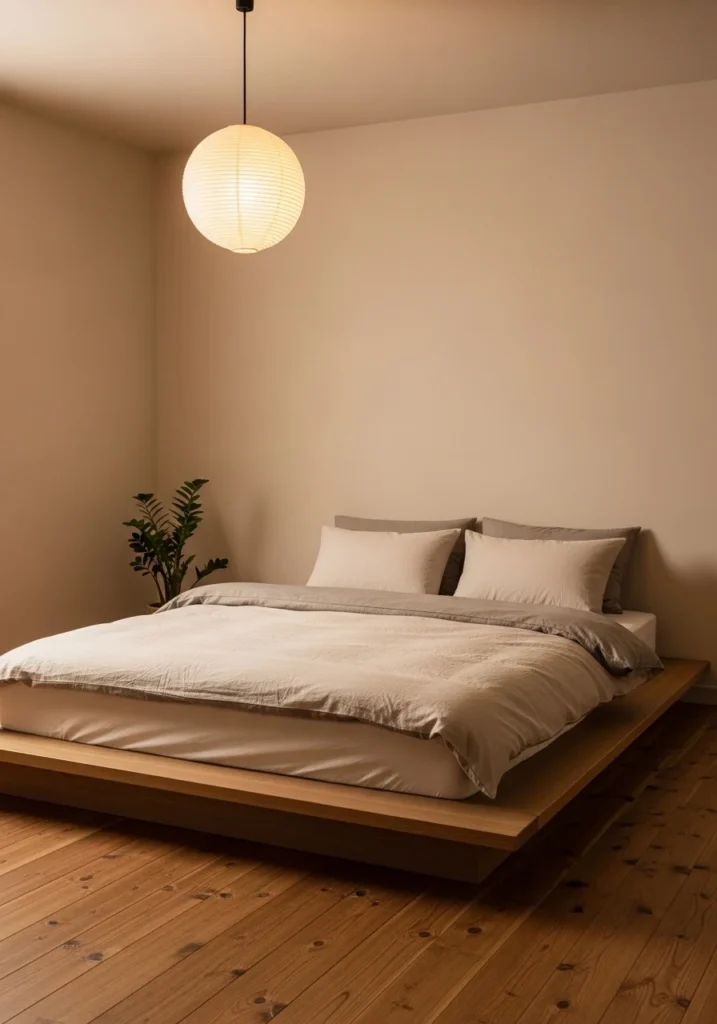
A low wooden platform bed is a hallmark of Japanese bedrooms. It keeps the bed close to the floor, promoting a grounded, minimalist aesthetic. Natural wood tones like light oak or bamboo work best for a serene vibe.
This design works because it emphasizes simplicity and uncluttered lines, creating a calm, open space. The low profile also makes the room feel more expansive and harmonious.
Tip: Pair the bed with simple white or neutral bedding and a soft futon mattress for an authentic Japanese feel.
2. Tatami Mats
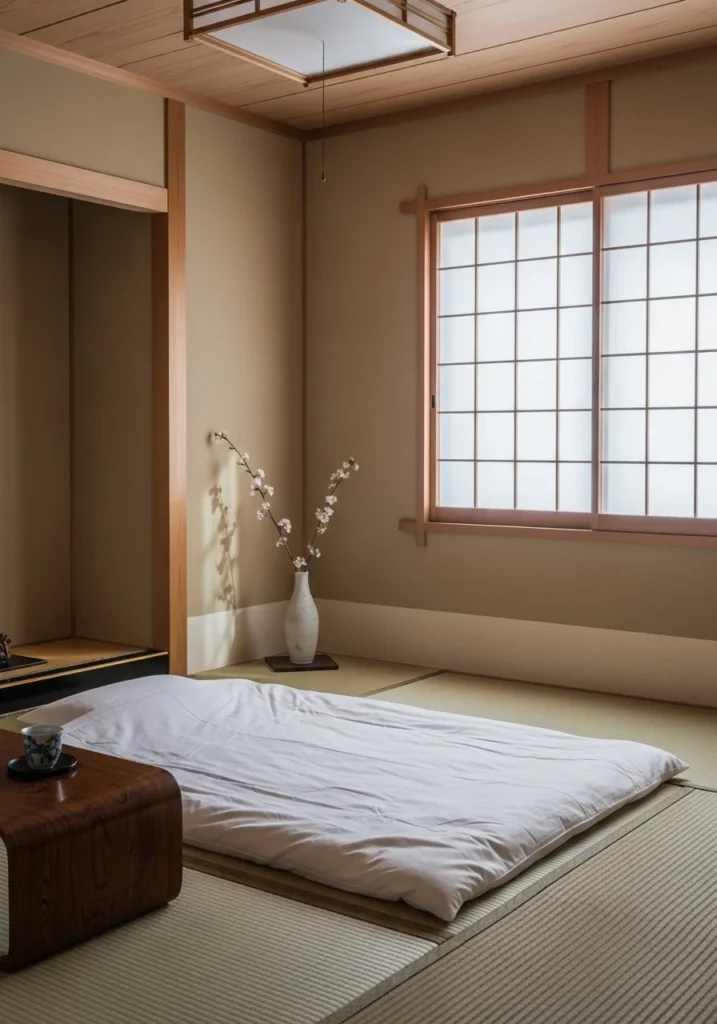
Tatami mats are traditional Japanese flooring made from woven straw. They provide a natural texture and a soft, warm surface for walking or sitting.
These mats work well in bedrooms because they bring an organic, earthy element and define the sleeping area without overwhelming the space. Tatami flooring adds cultural authenticity and a tactile sense of comfort.
Tip: Use tatami mats in combination with a low bed or futon to fully embrace the Japanese style.
3. Shoji Screens for Privacy
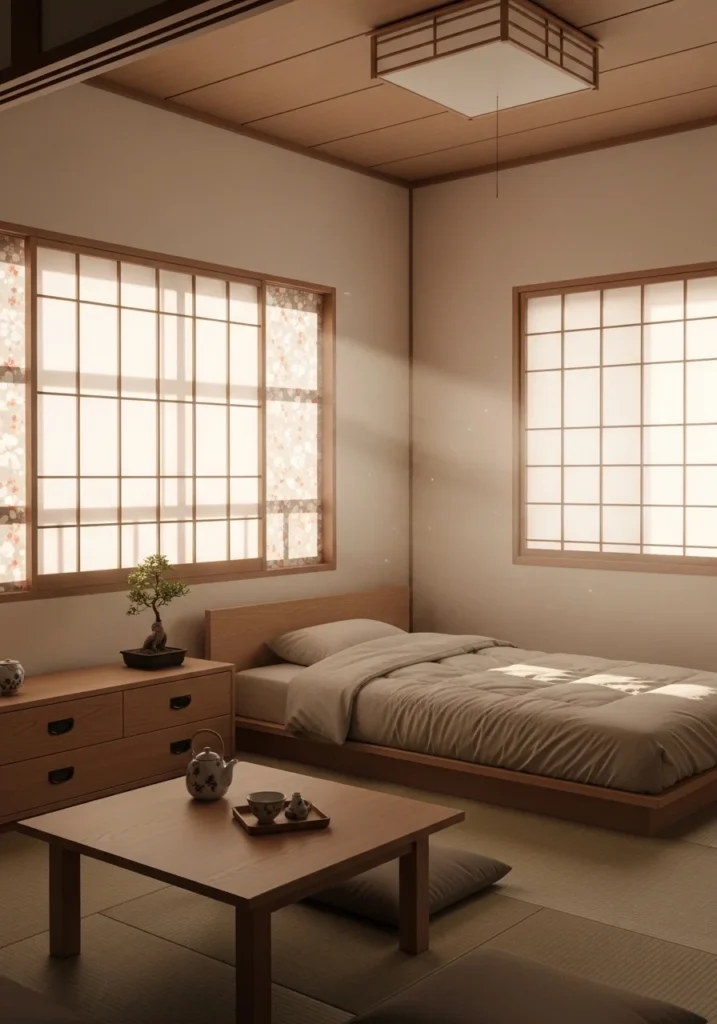
Shoji screens are sliding panels made of wood frames and translucent paper. They can separate areas, provide privacy, or serve as decorative wall features.
They work because they diffuse natural light softly across the room, creating a peaceful, airy atmosphere. Shoji screens help maintain an open, uncluttered feeling while subtly dividing the space.
Tip: Use a screen near the window to filter sunlight or as a backdrop for the bed for a traditional touch.
4. Minimalist Bedding and Neutral Colors
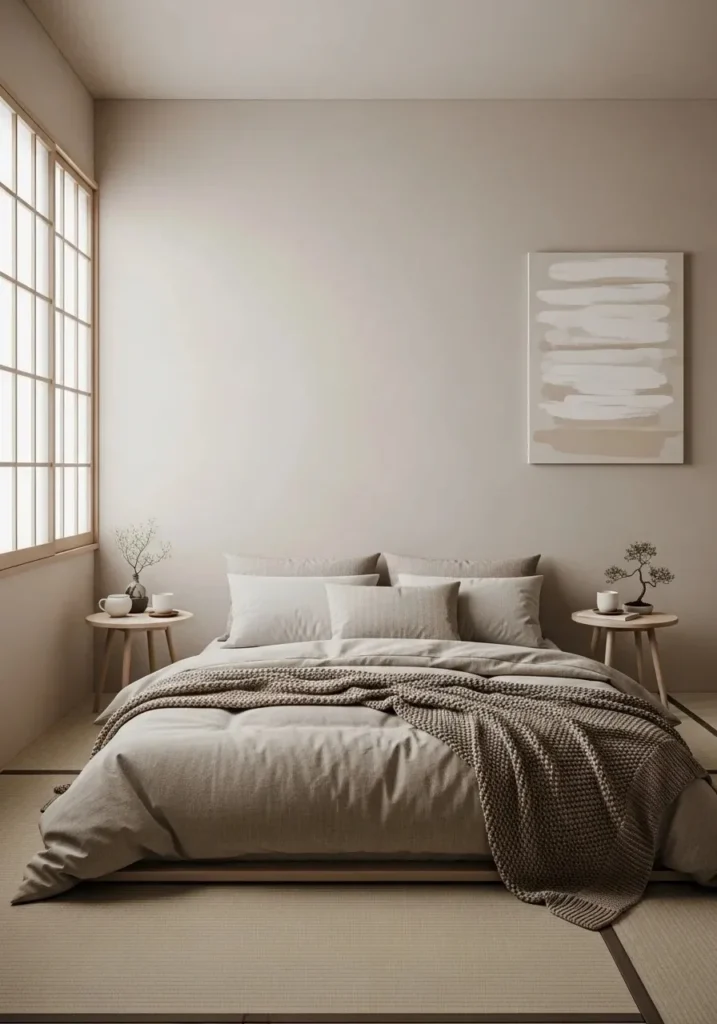
Japanese bedrooms often favor neutral tones like whites, creams, soft beiges, and greys. Minimalist bedding with simple textures enhances a serene, uncluttered look.
This works because a neutral palette allows natural materials, lighting, and decorative accents to shine, creating a calm and inviting atmosphere. Simple bedding reduces visual noise and encourages restful sleep.
Tip: Layer a lightweight quilt or futon on top of the mattress for both warmth and authenticity.
5. Natural Wood Furniture
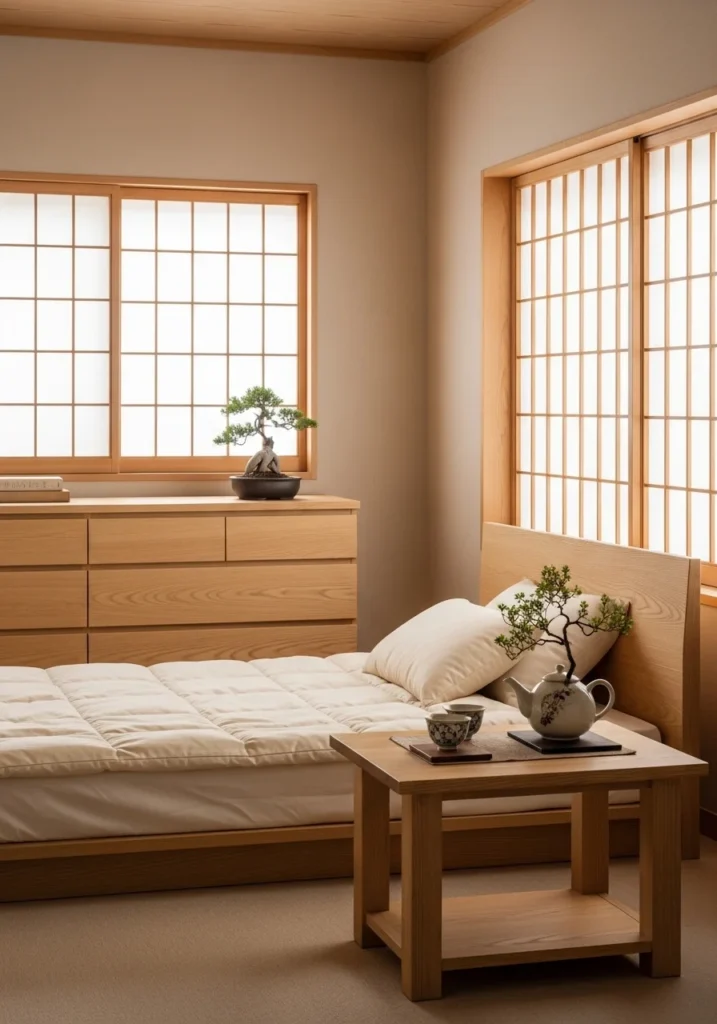
Furniture in Japanese bedrooms is typically made of light, natural woods such as bamboo, oak, or walnut. Pieces are simple, low, and functional, with clean lines and minimal ornamentation.
This works because natural wood brings warmth and texture without overpowering the space. It aligns perfectly with the Japanese principle of Wabi-Sabi, celebrating simplicity and natural imperfections.
Tip: Keep furniture minimal — one low dresser and a small bedside table is often enough.
6. Zen-Inspired Decor and Plants
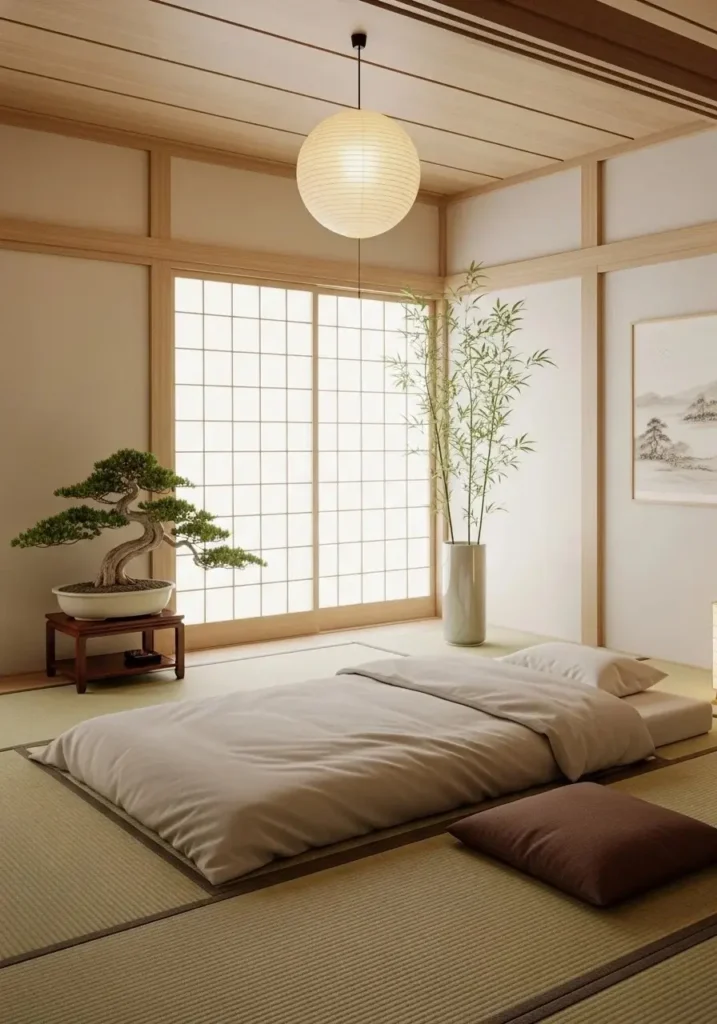
Japanese design emphasizes connection with nature. Adding small bonsai trees, bamboo plants, or simple greenery can instantly create a peaceful and refreshing environment.
This works because natural elements introduce life and tranquility into a room. Plants soften the minimalistic space and enhance the calming Japanese aesthetic.
Tip: Use one or two small plants rather than filling the room; simplicity is key.
Also Read This Blog: Pink and Black Bedroom Ideas: 16 Stylish Ways to Create a Bold Yet Cozy Space
7. Sliding Wooden Doors
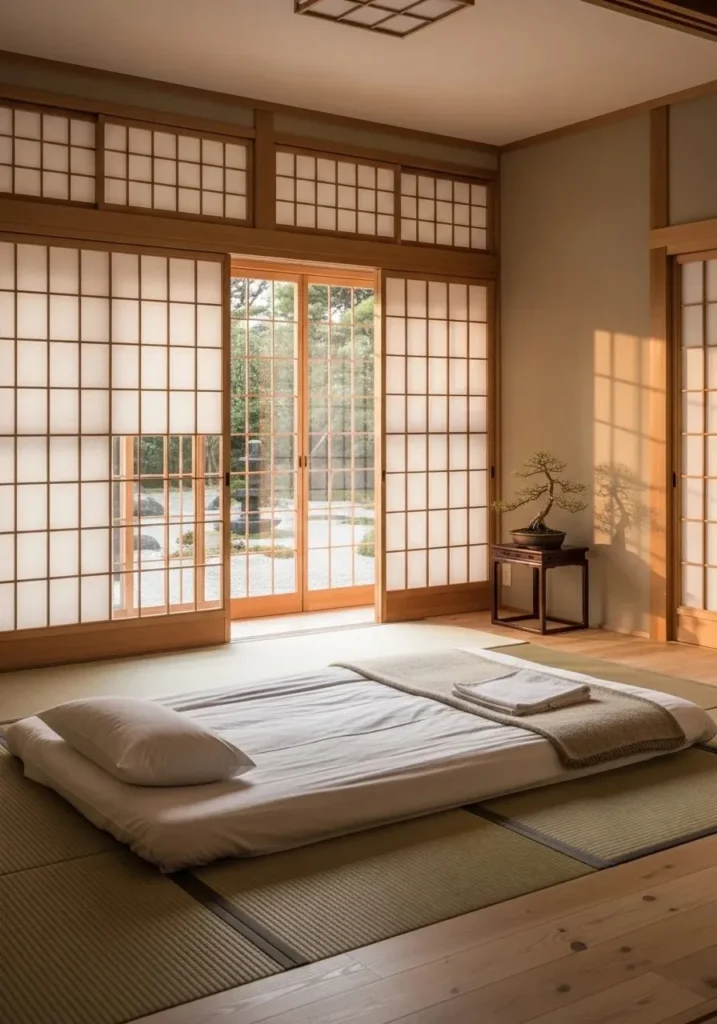
Sliding wooden doors save space while maintaining the minimalist aesthetic. They are often paired with clean, simple walls and neutral floors.
This design works because it creates smooth lines and an open feeling, avoiding the visual clutter of swinging doors. Sliding doors are both functional and stylish, complementing Japanese-style bedrooms beautifully.
Tip: Opt for light-colored wood or bamboo to keep the room feeling bright and airy.
8. Soft, Ambient Lighting
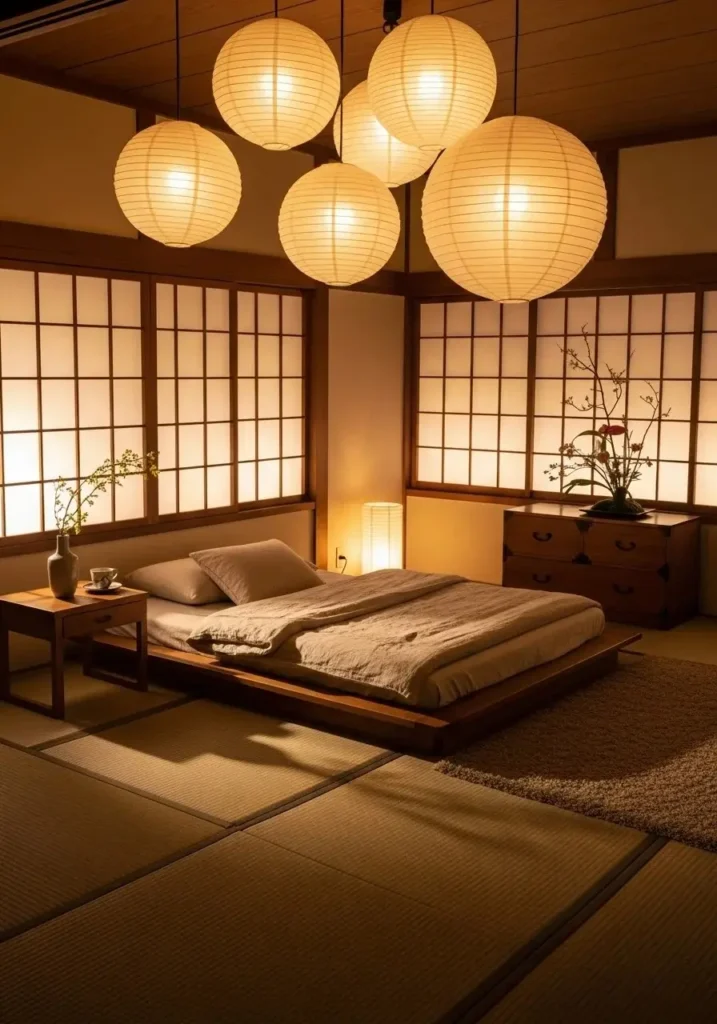
Lighting is subtle in Japanese bedrooms. Use low, warm lighting from paper lanterns, floor lamps, or recessed lighting to create a cozy, serene mood.
This works because gentle illumination enhances relaxation and emphasizes textures and natural materials without harsh glare. Ambient lighting creates a calm environment that promotes restful sleep.
Tip: Place lamps near the bed or low furniture for a soothing, intimate glow.
9. Futon Bedding
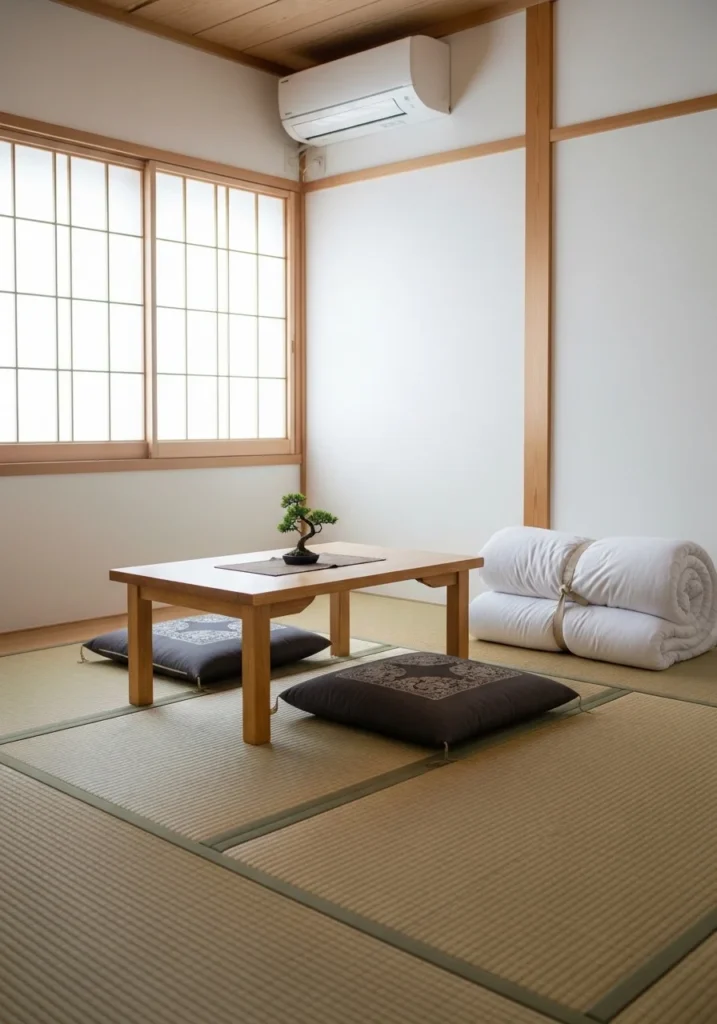
Futons are traditional Japanese mattresses that can be rolled up and stored during the day. They save space and maintain a minimalist, airy bedroom.
Futons work because they allow the room to feel open and multifunctional, ideal for small spaces or minimalist lifestyles. Sleeping close to the floor also promotes a grounded, cozy atmosphere.
Tip: Pair a futon with a tatami mat for an authentic Japanese bedroom setup.
10. Neutral Area Rugs
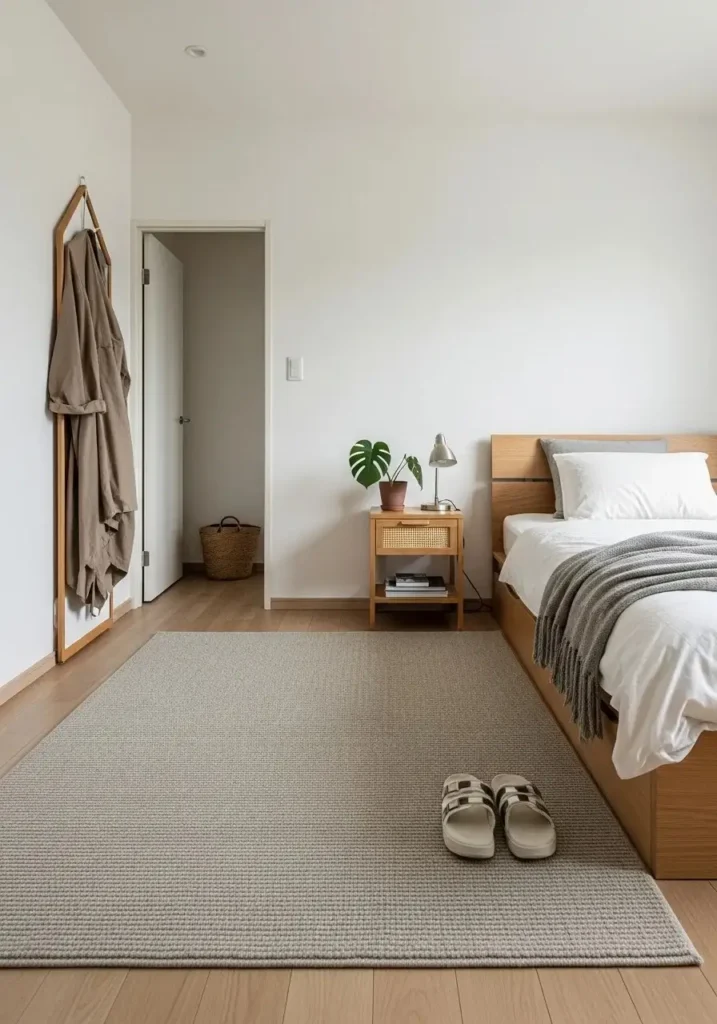
A soft, neutral-colored rug can define the sleeping area without overpowering the simplicity of the room. Wool, jute, or cotton rugs in beige, cream, or grey tones add warmth and texture.
This works because it softens hard floors and complements natural materials, maintaining the minimalist and serene aesthetic of Japanese design.
Tip: Choose a flat-weave or low-pile rug to keep the clean, simple lines of the room.
Also Read This Blog: 17 Rustic Bedroom Ideas That Make Your Space Feel Warm, Cozy, and Timeless
11. Low Nightstands
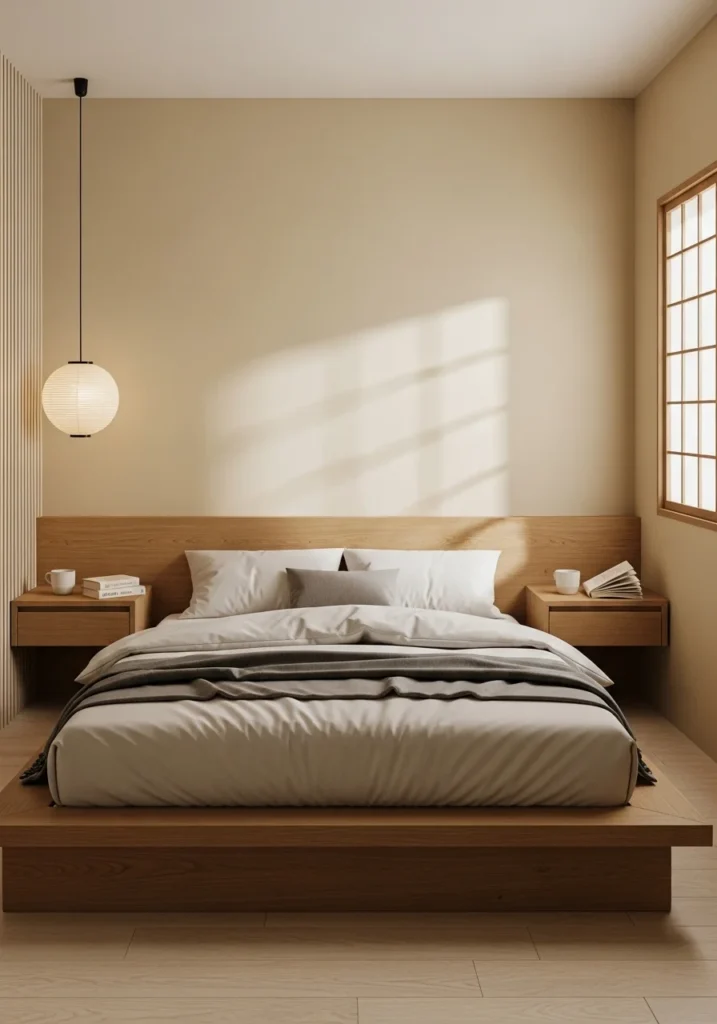
Low-profile nightstands reflect the Japanese preference for furniture that stays close to the floor. Simple wooden tables or minimal shelves provide functionality without clutter.
They work because the low height emphasizes openness and visual calm, keeping the room balanced and harmonious.
Tip: Select nightstands with built-in drawers to hide clutter and maintain simplicity.
12. Wall-Mounted Storage
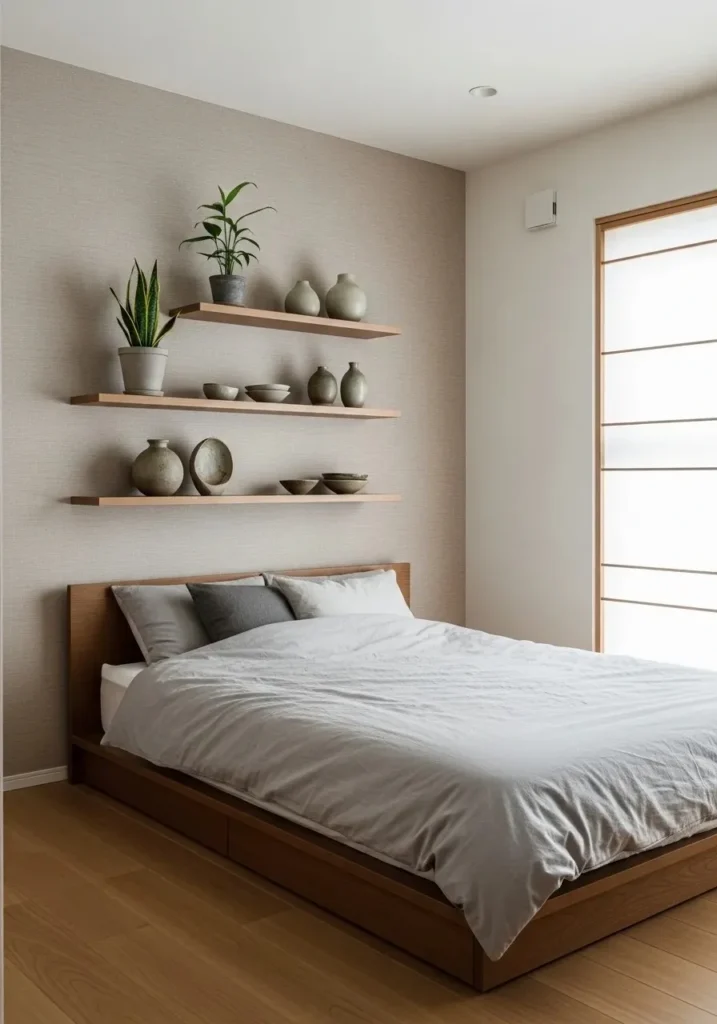
Wall-mounted shelves or cabinets keep the floor space open while offering storage for books, decor, or personal items. Floating furniture is perfect for Japanese-inspired bedrooms.
This works because vertical storage enhances minimalism, prevents clutter, and contributes to a clean, Zen-like environment.
Tip: Keep items on shelves minimal — one or two small plants or ceramics works best.
13. Shoji-Style Bedside Lamps
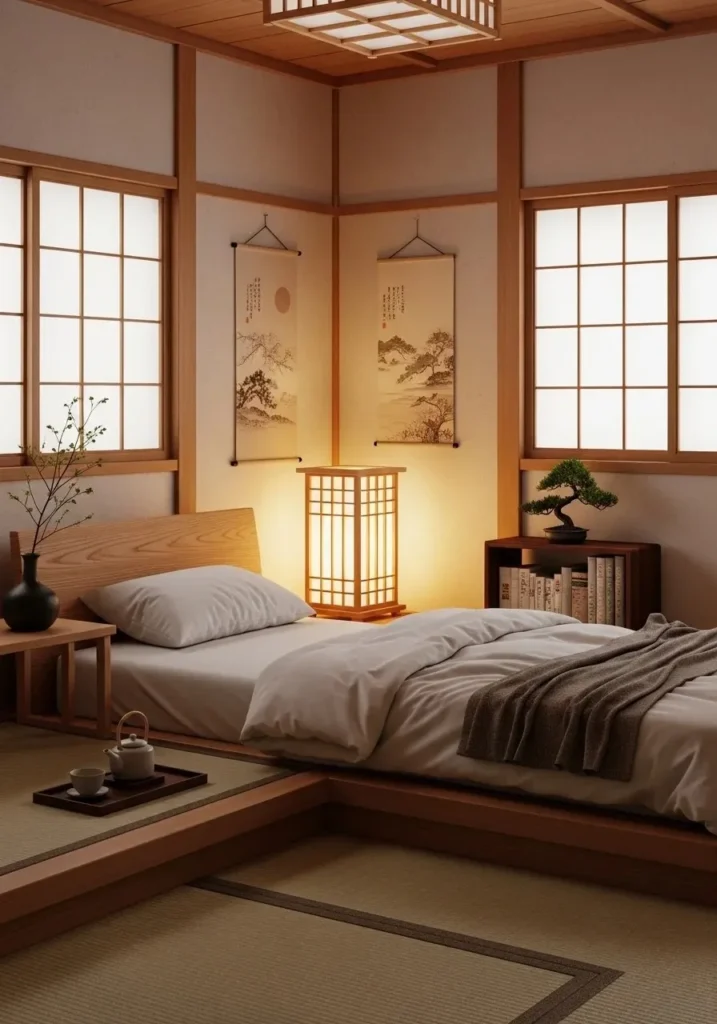
Shoji-inspired lamps use paper or translucent material to diffuse warm light softly. They create a calming ambiance and complement natural wood furniture.
This works because soft, warm lighting promotes relaxation, enhances natural textures, and maintains the serene Japanese aesthetic.
Tip: Place a lamp on a low table near the bed for a gentle, ambient glow.
Also Read This Blog: 16 Rainbow Bedroom Ideas That Instantly Make Your Space Feel Happy and Creative
14. Bamboo or Wooden Blinds
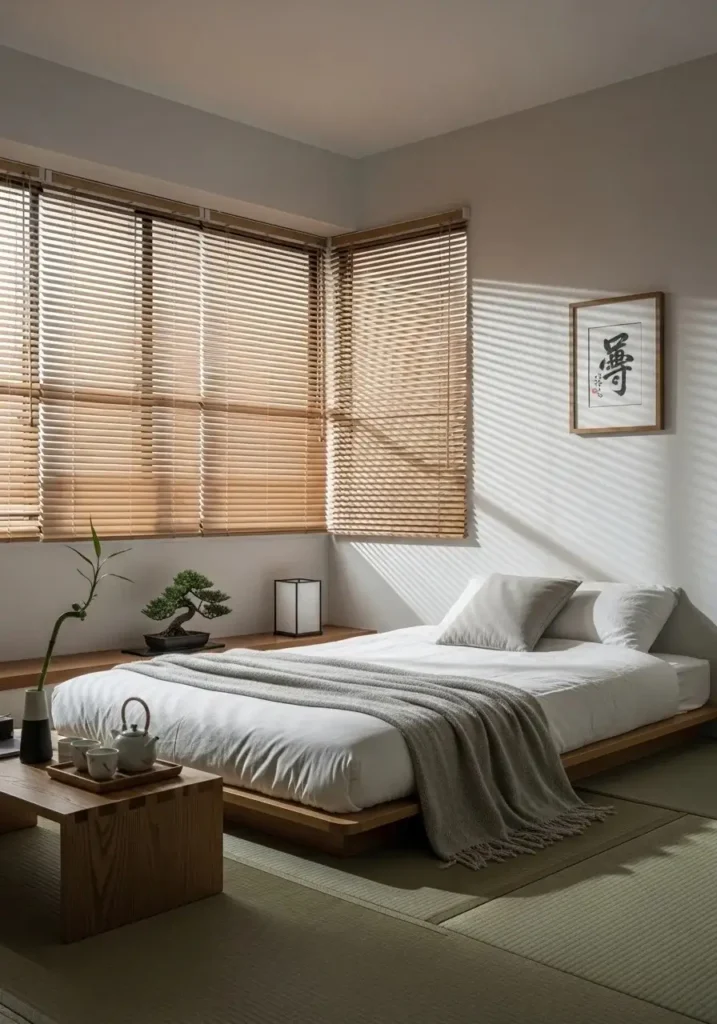
Window coverings made of bamboo or light wood are perfect for filtering sunlight gently while adding texture to the room.
This works because natural materials and soft light are key elements in Japanese design, creating a peaceful and organic atmosphere.
Tip: Combine blinds with sheer curtains for privacy and natural light control.
15. Minimal Artwork or Wall Decor
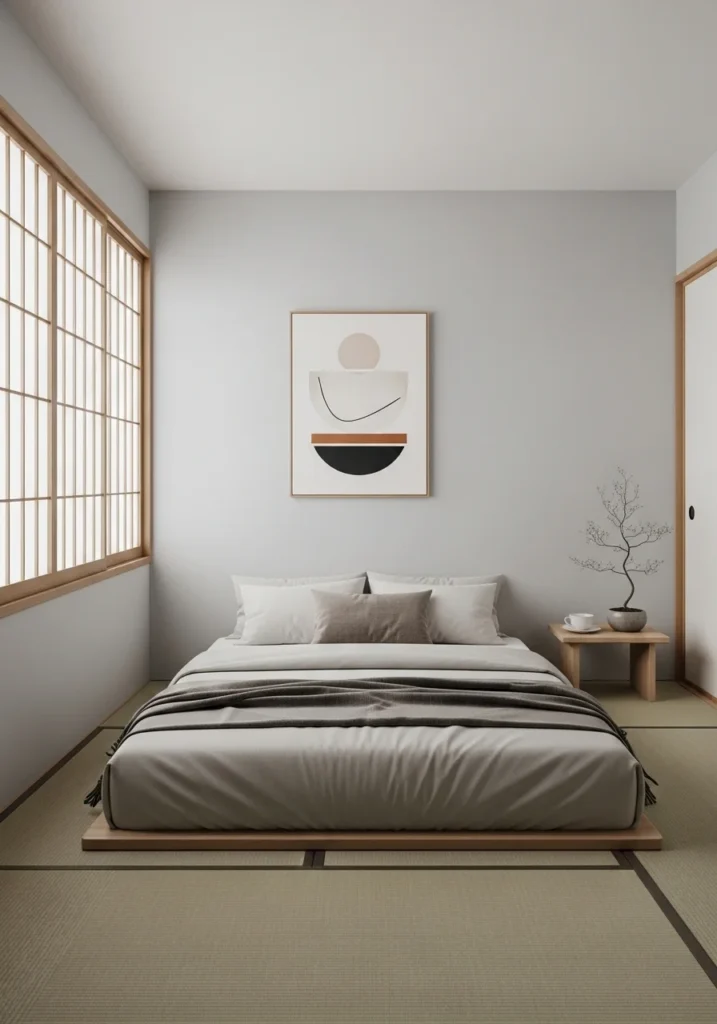
Japanese bedrooms often feature a single piece of wall art or calligraphy rather than multiple decorations. Simple ink paintings, nature prints, or bamboo artwork enhance serenity.
This works because minimal wall decor avoids visual clutter and highlights the beauty of negative space, a core principle in Japanese interiors.
Tip: Hang art at eye level and leave ample surrounding wall space to maintain a balanced look.
16. Zen-Inspired Personal Touches
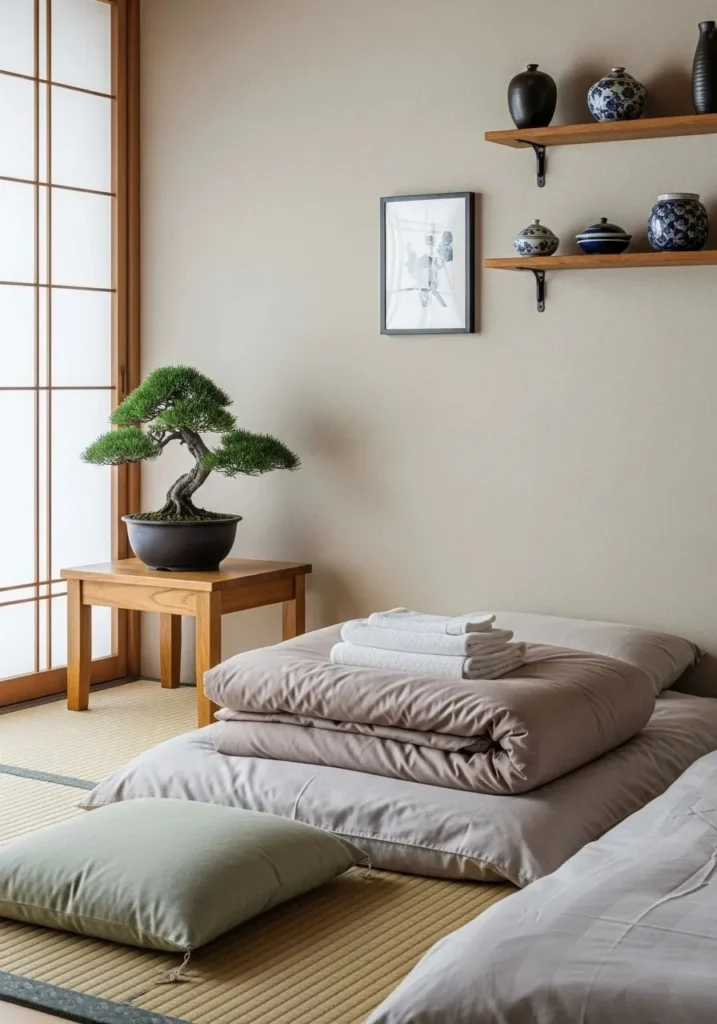
Adding subtle personal touches like a small bonsai, handcrafted ceramics, or a neatly folded tatami blanket creates warmth without overwhelming the space.
This works because Japanese bedrooms focus on mindfulness and intentional living. A few meaningful items enhance comfort while keeping the minimal aesthetic intact.
Tip: Display only a few items on shelves or nightstands to maintain tranquility and balance.
Conclusion
Creating a Japanese-inspired bedroom is about simplicity, natural materials, and mindful design. From low platform beds and tatami mats to soft lighting and subtle decor, these Japanese bedroom ideas show how minimalism can transform your space into a serene retreat.
The key is balance — combine neutral tones, natural wood, and simple accessories to promote calm, restfulness, and a connection with nature. Start small by incorporating one or two elements, then gradually build a peaceful, functional, and beautiful Japanese-inspired bedroom that feels uniquely yours.