
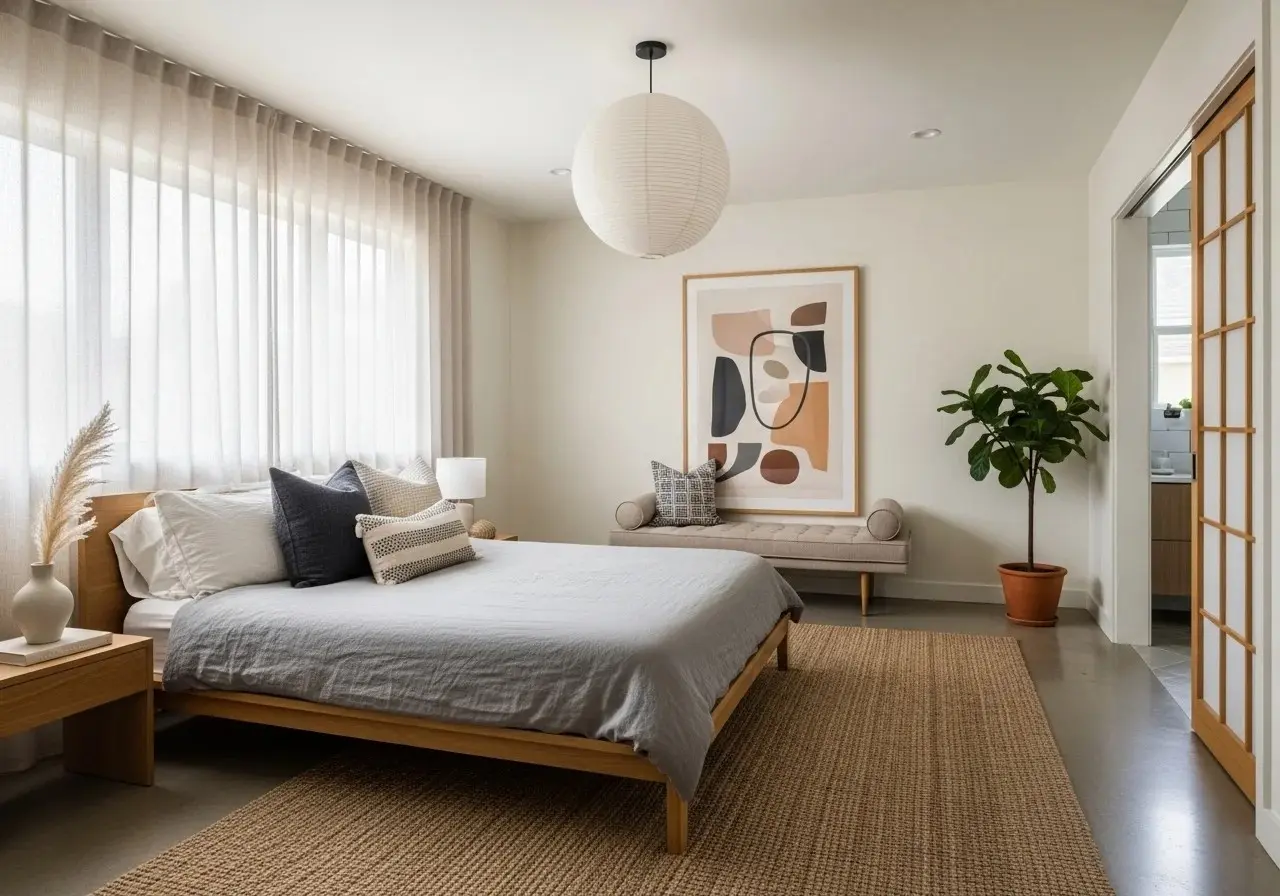
Japandi Bedroom Ideas: 17 Ways to Blend Japanese Minimalism with Scandinavian Warmth
Ever walk into a bedroom and feel instantly tense instead of relaxed? Too often, our bedrooms are cluttered, mismatched, or just plain cold. Japandi style solves that by marrying the clean, peaceful lines of Japanese design with the warm, cozy textures of Scandinavian interiors. The result? A bedroom that feels calming, intentional, and inviting the moment you step inside. These Japandi bedroom ideas show how to create a space that’s serene, elegant, and surprisingly easy to live in every day.
1. Start with a Neutral, Grounded Palette

A Japandi bedroom thrives on simplicity, so start with walls, bedding, and furniture in soft neutrals—think warm beige, soft taupe, or creamy ivory. This works because neutral tones instantly calm the eye and create a versatile base for layered textures. Both Japanese and Scandinavian styles favor muted colors that don’t compete with natural light or decor.
Tip: Add subtle variations like a light oak bed frame or linen curtains to give depth without breaking the serenity.
2. Low-Profile Bed for a Zen Feeling

Choose a bed that sits low to the floor with clean lines. Think platform beds in light wood with minimal detailing. This works because it mimics traditional Japanese futons while keeping a Scandinavian sense of openness. A low bed helps the room feel spacious and connected to the floor, creating a peaceful, grounded atmosphere.
Tip: Pair with simple, crisp white or cream linens to maintain a minimalist look.
3. Layer Textures Without Clutter
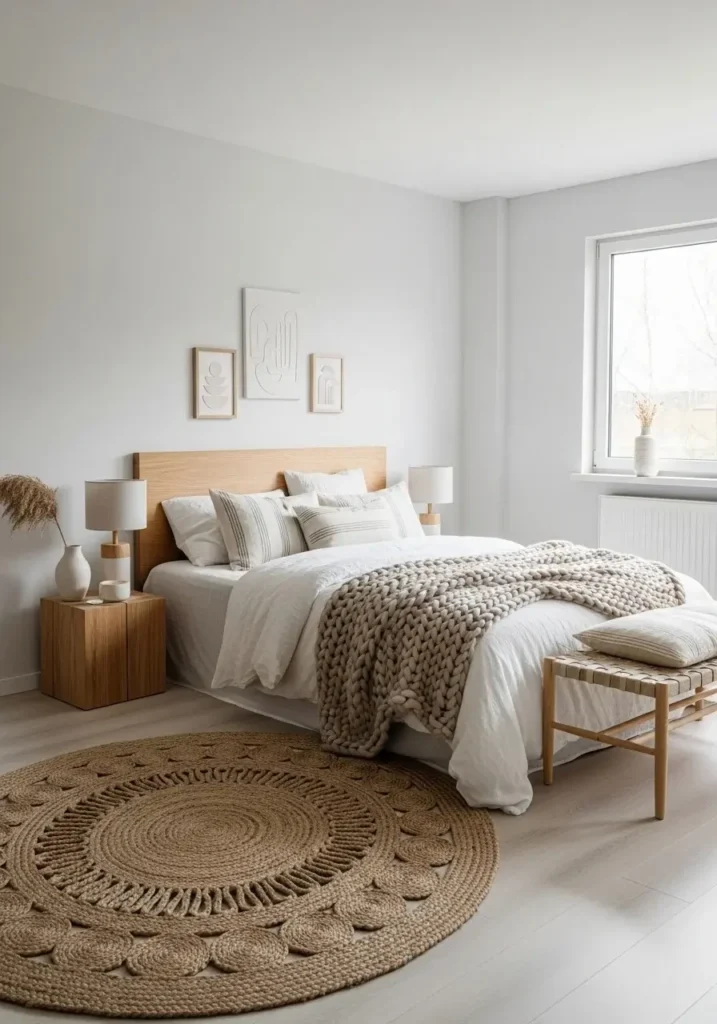
Introduce texture through bedding, rugs, and throws—linen sheets, soft wool blankets, and subtle jute rugs work beautifully. This works because texture adds warmth and visual interest without overwhelming the eye. Japandi design emphasizes tactile calm, so every layer should feel deliberate and natural.
Tip: Stick to a cohesive neutral palette to ensure textures complement rather than compete.
4. Incorporate Natural Wood Elements
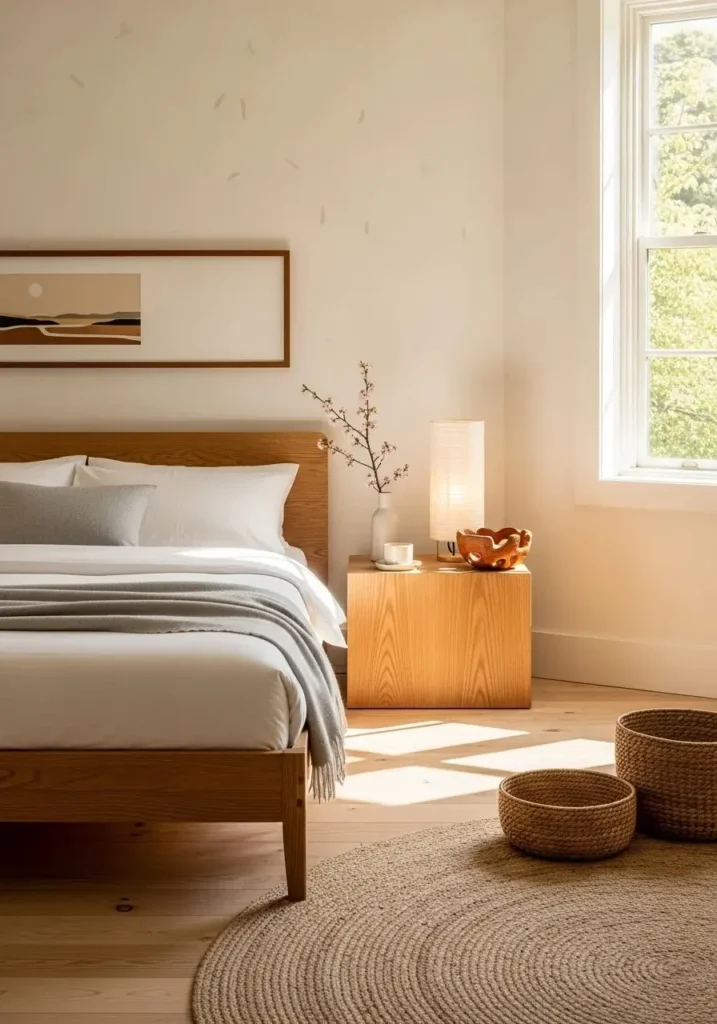
Use wooden furniture, frames, and accents in light to medium tones like oak, ash, or teak. This works because wood brings warmth and life to minimal interiors. Japanese and Scandinavian styles both highlight natural materials, which creates harmony and a sense of nature indoors.
Tip: Mix smooth, finished surfaces with raw or matte pieces to avoid monotony.
5. Keep Storage Hidden and Streamlined
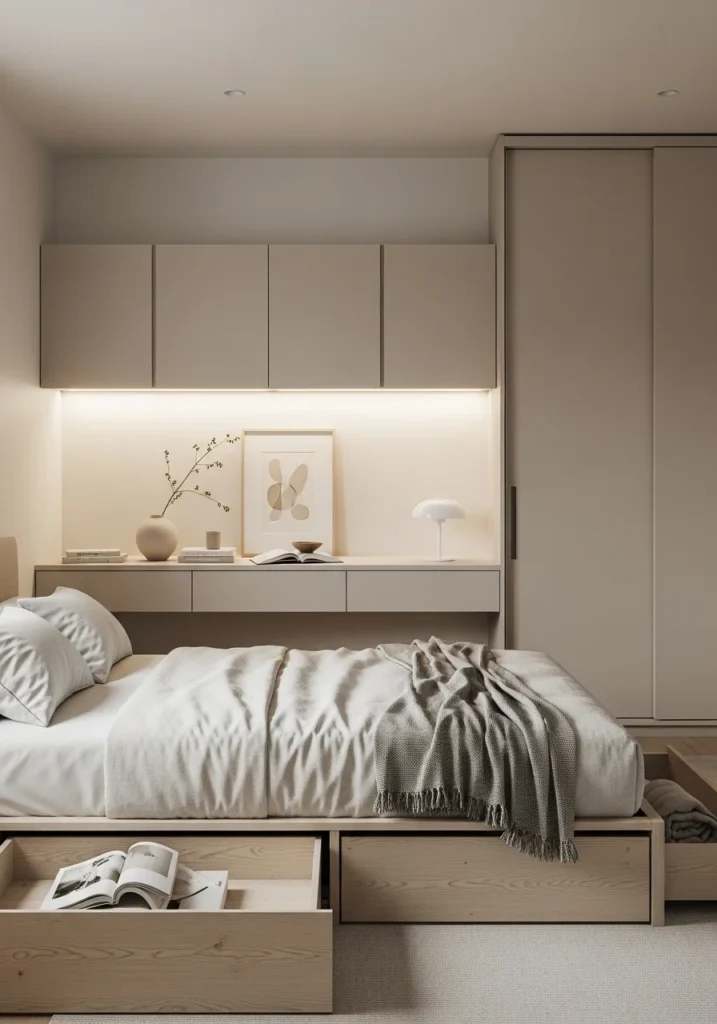
Opt for furniture with built-in drawers or minimalistic wardrobes that blend into the room. This works because Japandi design thrives on uncluttered spaces. Hiding everyday items reduces visual noise, helping the room feel airy and intentional.
Tip: Choose furniture with push-to-open drawers or subtle handles to maintain a clean look.
See More Amazing Ideas: 16 Wood Accent Wall Bedroom Ideas to Instantly Warm Your Space
6. Introduce Soft, Ambient Lighting
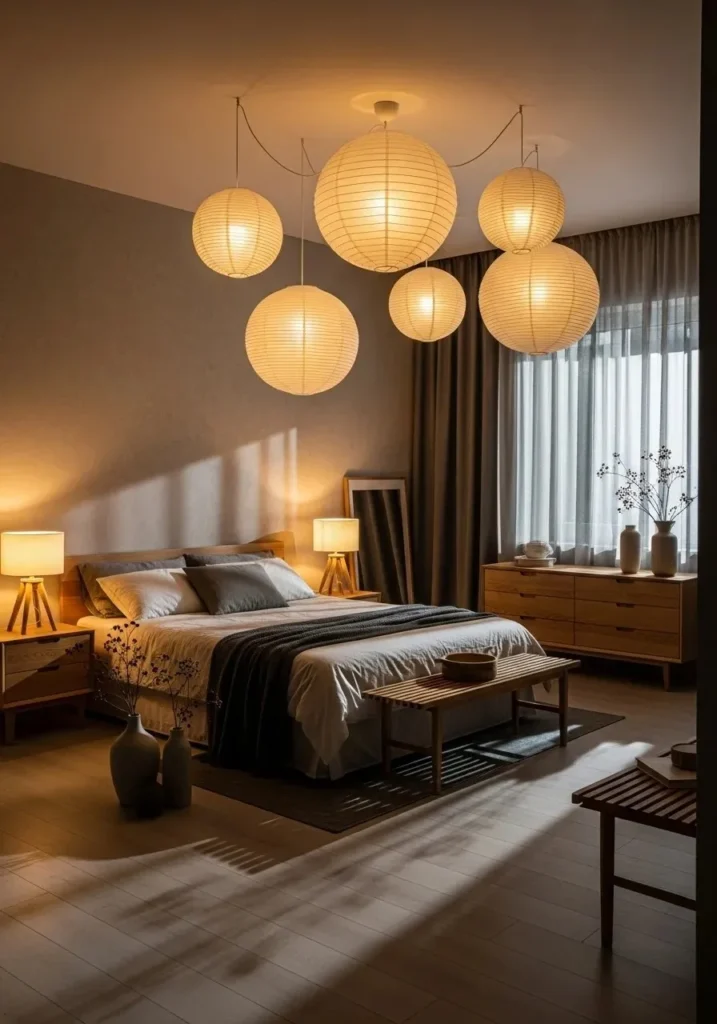
Select warm, soft lighting instead of harsh overhead lights. Paper lanterns, wooden lamp bases, or recessed LED strips work perfectly. This works because warm lighting enhances the cozy Scandinavian feel while echoing Japanese simplicity. Soft light encourages relaxation and sets a tranquil mood.
Tip: Layer lighting with bedside lamps and dimmers to adjust the ambiance easily.
7. Minimalist Wall Art or No Art at All

Keep walls bare or add one or two statement pieces like a single calligraphy scroll, abstract print, or woven wall hanging. This works because Japandi bedrooms favor intentional simplicity, letting each element breathe. Too many decorations disrupt the calm atmosphere.
Tip: Place art at eye level and use muted frames to avoid visual tension.
8. Add a Small Indoor Plant
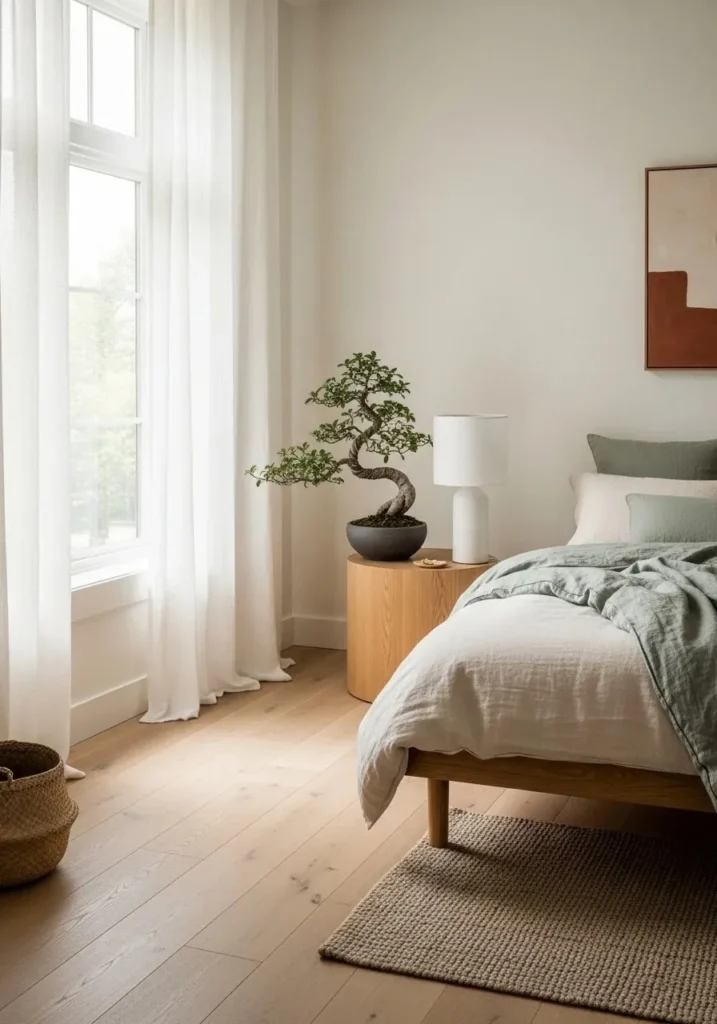
A single potted plant like a bonsai, fiddle leaf fig, or simple succulent introduces life and softness. This works because greenery adds a natural focal point without cluttering the space. Both Japanese and Scandinavian interiors celebrate biophilic design—bringing nature indoors for calm and wellbeing.
Tip: Choose plants that thrive in low light for effortless maintenance.
These Amazing Ideas Also For You: 17 Fairy Lights Bedroom Ideas to Create a Cozy, Dreamy Space
9. Mix Japanese Minimalism with Scandinavian Coziness

Combine minimalist furniture and clean lines with soft textiles and cozy throws. Think a sleek wooden bed paired with a chunky wool blanket or linen pillows. This works because the contrast balances functionality with warmth, creating a bedroom that feels both disciplined and inviting.
Tip: Stick to two to three textures maximum to maintain simplicity without appearing flat.
10. Choose Multi-Functional Furniture
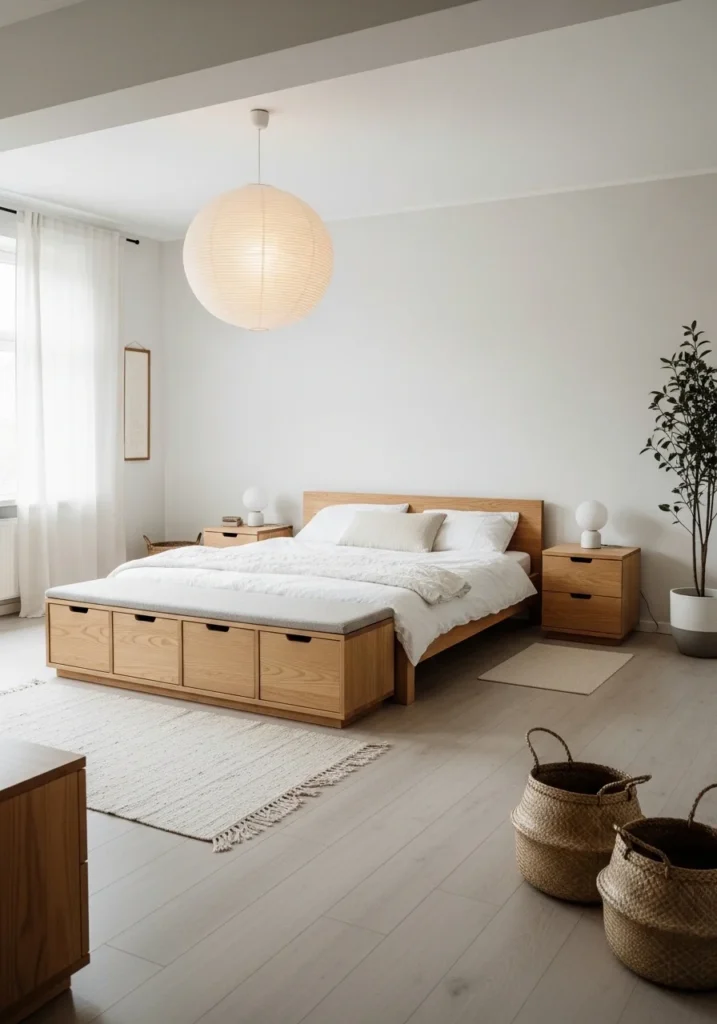
Japandi design values simplicity and efficiency. Select pieces that serve more than one purpose, like a bedside table with drawers, a bench that doubles as storage, or a foldable desk. This works because multi-functional furniture reduces clutter and maximizes the serene, open feeling of the room.
Tip: Keep surfaces mostly clear—display only a single plant or a favorite book to maintain a minimalist look.
11. Embrace Natural Fibers and Bedding

Opt for sheets, pillowcases, and blankets in linen, cotton, or wool. These natural fibers feel soft and breathable while supporting the muted color palette. This works because tactile comfort is central to both Japanese and Scandinavian philosophies. A bed that looks as good as it feels encourages relaxation and slows down the pace of your day.
Tip: Wash linens in soft, neutral tones to keep them looking fresh and naturally textured over time.
These Ideas Also for You: Bunk Bed Ideas: 15 Smart Ways to Make Your Space Feel Bigger and More Fun
12. Include a Statement Wooden Headboard
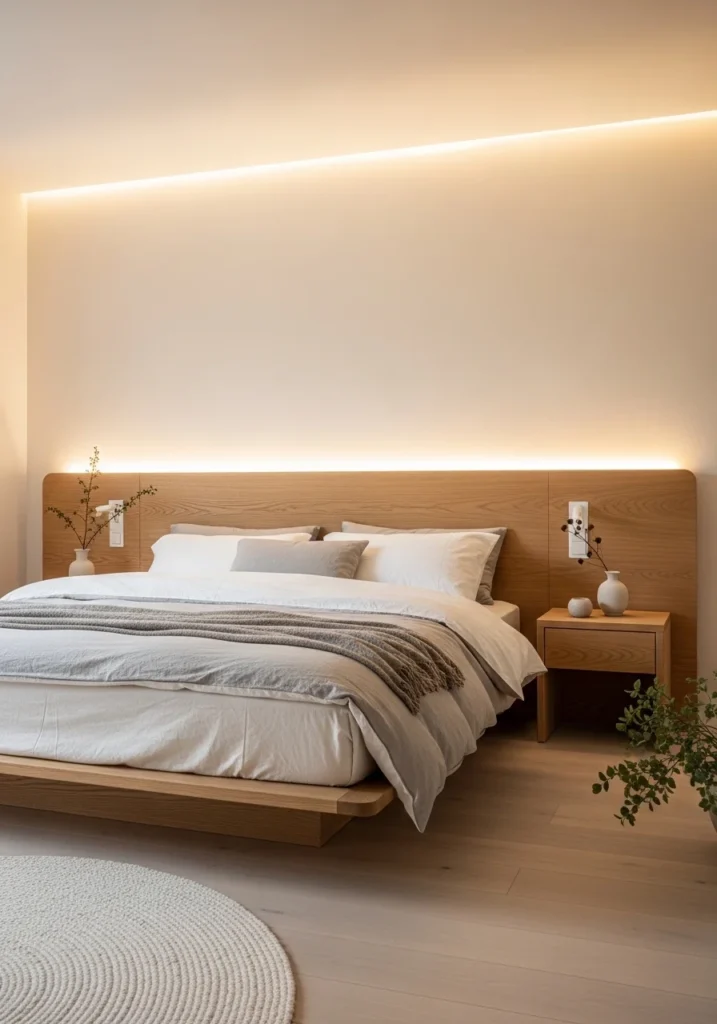
A simple, low wooden headboard in ash, oak, or walnut can define the bed without overwhelming the room. This works because it adds visual weight and focus while remaining minimalist. The wood introduces warmth, balancing the crisp lines of the bed and linens.
Tip: Avoid ornate carvings—smooth, clean edges are key for Japandi calm.
13. Use Sliding Doors or Panels
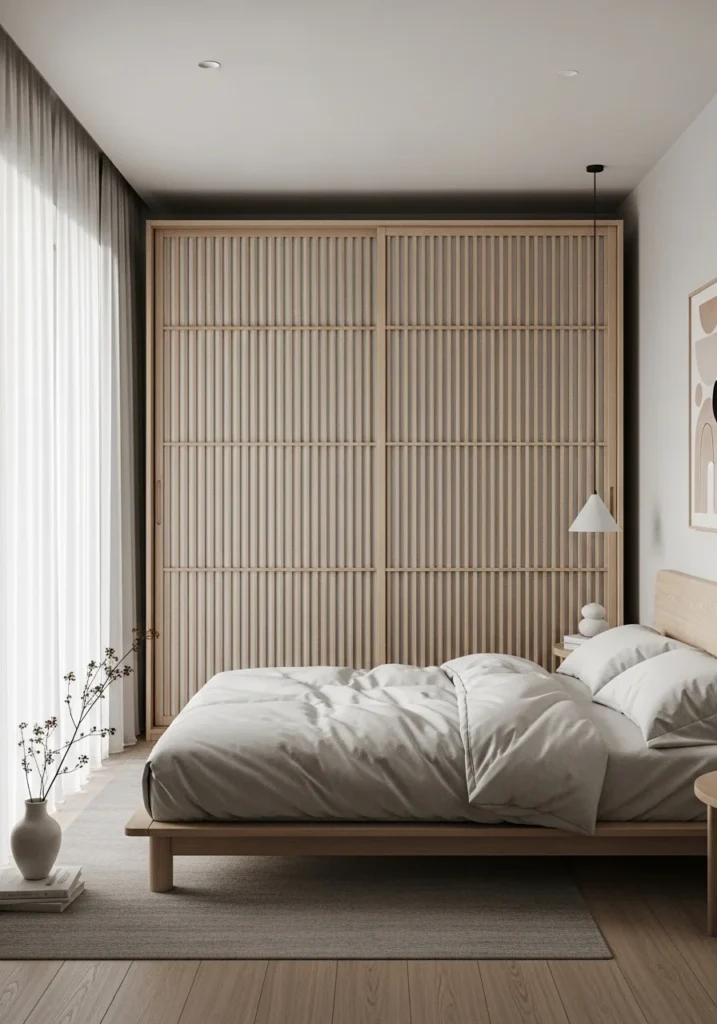
Instead of traditional swinging doors for closets or enclosures, consider sliding doors or shoji-style panels. This works because sliding doors save space and maintain clean, uninterrupted lines, echoing Japanese minimalism. They also soften the visual flow of the room.
Tip: Stick to natural wood tones or muted neutrals to keep the look seamless.
14. Integrate Low Lighting Layers

Layer lighting using wall sconces, bedside lamps, and ceiling fixtures with dimming options. This works because soft, adjustable light enhances a calming atmosphere. Combining multiple light sources lets you highlight textures, wood grain, and textiles while keeping the mood intimate.
Tip: Use warm white bulbs (2700–3000K) for a cozy, inviting glow.
Also Read More Ideas: Coastal Cowgirl Bedroom Ideas: 16 Ways to Mix Beach Vibes with Western Charm
15. Add Minimal Decorative Accents
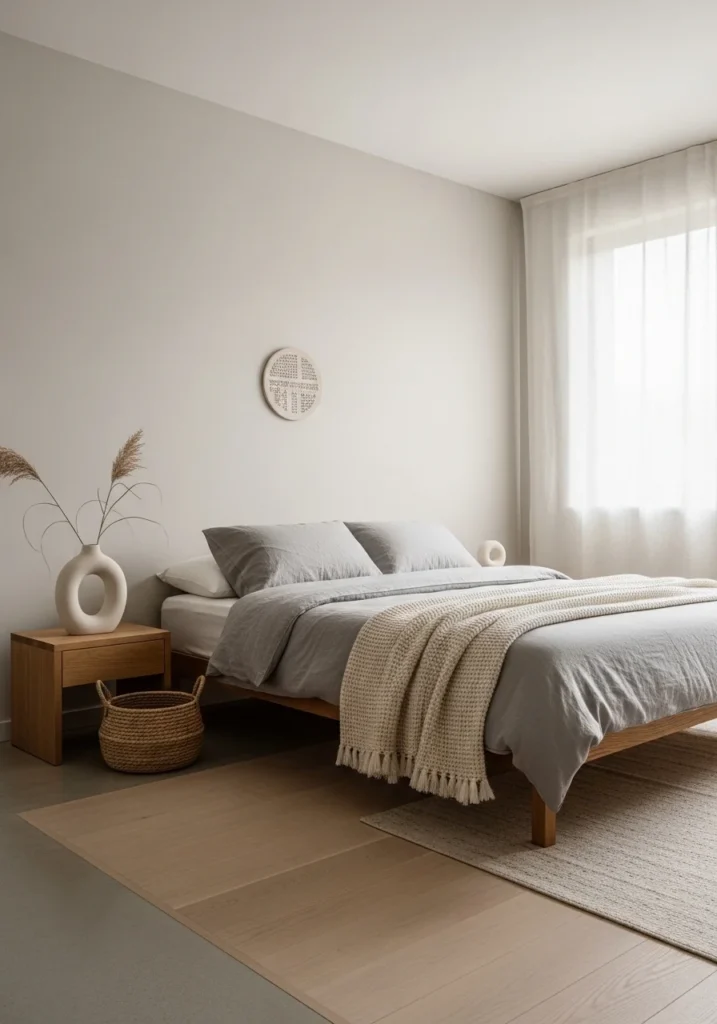
Keep decorative items simple and intentional—like a ceramic vase, a woven basket, or a small sculptural object. This works because Japandi style values quality over quantity. Every object should feel purposeful and elevate the room without adding clutter.
Tip: Limit to three to five decor pieces in the room for a clean, balanced look.
16. Incorporate Subtle Patterns
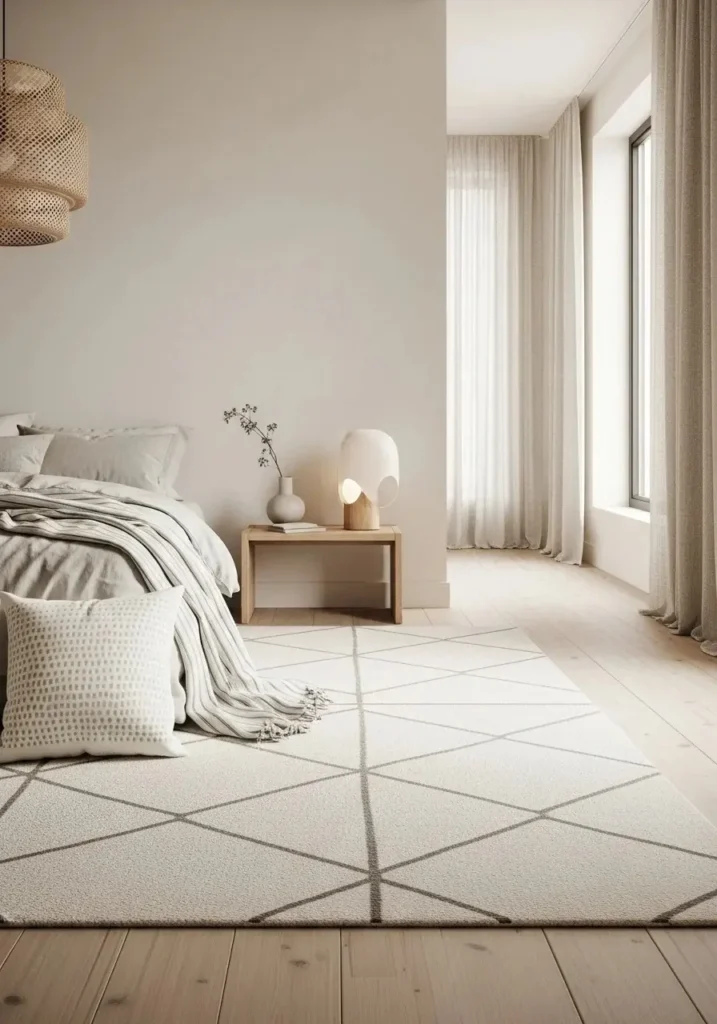
Introduce gentle patterns through rugs, throws, or cushions in muted colors—like soft stripes, grids, or geometric motifs. This works because subtle patterns bring visual interest without breaking the serene feel. Japanese textiles often feature understated designs, while Scandinavian interiors like soft geometric textures. Together, they create a calm, layered look.
Tip: Stick to one patterned element per space to avoid visual noise.
17. Keep the Floor Open and Grounded
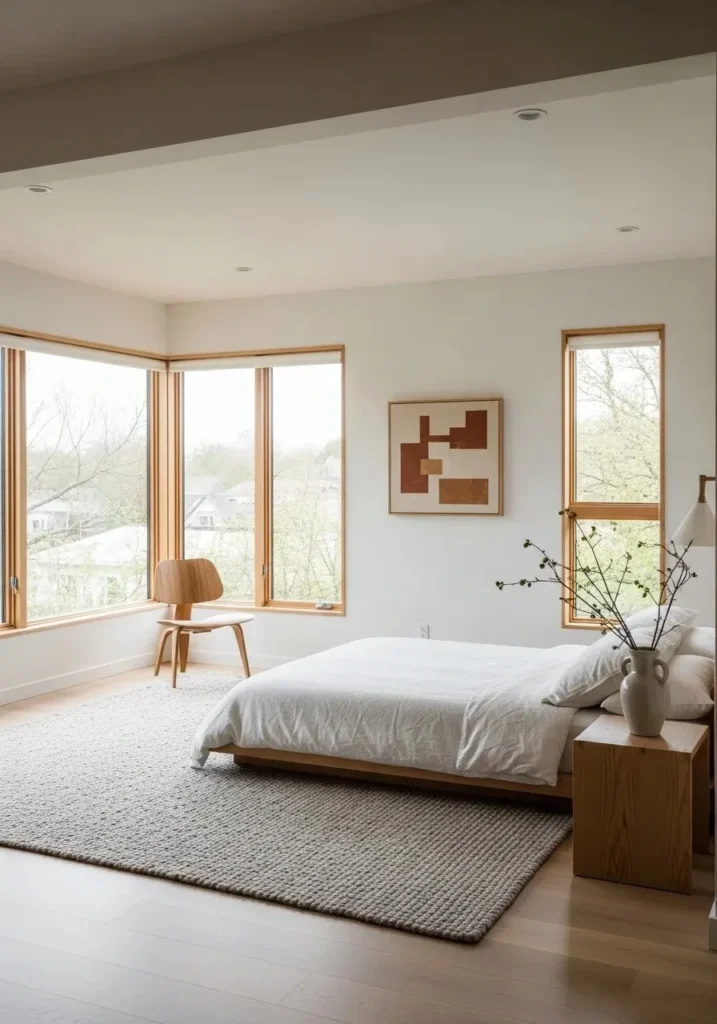
Japandi bedrooms thrive on openness. Avoid excessive furniture, bulky rugs, or floor clutter. This works because open space enhances the sense of calm and allows natural light to flow freely. It also makes the room feel more spacious and balanced. A few low-profile rugs or mats can define areas without restricting flow.
Tip: Keep pathways clear and leave at least 2–3 feet around the bed to maintain an airy feel.
Conclusion
Creating a Japandi bedroom is less about following strict rules and more about crafting a space that calms your mind and nurtures your senses. By blending Japanese minimalism with Scandinavian warmth, you can achieve a bedroom that feels light, intentional, and cozy all at once. Focus on natural materials, neutral tones, layered textures, and purposeful furniture choices.
Start with one small change—a low-profile bed, soft linen bedding, or a single potted plant. Over time, layer in wooden accents, subtle patterns, and thoughtful storage. Each small decision compounds, transforming your bedroom from a simple sleeping area into a sanctuary.
Your Japandi bedroom should feel like a gentle exhale at the end of the day—a space that welcomes you, encourages rest, and reflects calm simplicity in every detail. With patience and intention, you can create a bedroom that’s both functional and profoundly serene.