Living Room Kitchen Open Concept: 15 Ideas to Design Your Space
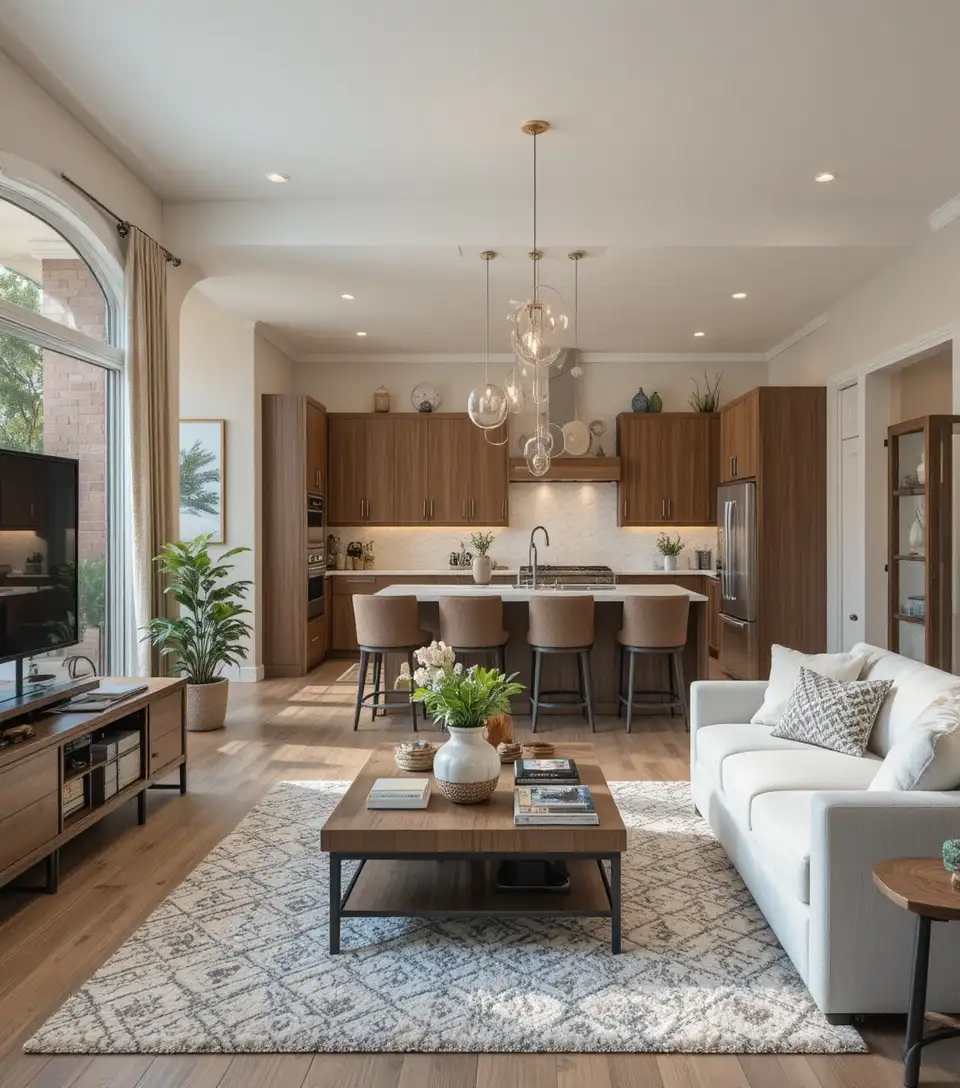
An open concept living room and kitchen can make your home feel spacious, connected, and perfect for entertaining. But without planning, it can feel chaotic or disjointed. The key is creating flow while keeping each area functional and visually harmonious. These 15 ideas will guide you through designing a cohesive, practical, and stylish open concept layout for modern living.
1. Maximize Natural Light
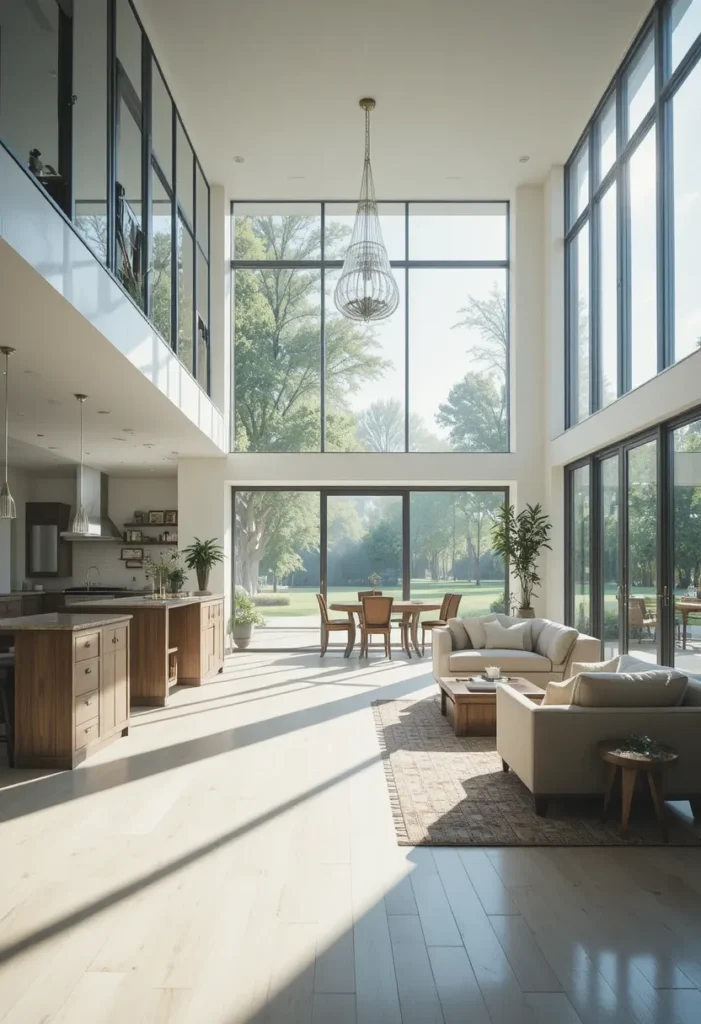
Natural light creates an inviting, airy atmosphere in open concept layouts. Large windows, glass doors, and skylights unify the kitchen and living areas.
Tip: Position mirrors to reflect light and make the space appear even larger.
Common mistake: Blocking windows with tall furniture or cabinets. Keep sightlines clear so sunlight flows freely through both zones.
2. Define Zones with Furniture
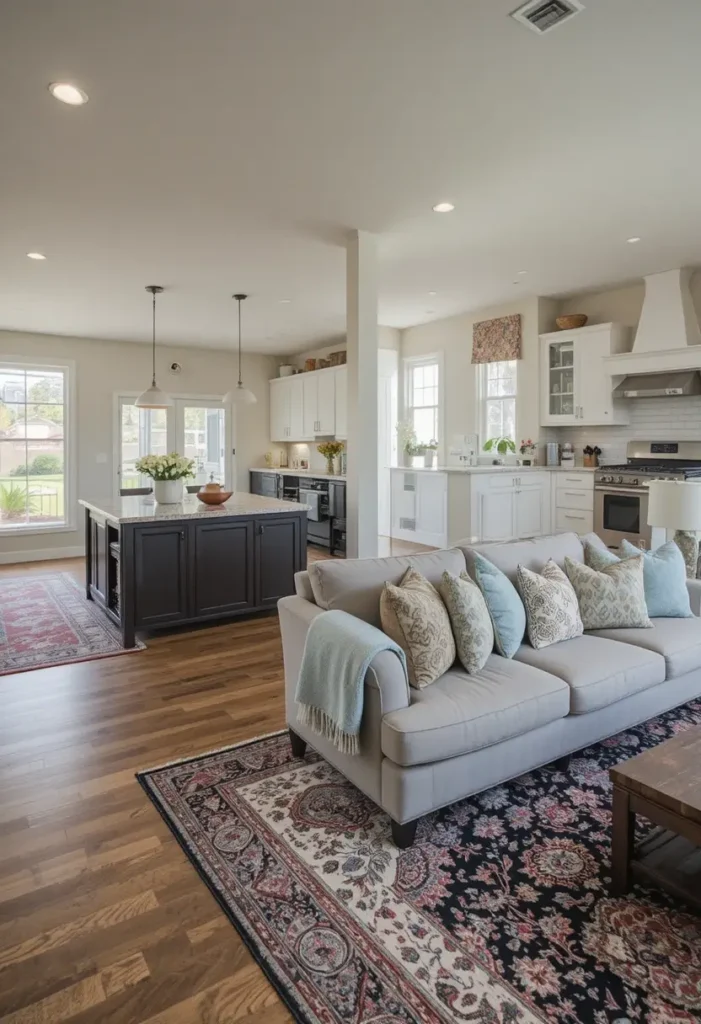
Open concepts can feel too merged if there’s no visual separation. Use sofas, kitchen islands, or rugs to subtly define living and kitchen areas.
Tip: Place a sofa with its back to the kitchen to create a soft barrier.
Common mistake: Relying on walls or bulky furniture. Over-partitioning defeats the open concept feel. Subtle cues work best.
3. Cohesive Color Palette
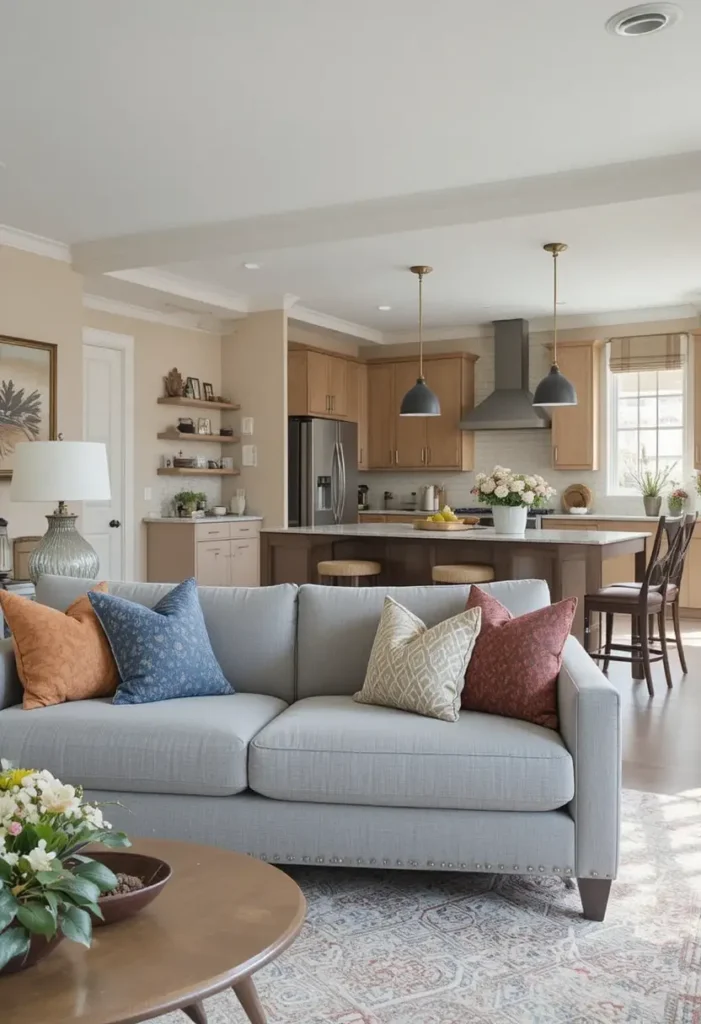
A unified color scheme keeps open spaces balanced. Neutral base colors with coordinated accents in cabinets, furniture, and décor maintain harmony.
Tip: Repeat one color in both zones—for example, kitchen bar stools matching living room cushions.
Common mistake: Using too many contrasting colors. This can break visual flow and make the space feel fragmented.
4. Kitchen Island as a Central Hub
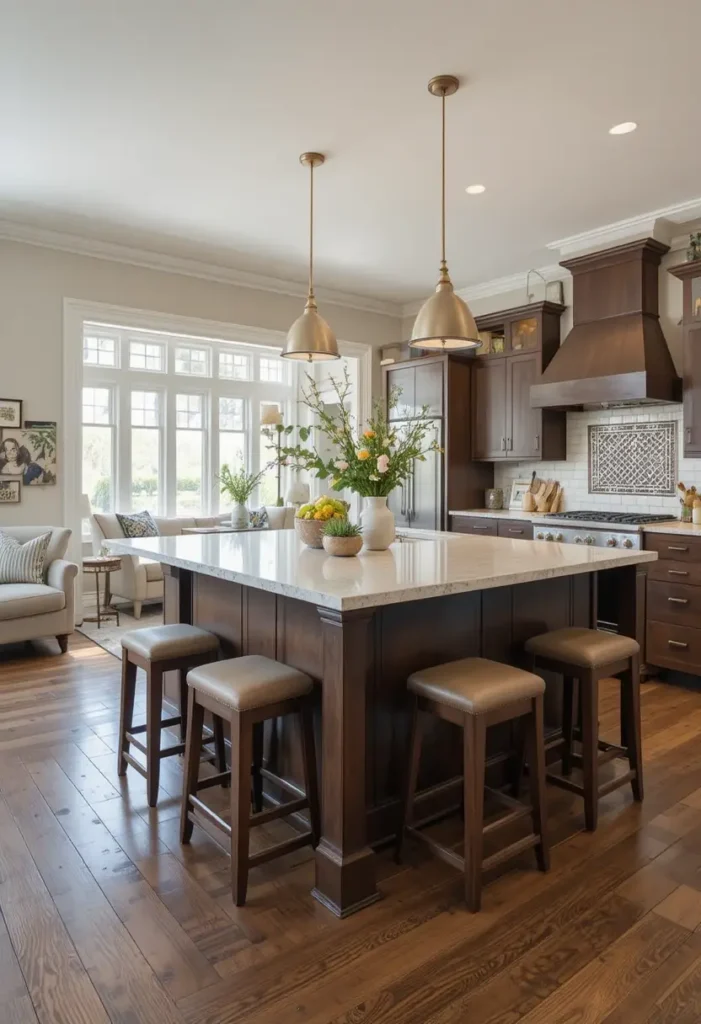
A kitchen island can double as prep space, dining area, and social hub connecting the living room.
Tip: Add stools and under-counter storage for multifunctional use.
Common mistake: Making the island too small or placing it awkwardly. Ensure it allows free movement around both kitchen and living spaces.
5. Layered Lighting
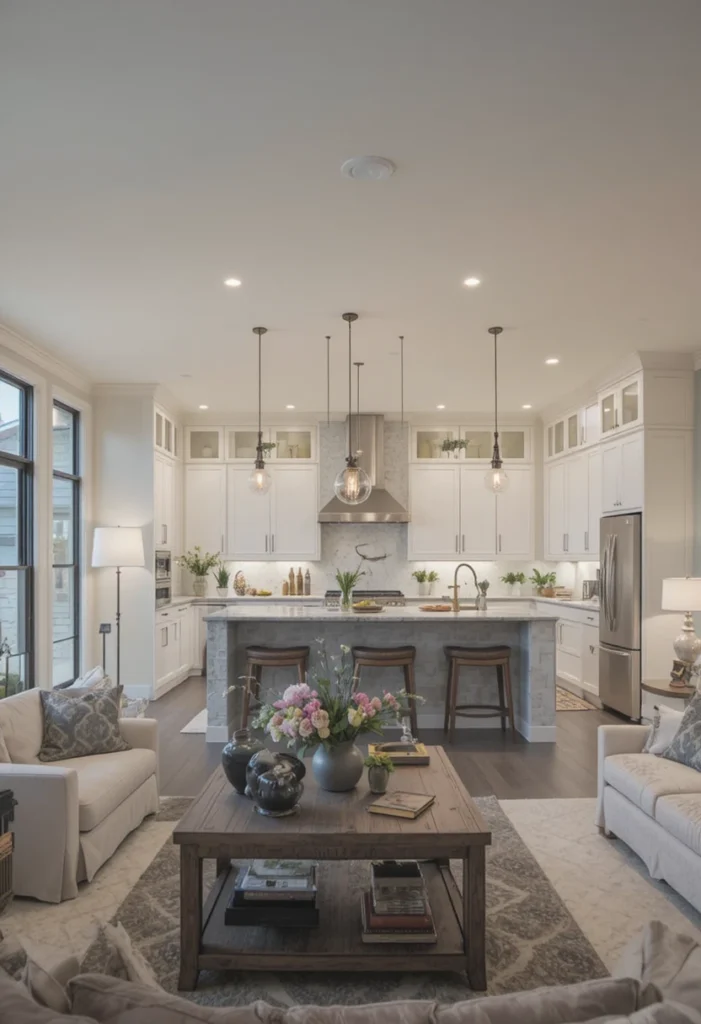
Layered lighting supports different activities in open concepts—cooking, dining, and relaxing. Use overhead lighting, pendants, and floor lamps for versatility.
Tip: Install task lighting under kitchen cabinets and ambient lights in the living area.
Common mistake: Using only one light source. It can leave corners dark and disrupt the comfortable, open feel.
6. Blend Furniture and Style
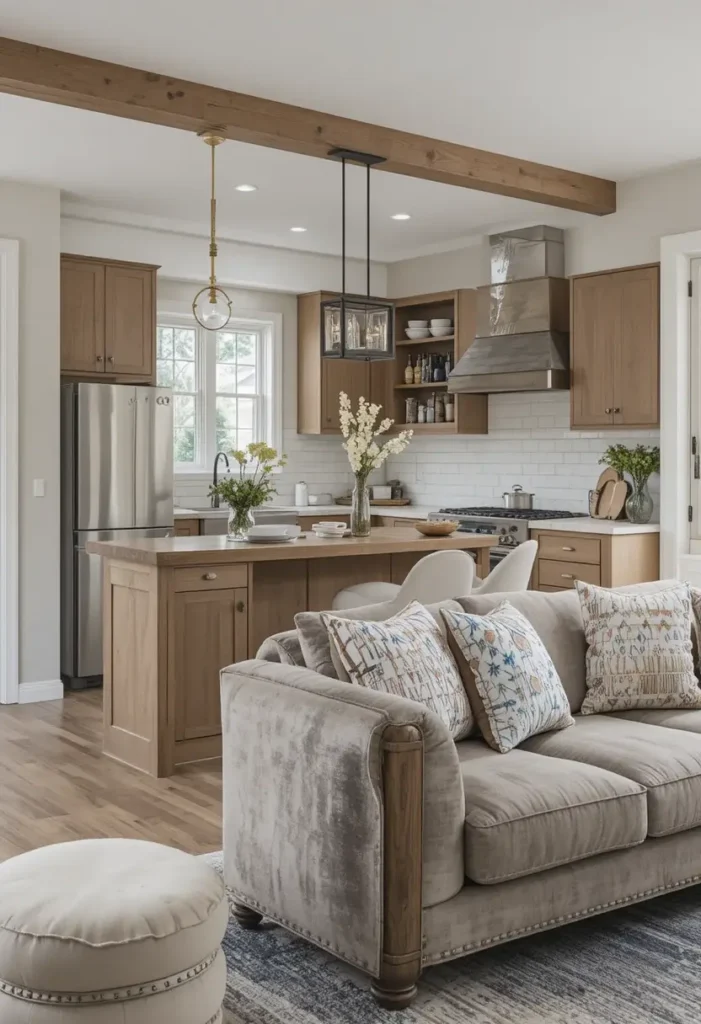
Mix kitchen and living room styles carefully. Modern cabinets with a rustic sofa or sleek chairs with a cozy rug can work if colors and materials are repeated across zones.
Tip: Use shared materials like wood or metal accents to tie areas together.
Common mistake: Randomly mixing styles. Without coordination, it looks chaotic. Keep at least one visual element consistent.
Also Read This Blog: Open Layout Living Room Dining Room: 15 Ideas to Design Your Space
7. Maintain Clear Pathways
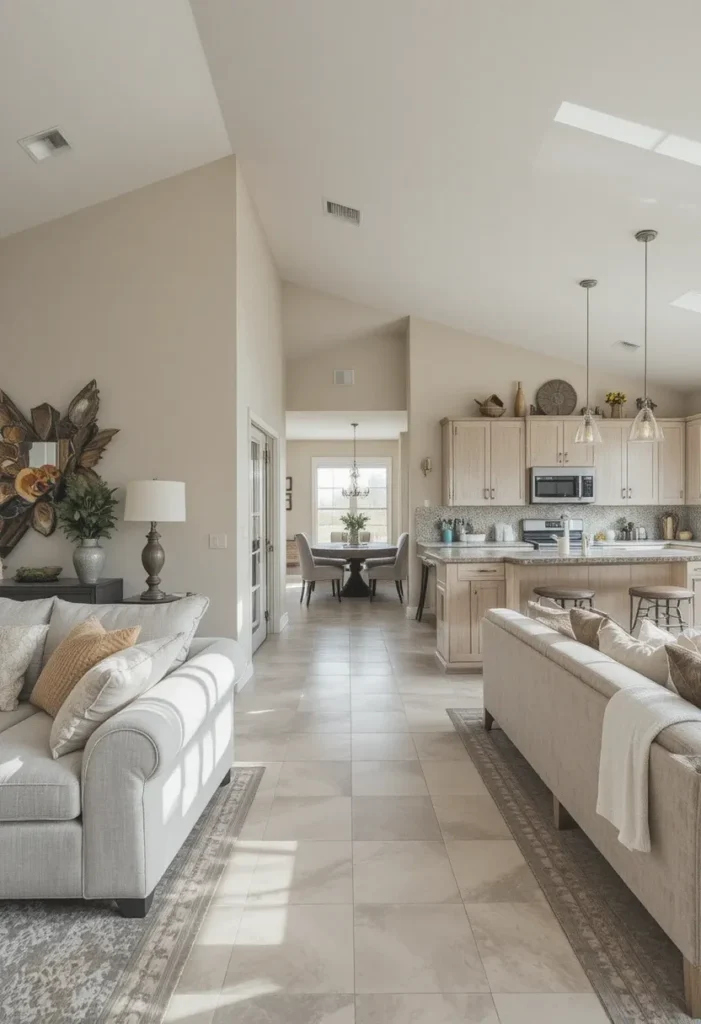
Traffic flow is crucial in open concepts. Ensure there’s at least 2–3 feet of space between counters, tables, and sofas.
Tip: Arrange furniture along walls or islands to leave central areas open.
Common mistake: Crowding the center. Poor flow reduces usability and breaks the sense of openness.
8. Use Statement Pieces Wisely
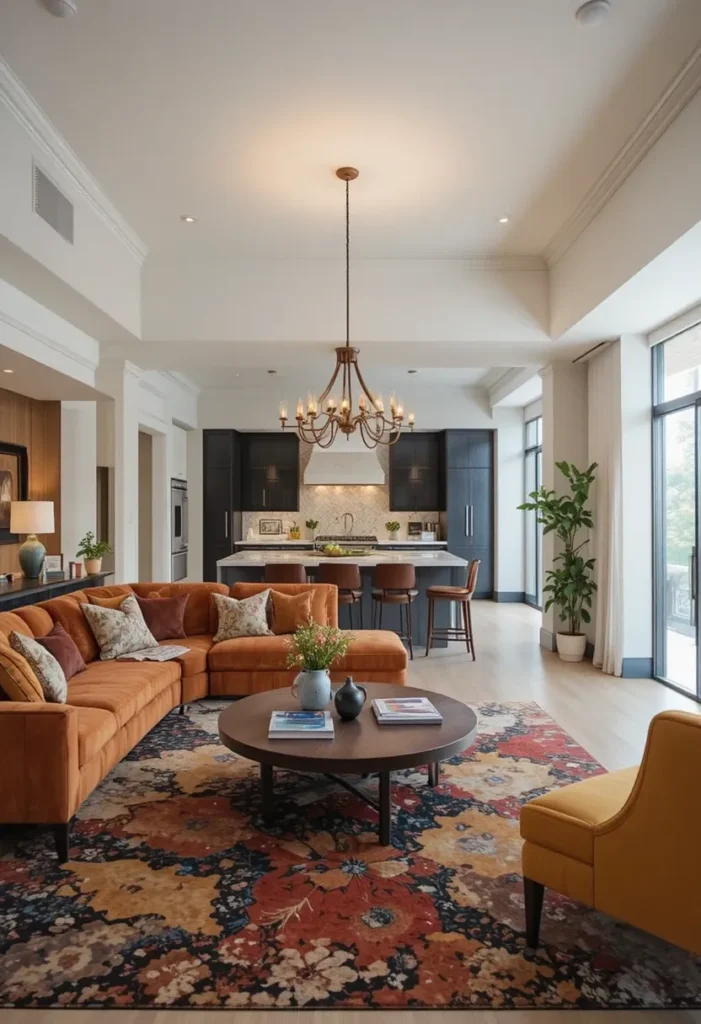
Statement pieces, like a bold sofa, a colorful rug, or a unique kitchen island, anchor an open concept visually. They add personality without overwhelming the space.
Tip: Pick one statement per zone—such as a bright dining table or an accent wall in the living room.
Common mistake: Adding multiple strong pieces at once. Too many focal points compete, making the space feel chaotic. Stick to one bold element per area for balance.
9. Incorporate Vertical Storage
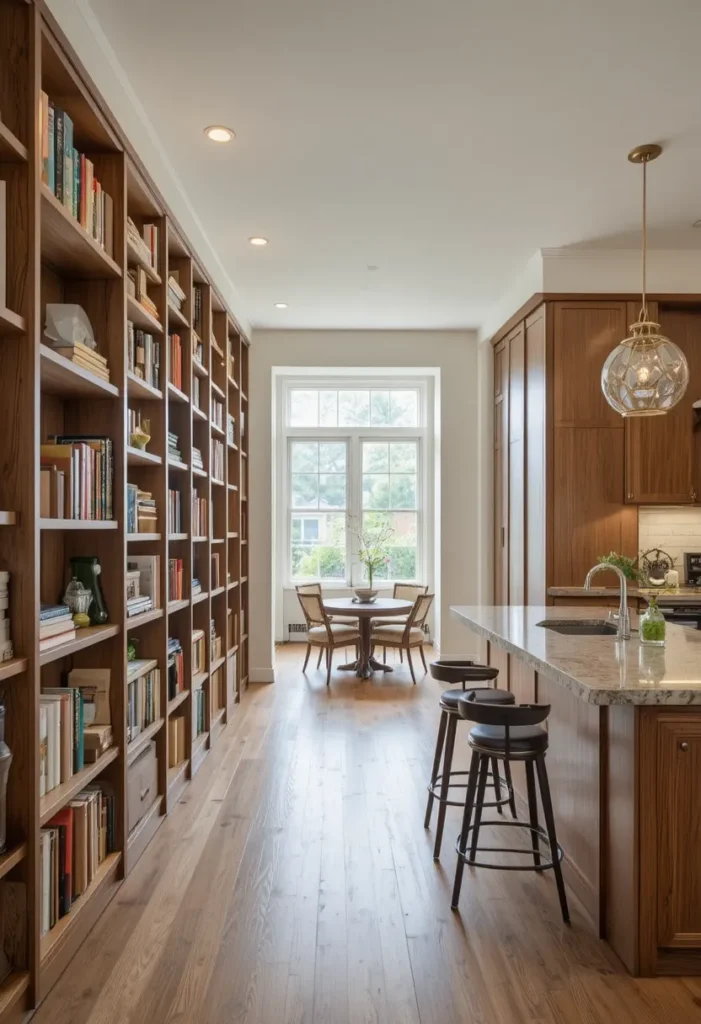
Tall shelves, cabinets, or wall-mounted racks help maximize storage while keeping the floor open. Vertical storage draws the eye upward and balances spacious ceilings.
Tip: Place a tall bookshelf in the living area or a vertical spice rack in the kitchen to keep essentials handy.
Common mistake: Overloading vertical storage with clutter. Visible mess can make the space feel busy and reduce the clean, open aesthetic. Keep display items minimal.
10. Add Greenery
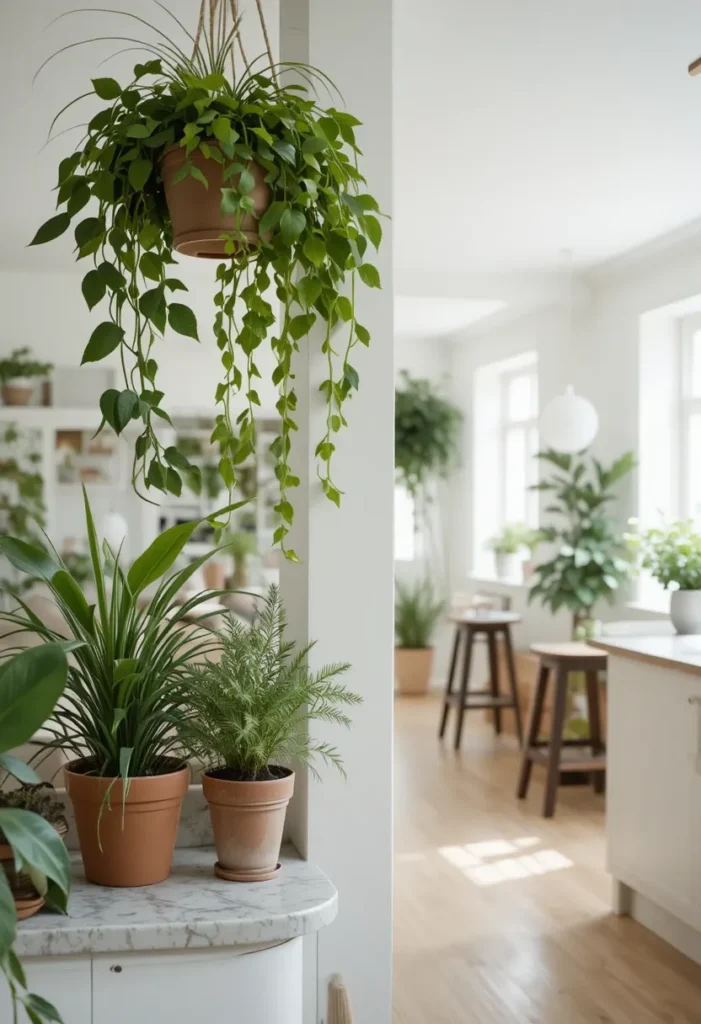
Plants refresh the space, soften sharp edges, and create subtle separation between living and kitchen areas. Tall potted plants or hanging greenery add height and interest.
Tip: Use medium-sized plants near the sofa or small herbs on the kitchen counter for a natural touch.
Common mistake: Overcrowding the room with tiny plants. Too many can break flow and make the area feel messy. Fewer, well-placed plants are more effective.
Also Read This Blog: Curtains Living Room: 15 Expert Tips for Style & Comfort
11. Harmonize Flooring
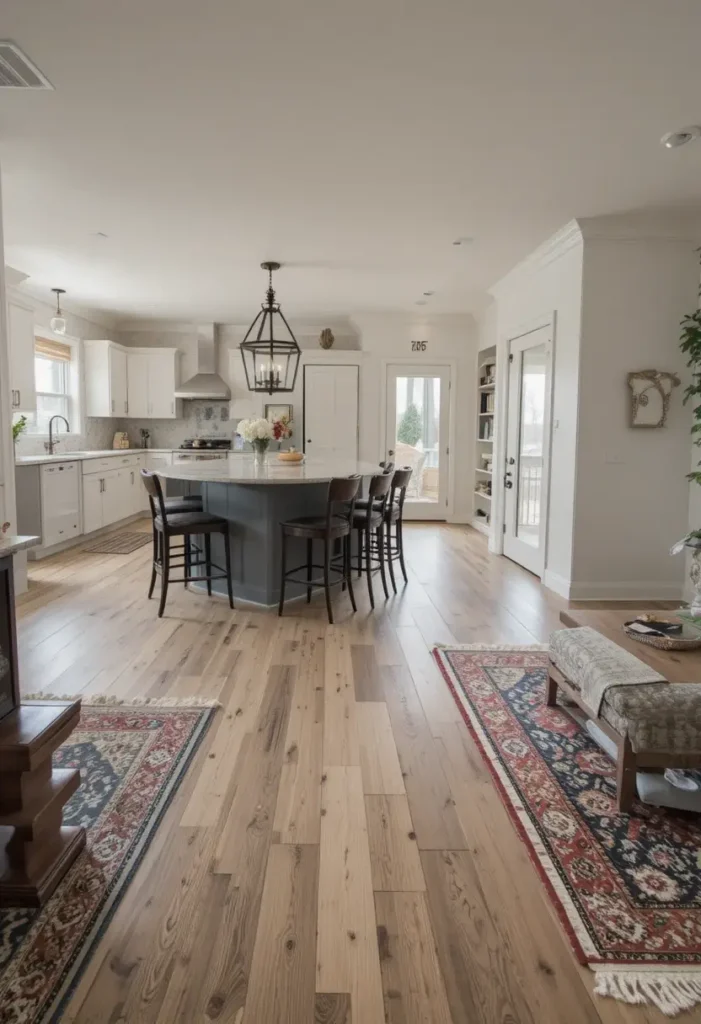
Consistent flooring across kitchen and living room keeps the open space unified. Hardwood, polished concrete, or neutral tiles work well.
Tip: If using different textures, ensure they complement each other and use rugs to define zones.
Common mistake: Abruptly switching flooring without cohesion. Too many contrasting materials break visual continuity and make the open space feel disconnected.
12. Maintain a Functional Kitchen
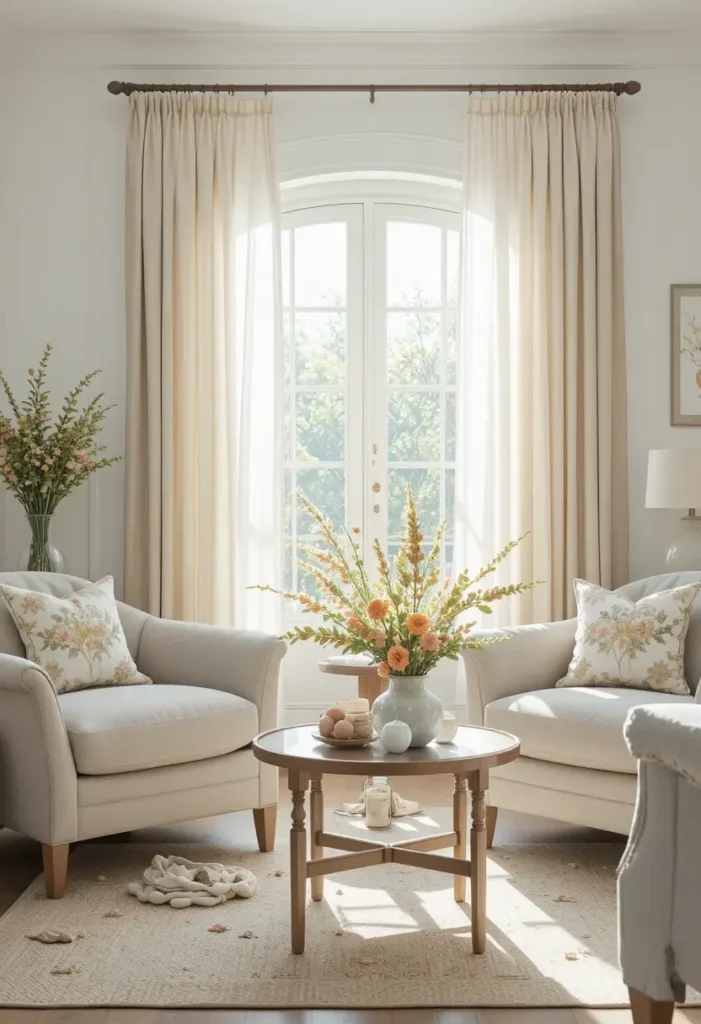
The kitchen should remain practical without dominating the living space. Open shelving or minimalist cabinetry keeps it airy.
Tip: Install an island with storage and prep space. Keep countertops clear for visual openness and ease of cooking.
Common mistake: Cramming too many appliances or cabinets. Cluttered kitchens disrupt the sense of openness and make the area hard to use efficiently.
13. Blend Patterns and Textures
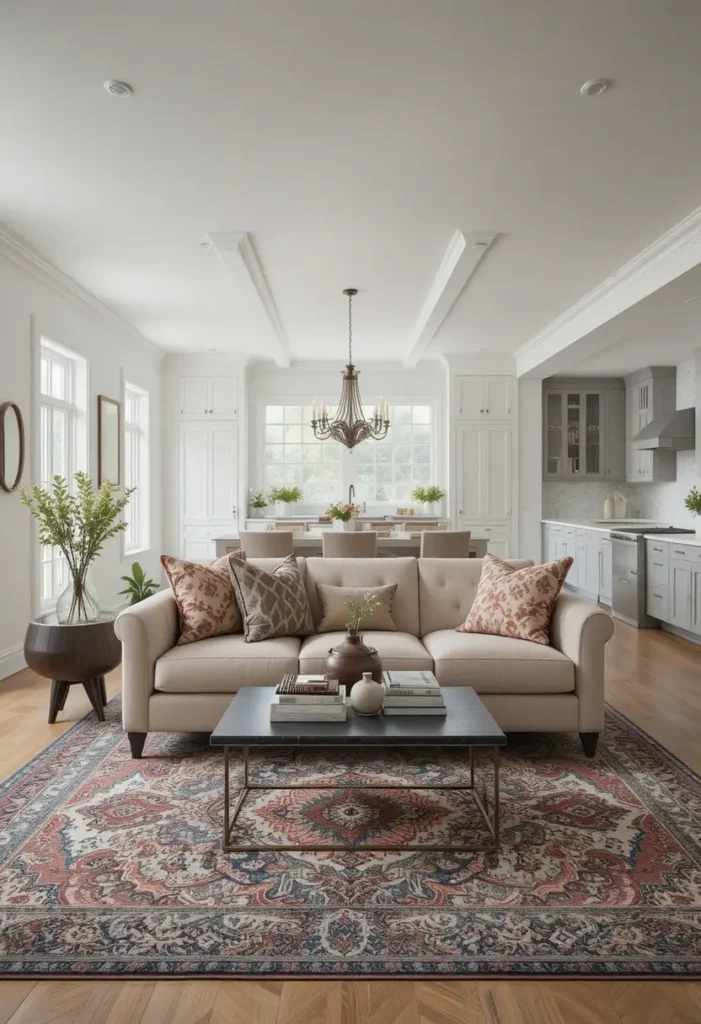
Mixing textures and patterns adds warmth and depth while keeping the space cohesive. A patterned rug in the living area, textured cushions, and subtle kitchen backsplash tiles can complement each other.
Tip: Repeat textures across both zones for harmony, like a wooden accent or metal finishes.
Common mistake: Using multiple bold patterns. Too many prints compete visually and make the layout feel fragmented. Stick to 1–2 accent patterns paired with neutral solids.
Also Read This Blog: Living Room with Fireplace: 15 Smart Design Ideas
14. Use Lighting to Separate Zones
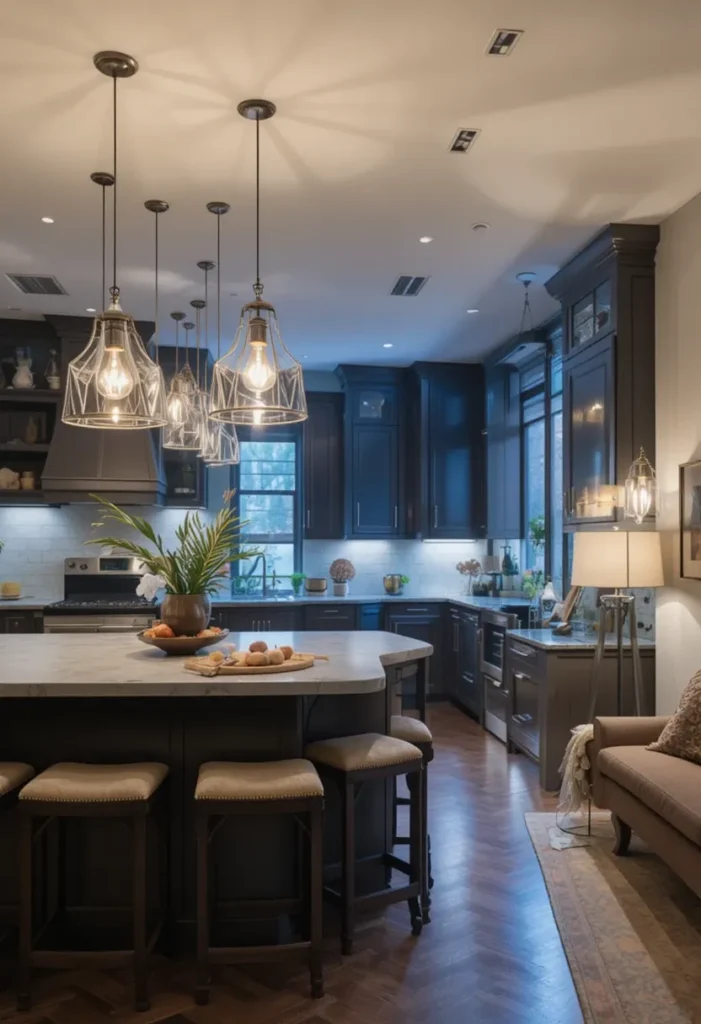
Different lighting layers help define each area’s function. Pendant lights above the island or dining table, floor lamps in the living area, and under-cabinet kitchen lights create balance.
Tip: Choose dimmable lights to adjust the mood for cooking, dining, or relaxing.
Common mistake: Using only one general light source. A single overhead light leaves some areas underlit and makes it hard to distinguish zones effectively.
15. Add Personal Touches and Décor
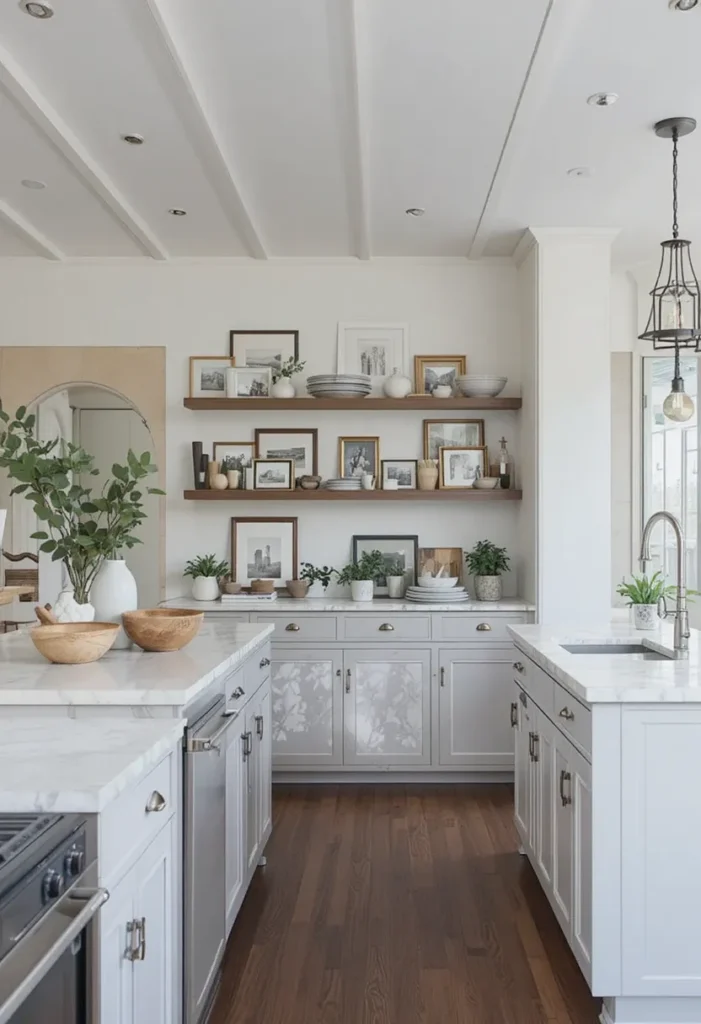
Finally, personalize the space to make it feel lived-in. Family photos, artwork, decorative bowls, or cookbooks can unify style while adding character.
Tip: Rotate small décor seasonally or use meaningful items to keep the area fresh and welcoming.
Common mistake: Overfilling surfaces. Too many items create visual clutter and reduce the airy feel. Keep personal décor minimal but intentional for a clean, open concept aesthetic.
Conclusion
Designing a living room kitchen open concept requires balance, flow, and thoughtful design. By maximizing light, defining zones, layering textures, harmonizing flooring, and adding personal touches, you create a space that is both functional and stylish. Avoid clutter, maintain clear pathways, and blend styles and materials to ensure cohesion. With these 15 ideas, your open concept can support daily life, entertaining, and a comfortable, inviting atmosphere.