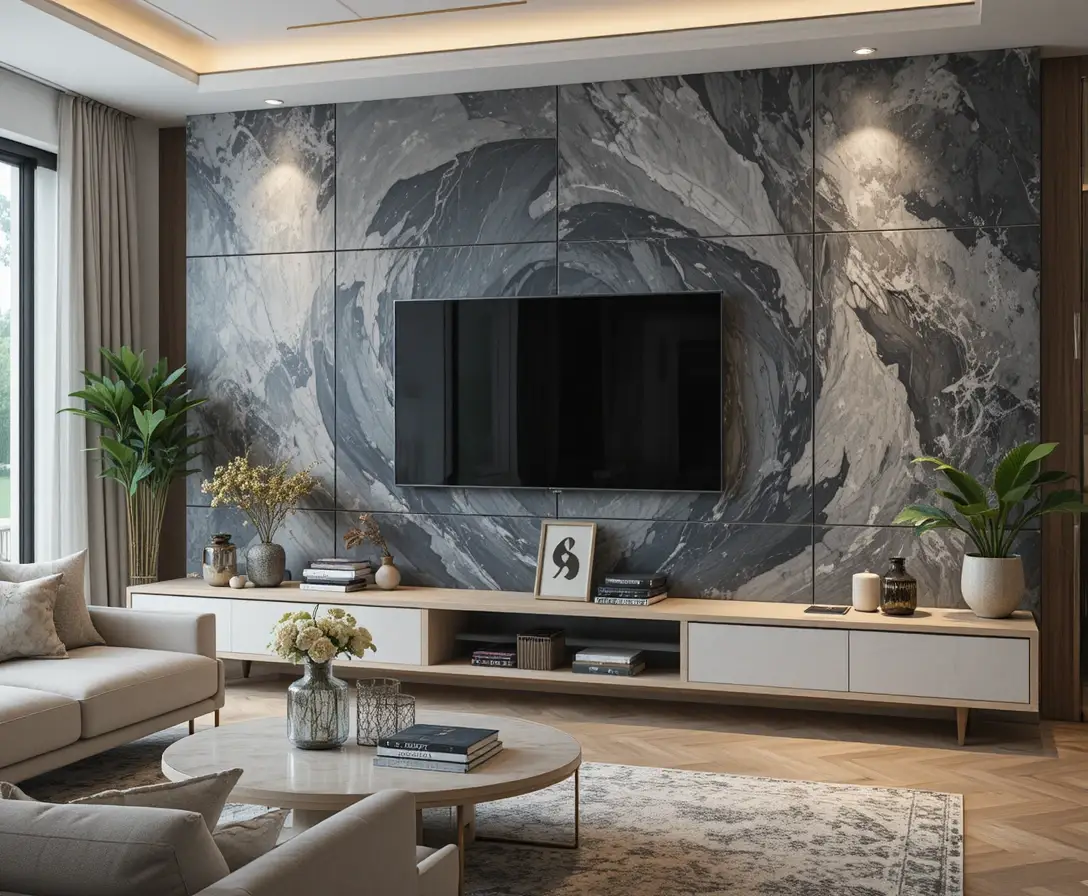
13 Practical Living Room TV Wall Ideas to Maximize Style & Comfort
Living room TV walls are often the centerpiece of a home, yet setting them up can feel overwhelming. From mounting the TV to choosing the right storage and décor, there are many decisions to make. The goal isn’t to copy trends blindly but to create a wall that is functional, visually balanced, and enhances your living room experience. Here are 13 practical ideas to help you design a living room TV wall that works for real life.
1. Center the TV at eye level
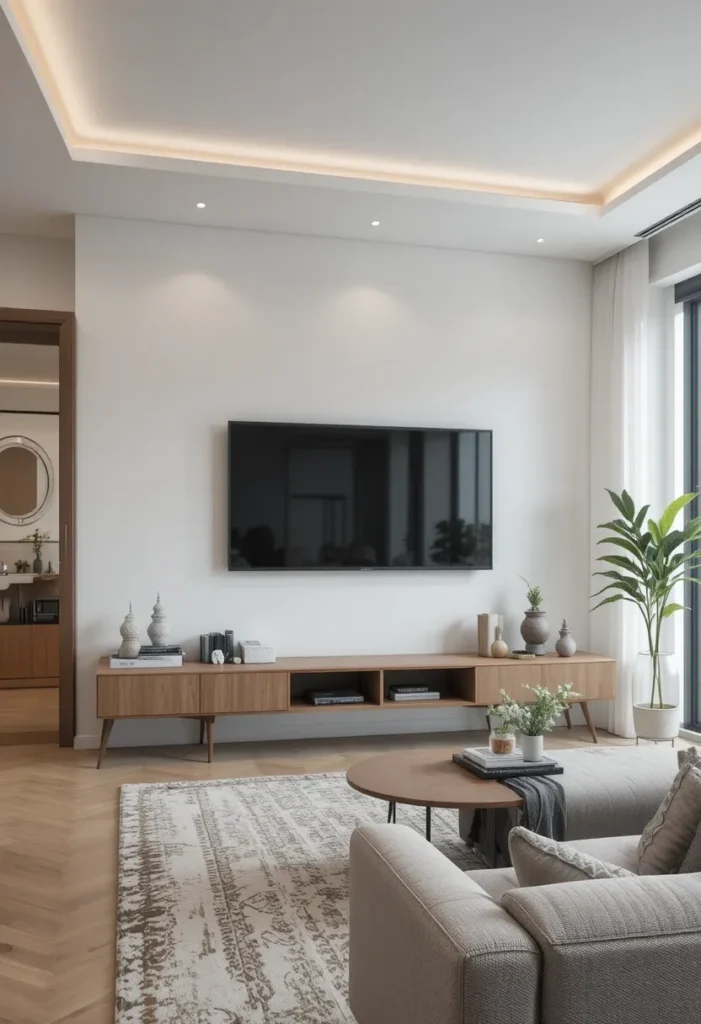
What it is:
Positioning the TV so that the center of the screen aligns roughly with eye level when seated.
Why it works:
Watching a TV that’s too high or low causes neck strain and discomfort during long viewing sessions.
Practical tip:
Measure your sofa height and sit down. The center of the screen should be roughly at eye height. Many people mount TVs too high above a console, which makes viewing uncomfortable.
2. Use a floating media console
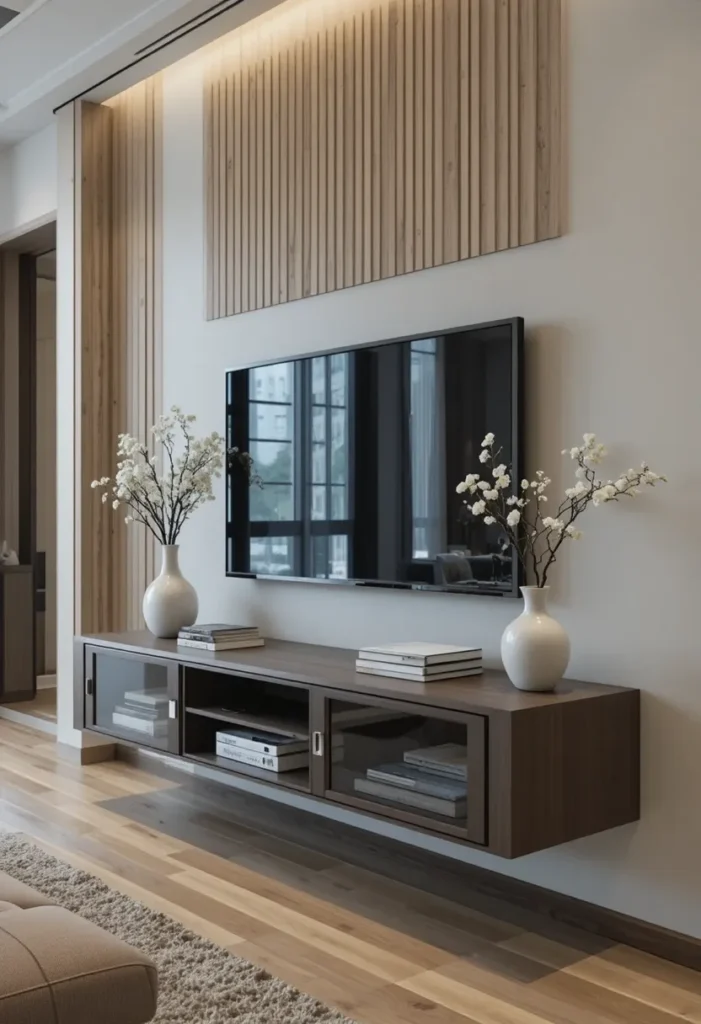
What it is:
A wall-mounted console below the TV that appears suspended above the floor.
Why it works:
Floating consoles create a sense of space, make cleaning easier, and keep the area under the TV visually light.
Practical tip:
Choose a console slightly wider than the TV for balance. Avoid oversized pieces that dominate a small wall.
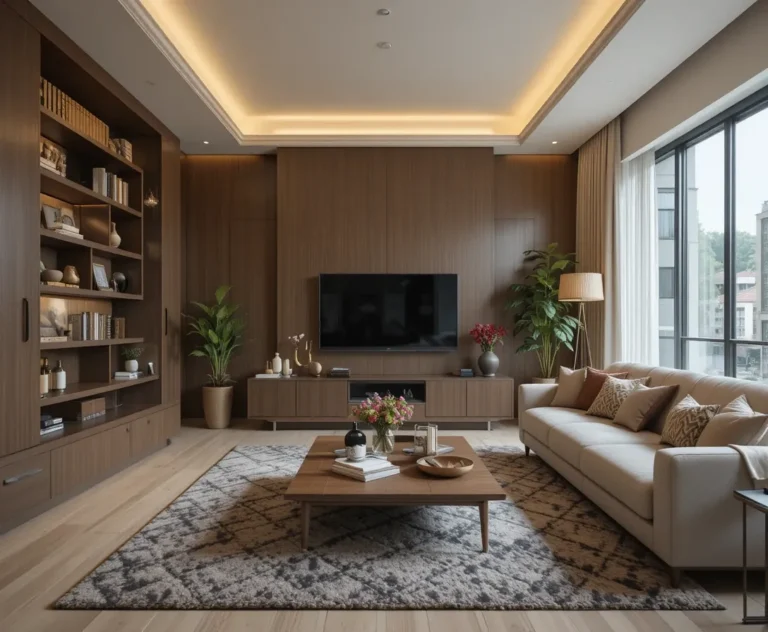
3. Add built-in shelves or cabinetry
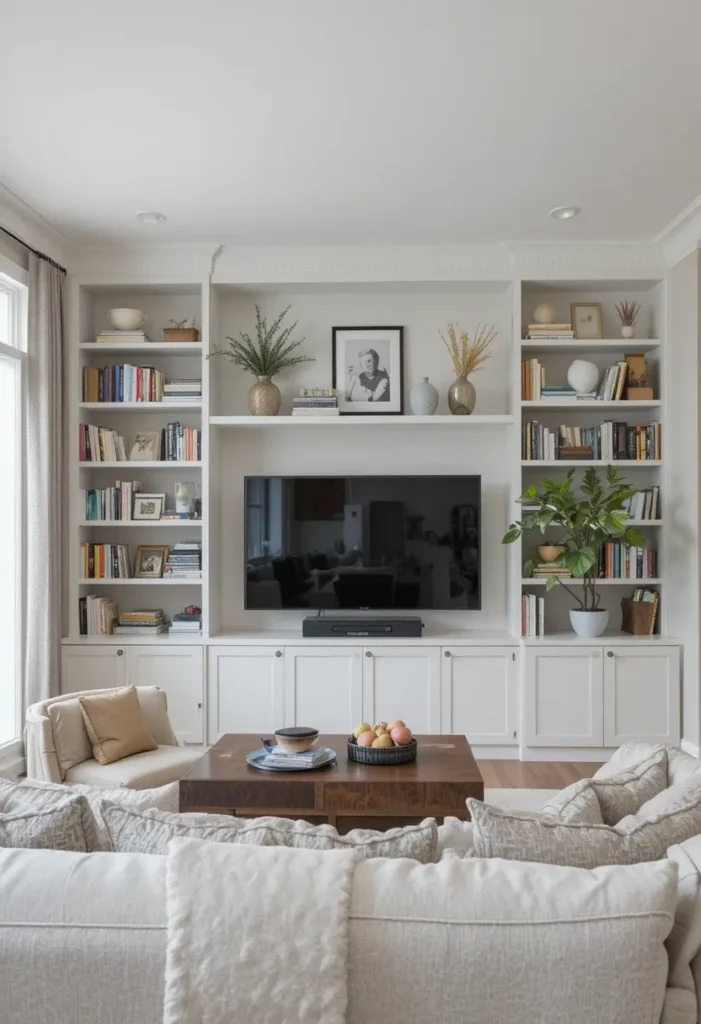
What it is:
Custom or modular shelving around the TV for storage and display.
Why it works:
It organizes electronics, books, and décor while framing the TV nicely. Built-ins can make the wall look intentional rather than an afterthought.
Practical tip:
Place items asymmetrically for a modern look, but keep larger items at the bottom for visual weight. Avoid overcrowding shelves; too many objects make the wall feel busy.
4. Integrate artwork or wall décor
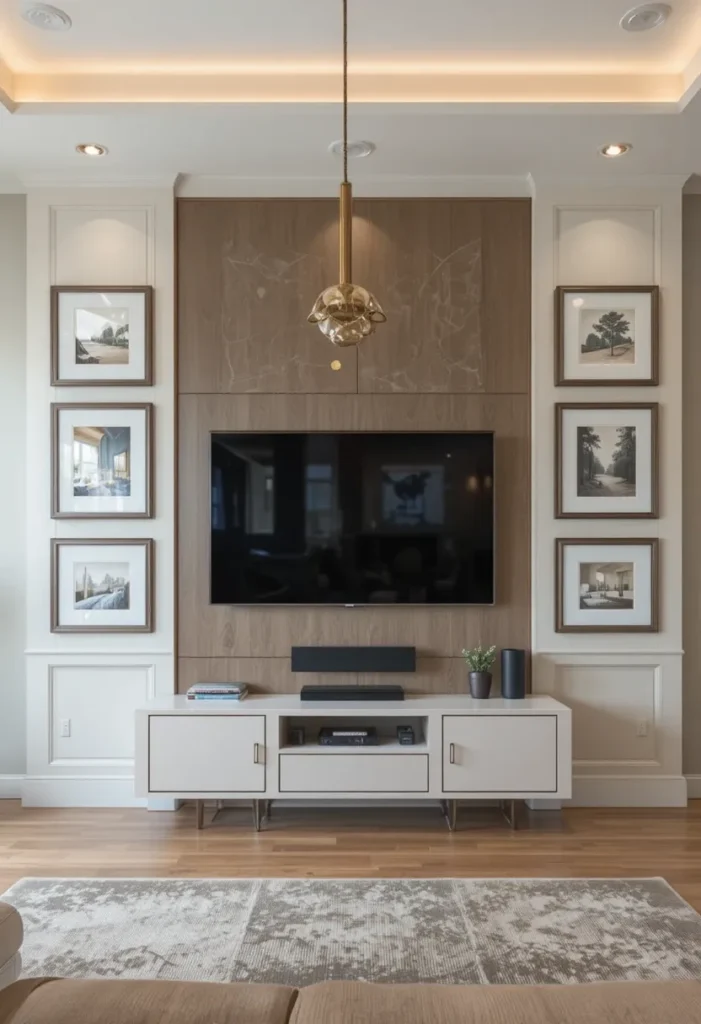
What it is:
Adding framed artwork, prints, or decorative panels around the TV.
Why it works:
TVs alone can feel cold and mechanical. Artwork softens the visual impact and adds personality.
Practical tip:
Keep at least a few inches of spacing between the TV and décor. Too close, and the wall feels cramped. Many people over-decorate the wall, which draws attention away from the TV itself.
5. Use a gallery wall with the TV as the anchor
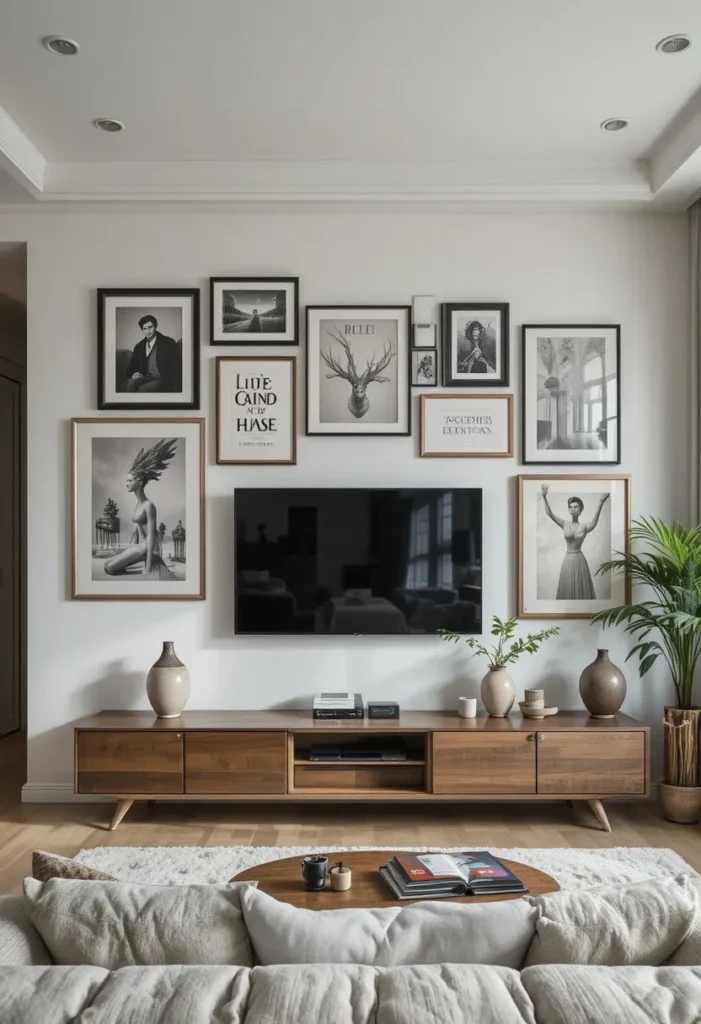
What it is:
Treating the TV as a central piece among smaller frames or wall décor.
Why it works:
Creates a cohesive focal point while balancing technology with personality.
Practical tip:
Choose 3–5 frames or objects on each side of the TV, keeping symmetry or a deliberate asymmetry. Avoid placing too many tiny items that visually compete with the screen.
Also Read This Blog: 24 Bedroom Lamps Ideas 2026: Stylish DIY, Modern, Vintage and More
6. Consider accent lighting
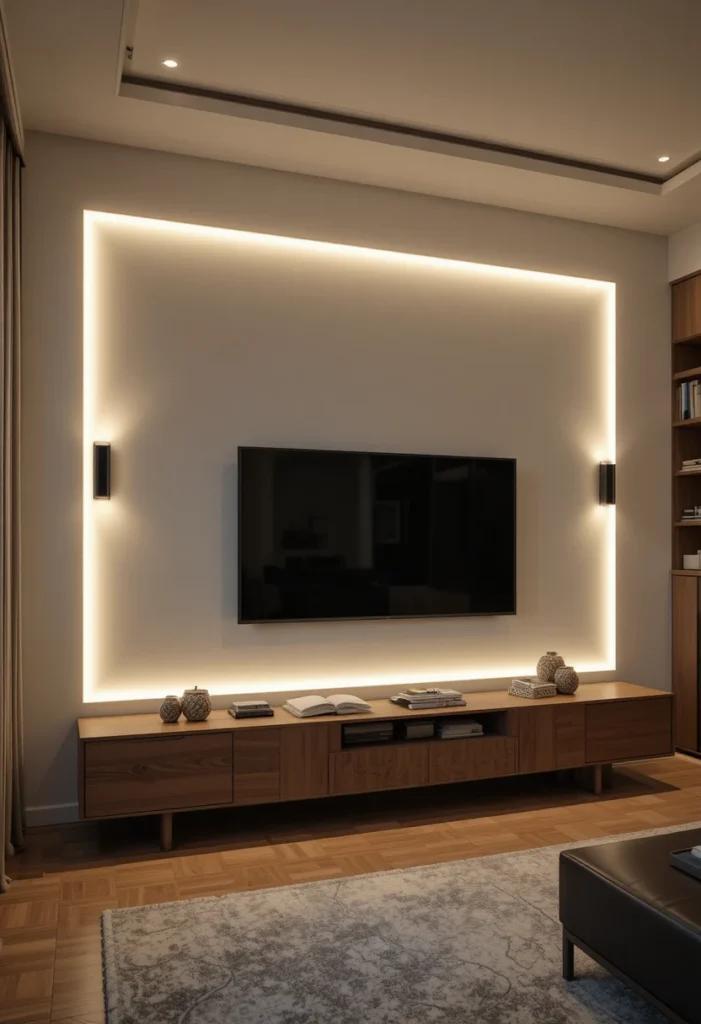
What it is:
LED strips, wall sconces, or uplighting around the TV wall.
Why it works:
Soft lighting reduces eye strain, highlights décor, and creates ambiance without glare.
Practical tip:
Place lights behind the TV or along shelves. Avoid harsh overhead lights directly in front of the screen. Many skip this, but lighting makes a huge difference in viewing comfort.
7. Mount the TV on a swivel bracket
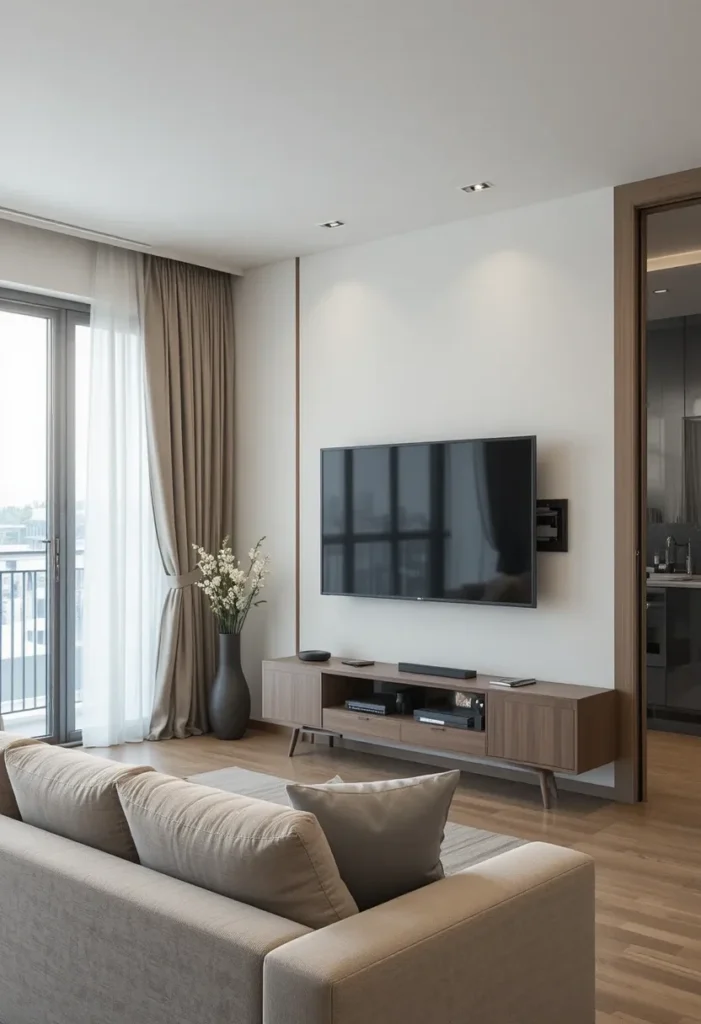
What it is:
A bracket that allows the TV to pivot left, right, or tilt.
Why it works:
Provides flexibility for different seating arrangements and reduces glare from windows.
Practical tip:
Ensure the bracket supports your TV weight and allows smooth movement. Avoid cheap brackets that wobble; stability is key.
8. Conceal cables and electronics
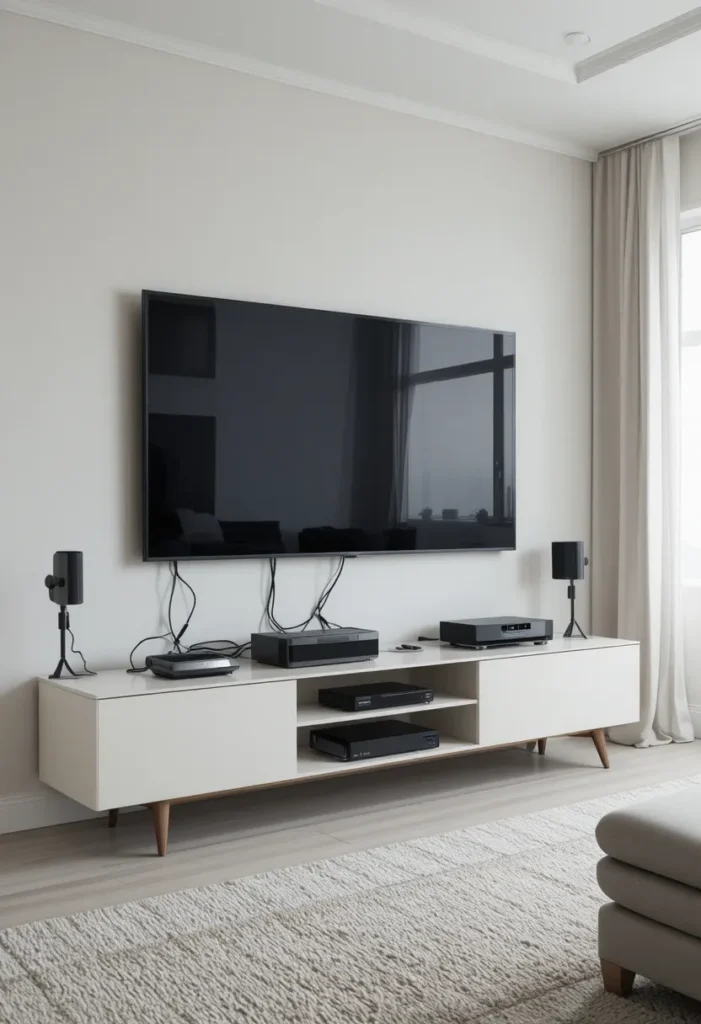
What it is:
Hiding wires, game consoles, and streaming devices from view.
Why it works:
Visible cables instantly make even a clean wall look messy. Concealing them keeps the TV wall sleek and organized.
Practical tip:
Use cable raceways, cord covers, or run wires inside the wall if possible. Don’t pile devices under the TV; it looks cluttered and collects dust.
Also Read This Blog: 16 Black Bedroom Ideas: Modern, Stylish, and Timeless Designs for 2026
9. Add a feature wall
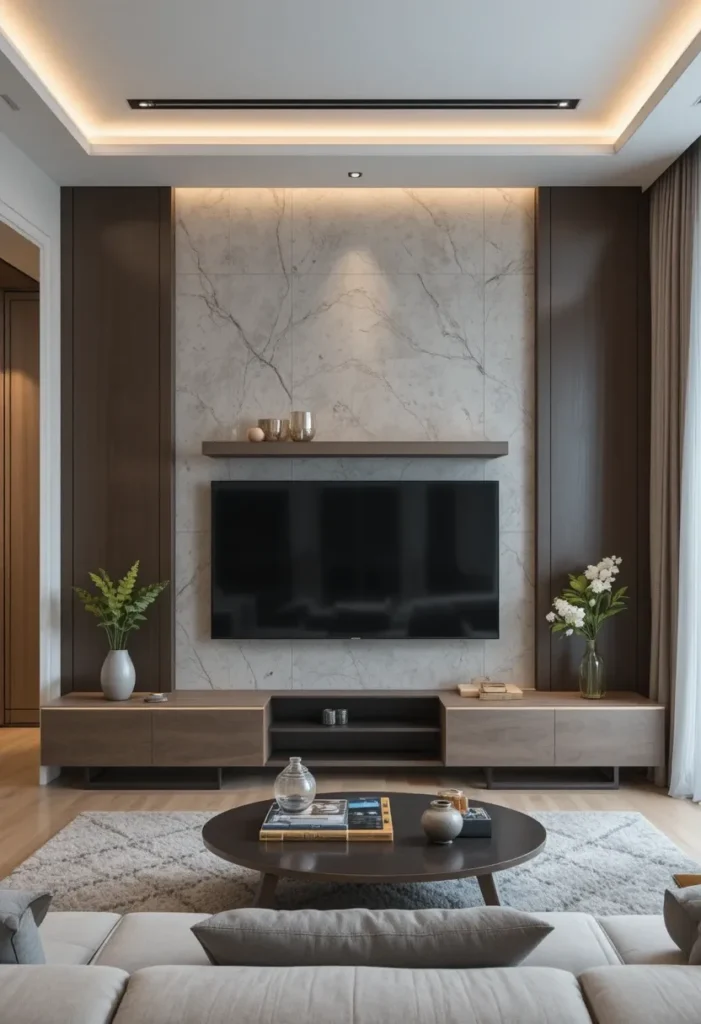
What it is:
Painting, wallpapering, or adding textured panels behind the TV.
Why it works:
Feature walls make the TV pop and give the room a polished look.
Practical tip:
Choose subtle textures or neutral colors for small rooms. Avoid overly bold patterns that distract from watching the screen.
10. Balance the wall with furniture
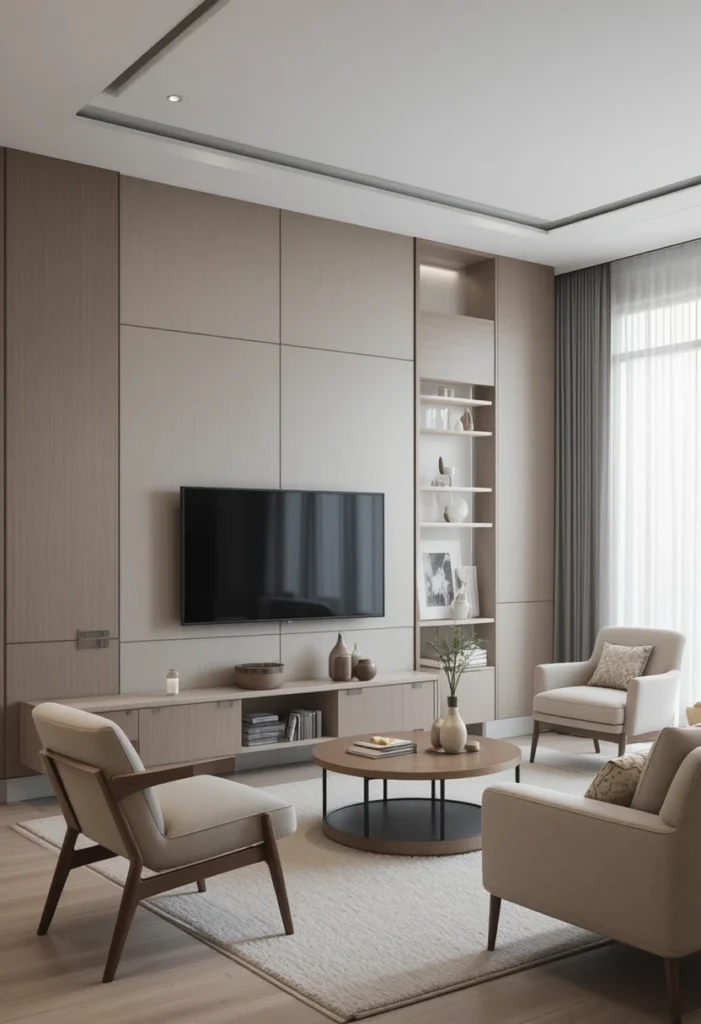
What it is:
Placing sofas, chairs, and side tables in a way that complements the TV wall.
Why it works:
A well-balanced space ensures comfort and flow. Furniture that’s too close or too far from the wall can disrupt viewing and the room’s aesthetic.
Practical tip:
Maintain at least 6–8 feet between seating and the TV in a standard living room. Many forget spacing, which affects both style and function.
11. Incorporate plants or greenery
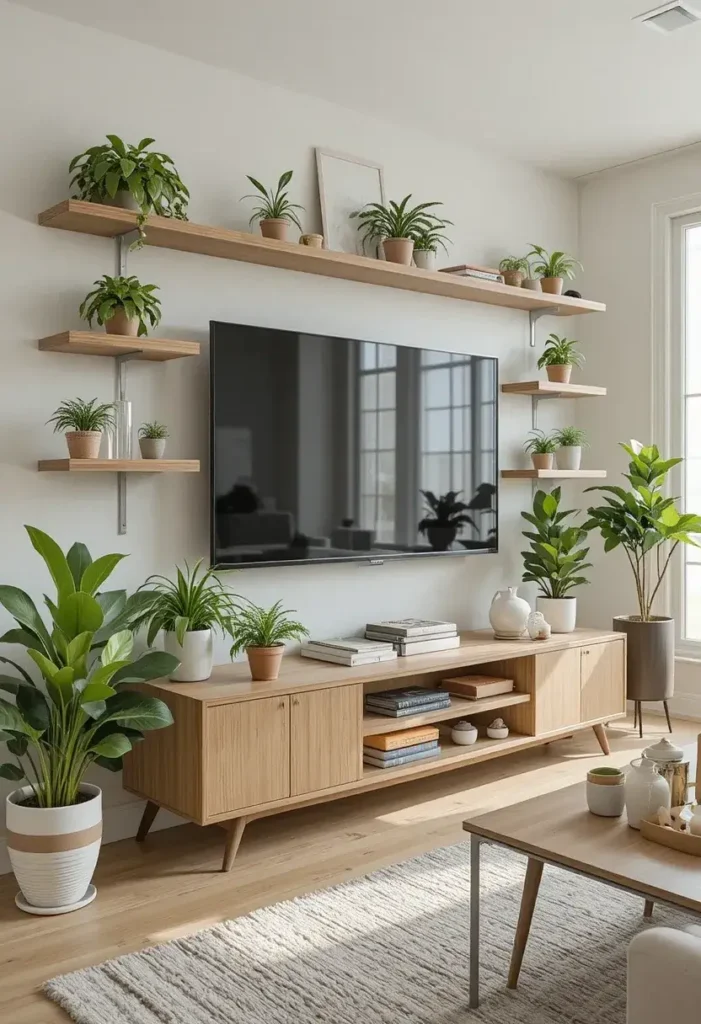
What it is:
Placing potted plants or small planters near or on the TV wall.
Why it works:
Greenery softens electronics, adds life, and improves air quality.
Practical tip:
Choose plants that don’t shed leaves onto electronics. Small succulents or medium-sized potted plants work best. Avoid overloading the wall with large plants that block the screen.
Also Read This Blog: 13 Practical Apartment Living Room Ideas to Maximize Comfort & Style
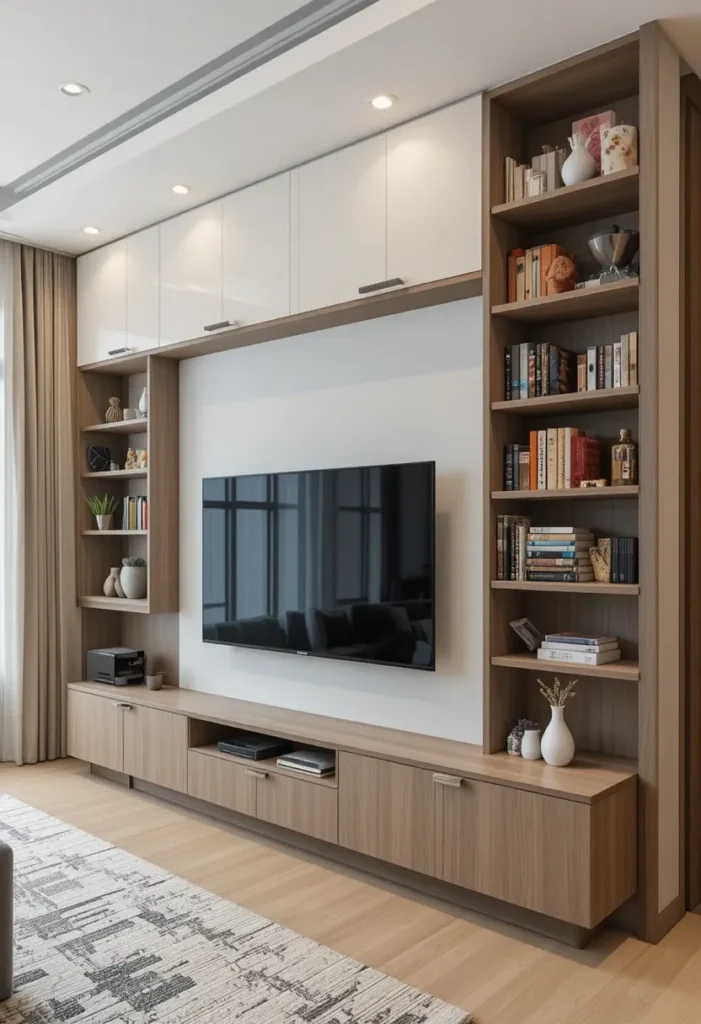
12. Use a mix of open and closed storage
What it is:
Combination of cabinets with doors and open shelving on the TV wall.
Why it works:
Closed storage hides clutter while open shelves display décor and personality. This keeps the wall functional and visually appealing.
Practical tip:
Rotate decorative items seasonally to refresh the look. Many people either hide everything or display too much, making the wall feel unbalanced.
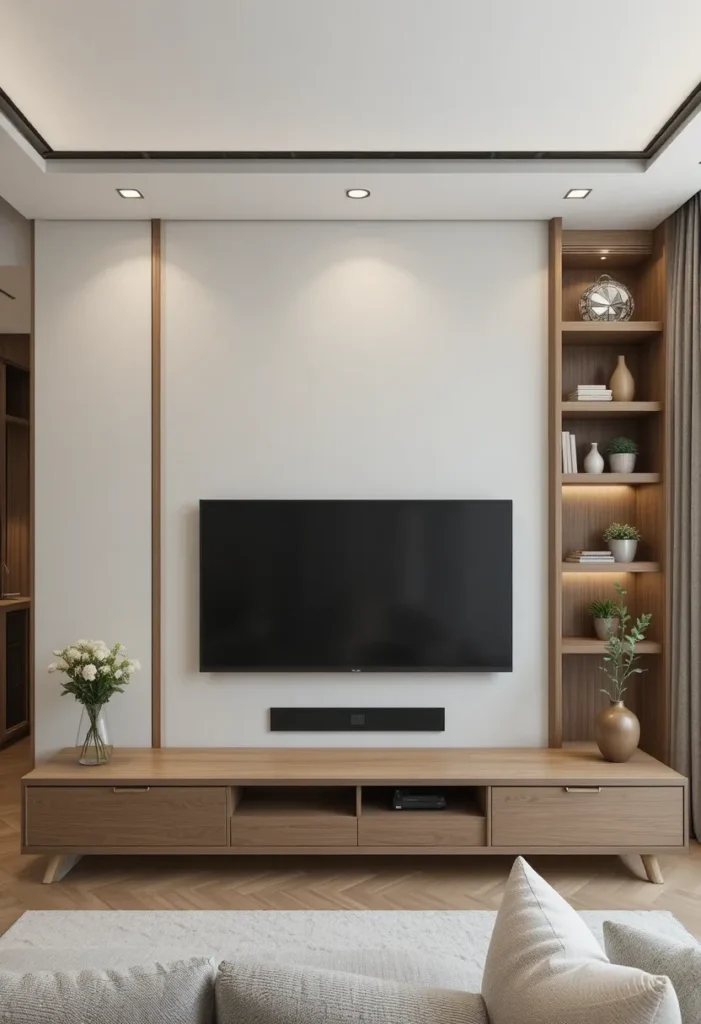
13. Keep scale and proportion in mind
What it is:
Ensuring the TV, furniture, shelves, and décor are proportionate to the wall and room size.
Why it works:
Oversized TVs or furniture can overwhelm a living room, while tiny screens or narrow shelves look lost. Balanced proportions make the space feel harmonious and inviting.
Practical tip:
Measure the wall before purchasing furniture or decor. Aim for the TV to take up roughly two-thirds of the width of the wall for a pleasing scale.
Conclusion
A functional and stylish TV wall in a living room doesn’t require over-the-top setups. Thoughtful placement, balanced décor, hidden cables, and flexible furniture make the wall both practical and visually appealing. When the space feels intentional, comfortable, and easy to use, you’ve created a TV wall that works for everyday life.