14 Floor Lamps Living Room Ideas for Warmth, Balance, and Better Lighting
Lighting can completely change how your living room feels — often more than new furniture or paint. A well-placed floor lamp adds warmth, depth, and function without requiring renovation. It can define a reading corner, soften a dark area, or balance an open layout. If your space feels slightly unfinished or flat, lighting is often the missing layer. These 14 floor lamps living room ideas will help you think practically about placement, scale, and mood so your space feels comfortable and thoughtfully designed.
1. Use an Arc Floor Lamp to Anchor a Seating Area
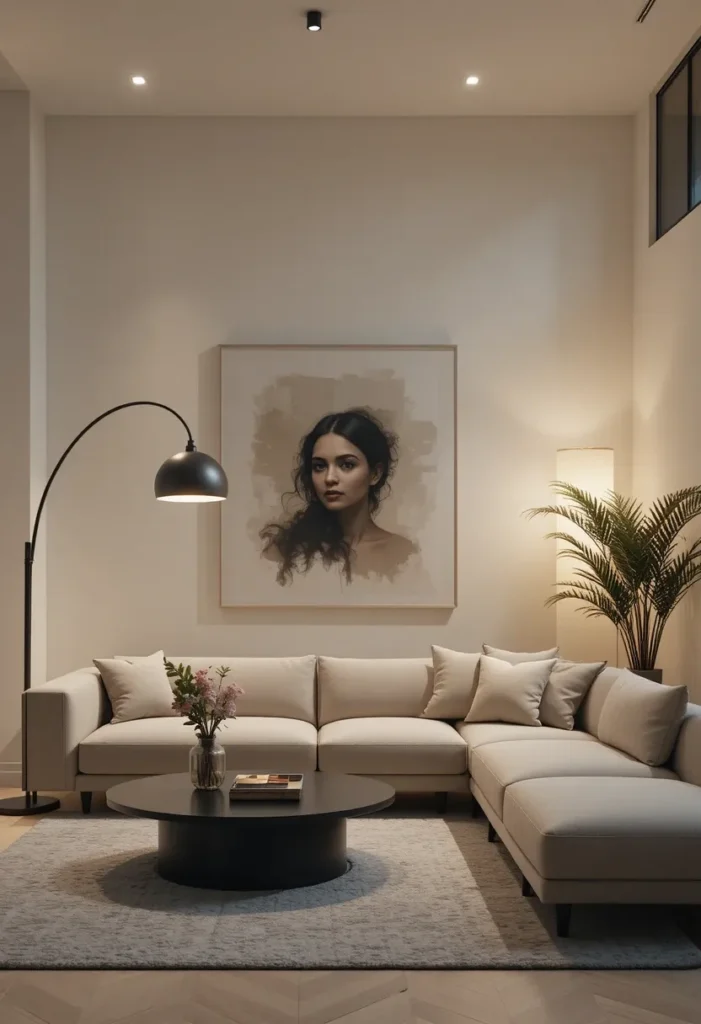
An arc floor lamp curves outward, allowing the light to hang over a sofa or coffee table. It acts almost like ceiling lighting without any wiring changes.
This works especially well in open living rooms where seating floats away from walls. The curved arm visually anchors the arrangement.
Tip: make sure the base is heavy enough to prevent tipping.
Common mistake: choosing one that’s too short. The arc should extend comfortably over the seating, not stop awkwardly at shoulder height.
2. Add a Tripod Lamp for Balanced Structure
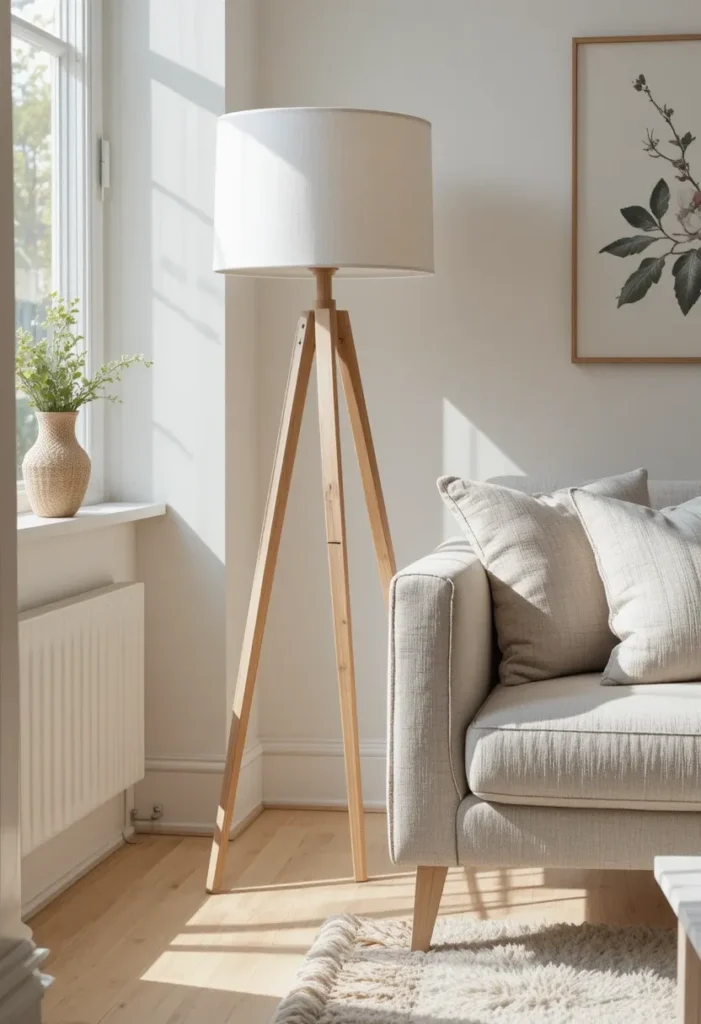
Tripod floor lamps stand on three legs, which instantly add visual balance and height. They feel structured but not bulky.
They’re ideal in rooms with soft furniture shapes because they introduce gentle contrast. A linen shade keeps the look relaxed.
Tip: position it near a corner to soften sharp angles.
Avoid thick, chunky legs in small rooms — slim frames maintain openness.
3. Choose a Slim Minimalist Lamp for Small Spaces
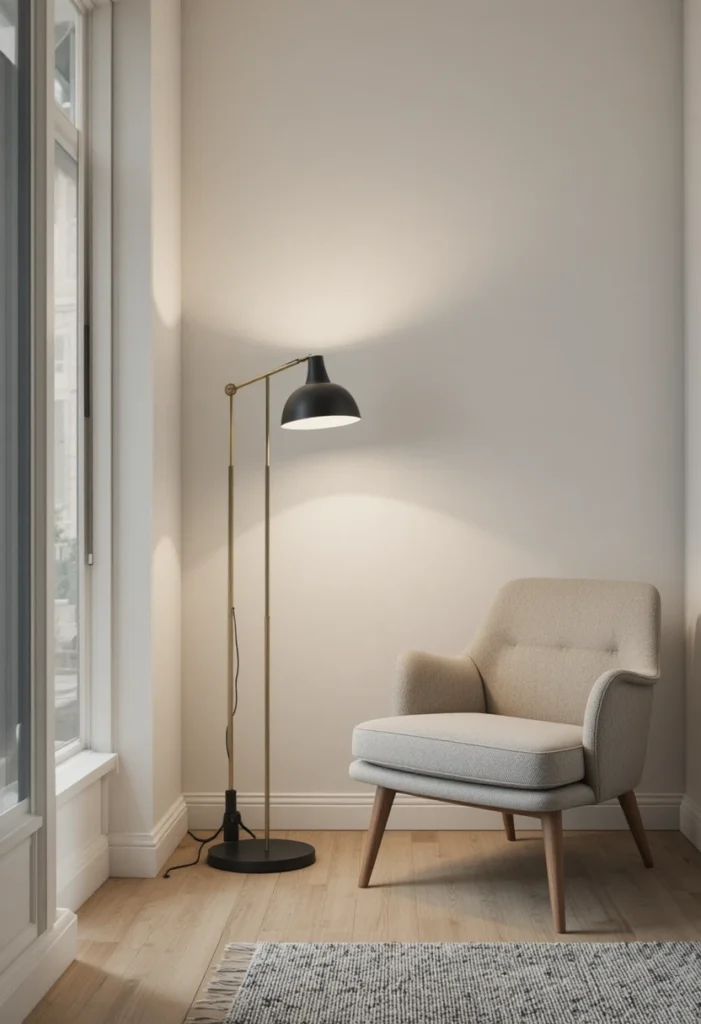
In compact living rooms, visual clutter matters. A slim, minimalist floor lamp provides light without competing for attention.
This works because it keeps the eye moving upward instead of crowding the floor area. Black or brushed metal finishes blend easily.
Tip: place it beside a narrow console or armchair.
Common mistake: ignoring cord placement. Always check outlet distance before deciding the final spot.
4. Try a Shelf Floor Lamp for Extra Function
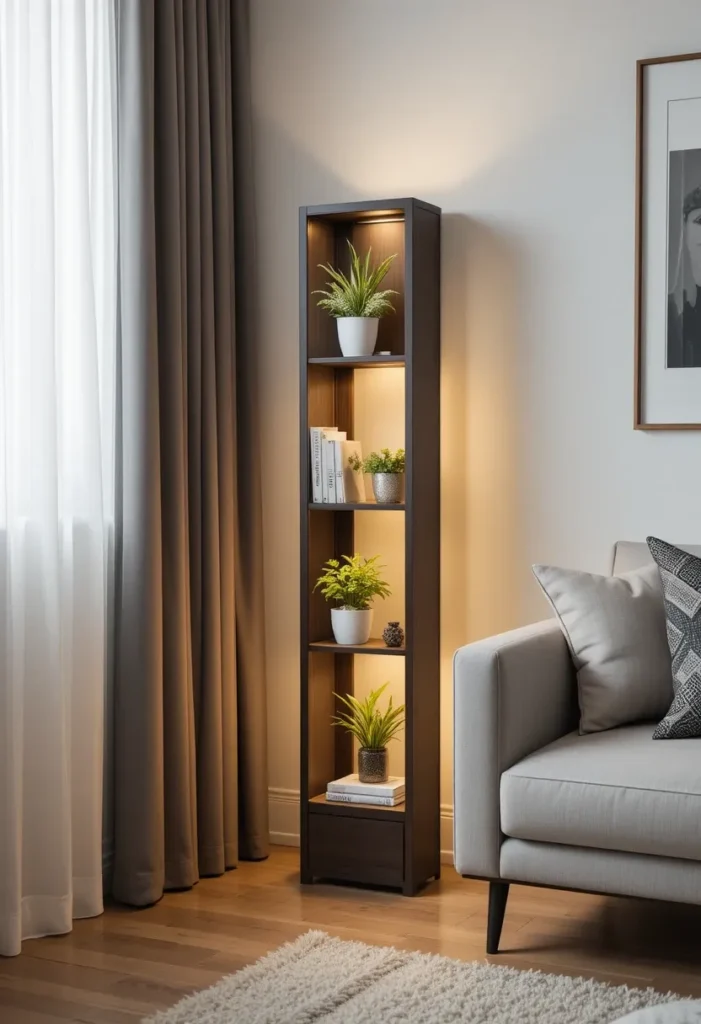
A floor lamp with built-in shelves combines lighting and storage in one vertical piece. It’s practical and efficient.
It works well in apartments where side tables feel bulky. You can display a small plant, books, or a framed photo.
Tip: style the shelves minimally to avoid visual chaos.
Mistake to avoid: overloading with décor. Too many items make the lamp look cluttered instead of intentional.
Also Read This Blog: Open Layout Living Room Dining Room: 15 Ideas to Design Your Space
5. Soften the Room with a Fabric Shade Lamp
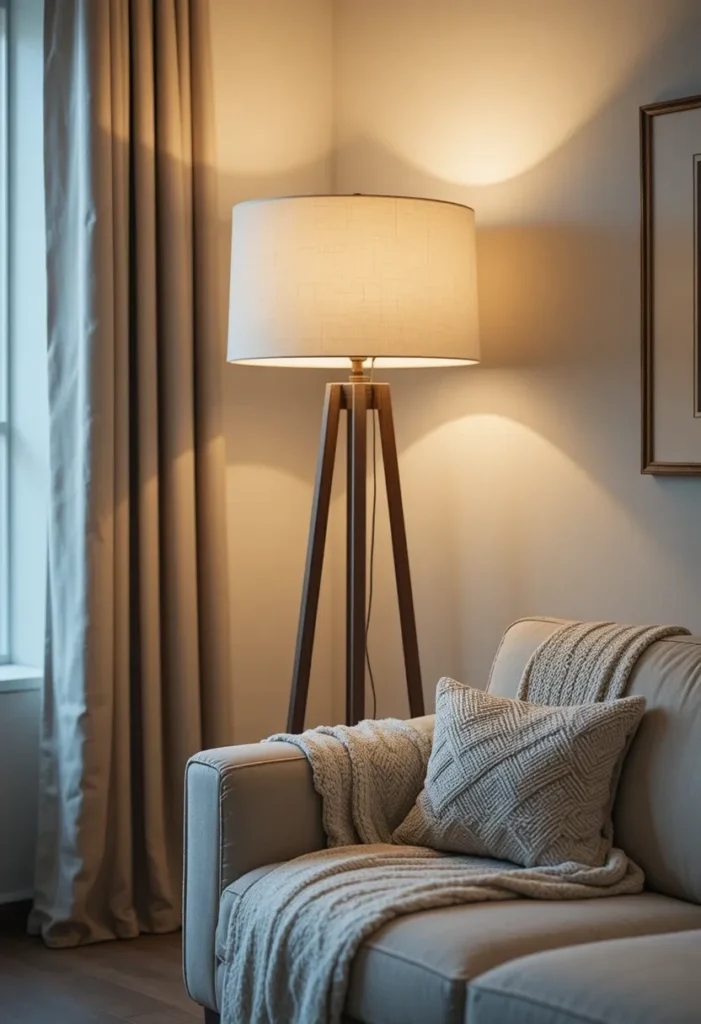
Fabric shades diffuse light gently, creating a calm, welcoming glow. They’re perfect for family rooms or evening relaxation.
This type of lamp prevents harsh shadows and balances brighter overhead lighting.
Tip: choose off-white or warm beige shades for flexibility.
Avoid very dark shades unless your room already gets strong natural light — they can absorb more brightness than expected.
6. Brighten Dark Corners with a Tall Corner Lamp
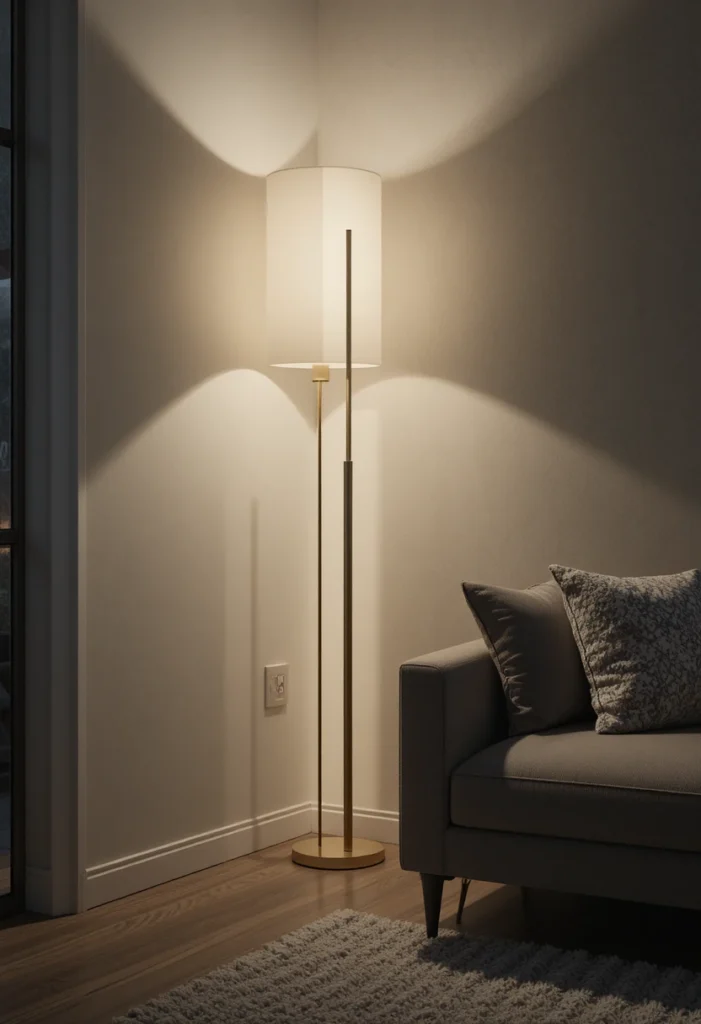
Corners often feel forgotten and dim. A tall floor lamp instantly lifts that area and makes the room feel complete.
This works because light in the corner reduces heavy shadows and expands the sense of space.
Tip: angle the light slightly toward the center of the room.
Common mistake: pushing it tightly into the wall. Leave a little breathing space so it doesn’t look cramped.
7. Use an Adjustable Reading Lamp for Practical Comfort
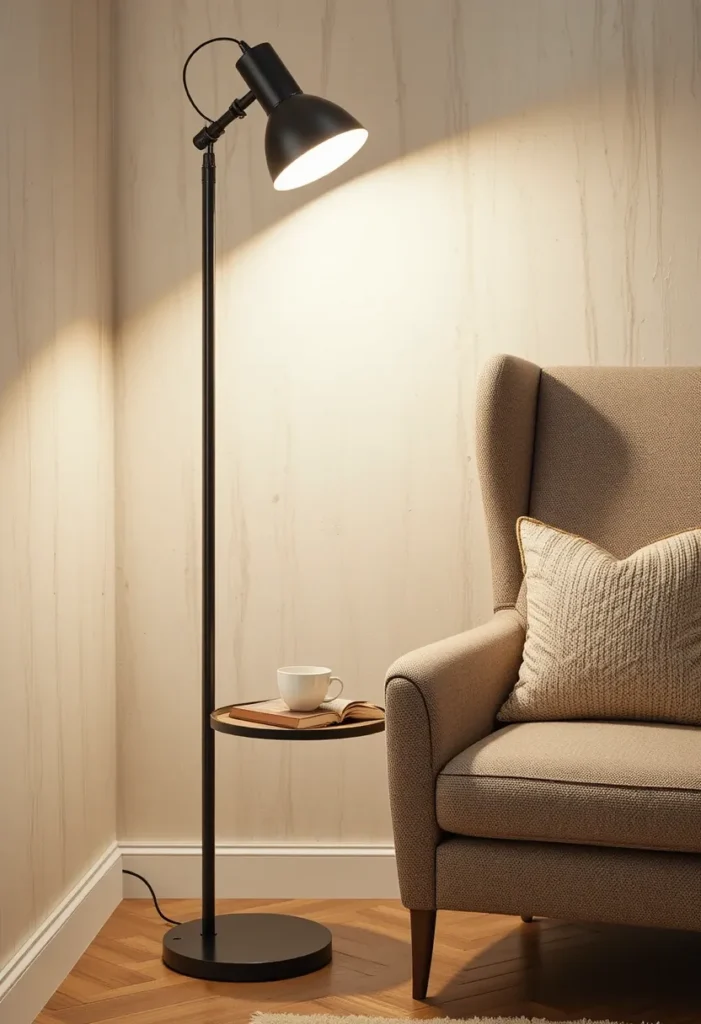
An adjustable floor lamp allows you to direct light exactly where you need it. It’s ideal next to an armchair or recliner.
This works because it supports real-life activities — reading, journaling, or working on a laptop.
Tip: keep it within arm’s reach of your seating.
Mistake to avoid: placing it too far behind the chair. You shouldn’t have to lean awkwardly to adjust the light.
8. Make a Statement with an Oversized Floor Lamp
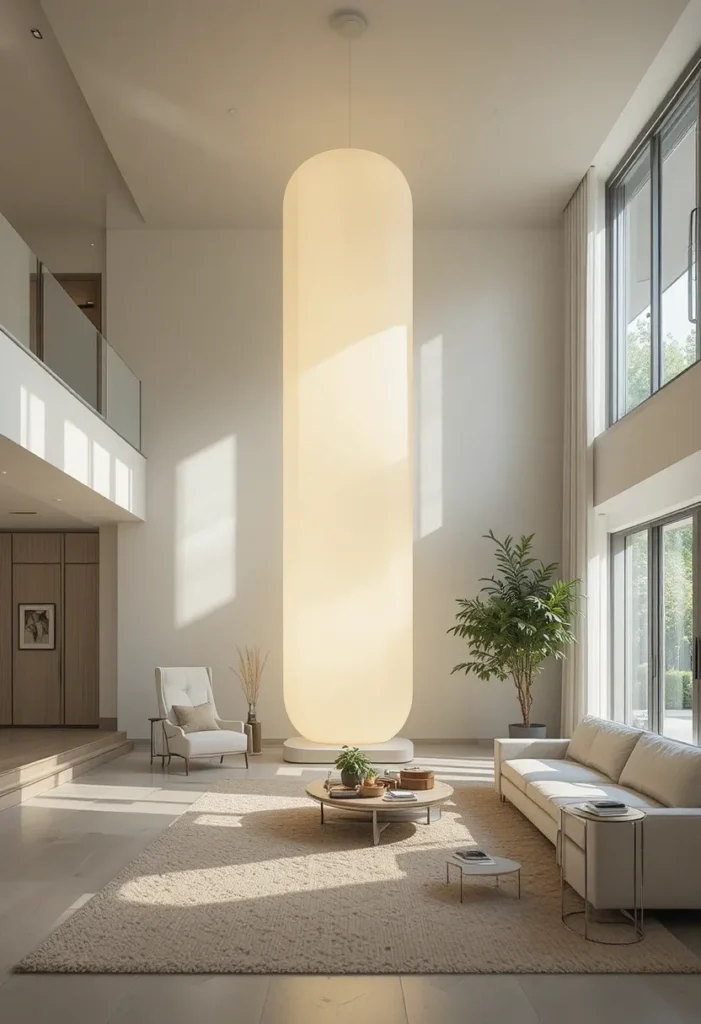
An oversized floor lamp acts almost like a piece of art. It fills vertical space and draws the eye upward, especially in rooms with higher ceilings.
This works well in open layouts where furniture feels low or spread out. The scale helps balance the room.
Tip: pair it with simple furniture so it doesn’t compete.
Common mistake: using oversized designs in tight rooms — always measure your ceiling height first.
Also Read This Blog: Living Room with Fireplace: 15 Smart Design Ideas
9. Add Warmth with a Wooden Floor Lamp
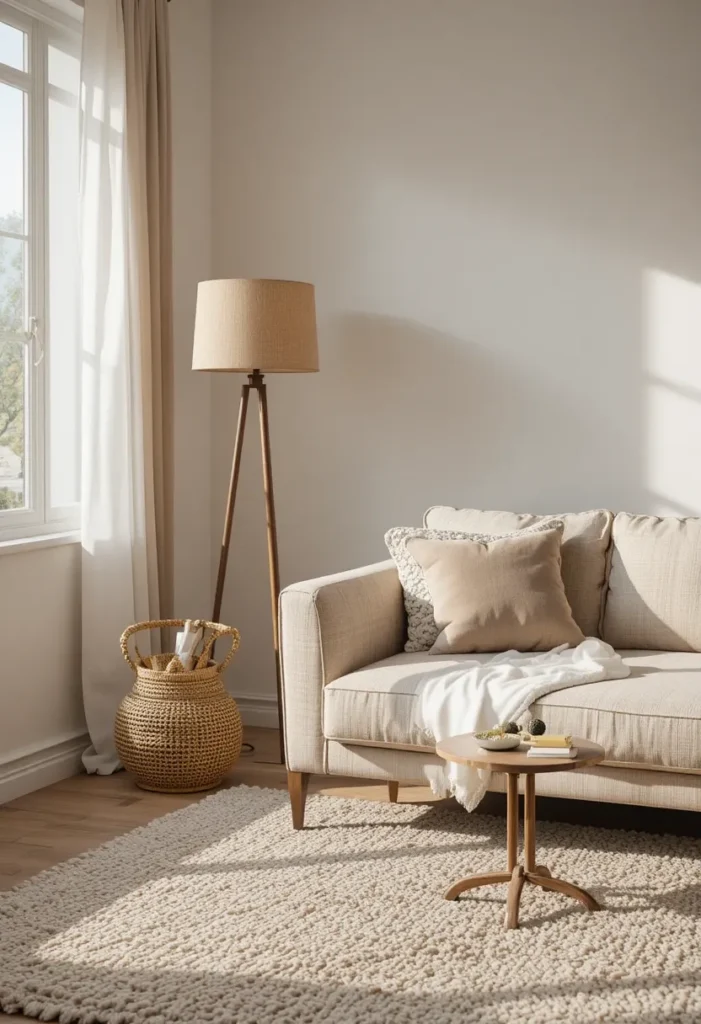
Wood-based floor lamps introduce natural texture and warmth. They soften modern rooms that feel a bit too sleek or cool.
This works particularly well with neutral sofas and layered textiles. The wood brings subtle depth without overwhelming the space.
Tip: match the wood tone loosely with your coffee table or shelves.
Avoid mixing too many wood finishes — choose complementary tones to keep things cohesive.
10. Use a Multi-Head Floor Lamp for Layered Light
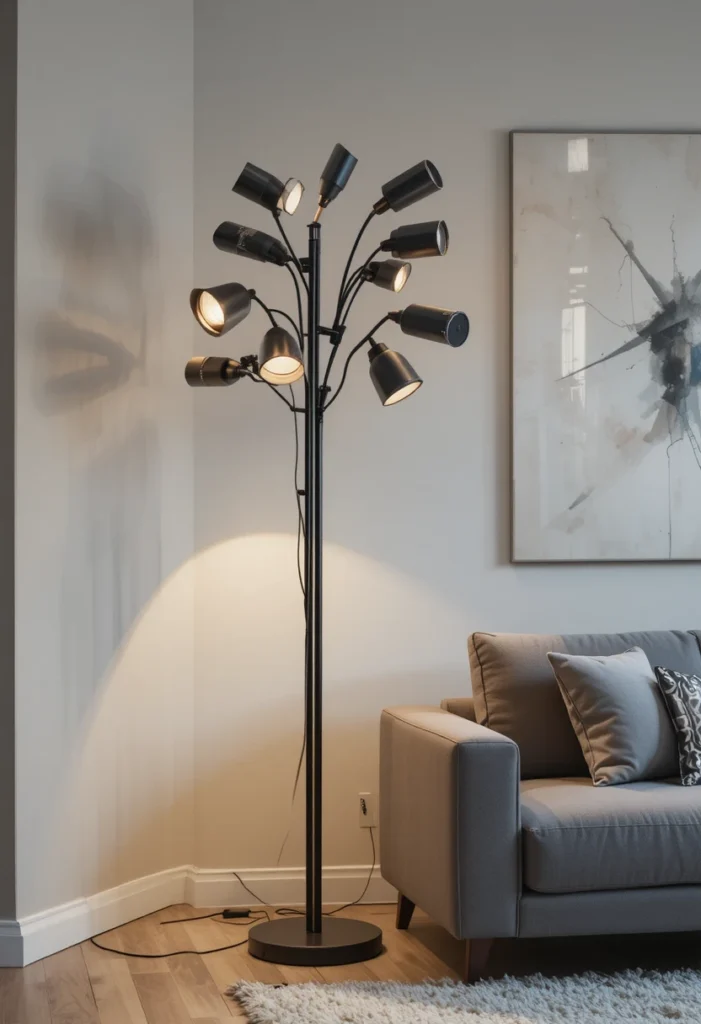
A multi-head floor lamp has several adjustable lights branching from one base. It spreads brightness across different areas at once.
This works beautifully in larger living rooms where one bulb isn’t enough. It creates layered lighting without adding multiple fixtures.
Tip: angle each light differently to avoid harsh glare.
Mistake to avoid: pointing all heads in one direction — that defeats the purpose of balanced lighting.
Also Read This Blog: Curtains Living Room: 15 Expert Tips for Style & Comfort
11. Introduce a Brass or Gold Accent Lamp
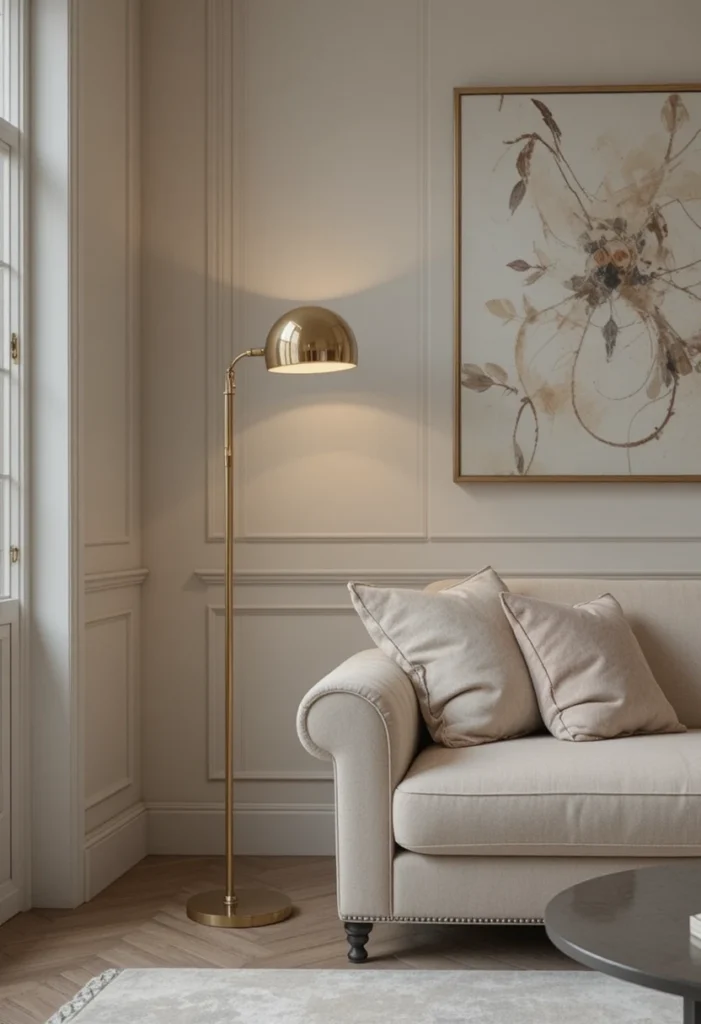
Brass or gold finishes reflect light softly and add quiet elegance. They’re especially effective in neutral or monochrome living rooms.
This works because metallic surfaces subtly brighten the area without needing extra décor.
Tip: place it near a mirror or light-colored wall to enhance reflection.
Avoid overusing metallic accents — one or two pieces are enough for harmony.
12. Choose a Dimmable Floor Lamp for Flexibility

A dimmable floor lamp allows you to adjust brightness depending on time of day or mood. It gives your living room adaptability.
This works well if your space serves multiple purposes — relaxing at night, hosting friends, or reading quietly.
Tip: check bulb compatibility before buying.
Common mistake: pairing non-dimmable bulbs with dimmer switches, which can cause flickering.
Also Read This Blog: Living Room Kitchen Open Concept: 15 Ideas to Design Your Space
13. Try a Sculptural or Artistic Floor Lamp
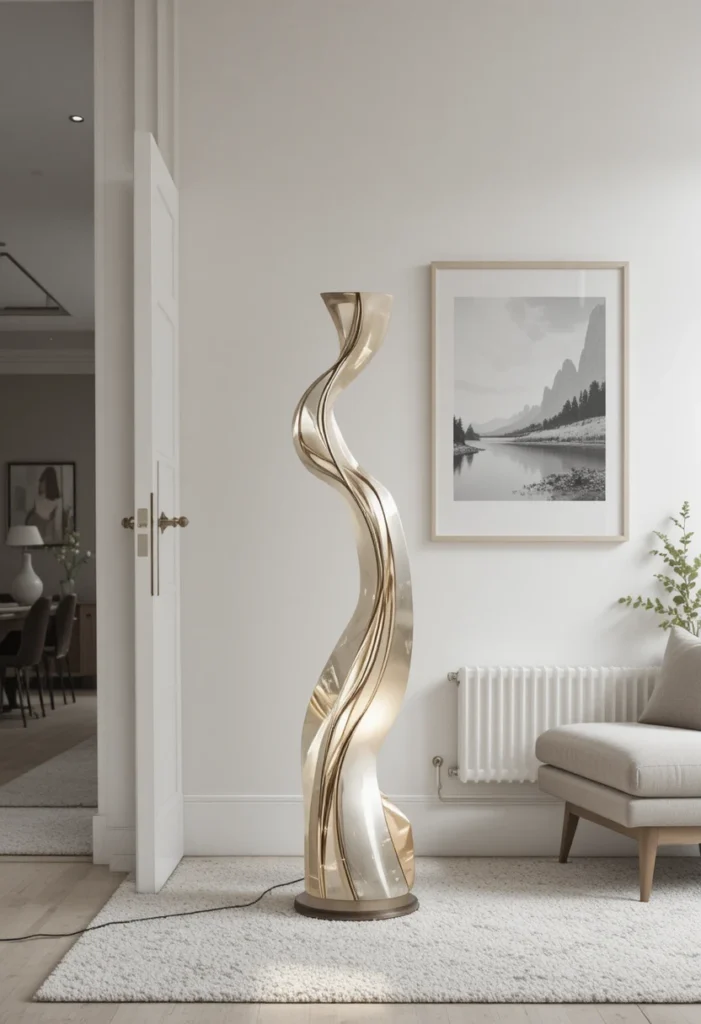
Some floor lamps are designed with unique shapes or creative forms. They double as functional lighting and decorative pieces.
This works best in minimalist spaces where one standout item adds personality without clutter.
Tip: keep surrounding décor simple so the lamp remains the focus.
Avoid overly intricate designs in already busy rooms — it can feel visually overwhelming.
14. Place a Floor Lamp Behind the Sofa for Subtle Glow
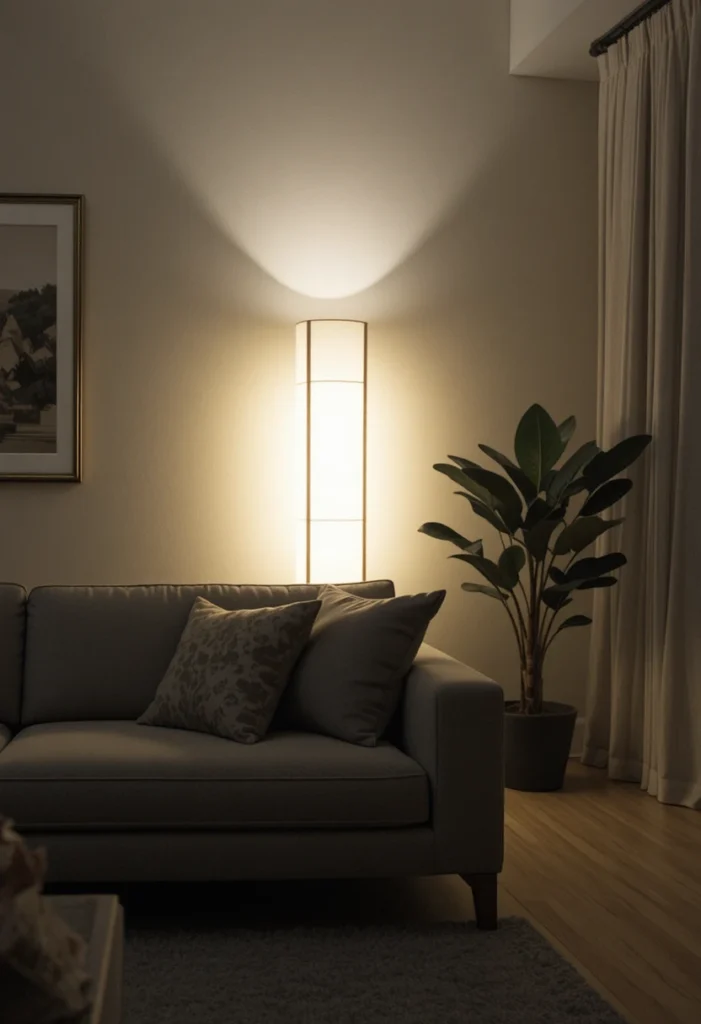
Positioning a floor lamp slightly behind a sofa creates indirect lighting. It casts a soft glow across the wall and seating area.
This works especially well in evenings when you want a calm atmosphere instead of bright overhead light.
Tip: choose a taller lamp so the shade rises above the backrest.
Common mistake: placing it too low — light should gently spread, not shine directly into eye level.
Conclusion
The right floor lamp does more than brighten a room — it shapes how the space feels and functions. Whether you choose an arc lamp to anchor your seating area, a slim minimalist design for a small room, or a dimmable option for flexibility, thoughtful placement makes all the difference.
Lighting works best when it feels layered and intentional. Instead of relying only on overhead fixtures, adding one well-chosen floor lamp can soften corners, highlight textures, and create a more inviting atmosphere. Start with one area that feels slightly unfinished, and let lighting guide the transformation.