14 Farmhouse Living Room Ideas to Create a Cozy, Stylish Space
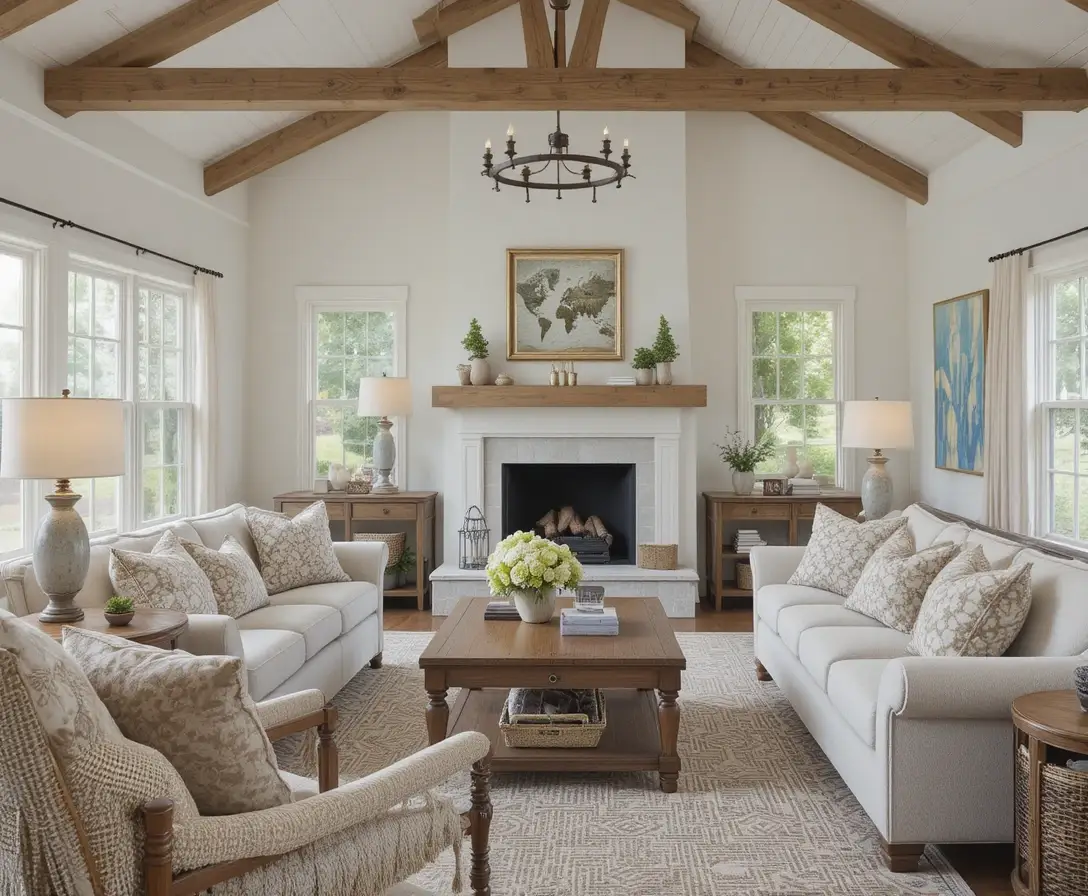
Transforming a farmhouse living room into a cozy, stylish, and functional space doesn’t need to be complicated. By focusing on simple, practical ideas—like neutral colors, natural textures, and cozy seating—you can create a warm and inviting atmosphere. These 14 tips will guide you step by step with confidence.
1. Embrace Neutral Base Colors
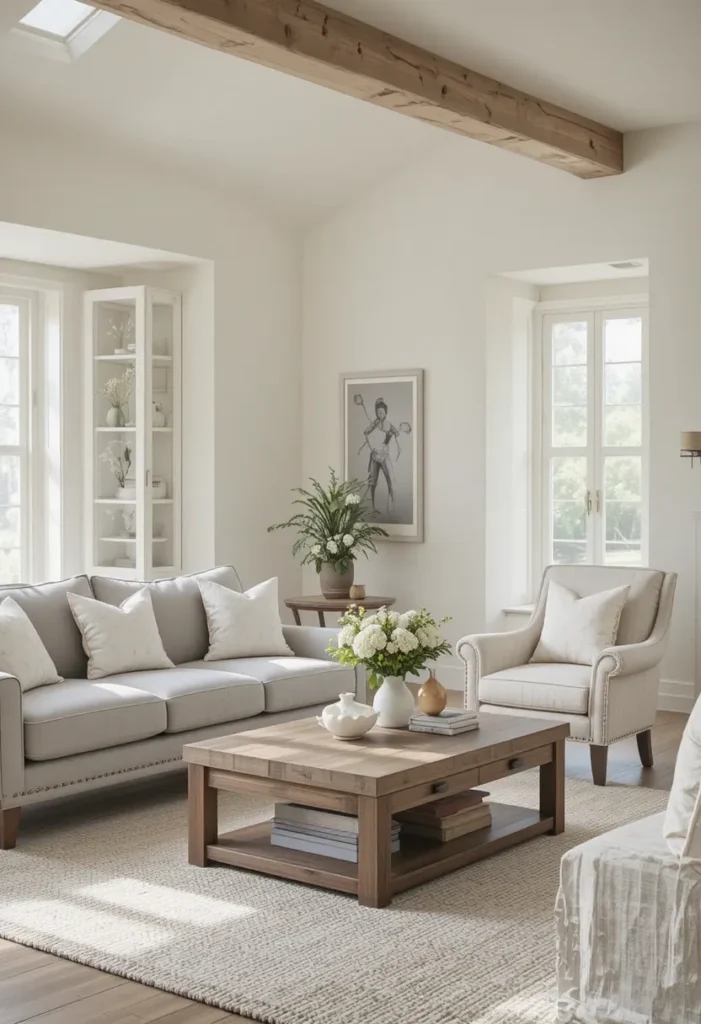
Start with a neutral palette—whites, creams, and soft grays.
These colors provide a calm backdrop that allows furniture, textures, and decor to shine.
Tip: Paint walls in a warm off-white and add soft gray or beige furniture. Avoid overly dark neutrals that can make the space feel closed in.
2. Use Natural Wood Elements
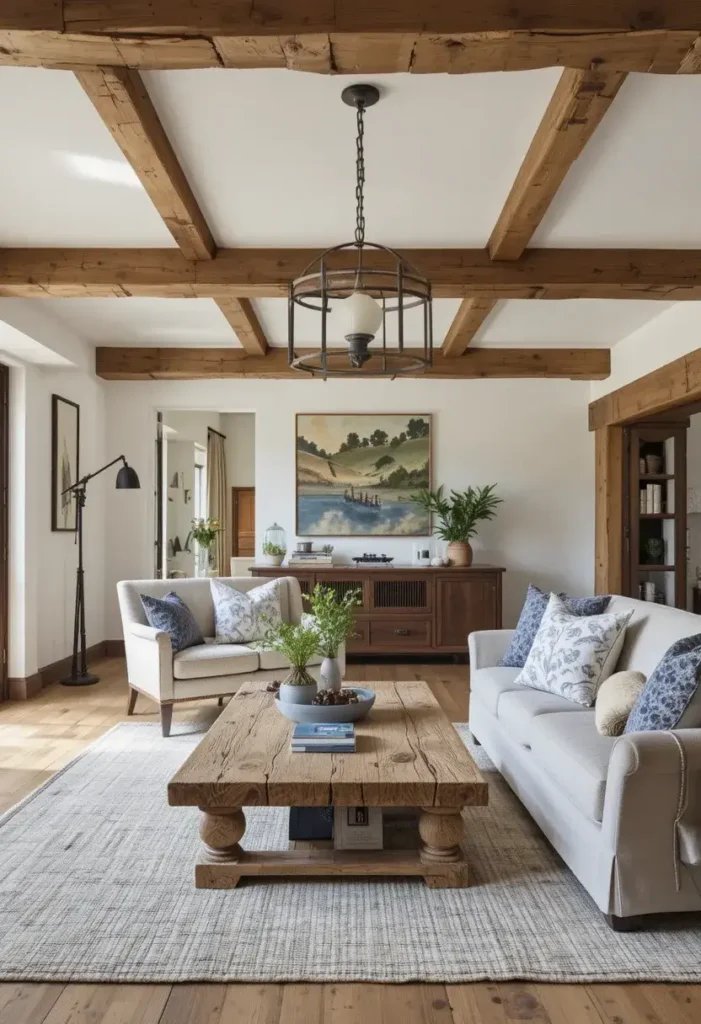
Exposed wood beams, coffee tables, or sideboards instantly add farmhouse charm.
Wood brings warmth and an organic feel that complements both rustic and modern pieces.
Tip: Mix different wood finishes carefully. For example, a reclaimed oak coffee table paired with a walnut sideboard creates depth without clashing.
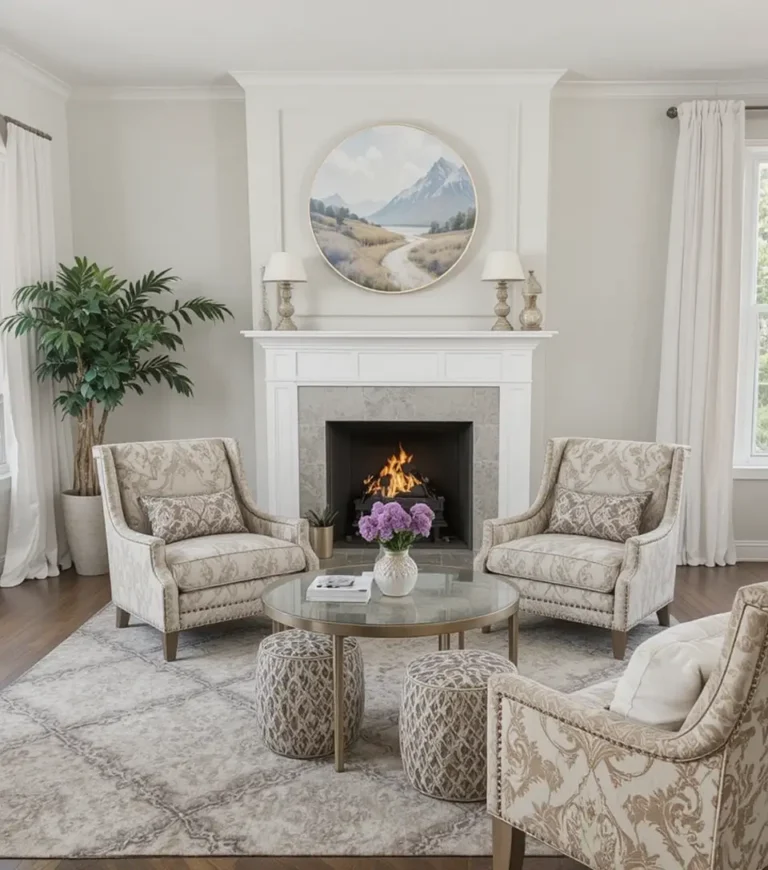
3. Incorporate a Statement Fireplace
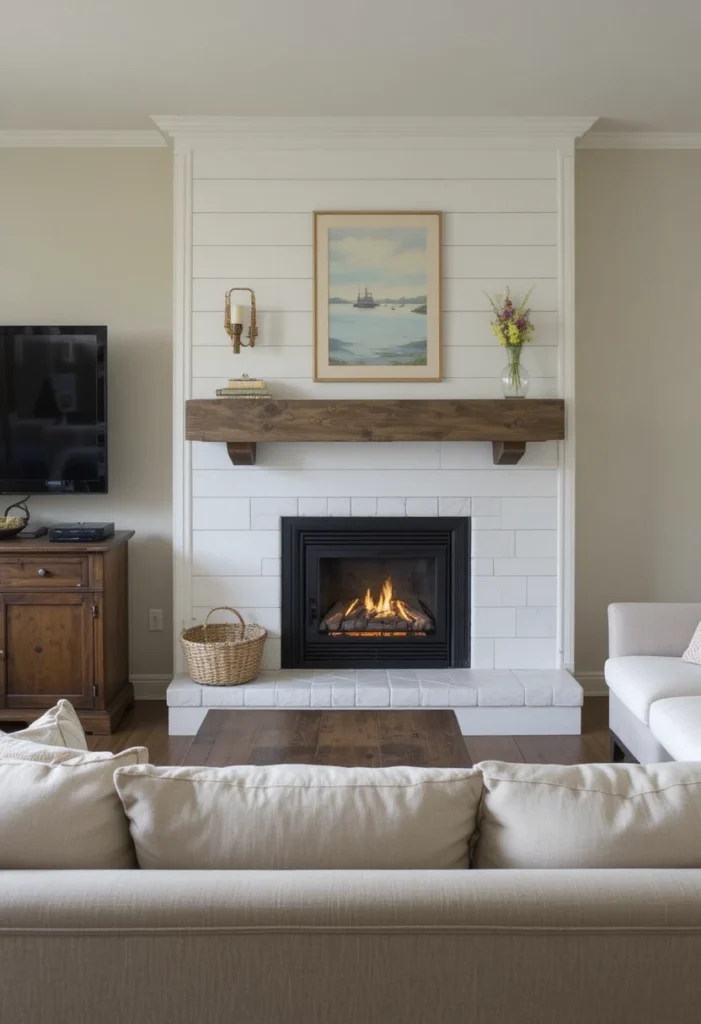
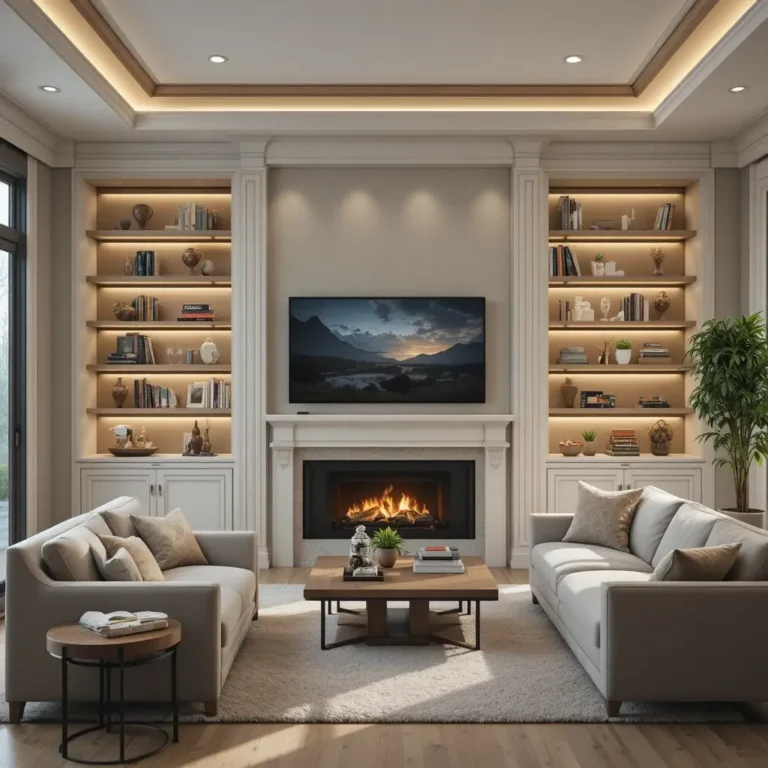
A fireplace creates a cozy focal point and encourages family gatherings.
Even if you don’t have a traditional fireplace, a faux or electric version works beautifully.
Tip: Frame it with shiplap or stone to enhance the farmhouse feel. Avoid overly ornate mantels—they can feel out of place in a simple farmhouse style.
4. Mix Textures for Depth
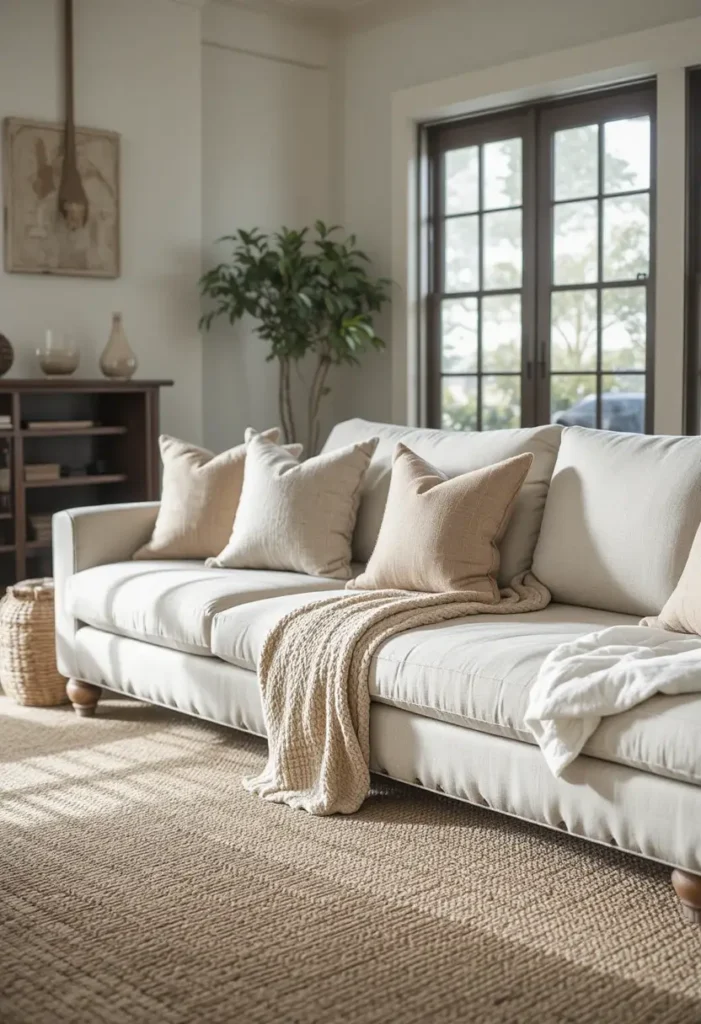
Layering textures adds interest without clutter. Think linen, wool, burlap, or jute.
Textures make a room feel lived-in and inviting, not flat or staged.
Tip: Pair a soft linen sofa with a chunky knit throw and a jute rug. Balance is key—too many textures can feel chaotic.
5. Add Cozy, Oversized Seating
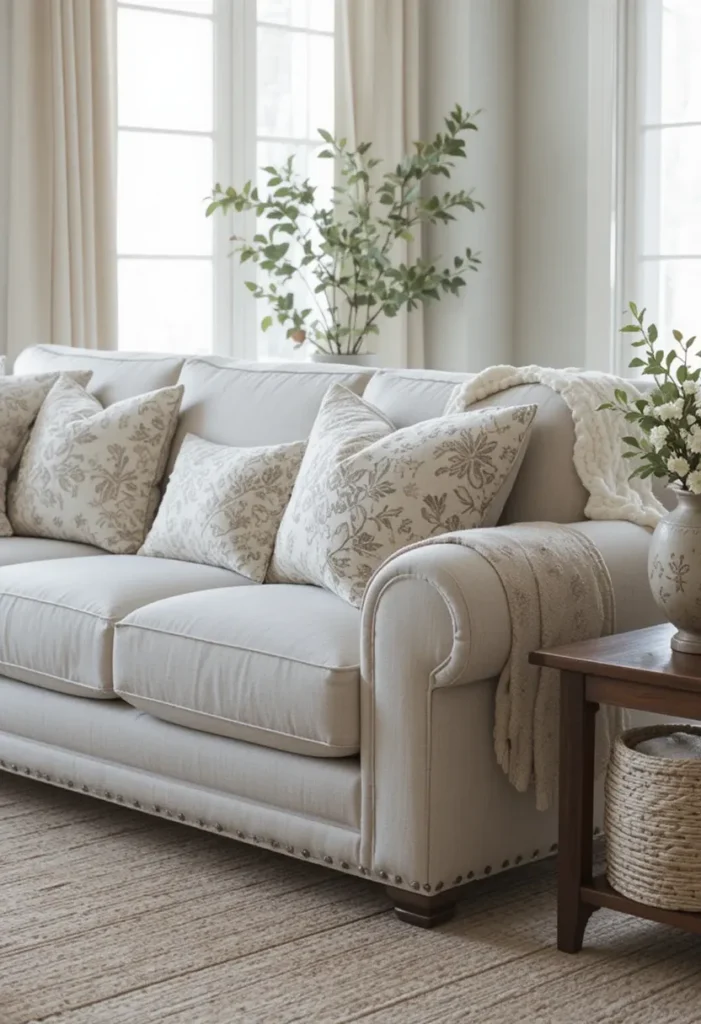
Farmhouse living rooms thrive on comfort. Large, cushioned sofas or armchairs invite people to linger.
This isn’t about showy furniture; it’s about functionality and warmth.
Tip: Choose seating with removable covers for easy cleaning. Avoid tiny accent chairs that feel impractical.
6. Showcase Vintage or Reclaimed Pieces
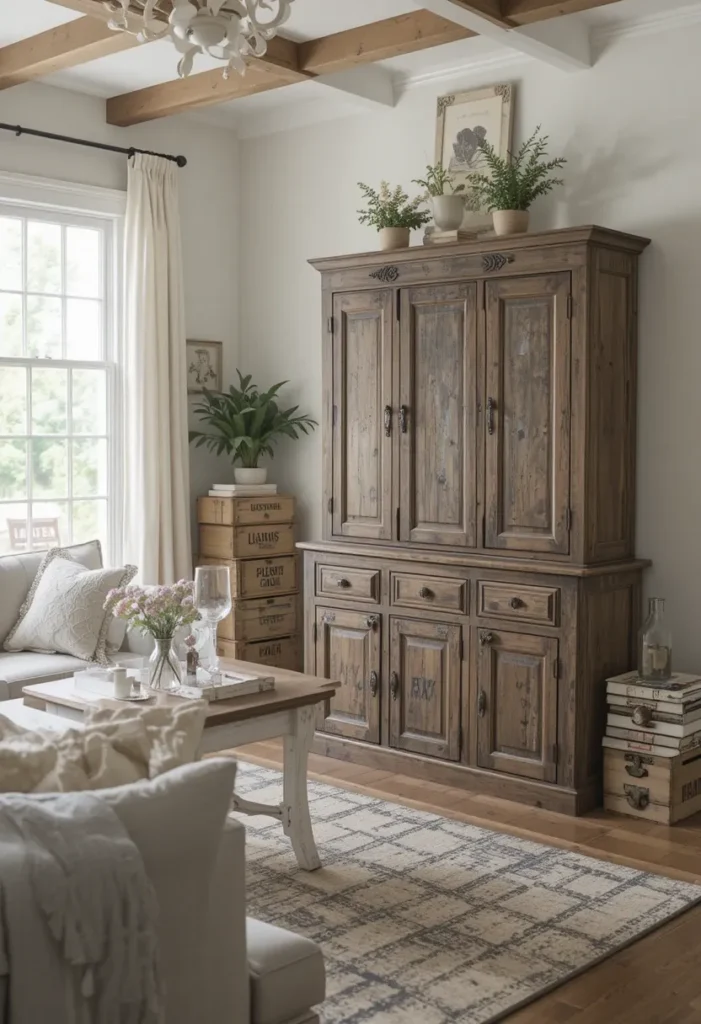
Incorporate furniture with history—antique cabinets, distressed tables, or old crates.
These pieces add character and a sense of story to your living room.
Tip: Balance vintage with modern essentials. A reclaimed wood cabinet works best alongside simple, contemporary seating to prevent the space from feeling outdated.
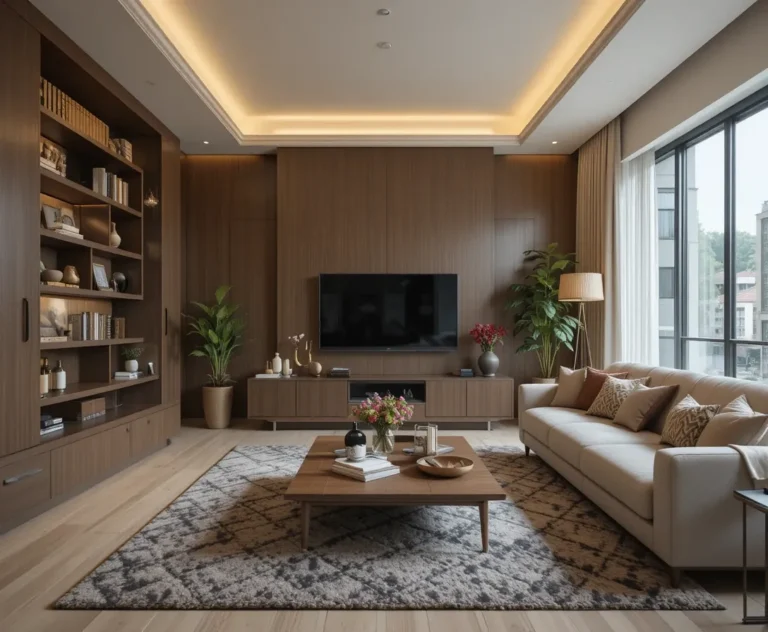
7. Incorporate Open Shelving
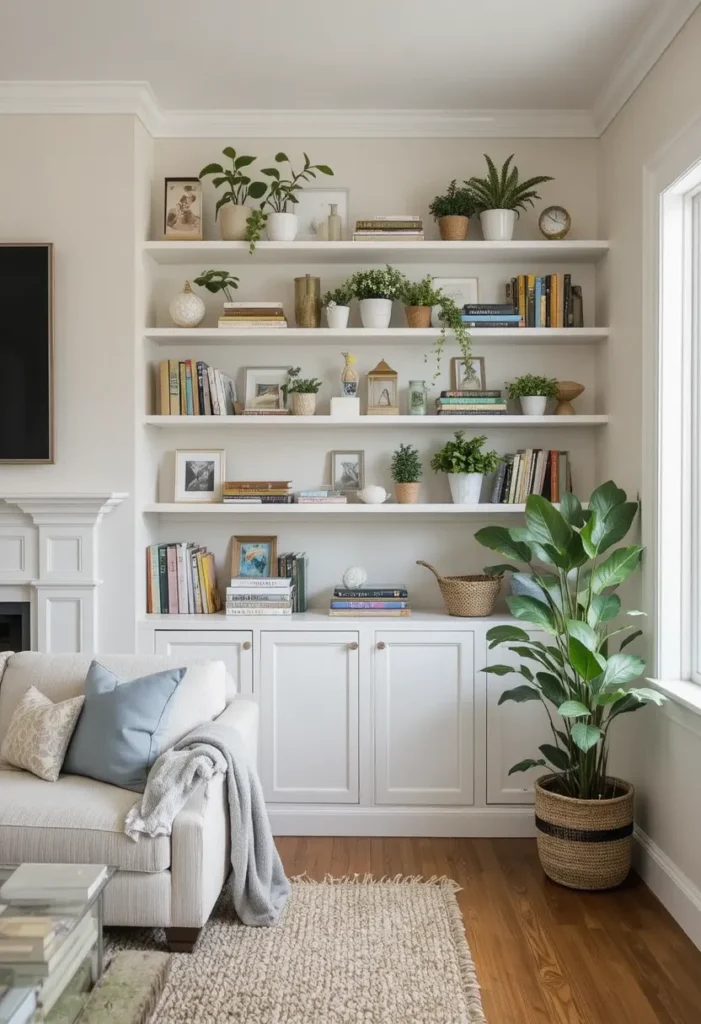
Open shelving allows you to display decor, books, and plants while keeping the room airy.
It also gives you the chance to rotate accessories seasonally.
Tip: Avoid overcrowding shelves. Leave some negative space to maintain a clean, relaxed feel.
8. Layer Rugs for Comfort
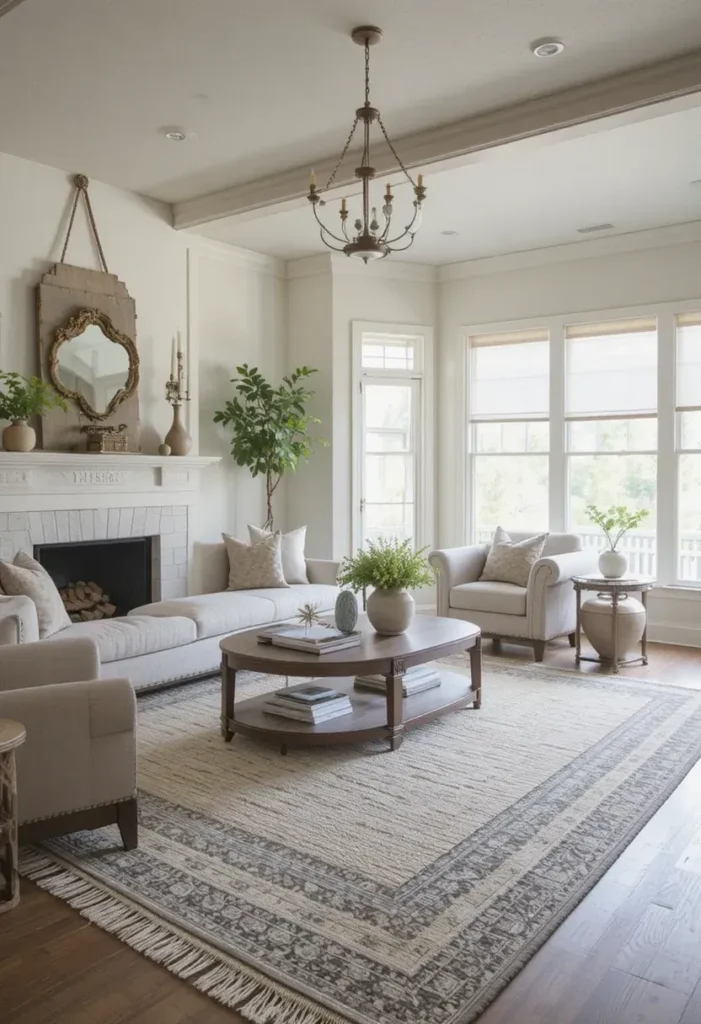
Farmhouse living rooms often combine different patterns and textures on the floor.
Layered rugs can define spaces, add warmth, and anchor furniture.
Tip: Place a larger neutral rug first, then layer a smaller patterned rug for visual interest. Make sure the rugs complement, rather than compete with, each other.
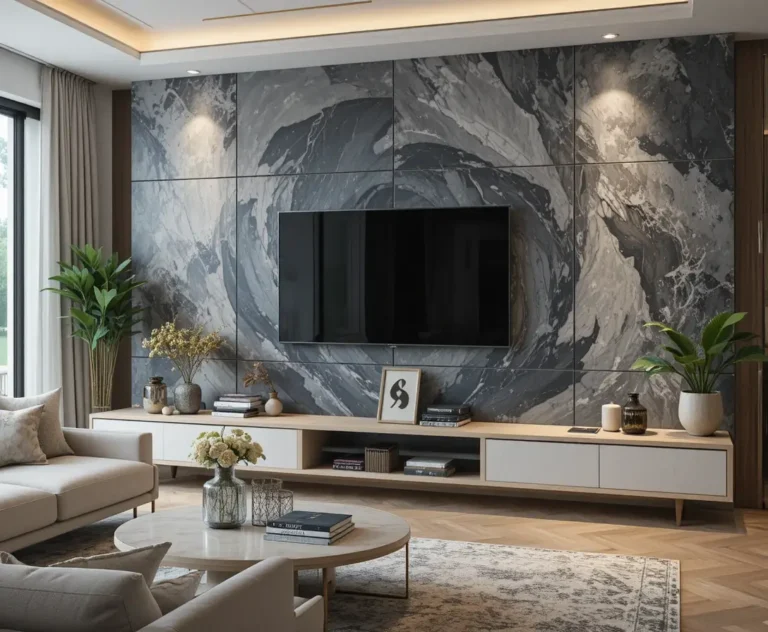
Also Read This Blog: 13 Practical Living Room TV Wall Ideas to Maximize Style & Comfort
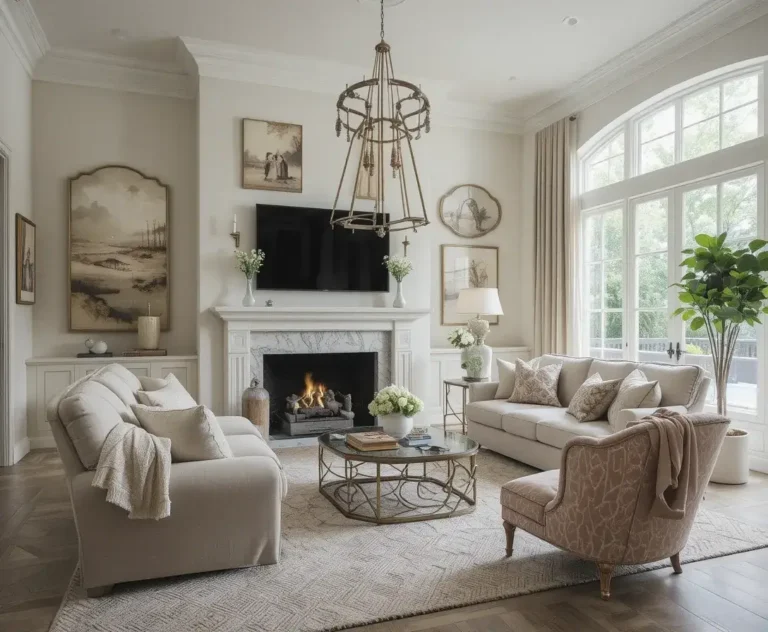
9. Incorporate Farmhouse Lighting
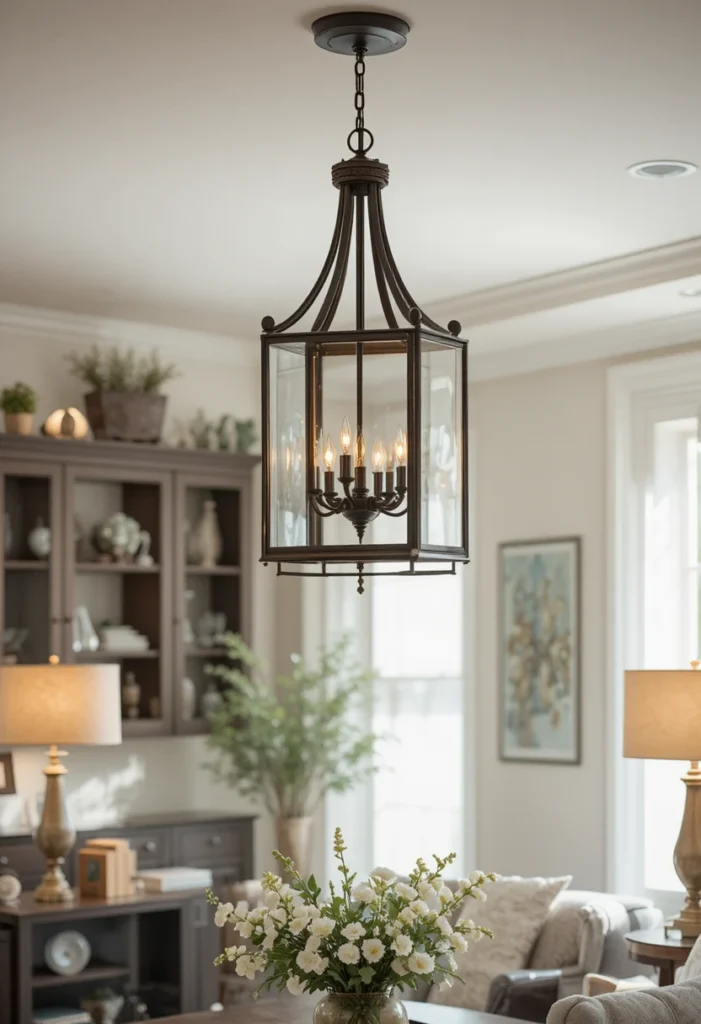
Lighting sets the mood and reinforces style. Consider wrought iron chandeliers, lantern pendants, or simple table lamps.
Lighting should feel functional but also inviting.
Tip: Avoid overly modern or shiny fixtures. Stick to warm finishes like bronze, black, or matte gold.
10. Display Natural Elements
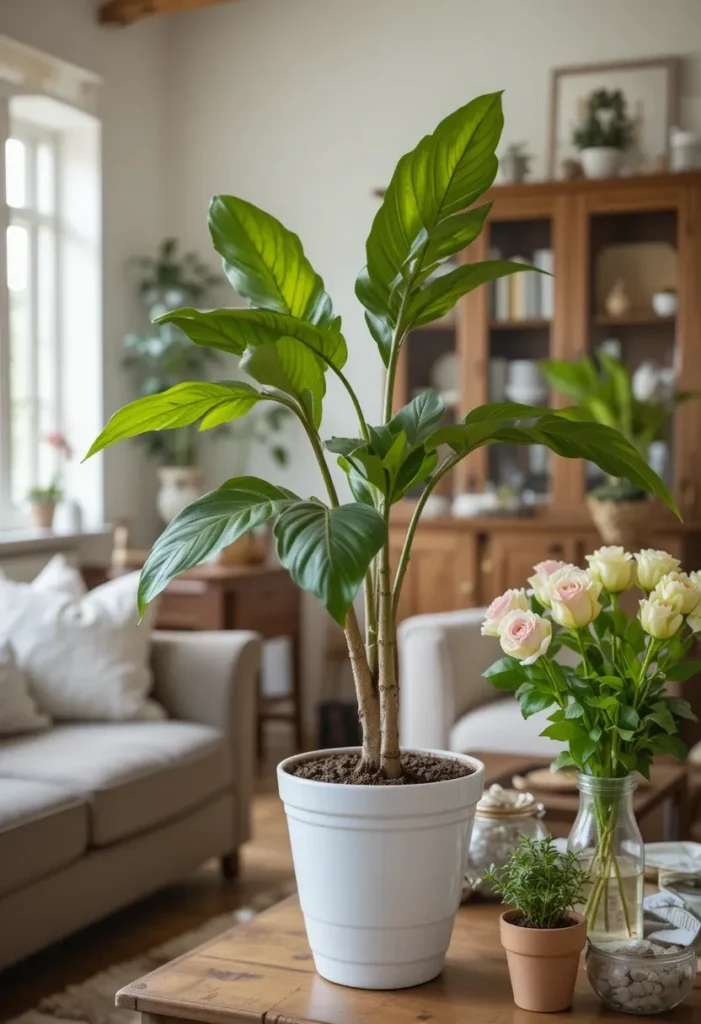
Plants, flowers, and natural decor bring life and energy into the room.
Greenery softens hard lines and balances wood and metal elements.
Tip: Use a mix of large leafy plants and small potted herbs. Avoid overcrowding—one large statement plant can be more effective than many tiny ones.
11. Keep Windows Simple
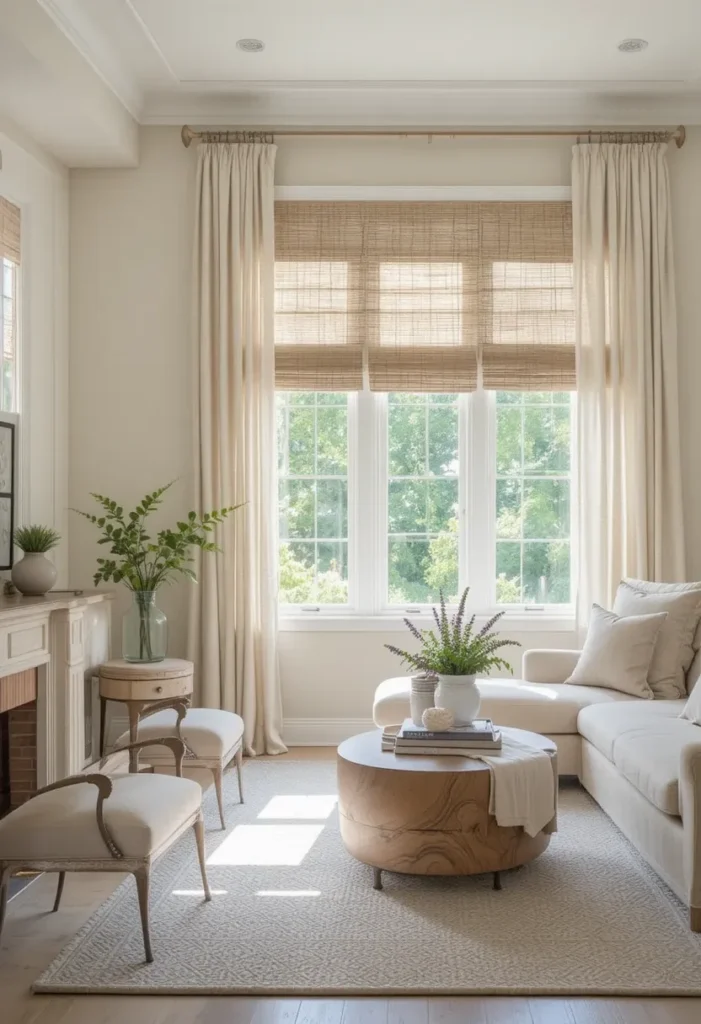
Farmhouse windows usually favor light, airy treatments like linen curtains or woven shades.
This lets natural light flow in and keeps the room bright and welcoming.
Tip: Avoid heavy drapes that block light. Soft layers with a simple rod often look best.
Also Read this Blog: 14 Living Room Designs That Blend Style, Comfort & Everyday Life
12. Use Subtle Patterns
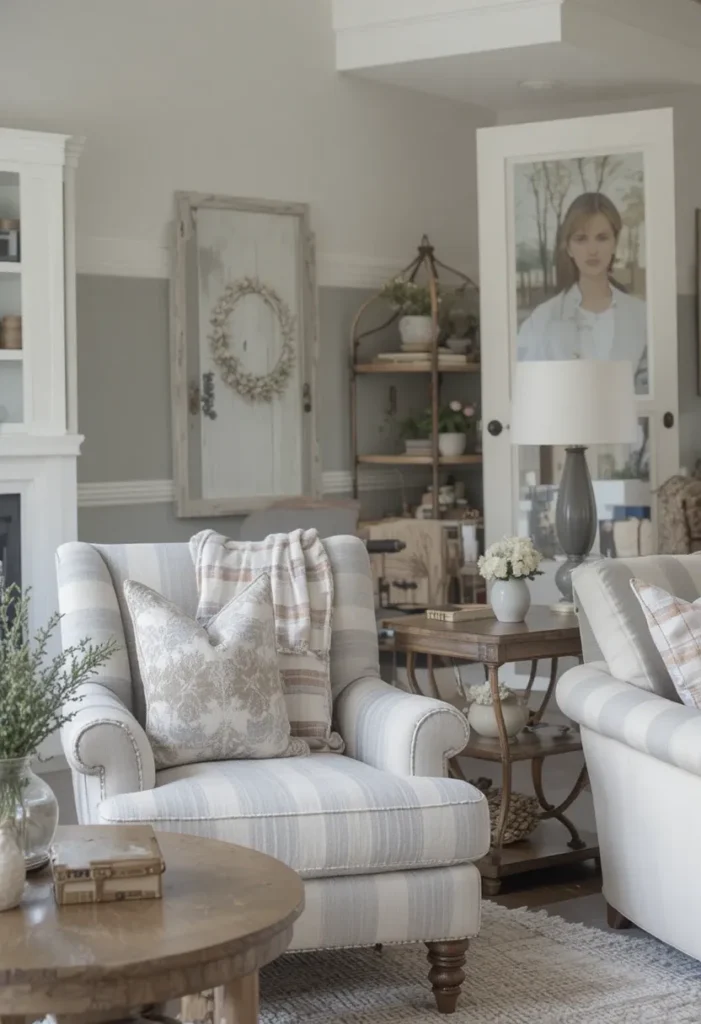
Stripes, plaids, and checks add farmhouse charm without overwhelming the space.
They work well on throw pillows, blankets, or small accent chairs.
Tip: Stick to a consistent color palette. Mixing too many patterns in different hues can feel chaotic rather than cozy.
13. Include Functional Storage
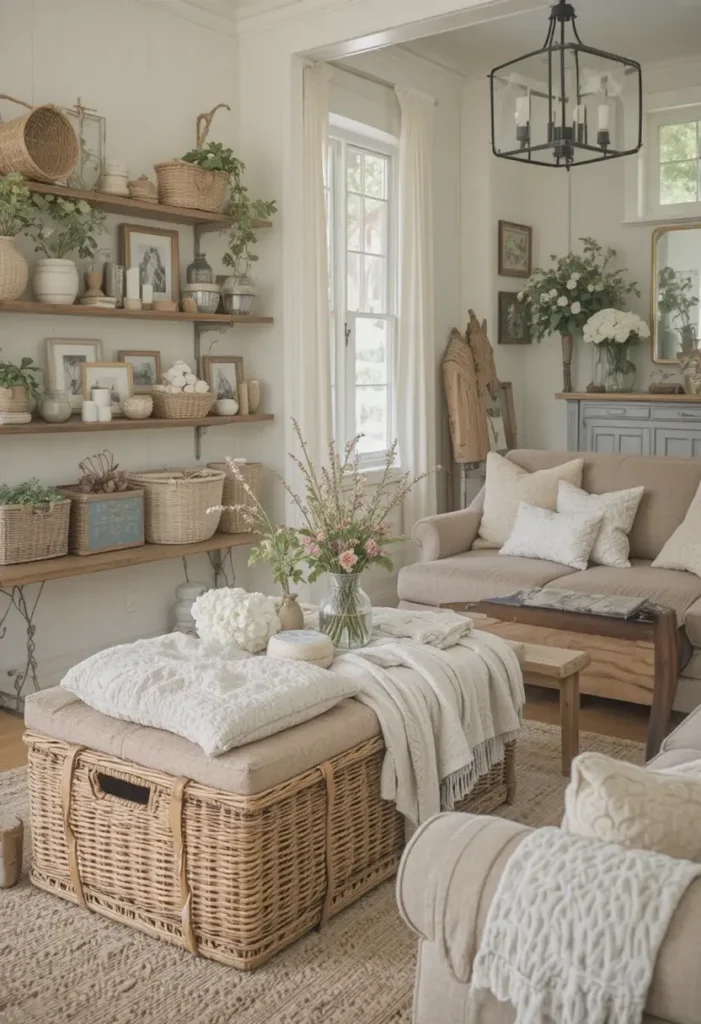
Farmhouse living rooms often double as family hubs, so clever storage is key.
Baskets, ottomans, and benches with hidden compartments keep clutter out of sight.
Tip: Choose storage that complements the style of your furniture. Avoid plastic bins—they break the aesthetic.
14. Add Personal Touches
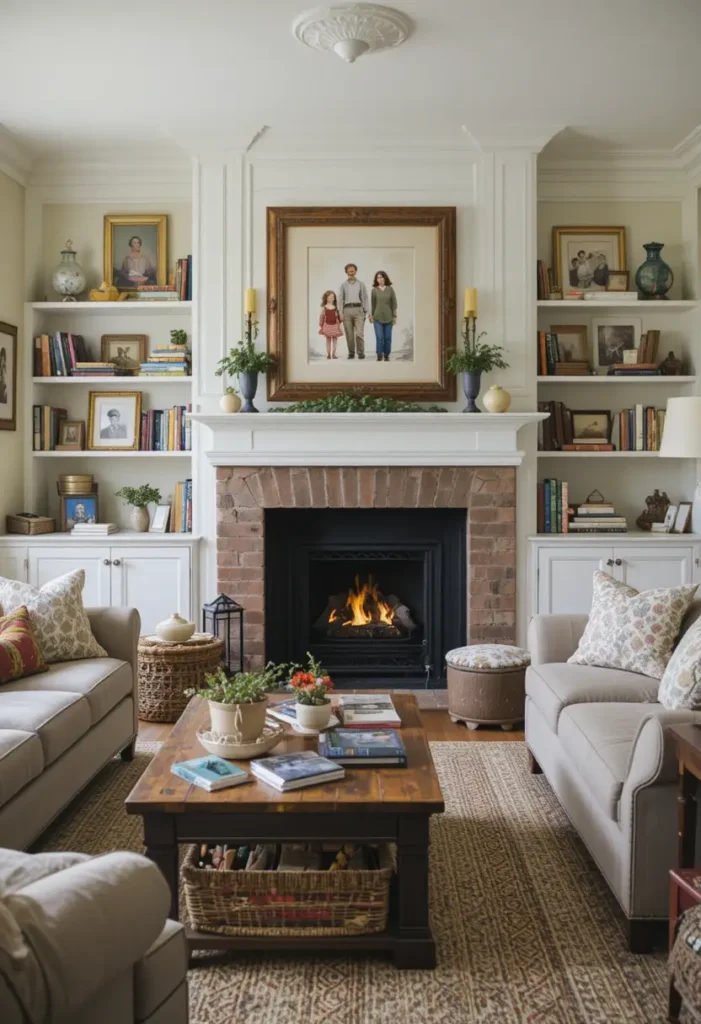
Finally, make the room feel lived-in by displaying items that reflect your personality: framed family photos, meaningful books, or handmade crafts.
Personal touches prevent a space from feeling like a showroom.
Tip: Rotate items occasionally to refresh the look without spending money. Avoid filling every surface—select a few pieces with intention.
Conclusion
Creating a farmhouse living room is about balancing comfort, style, and practicality. By layering textures, incorporating natural elements, and focusing on cozy, functional furniture, you can achieve a space that feels welcoming and timeless. Take each idea step by step, trust your instincts, and your living room will naturally reflect warmth and personality.