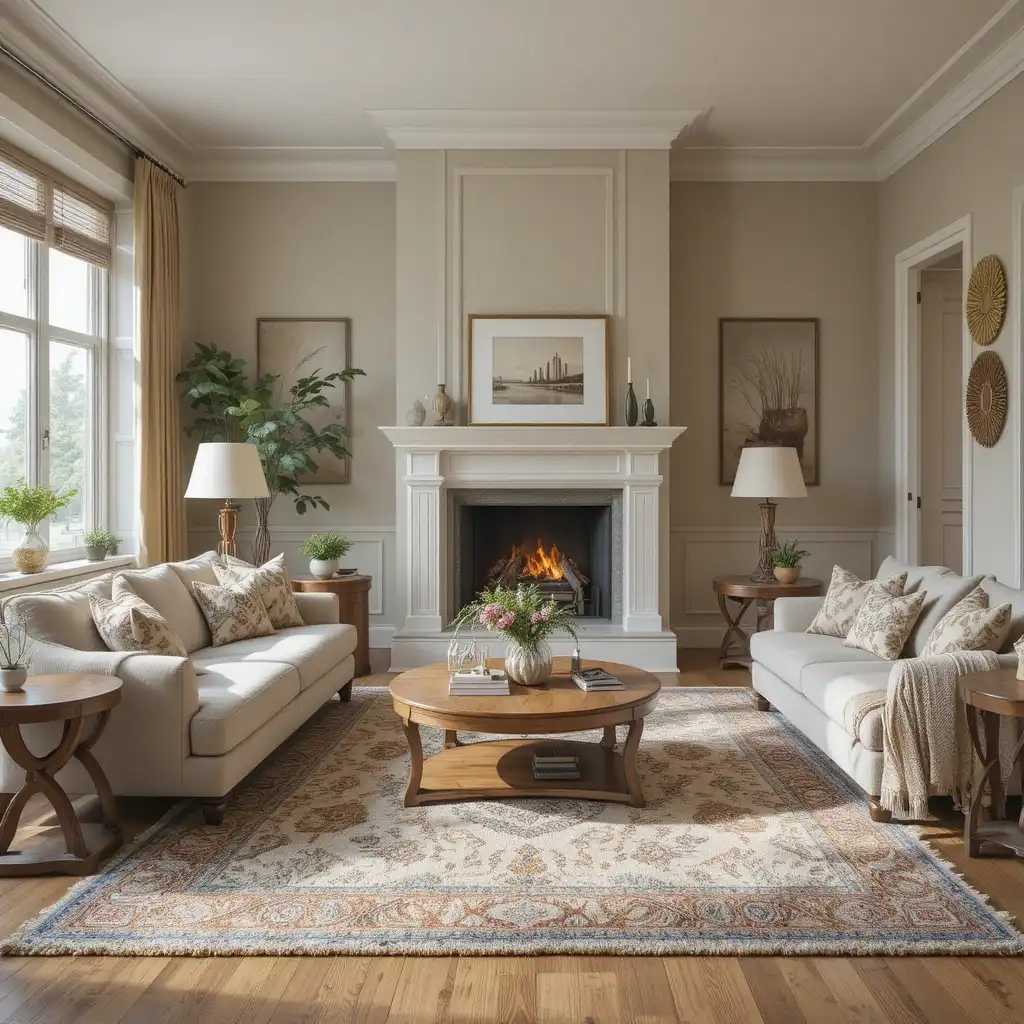
Area Rugs in Living Room: 15 Ideas to Transform Your Space
A living room can feel uninviting if the floor looks bare or disconnected. Area rugs do more than fill space—they define seating areas, add warmth, and bring texture to a room. Choosing and styling the right rug can be tricky, so these 15 ideas will help you make confident, practical choices for your living room.
1. Choose the Right Size
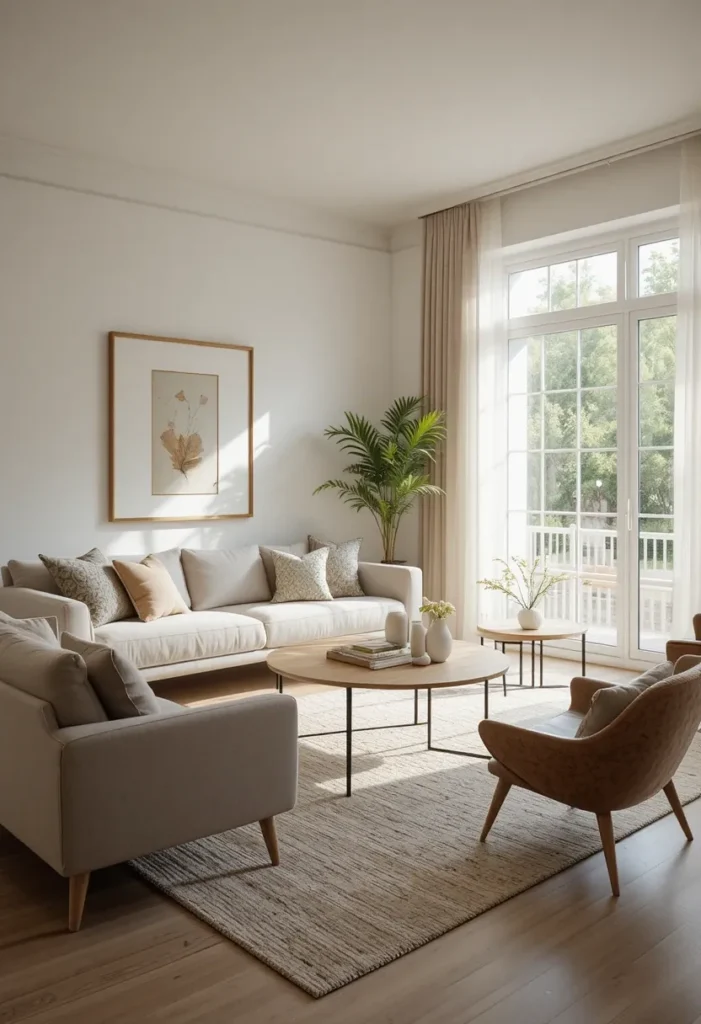
Choosing the right rug size ensures your living room feels balanced and cohesive. Too small or too large rugs can disrupt the furniture layout and room flow.
Rugs should anchor your seating area, with all or front furniture legs on them. This visually unites the space, making it feel intentional and connected.
Tip: Measure your living room and mark the area with tape. An 8×10 rug works well for many standard spaces, leaving some floor visible around edges.
2. Layer Rugs for Visual Interest
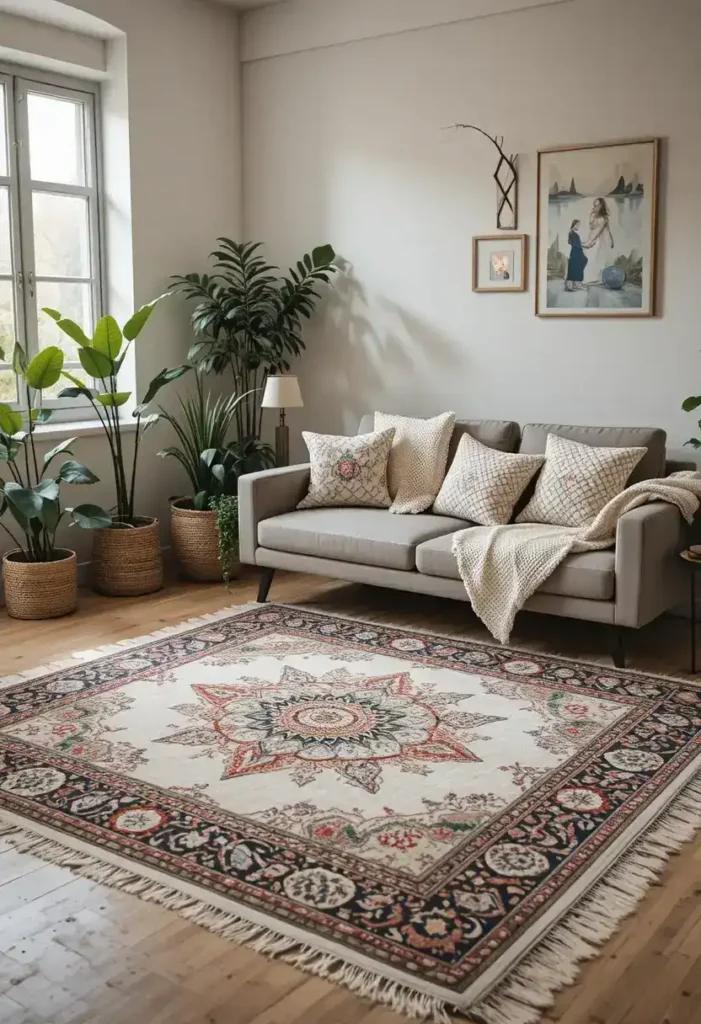
Layering rugs adds texture, depth, and personality to your living room without overcrowding. A neutral base with a smaller patterned rug works best.
Balance is key. Ensure colors and textures complement each other to avoid clashes. Avoid layering more than two rugs to maintain a clean look.
Tip: Place the smaller rug under the coffee table or seating focal point. Keep it proportional—about half the size of the base rug for harmony.
3. Define Zones in Open Floor Plans
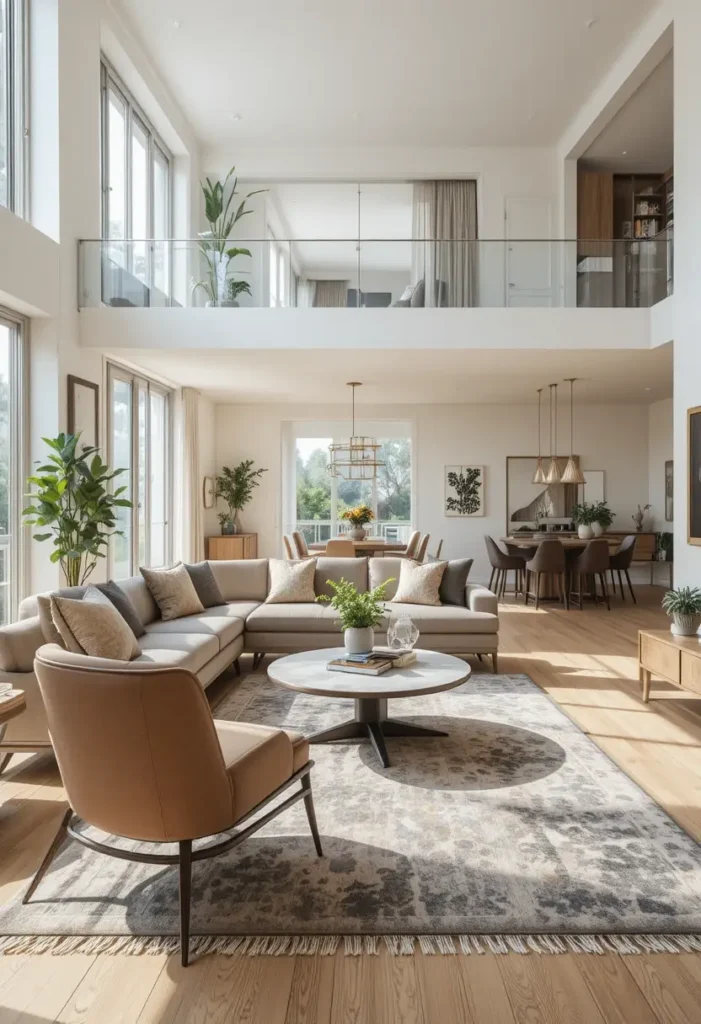
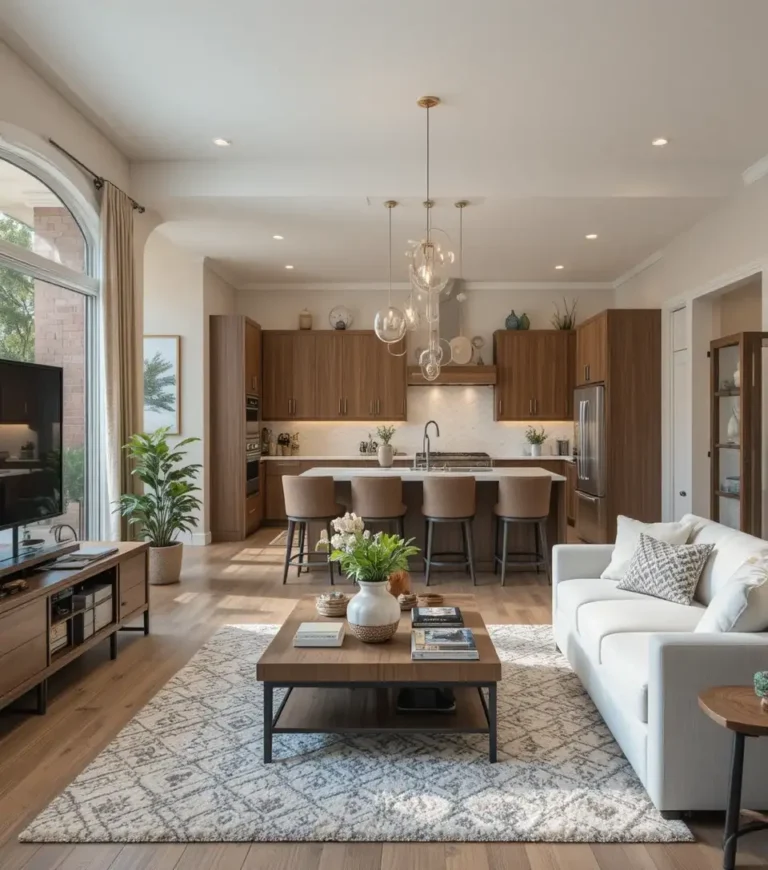
In open-concept rooms, rugs create visual boundaries between seating, dining, and other areas. They make each zone feel intentional and structured.
A rug should be large enough to fit furniture comfortably. Too small, and the zone feels disconnected. Too big, and it crowds other areas.
Tip: Place the rug under all front legs of furniture in the zone. This anchors the seating area and clearly separates it from other spaces.
4. Choose the Right Material
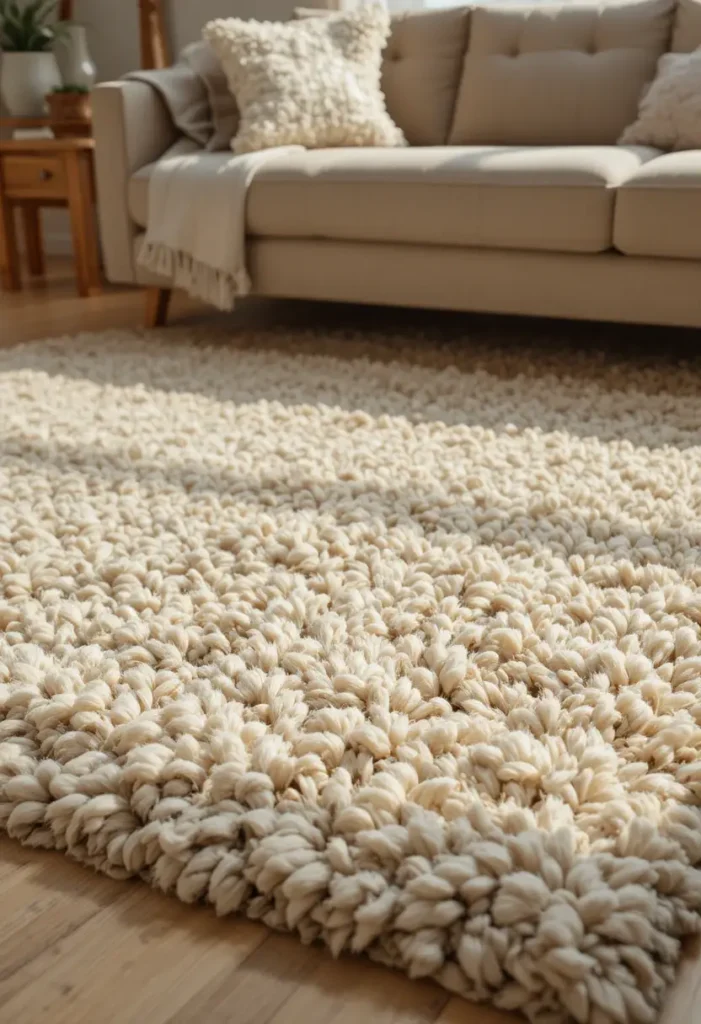
Rug material affects comfort, durability, and maintenance. Wool is soft and long-lasting, cotton is lightweight, and synthetics are practical for homes with kids or pets.
High-pile rugs feel luxurious but trap dust, while flatweaves are easier to clean. Choosing material suited to lifestyle ensures the rug remains practical and enjoyable.
Tip: Wool is ideal for high-traffic areas. Synthetic options work well for spills. Cotton rugs are easy to move and clean in smaller spaces.
5. Match Colors with Your Room
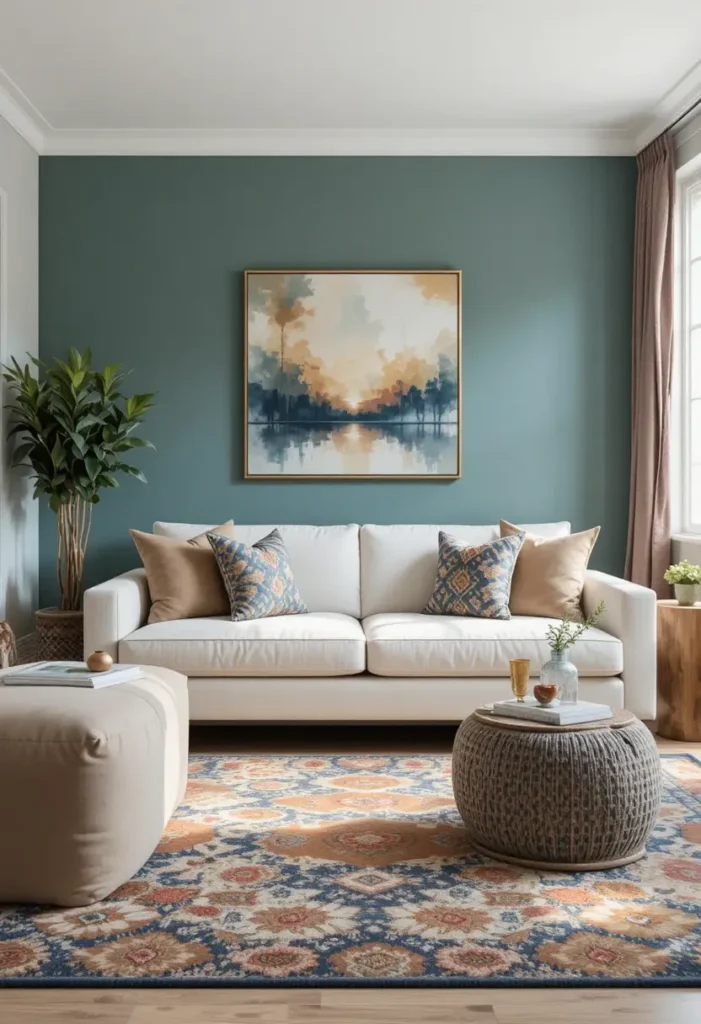
A rug’s color ties together furniture, walls, and décor. Neutral rugs provide calm, while bold patterns can make a statement without overwhelming the room.
Avoid clashing colors. Pull a hue from your furniture or artwork for cohesion. This creates a harmonious and intentional look in your living room.
Tip: Neutral furniture allows for bold rugs. If furniture is colorful, choose simple rug patterns to balance the space and prevent visual clutter.
Also Read This Blog: Living Room Dining Room Combo Layout Ideas for a Functional Space
6. Use Texture to Add Warmth
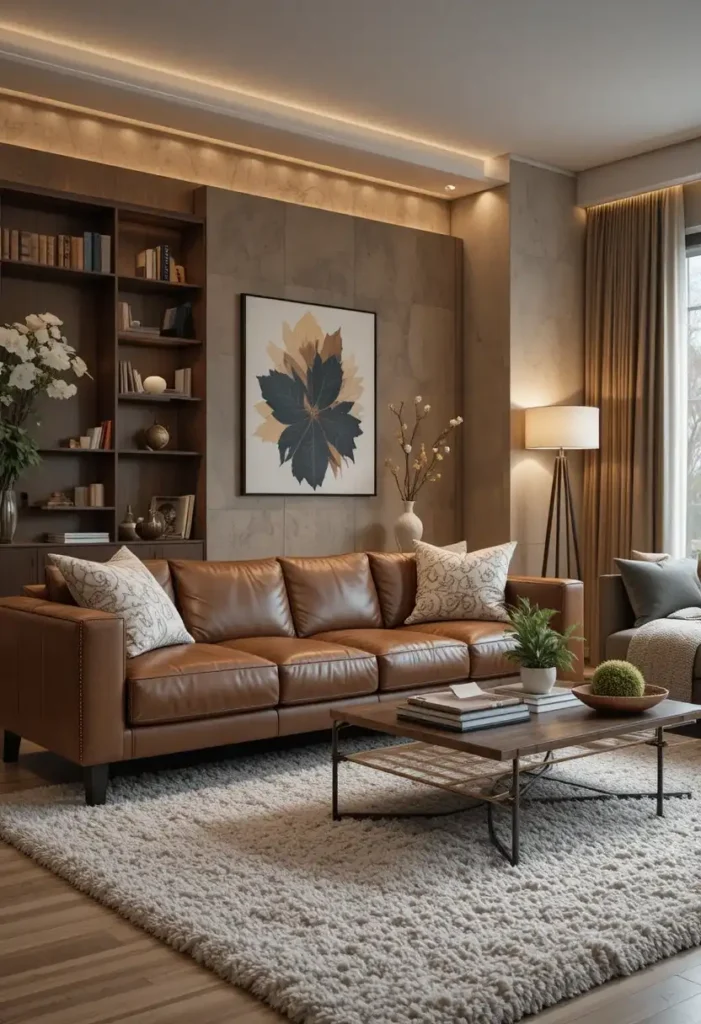
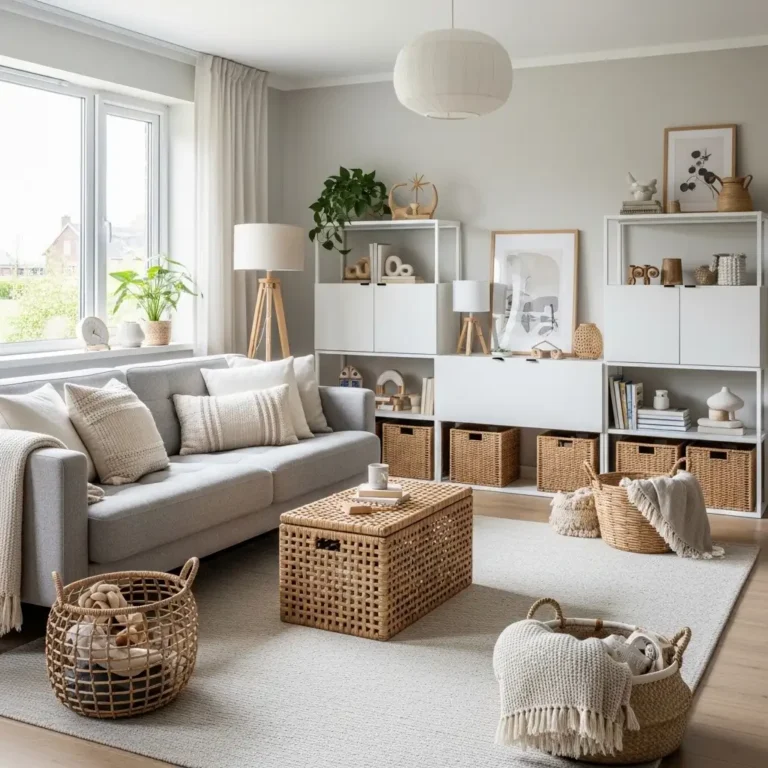
Texture adds depth and coziness to your living room. Rugs with thick weaves or shag piles create a comfortable, inviting space underfoot while enhancing visual interest.
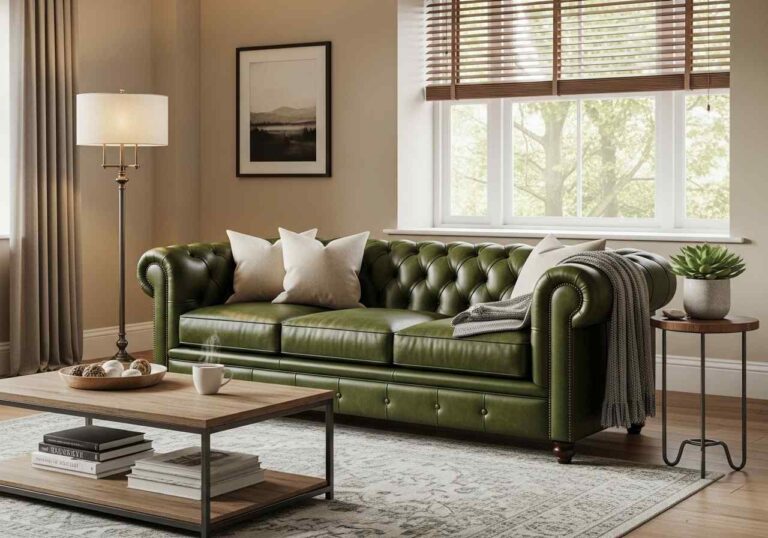
Combining textures works well, such as pairing a smooth leather sofa with a plush wool rug. Avoid overloading the room with multiple heavy textures.
Tip: Choose rugs that contrast furniture material for dimension. Flatweaves for modern rooms, shag or knotted wool for cozy vibes. Balance keeps the space comfortable.
7. Furniture Placement Matters
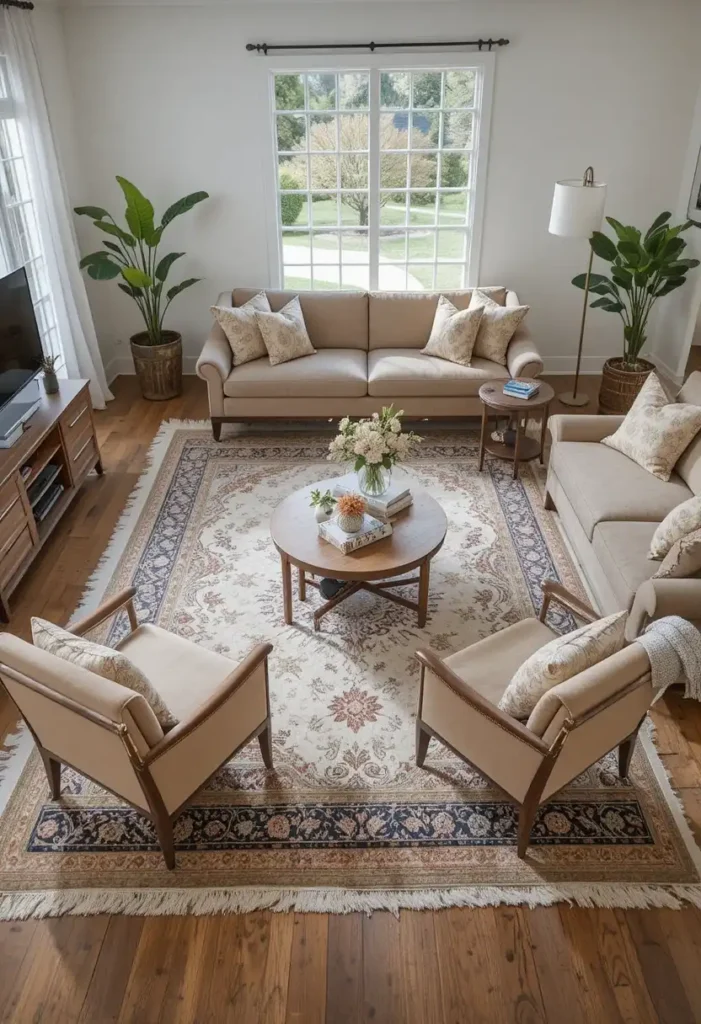
How furniture sits on a rug changes the room’s flow. Full placement unifies seating, while front legs only create a relaxed, casual look that feels approachable.
Placing just a corner under a chair or sofa looks awkward and disconnected. Proper alignment ensures the seating feels intentional and visually tied together.
Tip: Test arrangements before buying. Full or partial placement works depending on room size, but always prioritize a natural connection between furniture and rug.
8. Patterns Can Energize or Overwhelm
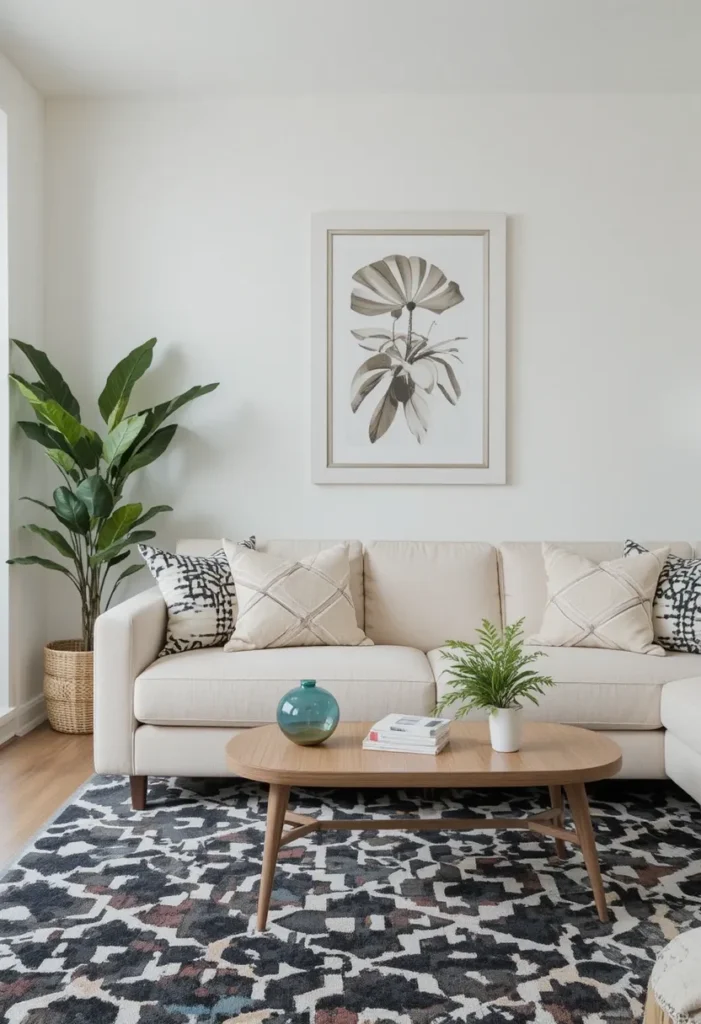
Rug patterns add personality, but busy designs can clash with existing décor. Choose patterns that complement furniture, walls, and artwork for a cohesive look.
Neutral furniture allows bolder patterns, while colorful furniture pairs better with simple or subtle designs. Balance prevents visual chaos in the living room.
Tip: Geometric patterns suit modern spaces, while floral or abstract designs fit traditional or eclectic interiors. Match pattern scale to room size.
Also Read This Blog: Wall Decor for Living Room: 12 Thoughtful Ideas That Actually Work
9. Balance Scale and Proportion
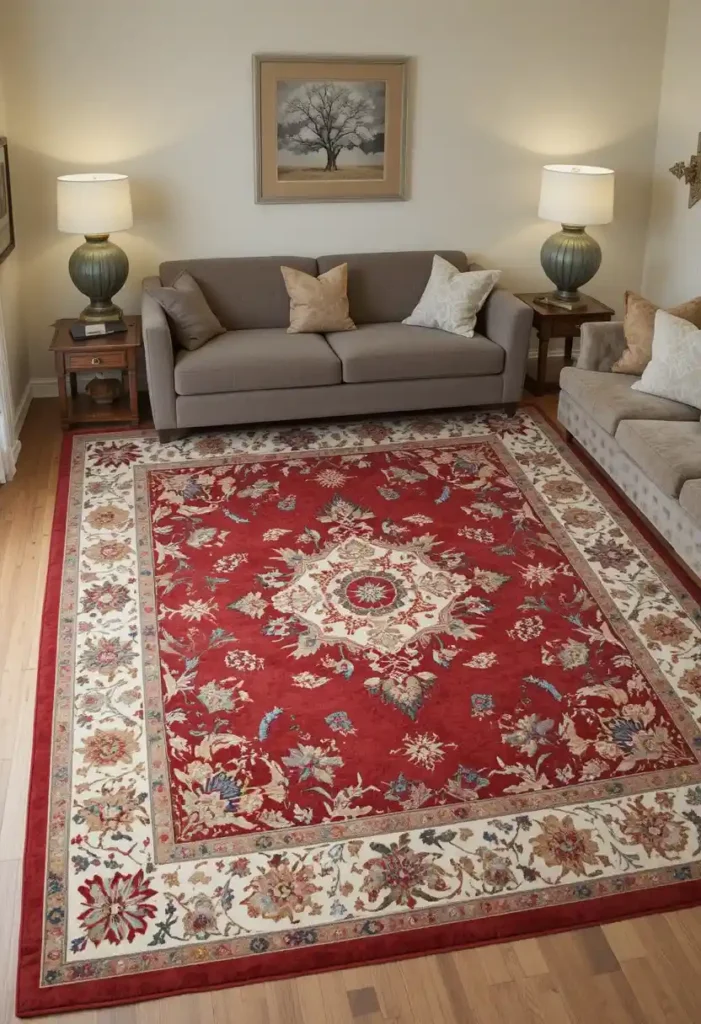
Proportion ensures the rug enhances the space rather than dominating it. A small rug in a large room feels disconnected, while a huge rug overwhelms.
Leave 12–18 inches of floor exposed around the edges. This framing technique balances the visual weight of the rug and furniture.
Tip: Measure furniture and seating areas before purchasing. Correct scale keeps the room visually harmonious and avoids awkward, cramped layouts.
10. Consider Maintenance
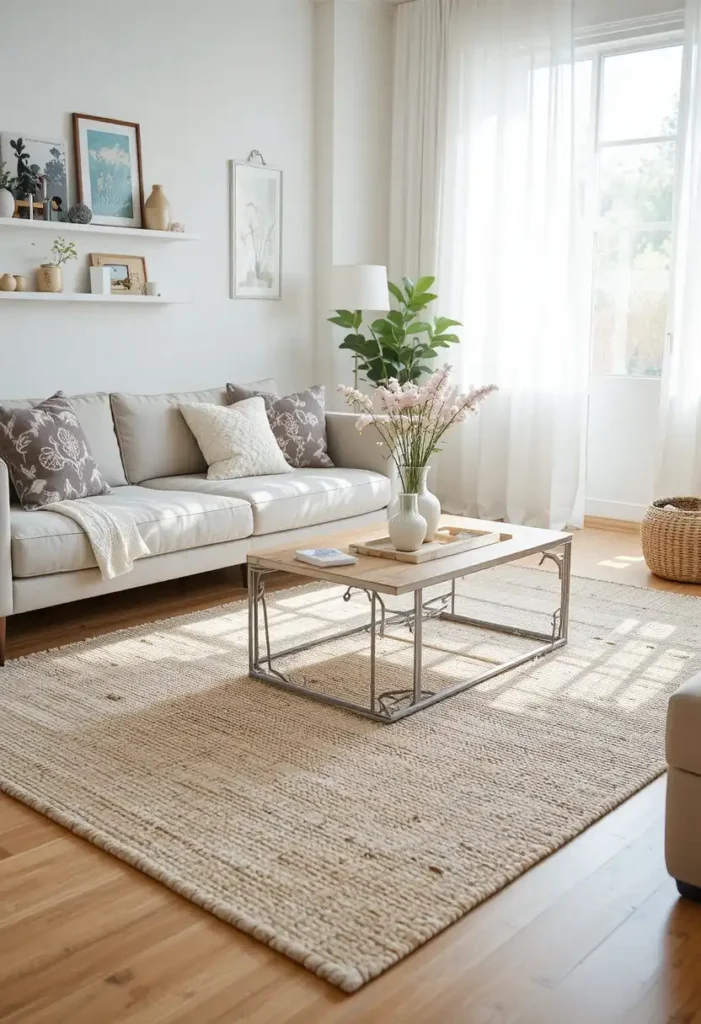
Rugs require care, and some materials are easier to maintain than others. High-pile rugs trap dust, while flatweaves or synthetics are simpler to clean.
Regular vacuuming and occasional spot cleaning prolong a rug’s life. Avoid placing delicate rugs in high-traffic zones where wear is inevitable.
Tip: Choose material based on lifestyle. Wool is durable, synthetic is pet-friendly, and cotton works well for small, movable rugs in casual spaces.
11. Experiment with Shapes
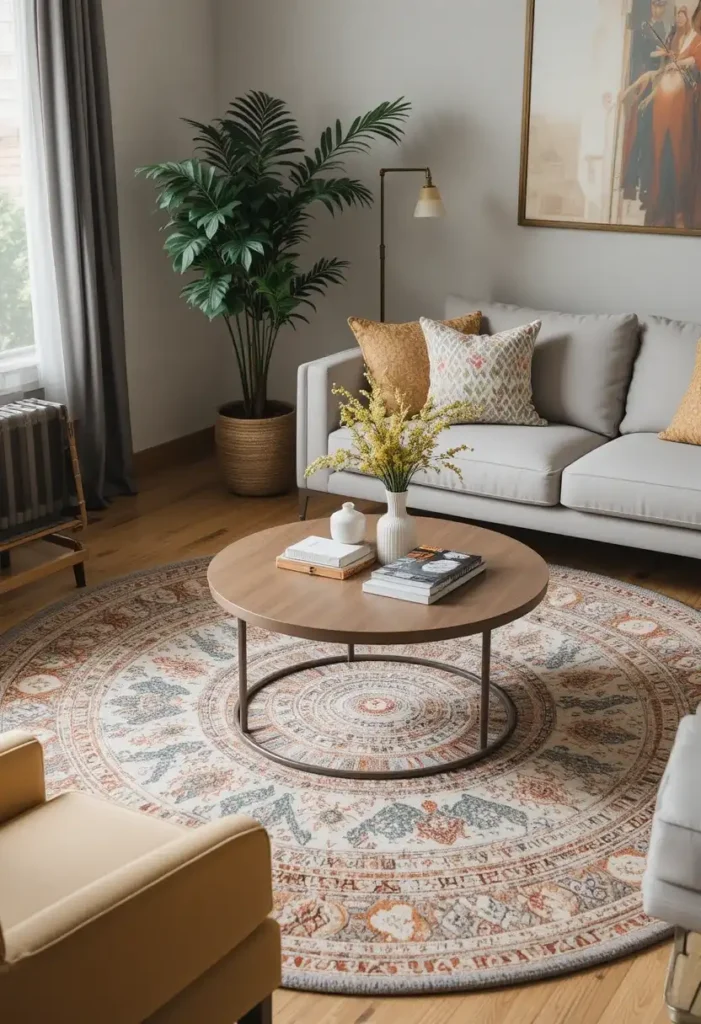
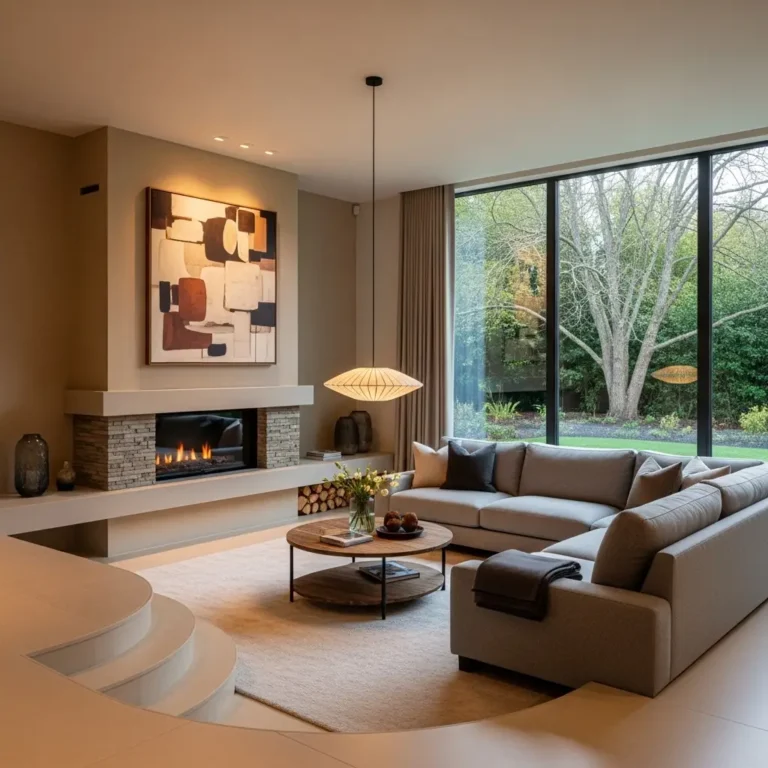
Rugs aren’t limited to rectangles. Round rugs soften square seating areas, and runners elongate narrow rooms. Using varied shapes adds personality and dimension.
Unique shapes can highlight a coffee table or reading nook. Avoid awkward fits by measuring the space before buying to ensure proper placement.
Tip: Round rugs create a cozy focal point, and runners guide flow in narrow living rooms or entryways. Shape can influence room perception.
12. Soften Hard Floors
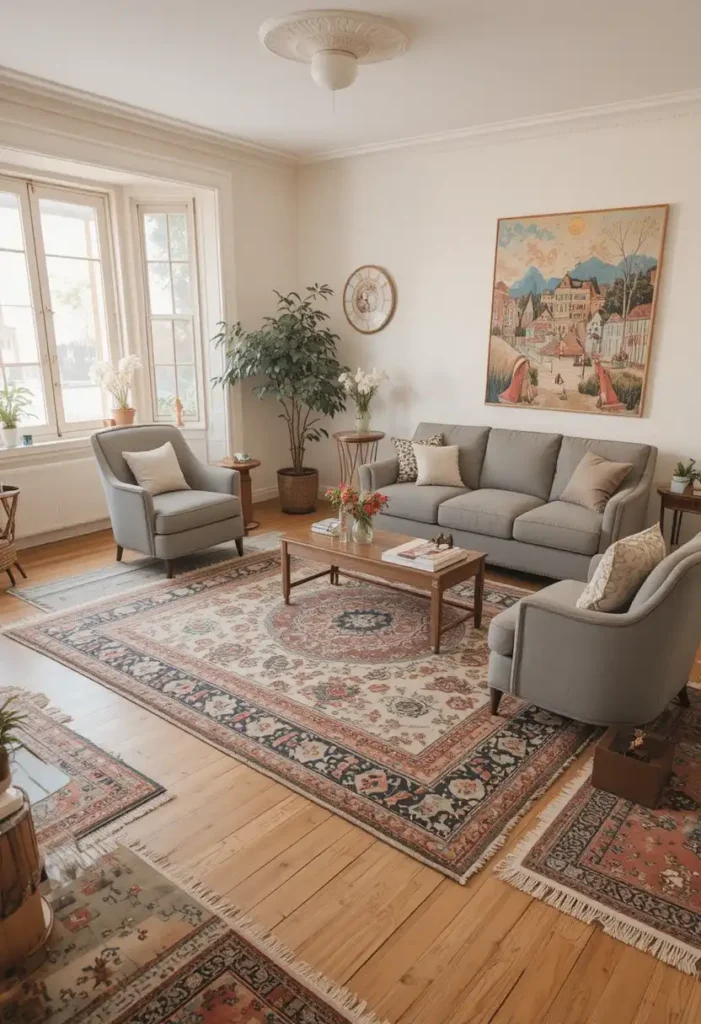
Hardwood, tile, or concrete can feel cold or echo. Rugs absorb sound, add warmth, and make a living room feel inviting and comfortable.
Even small accent rugs under chairs or side tables improve comfort and visual balance. They also prevent slipping and protect floors from scratches.
Tip: Layer rugs strategically in high-use areas. A larger rug under main seating, with smaller accents in corners, softens the entire room effectively.
Also Read This Blog: Luxury Living Room: 13 Thoughtful Ideas to Elevate Your Space
13. Pay Attention to Edges
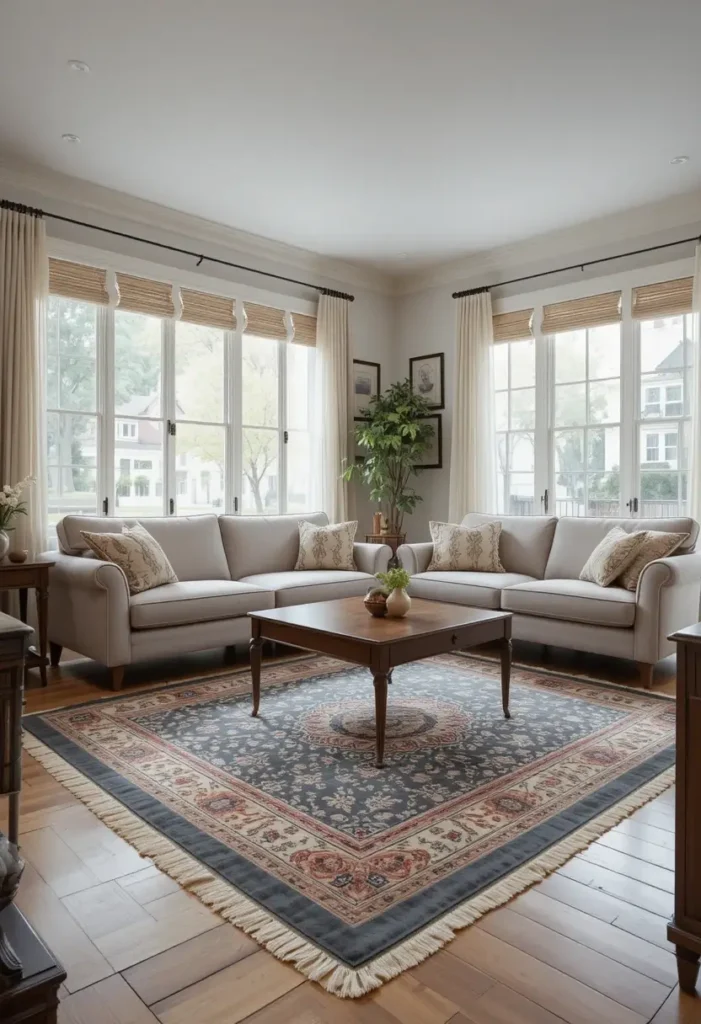
Edges affect both safety and style. Fringes add charm but can be tripping hazards. Clean or serged edges are more practical for high-traffic areas.
A rug pad prevents slipping, keeps edges flat, and extends the rug’s life. It also adds extra cushioning for comfort underfoot.
Tip: Check for curling or uneven edges regularly. Proper padding and placement maintain both the rug’s appearance and functionality over time.
14. Seasonal Swaps Refresh Your Space
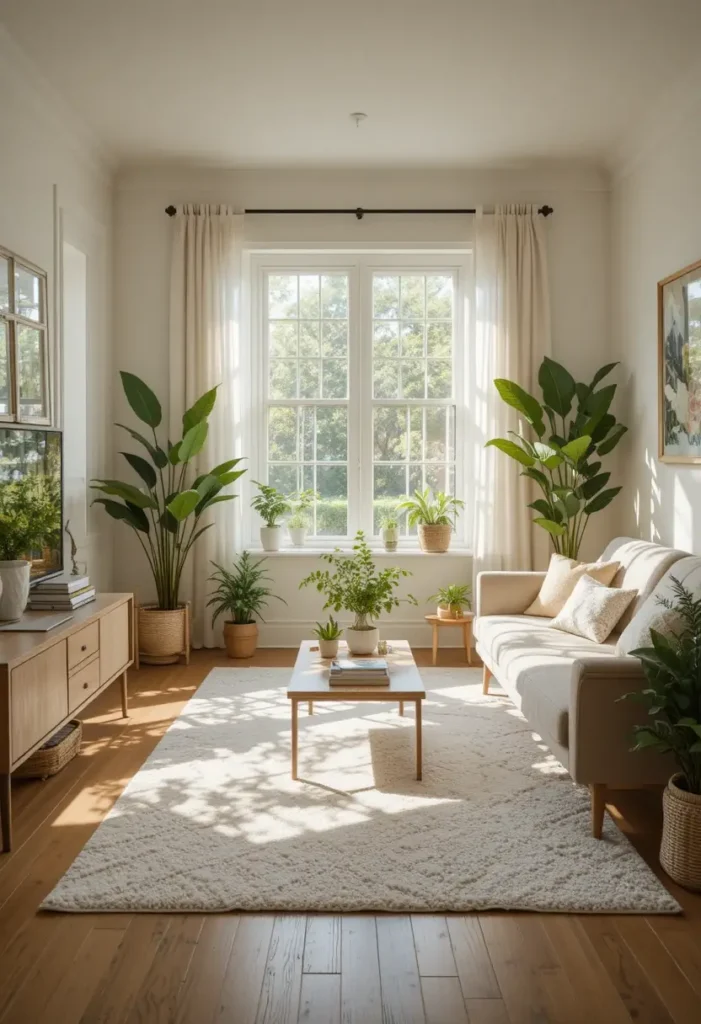
Swapping rugs seasonally refreshes your living room without major redecorating. Light cotton or jute rugs work well in spring and summer.
Thicker wool or shag rugs add warmth and comfort in fall and winter. Seasonal rotation allows experimenting with textures, colors, and moods.
Tip: Use lighter colors in warmer months to brighten the space and heavier textures in colder months to create a cozy, inviting atmosphere.
15. Let Rugs Inspire Your Décor
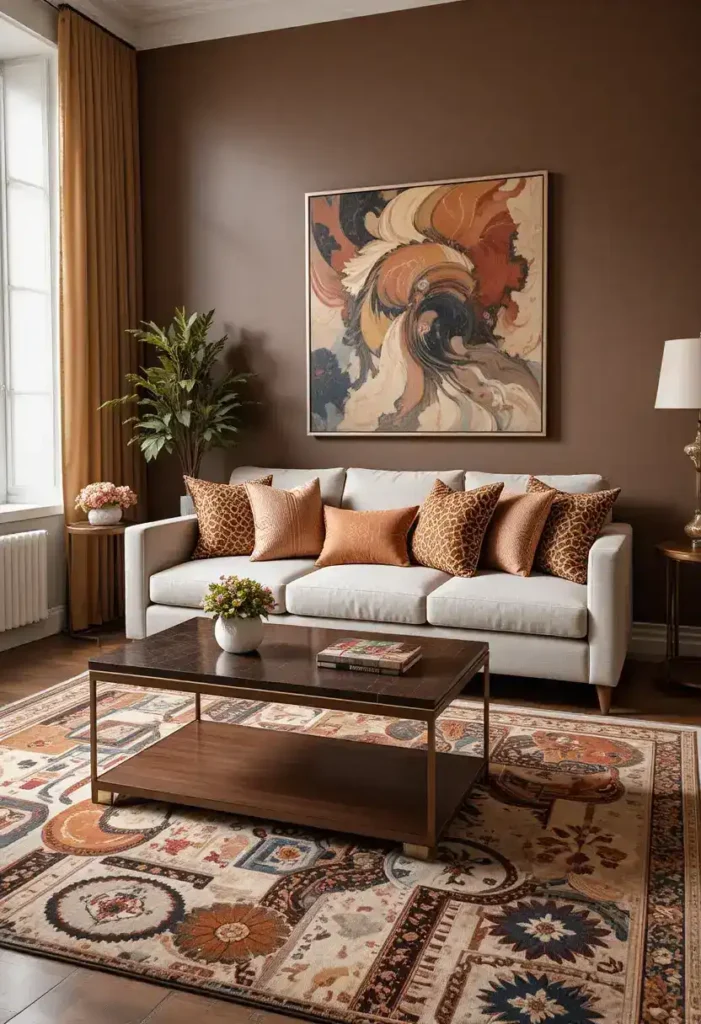
Your rug can guide the style and color palette for the entire room. Bold rugs influence pillow, artwork, and accent furniture choices.
Neutral rugs give flexibility to experiment with wall art, throws, or furniture accents. Let the rug act as the anchor of your design decisions.
Tip: Choose your rug first before decorating other elements. This simplifies styling, ensures cohesion, and creates a comfortable, visually balanced living room.
Conclusion
Area rugs are more than decoration—they anchor furniture, define zones, add texture, and make your living room feel warm and welcoming. By carefully considering size, material, color, and placement, you can avoid common mistakes and style your space with confidence. With these 15 practical ideas, your living room can be both beautiful and comfortable, creating a space you’ll genuinely enjoy.