12 Japanese Living Room Ideas That Feel Calm, Minimal, and Deeply Grounded
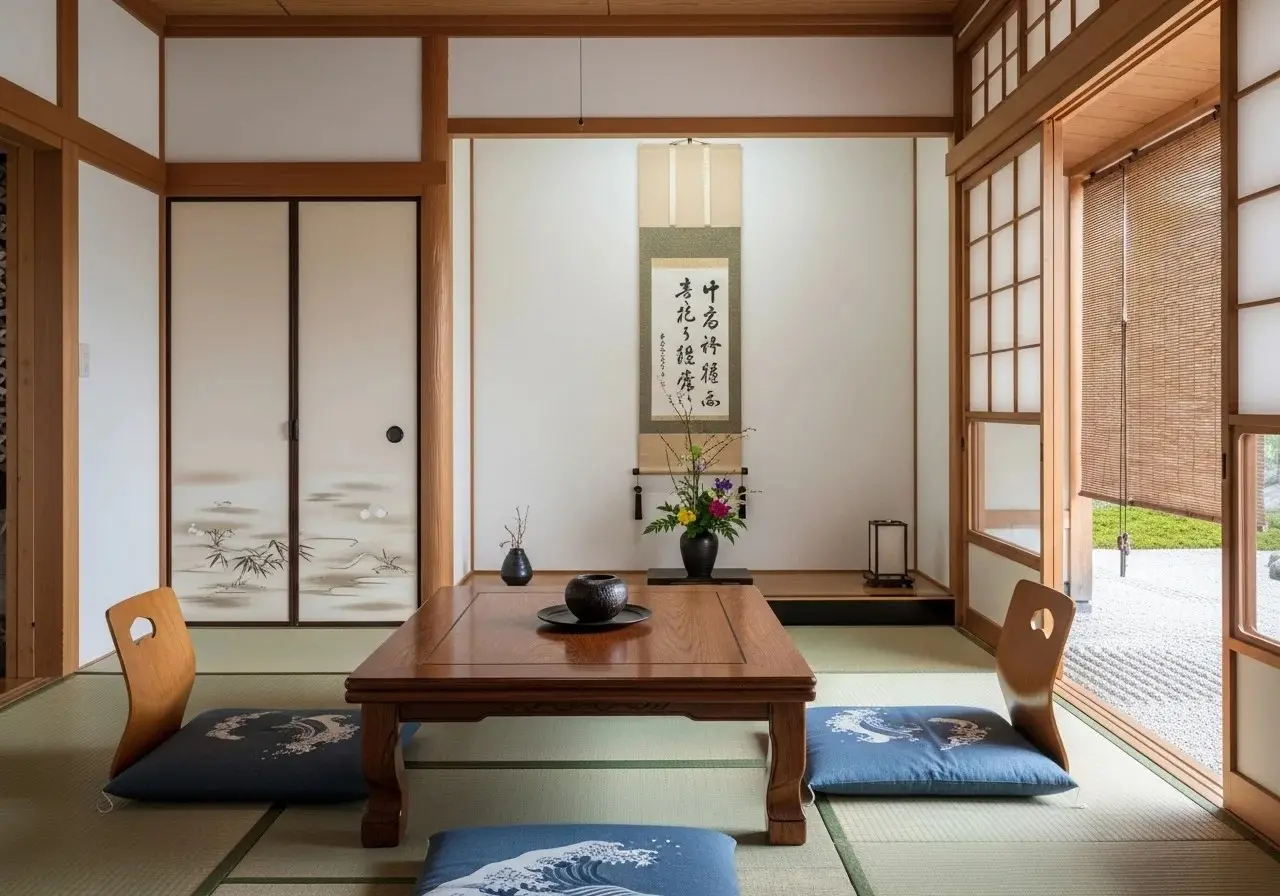
Ever feel like your living room is doing too much—too many colors, too much furniture, too much noise? You walk in, and instead of relaxing, your mind stays busy. That’s where a Japanese-inspired approach can quietly change everything. These japanese living room ideas focus on simplicity, balance, and natural beauty to create a space that feels calm the moment you enter. It’s not about having less—it’s about choosing better, softer, and more intentional pieces that truly support how you want to feel at home.
1. Embrace a Low Furniture Layout
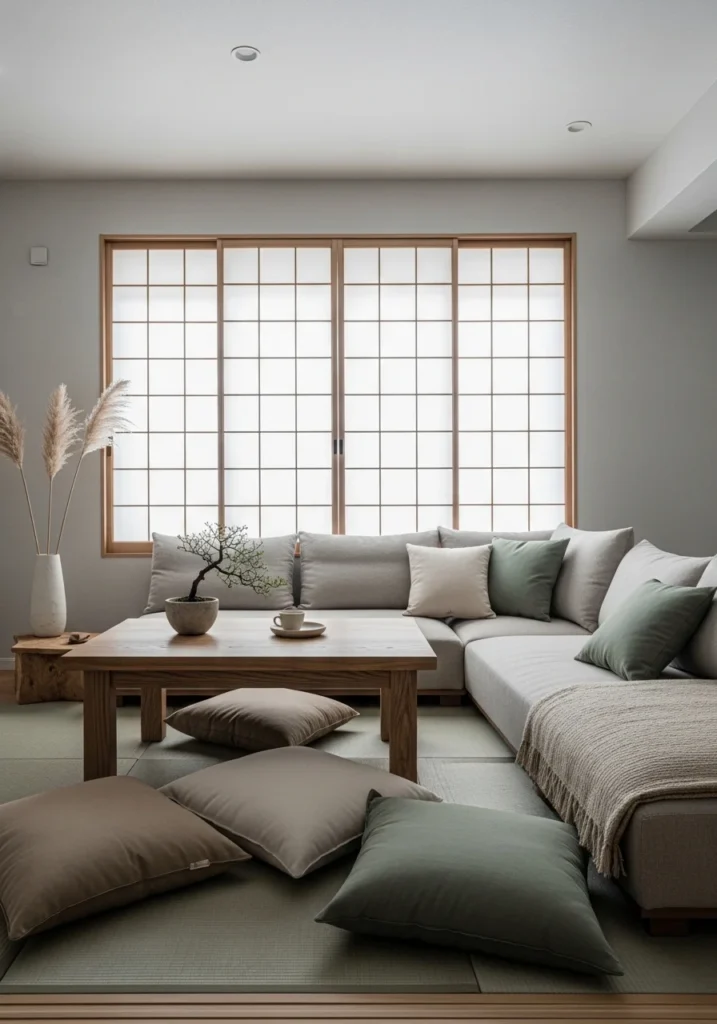
Japanese living rooms often sit closer to the ground, with low sofas, floor cushions, or even simple mats. This creates a grounded, relaxed atmosphere that feels instantly calming.
This works because lowering the visual height of furniture opens up the room and makes everything feel more spacious and peaceful. It also encourages a slower, more intentional way of living.
Tip: Try a low coffee table paired with floor cushions to ease into this style without fully changing your setup.
2. Use Natural Materials Everywhere
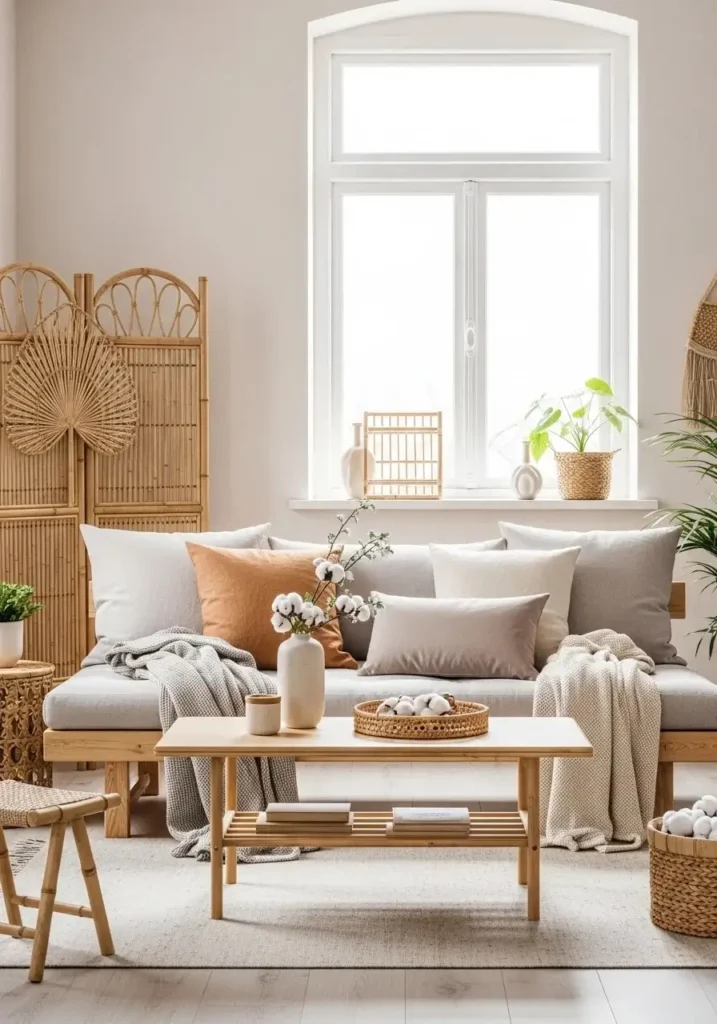
Think wood, linen, cotton, bamboo, and paper textures throughout your space. From flooring to furniture to decor, natural elements are key.
This works because these materials bring warmth and authenticity. They soften the space and connect your home to nature, which is central to Japanese design philosophy.
Tip: Choose one dominant material—like light wood—and repeat it subtly across furniture for a cohesive look.
3. Keep a Soft, Neutral Color Palette
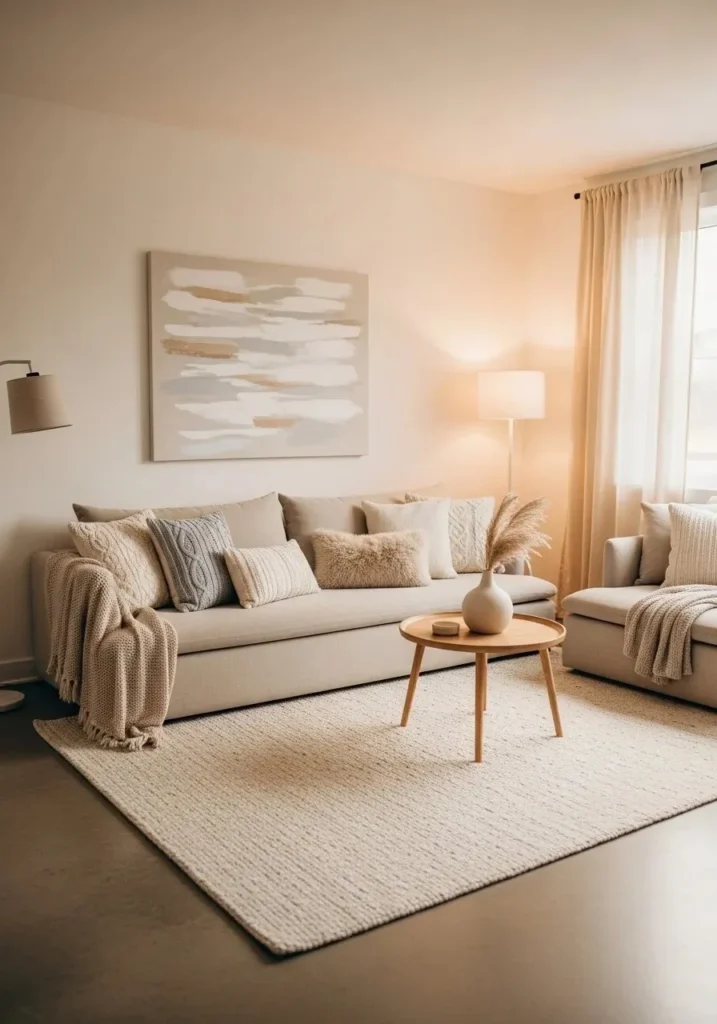
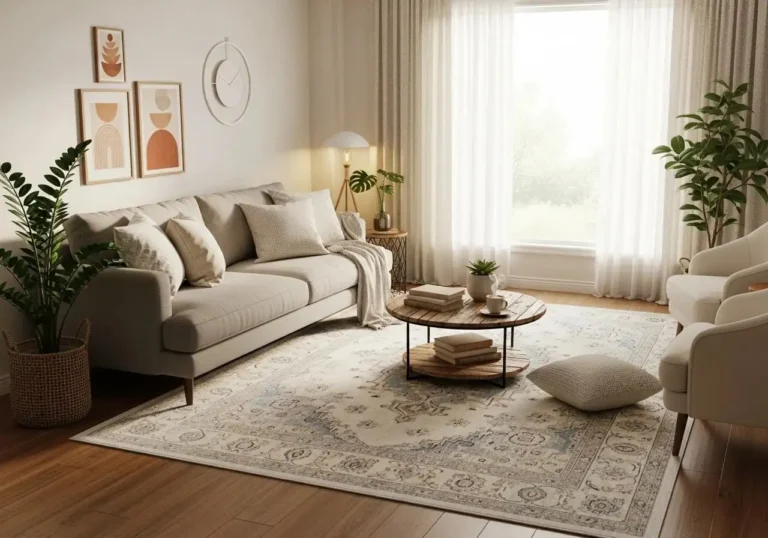
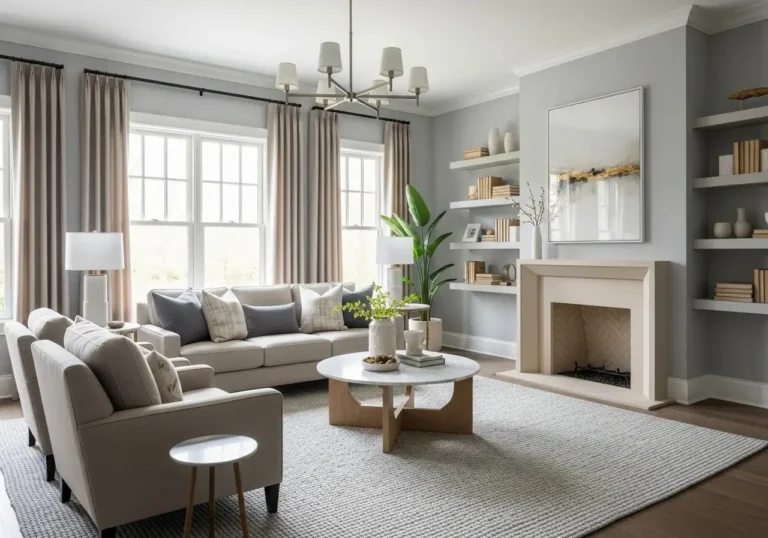
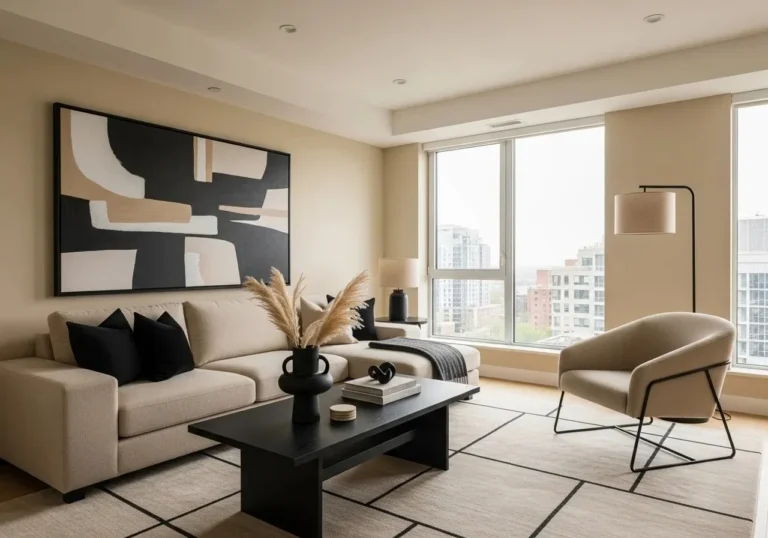
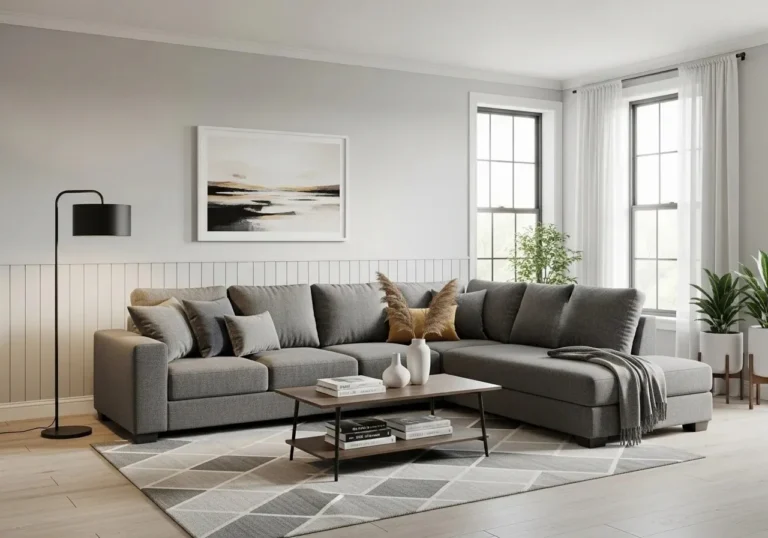
Stick to calming shades like warm white, beige, soft gray, and muted earth tones. Avoid overly bright or contrasting colors.
This works because neutral palettes create a quiet visual environment. Your eyes can rest, and the room feels more open and harmonious.
Tip: Add depth with texture instead of color—layer different fabrics and finishes in similar tones.
4. Let Natural Light Lead the Design
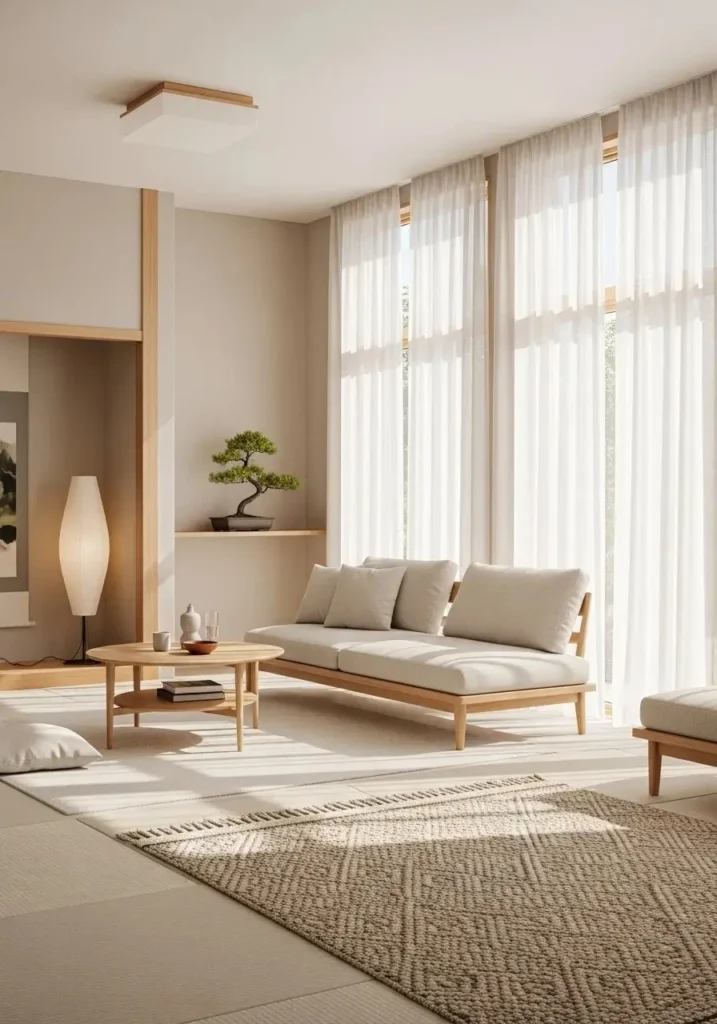
Japanese spaces are designed to work with light, not against it. Keep windows open, use sheer curtains, and allow sunlight to flow in.
This works because natural light enhances simplicity and highlights textures beautifully. It makes the space feel alive without needing extra decoration.
Tip: Use light-filtering curtains instead of heavy drapes to keep the glow soft and diffused.
5. Add Shoji-Style Elements
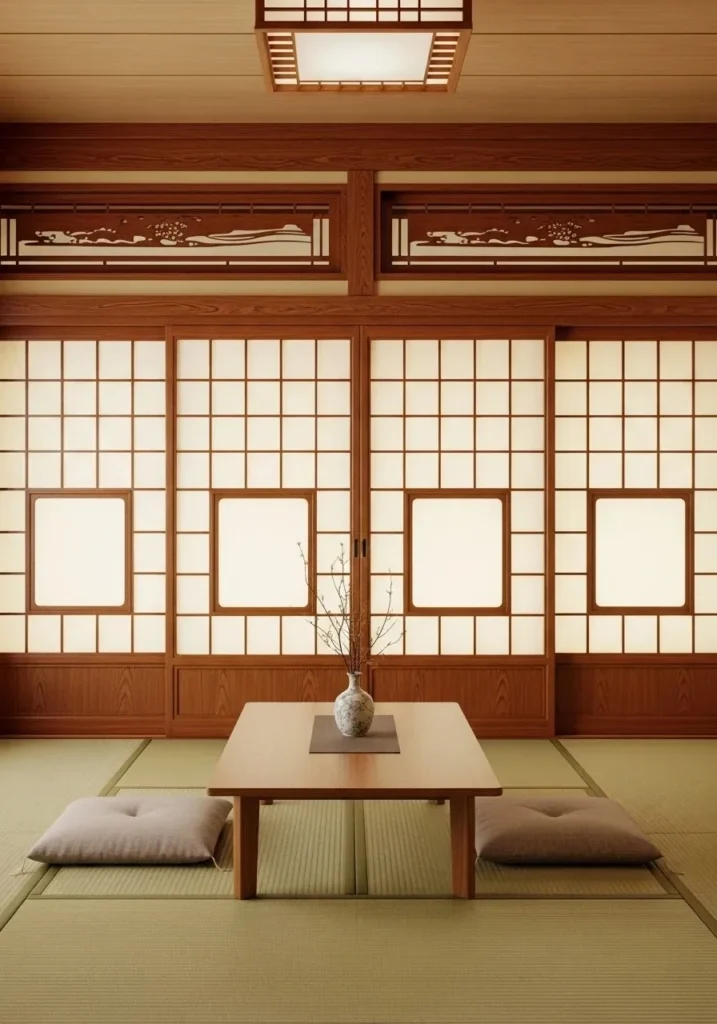
Shoji screens—wooden frames with translucent paper—are a signature feature. You can use them as room dividers, sliding doors, or even wall decor.
This works because they provide privacy while still letting light pass through. They create softness and structure at the same time.
Tip: If real shoji screens aren’t available, try similar panel designs or frosted glass alternatives.
See More Amazing Ideas Also: 16 Living Room Color Combination Ideas That Instantly Transform Your Space
6. Japanese Living Room Ideas with Minimal Decor
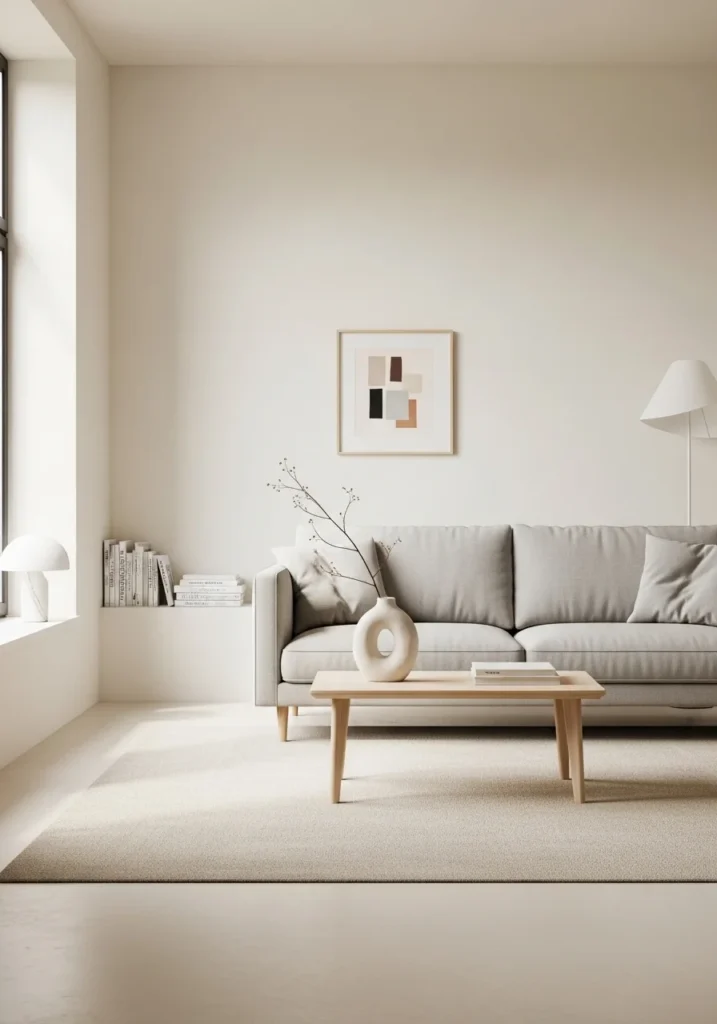
Instead of filling every surface, choose a few meaningful decor pieces—like a ceramic vase, a small sculpture, or a single artwork.
This works because negative space is just as important as the objects themselves. It allows each piece to stand out and keeps the room feeling calm.
Tip: Follow the “one focal point per area” rule to avoid visual clutter.
7. Bring Nature Indoors with Simple Greenery
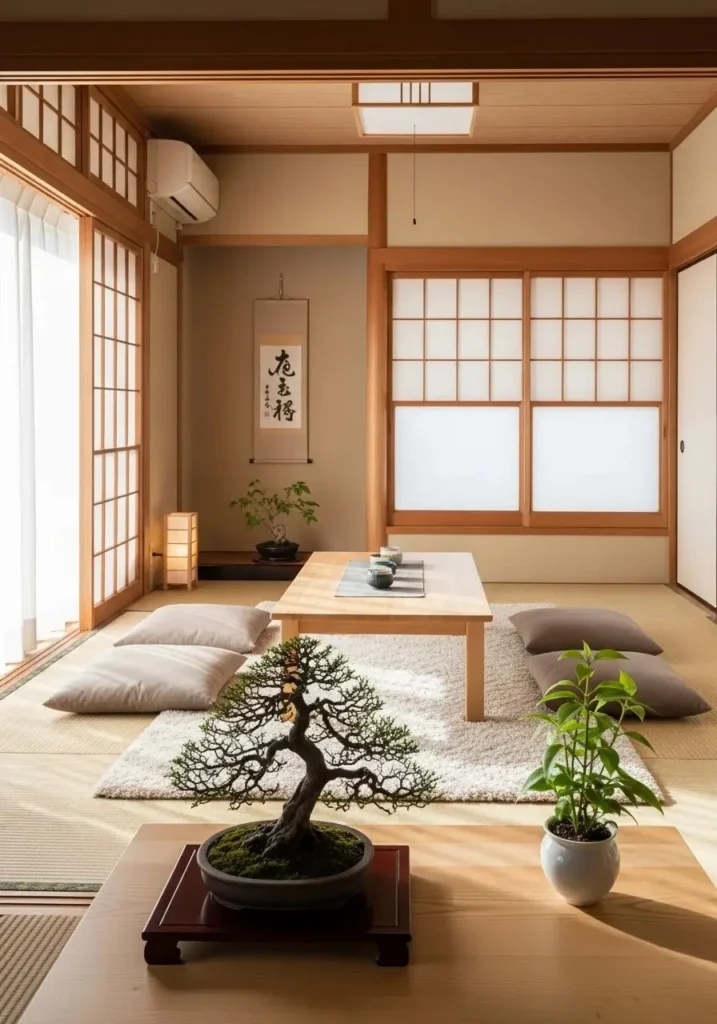
A Japanese-inspired living room often includes subtle touches of nature, like a small bonsai tree, a leafy plant, or a simple branch in a vase. Keep it minimal and intentional.
This works because greenery adds life without overwhelming the space. It creates a quiet connection to the outdoors, which instantly makes the room feel calmer and more grounded. The simplicity of one well-placed plant feels more powerful than many scattered pieces.
Tip: Choose low-maintenance plants and place them where they can get soft, natural light.
8. Use Tatami Mats or Natural Fiber Rugs
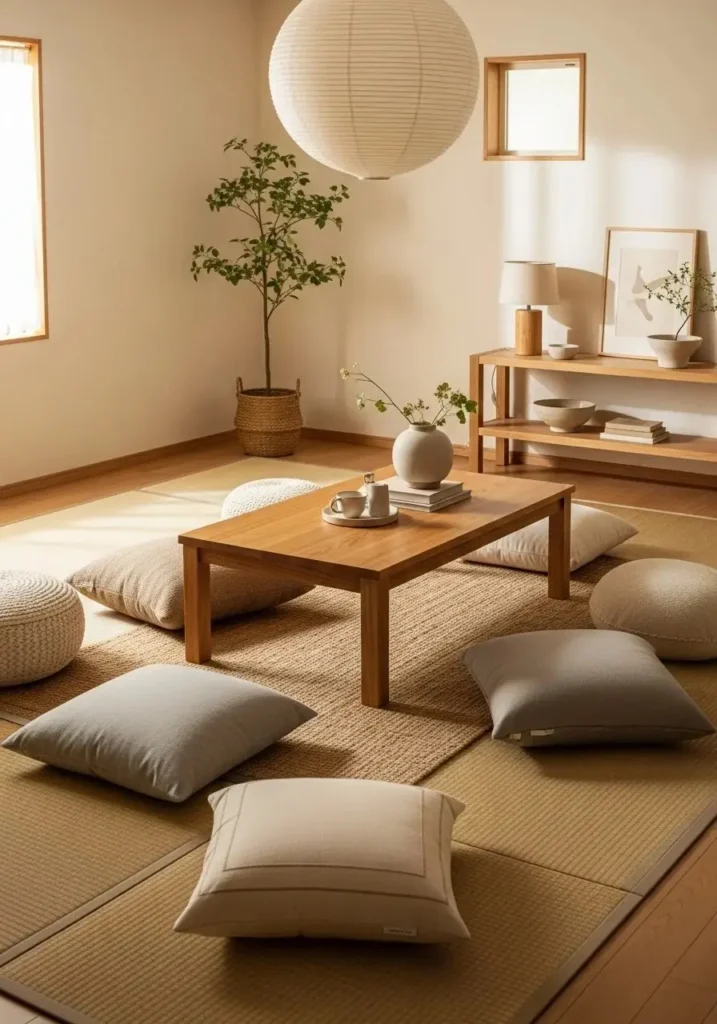
Tatami mats are a traditional Japanese flooring element, but you can also use jute, sisal, or woven rugs to create a similar feel. Stick to neutral tones and simple textures.
This works because natural fiber underfoot adds warmth while keeping the space grounded and organic. It also visually defines seating areas without adding clutter. The texture brings subtle interest without disrupting the calm palette.
Tip: Keep rugs slightly oversized so the layout feels balanced and intentional.
9. Japanese Living Room Ideas with Sliding Doors
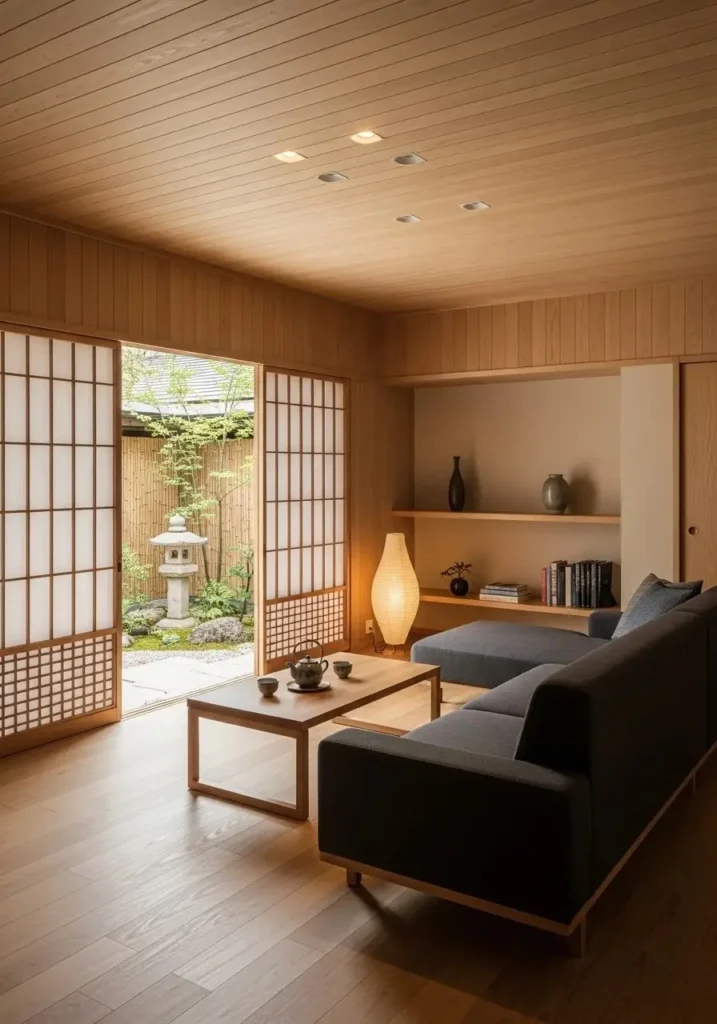
Sliding doors, whether traditional shoji or modern wood panels, help maintain clean lines and flexible space. They can separate areas without closing them off completely.
This works because sliding elements keep the room adaptable and open. You can shift the layout easily while maintaining a sense of flow. It also avoids the bulkiness of standard doors, keeping everything light and minimal.
Tip: Choose soft-close tracks to keep the movement smooth and quiet.
See More Amazing Ideas Also: 15 Black Furniture Living Room Ideas That Feel Bold, Cozy & Stylish
10. Focus on Clean, Uncluttered Surfaces
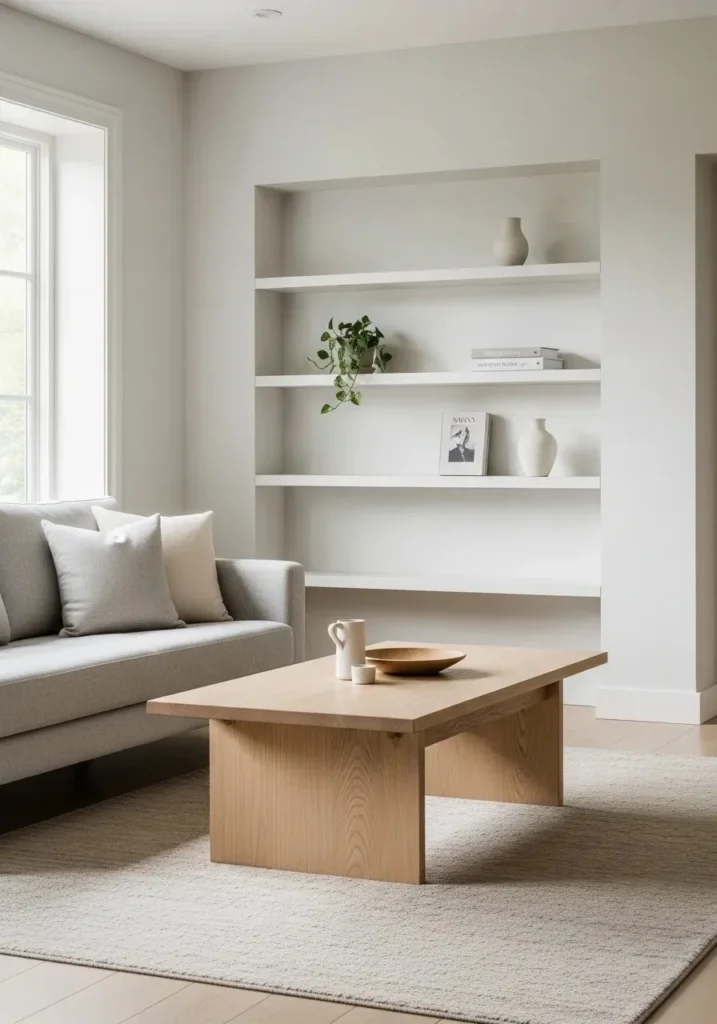
Clear surfaces are a key part of Japanese interiors. Keep coffee tables, shelves, and sideboards mostly empty, with only a few carefully chosen items.
This works because visual simplicity creates mental calm. When your eyes aren’t constantly processing clutter, the room feels more peaceful and restful. It also highlights the beauty of each object you choose to display.
Tip: Do a quick reset daily—removing extra items helps maintain that clean, serene look.
11. Add Warm, Soft Lighting for Evenings
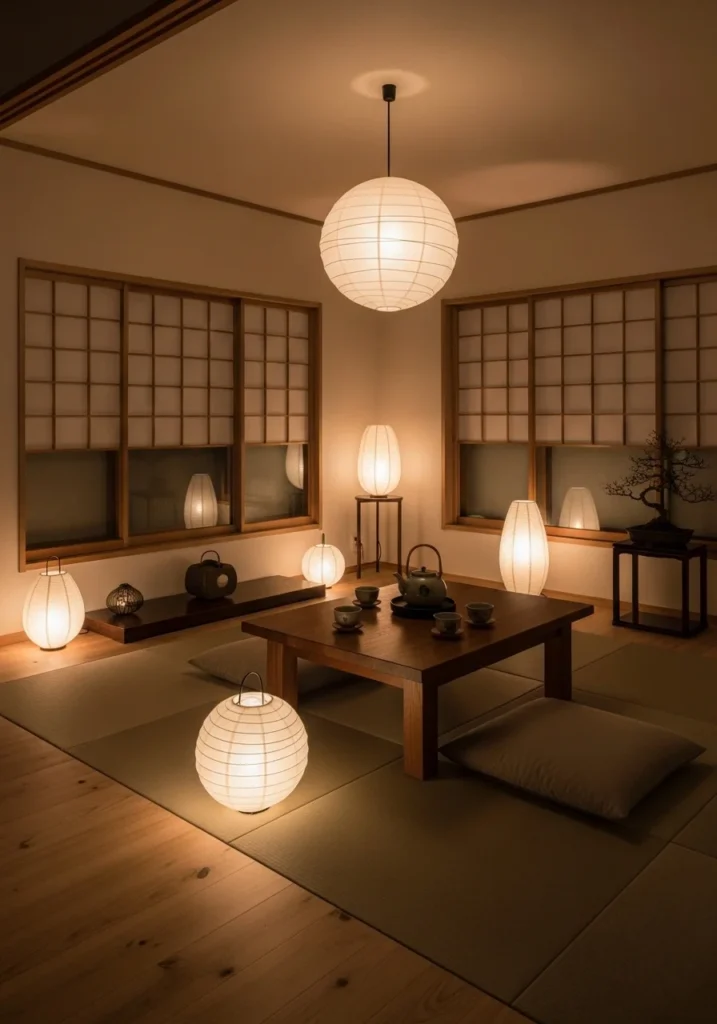
When the sun goes down, switch to soft, warm lighting through paper lamps, floor lights, or simple fixtures. Avoid harsh overhead lights.
This works because gentle lighting enhances the calming atmosphere and keeps the space feeling intimate. It complements natural materials and soft tones beautifully. The glow should feel subtle, not overpowering.
Tip: Use warm bulbs and place lights at different heights for a layered effect.
12. Keep the Layout Open and Intentional
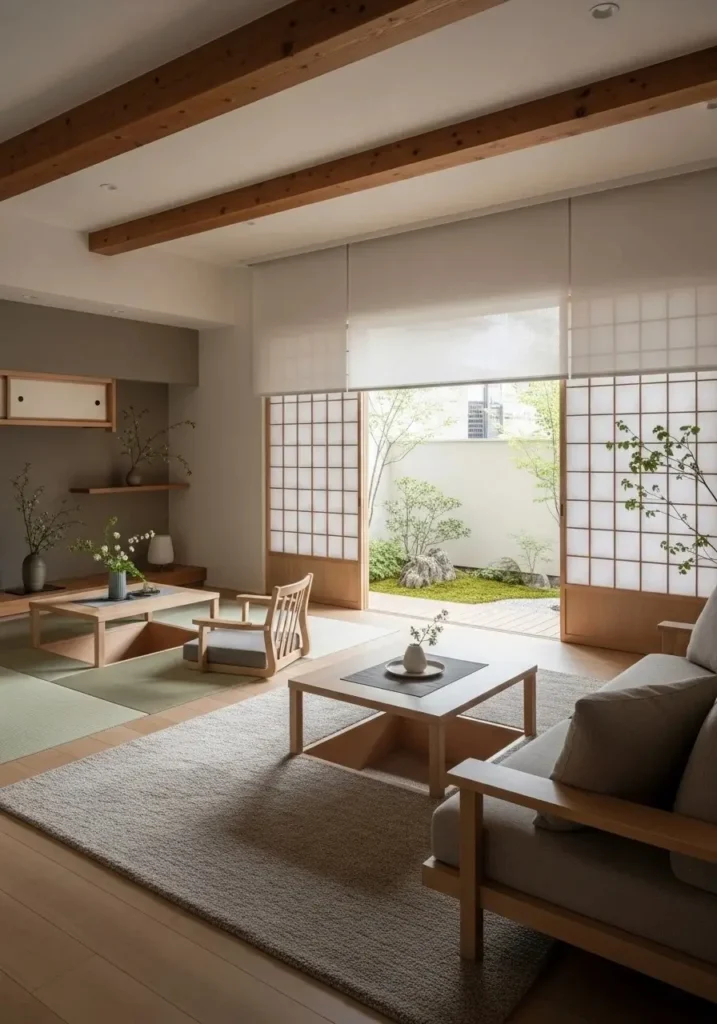
Japanese living rooms often feel spacious because they avoid overcrowding. Leave breathing space between furniture and allow the room to flow naturally.
This works because open layouts create a sense of freedom and balance. Every piece has room to exist without competing for attention. It makes the space feel both functional and calming.
Tip: Step back and remove one unnecessary item—you’ll instantly feel the difference.
Conclusion
The beauty of japanese living room ideas lies in their quiet simplicity. It’s not about following strict rules or removing everything you own—it’s about creating a space that feels calm, balanced, and intentional. When you focus on natural materials, soft light, and thoughtful design, your living room becomes more than just a place to sit. It becomes a place to breathe, reset, and truly unwind. Start small, trust your instincts, and let your space slowly transform into something that feels peaceful every single day.