16 Green Dining Room Ideas That Feel Fresh, Stylish, and Inviting
Have you ever looked at your dining room and felt like something was missing? Maybe the space feels flat, dull, or simply not inviting enough for family dinners or gatherings with friends. The right color can completely transform how a room feels, and green is one of the most powerful choices. From soft sage to dramatic emerald, a green dining room can create warmth, elegance, and calm all at once. These ideas will help you design a space that feels fresh, welcoming, and beautifully balanced.
1. Soft Sage Green Walls
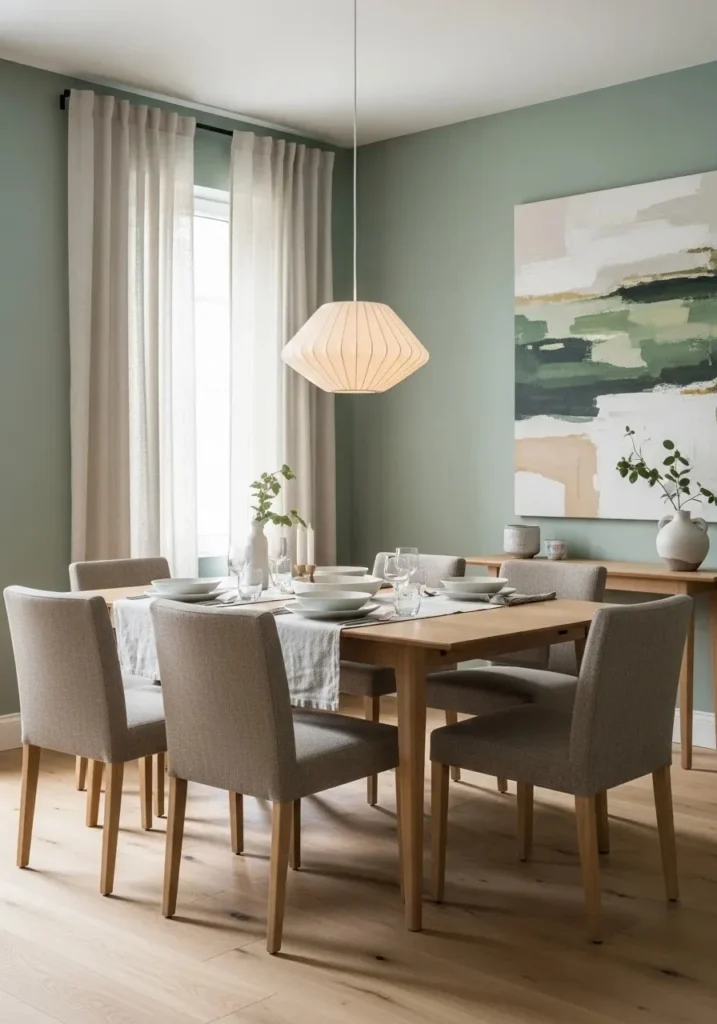
If your dining room feels too plain or sterile, sage green walls can instantly soften the atmosphere. This muted shade of green works beautifully with natural wood tables, linen curtains, and warm lighting.
Sage reflects light gently, which helps smaller dining rooms feel more open and relaxed. The color also pairs effortlessly with neutral tones like beige, cream, and light oak furniture.
Why it works: Sage green feels calming and natural without overpowering the space.
Tip: Add matte brass light fixtures or candle holders to warm up the soft green tones.
2. Deep Emerald Statement Walls
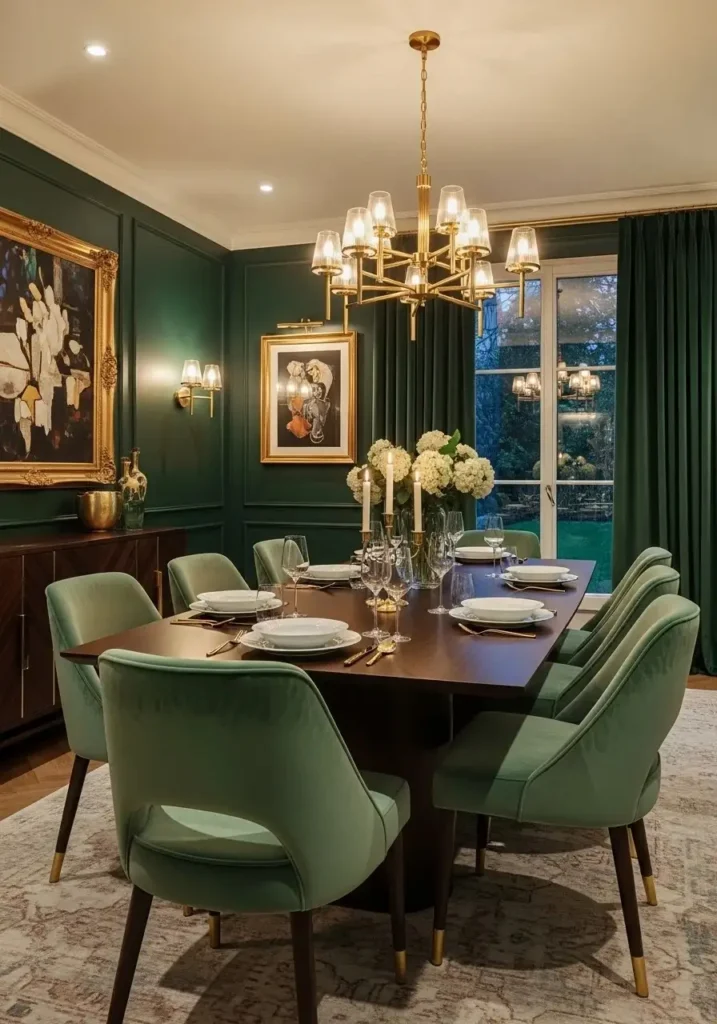
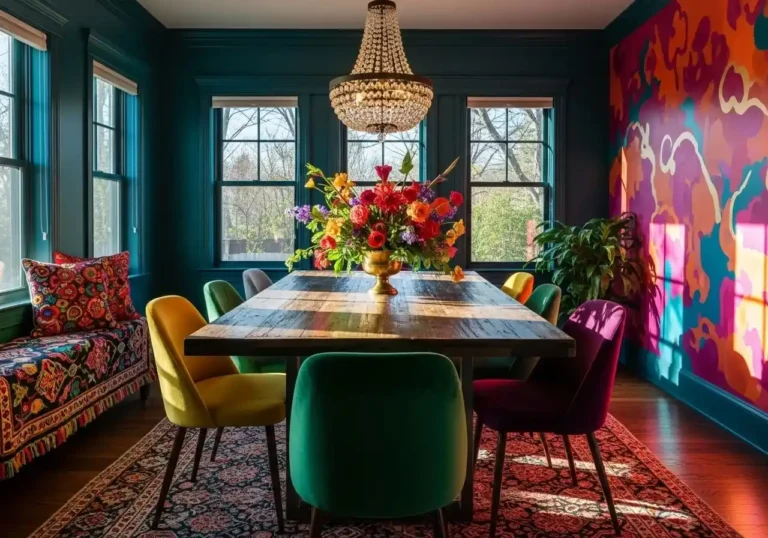
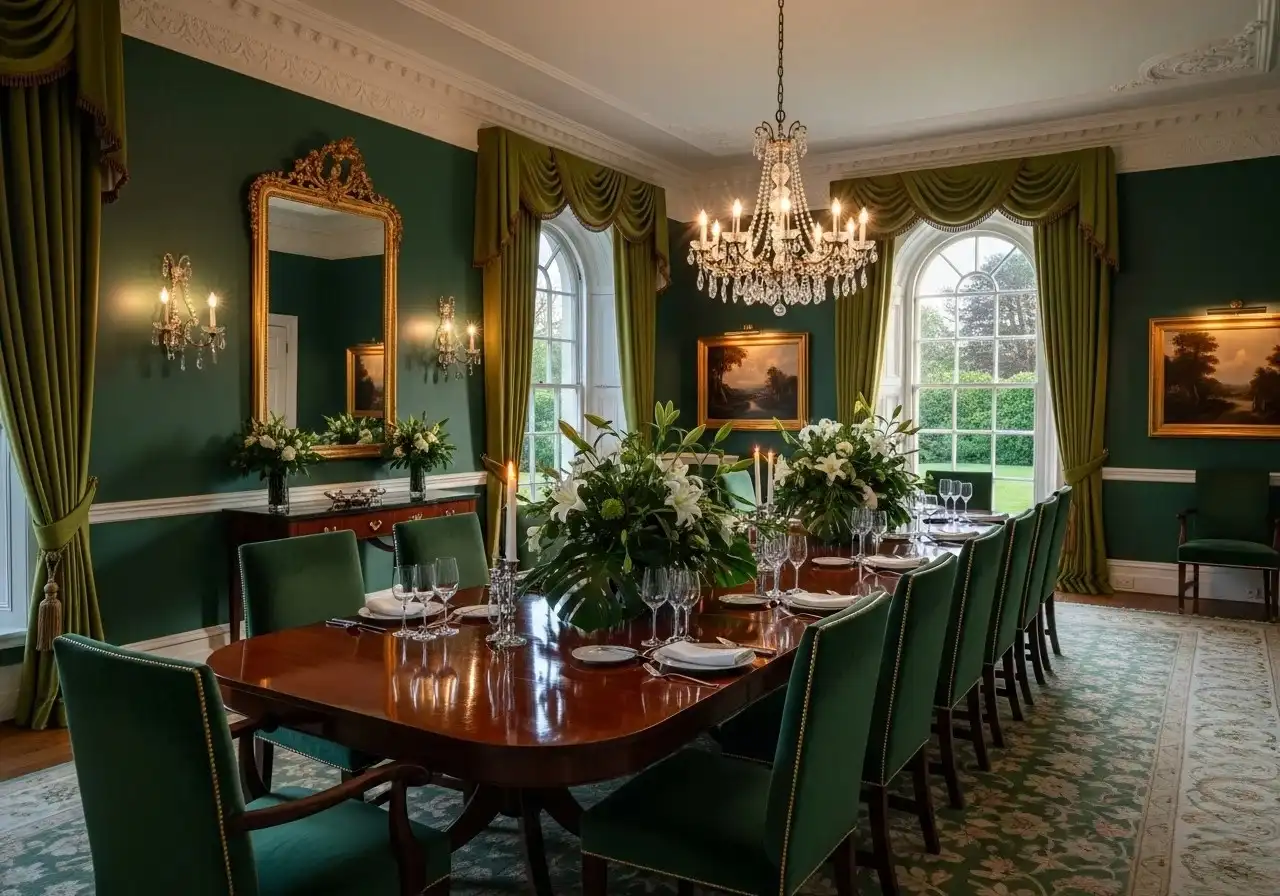
For a bold and dramatic dining space, emerald green walls create an unforgettable look. This rich tone adds depth and elegance, especially when paired with velvet dining chairs, gold accents, or dark wood furniture.
Under warm pendant lighting, emerald green almost glows, making dinner gatherings feel cozy and sophisticated.
Why it works: Dark green adds luxury while still feeling grounded and natural.
Tip: Balance the depth of emerald with a light-colored rug or white trim to keep the room from feeling too heavy.
3. Green Board and Batten Wall Panels
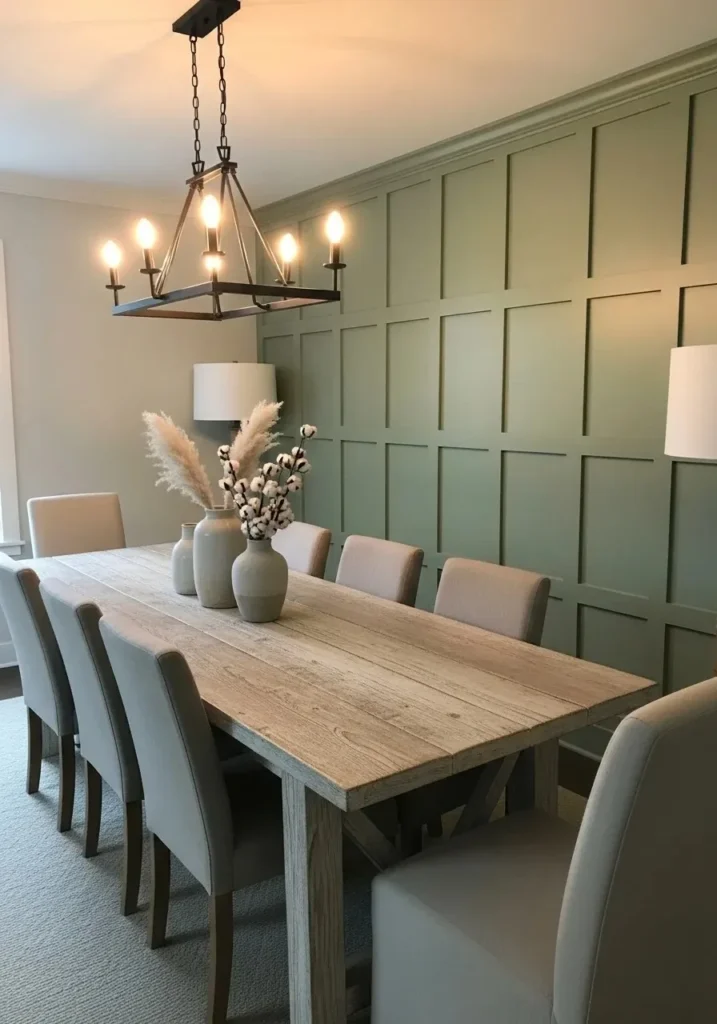
If plain painted walls feel too simple, consider adding board and batten paneling in a soft olive or sage green. The texture instantly adds character and architectural interest.
This works especially well in traditional or farmhouse-style dining rooms. The panels create subtle shadows that make the color look richer throughout the day.
Why it works: Wall paneling adds dimension while keeping the design elegant and timeless.
Tip: Paint the trim and paneling the same green shade for a cohesive, designer look.
4. Olive Green Dining Chairs
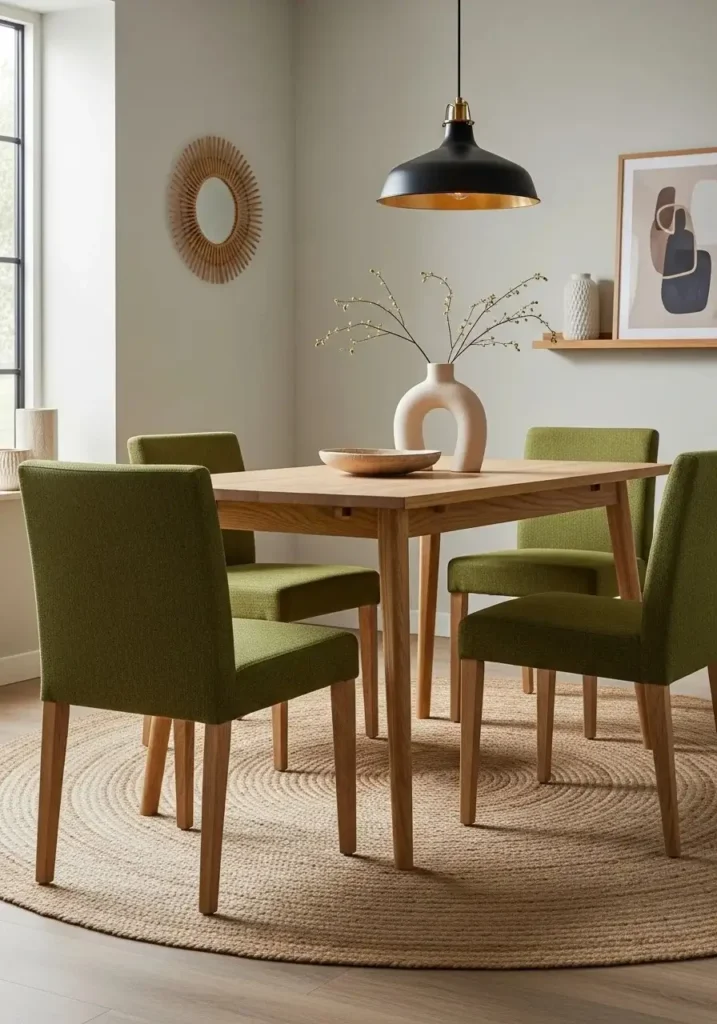
Sometimes changing the walls isn’t necessary. Olive green dining chairs can bring color and warmth without a full room makeover.
Imagine a natural wood dining table surrounded by soft olive upholstered chairs. The look feels relaxed, earthy, and welcoming.
Why it works: Furniture introduces color in a flexible, low-commitment way.
Tip: Choose textured fabrics like linen or velvet to give the chairs more visual interest.
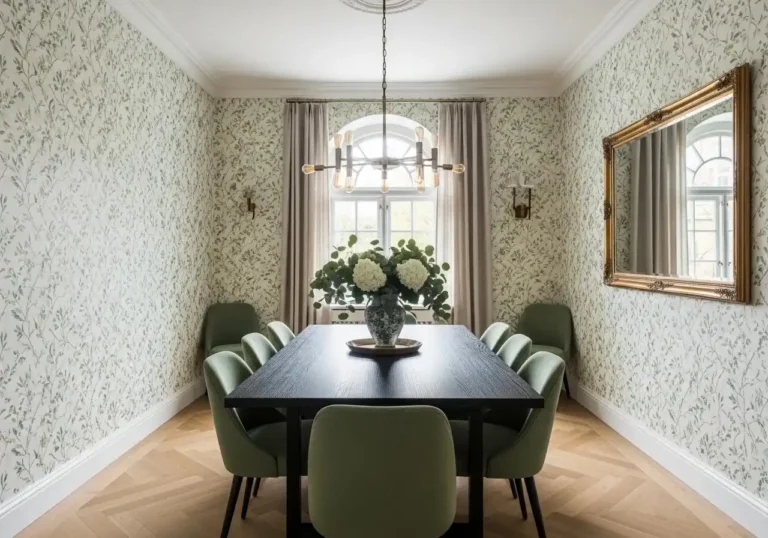
5. Green Wallpaper Accent Wall
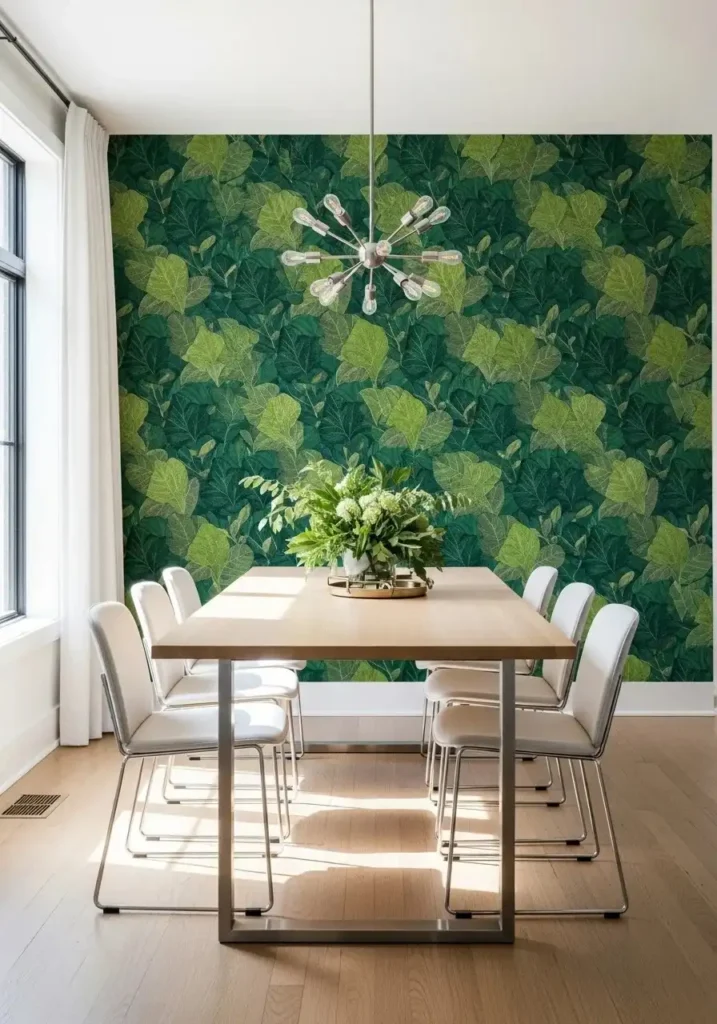
If you want personality in your dining room, wallpaper can instantly transform the space. Botanical prints, leafy patterns, or soft watercolor greens create a beautiful focal point behind the dining table.
Wallpaper also adds subtle movement and texture that paint alone can’t provide.
Why it works: Patterns make the room feel lively while still staying cohesive with the green color palette.
Tip: Keep the other walls neutral so the wallpaper remains the main design feature.
6. Dark Green Built-In Cabinets
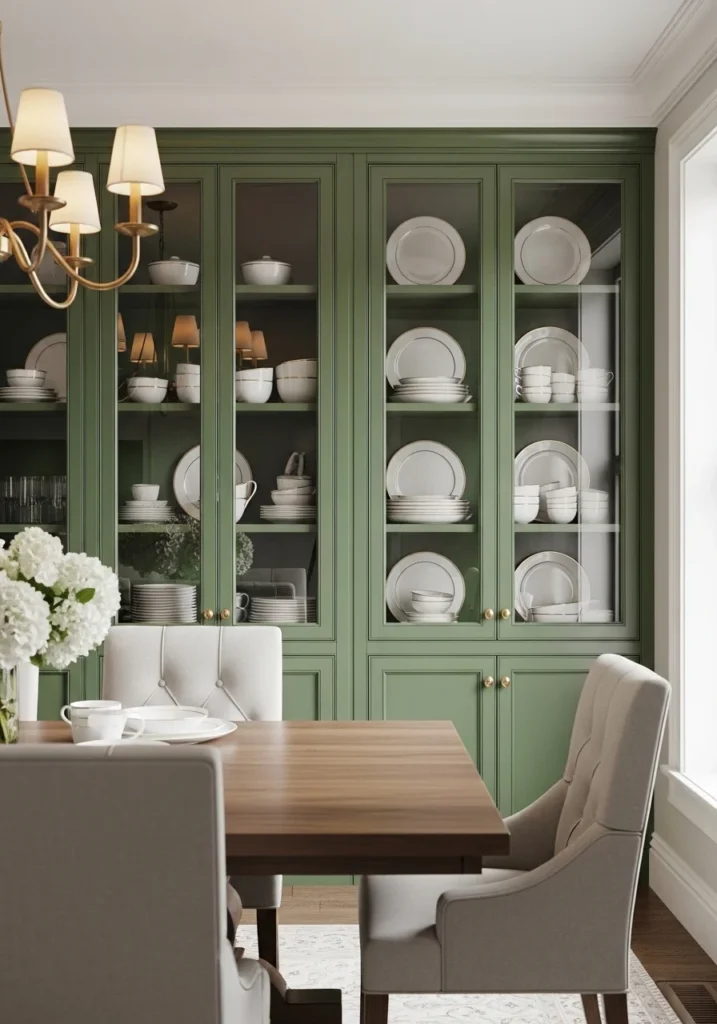
Storage can become a design feature when painted in a rich green shade. Built-in cabinets or dining room buffets in forest green add depth while highlighting dishware and decor.
Glass cabinet doors allow white plates, bowls, or glassware to stand out beautifully against the darker color.
Why it works: Dark cabinetry anchors the room and adds visual weight.
Tip: Install small warm LED lights inside cabinets to highlight dishes and create a cozy evening glow.
Also Read This Blog: One Wall Kitchen with Island: 14 Smart Ideas That Actually Work
7. A Green Dining Room with Natural Wood
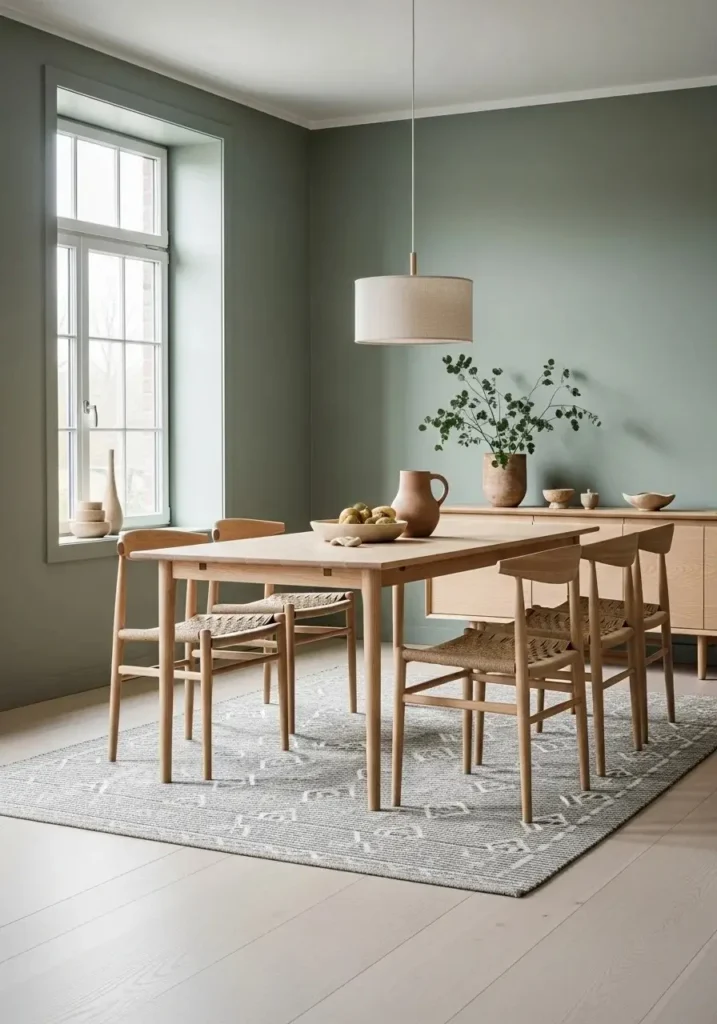
One of the easiest ways to make green feel warm and balanced is by pairing it with natural wood. Light oak tables, walnut chairs, or woven rattan lighting soften the color and make the room feel organic.
This combination works beautifully in Scandinavian or modern farmhouse interiors.
Why it works: Wood tones prevent green from feeling too cool or overly dramatic.
Tip: Add a large wooden bowl or woven centerpiece on the dining table to reinforce the natural theme.
8. Two-Tone Green and White Walls
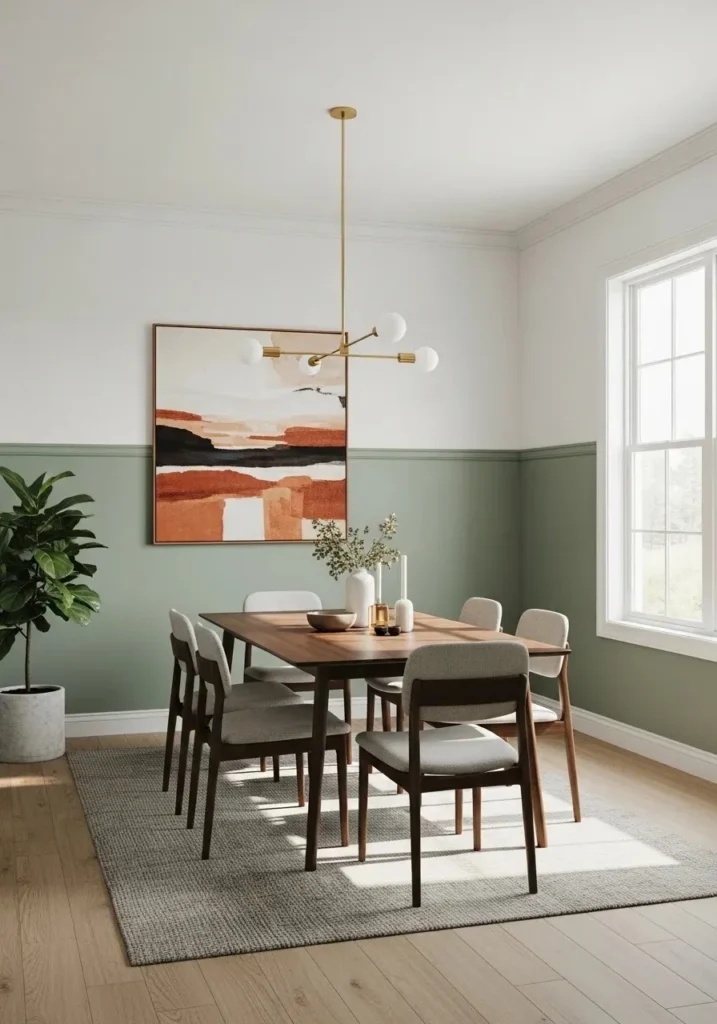
If a full green room feels too bold, try a two-tone wall design. The lower half of the wall can be painted sage or olive green, while the upper half remains crisp white.
This creates a balanced look that feels fresh and structured at the same time. The white upper portion reflects light while the green base adds depth.
Why it works: Two-tone walls create contrast without overwhelming the space.
Tip: Use a chair rail or simple molding between colors for a polished finish.
9. Emerald Green Velvet Dining Chairs
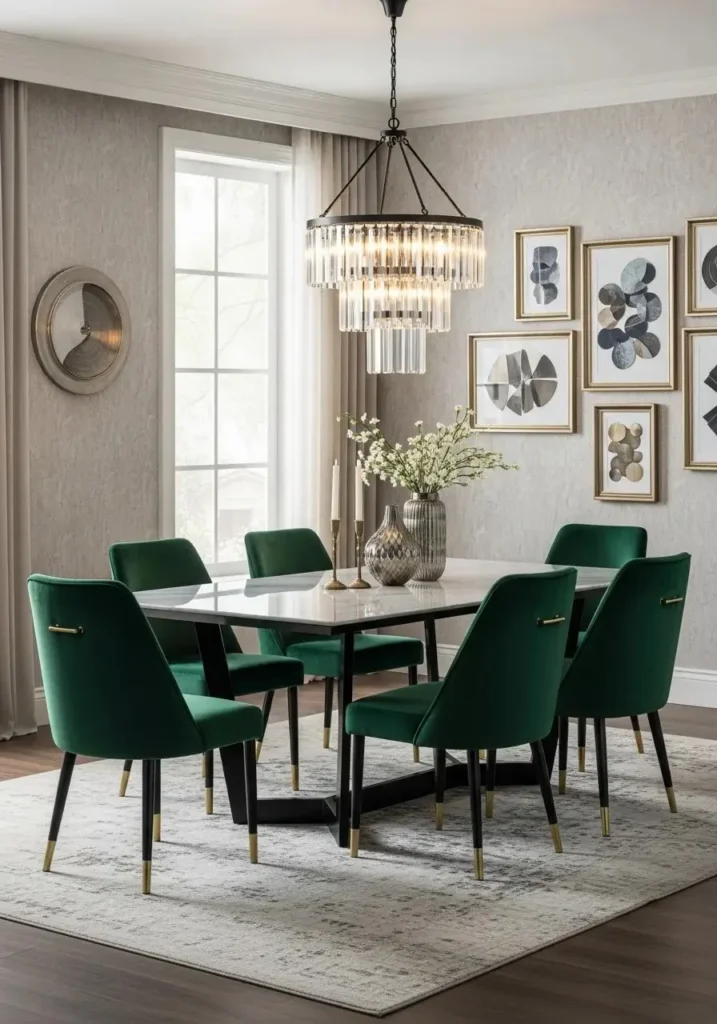
If your dining room feels a little plain, velvet chairs in a deep emerald shade can instantly elevate the entire space. The soft texture reflects light beautifully, making the color appear richer and more luxurious during both day and evening meals.
Pair emerald velvet chairs with a dark wood or marble dining table for a dramatic contrast. Under warm pendant lighting, the fabric almost glows, creating a cozy yet elegant atmosphere.
Why it works: Velvet adds texture and depth, making the room feel more sophisticated without needing major renovations.
Tip: Balance the richness with lighter elements like a neutral rug or cream curtains.
10. Green Ceiling for a Surprising Twist
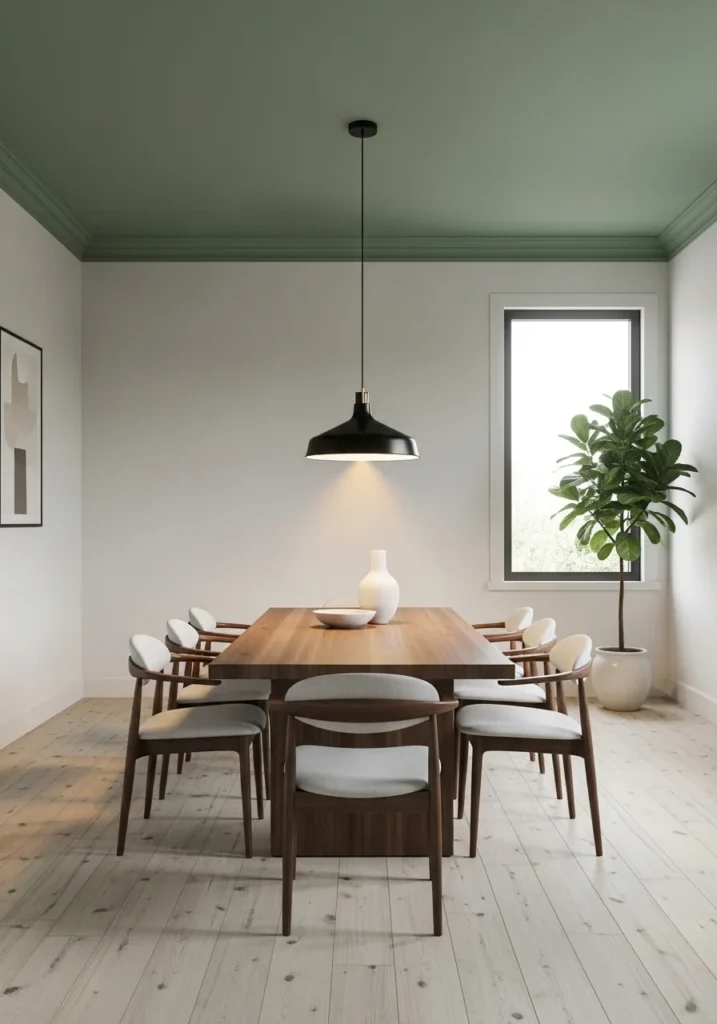
Most people focus on walls, but painting the ceiling green can create a unique and memorable dining space. A soft sage or muted olive ceiling adds warmth without overwhelming the room.
This design trick works especially well in rooms with white or neutral walls. When light hits the ceiling, the subtle color creates a cozy, enveloping feeling during dinner gatherings.
Why it works: A colored ceiling adds personality while keeping the walls simple.
Tip: Use a slightly lighter green than the walls so the room still feels open and bright.
Also Read This Blog: Long Kitchen Layout: 14 Smart Ideas to Make It Feel Balanced and Beautiful
11. Botanical Gallery Wall
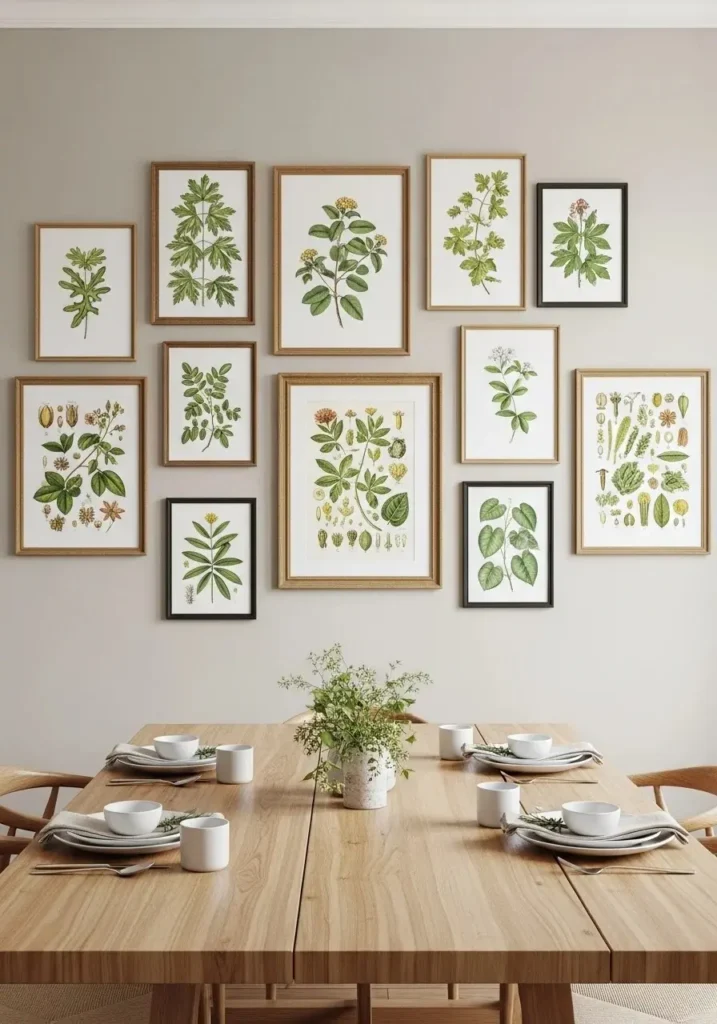
A botanical-themed gallery wall is a beautiful way to bring green into your dining room without repainting everything. Framed plant illustrations, vintage botanical prints, or leafy artwork add charm and personality.
Arrange a collection of green-toned prints above a buffet or along a large wall near the dining table. The artwork introduces color while keeping the room light and elegant.
Why it works: Art adds layers of visual interest and reinforces the natural theme.
Tip: Use similar frame colors, like black or brass, so the gallery wall feels cohesive rather than cluttered.
12. Green Tile Feature Wall
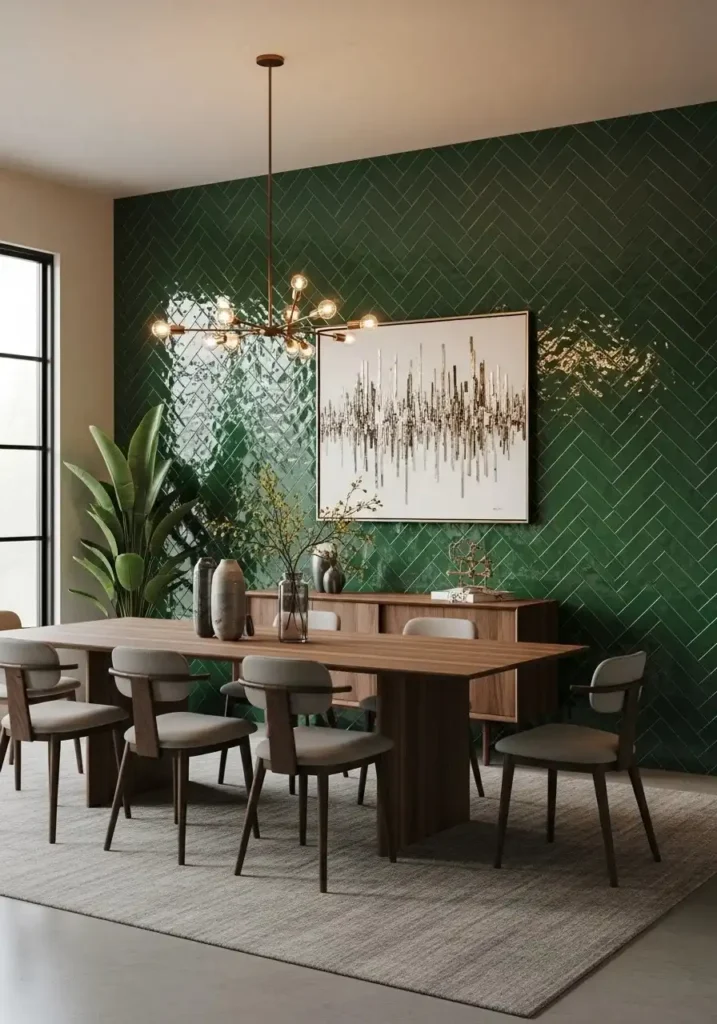
For a more modern and creative look, consider installing green tiles on one dining room wall. Glossy emerald, matte olive, or handmade ceramic tiles can create a beautiful texture that catches the light.
This idea works especially well in open-concept homes where the dining room connects with the kitchen. The tiled wall becomes a subtle focal point that feels stylish and unique.
Why it works: Tiles add texture and reflect light, giving the room depth and character.
Tip: Keep surrounding decor simple so the tiled wall remains the highlight.
13. Moss Green Curtains
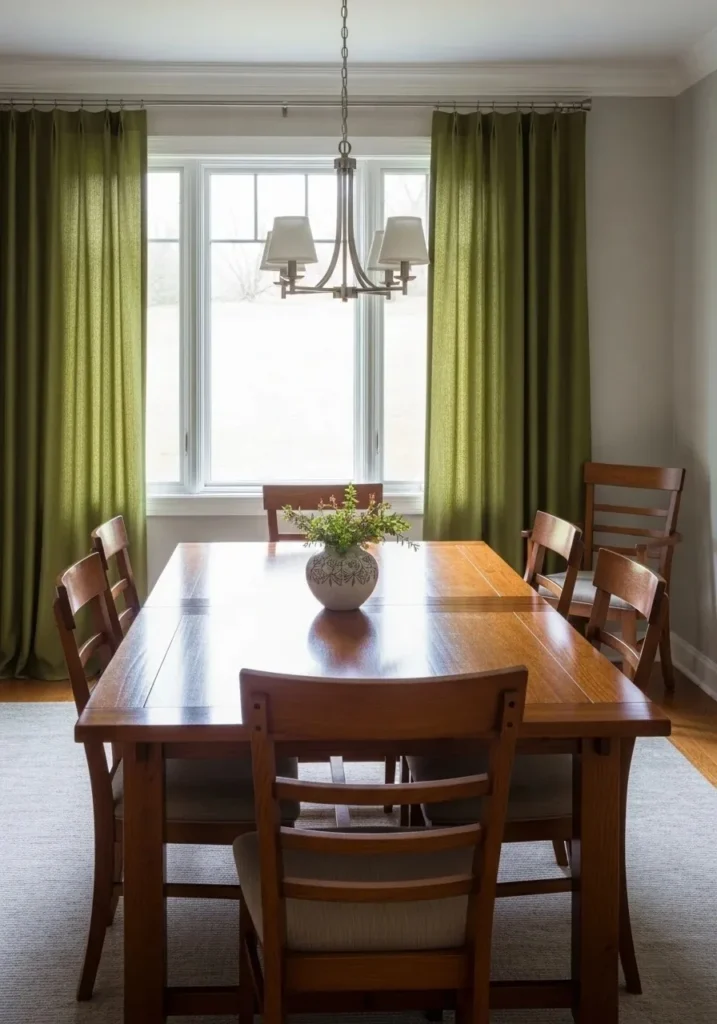
Curtains are an easy way to introduce green while also softening the dining room’s atmosphere. Moss green or deep olive curtains frame windows beautifully and make the room feel warmer and more inviting.
The fabric also adds vertical movement, drawing the eye upward and making the space appear taller.
Why it works: Textiles add softness and warmth while bringing subtle color into the room.
Tip: Hang curtains slightly higher than the window frame to make ceilings appear taller.
Also Read This Blog: 14 Green Kitchen Island Ideas to Anchor Your Space Beautifully
14. Green Dining Table Centerpiece
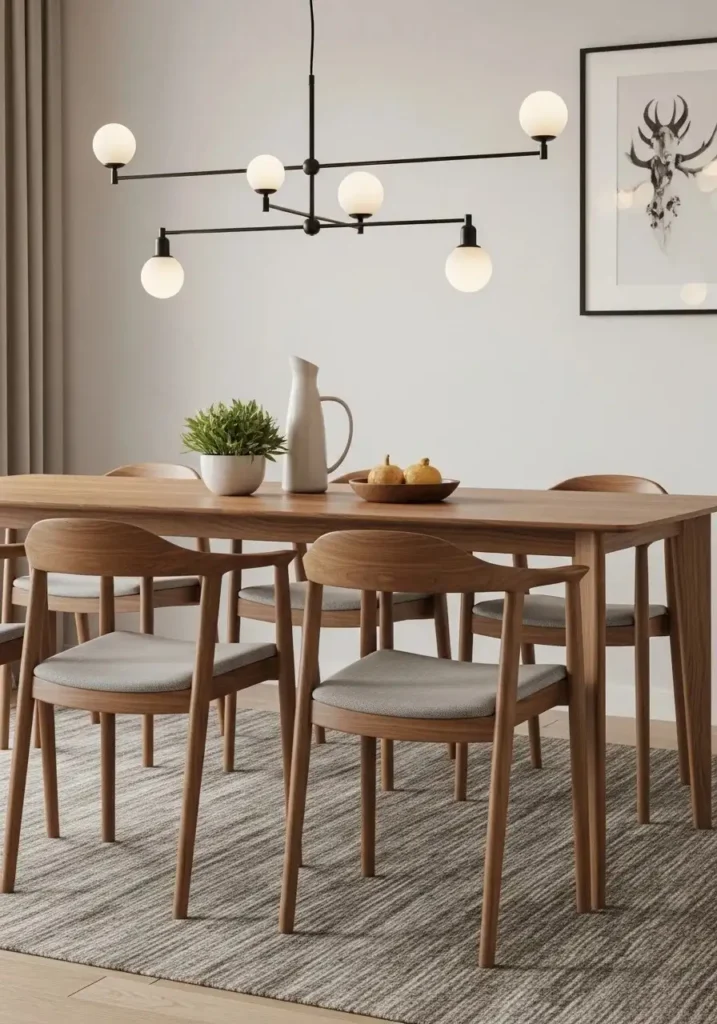
Sometimes a simple centerpiece can transform the entire mood of your dining room. A long arrangement of eucalyptus branches, moss runners, or small green plants instantly adds life to the table.
The natural greenery contrasts beautifully with wood, marble, or glass dining tables. It also makes everyday meals feel a little more special.
Why it works: Natural elements bring freshness and organic texture to the room.
Tip: Choose low arrangements so guests can still see each other easily across the table.
15. Green and Gold Color Combination
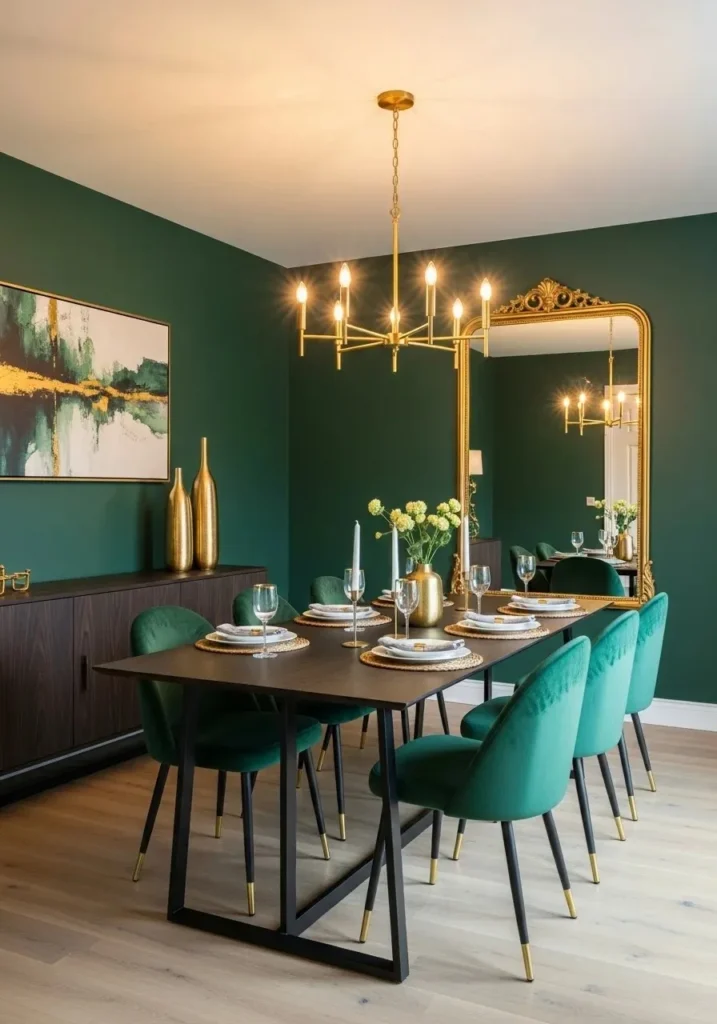
Green and gold is one of the most elegant color pairings for a dining room. Deep forest or emerald green walls combined with gold light fixtures, picture frames, or table accents create a luxurious atmosphere.
The warm metallic tones balance the coolness of green, making the space feel both glamorous and welcoming.
Why it works: Metallic accents reflect light and add sophistication to darker colors.
Tip: Repeat the gold finish in two or three places, such as lighting, hardware, or decor, to keep the design cohesive.
16. Indoor Plants for a Living Green Dining Room
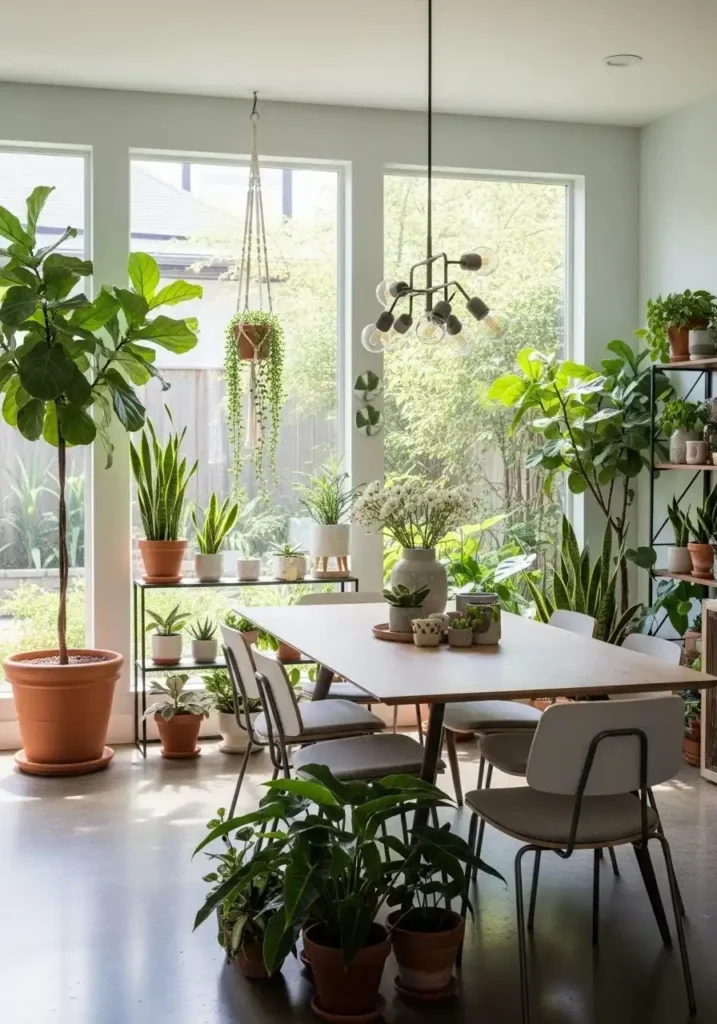
One of the easiest ways to create a green dining room is simply by adding plants. Large potted plants, hanging greenery, or small herbs placed along a shelf can instantly make the room feel fresh and lively.
Plants also soften hard surfaces like tables, walls, and cabinets. The natural shapes and shades of green bring movement and energy to the room.
Why it works: Living greenery adds texture, color variation, and a calming natural feel.
Tip: Choose low-maintenance plants like pothos, snake plants, or monstera if the dining room has limited sunlight.
Conclusion: Creating a Dining Room That Feels Alive
A dining room should feel welcoming, comfortable, and full of life — not dull or uninspiring. A green dining room brings exactly that feeling. Whether you choose soft sage walls, bold emerald furniture, botanical artwork, or simple greenery on the table, green has a way of making a space feel calm and vibrant at the same time.
The key is balance. Mix natural textures, warm lighting, and different shades of green to create depth. Even small touches can make a big difference. When done right, your dining room becomes more than just a place to eat — it becomes a space where conversations last longer and memories naturally unfold.