

15 Black and Brown Bedroom Ideas: Warm, Grounded & Surprisingly Elegant
Black and brown might not be the first pairing people think of for a bedroom. But when done right, this combination feels rich, grounded, and incredibly cozy. Black adds depth and definition. Brown brings warmth and comfort.
If your space feels flat, too cool, or lacks character, this color duo can transform it without feeling trendy or overwhelming. Let’s walk through thoughtful ways to make black and brown work beautifully together.
1. Start with a Rich Brown Foundation

Begin with brown as your base—wood floors, a walnut bed frame, or warm brown walls. Brown creates instant warmth, which balances black’s intensity.
This works because black can feel harsh on its own. Layering it over a brown foundation softens the look and keeps the room inviting.
Tip: Choose one main brown tone (like chocolate or espresso) and stick to it.
Mistake to avoid: Mixing too many brown shades without intention can make the room feel muddy instead of cohesive.
2. Use Black as a Framing Color

Think of black as the outline of your room. Black window frames, picture frames, or a black headboard add structure without overpowering the space.
It works because black visually anchors a room. It defines edges and makes brown tones look richer.
Example: A brown leather bed with black bedside lamps instantly feels styled.
Avoid: Painting all four walls black in a small bedroom—it can shrink the space unless balanced with plenty of light.
3. Pair Brown Wood with Matte Black Furniture
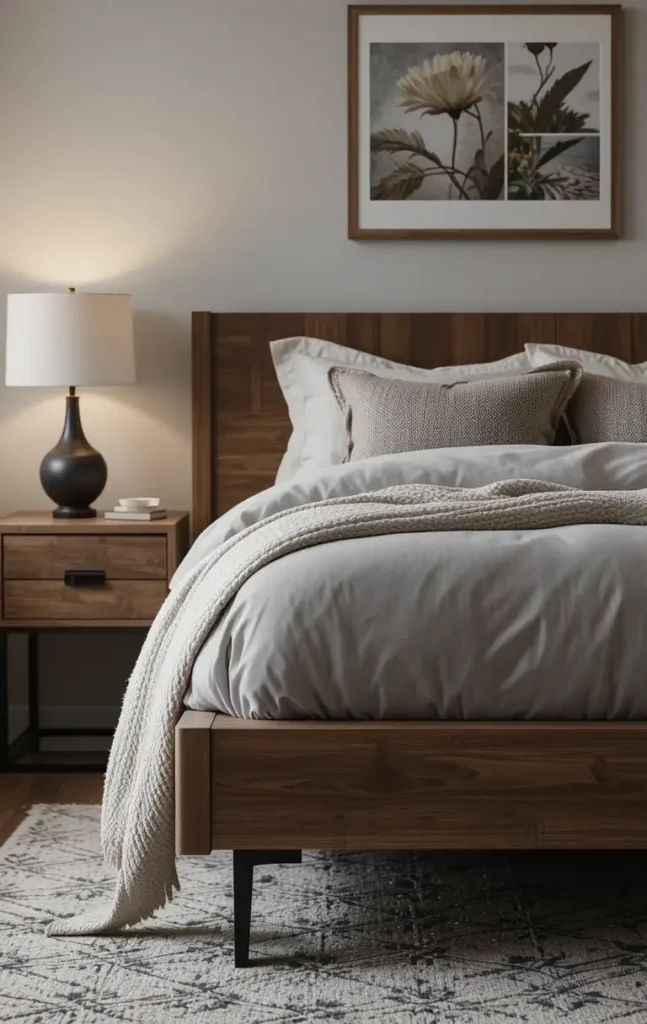
Brown wood furniture—like oak or walnut—pairs beautifully with matte black metal pieces. The mix feels modern yet grounded.
This contrast works because matte black doesn’t compete with wood grain. Instead, it highlights it.
Tip: Try black metal nightstands next to a warm wood bed.
Mistake: Avoid glossy black finishes if your wood is rustic; the mismatch can feel disconnected.
4. Add a Black Accent Wall Behind a Brown Bed

A black accent wall behind a brown headboard creates drama in a controlled way. It feels bold but not overwhelming.
This works because the brown softens the black, preventing it from feeling too stark.
Example: A dark charcoal wall with a camel leather bed looks cozy and sophisticated.
Avoid: Using flat black without good lighting—it can absorb too much light and feel heavy.
5. Layer Brown Textiles Against Black Furniture

If you already have black furniture, soften it with brown textiles—throws, cushions, or a woven bench.
Brown fabrics add warmth and prevent black from feeling cold or industrial.
Tip: Try a chunky brown knit throw over a black bedspread.
Common mistake: Don’t choose fabrics that are too close in tone to black; you’ll lose contrast and visual interest.
Also Read This Blog: 15 Purple Bedroom Ideas: Calm, Cozy, and Surprisingly Versatile
6. Incorporate Leather for Warmth
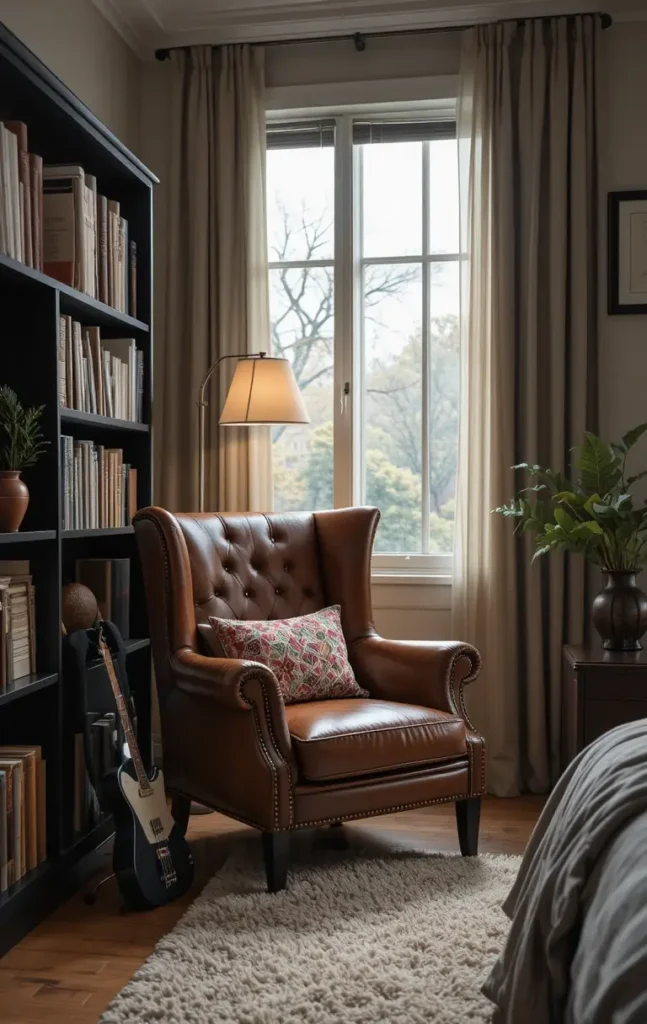
Brown leather—whether in a headboard, chair, or bench—instantly elevates a black and brown bedroom.
Leather works because it reflects light subtly, adding texture and richness without clutter.
Example: A small brown leather reading chair beside a black bookshelf adds depth.
Avoid: Overusing leather. Too much can feel heavy. Balance it with soft linens or cotton bedding.
7. Balance Dark Colors with Light Bedding

When working with two dark colors, light bedding becomes essential. Cream, beige, or soft white sheets create breathing room.
This works because contrast prevents the space from feeling cave-like.
Tip: Use layered neutrals—like ivory sheets with a tan quilt—over a black or brown bed frame.
Mistake: Pure bright white can look too stark. Choose warmer whites to maintain the cozy tone.
8. Mix Different Brown Tones (Carefully)

Once your base is set, layering different brown shades adds richness. Think walnut furniture, caramel cushions, and a deeper espresso nightstand.
This works because variation prevents the room from looking flat. Multiple tones create depth while still feeling cohesive.
Tip: Keep undertones consistent—warm with warm, cool with cool.
Mistake: Randomly mixing red-toned brown with gray-brown. That clash feels accidental instead of layered.
Also Read This Blog: 13 Bedroom Corner Ideas That Make Every Inch Feel Intentional
9. Introduce Soft Black Through Textiles
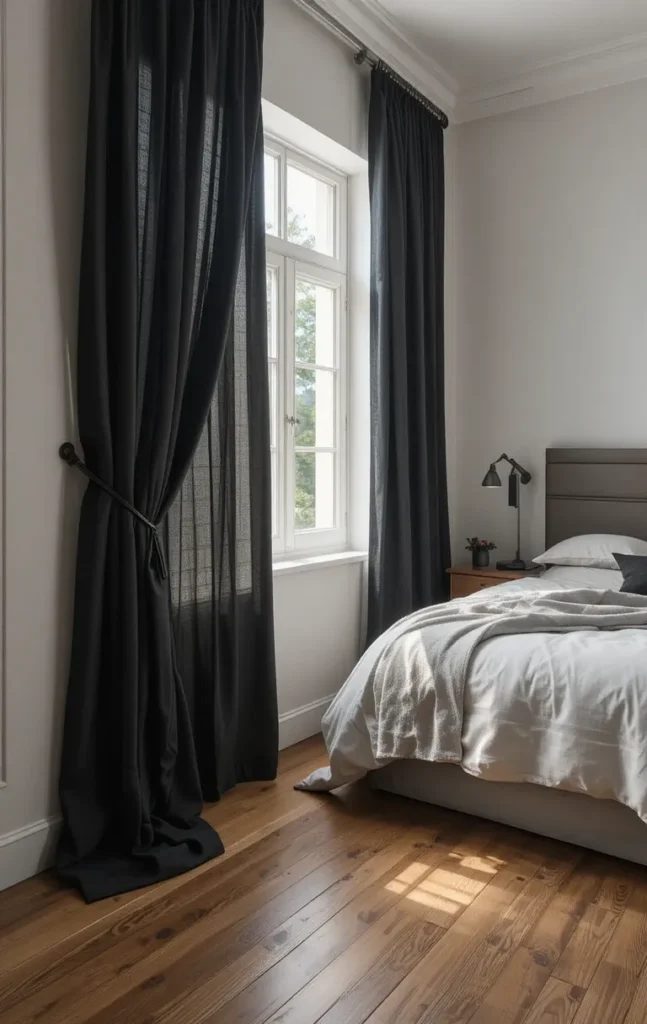
Instead of only using black in furniture or walls, bring it in through fabric—curtains, bedding, or a textured rug.
This works because soft black feels less harsh than painted surfaces. It adds contrast without making the room heavy.
Example: Black linen curtains paired with warm wood floors look grounded yet airy.
Avoid: Thick, shiny black fabrics in small rooms. They can block light and overwhelm the space.
10. Add Brass or Gold Accents for Warmth
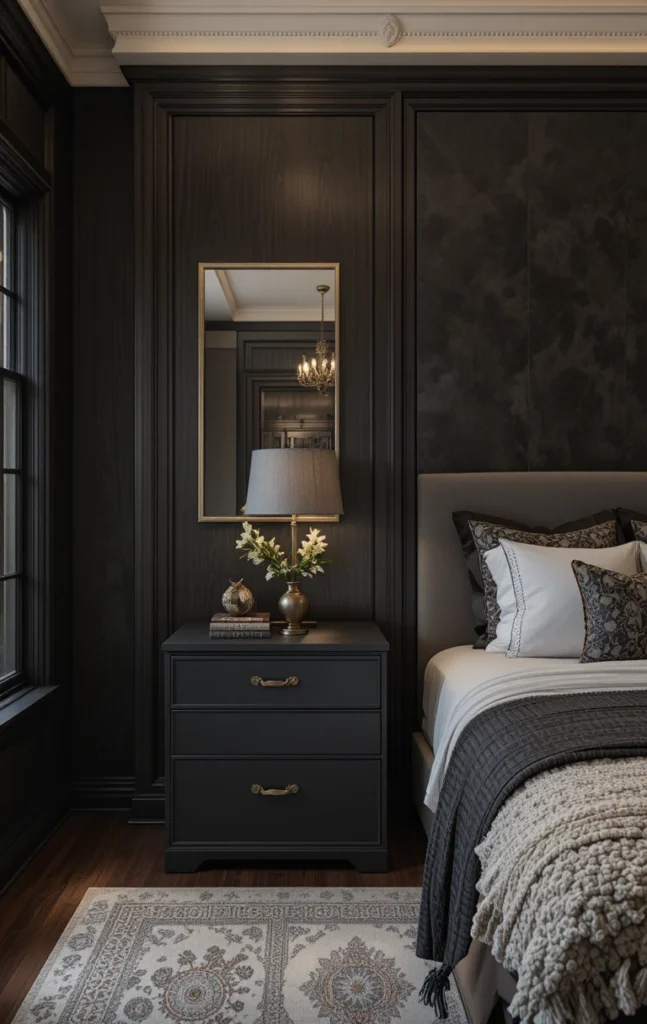
Black and brown together can sometimes feel very dark. A touch of brass or warm gold hardware instantly lifts the mood.
This works because metallic warmth bridges the gap between black and brown, tying them together naturally.
Tip: Swap drawer handles for brushed brass or add a small gold table lamp.
Mistake: Don’t overdo metallics. Too many shiny surfaces can distract from the calm atmosphere.
Also Read This Blog: 15 Bedroom Chandelier Ideas to Add Elegance, Warmth & Style
11. Use Natural Textures to Soften the Palette

When working with darker colors, texture becomes essential. Woven baskets, jute rugs, and linen bedding prevent the room from feeling too polished.
This works because natural materials introduce lightness and balance.
Example: A light jute rug under a black bed frame warms up the space instantly.
Avoid: Using only smooth surfaces (metal, lacquer, leather). It can make the room feel stiff and uninviting.
12. Create Contrast with Wall Art

Artwork is one of the easiest ways to tie black and brown together. Look for prints that include both shades in abstract or landscape styles.
This works because art visually connects your color story.
Tip: Hang black-framed art above a brown dresser to anchor the space.
Mistake: Choosing art that’s too small. Undersized pieces can look lost against dark walls.
13. Play with Lighting to Control Mood
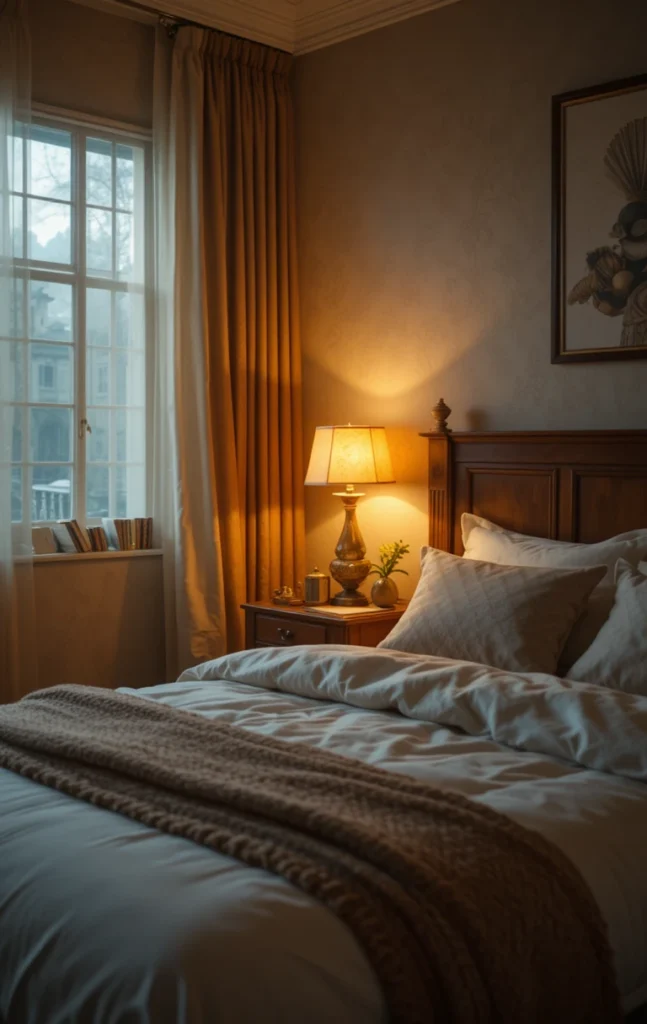
Lighting makes or breaks a black and brown bedroom. Warm bulbs (2700K–3000K) enhance brown tones and soften black edges.
This works because warm light prevents the space from feeling cold or shadowy.
Example: Add bedside lamps with warm white bulbs instead of cool LED overhead lights.
Avoid: Harsh white lighting—it exaggerates darkness and removes the cozy effect you’re trying to create.
Also Read This Blog: 16 Black and Silver Bedroom Ideas for Elegant & Stylish Spaces
14. Keep Patterns Minimal and Intentional

With two strong colors, subtle patterns work best. Think thin black stripes on beige bedding or a simple geometric rug.
This works because restrained patterns maintain elegance without overwhelming the eye.
Tip: Choose one patterned element and keep the rest solid.
Mistake: Mixing bold black-and-white prints with dark brown furniture—it can feel chaotic rather than calm.
15. Add a Soft Focal Point to Prevent Heaviness

Every dark bedroom needs a moment of softness—a light upholstered bench, a soft cream throw, or a neutral armchair.
This works because it gives the eye a place to rest and keeps the palette from feeling too dense.
Example: A light beige bench at the foot of a black and brown bed instantly balances the room.
Avoid: Filling every corner with dark décor. Negative space is just as important as color.
Conclusion
Black and brown together create a bedroom that feels grounded, warm, and quietly sophisticated. The key isn’t adding more—it’s balancing depth with softness, contrast with warmth.
Start with one strong foundation, layer carefully, and pay attention to lighting and texture. Small adjustments—like swapping hardware or adding lighter bedding—can completely shift the mood.
You don’t need a full renovation to make this pairing work. With thoughtful choices, black and brown can become one of the most comforting and elegant combinations in your home.