Wall Decor for Living Room: 12 Thoughtful Ideas That Actually Work
Blank walls can make even a well-furnished living room feel unfinished. At the same time, filling them randomly often creates clutter instead of character. The key to choosing the right wall decor for living room spaces is understanding what the room needs—more warmth, more personality, or better balance—and then making intentional choices.
Below are 12 practical ideas that help you decorate your walls in a way that feels thoughtful, not overwhelming.
1. Create a Large-Scale Focal Point
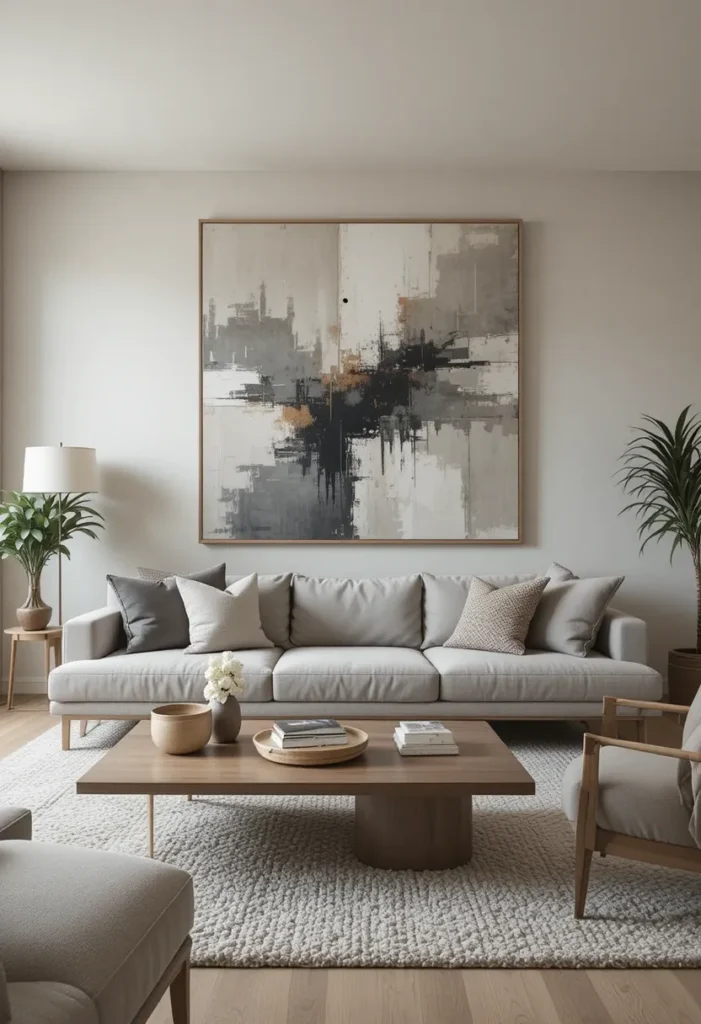
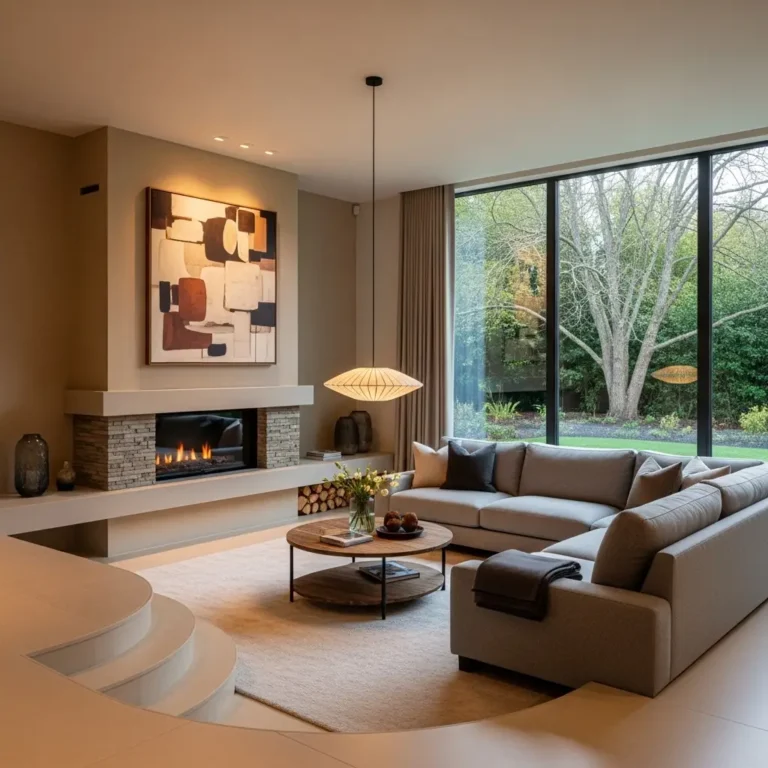
A large piece of art or oversized decor can anchor the entire room. Instead of scattering small items everywhere, one bold piece draws the eye and gives the space direction.
This works because the living room usually needs a visual center, especially above a sofa or fireplace. Without it, the wall can look empty or awkward.
Choose something proportional to the furniture below it. A common mistake is hanging art that’s too small. Aim for a piece that spans about two-thirds the width of the sofa for better balance.
2. Build a Thoughtful Gallery Wall
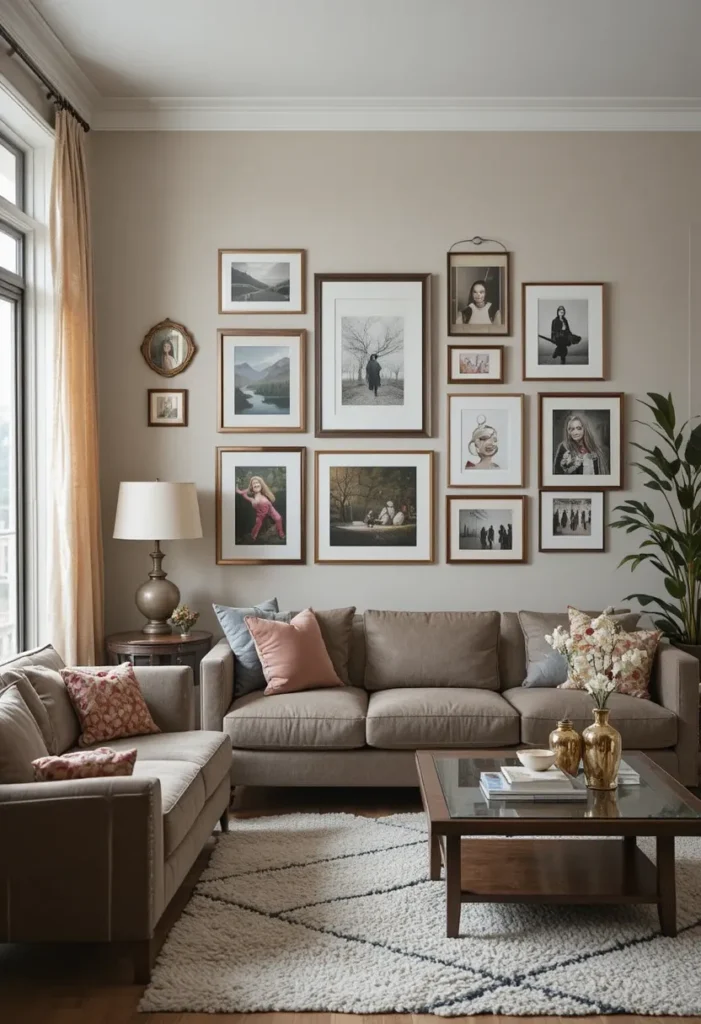
A gallery wall is a collection of framed art, photos, or prints arranged in a cohesive layout. It adds personality and tells a story.
This works well when you want visual interest without relying on a single large piece. It also allows you to mix personal photos with artwork.
Plan the layout on the floor before hanging anything. Keep spacing consistent and avoid mixing too many frame styles unless you’re intentionally going eclectic.
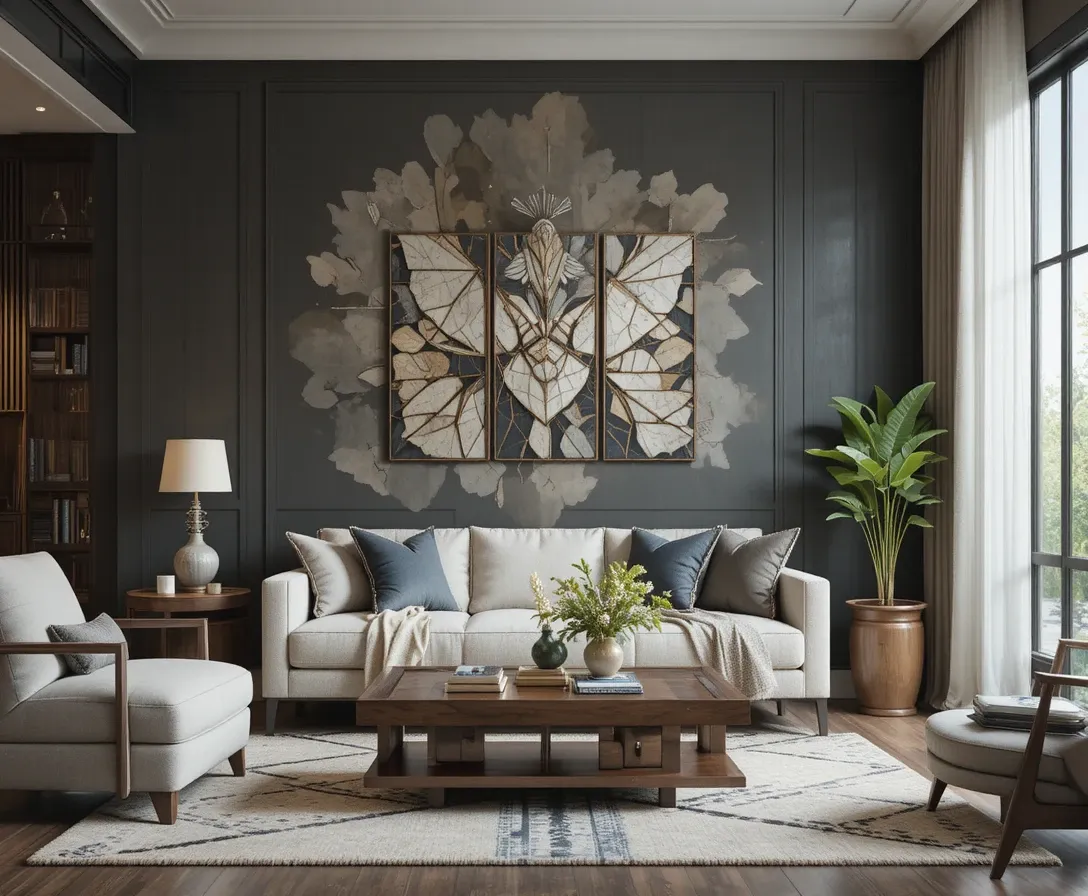
3. Add Wall Paneling or Molding
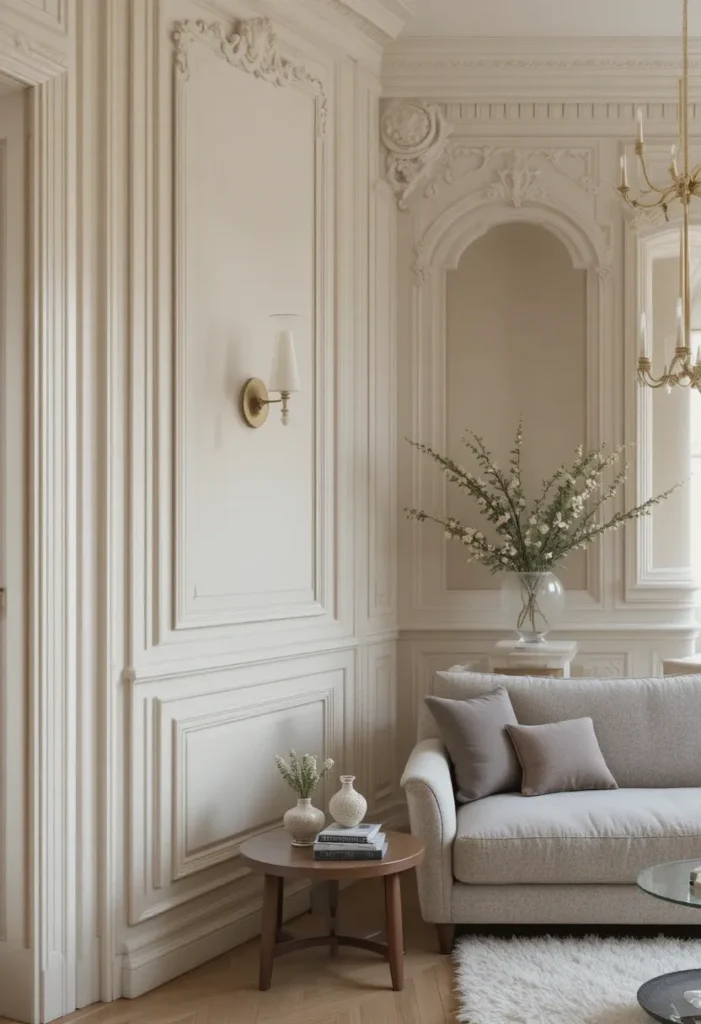
Wall paneling, such as board and batten or simple molding, adds architectural detail to plain walls. It creates depth even before decor is added.
This works because texture changes how light hits the surface, making the room feel richer and more finished.
Keep the design simple if your furniture is already bold. Overly ornate paneling in a busy room can feel heavy rather than elegant.
4. Use Mirrors to Expand the Space
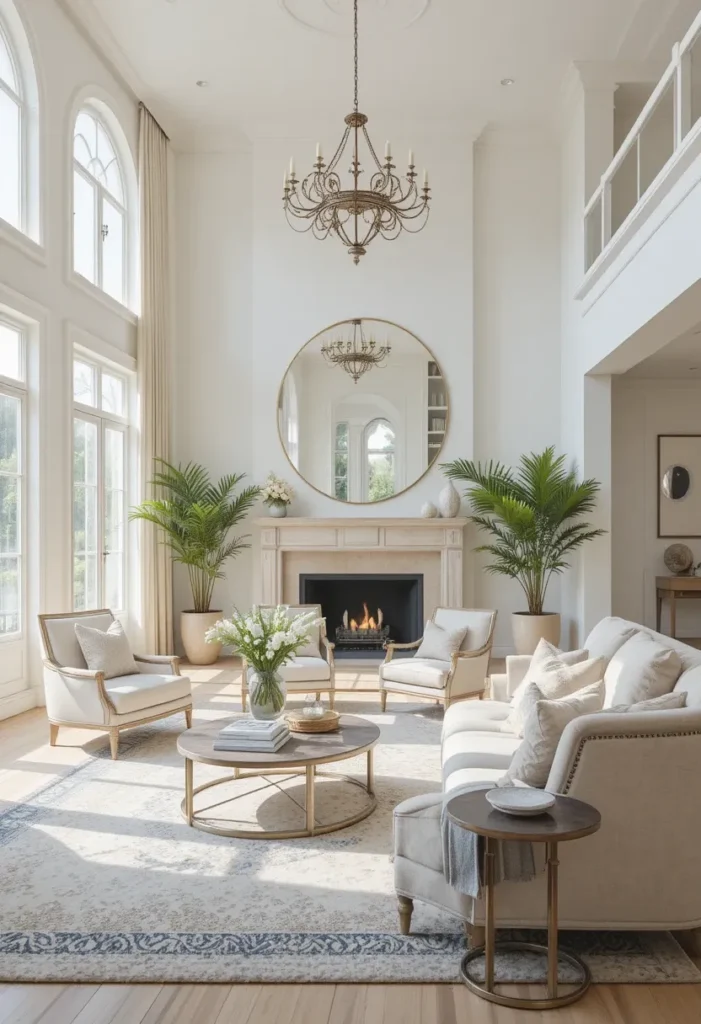
Mirrors are more than decorative pieces. They reflect light and make smaller living rooms feel larger.
This works especially well across from a window, where natural light can bounce around the room.
Avoid placing mirrors where they reflect clutter or a blank wall. What the mirror shows matters just as much as the mirror itself.
Also Read This Blog: Living Room Dining Room Combo Layout Ideas for a Functional Space
5. Install Floating Shelves
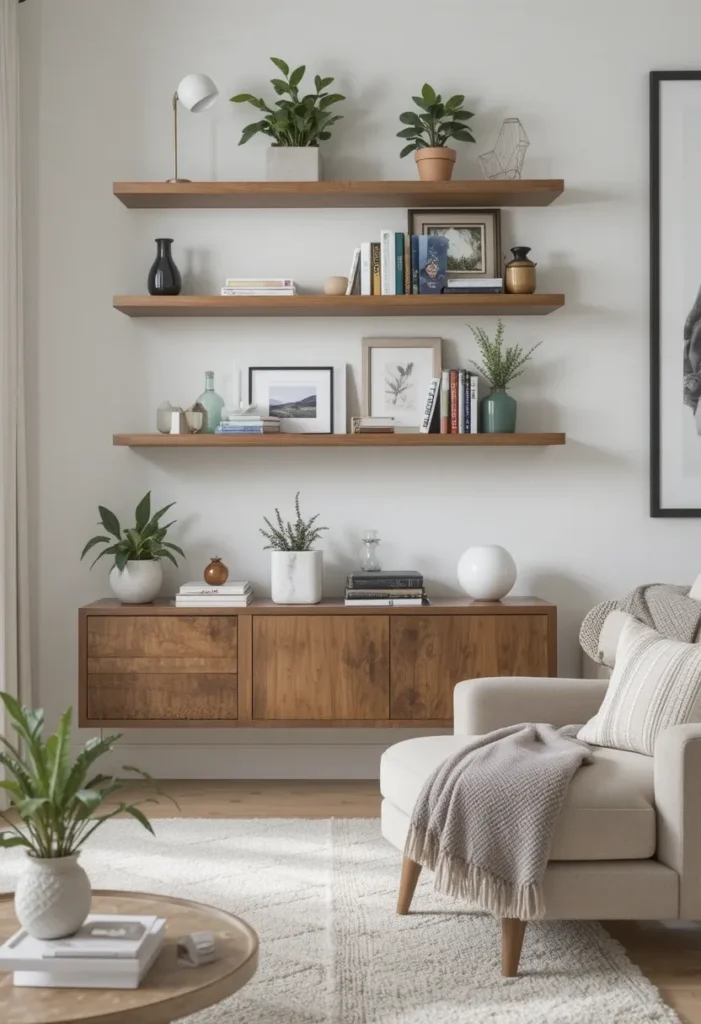
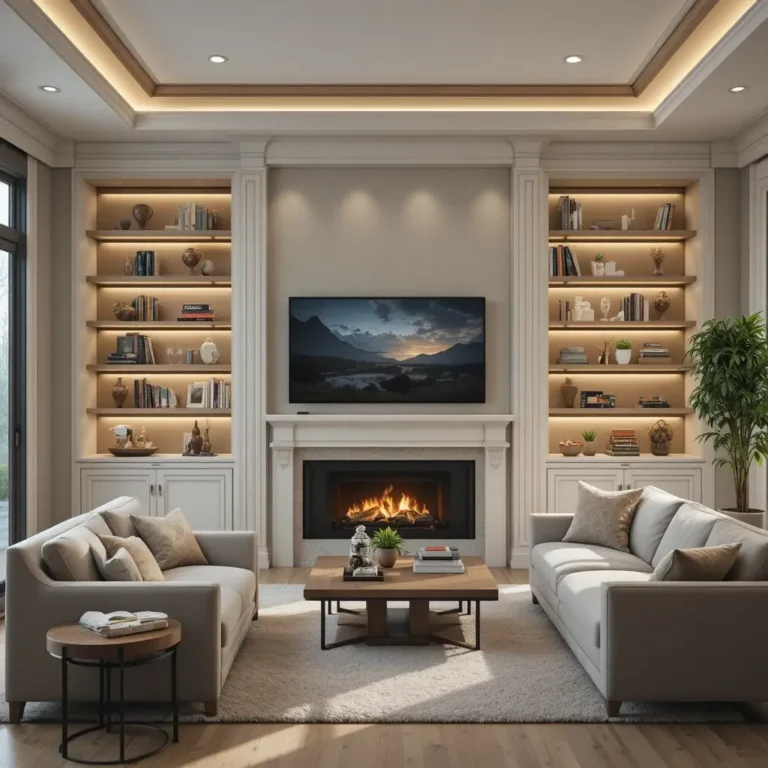
Floating shelves provide both decor and function. They allow you to display books, plants, or curated objects without bulky furniture.
This works because shelves add vertical interest while keeping the floor space open.
Keep styling simple. A few balanced groupings look better than overcrowded shelves filled with random items.
6. Incorporate Textured Wall Art
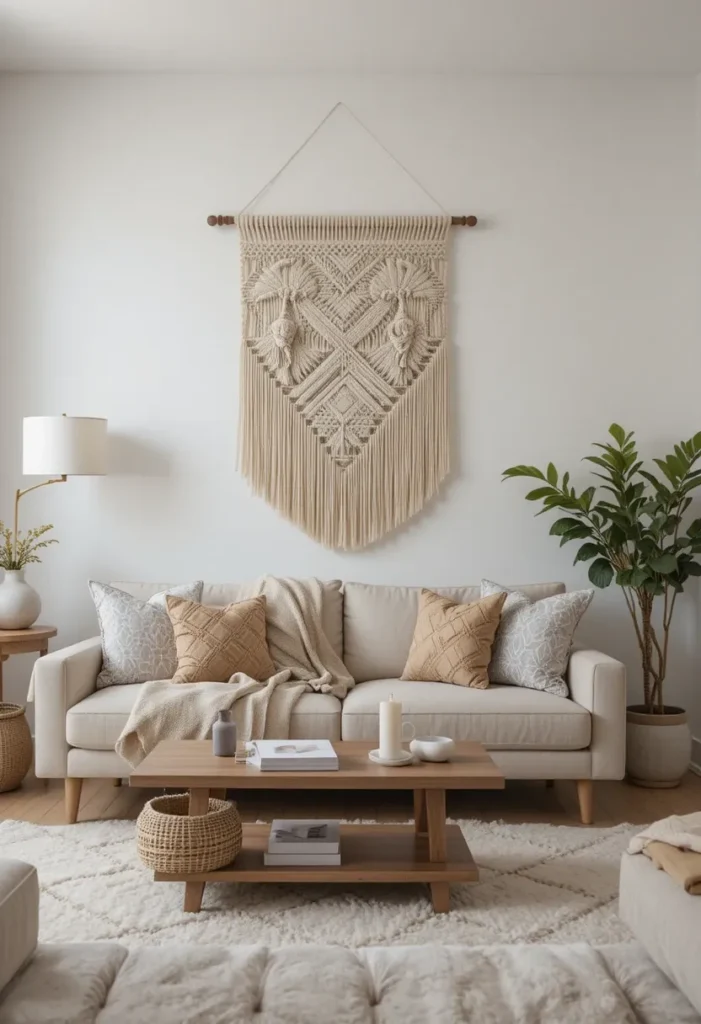
Textured art, such as woven pieces, fabric panels, or sculptural wall decor, adds softness and depth.
This works well in living rooms that feel flat or overly minimal. Texture creates warmth without adding visual noise.
If your room already has many patterns, choose neutral textured pieces so the space doesn’t feel busy.
7. Frame Meaningful Personal Items
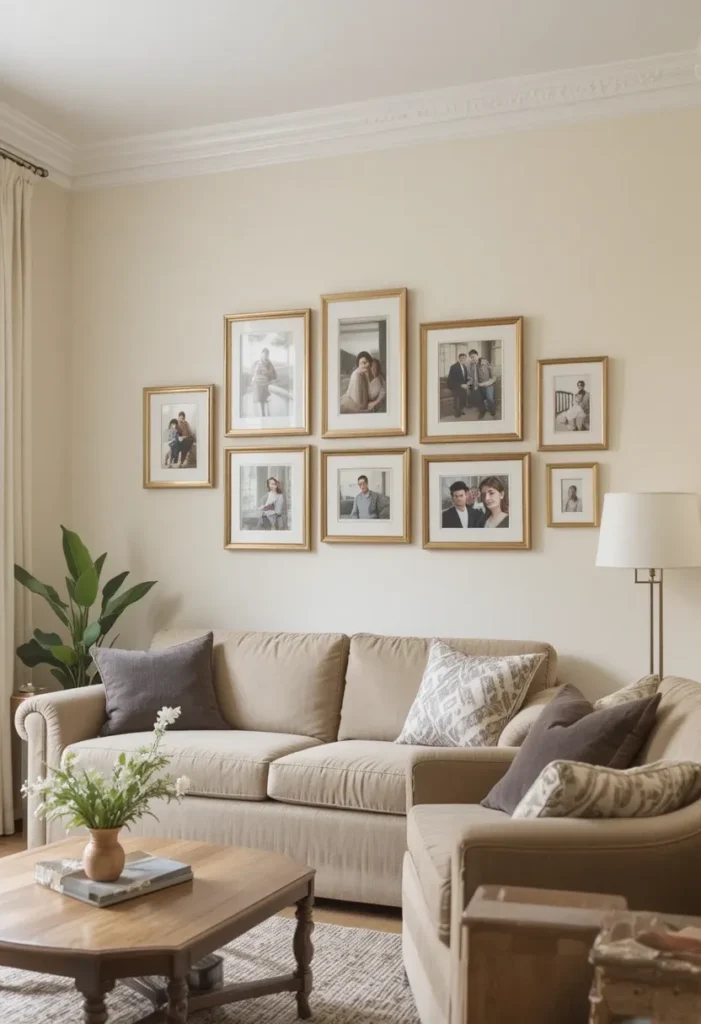
Wall decor feels more authentic when it reflects your life. Framed travel photos, family pictures, or even meaningful quotes can make the space feel lived in.
This works because personal touches create connection. The room feels welcoming rather than staged.
Be selective. Too many unrelated items can look cluttered. Choose pieces that truly matter and display them intentionally.
Also Read This Blog: 15 Living Room Remodel Ideas That Actually Improve How the Space Feels
8. Try a Statement Wallpaper Accent
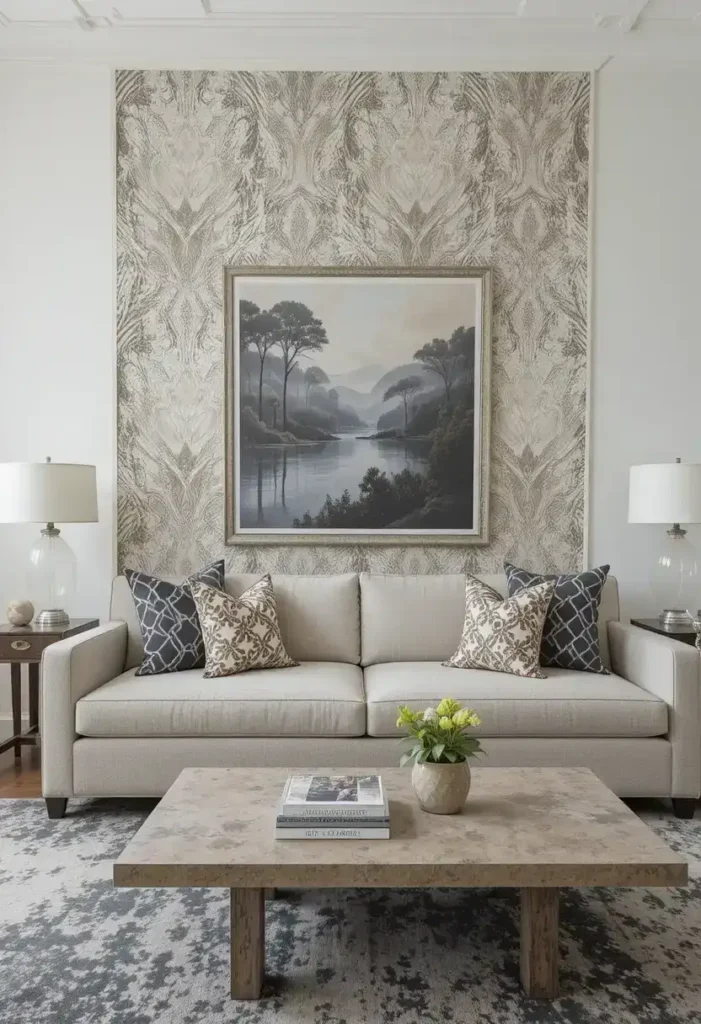
Wallpaper can transform a wall into a feature. A subtle pattern adds interest, while a bold design makes a strong statement.
This works when you want impact without filling the wall with separate decor pieces.
Avoid covering every wall in a strong pattern unless the room is large and well-lit. An accent wall is often enough to create depth.
9. Hang Curtains Higher for Visual Height
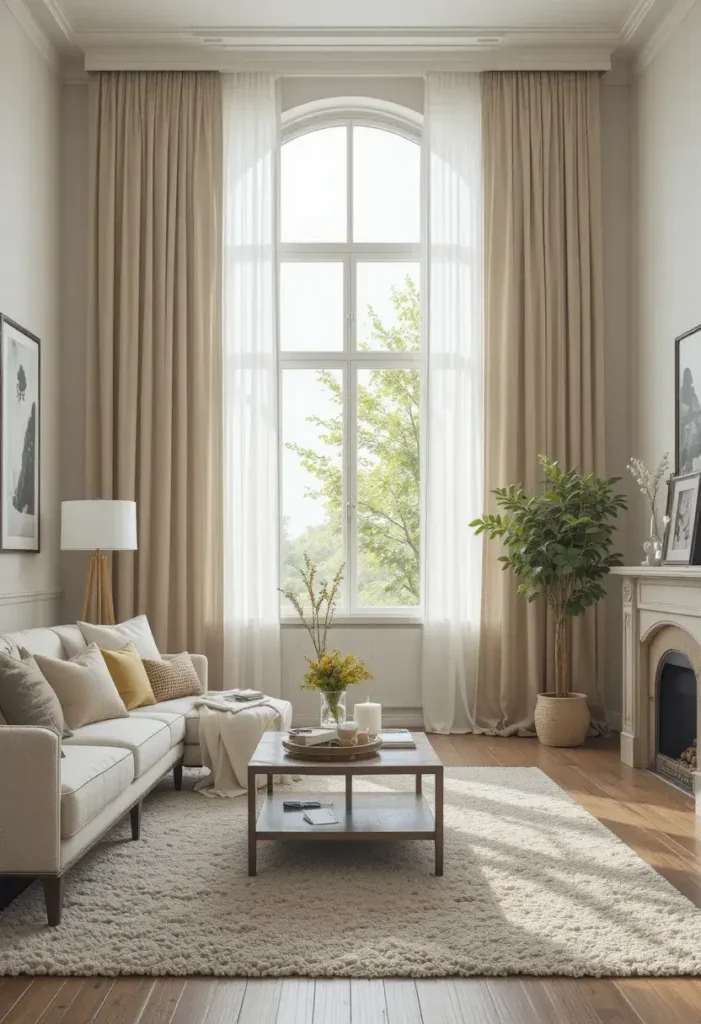
While curtains aren’t traditional decor pieces, they dramatically affect how walls look.
Hanging them higher and wider than the window frame makes ceilings appear taller and walls feel grander.
A common mistake is installing curtain rods directly above the window. Extending them closer to the ceiling creates a more polished look.
10. Use Wall-Mounted Lighting
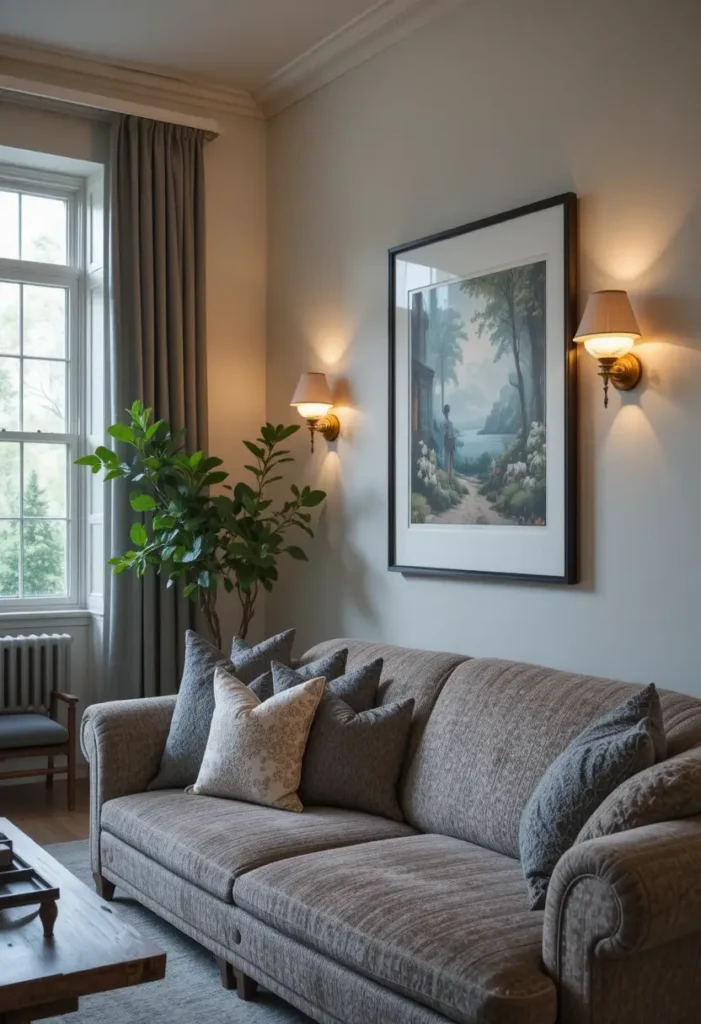
Wall sconces or mounted lamps combine decoration with functionality. They free up table space while adding warmth.
This works especially well in living rooms with limited surface space or awkward layouts.
Position them at a comfortable height for seated eye level. Lighting that’s too high or too low can feel off balance.
11. Keep One Wall Intentionally Minimal
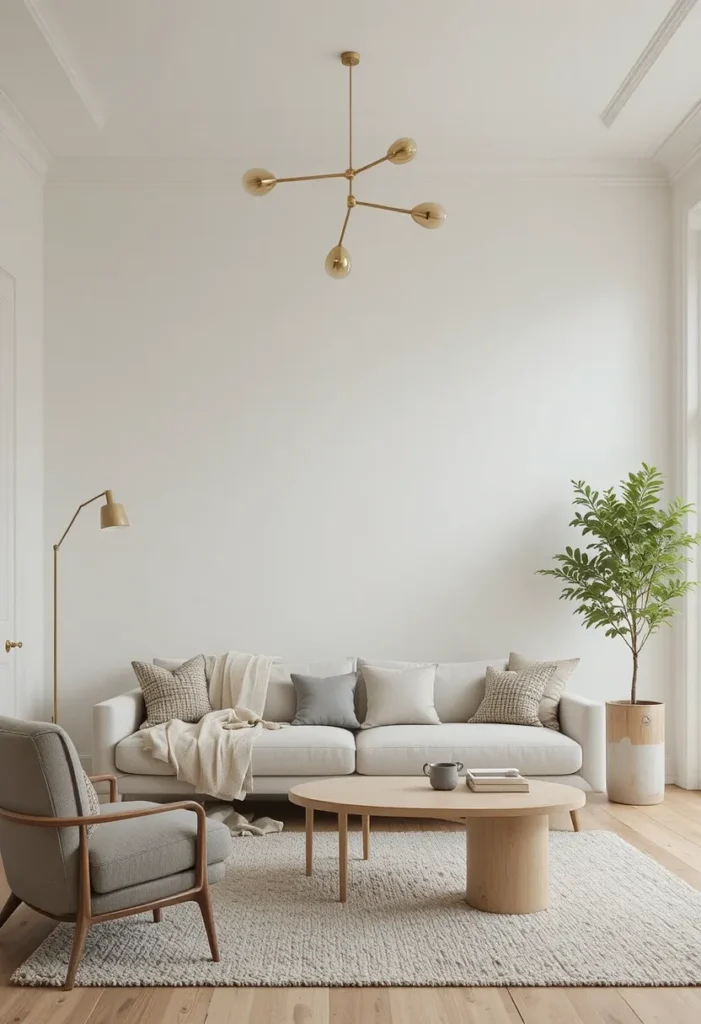
Not every wall needs decoration. Leaving one wall mostly clear can make the rest of the room feel more intentional.
This works because negative space allows the eye to rest. It also highlights focal areas more effectively.
If you’re unsure about adding something, step back and live with the empty space for a few days. Sometimes restraint is the best choice.
Also Read This Blog: 14 Farmhouse Living Room Ideas to Create a Cozy, Stylish Space
12. Combine Different Elements for Depth
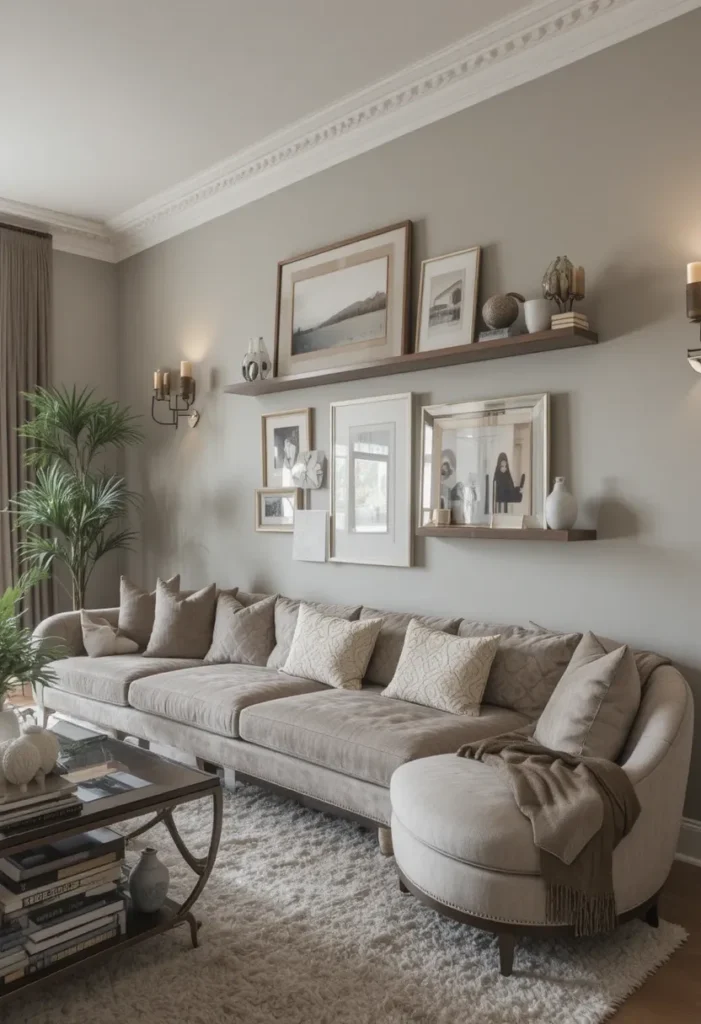
The most balanced walls often mix elements—art with sconces, shelves with framed pieces, or paneling with paint.
This works because layering creates visual depth without overcrowding.
The key is balance. If you combine multiple elements, keep the color palette cohesive so the wall feels unified rather than chaotic.
Conclusion
Wall decor for living room spaces doesn’t have to be complicated. When you focus on scale, balance, and meaning, your walls naturally start to support the room instead of competing with it. Thoughtful choices—whether bold or minimal—create a space that feels complete and comfortable. By paying attention to proportion and avoiding clutter, you can transform blank walls into features that truly enhance your living room.