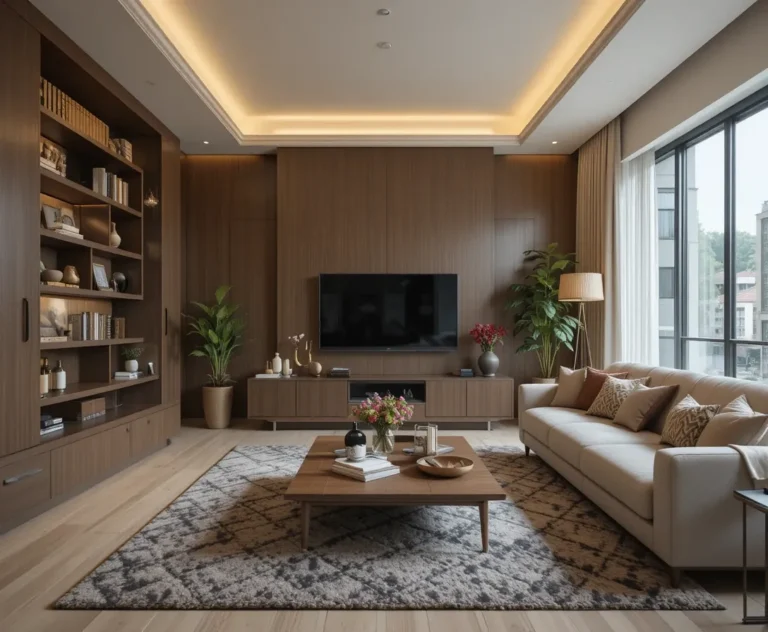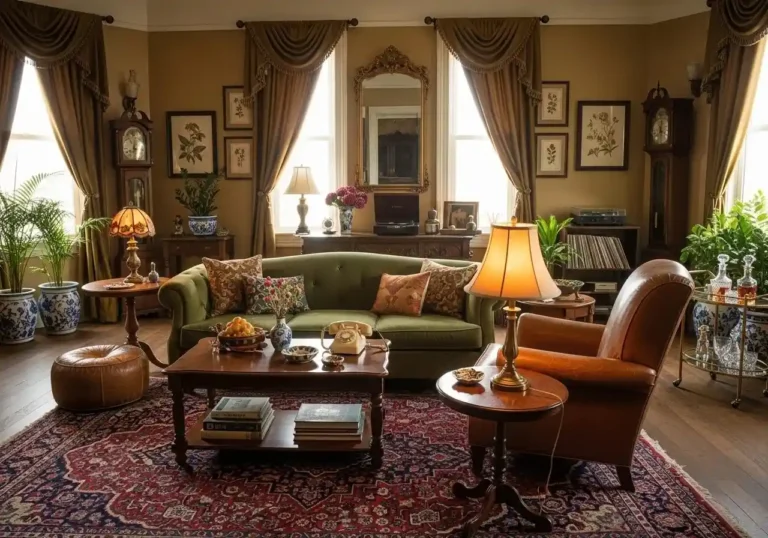
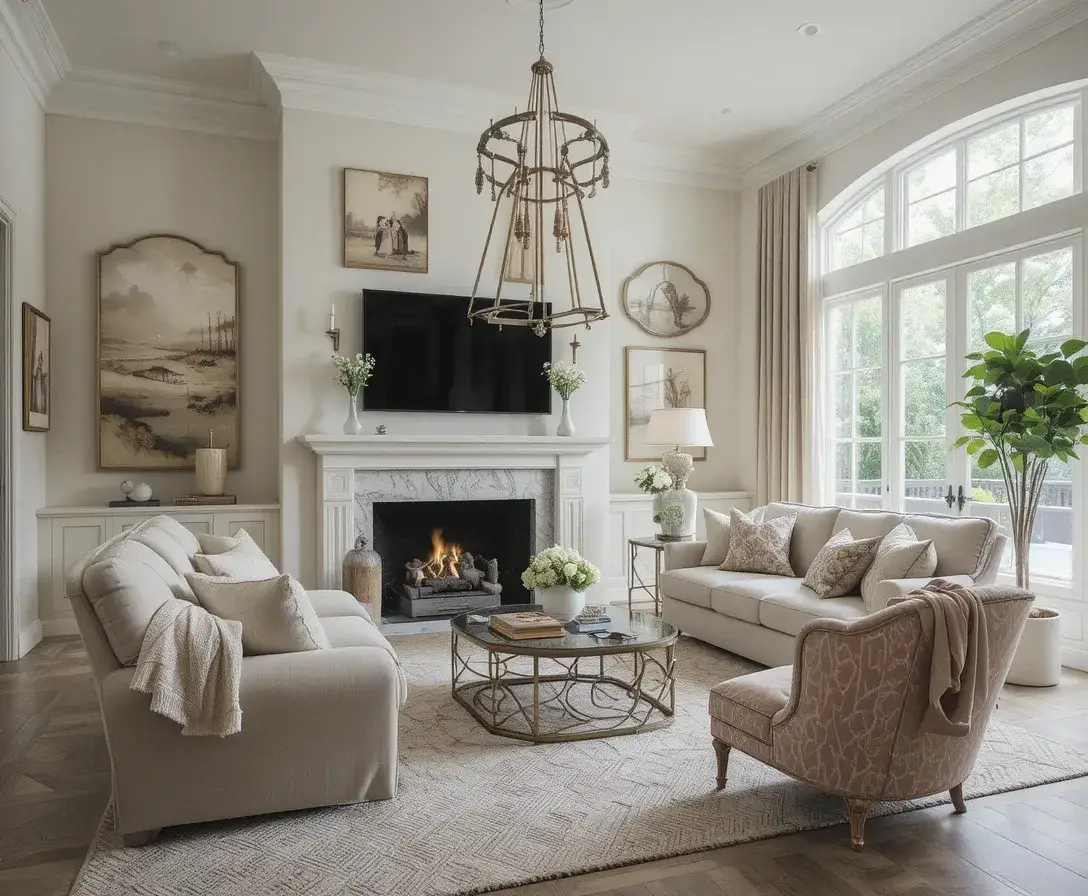
14 Living Room Designs That Blend Style, Comfort & Everyday Life
Living rooms are the heart of any home. They are where families gather, friends socialize, and quiet moments are enjoyed. Designing a living room that balances style, comfort, and functionality can feel overwhelming, especially with so many trends and options. The goal isn’t to copy what’s trendy but to create a space that works for your life. Here are 14 practical living room design ideas to help you make your space both beautiful and functional.
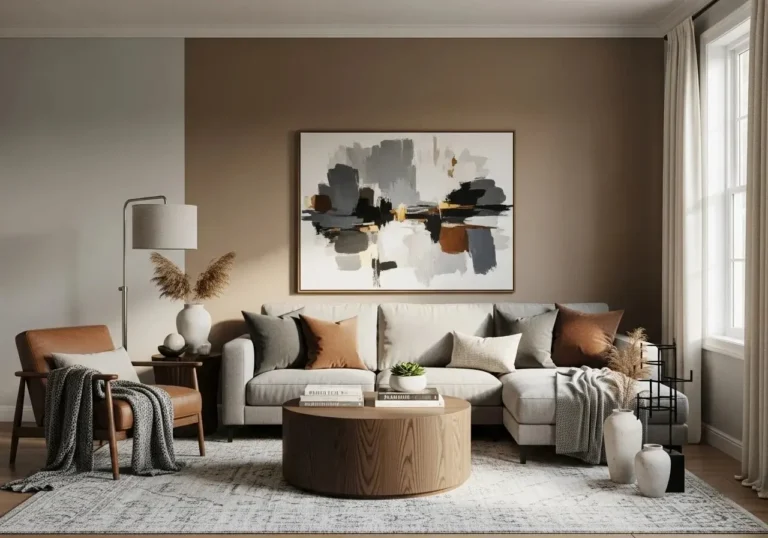
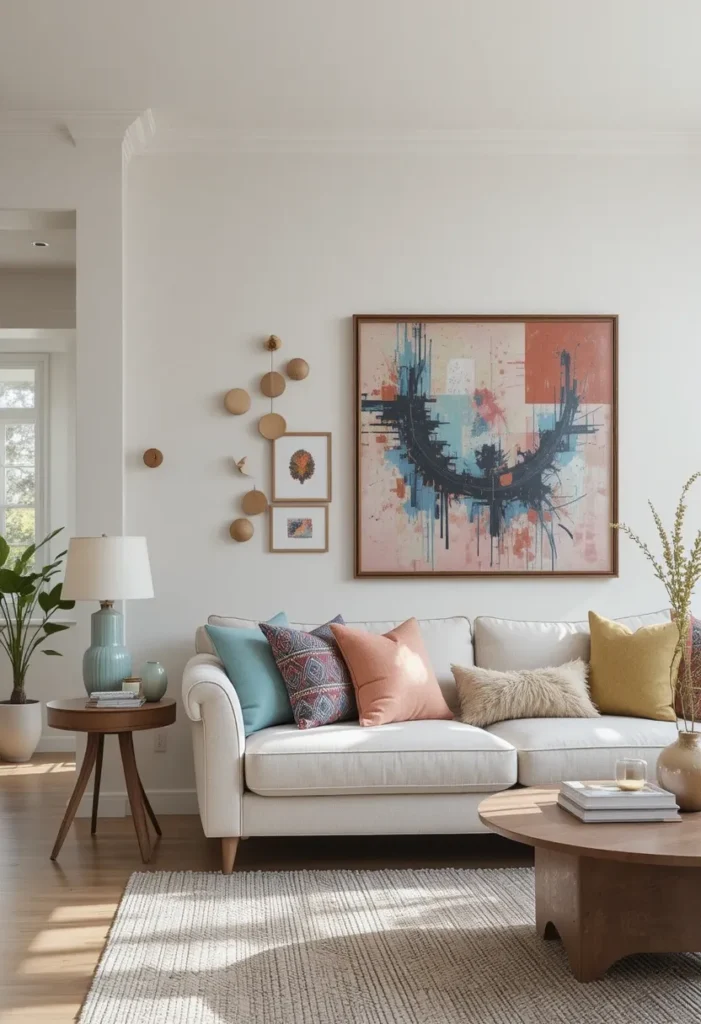
1. Choose the right color palette
What it is:
Selecting a cohesive set of colors for walls, furniture, and décor.
Why it works:
A coordinated color palette instantly makes a room feel harmonious and well-thought-out, while mismatched colors can feel chaotic.
Practical tip:
Start with a neutral base for walls and larger furniture, then add accent colors with pillows, rugs, or artwork. Avoid choosing too many bright colors at once, which can overwhelm the space.
2. Prioritize comfortable seating
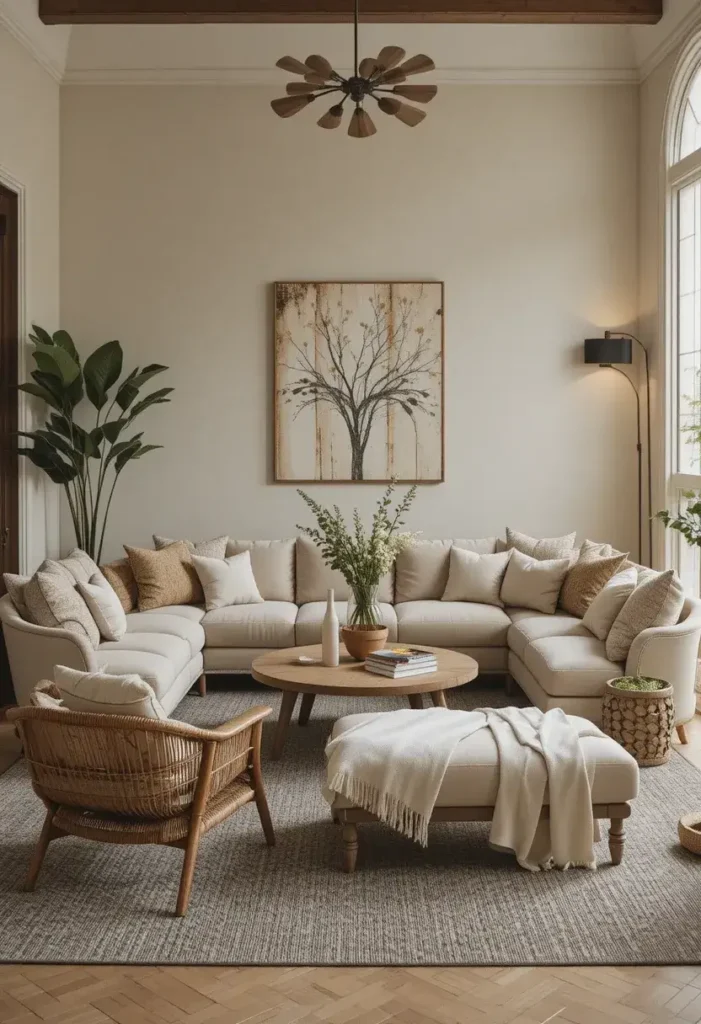
What it is:
Choosing sofas, chairs, or sectional arrangements that are comfortable for your family’s needs.
Why it works:
A stylish living room is meaningless if it isn’t comfortable to sit in. People won’t enjoy spending time there.
Practical tip:
Test sofas and chairs before buying. Look for supportive cushions and fabrics that feel good on the skin. Avoid pieces that are purely decorative but uncomfortable.
3. Use layered lighting
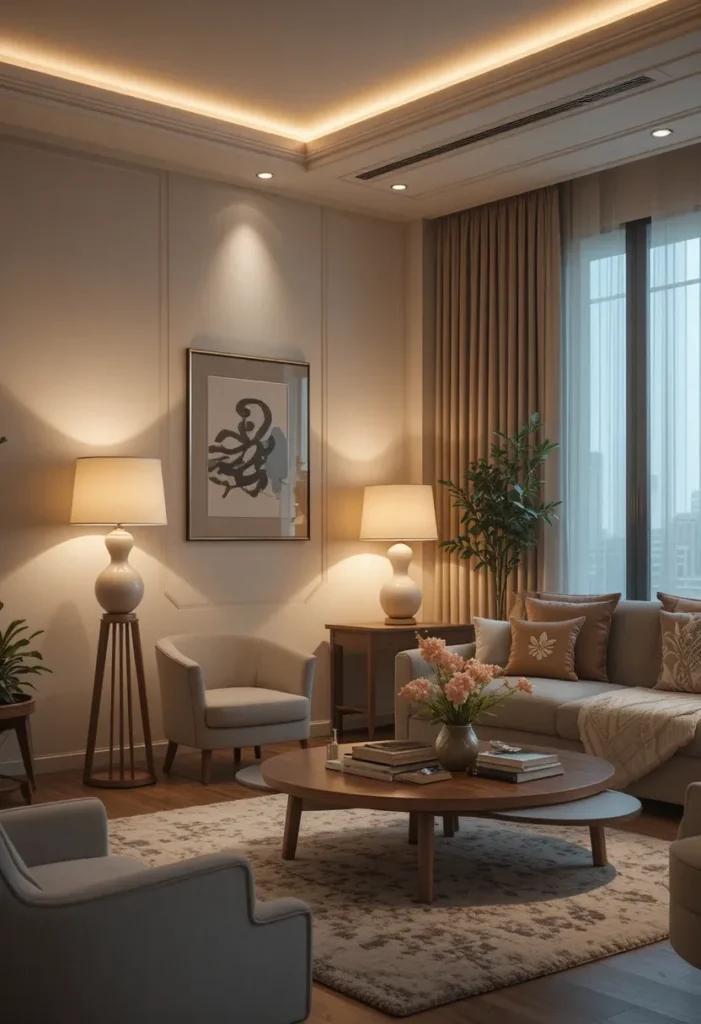
What it is:
Combining ambient, task, and accent lighting throughout the room.
Why it works:
Layered lighting ensures the room is functional at all times of day and creates warmth without harsh glare.
Practical tip:
Include floor lamps, table lamps, and overhead lights. Consider dimmers to adjust mood. Avoid relying solely on a single ceiling fixture, which can make the room feel flat.
4. Anchor the space with a rug
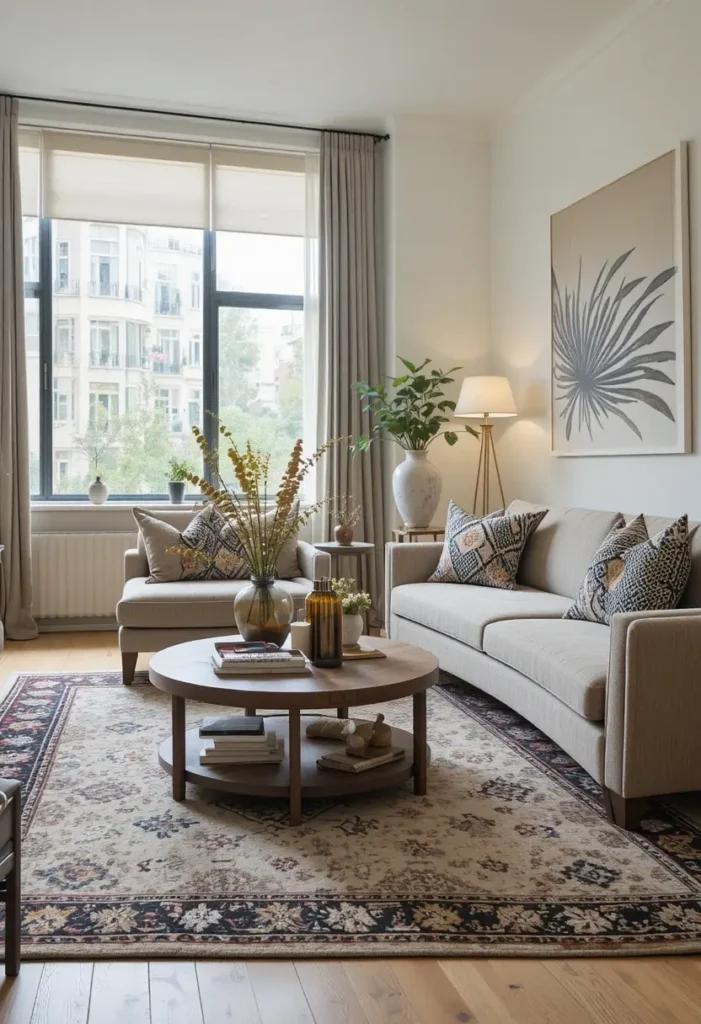
What it is:
Placing a rug that ties together your seating and décor.
Why it works:
Rugs visually define areas and add warmth and texture. They also prevent the room from feeling empty or disjointed.
Practical tip:
Ensure the rug is large enough for at least the front legs of all major seating pieces to sit on it. Avoid tiny rugs that make furniture seem disconnected.
Also Read This Blog: Pink and Black Bedroom Ideas: 16 Stylish Ways to Create a Bold Yet Cozy Space
5. Mix textures for depth
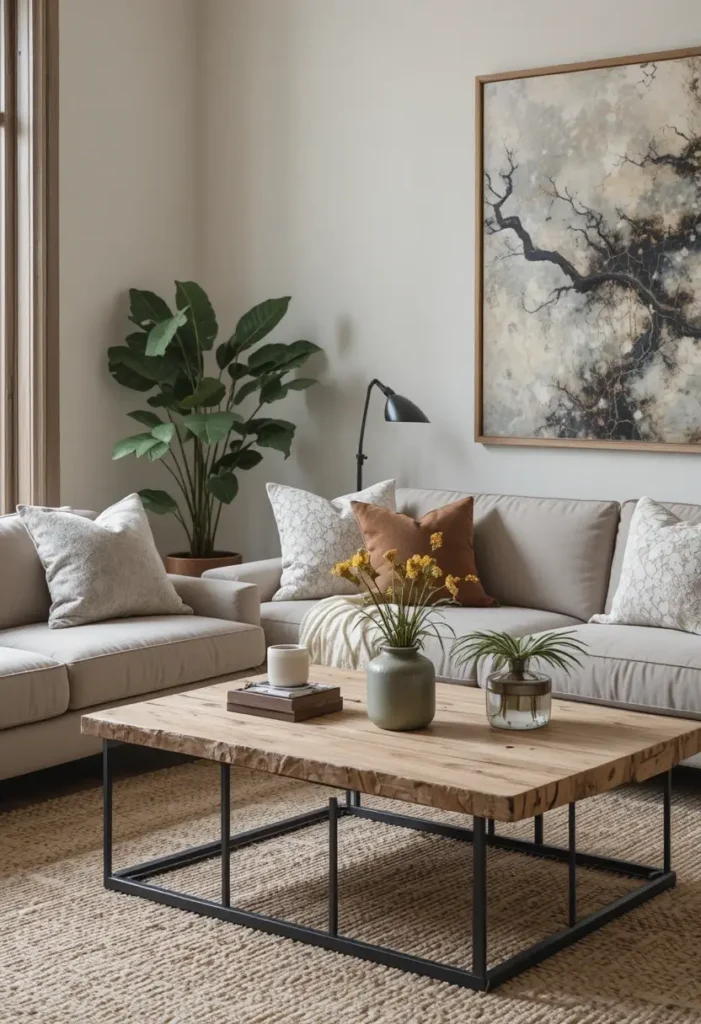
What it is:
Combining different materials like wood, metal, glass, and fabric.
Why it works:
Texture adds dimension and interest to a living room without introducing clutter. A room with only one material can feel flat.
Practical tip:
Add soft throws, velvet cushions, wooden coffee tables, and metal accents. Avoid overloading the space with too many patterns at once.
6. Balance scale and proportion
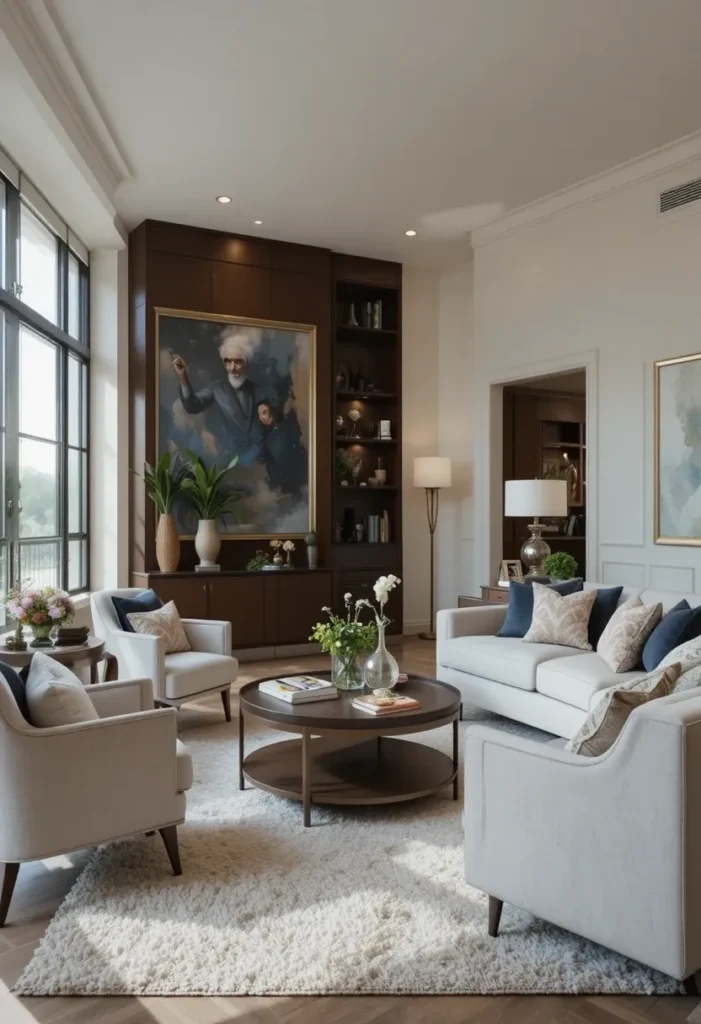
What it is:
Ensuring furniture and décor are proportionate to the room size.
Why it works:
Oversized furniture can overwhelm a small room, while tiny pieces feel lost in a large space. Balanced proportions create a cohesive look.
Practical tip:
Measure your room and consider layout before purchasing. Keep larger items anchored and fill in with smaller accessories. Avoid buying purely based on style without considering size.
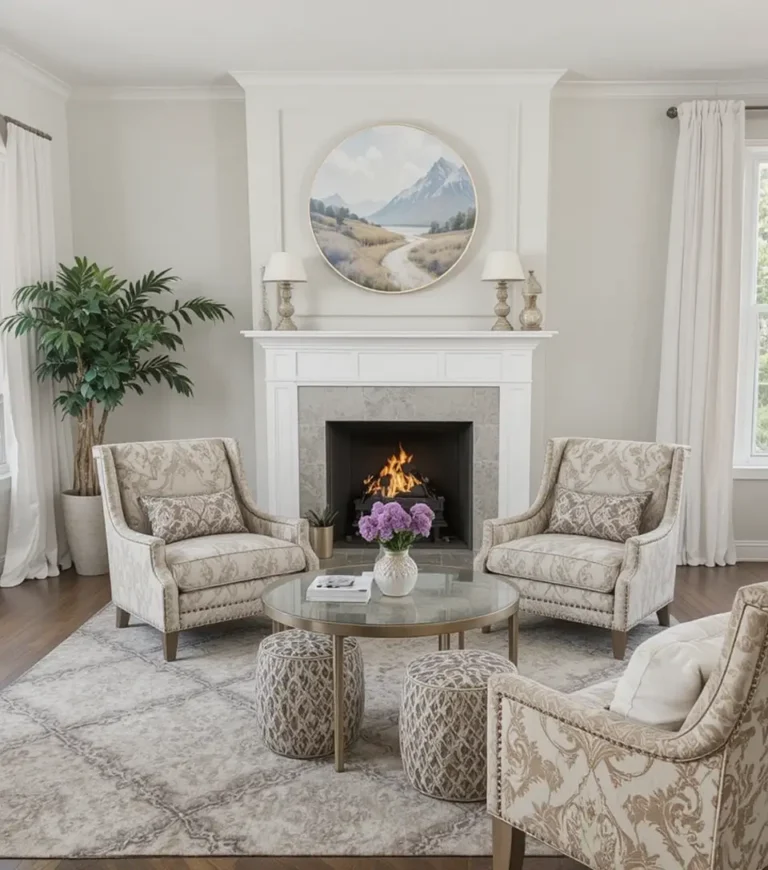
7. Create a focal point
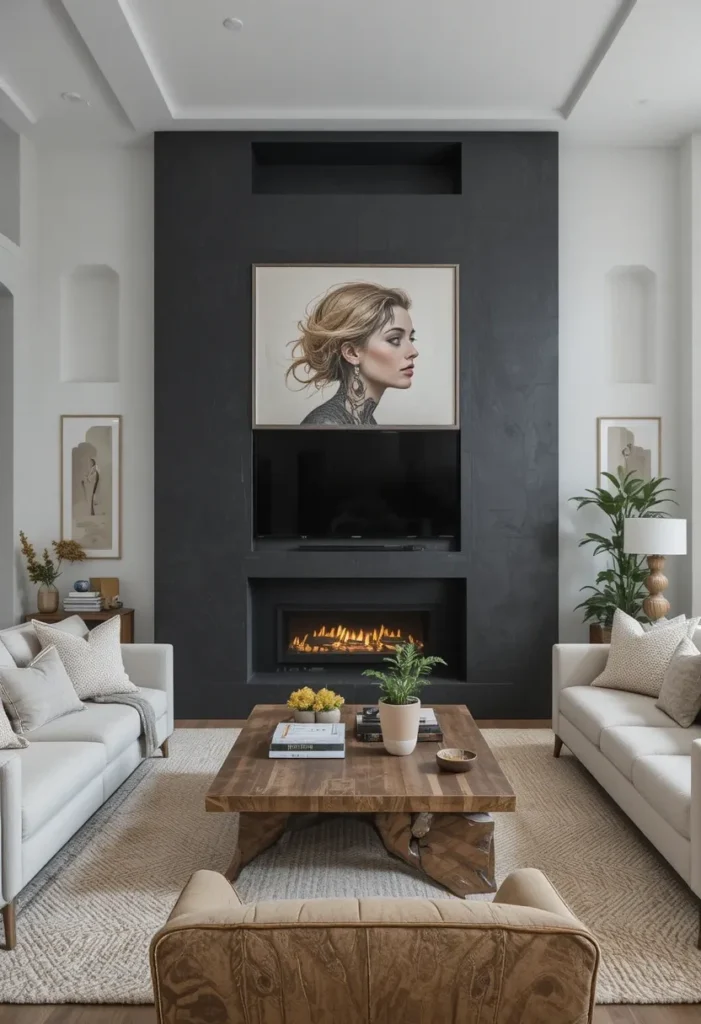
What it is:
Designating a main area that draws the eye, like a fireplace, TV wall, or statement artwork.
Why it works:
A focal point helps guide the room’s design and prevents the space from feeling scattered.
Practical tip:
Use furniture and décor to naturally lead the eye toward the focal point. Avoid cluttering other walls with competing attention-grabbers.
8. Incorporate multifunctional furniture
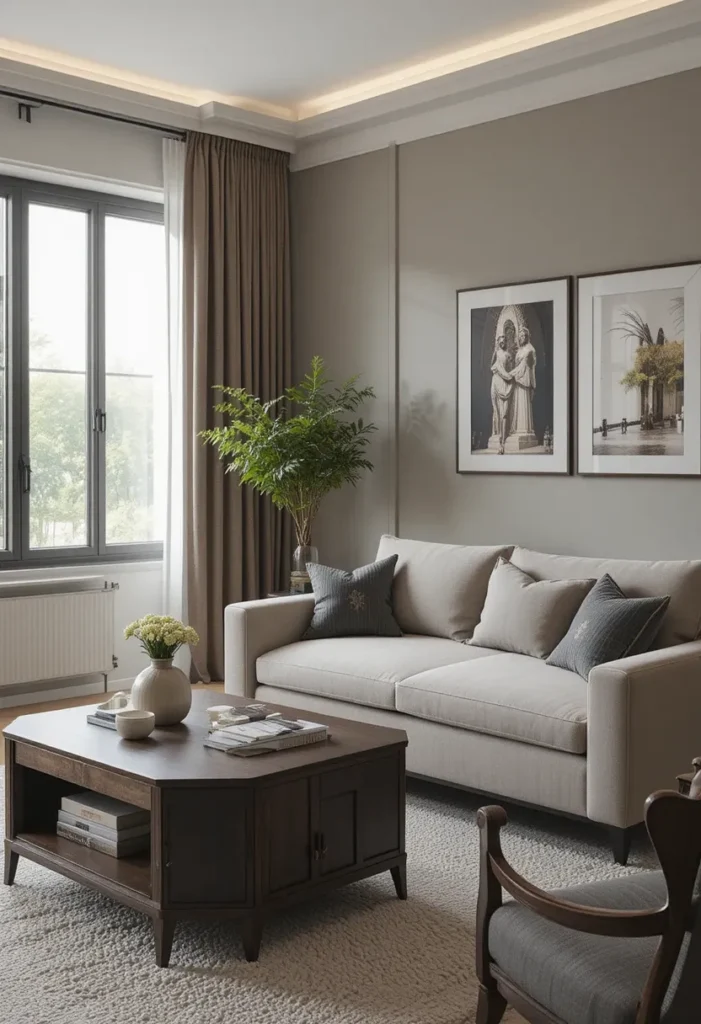
What it is:
Furniture that serves more than one purpose, such as storage ottomans or sleeper sofas.
Why it works:
This maximizes space and keeps the room functional, especially in smaller living rooms.
Practical tip:
Choose pieces that blend with your style while providing extra storage or seating. Avoid items that look good but serve no practical function.
Also Read This Blog: 13 Practical Living Room TV Wall Ideas to Maximize Style & Comfort
9. Keep traffic flow in mind
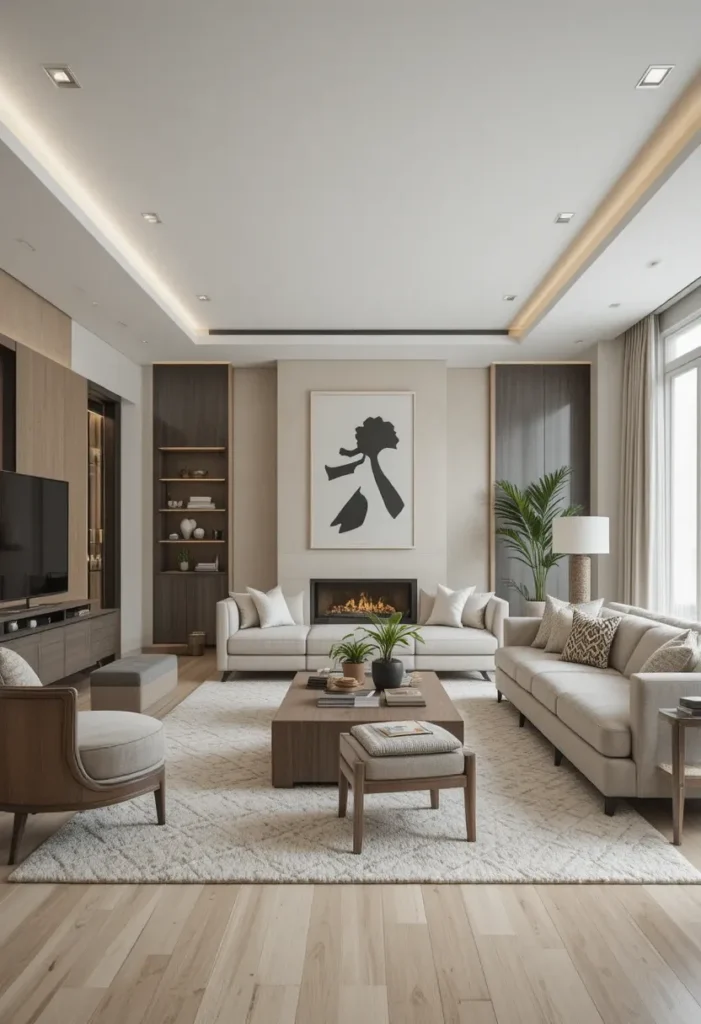
What it is:
Arranging furniture to allow easy movement through the room.
Why it works:
Poor traffic flow makes a room feel cramped and uncomfortable, no matter how stylish it is.
Practical tip:
Leave at least 30–36 inches for main walking paths. Avoid blocking doorways or windows with large furniture.
10. Integrate greenery
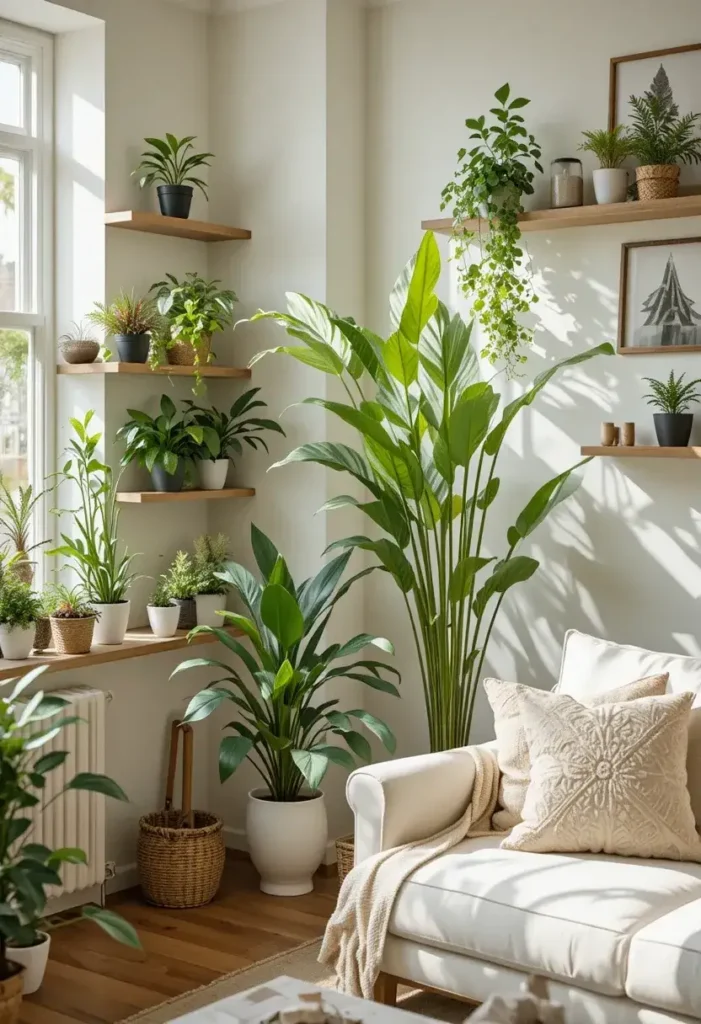
What it is:
Adding plants to your living room design.
Why it works:
Plants add life, improve air quality, and soften harsh lines of furniture or electronics.
Practical tip:
Use a mix of small potted plants and taller floor plants. Avoid plants that drop leaves or require high maintenance if you want a low-effort setup.
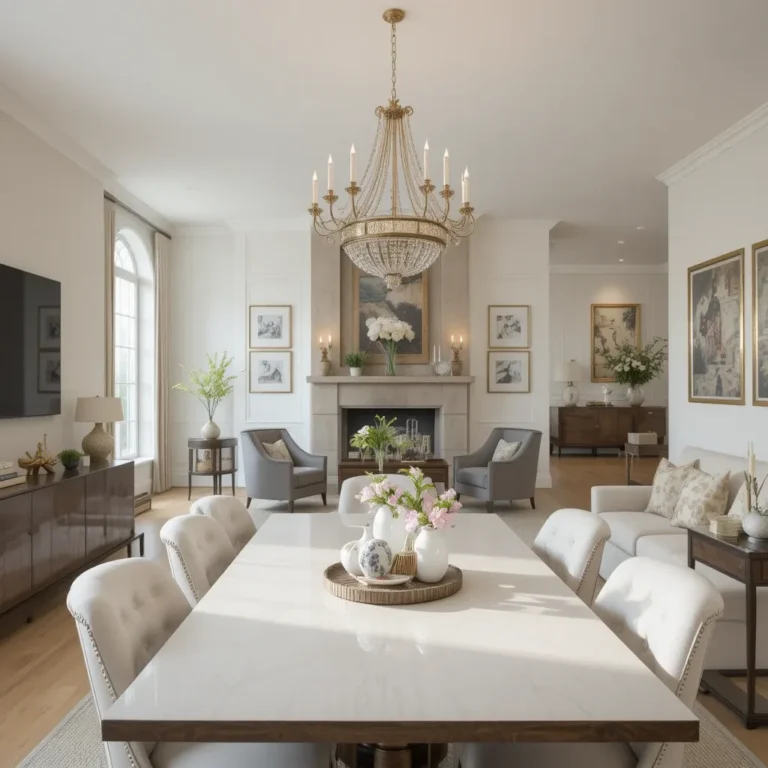
11. Use statement lighting fixtures
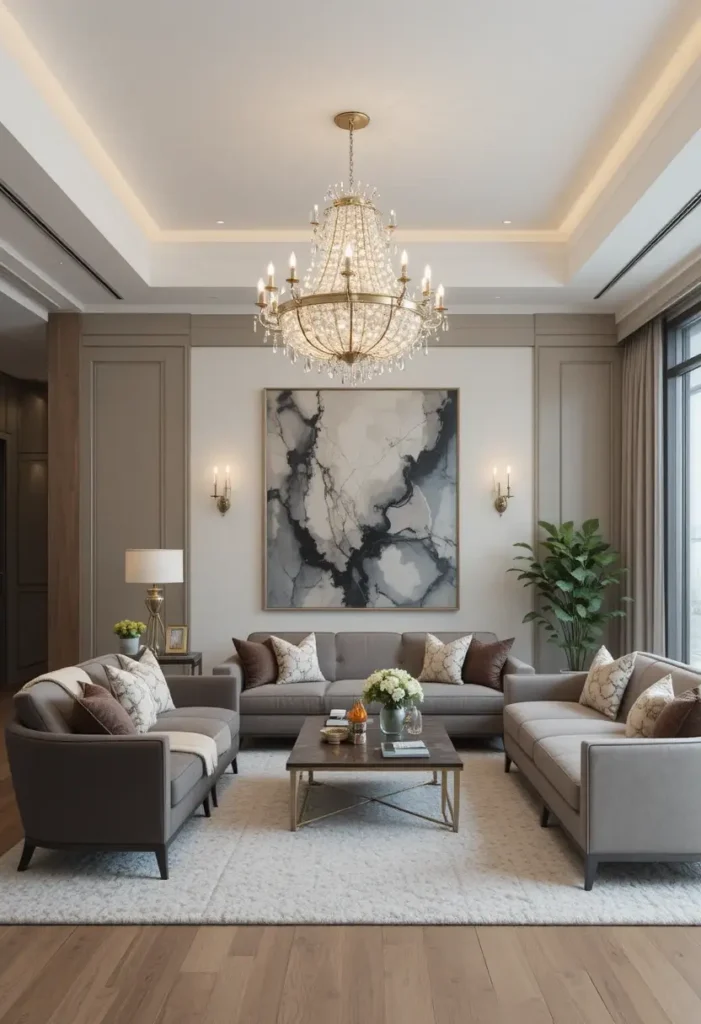
What it is:
Incorporating a chandelier, pendant, or unique ceiling fixture as a design element.
Why it works:
Statement lighting adds visual interest and can serve as both functional and decorative elements.
Practical tip:
Scale the fixture appropriately to the room size. Avoid overpowering a small space with an excessively large piece.
12. Layer wall décor
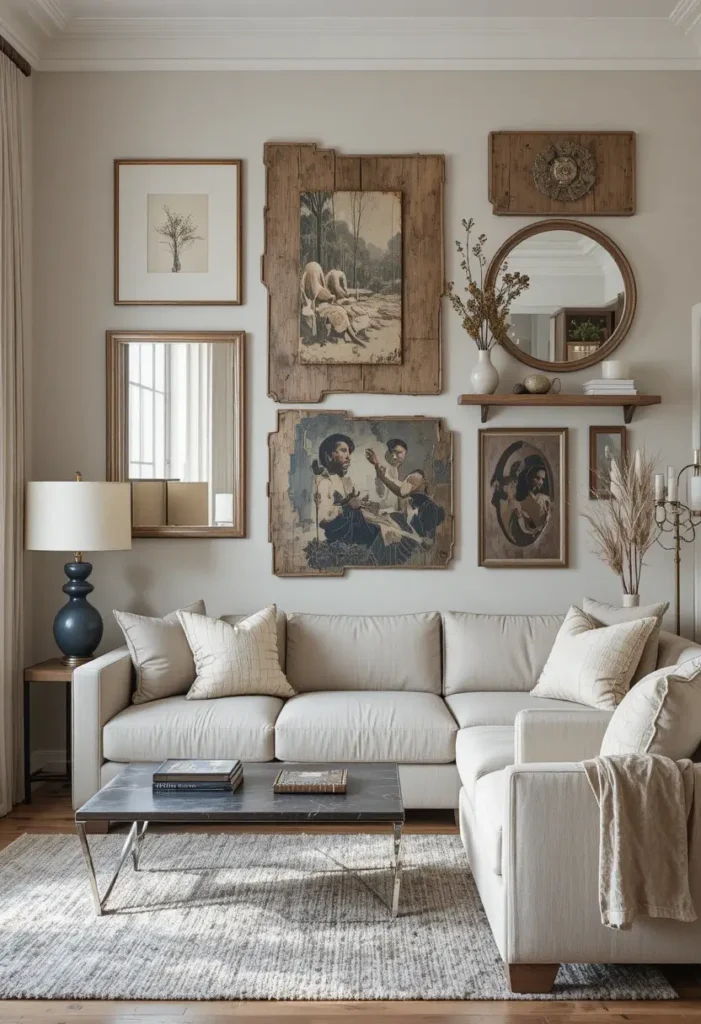
What it is:
Using artwork, mirrors, shelves, or decorative panels to enhance walls.
Why it works:
Layered décor prevents walls from looking empty and gives the room personality without clutter.
Practical tip:
Mix sizes and shapes, but leave enough negative space to avoid a crowded look. Avoid hanging everything at the same height or too close together.
Also Read This Blog: 13 Practical Apartment Living Room Ideas to Maximize Comfort & Style
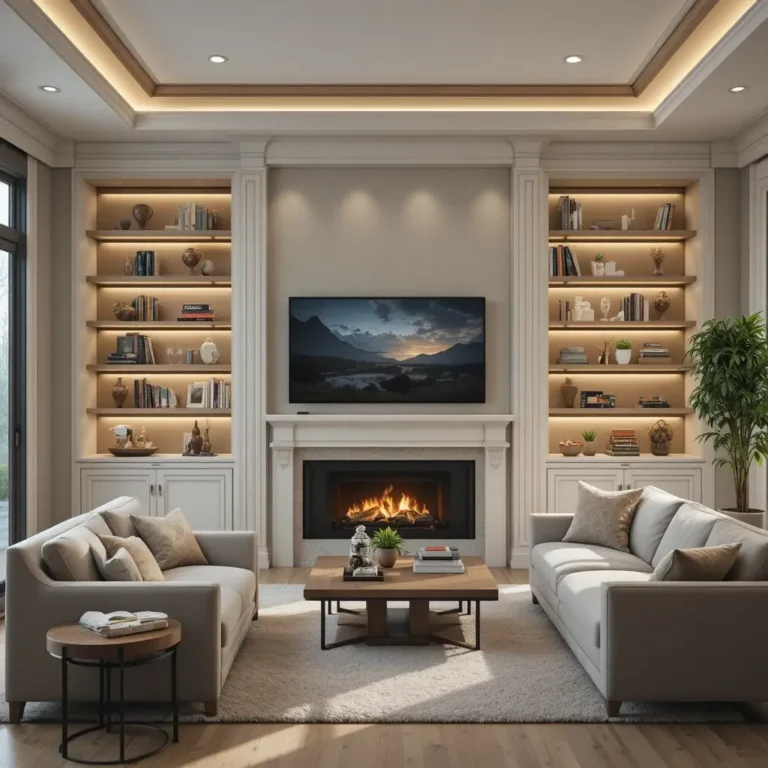
13. Maintain a mix of open and closed storage
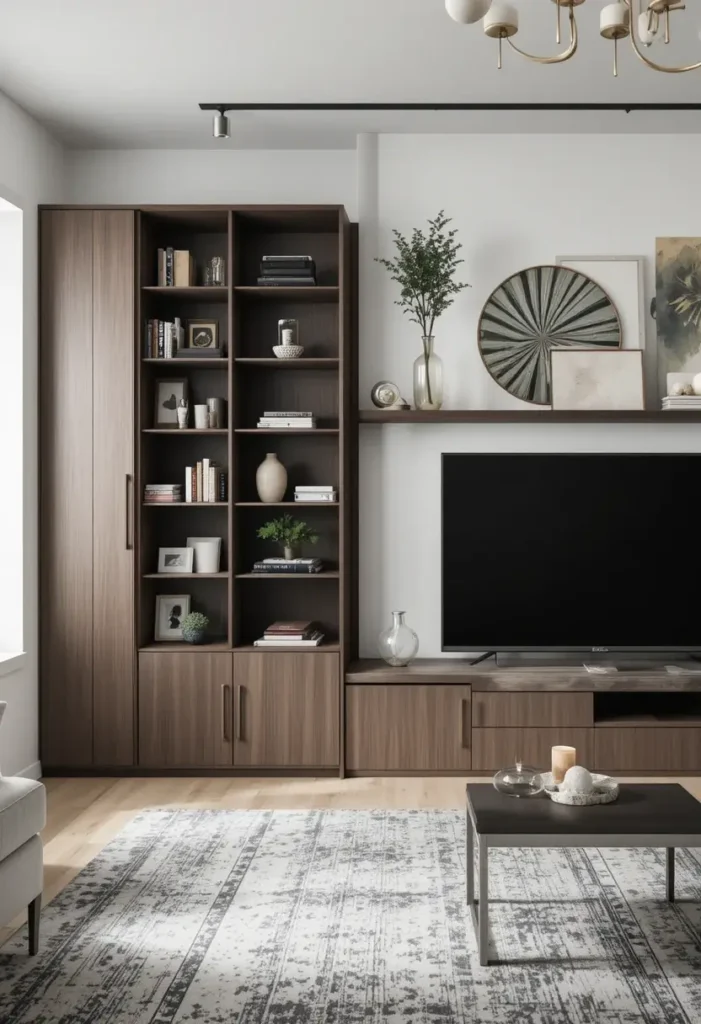
What it is:
Balancing cabinets, shelves, and baskets to store items while displaying décor.
Why it works:
Open storage keeps favorite items visible, while closed storage hides clutter for a clean look.
Practical tip:
Rotate displayed items seasonally to keep the space fresh. Avoid leaving shelves overcrowded or cabinets overstuffed.
14. Edit and refresh regularly
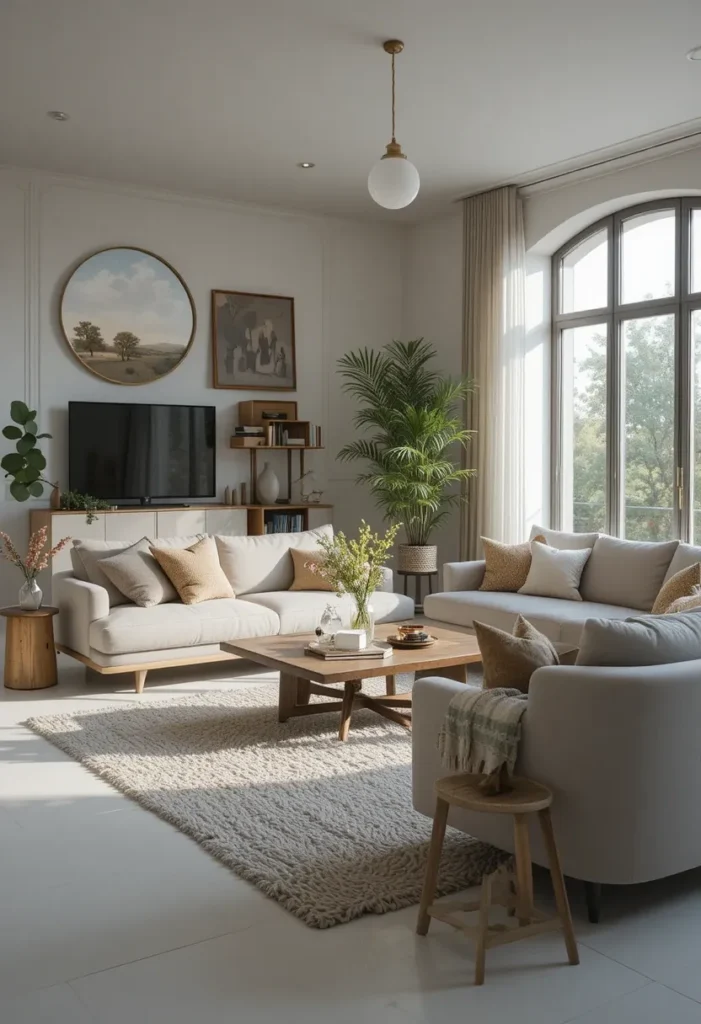
What it is:
Reassessing furniture, décor, and layout periodically.
Why it works:
Living rooms accumulate unnecessary items over time, making spaces feel cramped or stale.
Practical tip:
Every few months, remove one or two items and see how the room feels. Avoid constantly adding new pieces without removing old ones.
Conclusion
A well-designed living room doesn’t come from following every trend or buying everything new. It’s about creating a space that feels comfortable, balanced, and functional for your life. Thoughtful furniture placement, cohesive color palettes, layered textures, and practical décor make a room inviting and enjoyable to live in. When the space works for everyday life, you’ve successfully designed a living room that’s both stylish and livable.