14 Green Kitchen Island Ideas to Anchor Your Space Beautifully
A kitchen island is more than just extra counter space—it’s the heart of the kitchen. When done right, it anchors the entire room visually and functionally. Green kitchen island ideas have become increasingly popular because green feels timeless, calming, and deeply connected to nature. Whether your kitchen is modern, rustic, or classic, the right shade of green can instantly elevate the space while solving common design challenges like lack of warmth, contrast, or personality.
Below, you’ll find practical and stylish ways to use green kitchen islands to create balance, beauty, and functionality in your kitchen.
Key Takeaways
Green kitchen island ideas offer flexibility across design styles, from modern to farmhouse. Lighter greens create calm, airy kitchens, while deeper shades add drama and sophistication. Pairing green with materials like marble, wood, brass, and tile helps balance color and texture. With thoughtful choices, a green island can brighten the room, add warmth, and become a timeless focal point.
Brighten a Dark Green Kitchen Island With Marble
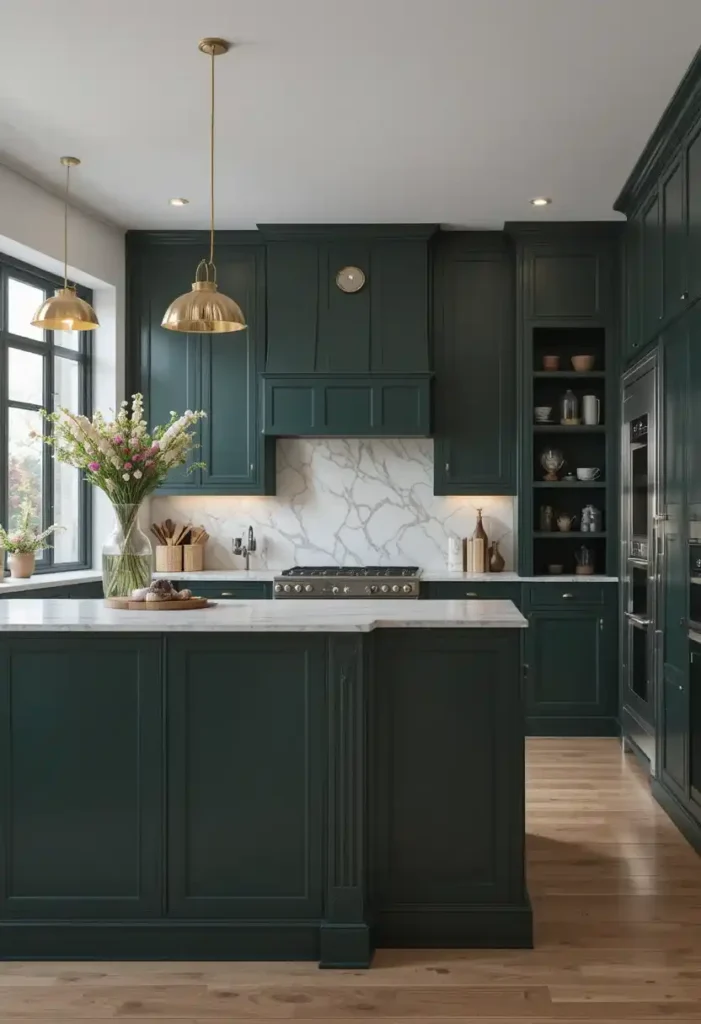
Dark green islands can look rich and dramatic, but they sometimes risk making the kitchen feel heavy. Marble countertops are an ideal solution. Their light veining reflects natural and artificial light, instantly brightening the space. White or lightly veined marble creates contrast while maintaining elegance.
This combination works especially well in smaller kitchens where darker cabinetry might otherwise shrink the space visually. Marble also adds durability and a high-end feel, making your island both practical and beautiful.
Pair Sage Green Islands With Warm Wood Accents
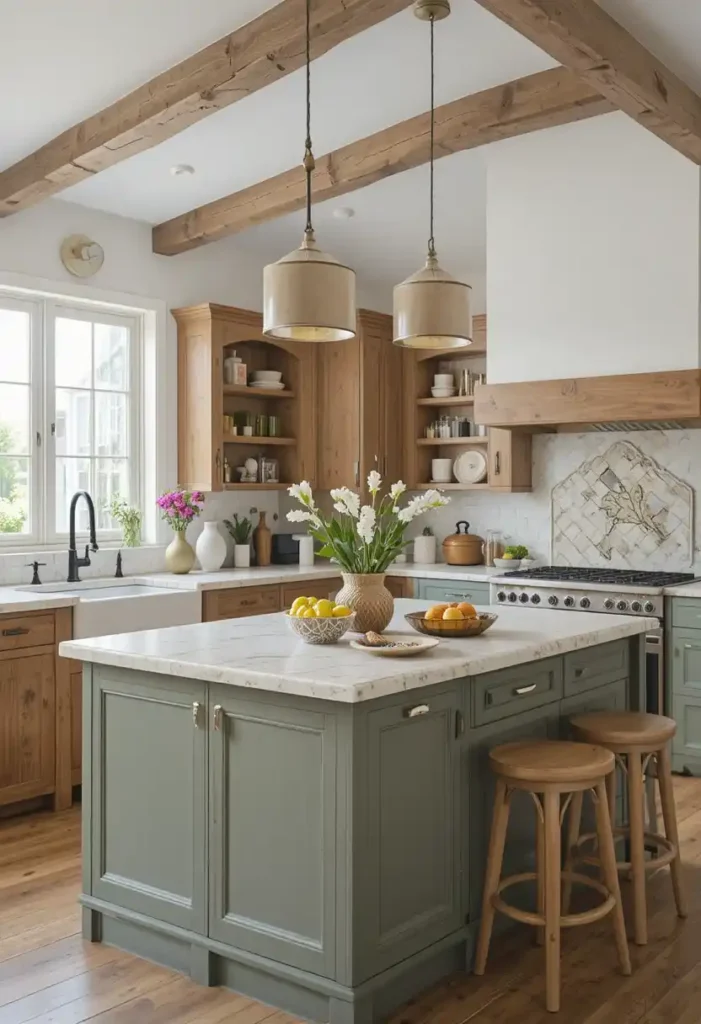
Sage green is one of the most versatile shades in green kitchen ideas. It feels soft, soothing, and approachable. Pairing it with warm wood accents—such as oak stools, butcher block details, or open shelving—adds natural warmth.
This pairing solves a common problem: kitchens that feel too sterile or cold. The wood introduces organic texture, while sage green keeps the space light and welcoming, perfect for family-friendly kitchens.
Enhancing Warmth With Wood
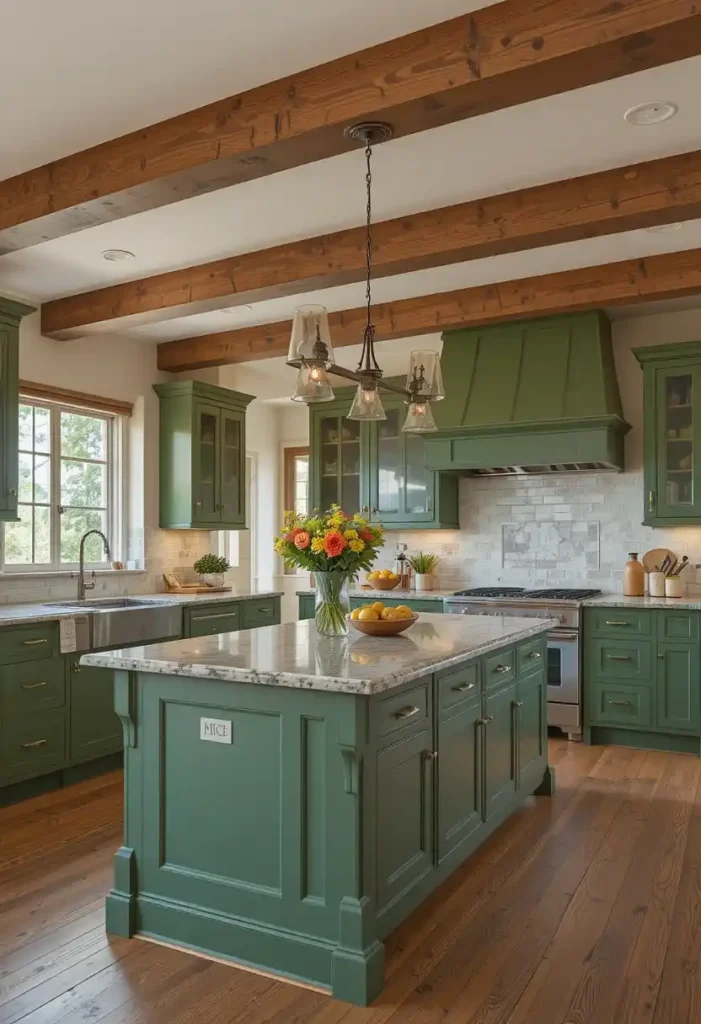
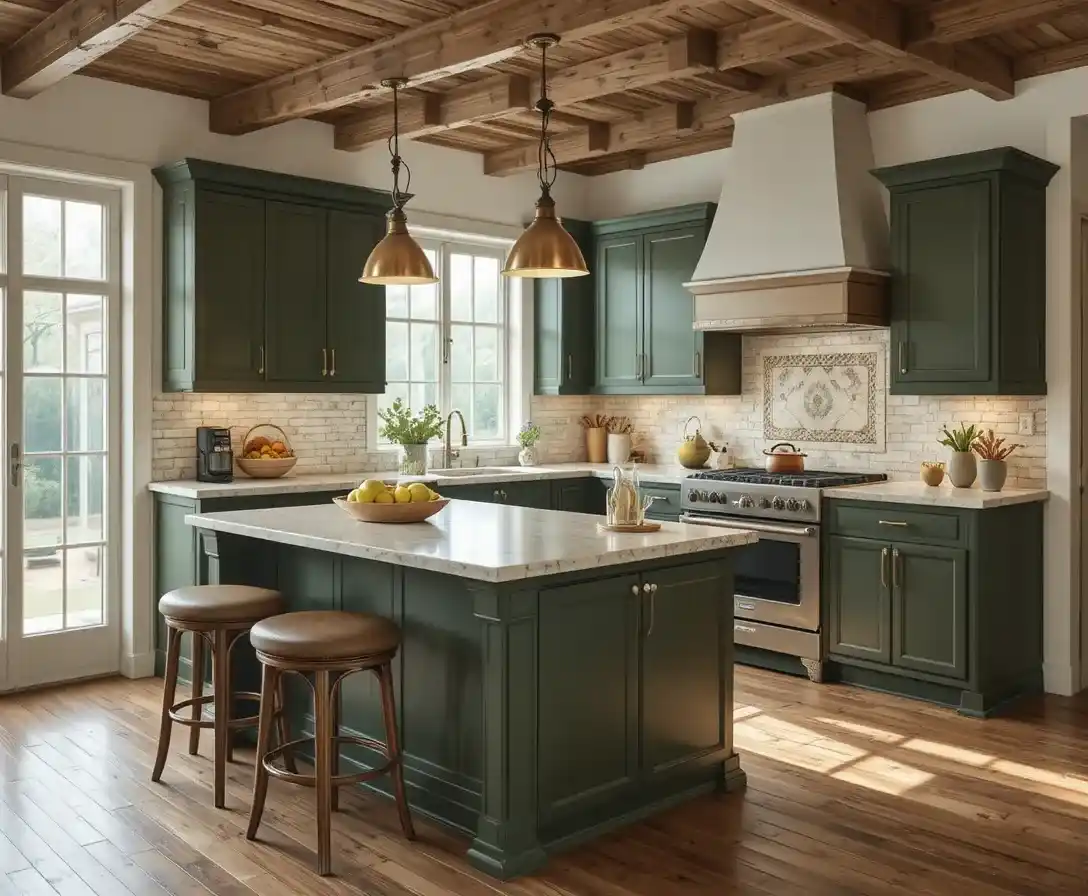
Wood plays a crucial role in preventing green islands from feeling flat or overly modern. Even darker greens benefit from wooden elements like ceiling beams, flooring, or trim. Wood softens bold colors and adds visual comfort.
For homeowners worried that green might feel too bold, wood balances the color and makes it feel grounded and timeless rather than trendy.
Balancing Softness and Texture
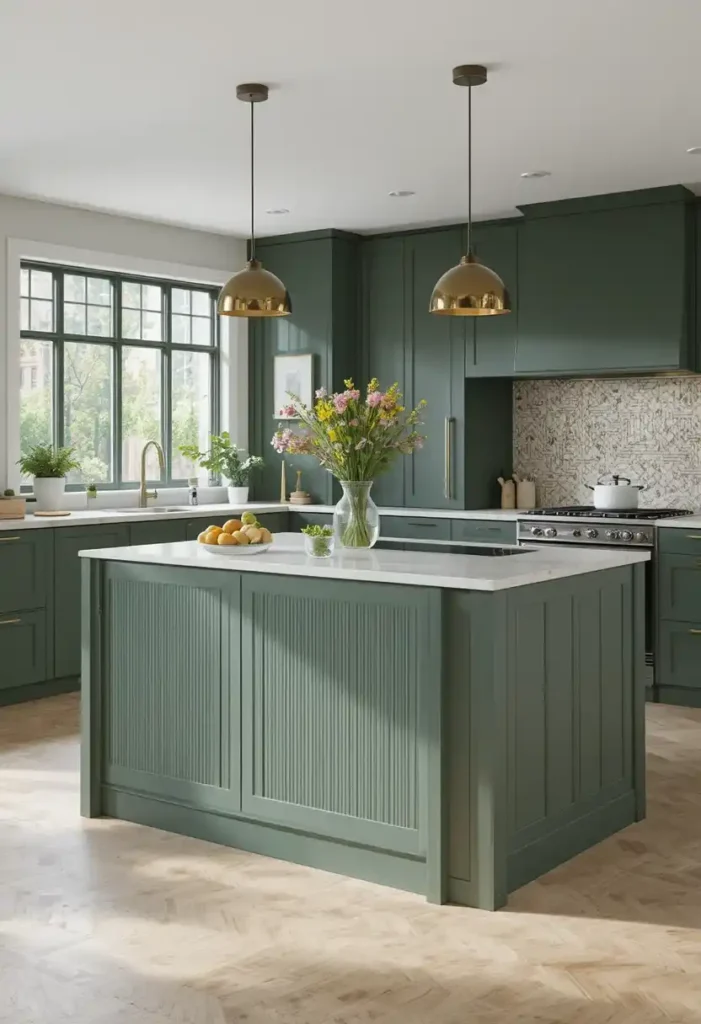
One challenge with painted kitchen islands is avoiding a flat appearance. Texture is the solution. Matte finishes, subtle wood grain, and stone surfaces add depth. Even simple paneling on the island can create dimension.
Green kitchen island ideas shine when softness and texture work together, creating a space that feels layered rather than one-dimensional.
Create Contrast With White Countertops and Green Islands
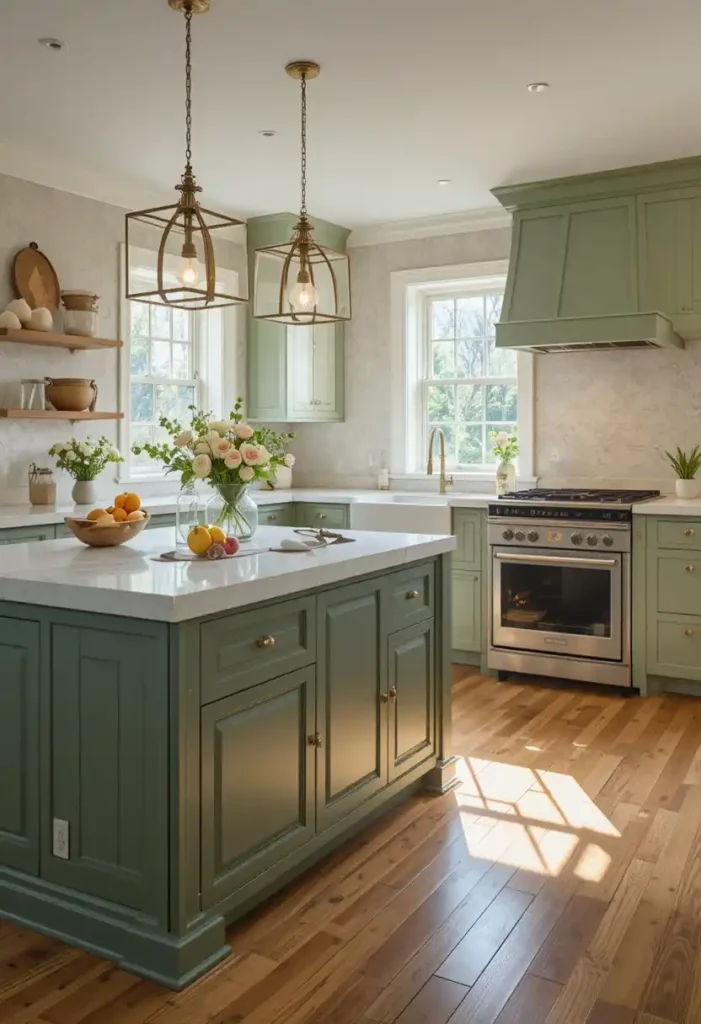
White countertops remain a classic choice for a reason. When paired with green islands, they provide crisp contrast that keeps the kitchen feeling fresh and open. This combination is especially helpful in kitchens with limited natural light.
White surfaces reflect light, while green adds personality. Together, they create balance without overwhelming the room.
Embrace Olive Tones for a Sophisticated Centerpiece
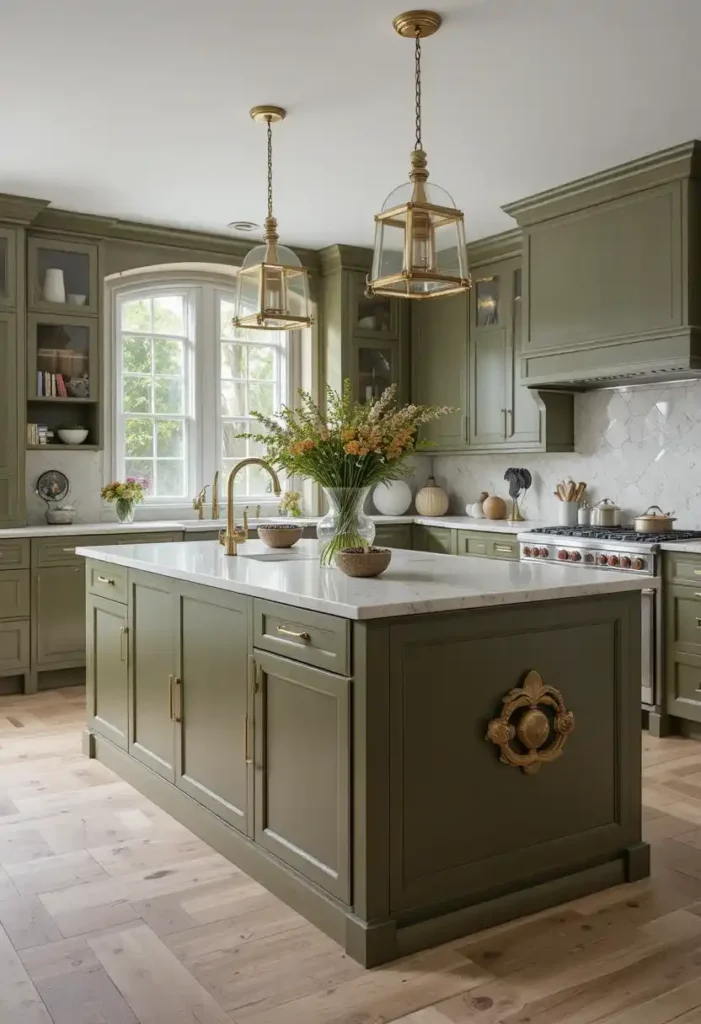
Olive green is understated yet elegant, making it an excellent choice for a kitchen island that feels refined without being overpowering. This earthy tone adds depth and richness while still blending seamlessly with a wide range of materials and finishes. It creates a grounded focal point that feels intentional rather than trendy.
Olive shades pair beautifully with brass hardware, neutral walls, and natural stone surfaces. If you want a kitchen that feels polished, welcoming, and timeless, this color offers sophistication without flashiness or excess visual noise.
Also Read This Blog: Spanish Rice in Rice Cooker – Easy, Flavorful & Foolproof Recipe
Versatility Across Design Styles
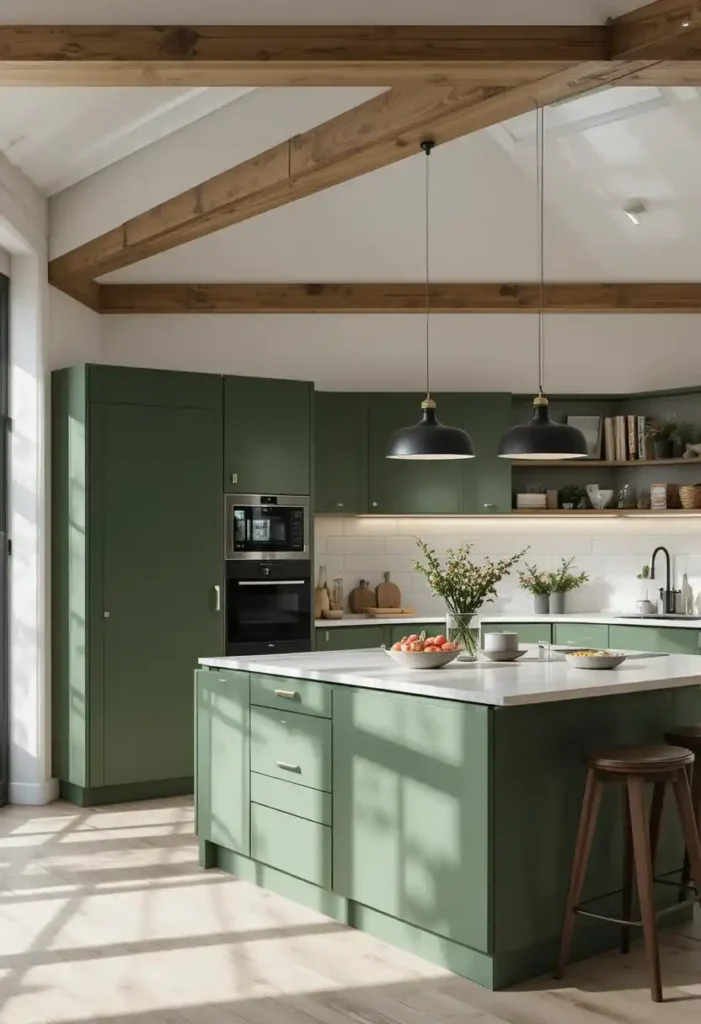
One of the biggest strengths of green-toned islands is their ability to adapt to different design aesthetics. Softer shades work well in coastal or Scandinavian kitchens, while deeper tones feel right at home in modern, industrial, or contemporary spaces.
This flexibility allows homeowners to invest confidently, knowing the design won’t feel outdated if other elements change later. A well-chosen green island evolves easily with new décor, lighting, or finishes.
Warmth With Understated Elegance
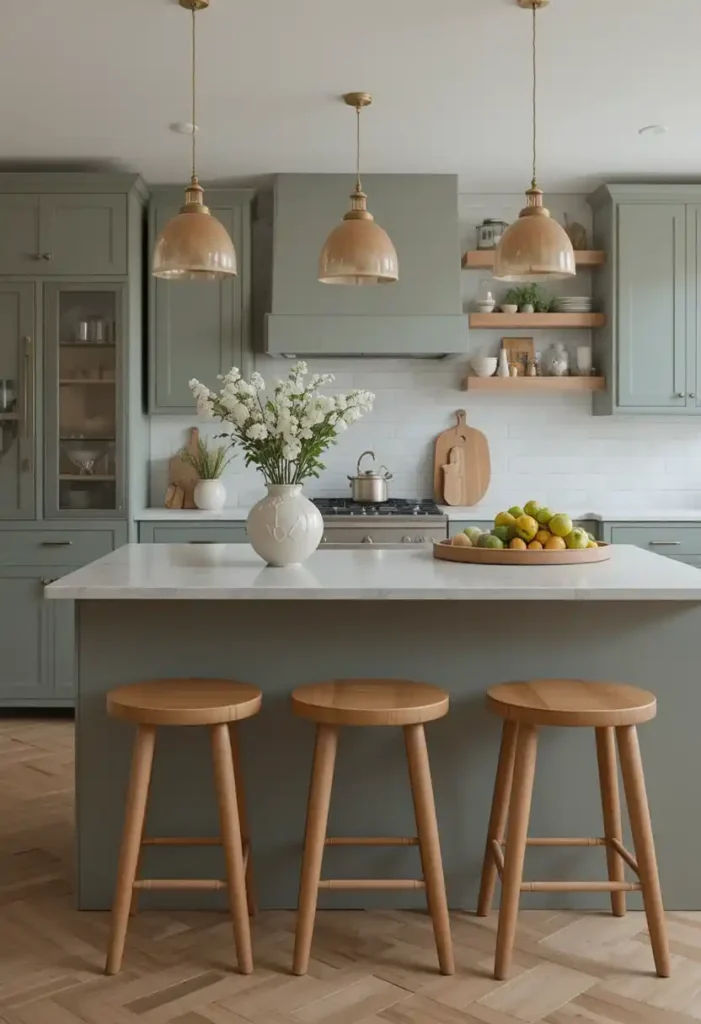
Muted green shades bring warmth into the kitchen while maintaining a calm and balanced look. They introduce color without dominating the space, making them ideal for homeowners who prefer subtle sophistication over bold statements.
These softer tones also age gracefully, resisting the quick trend cycle. Over time, they continue to feel fresh, making them a smart long-term design decision for functional kitchens.
Pairing Olive With Neutrals
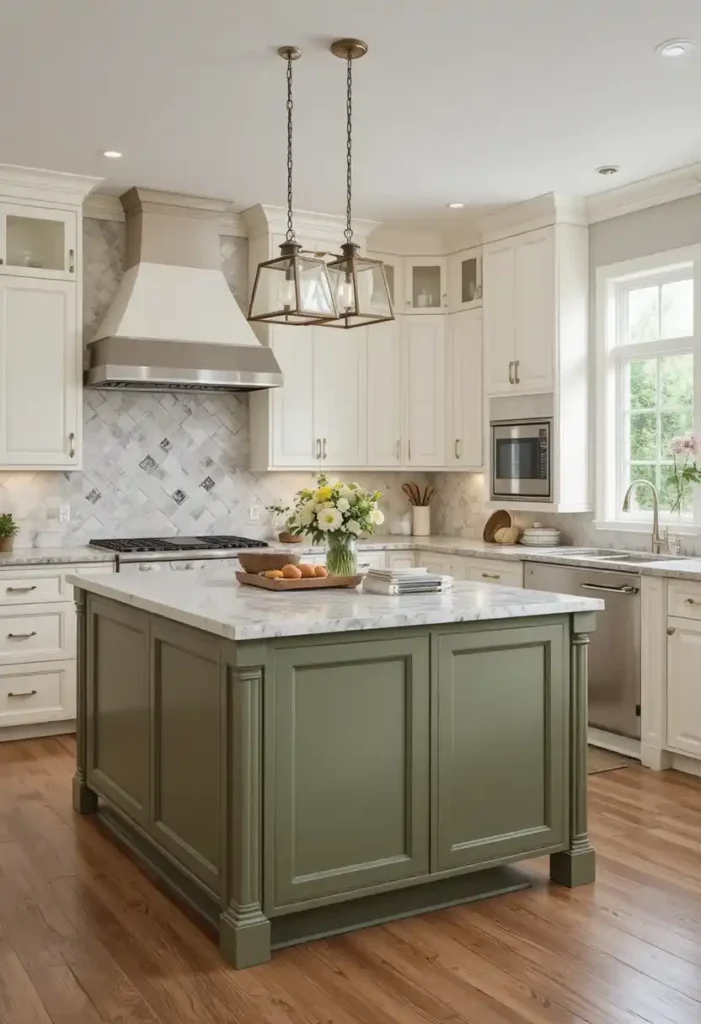
Neutral colors such as beige, cream, and soft gray allow olive tones to stand out without competing for attention. This pairing keeps the overall design cohesive while letting the island naturally become the focal point.
Using neutrals also solves the problem of visual clutter. The space feels calmer, more organized, and easier on the eyes—especially important in kitchens used daily.
Make a Statement With Deep Emerald Green
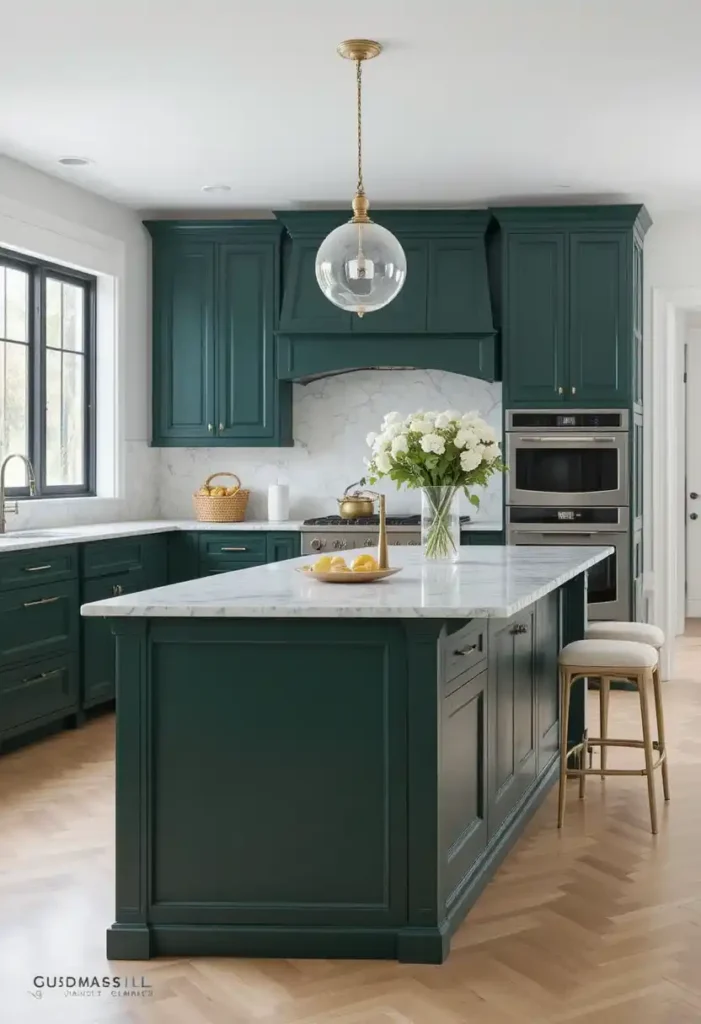
Deep emerald shades create a dramatic and luxurious presence, especially in larger kitchens with plenty of light. This jewel tone adds richness and personality, instantly elevating the overall design.
Balancing darker tones with lighter countertops or walls prevents the space from feeling heavy. The result is a bold centerpiece that feels intentional, elegant, and well-proportioned.
Add Industrial Flair With Forest Green and Metal Fixtures
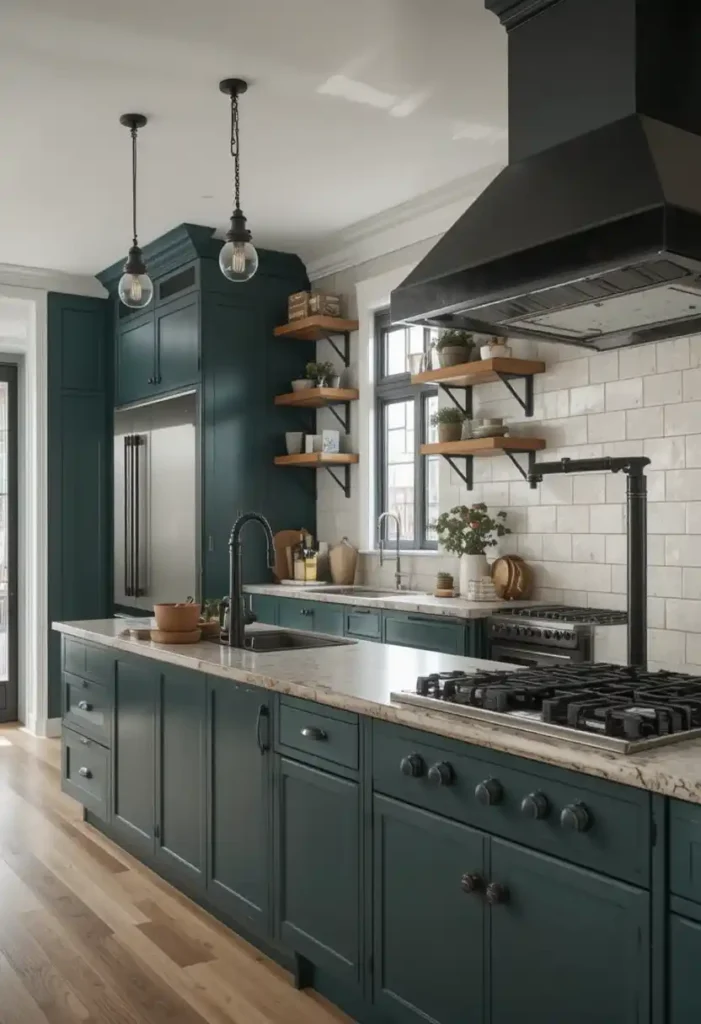
Forest green works exceptionally well in kitchens that lean industrial. When paired with metal fixtures such as black steel, brushed nickel, or iron, it creates a strong yet welcoming aesthetic.
The metal adds sharpness and structure, while the green keeps the space warm and grounded. Together, they strike a balance between rugged character and everyday comfort.
Go Two-Toned for Visual Interest
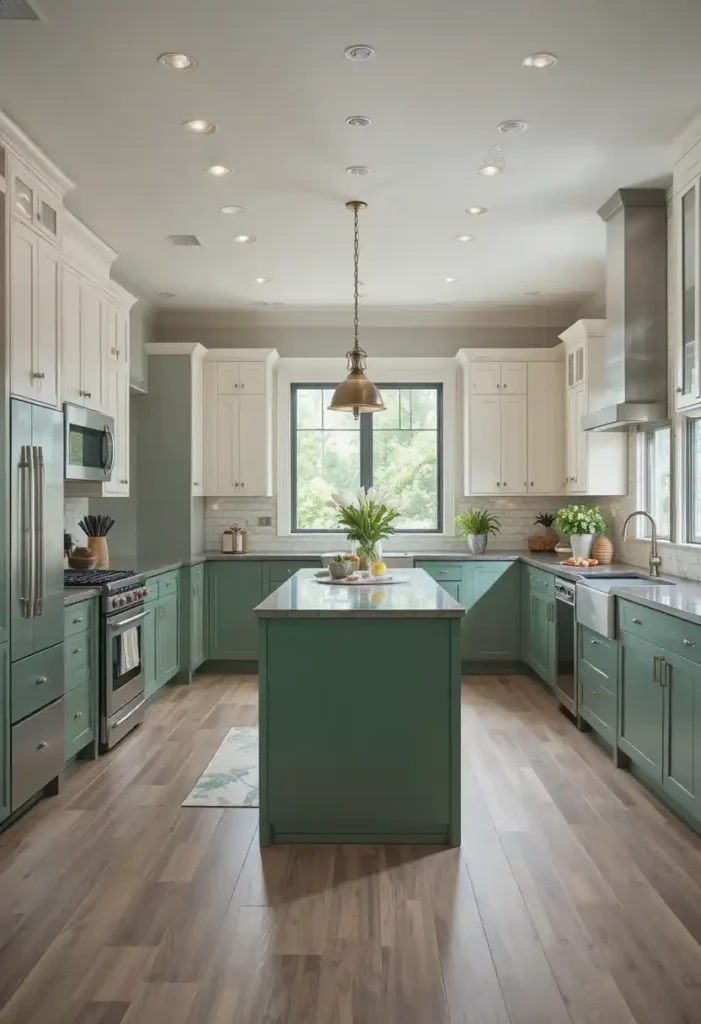
Two-toned kitchens are an effective solution for avoiding flat or monotonous designs. Pairing a colored island with neutral cabinetry adds contrast while keeping the overall look balanced.
This approach works particularly well in open-concept homes, where visual harmony matters. The island stands out naturally without overwhelming the surrounding space.
Also Read This Blog: Greek Lemon Rice Recipe – Easy, Flavorful & Authentic Mediterranean Side Dish
Contrast Upper and Lower Cabinets
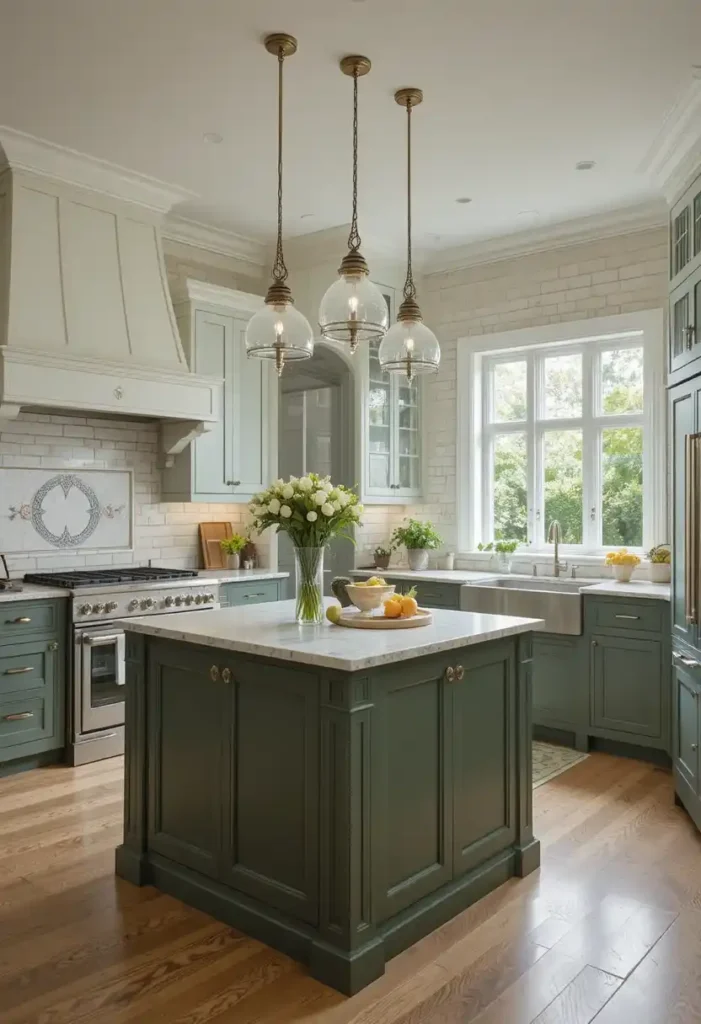
Using lighter colors on upper cabinets helps kitchens feel more spacious and open. Darker lower elements, including green islands, ground the design and add stability. This contrast creates a natural visual hierarchy.
Green kitchen island ideas fit seamlessly into this strategy by anchoring the lower half of the kitchen. The result is a balanced layout that avoids the boxed-in feeling common in smaller or poorly lit kitchens.
Mix Muted and Bold
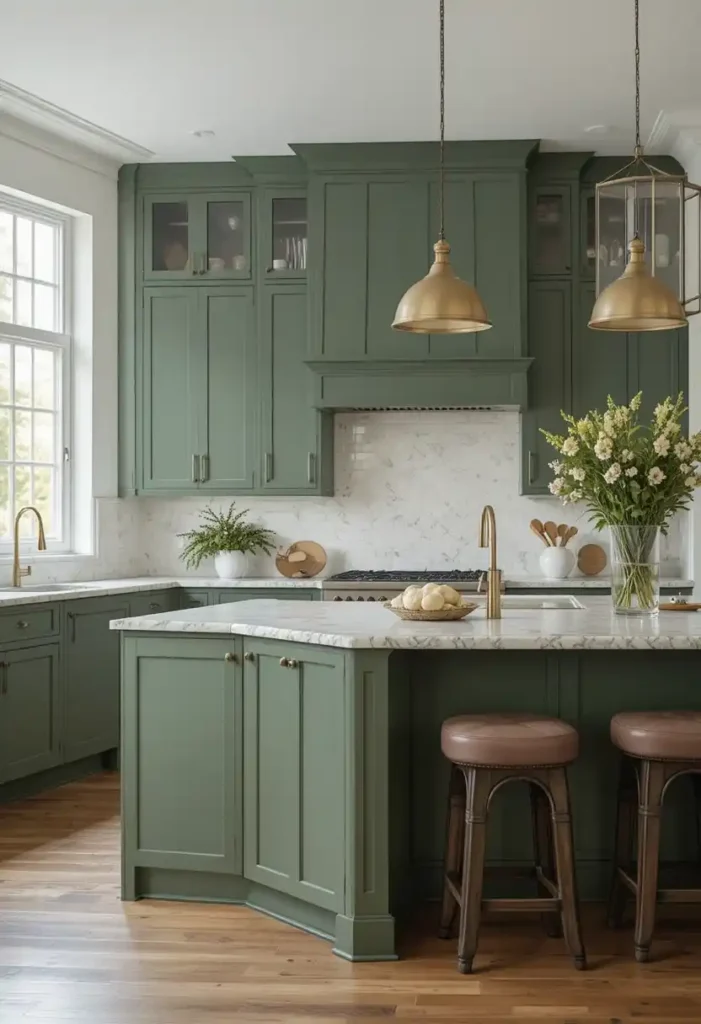
Combining muted cabinetry with a bolder green island adds depth and personality to the kitchen. This mix allows homeowners to experiment with color without committing to a fully bold space. It creates interest while maintaining control.
The success of this approach lies in restraint. By keeping surrounding elements simple, green kitchen island ideas remain the star without competing with too many colors or textures.
Conclusion
Green kitchen island ideas offer beauty, flexibility, and timeless appeal. From soft sage to deep emerald, green adapts to your space while solving common design challenges like lack of warmth or contrast. With the right materials, lighting, and finishes, a green kitchen island can anchor your kitchen beautifully—creating a space that feels both functional and unforgettable.