16 Bold 70s Living Room Ideas for a Retro Revival
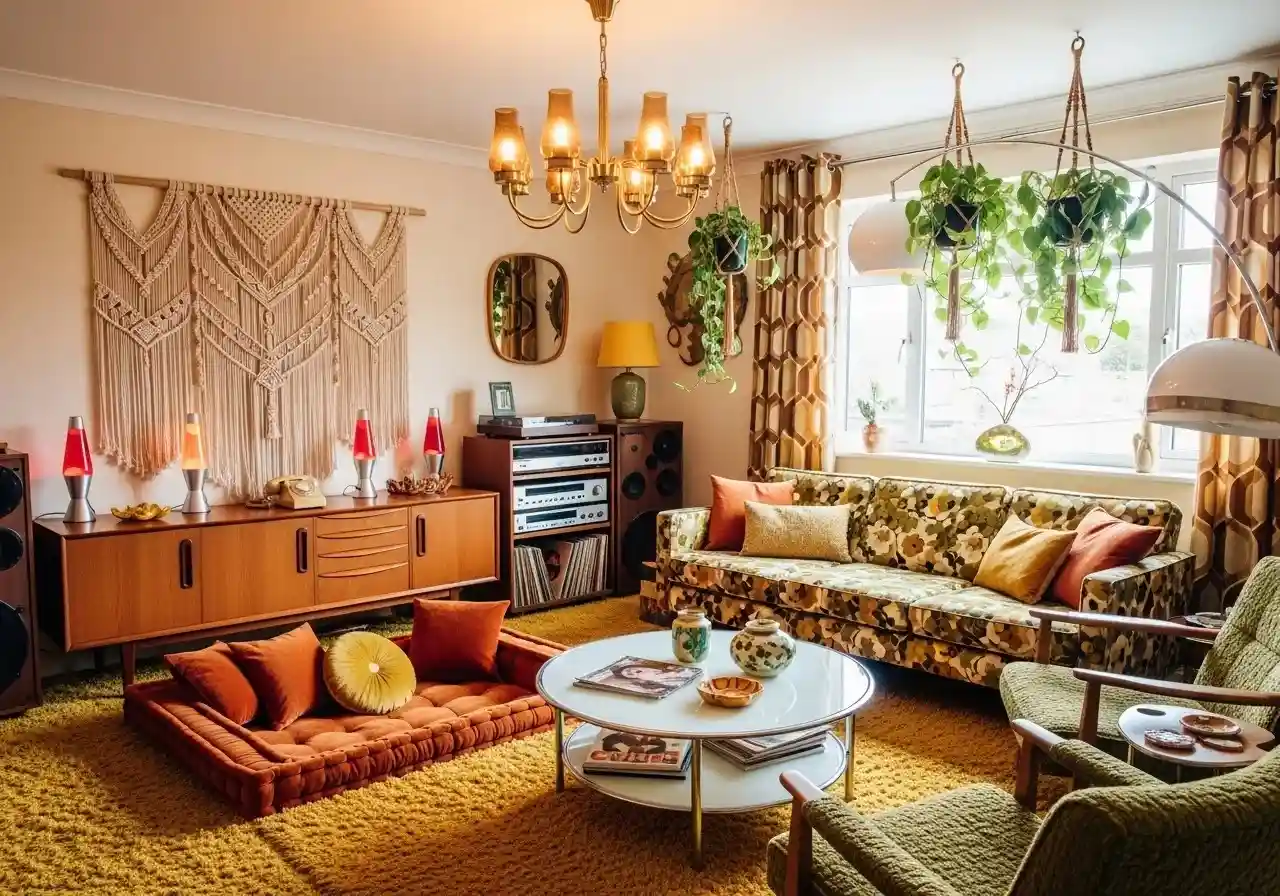
Does your living room feel a little flat, a little too safe? If you’re craving warmth, personality, and that cozy-but-cool vibe, it might be time to look back. The 1970s were fearless with color, texture, and mood — and honestly, we could use more of that energy today. These 70s living room ideas will help you create a space that feels nostalgic, expressive, and incredibly inviting — without turning your home into a time capsule.
Let’s bring back the groove, beautifully.
1. Embrace Earthy Color Palettes
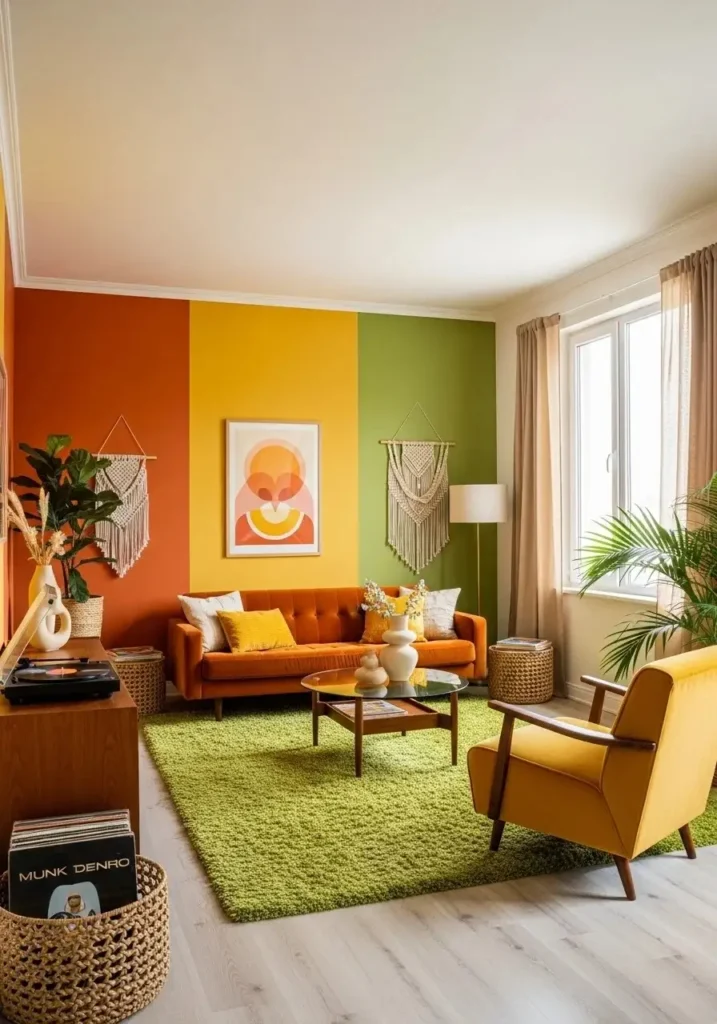
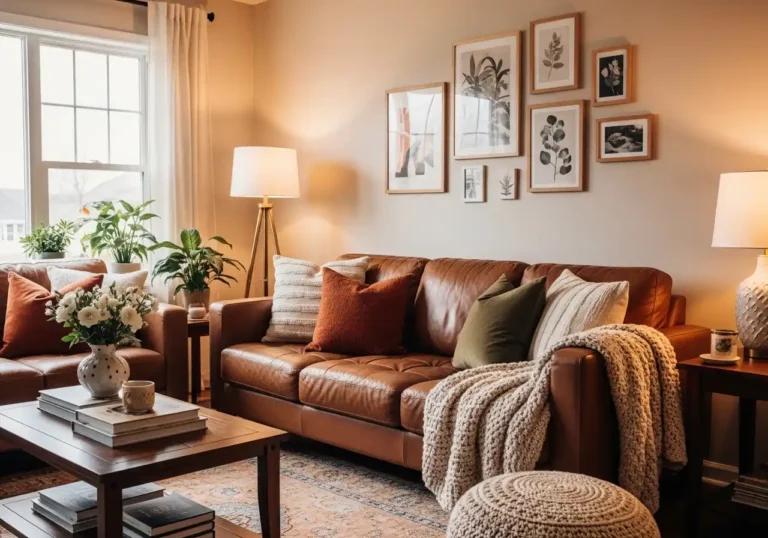
Think burnt orange, mustard yellow, avocado green, chocolate brown, and warm beige. A 70s-inspired palette instantly wraps your space in warmth.
These tones feel grounded and cozy, especially when layered together on walls, sofas, and accent chairs. They create a relaxed, lived-in mood that modern neutrals sometimes lack.
Why it works: Earthy hues mimic nature, making the room feel comforting and soulful.
Practical tip: Start small with rust or mustard throw pillows before committing to a bold wall color.
2. Add a Statement Velvet Sofa
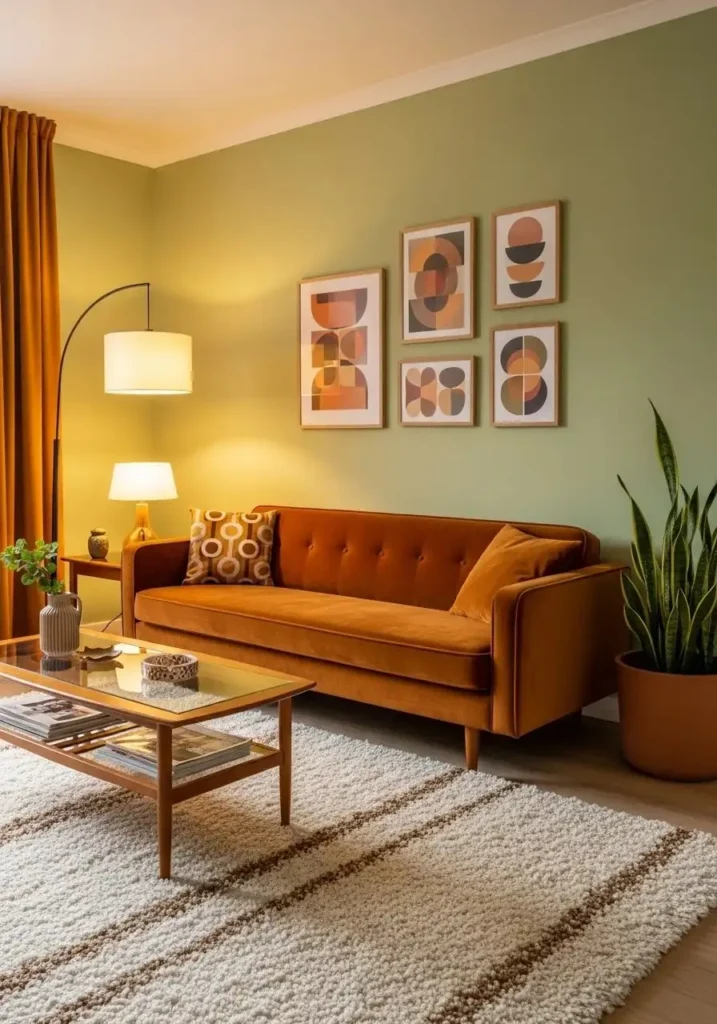
Nothing says 70s glamour like a plush velvet sofa in deep amber, olive, or caramel. The soft sheen of velvet catches light beautifully, especially in warm lighting. It adds drama while still feeling cozy enough for everyday lounging.
Why it works: Velvet instantly elevates the space while keeping that retro richness alive.
Practical tip: Choose a low-profile silhouette with rounded edges for an authentic vintage feel.
3. Play with Retro Geometric Patterns
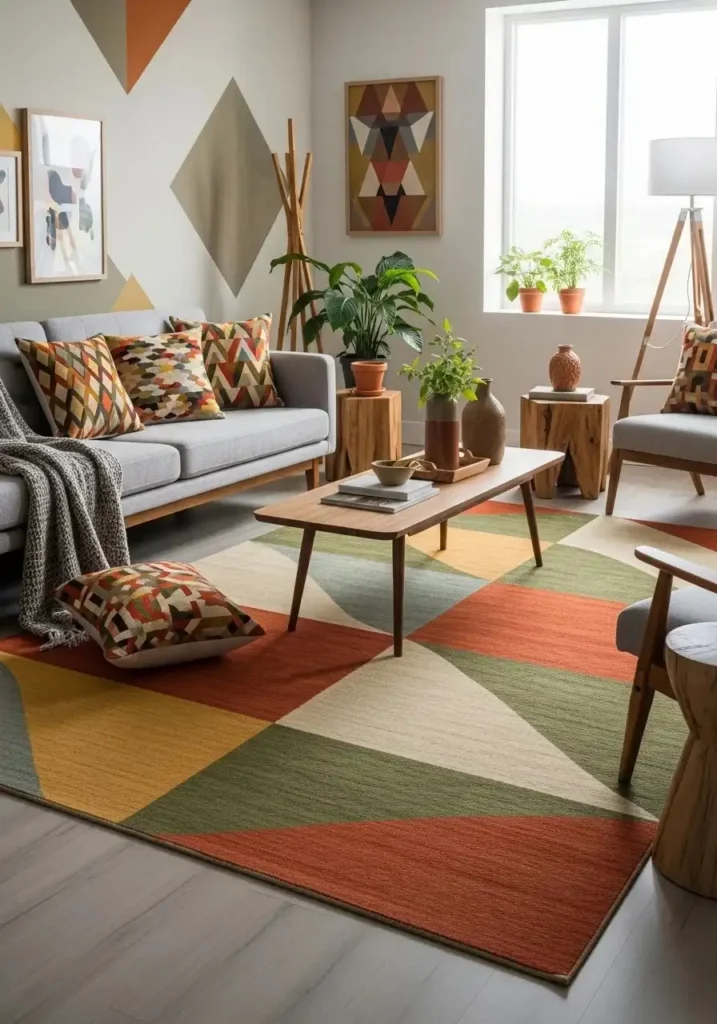
From bold area rugs to patterned wallpaper, geometric shapes were everywhere in the 70s. Look for oversized florals, curved lines, or graphic prints in earthy shades. Even a single patterned accent chair can make the room feel playful.
Why it works: Patterns bring movement and personality, preventing the space from feeling flat.
Practical tip: Balance bold prints with solid-colored furniture to avoid visual overload.
4. Incorporate Wood Paneling
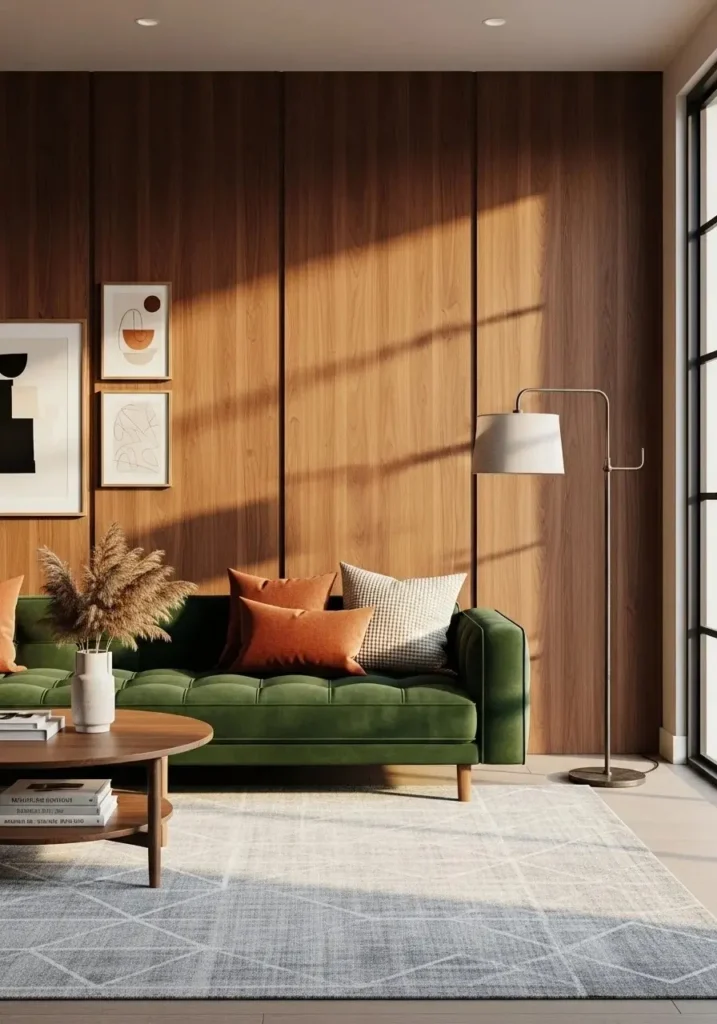
Wood-paneled walls instantly transport you back in time — especially in warm walnut or teak tones. Whether you install full paneling or add a single accent wall, it adds depth and texture to the room.
Why it works: Wood brings warmth and natural richness, grounding bold colors and patterns.
Practical tip: If real paneling feels too heavy, try peel-and-stick options for a lighter commitment.
5. Layer Shag Rugs
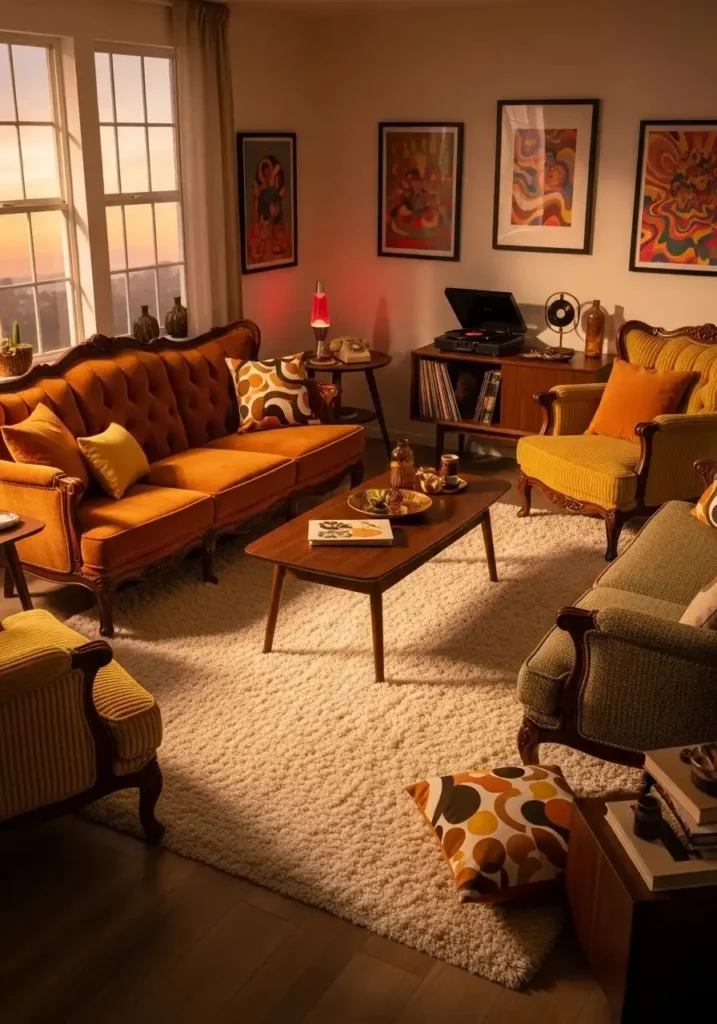
A thick, fluffy shag rug in cream, rust, or brown adds instant 70s charm. There’s something undeniably cozy about sinking your feet into plush texture. It softens the room and makes everything feel relaxed.
Why it works: Texture was key in 70s living room ideas — and shag delivers comfort and nostalgia at once.
Practical tip: Choose a neutral shag if your furniture is already bold.
Also Read This Blog: Grey Couch Living Room Ideas: 17 Stylish Ways to Transform Your Space
6. Go Low with Lounge Seating
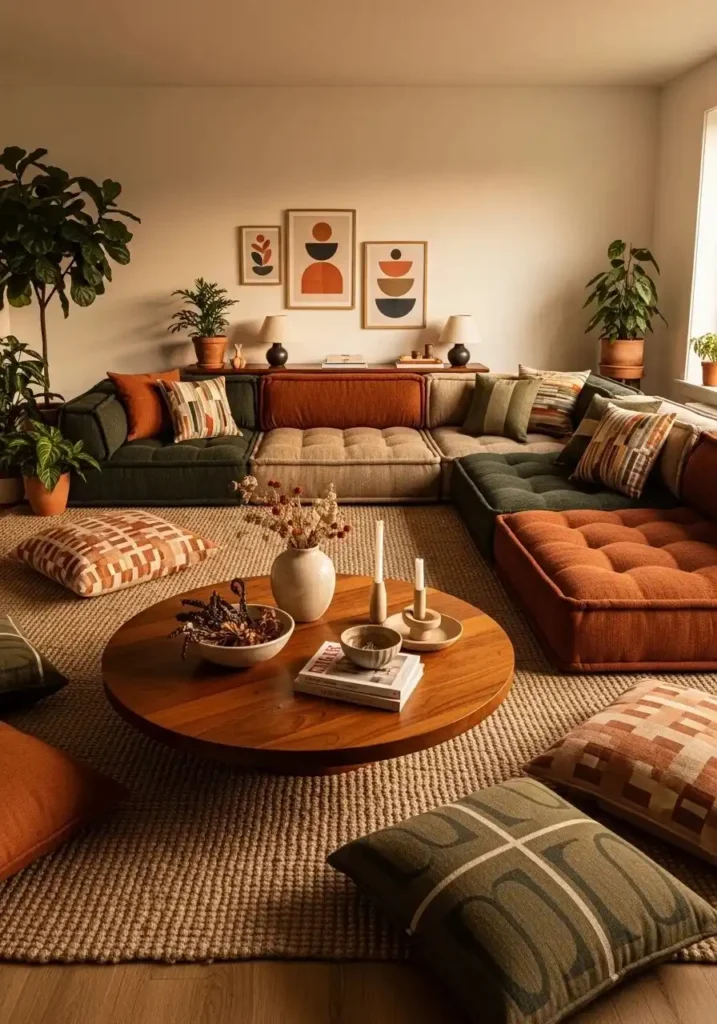
The 70s loved low-slung furniture. Think modular sofas, floor cushions, and wide coffee tables. This layout encourages conversation and a laid-back atmosphere. It also makes ceilings feel taller by keeping sightlines open.
Why it works: Lower seating feels casual and welcoming — perfect for cozy nights in.
Practical tip: Add oversized floor pillows for flexible seating that feels authentic.
7. Add Rattan and Wicker Accents
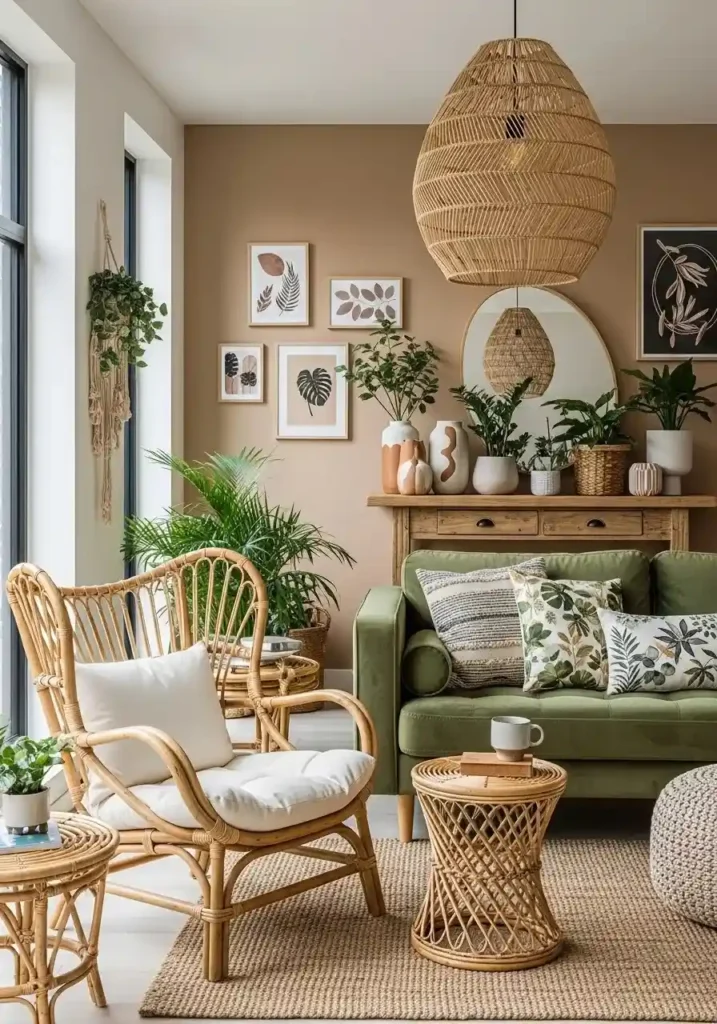
Rattan chairs, wicker side tables, or woven light fixtures bring a bohemian edge to a 70s living room. These natural materials lighten heavy color schemes and add texture without feeling overpowering.
Why it works: Organic textures balance bold design choices beautifully.
Practical tip: Use rattan sparingly — one accent chair or pendant light is enough.
Also Read This Blog: White Couch Living Room Ideas: 16 Stunning Ways to Style It
8. Create a Conversation Pit Feel
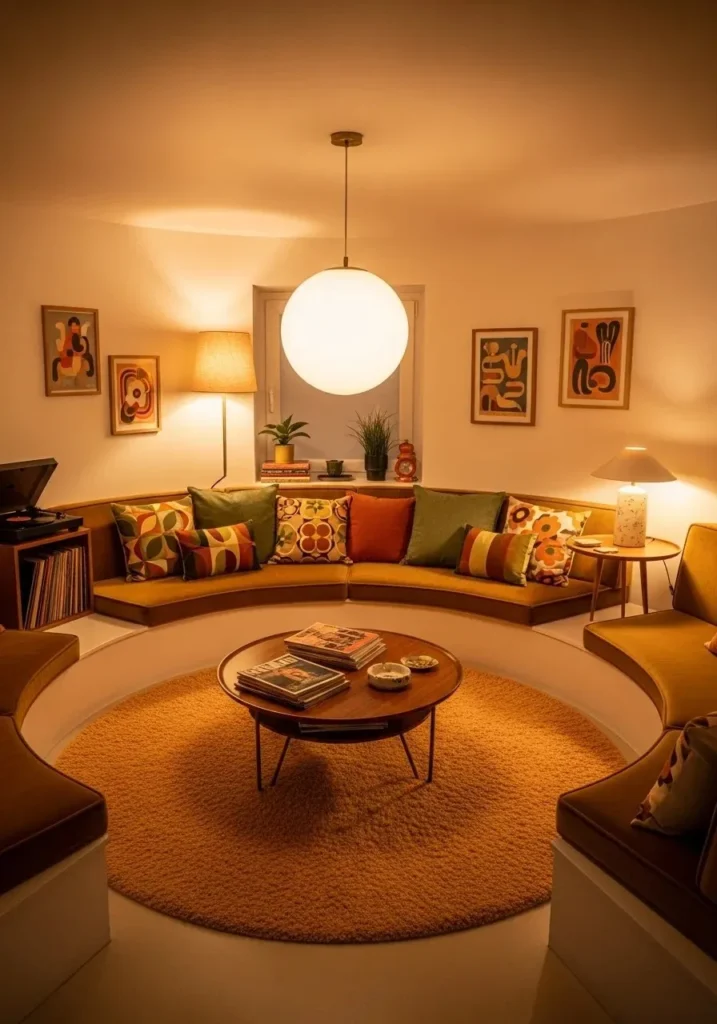
While you may not install a literal sunken floor, you can mimic the vibe with a circular furniture layout. Arrange seating around a central coffee table, keeping everything close and intimate.
Why it works: It makes the room feel intentional, social, and cozy — a true 70s signature.
Practical tip: Use a large round rug to visually anchor the seating arrangement.
9. Make Lighting Warm and Moody
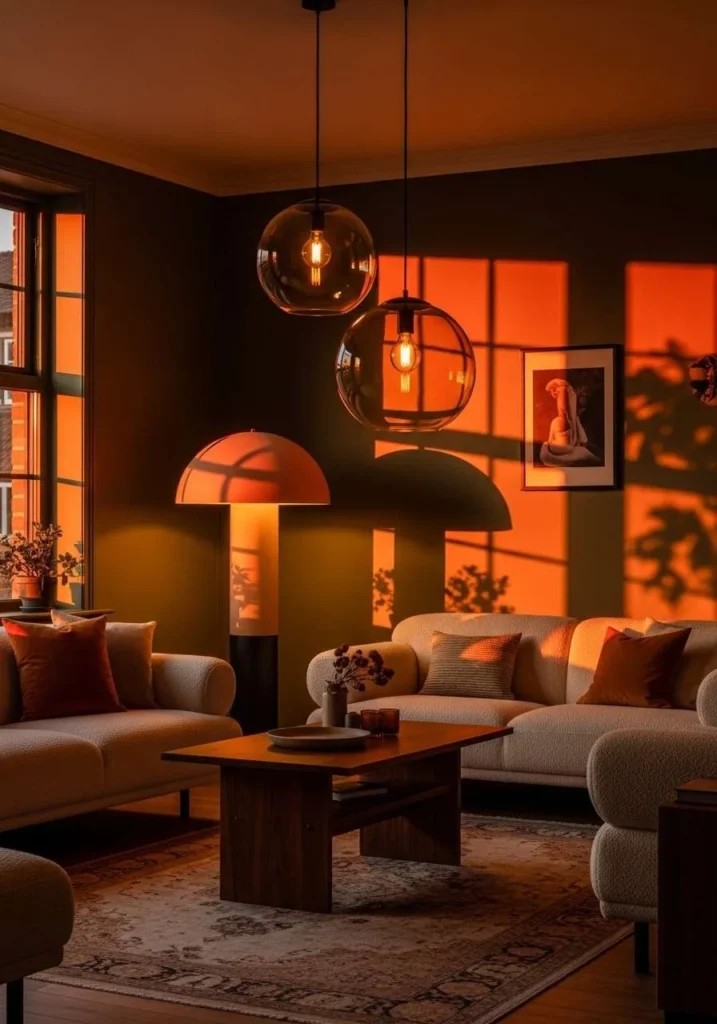
The 70s were never about harsh white lighting. Think warm amber glows, soft shadows, and cozy corners. Add table lamps with fabric shades, globe floor lamps, or mushroom-style lamps in earthy tones. The goal is layered lighting that feels intimate, not bright and clinical.
Why it works: Warm light enhances rich colors like rust, brown, and mustard, making the room feel inviting and nostalgic.
Practical tip: Swap cool LED bulbs for warm white (2700K) to instantly change the mood.
10. Add a Bold 70s Living Room Ideas Wallpaper Moment
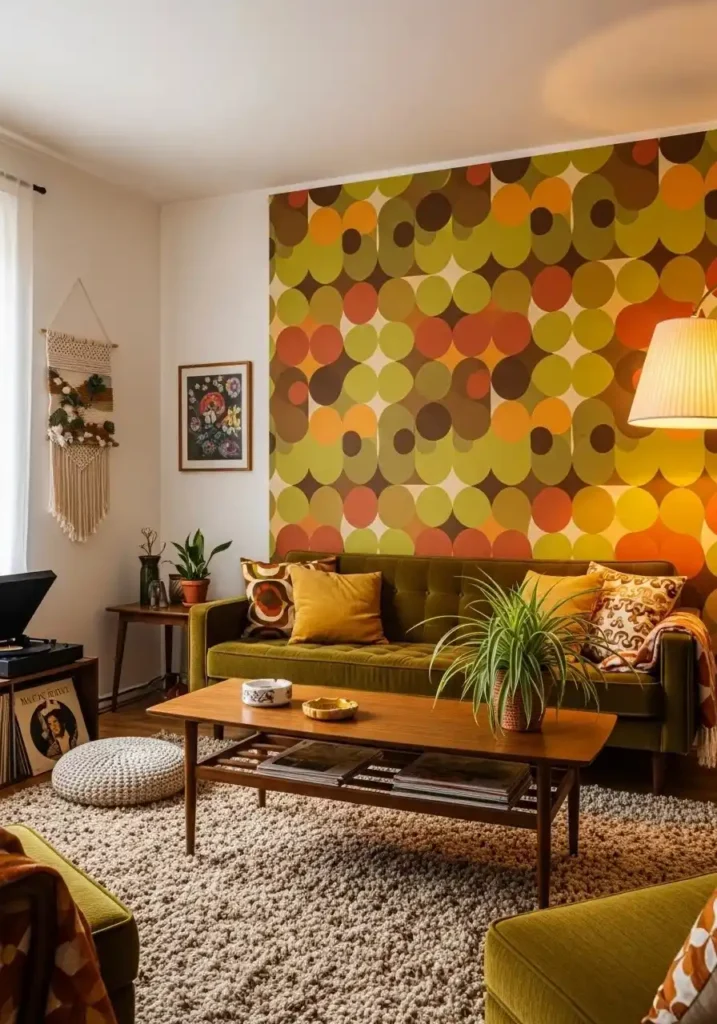
If you’re feeling brave, wallpaper is your best friend. Look for oversized florals, abstract swirls, or geometric prints in burnt orange, olive, or golden yellow. Use it on one accent wall behind your sofa to create impact without overwhelming the space.
Why it works: Wallpaper captures the playful spirit of 70s living room ideas while adding instant personality.
Practical tip: Try peel-and-stick wallpaper first if you’re unsure — it’s renter-friendly and low commitment.
Also Read This Blog: 18 Scandinavian Living Room Ideas for a Calm, Cozy Home
11. Bring in a Vintage Coffee Table
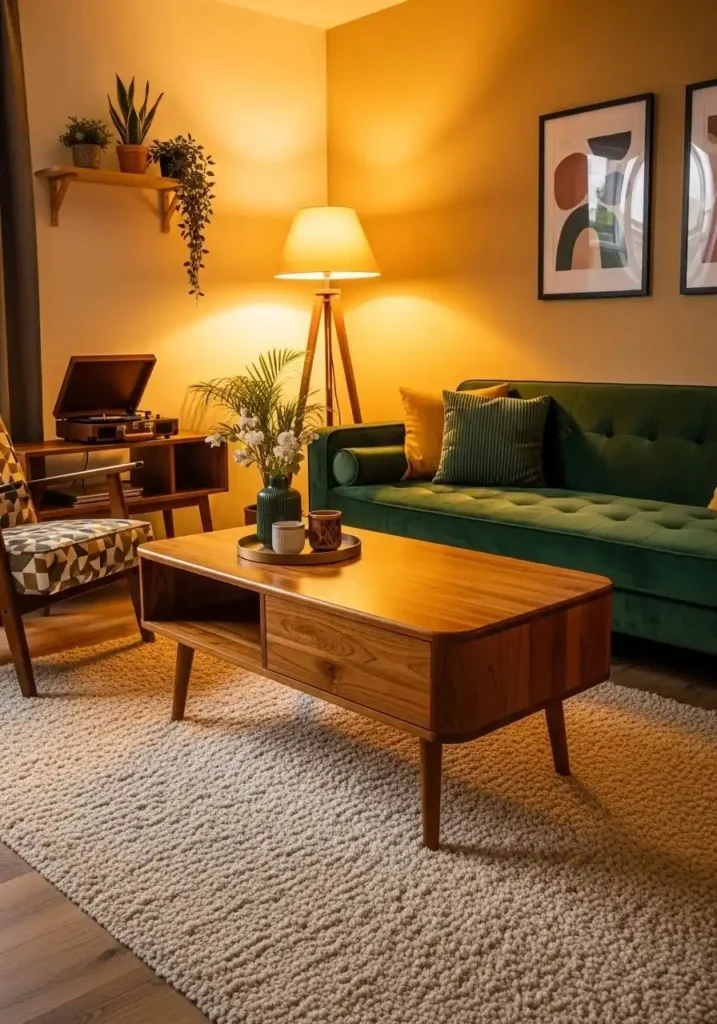
A chunky wooden coffee table, smoked glass top, or even a stone slab design feels perfectly retro. The 70s loved solid, grounded furniture pieces that made a statement. Look for rounded edges and substantial shapes.
Why it works: A bold coffee table anchors the room and balances softer elements like shag rugs and velvet sofas.
Practical tip: Thrift stores and vintage markets are gold mines for authentic finds.
12. Introduce Macramé and Wall Hangings
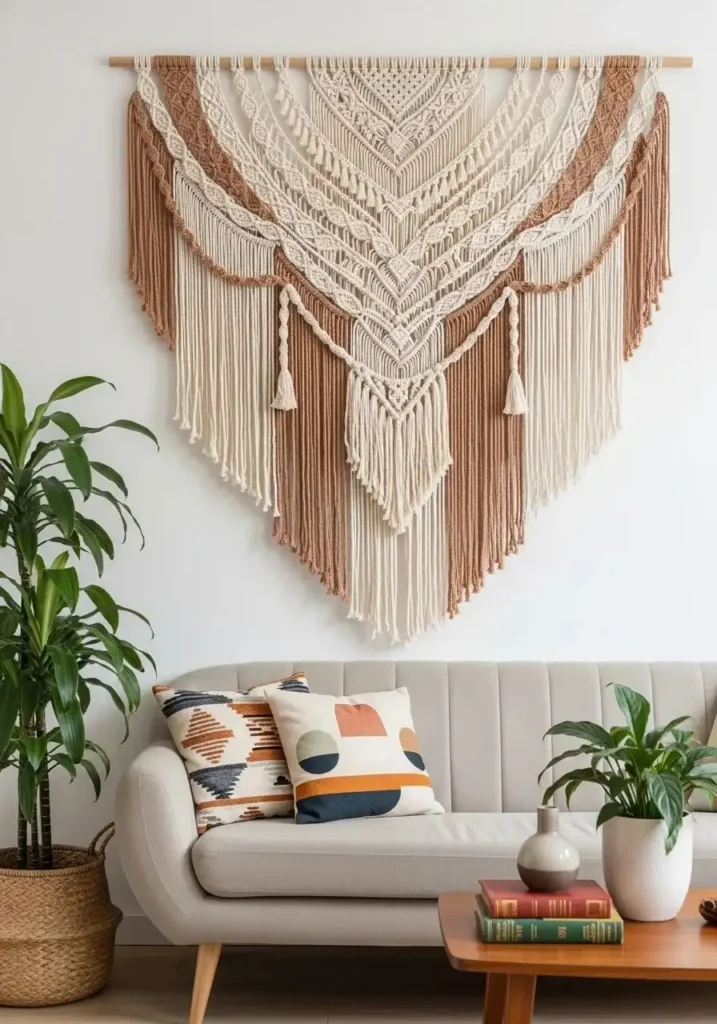
Macramé was huge in the 70s — and it’s making a serious comeback. Hang a large woven wall piece above your sofa or add smaller macramé plant holders near windows. The texture adds softness and movement.
Why it works: It layers the walls without adding heavy frames or busy artwork.
Practical tip: Stick to neutral cotton tones so it complements, not competes with, bold colors.
13. Display Retro Accessories
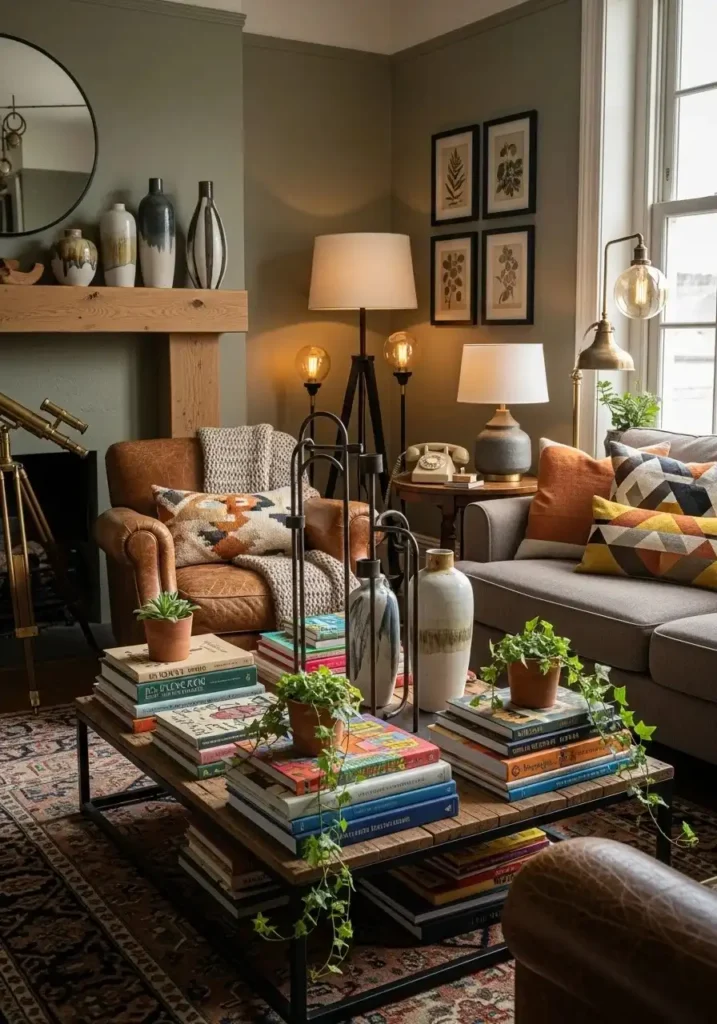
Think ceramic vases in earthy glazes, abstract sculptures, vintage record players, or stacked books with colorful spines. Accessories in a 70s living room should feel curated, not cluttered — expressive but intentional.
Why it works: Small details reinforce the theme and give your space authentic character.
Practical tip: Group items in odd numbers (like three or five) for a more natural look.
Also Read This Blog: Yellow Couch Living Room Ideas: 15 Cheerful Ways to Brighten Your Space
14. Mix Leather with Soft Textures
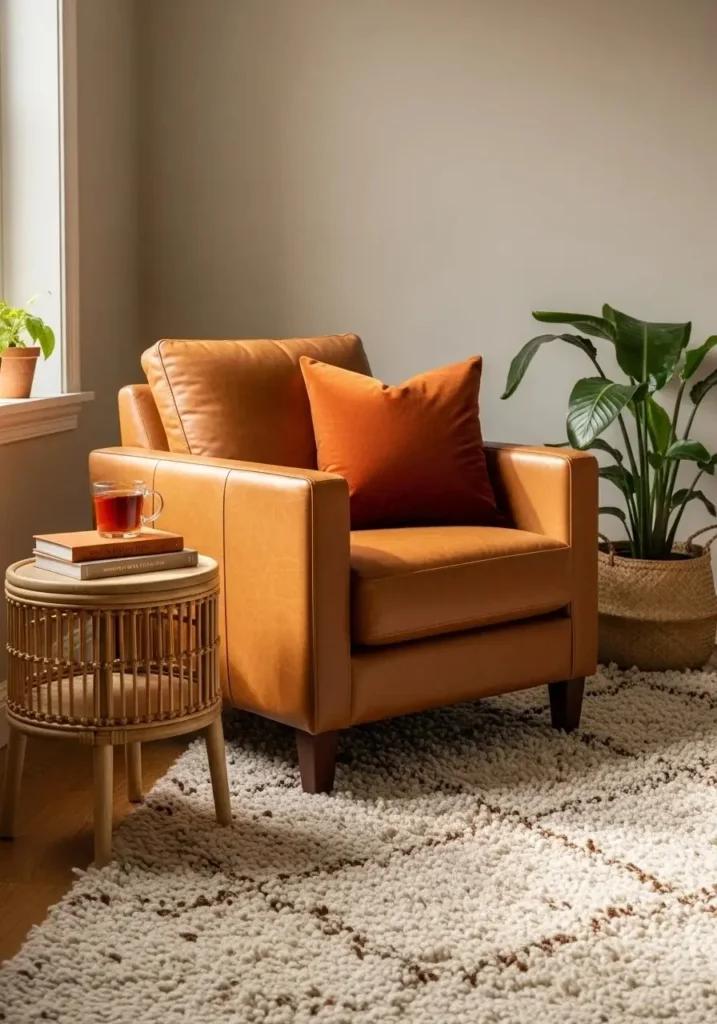
Caramel or cognac leather chairs pair beautifully with velvet, shag, and woven elements. The contrast between smooth leather and plush fabrics creates visual depth and balance.
Why it works: Leather adds richness and maturity, keeping bold 70s elements from feeling too playful.
Practical tip: Choose warm-toned leather rather than cool brown to stay true to the era.
15. Add Indoor Plants with Personality
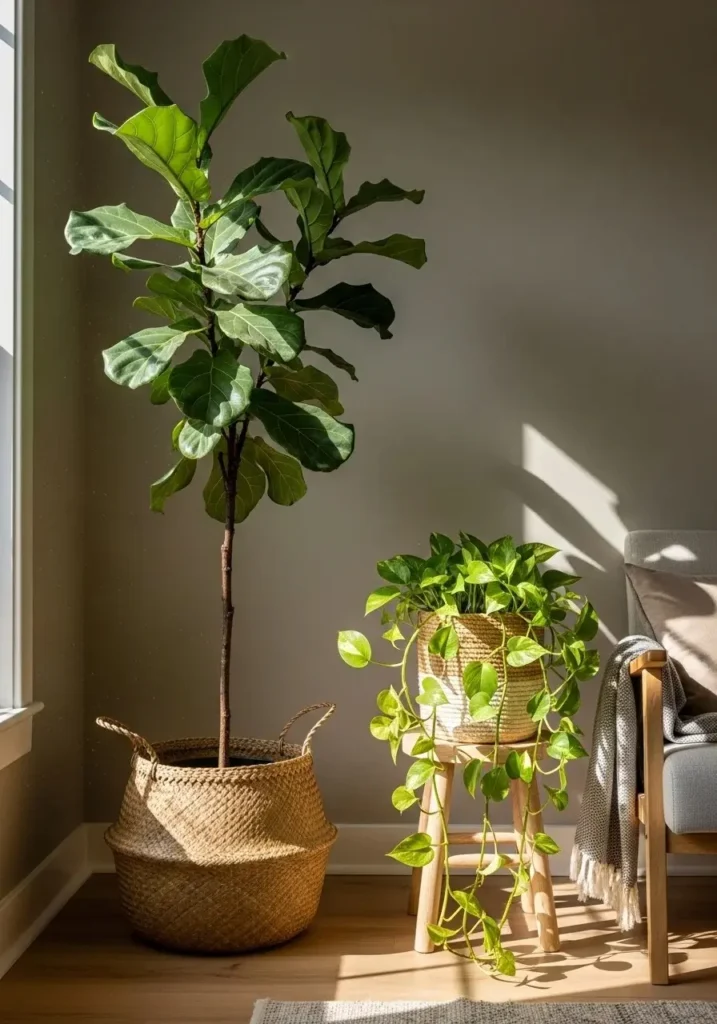
The 70s adored greenery — especially dramatic plants like fiddle-leaf figs, rubber plants, and cascading pothos. Place them in ceramic pots or woven baskets for that earthy vibe. A tall plant in a corner instantly softens angular furniture.
Why it works: Plants add life and break up heavy textures and colors.
Practical tip: Use plant stands to vary heights and create dimension.
16. Embrace Bold Art and Personal Expression
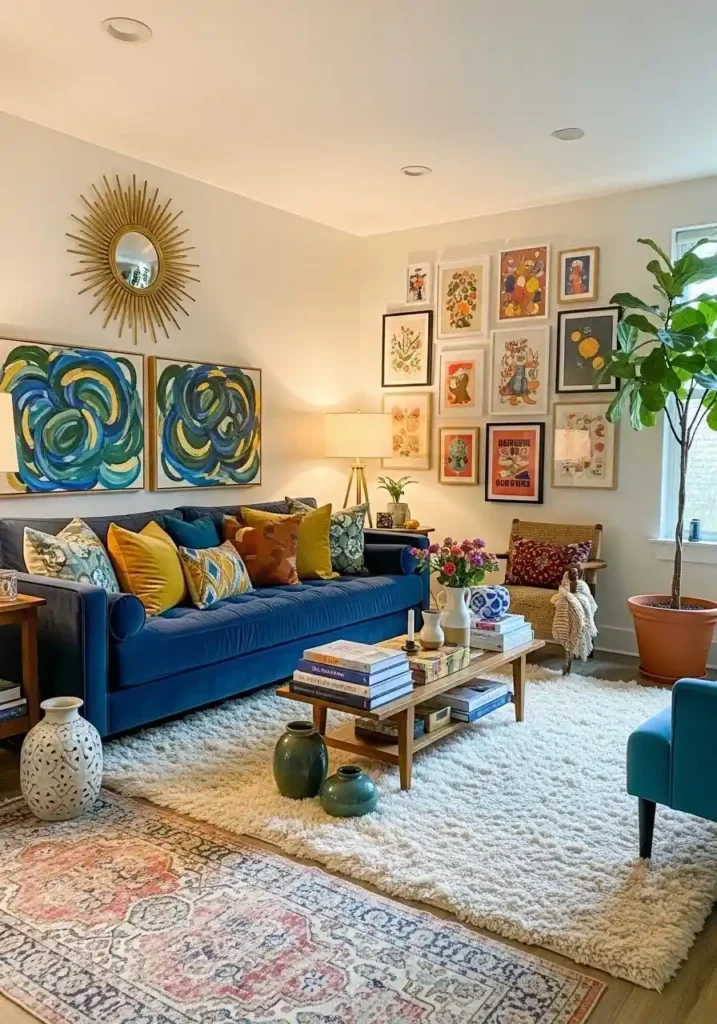
The 70s weren’t afraid of self-expression. Add abstract paintings, sunburst mirrors, or colorful framed prints. Don’t overthink matching everything perfectly. A little creative freedom makes the space feel authentic and lived-in.
Why it works: Personal art choices prevent your room from feeling staged or overly themed.
Practical tip: Leave some negative space around statement pieces so they can truly shine.
Conclusion: Designing Your Own 70s-Inspired Retreat
At its heart, a 70s-inspired living room isn’t about copying the past — it’s about embracing warmth, texture, and personality. These 70s living room ideas show how earthy colors, plush fabrics, natural materials, and bold details can come together to create a space that feels soulful and inviting. You don’t have to transform everything overnight. Start with a velvet sofa, a shag rug, or warmer lighting, and build from there. When you mix comfort with confidence, your living room becomes more than stylish — it becomes a space that truly feels like you.