15 Purple Bedroom Ideas: Calm, Cozy, and Surprisingly Versatile
Purple Bedroom is often misunderstood. Some people think it’s too bold, too dark, or too dramatic for a bedroom. But when used thoughtfully, purple can feel calming, elegant, and deeply personal. From soft lavender to rich plum, this color offers more flexibility than most expect.
If your bedroom feels flat or uninspiring, purple might be the layer of warmth or depth it’s missing. Below are practical, real-world ideas to help you use purple beautifully—without overwhelming your space.
1. Start with Soft Lavender Walls

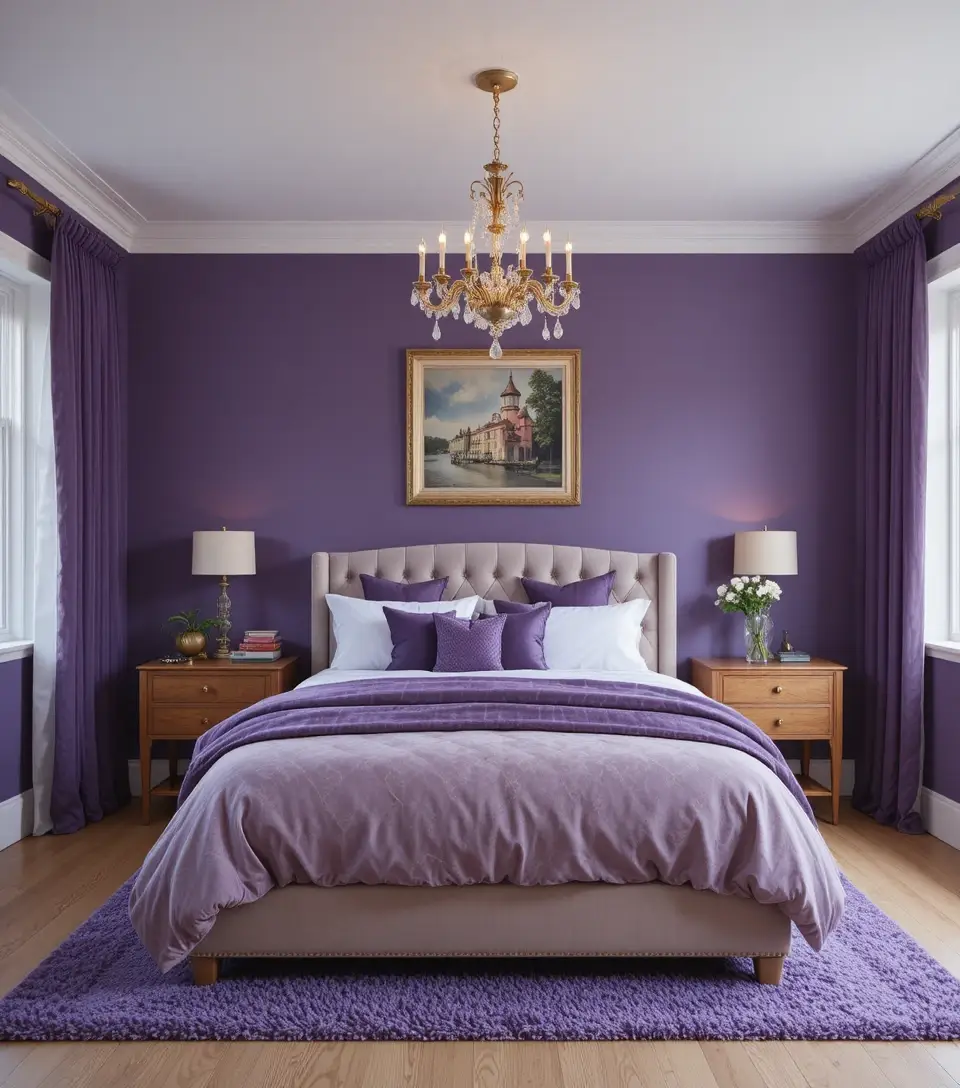
Lavender is one of the easiest ways to introduce purple into a bedroom. It’s light, airy, and calming—perfect for a space meant for rest.
It works because softer purples carry the serenity of blue with a hint of warmth. They add personality without making the room feel heavy.
Tip: Pair lavender walls with white bedding and light wood furniture.
Mistake to avoid: Choosing a purple that’s too gray or too pink. Always test a sample on your wall before committing.
2. Add a Deep Plum Accent Wall
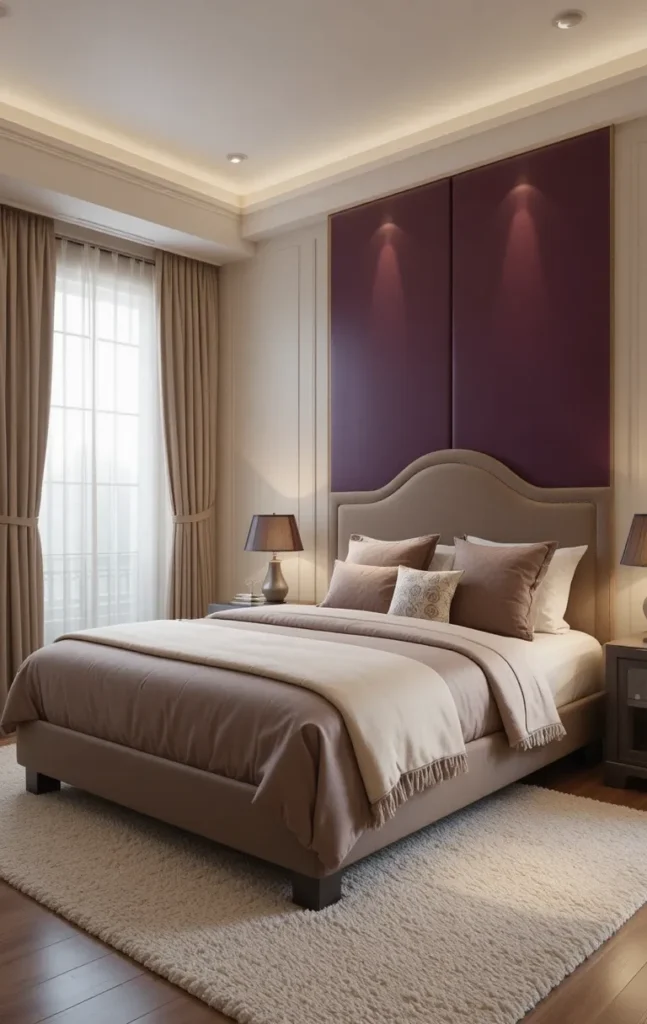
If you prefer bold design, a plum accent wall behind the bed creates depth and drama without overwhelming the room.
Dark purple works best when balanced with lighter tones. It grounds the space and makes neutral furniture stand out.
Tip: Keep the other three walls neutral—cream, beige, or soft gray.
Mistake to avoid: Using plum in a small room with poor lighting. Without enough light, it can feel heavy instead of cozy.
3. Use Purple Bedding as a Focal Point
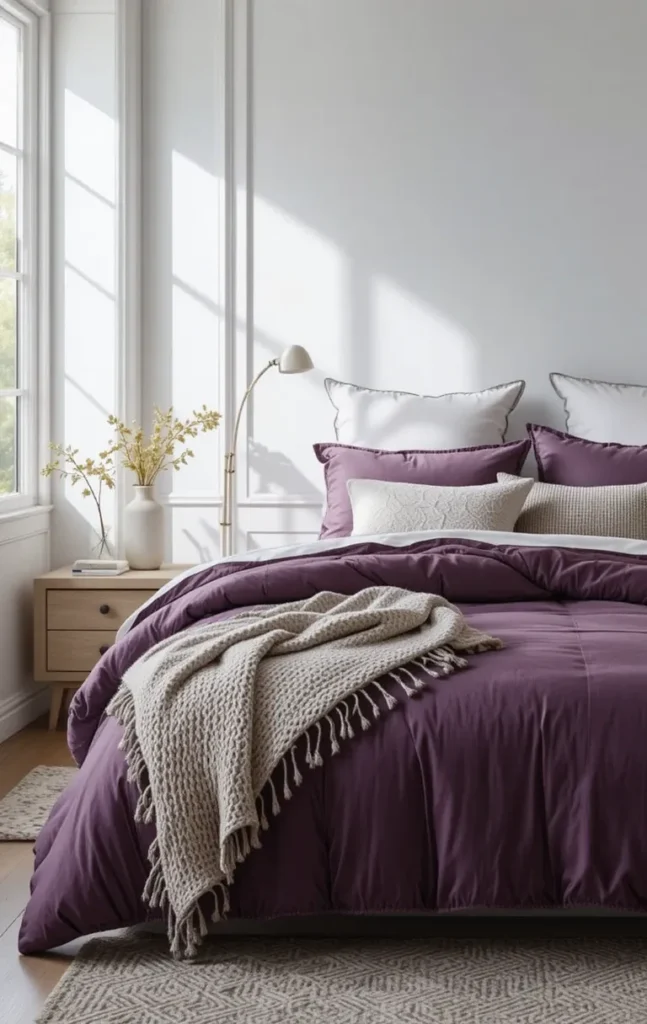
Not ready to paint? Start with bedding. A purple duvet or quilt instantly changes the mood of the room.
This works because the bed is naturally the center of attention. Rich purple fabrics add warmth and a layered feel.
Tip: Mix textures—cotton sheets, velvet pillows, knitted throws.
Mistake to avoid: Matching everything exactly. Too much identical purple can look flat. Break it up with neutrals.
4. Try Purple and Gray for a Balanced Look
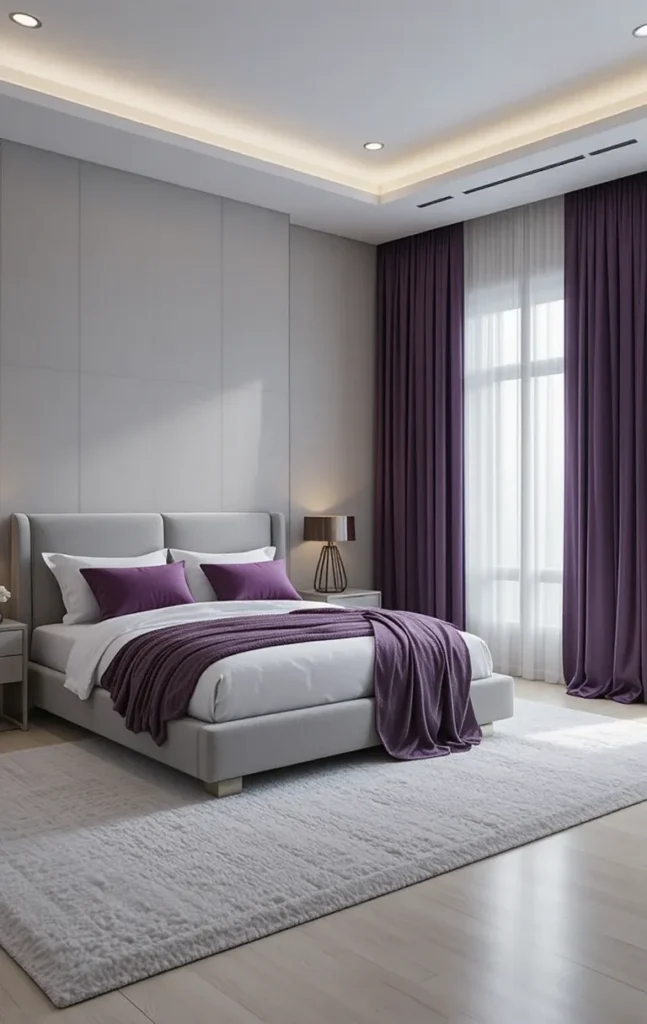
Purple and gray create a modern, balanced palette. Gray tones calm the richness of purple, making the room feel refined.
This combination works especially well in contemporary bedrooms.
Tip: Use light gray walls with deeper purple cushions or curtains.
Mistake to avoid: Choosing cool gray with warm purple. Make sure undertones match to avoid a clashing feel.
Also Read This Blog: 16 Black Bedroom Ideas: Modern, Stylish, and Timeless Designs for 2026
5. Incorporate Purple Through Curtains
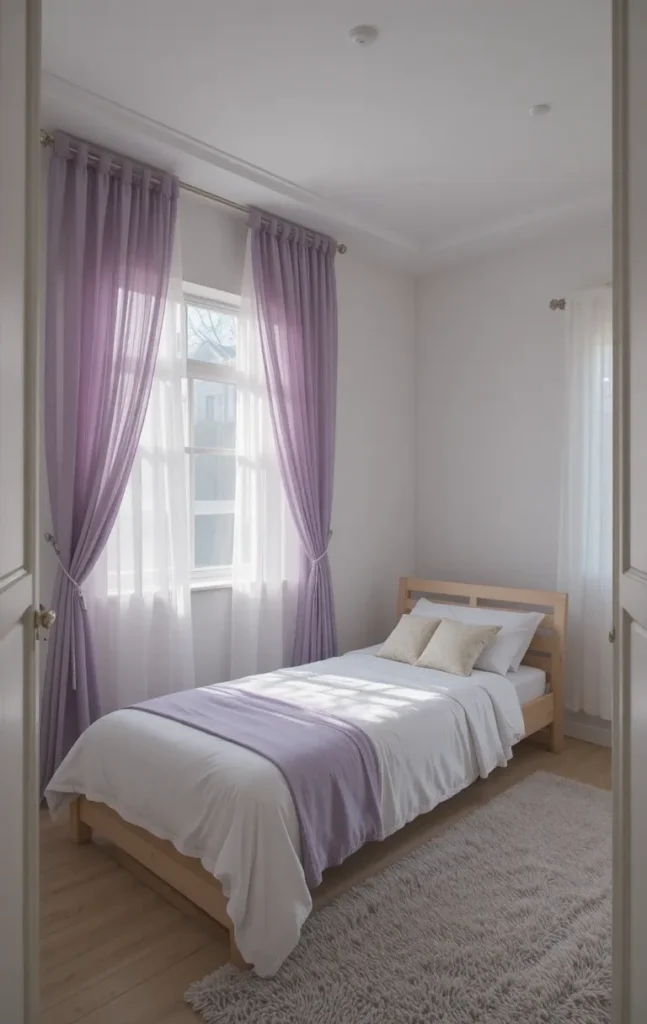
Curtains are a low-risk way to experiment with color. Purple curtains frame the room and add softness.
They work because they draw the eye upward and make ceilings appear taller.
Tip: In small rooms, choose sheer lavender curtains to keep things light.
Mistake to avoid: Very dark curtains in a small space. They can block too much natural light.
6. Pair Purple with Gold Accents
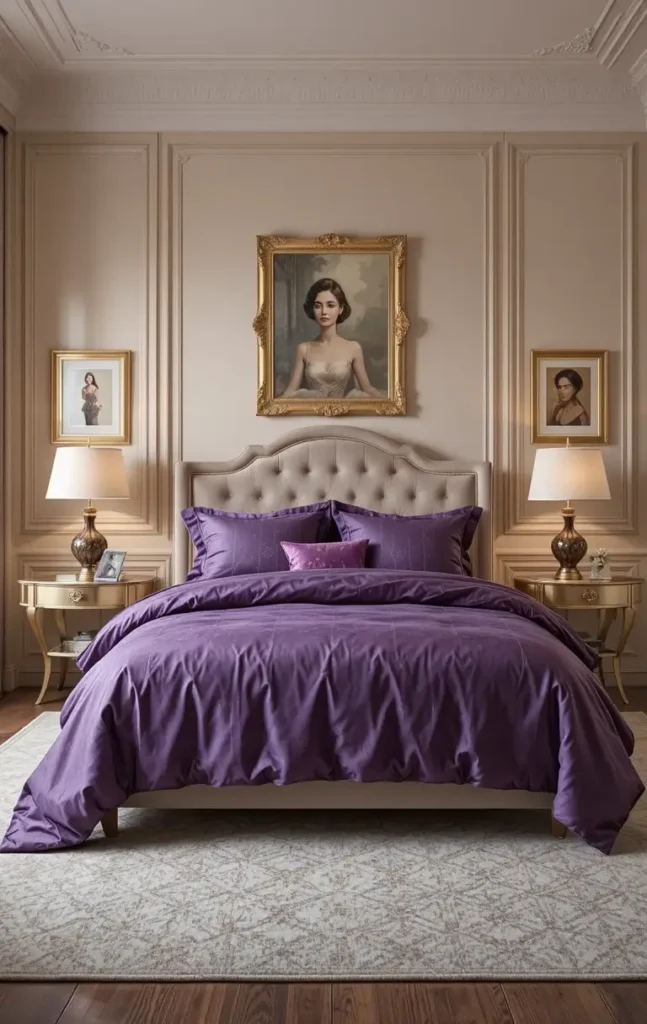
Purple and gold feel luxurious when done subtly. Gold lamps, frames, or drawer handles can elevate the space.
The warmth of gold balances purple’s cool tones and adds sophistication.
Tip: Stick to small metallic accents rather than large gold furniture.
Mistake to avoid: Overdoing shine. Too many gold pieces can make the room look flashy instead of elegant.
Also Read This Blog: 15 Moody Bedroom Ideas: Stylish, Cozy, and Dramatic Designs for 2026
7. Use Purple in Layered Textures
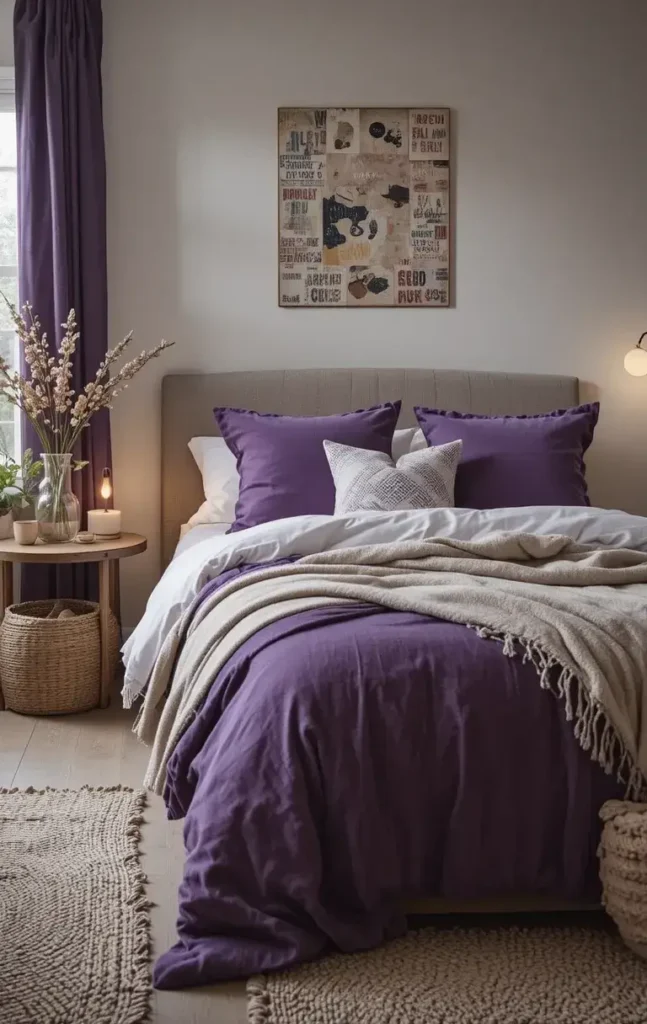
Instead of focusing only on color, think about texture. Velvet cushions, linen throws, and woven rugs in shades of purple create depth.
This works because texture makes even simple color schemes feel rich and thoughtful.
Tip: Combine at least three textures for a layered look.
Mistake to avoid: Using only one fabric type. A single texture can make the room feel one-dimensional.
8. Blend Purple with White for a Fresh Feel
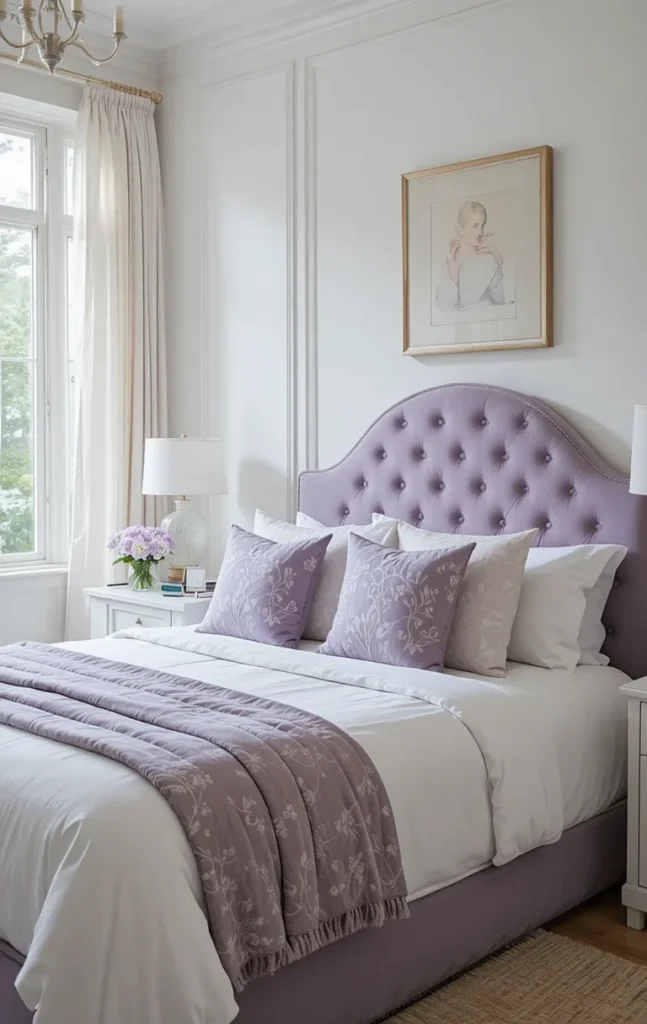
Purple can feel dramatic, but when paired with white, it becomes light and breathable. White walls, trim, or bedding help soften even deeper purple tones.
This works because white reflects light and prevents the space from feeling heavy.
Tip: Try white walls with a violet headboard or lavender throw pillows.
Mistake to avoid: Using stark, cool white with warm purple. Choose a soft white if your purple has red undertones.
9. Create a Purple Feature Headboard
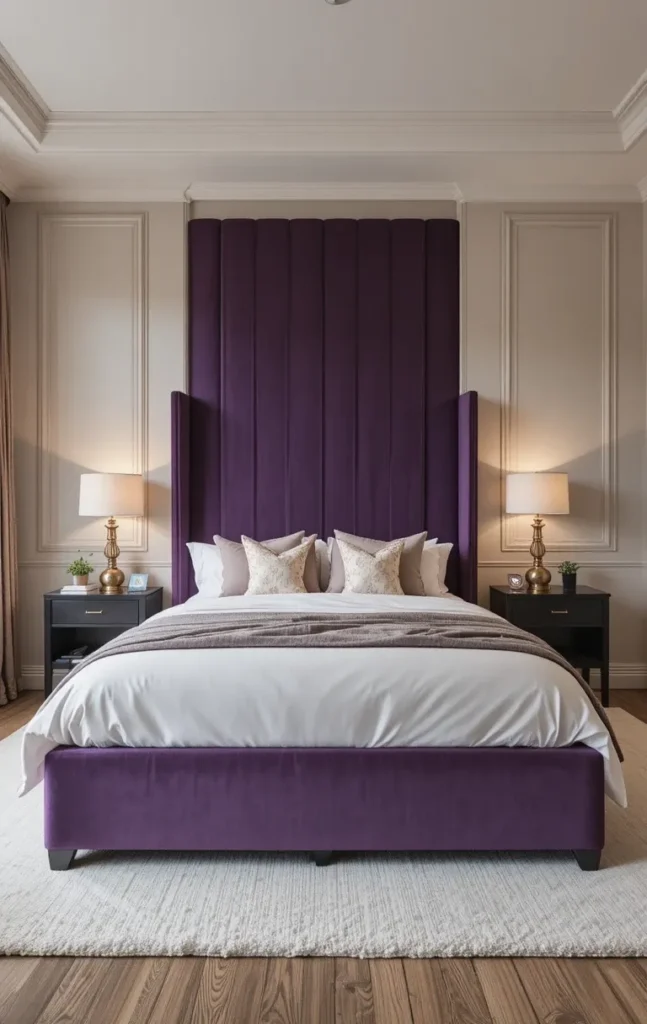
A purple upholstered headboard adds color without committing to painted walls. It becomes the room’s anchor.
This works because the bed naturally draws attention, so a colored headboard feels intentional rather than random.
Tip: Velvet or suede fabrics add depth and elegance.
Mistake to avoid: Choosing a headboard that’s too small. It should feel proportionate to your bed and wall.
Also Read This blog: LED Lights Bedroom Ideas: 10 Practical Ways to Transform Your Space
10. Try Purple and Beige for Warmth
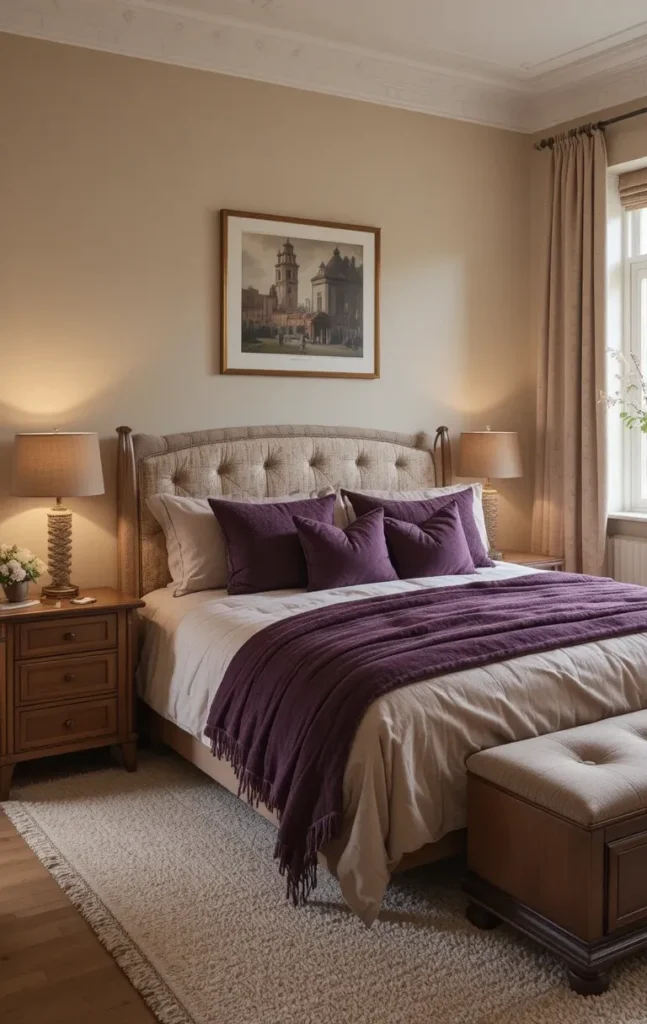
If gray feels too cool, beige is a warmer companion for purple. Together, they create a cozy and grounded atmosphere.
This pairing works especially well in bedrooms with wooden furniture.
Tip: Use beige walls with plum cushions and soft purple bedding.
Mistake to avoid: Mixing too many warm tones. Keep the palette controlled so it doesn’t look muddy.
11. Add Subtle Purple Through Artwork
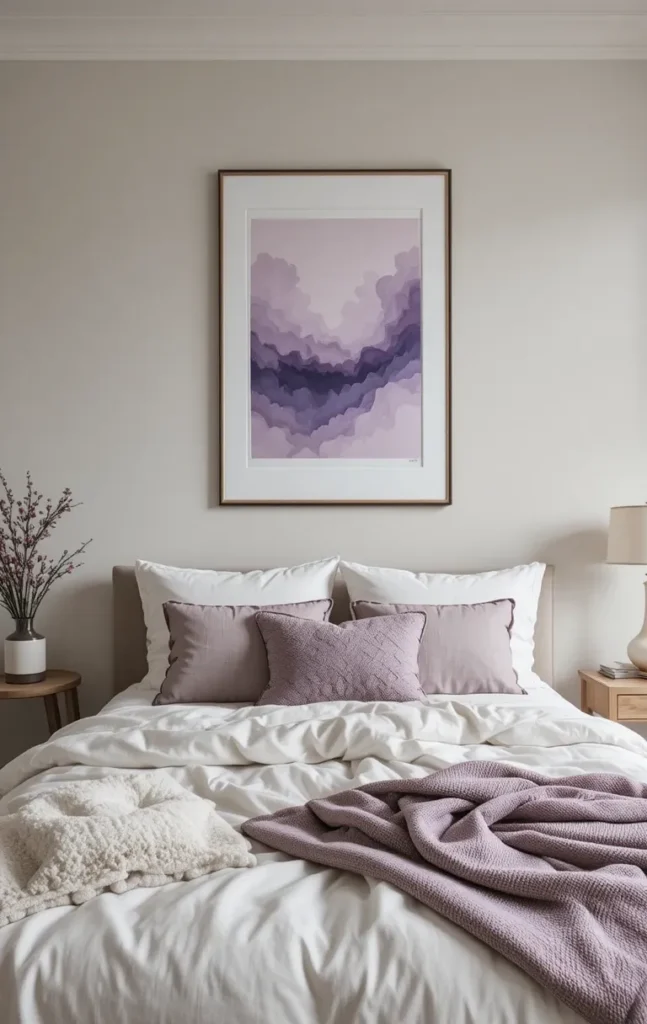
Artwork is one of the easiest ways to introduce purple without overwhelming the room.
It works because small color touches feel curated and intentional.
Tip: Choose prints that include purple alongside neutrals or soft greens.
Mistake to avoid: Hanging art too high or too small. Proper placement makes the color feel integrated, not accidental.
Also Read This Blog: 15 Blue Bedroom Ideas: Calm, Stylish, and Livable Designs for 2026
12. Use Purple in a Floral or Patterned Accent
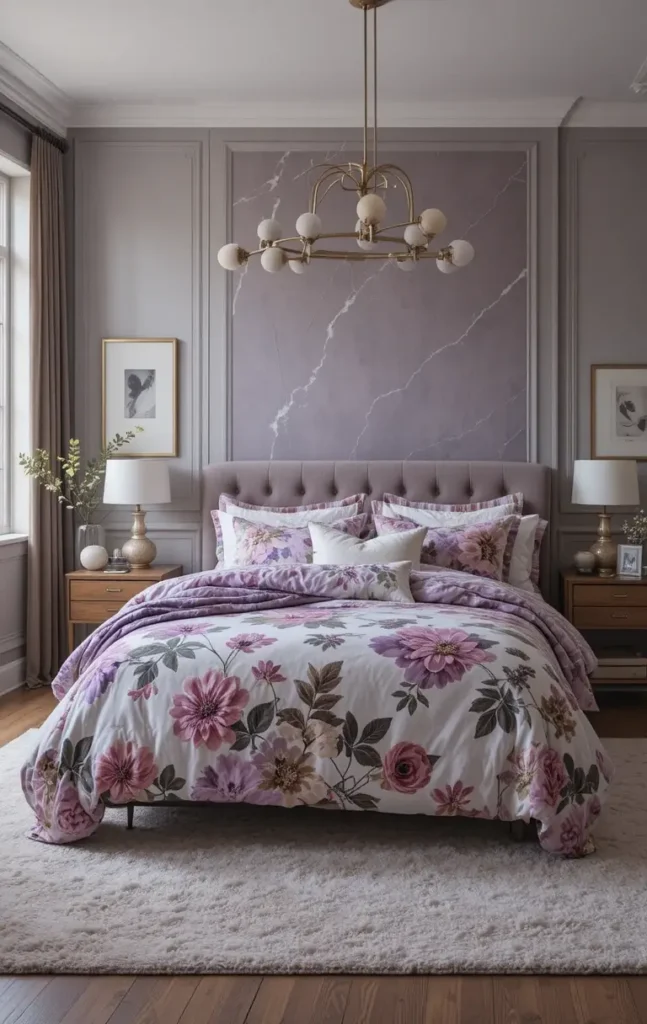
Patterns can soften bold color choices. Floral bedding, geometric cushions, or a patterned rug with purple hints add interest.
This works because patterns break up solid blocks of color.
Tip: Keep the rest of the room simple when using strong patterns.
Mistake to avoid: Mixing too many patterns without a shared color theme. It can quickly feel chaotic.
13. Go Monochrome with Different Purple Shades
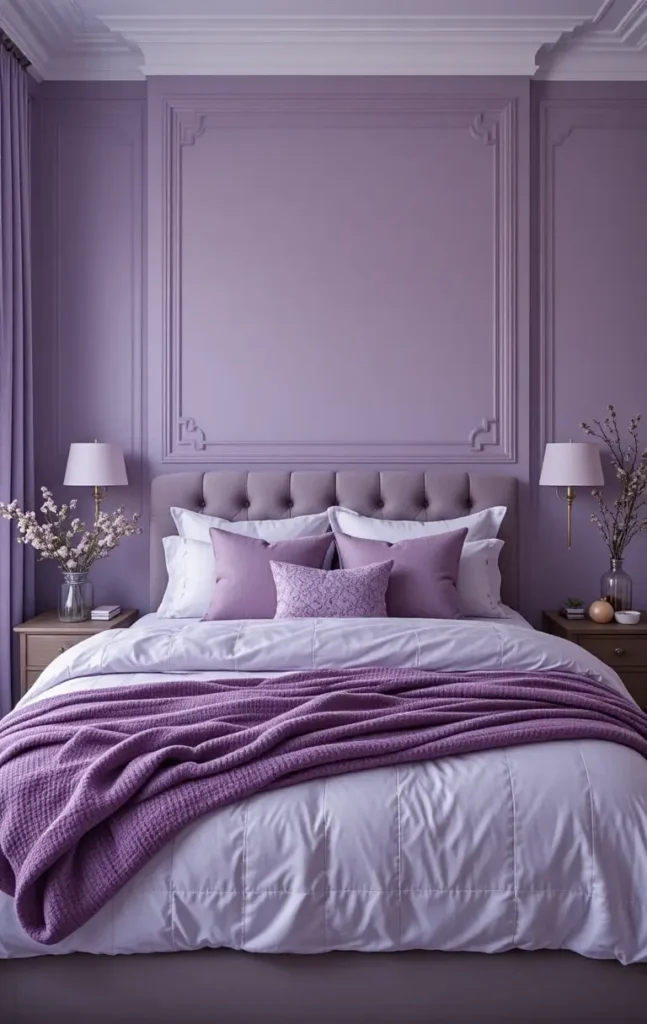
Using multiple shades—lavender, lilac, plum—creates a layered monochrome look.
This works because variation in tone prevents the room from feeling flat while keeping it cohesive.
Tip: Start with one main shade, then add lighter and darker accents.
Mistake to avoid: Ignoring contrast. Without variation, the space can feel dull.
Also Read This Blog: Bedroom Mirror Ideas: 10 Ways to Enhance Your Space
14. Introduce Purple Through a Statement Rug
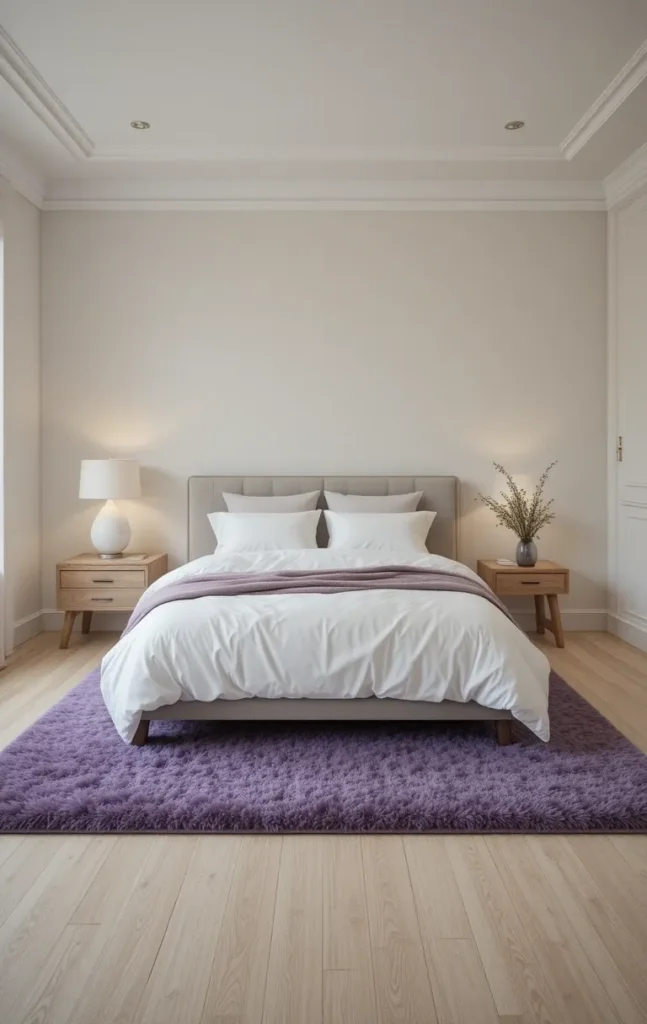
A purple rug grounds the room and adds softness underfoot.
It works because rugs define the sleeping area and tie furniture together.
Tip: Choose a rug large enough to extend under the bed.
Mistake to avoid: Picking a rug that’s too small. It can make the room look disconnected.
15. Soften the Space with Purple Lighting
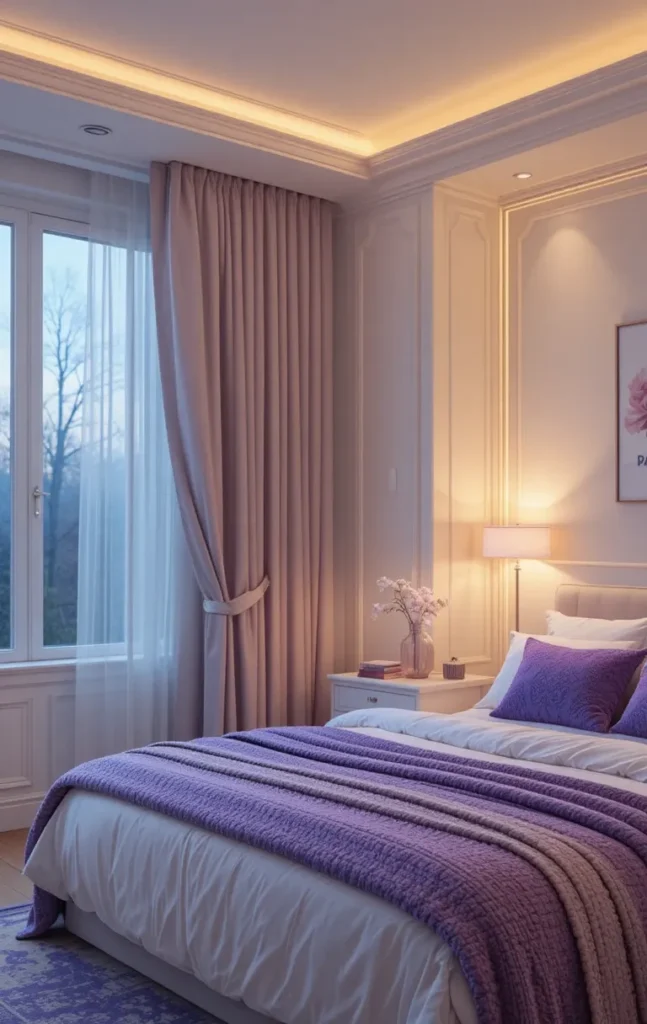
Lighting dramatically affects how purple appears. Warm bulbs can make it feel cozy, while cool bulbs make it appear sharper.
This works because purple shifts noticeably under different lighting conditions.
Tip: Use warm white bulbs and consider a purple-toned lamp base or shade for subtle color.
Mistake to avoid: Ignoring light temperature. Always test your lighting before finalizing paint or décor.
Conclusion
Purple bedroom doesn’t have to feel overwhelming or dramatic. When used thoughtfully, it can make a bedroom feel calm, warm, and deeply personal. The key is balance—mixing shades, pairing with neutrals, and layering textures so the room feels intentional.
Start small if you’re unsure. Try bedding, art, or curtains before painting walls. With the right approach, purple becomes not just a color choice—but a confident design decision that truly reflects your style.