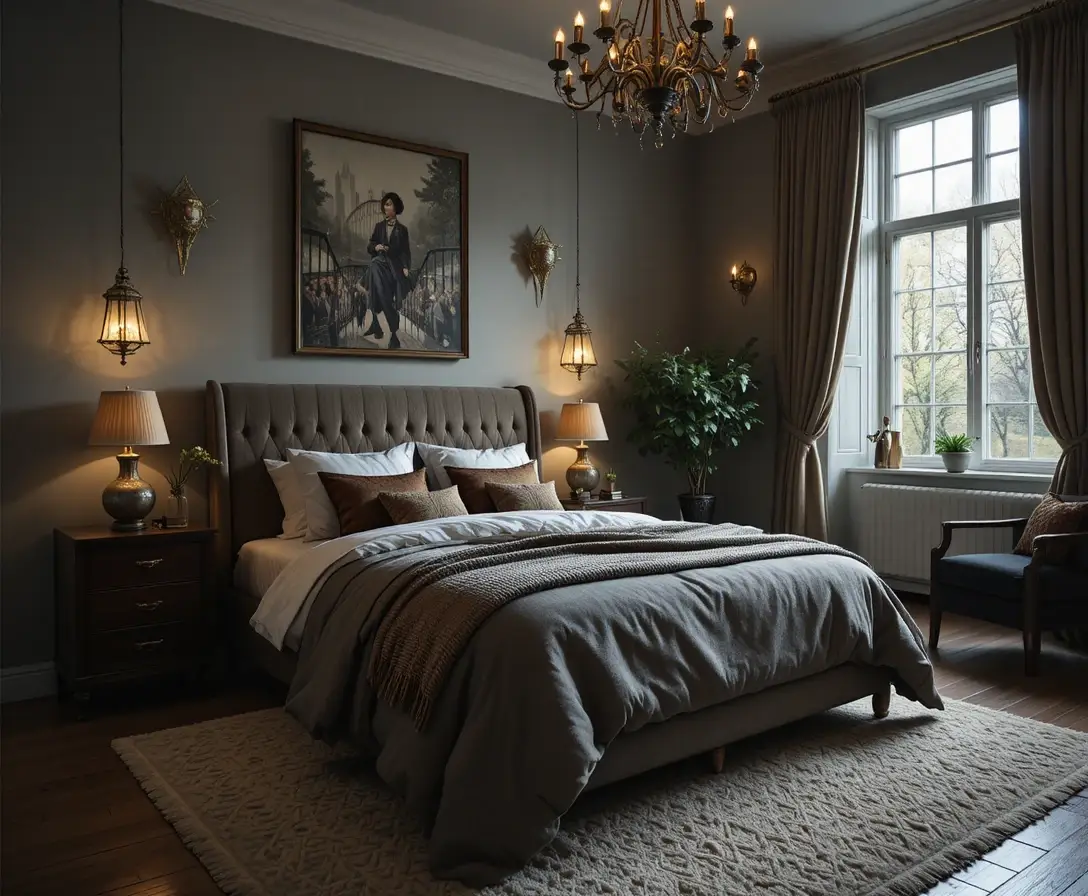
15 Moody Bedroom Ideas: Stylish, Cozy, and Dramatic Designs for 2026
Moody bedrooms have become one of the most sought-after trends in 2026, offering a perfect blend of drama, elegance, and coziness. Unlike plain neutral rooms, moody bedrooms create depth and personality while remaining relaxing and functional. These spaces are perfect for homeowners who want a retreat that feels both intimate and stylish.
Many people hesitate to use moody tones because they fear the room will feel too dark, small, or cold. Others struggle with furniture placement, lighting balance, or choosing complementary colors. This article provides 15 actionable moody bedrooms designed to solve these common problems and transform bedrooms into sophisticated, livable spaces.
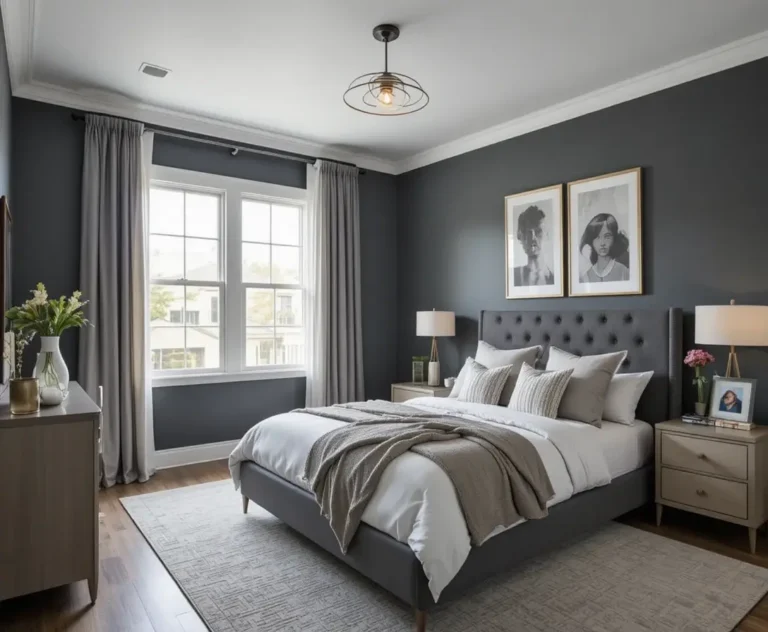
1. Dark Gray Walls for Depth and Calm
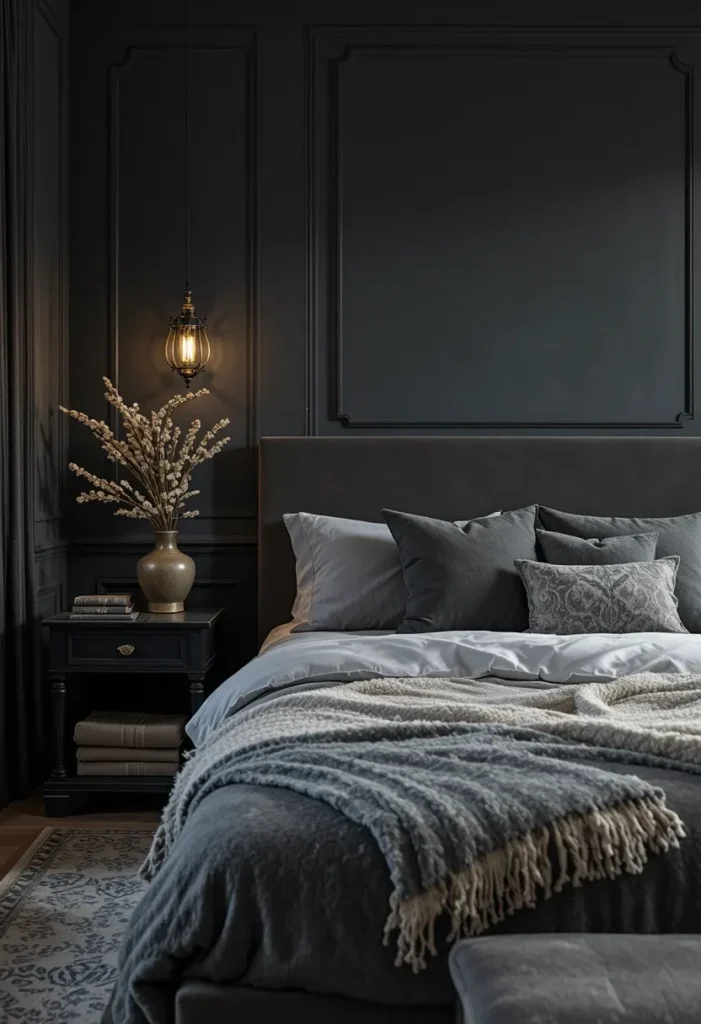
Dark gray is a classic choice for a moody bedroom because it feels dramatic without being overwhelming. Dark walls create intimacy while providing a versatile backdrop for furniture and décor.
Tips:
- Pair dark gray walls with warm lighting to avoid a cold atmosphere.
- Add lighter bedding or neutral curtains to balance the depth.
- Include textured accessories like velvet cushions or wool throws to soften the space.
Problem solved: Prevents the room from feeling flat, bland, or too harsh, creating a calming yet sophisticated environment.
2. Moody Jewel Tones for Elegance
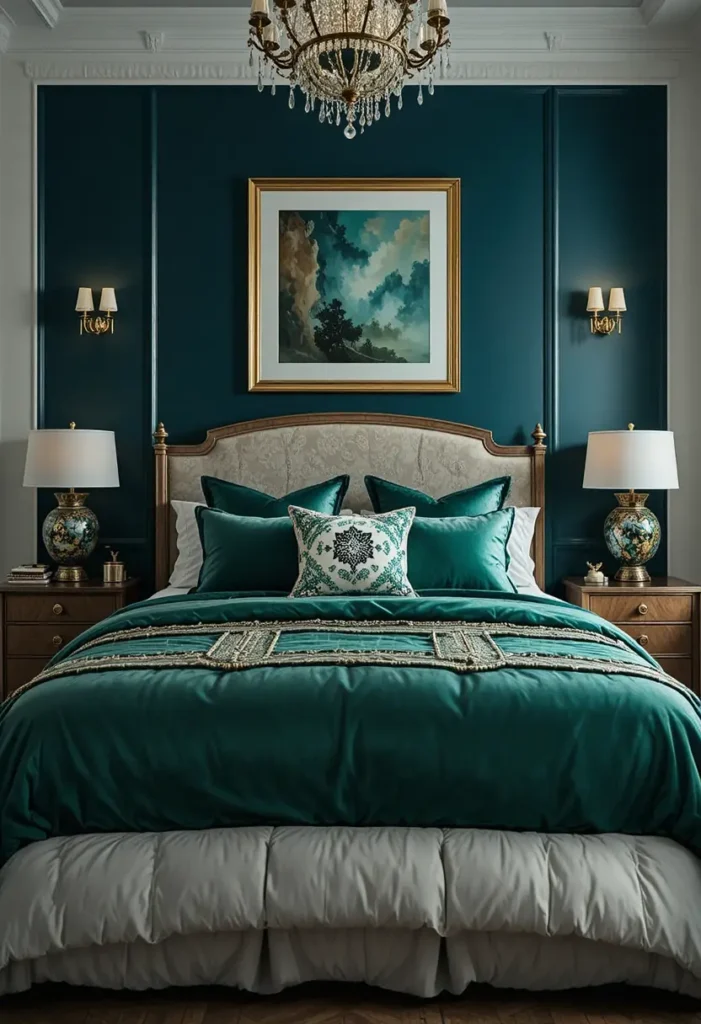
Deep jewel tones like emerald green, sapphire blue, and amethyst purple bring richness and luxury to moody bedrooms. These shades add personality and make a bedroom feel opulent without being overpowering.
Tips:
- Use jewel tones in accent walls, bedding, or statement furniture.
- Complement with metallic accents like brushed gold or matte brass.
- Keep the floor and ceiling neutral to avoid visual heaviness.
Problem solved: Provides color depth and personality while keeping the space cozy and stylish.
3. Black and Charcoal Layering for Drama
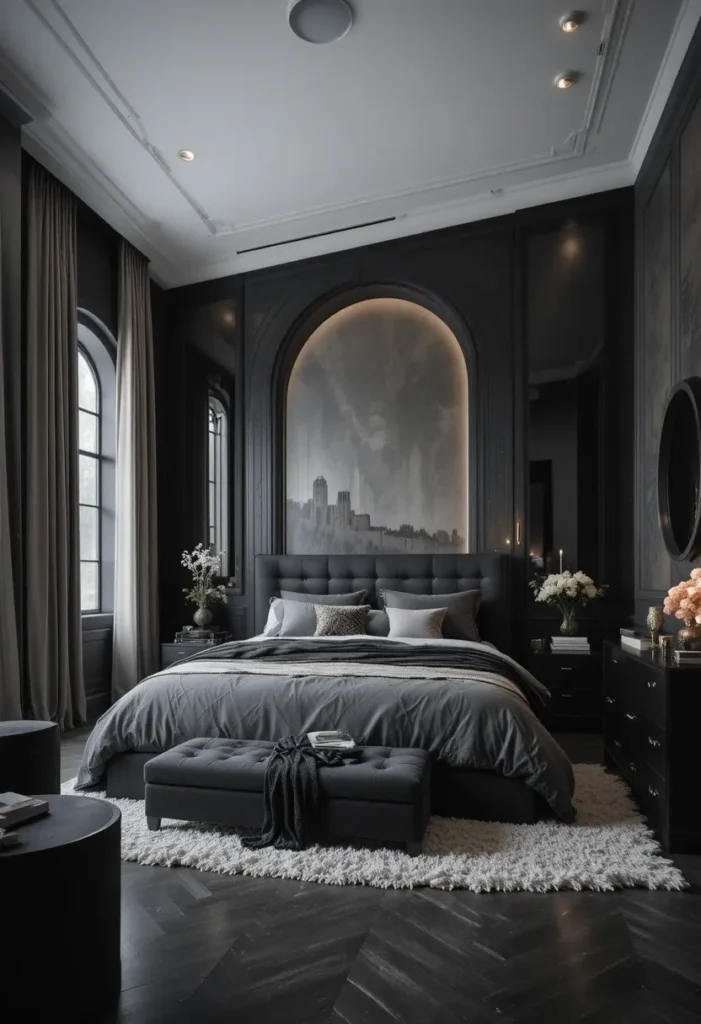
Layering different dark shades, such as black, charcoal, and slate, adds visual interest and sophistication. This approach ensures the room feels cohesive rather than flat.
Tips:
- Use black furniture or lighting fixtures for anchoring.
- Charcoal bedding or rugs soften the intensity without losing drama.
- Incorporate mirrors or reflective surfaces to bounce light and prevent heaviness.
Problem solved: Avoids monotony in dark rooms and maintains elegance without making the space oppressive.
4. Moody Accent Walls Behind the Bed
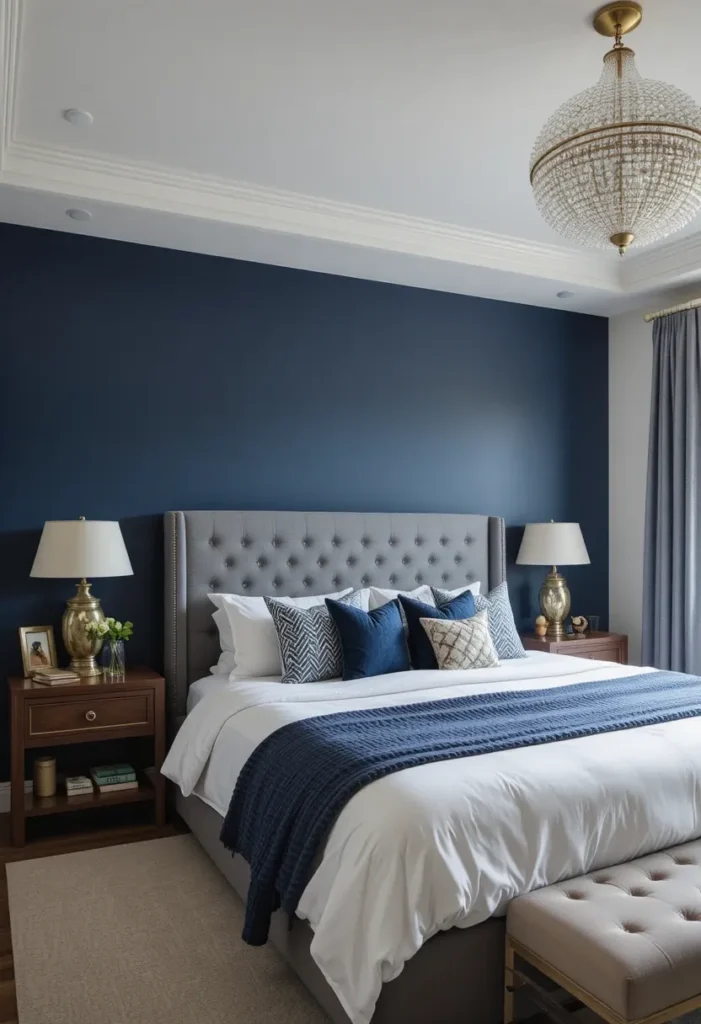
For those hesitant to paint the whole room dark, a moody accent wall is a safe and effective solution. Placing it behind the bed draws the eye and creates a focal point.
Tips:
- Choose a deep color like navy, charcoal, or forest green.
- Keep surrounding walls lighter to maintain balance.
- Add statement artwork or a textured headboard for added visual interest.
Problem solved: Offers drama without overwhelming the room, perfect for first-time moody bedroom experiments.
5. Layered Textures to Add Warmth
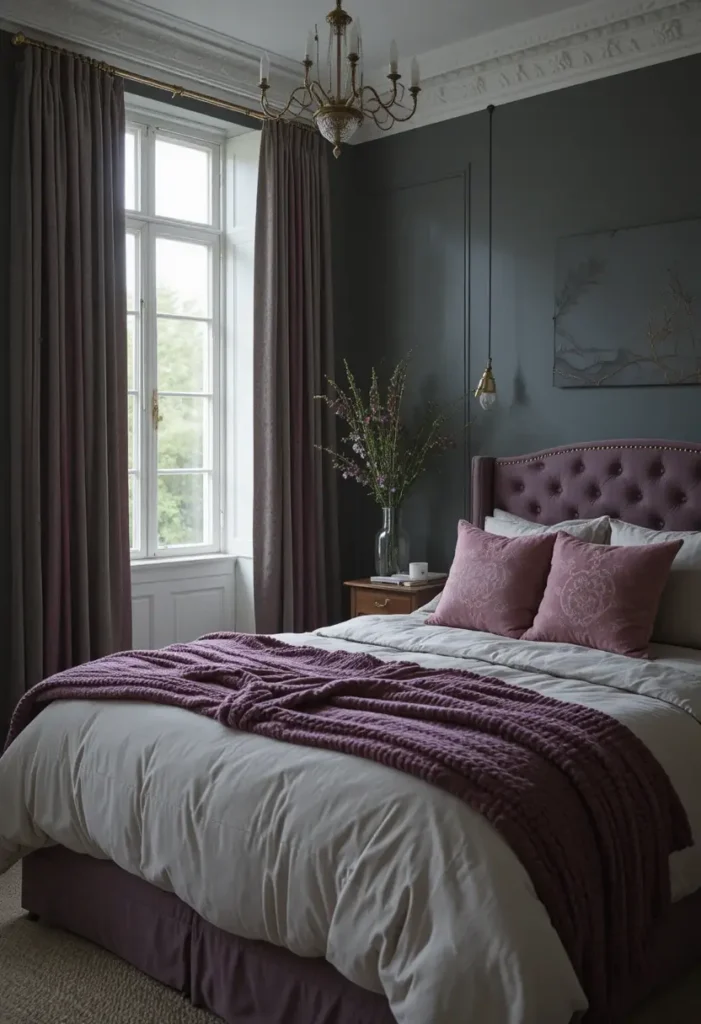
Moody colors can sometimes feel cold or rigid. Layering textures brings softness and warmth, making the bedroom feel inviting and livable.
Tips:
- Combine velvet cushions, knitted throws, and linen bedding.
- Include rugs with patterns or texture to anchor the space.
- Use textured curtains or wall panels to reflect light subtly.
Problem solved: Prevents the room from feeling austere or uncomfortable, adding comfort and dimension.
Also Read This Blog: Pink Bedroom Decor: 15 Stylish Ideas That Feel Grown-Up, Cozy, and Timeless
6. Warm Metallic Accents for Luxury
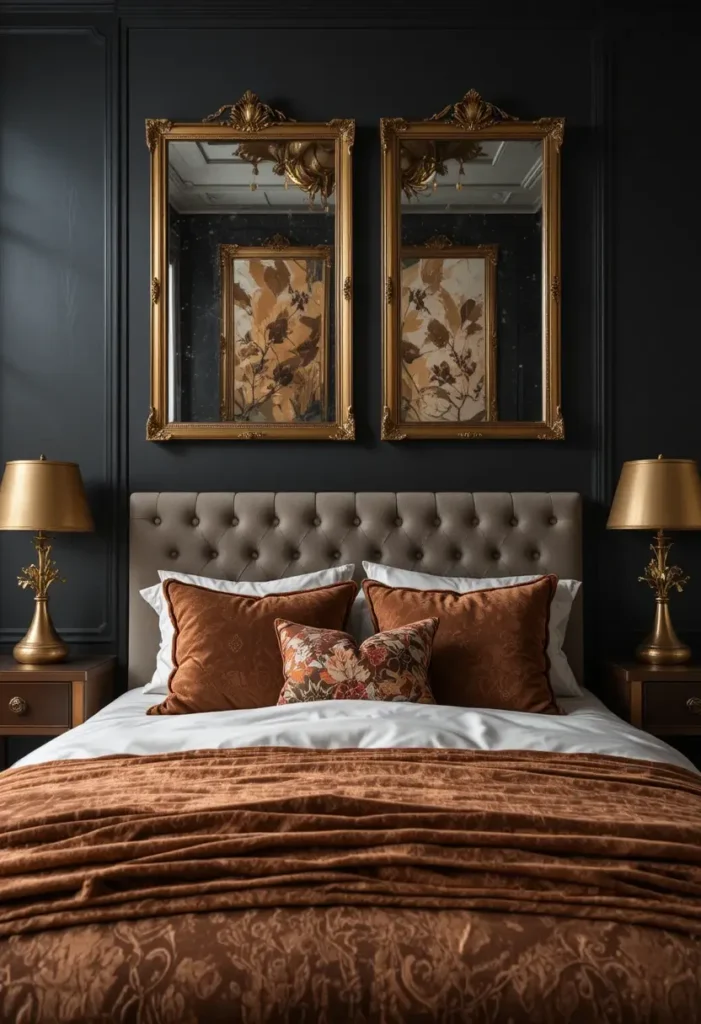
Metallic accents like brushed gold, copper, or antique brass elevate moody bedrooms, reflecting light and adding sophistication.
Tips:
- Use metals in lighting fixtures, drawer pulls, mirrors, or decorative accessories.
- Limit the use to small touches to prevent a flashy look.
- Pair with dark walls and rich fabrics to create a balanced, cohesive look.
Problem solved: Adds elegance and warmth, ensuring dark tones don’t feel flat or lifeless.
7. Layered Rugs for Comfort and Definition
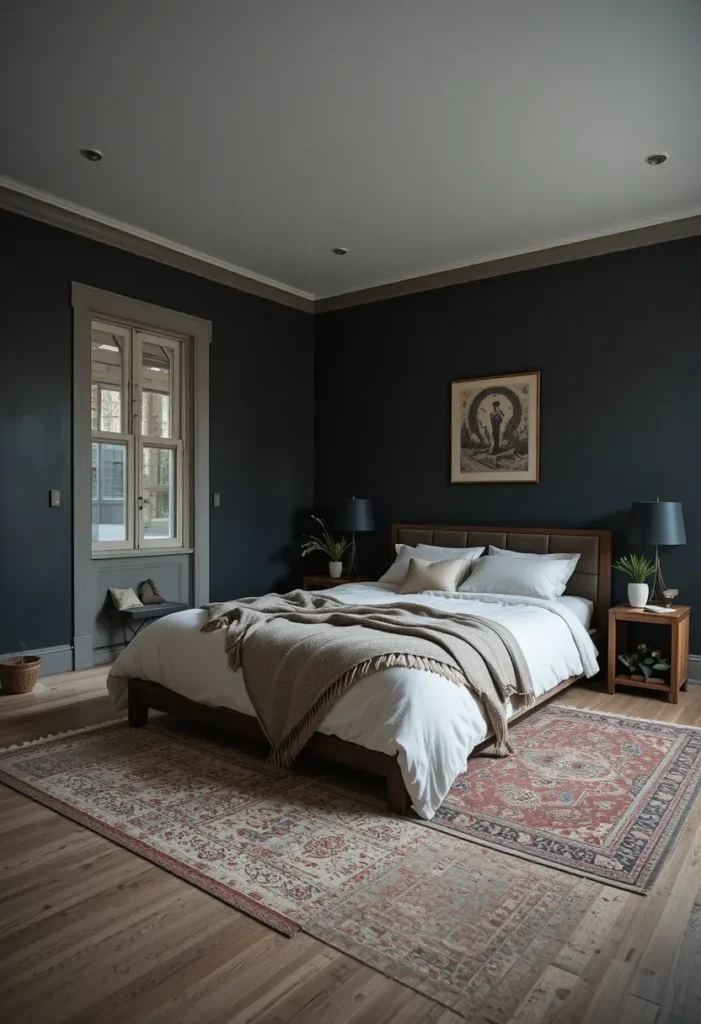
Layered rugs are a simple yet effective way to make moody bedrooms feel cozy and grounded. They also help define areas within the room.
Tips:
- Start with a neutral base rug, then layer textured or patterned rugs on top.
- Choose natural fibers like wool or jute for tactile comfort.
- Layered rugs work especially well in bedrooms with hardwood or tile floors.
Problem solved: Softens dark tones and prevents the bedroom from feeling cold or uninviting.
8. Soft Lighting for a Balanced Mood
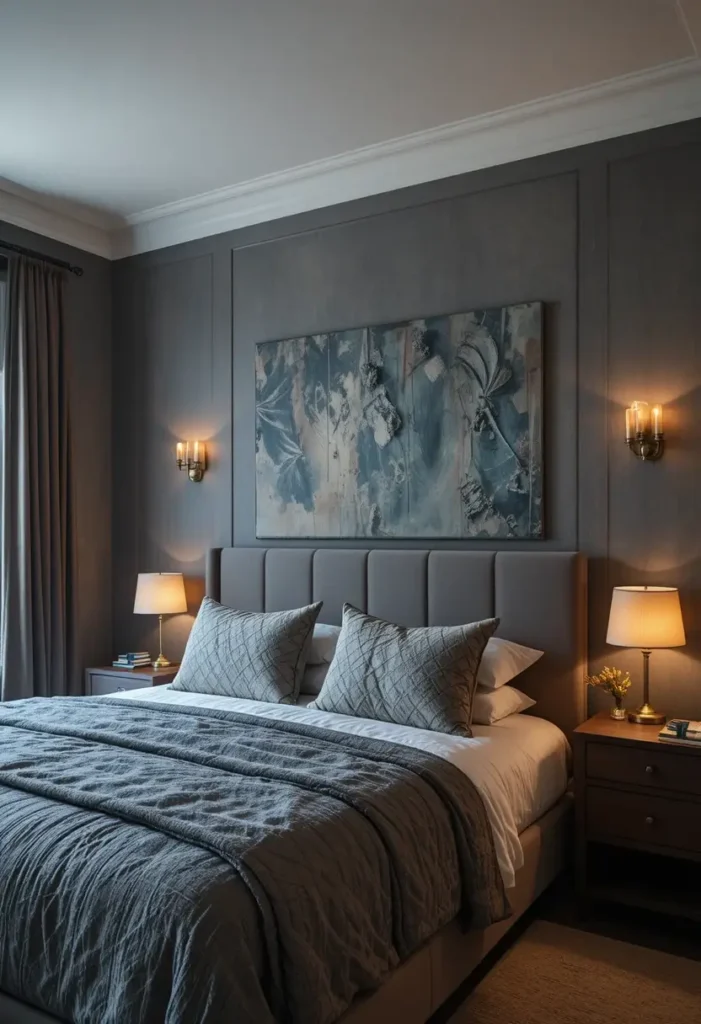
Lighting is critical in moody bedrooms. Without it, deep tones can feel oppressive. Layered lighting ensures the space is functional, comfortable, and visually appealing.
Tips:
- Combine overhead lights, wall sconces, and bedside lamps for layered illumination.
- Choose warm bulbs for a cozy, inviting atmosphere.
- Accent lighting can highlight artwork, textures, or architectural details.
Problem solved: Balances dark colors, prevents gloominess, and maintains a relaxing, intimate ambiance.
9. Moody Green Tones for Nature-Inspired Calm
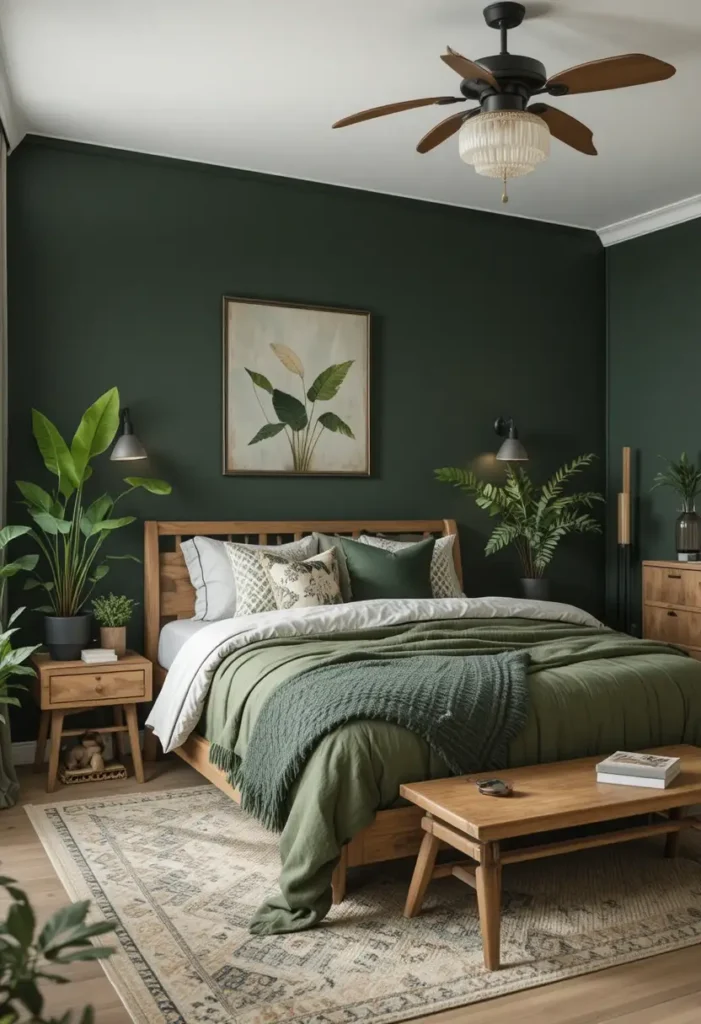
Dark green shades like forest or emerald green create a soothing, grounded bedroom that evokes nature. These tones are dramatic yet restful.
Tips:
- Pair with natural wood furniture and neutral textiles.
- Use plants or botanical artwork to enhance the organic vibe.
- Layer green tones with lighter greens or soft neutrals to avoid monotony.
Problem solved: Prevents moody bedrooms from feeling cold or overly artificial while adding freshness.
10. Navy Blue for Classic Elegance
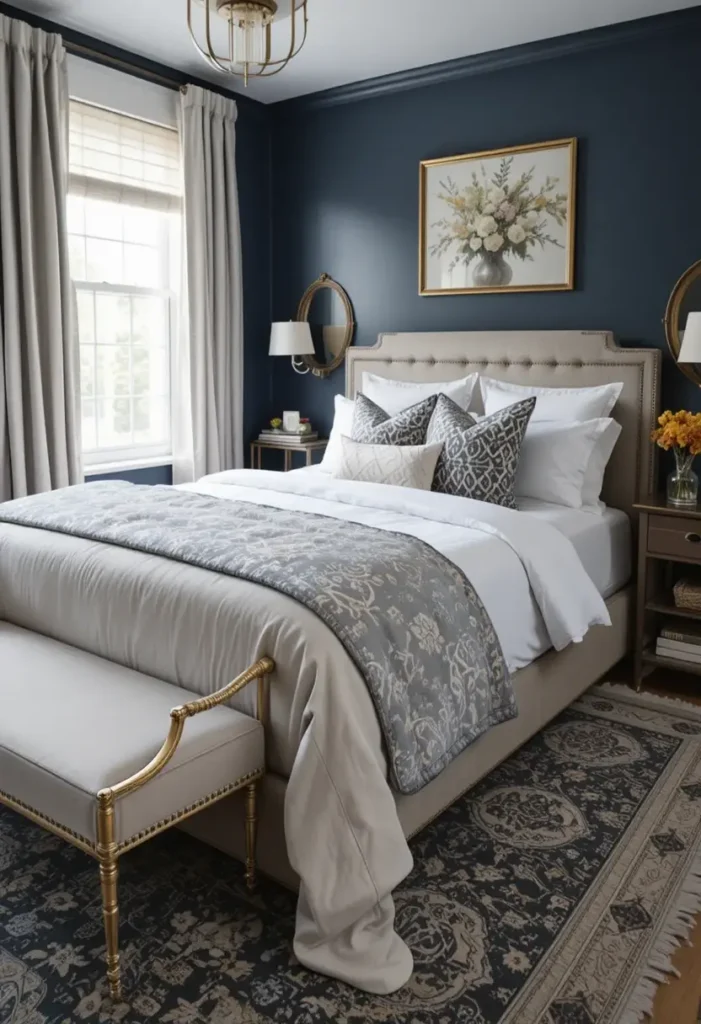
Deep navy adds timeless sophistication to a moody bedroom. It works well as a wall color, bedding, or accent furniture.
Tips:
- Combine navy with brass or gold accents for subtle luxury.
- White or light gray textiles help open up the space.
- Incorporate patterned rugs or cushions to add depth.
Problem solved: Offers drama without overpowering, making the room feel luxurious yet relaxing.
Also Read This Blog: 15 Yellow Bedroom Ideas: Bright, Cozy, and Stylish Designs for 2026
11. Moody Bedrooms with Statement Lighting
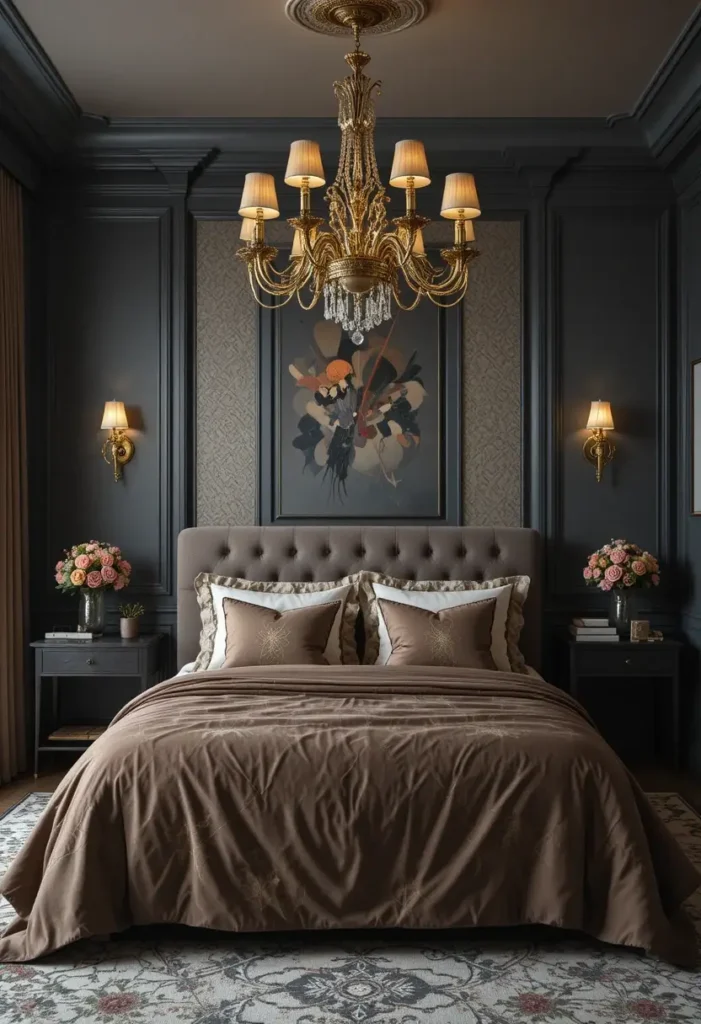
Lighting can become a centerpiece in moody spaces. Dramatic chandeliers, sculptural pendants, or wall sconces elevate the room.
Tips:
- Mix warm ambient light with focused task lighting.
- Consider dimmers to adjust mood throughout the day.
- Choose fixtures with metallic finishes to reflect light subtly.
Problem solved: Enhances ambiance, prevents darkness, and adds personality without clutter.
12. Dark and Light Color Layering
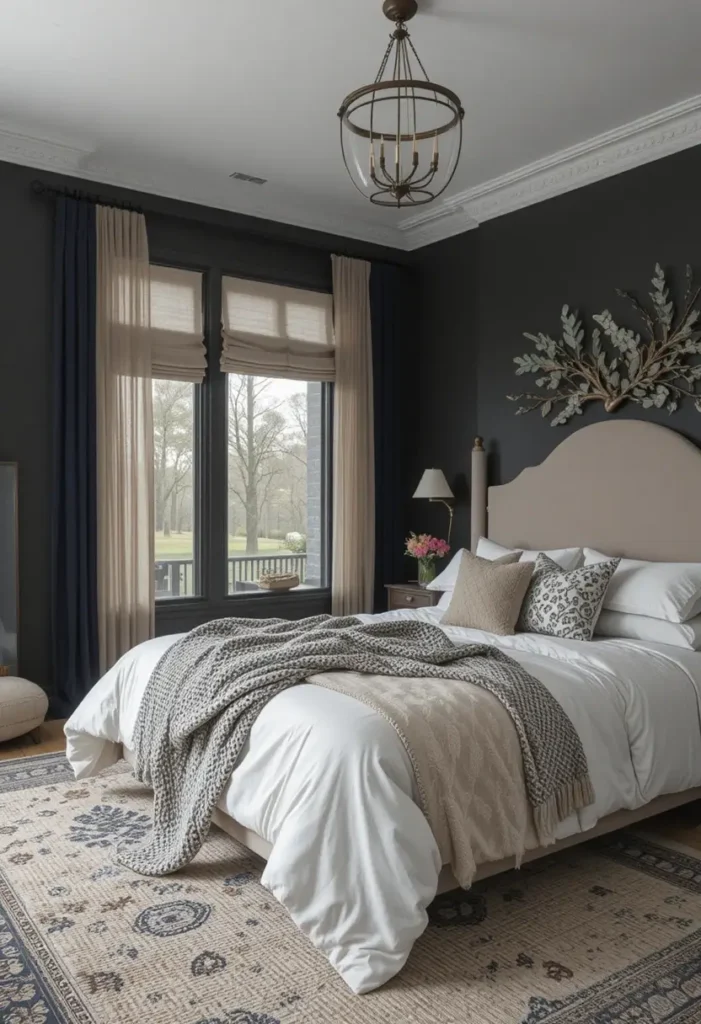
Mixing dark and light shades within the room keeps moody bedrooms balanced and visually interesting.
Tips:
- Combine dark walls with lighter bedding, rugs, or furniture.
- Layer varying shades of the same tone (charcoal, slate, soft gray).
- Use neutral curtains or cushions to break up heavy tones.
Problem solved: Avoids monotony, keeping the space visually dynamic while maintaining intimacy.
13. Moody Bedrooms with Textured Walls
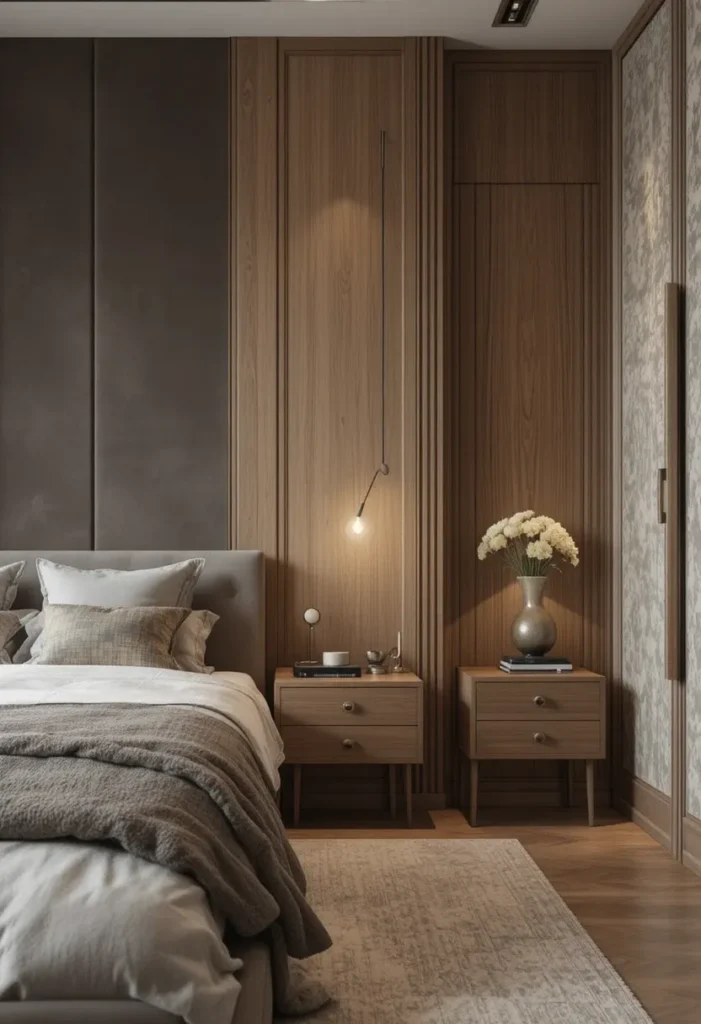
Adding texture to walls—like paneling, wallpaper, or plaster—creates depth and intrigue. Textured walls prevent dark colors from feeling flat.
Tips:
- Consider wood paneling, velvet wall panels, or subtle patterned wallpaper.
- Keep furniture minimal to highlight wall textures.
- Use accent lighting to emphasize texture.
Problem solved: Makes dark walls feel lively and tactile rather than heavy or dull.
Also Read This Blog: 15 Dark Gray Bedroom Ideas: Stylish, Cozy, and Modern Designs for 2026
14. Moody Bedrooms with Layered Bedding
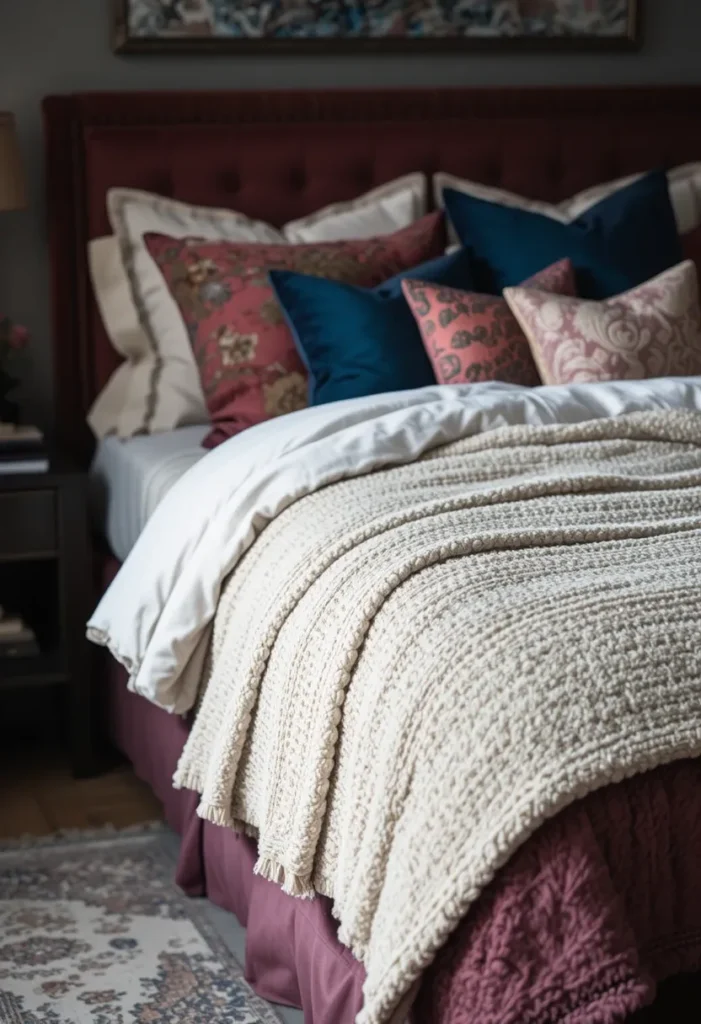
Layering bedding adds softness, warmth, and visual richness. Multiple textures make a moody bedroom cozy and inviting.
Tips:
- Combine velvet, linen, or knitted blankets with smooth sheets.
- Use accent pillows in jewel tones or metallics for depth.
- Fold throws at the foot of the bed to create dimension.
Problem solved: Prevents the room from feeling stark or uninviting despite dark walls.
15. Personalized Moody Bedrooms for Everyday Living
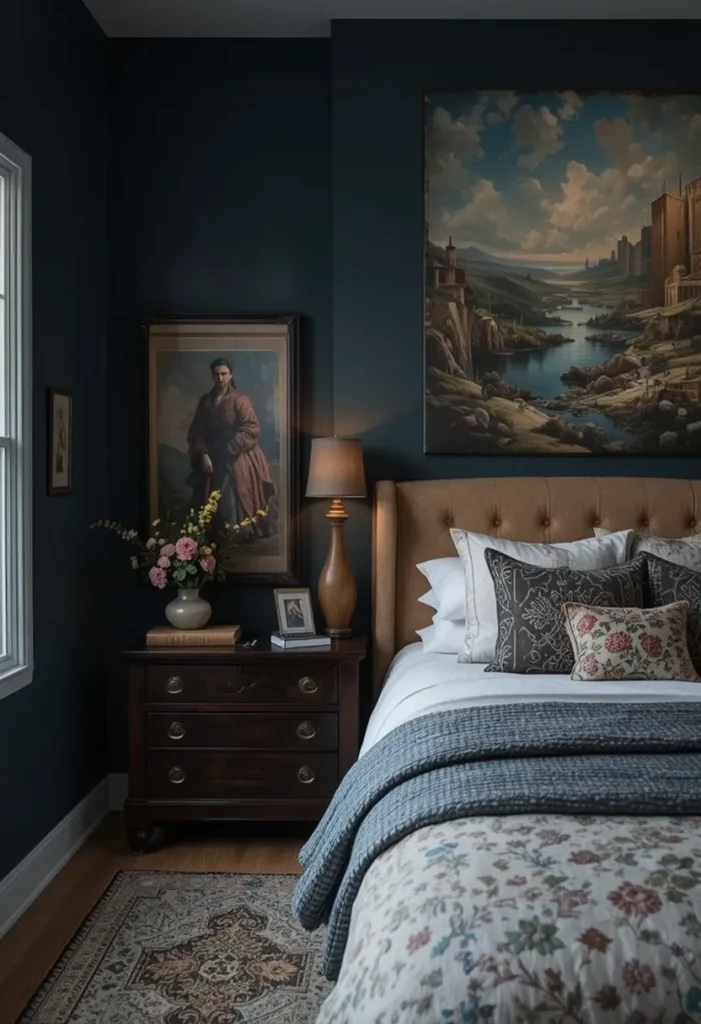
The ultimate key to a successful moody bedroom is personalization. A room must be functional and reflect your lifestyle while staying stylish.
Tips:
- Add artwork, sentimental objects, or custom furniture.
- Incorporate favorite textiles and lighting to suit routines.
- Balance dark tones with small personal accents to maintain livability.
Problem solved: Ensures the bedroom feels like a real retreat, not just a stylish display.
Final Conclusion
Moody bedrooms combine depth, elegance, and coziness when designed thoughtfully. By layering colors, textures, and lighting, and adding personal touches, homeowners can create stylish, intimate spaces that feel both dramatic and inviting. These 15 ideas offer practical solutions to common design challenges, making moody bedrooms timeless and livable.