Galley Kitchen Ideas: 16 Tips to Maximize Style and Functionality
Galley kitchens are a smart choice for many homes, especially when space is limited. They make cooking efficient because everything is within easy reach, but without careful planning, they can feel cramped or cluttered. With the right strategies, a galley kitchen can be stylish, functional, and even cozy. This guide shares 16 practical ideas to transform a narrow kitchen into a space that flows, feels larger, and works beautifully for everyday life. Each idea is easy to implement and focuses on both style and usability.
1. Open Shelving for Easy Access
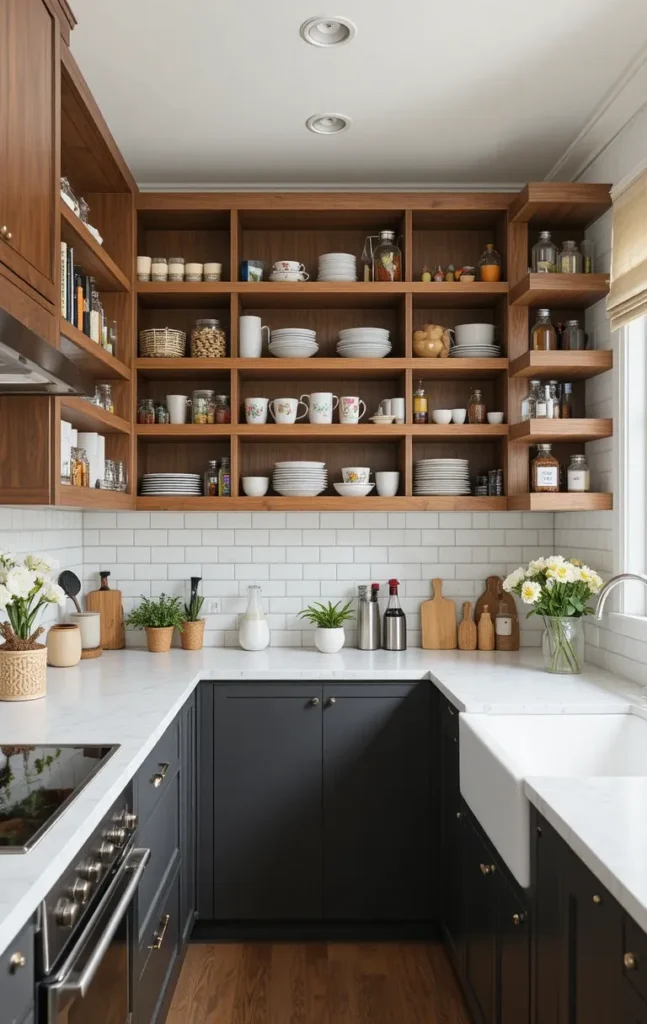
Open shelving is a fantastic way to make a galley kitchen feel more spacious. Unlike bulky cabinets, open shelves allow light to flow and provide instant access to everyday items like plates, mugs, and spices. They encourage organization because everything is visible, which helps reduce clutter.
Tip: Use matching containers or baskets for spices and dry goods to keep the shelves visually calm. Display items you use most often at eye level.
Common mistake: Overcrowding shelves. Avoid this by rotating seasonal items and only keeping essentials on display. Overfilled shelves can make the kitchen feel chaotic rather than open.
2. Bright, Reflective Surfaces
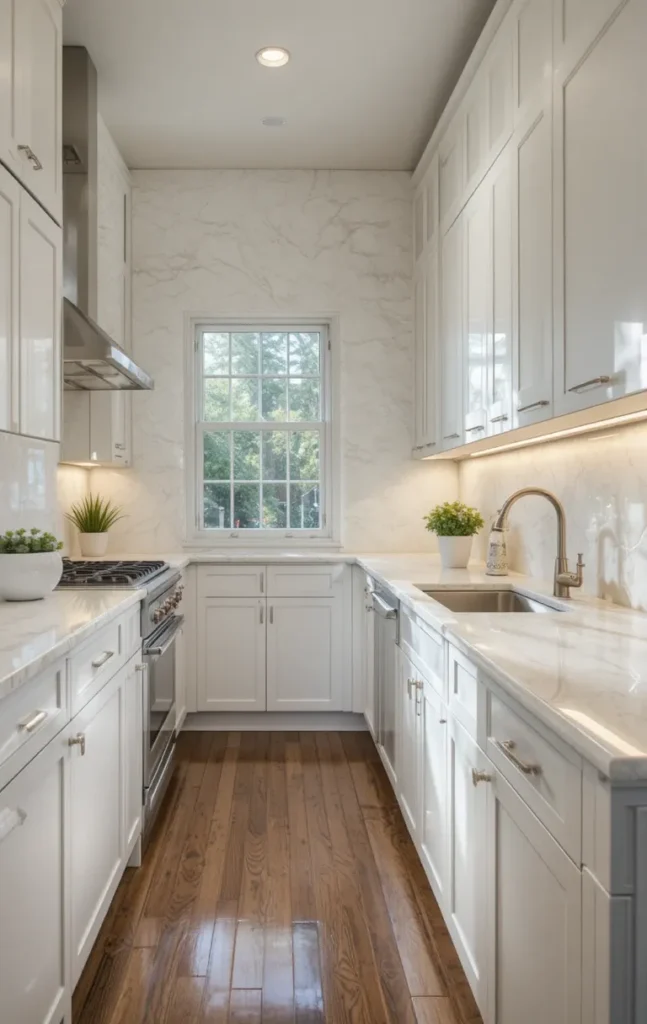
Bright colors and reflective finishes can make a narrow kitchen feel more open and inviting. White or light-colored cabinets, glossy tiles, or mirrored backsplashes bounce light around the space, visually expanding it.
Tip: Combine reflective surfaces with under-cabinet lighting to highlight counters and create depth. A glossy backsplash behind the stove or sink is both functional and visually enhancing.
Warning: Using only reflective finishes can make a kitchen feel cold or sterile. Balance them with warmer elements like wooden cutting boards, plants, or woven baskets to maintain a cozy feel.
3. Vertical Storage Solutions
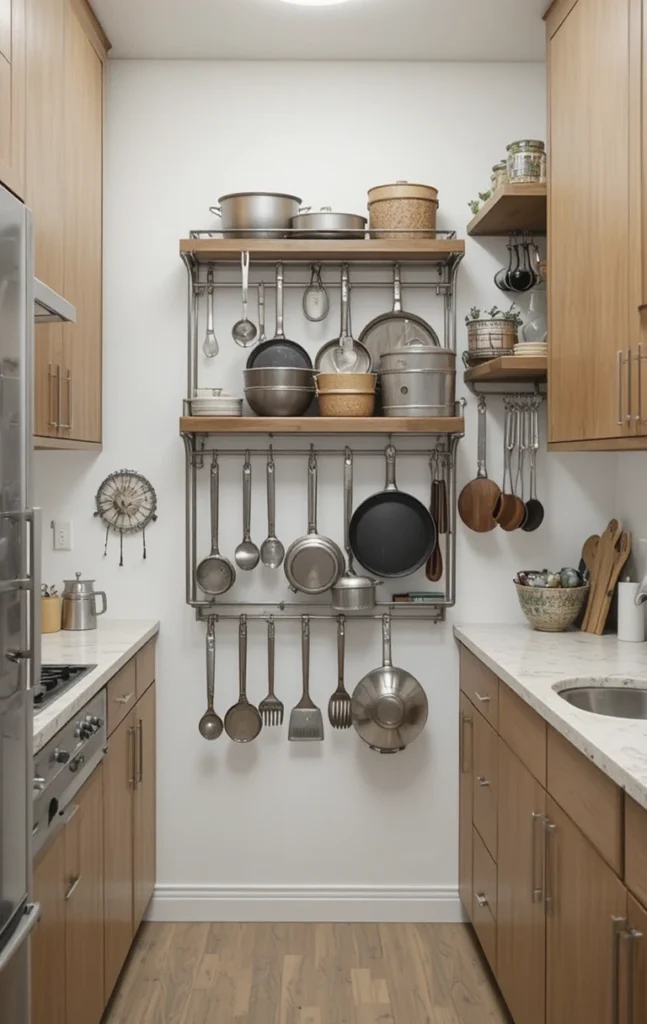
When floor space is limited, think vertical. Installing tall cabinets, shelves that go up to the ceiling, or hanging racks keeps counters clear and maximizes storage. Vertical storage also draws the eye upward, making the kitchen feel taller.
Tip: Magnetic knife strips, hanging utensil rails, or wall-mounted pot racks save space and keep everything within easy reach. A tall pull-out pantry can store snacks, canned goods, and spices neatly.
Mistake to avoid: Putting frequently used items too high. Keep everyday items at a reachable height to avoid strain, and place rarely used appliances or decor items on the top shelves.
4. Slim, Multi-Functional Furniture
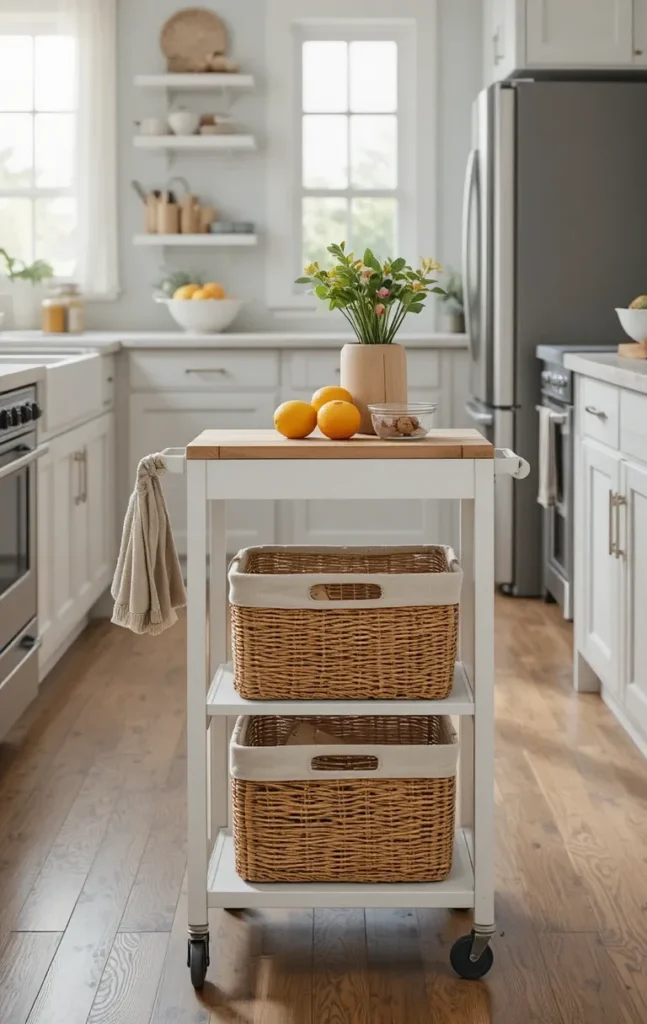
In a galley kitchen, every inch counts. Slim furniture pieces like rolling carts, foldable tables, or pull-out cutting boards can add extra prep space without blocking movement. Multi-functional pieces maximize utility while keeping the kitchen uncluttered.
Tip: Choose carts with storage underneath or foldable tables that double as extra prep space. This way, you get double functionality without overcrowding the kitchen.
Common mistake: Adding furniture that is too bulky or heavy. Narrow spaces need lightweight, slim designs that allow easy movement and maintain the visual flow of the galley layout.
5. Consistent Flooring for Flow

A continuous flooring choice creates a sense of length and cohesion in a galley kitchen. Using the same tile, wood, or laminate throughout prevents visual breaks, making the narrow space feel longer and less congested.
Tip: Lay planks or tile patterns lengthwise along the kitchen’s main walkway to elongate the space. Light-colored floors reflect more light, adding to the open feel.
Avoid: Using contrasting flooring or busy patterns that break the visual line. These can make a small kitchen feel chopped up and confined rather than continuous and open.
Also Read This Blog: 15 Bar Stools Kitchen Island Ideas: Stylish & Functional Seating for Your Home
6. Pull-Out Pantry Units

Pull-out pantry units are a game-changer for galley kitchens. They provide deep storage in a narrow space, allowing you to see and reach everything easily without bending or digging through shelves.
Tip: Organize items in labeled baskets or containers for spices, snacks, or dry goods. Rotate items regularly to keep the pantry tidy and accessible.
Mistake: Not checking clearance for the pull-out unit. Ensure it fully extends without blocking doors or appliances. Planning the layout properly avoids frustration and wasted space.
7. Lighting Layers
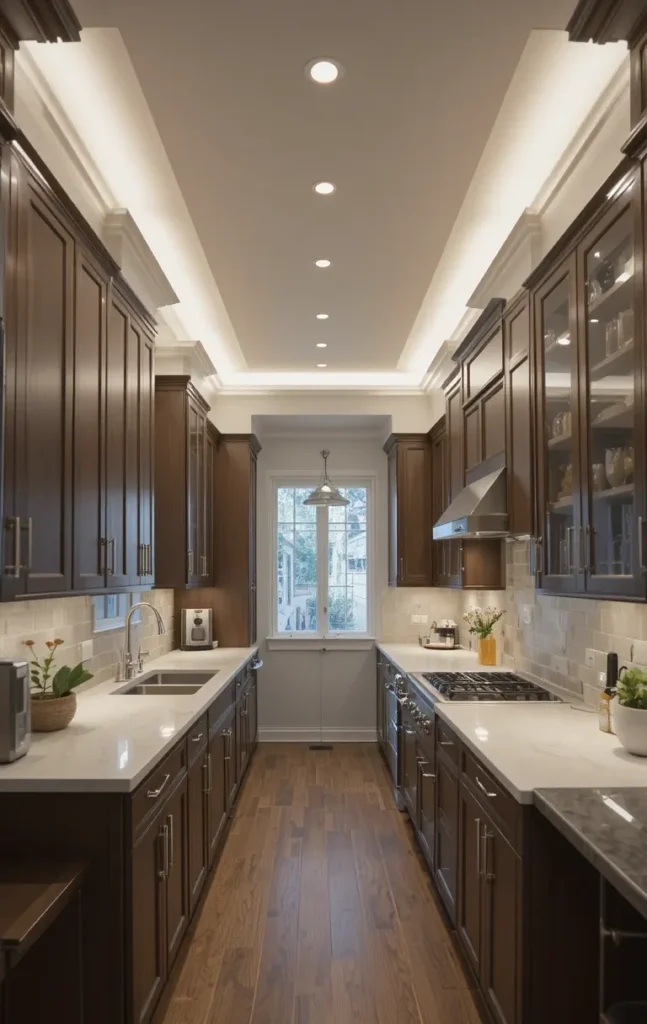
Layered lighting transforms a small kitchen. Combine overhead lights with task lighting under cabinets or along counters to create a bright, welcoming space. Proper lighting reduces shadows, which can make a narrow galley feel cramped.
Tip: LED strips under cabinets are energy-efficient and provide excellent task lighting. Consider a combination of recessed ceiling lights and pendant lighting over work areas for versatility.
Common error: Relying solely on ceiling lights. Shadows can make counters look dim and narrow spaces feel more confined. Layered lighting improves visibility and overall ambiance.
8. Minimal Hardware for Clean Lines
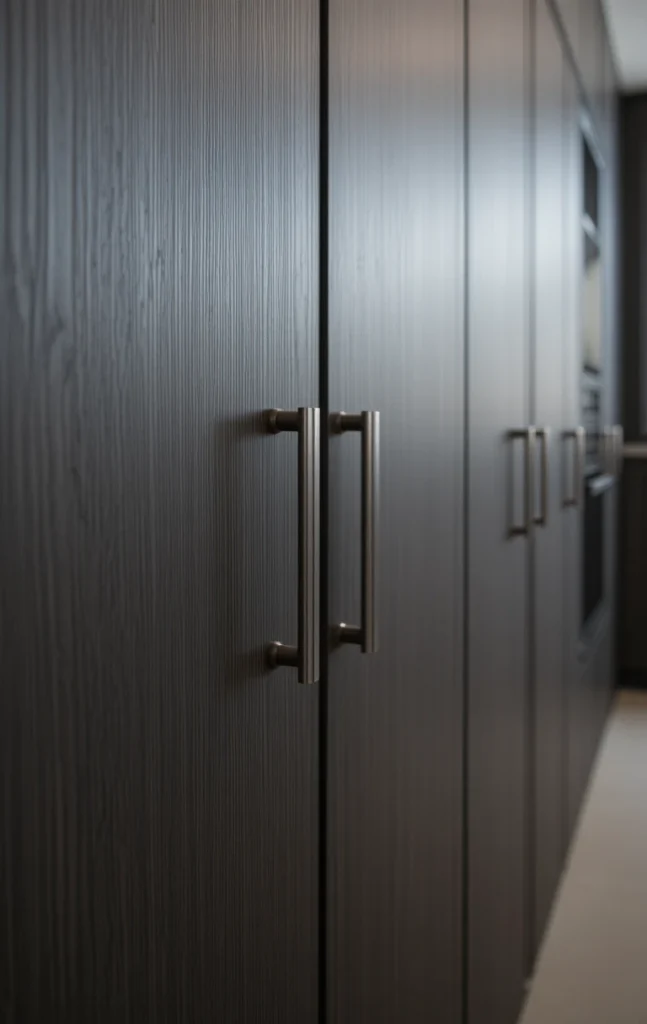
Small kitchens benefit from minimal, streamlined hardware. Slim handles, bar pulls, or push-to-open cabinets keep lines clean and avoid visual clutter. Heavy or ornate knobs can make a narrow space feel busy and congested.
Tip: Recessed handles or simple bar pulls add a modern look without overwhelming the kitchen. Match all hardware to maintain a cohesive design.
Avoid: Mixing different hardware styles. Consistency helps the eye flow along the kitchen walls, keeping the space looking open and orderly.
Also Read This Blog: 15 Kitchen Island Seating Ideas: Stylish & Functional Solutions for Your Home
9. Mirrors to Expand Space
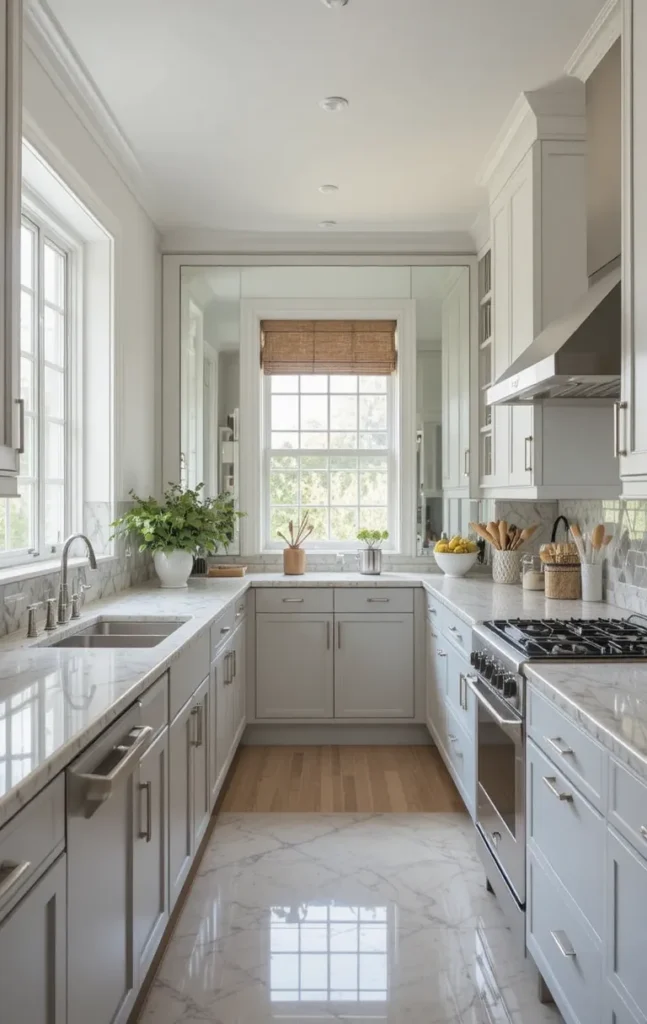
Mirrors aren’t just decorative—they can make a galley kitchen feel twice as wide. A mirrored backsplash or a reflective panel behind countertops adds depth and brightens the space by bouncing light around.
Tip: Place mirrors opposite a window or light source to maximize the effect. Even a small mirror strip along the wall can open up the kitchen visually.
Common mistake: Using mirrors without thought to cleaning. Smudges are noticeable in a small kitchen, so choose easy-to-clean glass or acrylic panels and wipe them regularly.
10. Color Coordination for Harmony
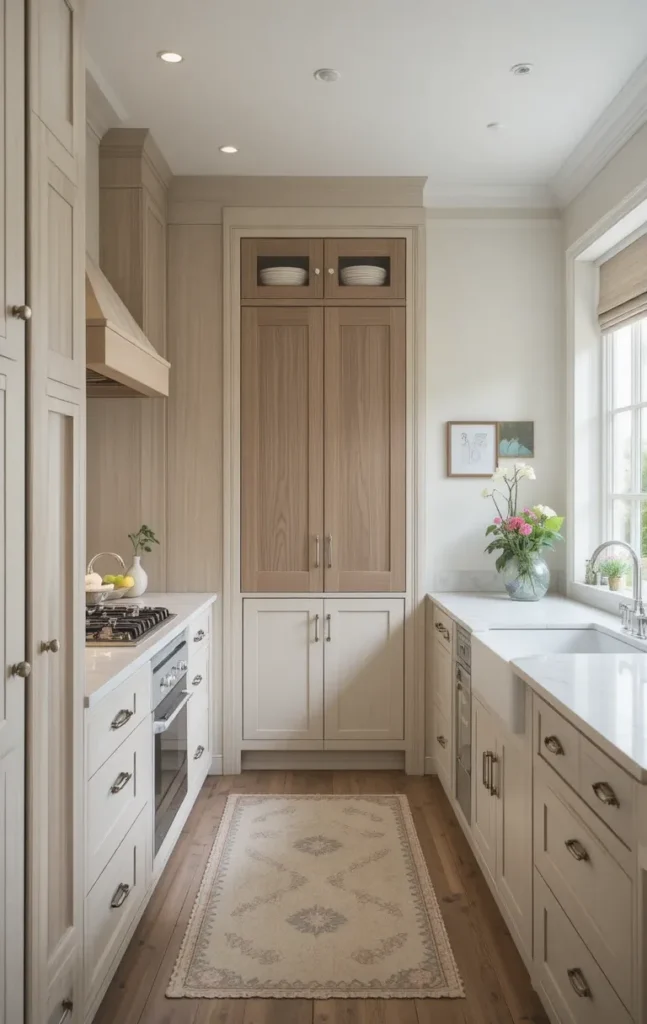
Choosing a consistent color palette helps a narrow kitchen feel cohesive and calm. Using two or three complementary colors keeps the space visually open and avoids the chaos of mismatched tones.
Tip: Pair a light base color (like white, cream, or soft gray) with accents in wood, metal, or muted tones to add warmth. Consider painting cabinets one color and walls another for balance.
Mistake to avoid: Overloading the kitchen with bold or clashing colors. Too many strong colors in a tight space can make it feel smaller and overwhelming.
11. Smart Appliance Placement
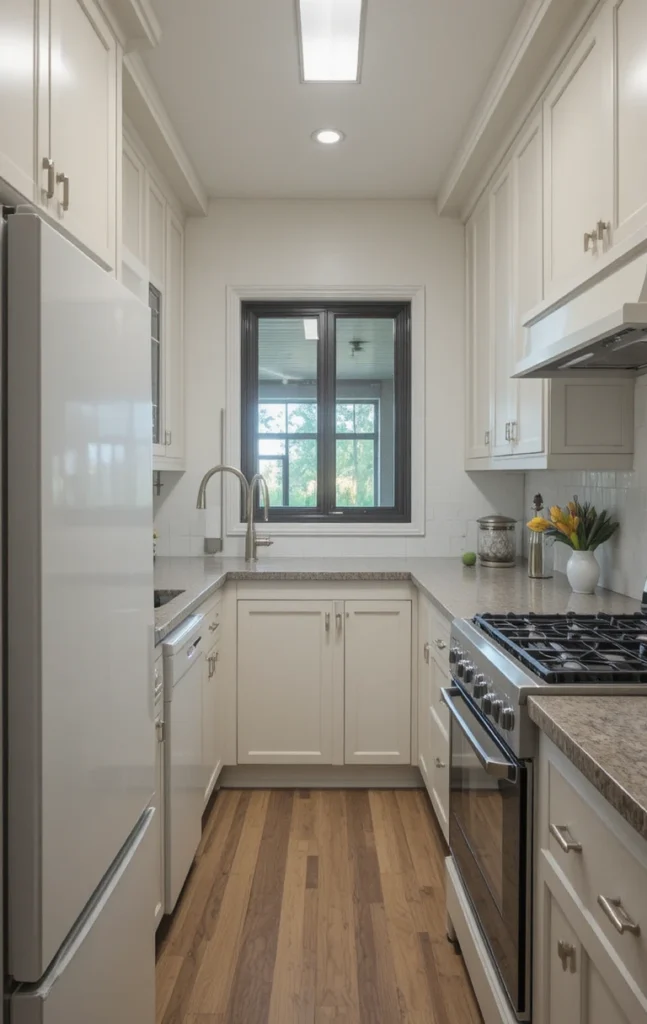
In galley kitchens, placement matters more than size. Appliances should be positioned for an efficient workflow—fridge near prep space, sink next to the stove, and dishwasher within reach but not in the main walkway.
Tip: Follow the “kitchen work triangle” rule to optimize efficiency: fridge → sink → stove. Even a small shift in appliance placement can reduce steps while cooking.
Common error: Placing large appliances in narrow walkways. Ensure doors can open fully without blocking movement or access to counters.
Also Read This Blog: Long Kitchen Layout: 14 Smart Ideas to Make It Feel Balanced and Beautiful
12. Pull-Out Trash & Recycling Units
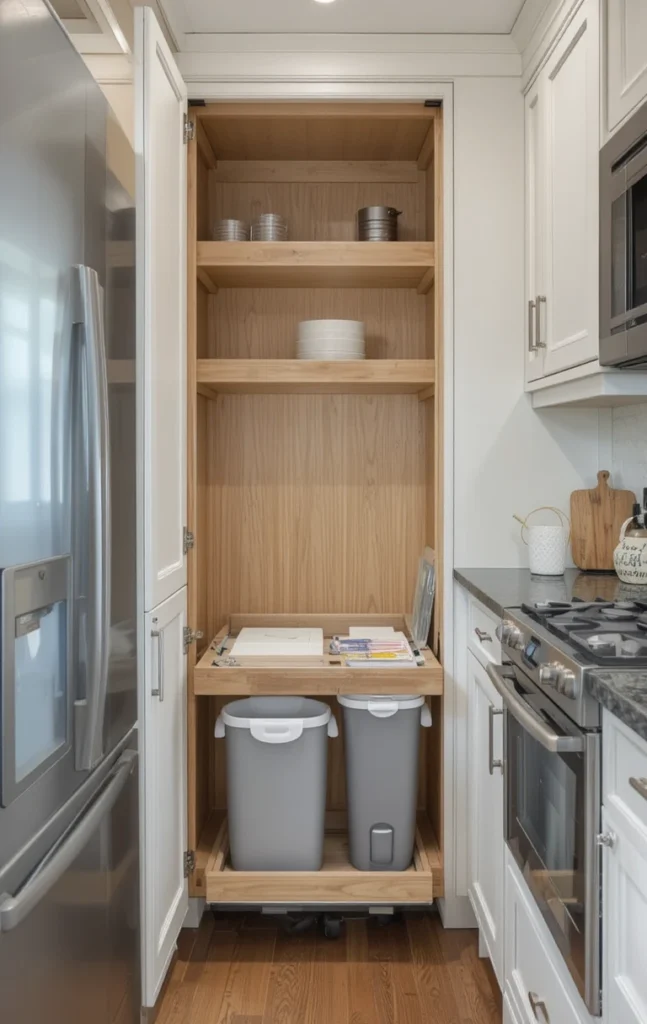
Hidden pull-out trash bins keep the kitchen clean and uncluttered. They are particularly helpful in galley layouts where space is limited and trash cans can block movement.
Tip: Install separate bins for recycling and waste in one unit. This encourages easy sorting and keeps counters free.
Mistake: Using a single, large bin in an awkward corner. It can block drawers or doors when opened. Pull-out units save both space and effort.
13. Glass-Front Cabinets for Openness
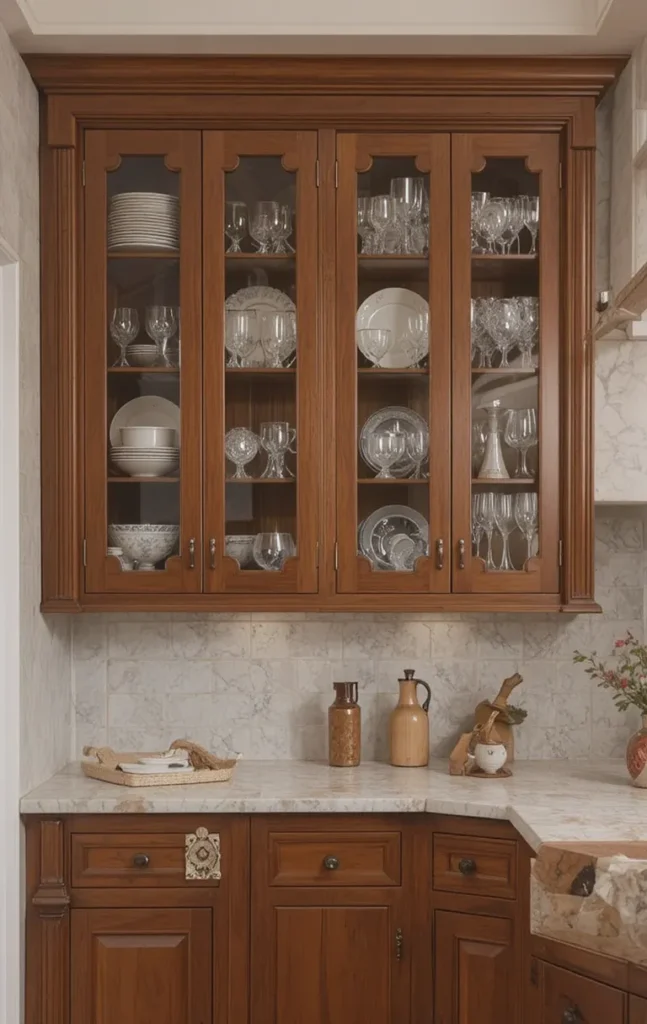
Glass-front upper cabinets make a kitchen feel lighter than solid doors. They allow you to display attractive dishes or glassware while maintaining a sense of openness.
Tip: Keep glass cabinets organized and avoid overcrowding. Use matching plates or glassware for a clean, intentional look.
Common error: Filling glass cabinets with mismatched items. A chaotic display can make the space look cluttered rather than elegant.
14. Compact Breakfast Nook
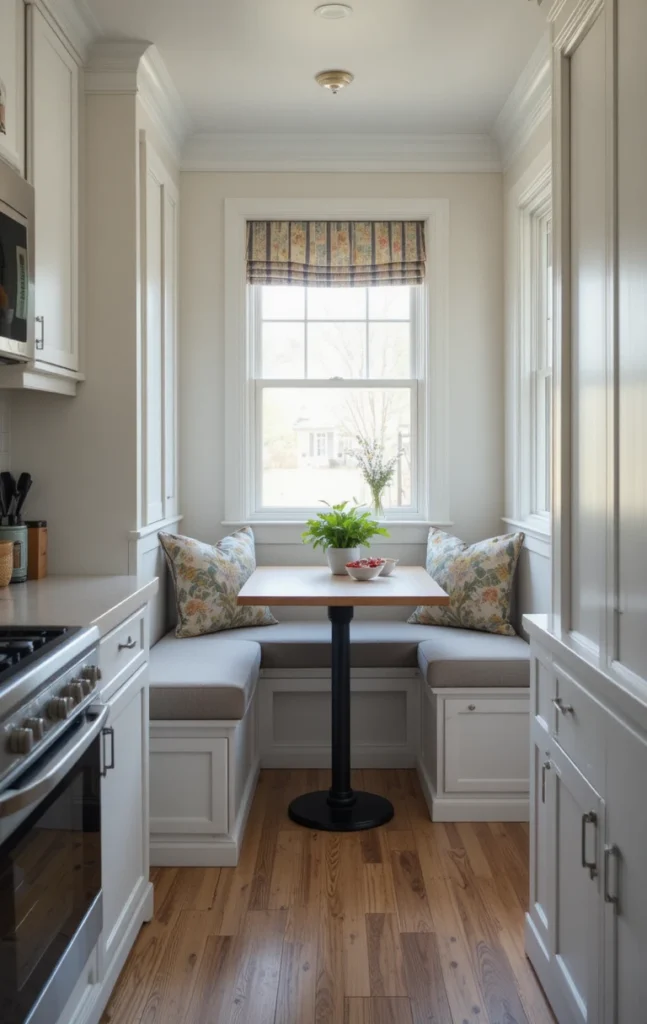
Even in narrow kitchens, a small breakfast nook can fit along a wall or window area. A foldable bench or wall-mounted table creates a cozy spot without interrupting kitchen flow.
Tip: Add a small cushion bench with storage underneath. It doubles as seating and extra storage for kitchen essentials.
Mistake to avoid: Installing large tables or chairs that block walking space. Keep furniture slim, foldable, or wall-mounted in galley kitchens.
Also Read This Blog: One Wall Kitchen with Island: 14 Smart Ideas That Actually Work
15. Pull-Down or Adjustable Shelving
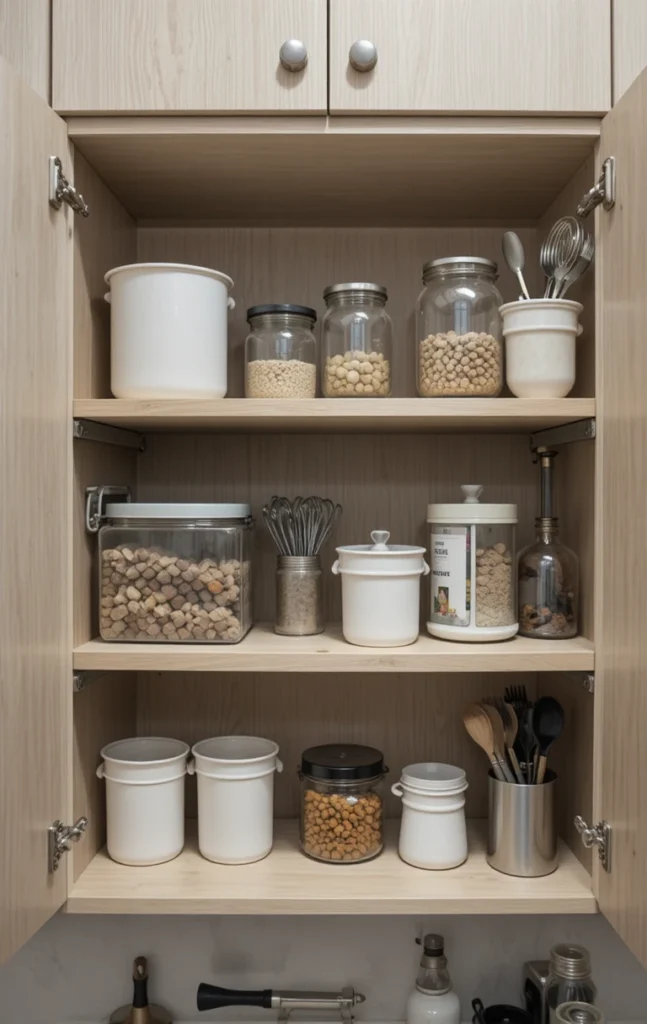
Adjustable shelves inside cabinets allow you to customize storage for taller appliances, large mixing bowls, or oversized pans. Pull-down shelves also make items accessible without stretching or climbing.
Tip: Use adjustable shelving in pantry cabinets to store both small spice jars and tall cereal boxes efficiently. Rotate shelves as your needs change.
Common mistake: Fixed shelves that don’t fit your items. They can waste space or force stacking, which leads to clutter and frustration.
16. Minimal Decor & Accessories
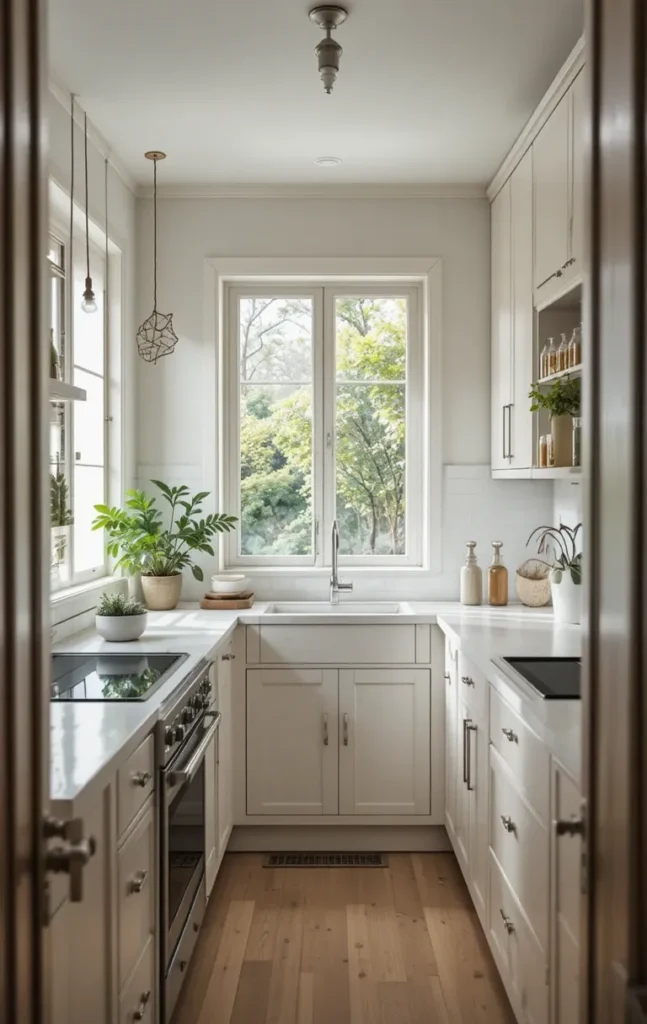
Less is more in a galley kitchen. Small, meaningful decor accents add personality without crowding the space. Focus on a few items like a small plant, a stylish utensil holder, or a piece of art.
Tip: Use wall-mounted accessories instead of countertop clutter. Magnetic spice jars, hanging rails, and small floating shelves maintain openness.
Mistake: Overdecorating. Too many items on counters or walls can make a narrow kitchen feel chaotic and cramped. Keep surfaces mostly clear.
Conclusion
A galley kitchen doesn’t have to feel tight or restrictive. With thoughtful storage, smart layouts, and simple design touches, it can be stylish, functional, and a joy to cook in. Start small—adjust shelving, lighting, or appliance placement—and gradually implement other ideas to create a harmonious flow. With patience and careful planning, even a narrow kitchen can feel open, bright, and perfectly tailored to your everyday needs.