Chicken Ramen Noodles: The Ultimate Homemade Guide for Flavor You’ll Love
If you’ve ever craved a warm bowl of chicken ramen noodles only to end up with bland broth, rubbery chicken, or soggy noodles — you’re not alone. Many people struggle with homemade ramen because they follow recipes that skip critical steps or rely on store‑bought flavor packets. The result? A disappointing bowl that tastes nothing like restaurant quality.
This recipe changes that. Here, you’ll learn why traditional recipes fall short, how to build deep, savory broth, how to cook chicken perfectly, and how to assemble your bowl so every bite delivers rich flavor, vibrant texture, and comfort. Whether you’re a busy weeknight cook or a ramen lover seeking better results, this guide gives you practical solutions backed by culinary insights.
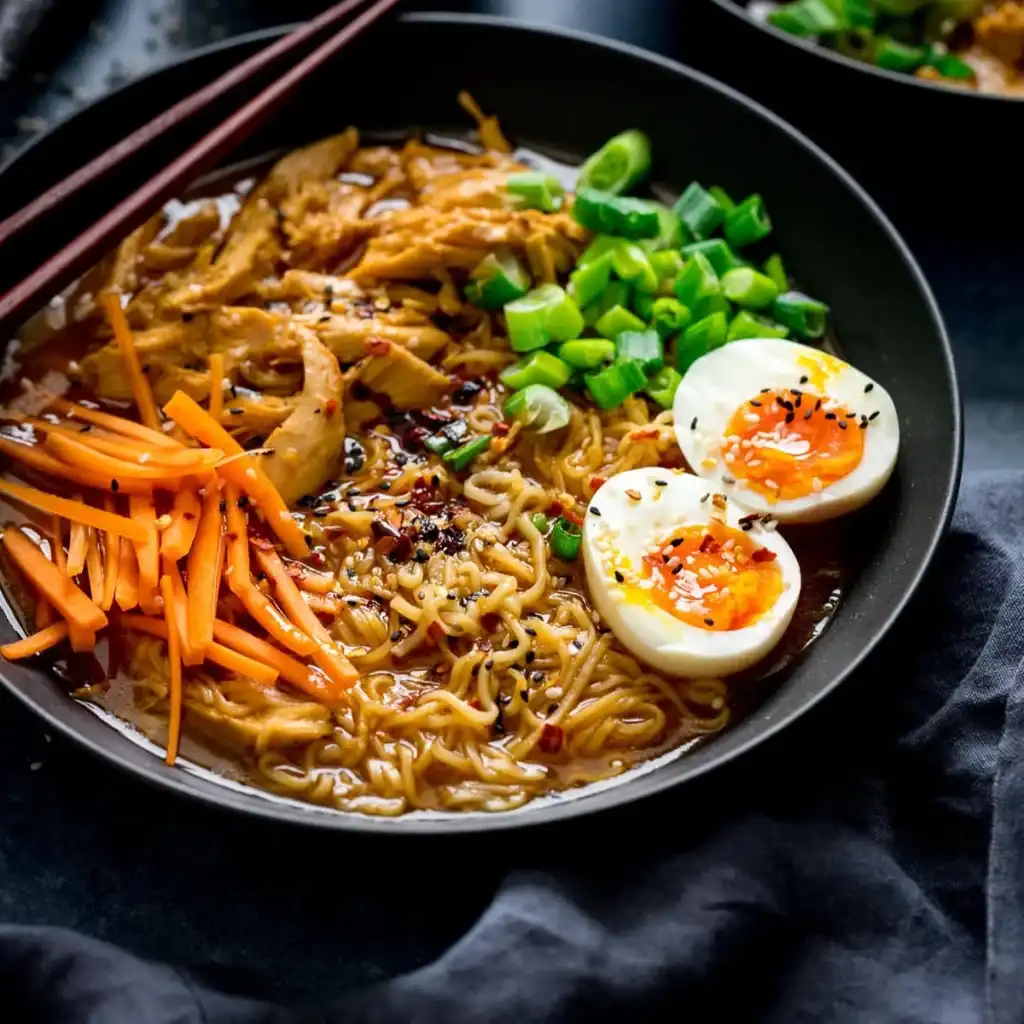
Why Most Chicken Ramen Noodles Don’t Taste Great
Before we dive into the recipe, it’s important to understand common pitfalls:
- Thin, flavorless broth — many recipes skip aromatics and slow development
- Overcooked or dry chicken — proteins need proper handling
- Soggy or clumped noodles — wrong cooking technique
- Imbalanced seasoning — too salty, too sweet, or too flat
- Lack of texture contrast — no toppings or layering
This guide fixes all of those issues by building flavor from the bottom up and layering textures so every spoonful is satisfying.
What You’ll Need (Ingredients)
For the Broth
- 6 cups chicken stock (homemade or low‑sodium store‑bought)
- 2 tablespoons soy sauce or tamari (for gluten‑free)
- 1 tablespoon mirin or rice vinegar
- 1 teaspoon sesame oil
- 1 small piece ginger (smashed)
- 3 garlic cloves (crushed)
- 1 green onion (white part)
For the Chicken
- 2 chicken thighs (boneless, skinless) or chicken breast
- 1 teaspoon soy sauce
- ½ teaspoon salt
- ½ teaspoon black pepper
- Optional: ½ teaspoon garlic powder
For the Ramen
- 2 servings ramen noodles (fresh or dried)
- Soft‑boiled eggs (optional but recommended)
- Vegetables: bok choy, spinach, shredded carrots
- Toppings: nori sheets, sesame seeds, sliced green onions
- Optional spice: chili crisp or sriracha
Step 1: Master the Broth — It’s Where Flavor Comes From
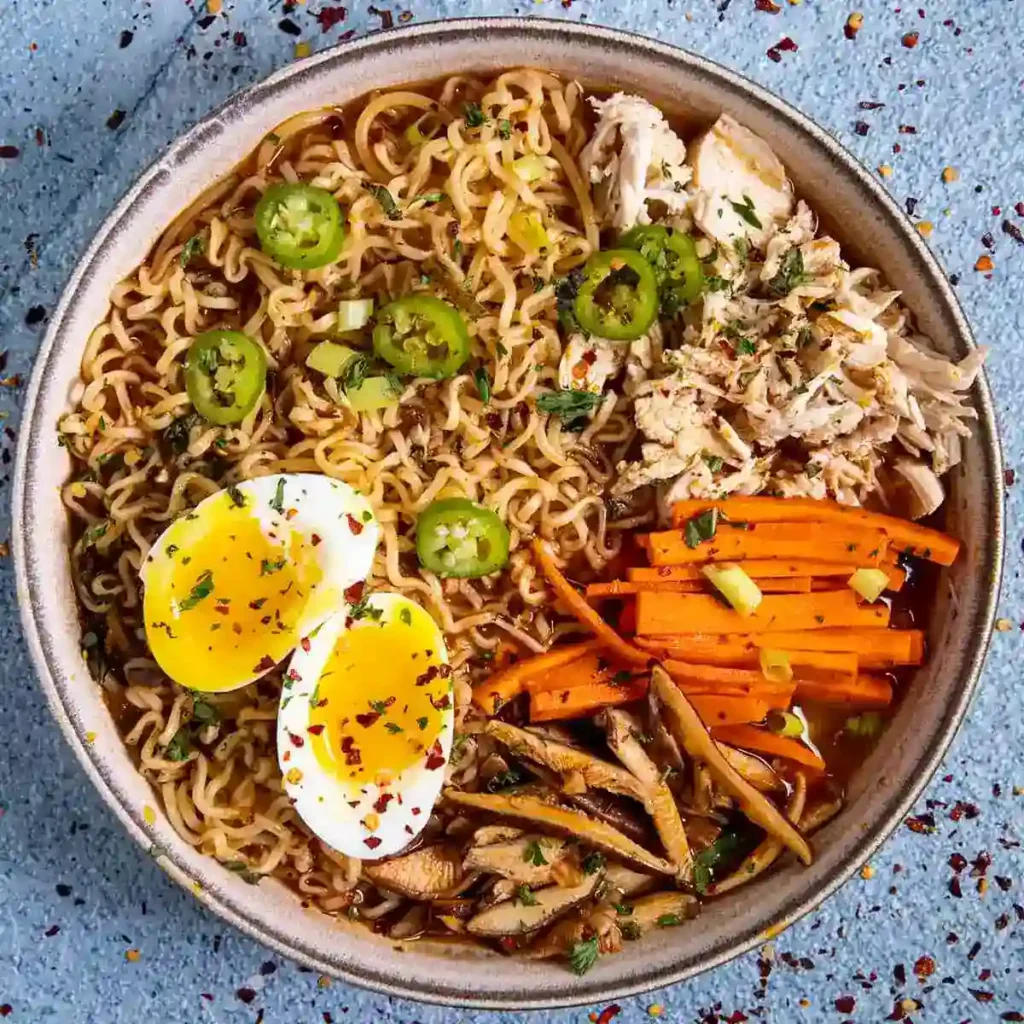
Flavor foundation = good broth. Many recipes use water + seasoning, but that results in a flat soup. Here’s how to build a rich base:
- Warm the stock in a pot over medium heat.
- Add garlic, ginger, and the white part of the green onion.
- Incorporate soy sauce + mirin.
- Cover and simmer for 15–20 minutes.
Tip: If you have homemade chicken stock, even better. The gelatin and natural fats deepen richness.
Why it works: Aromatics release oils and fragrance that infuse the broth, making it bold without being salty.
Step 2: Season and Cook the Chicken
Restaurant‑style chicken in ramen should be tender, juicy, and flavorful, not dry.
- Pat the chicken dry.
- Mix soy sauce, salt, pepper, and garlic powder.
- Rub the seasoning evenly on the chicken.
- Heat a skillet with 1 teaspoon oil over medium‑high heat.
- Sear chicken 2–3 minutes per side until golden.
- Reduce heat, cover, and cook 3–4 more minutes until internal temp hits 165°F (75°C).
Pro Tip: Let the chicken rest 5 minutes before slicing — this keeps juices locked in.
Step 3: Prepare the Noodles Without Sogginess
Cooking noodles perfectly is a distinct skill often overlooked.
- Bring a separate pot of water to a fast boil.
- Add ramen noodles and cook according to the package (usually ~3 minutes).
- Swirl gently so they don’t clump.
- Drain and rinse briefly with warm water to stop overcooking.
Why separate water matters: Cooking noodles in the broth dilutes flavor and releases starch that clouds the soup.
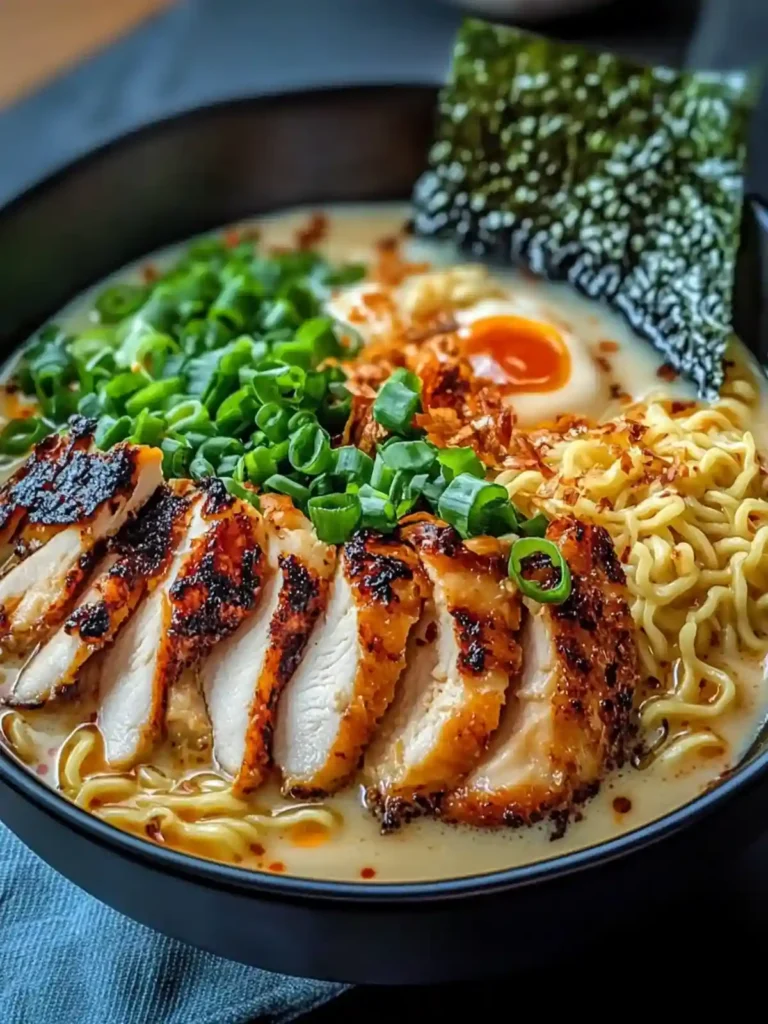
Step 4: Build Your Bowl (Layering for Texture)
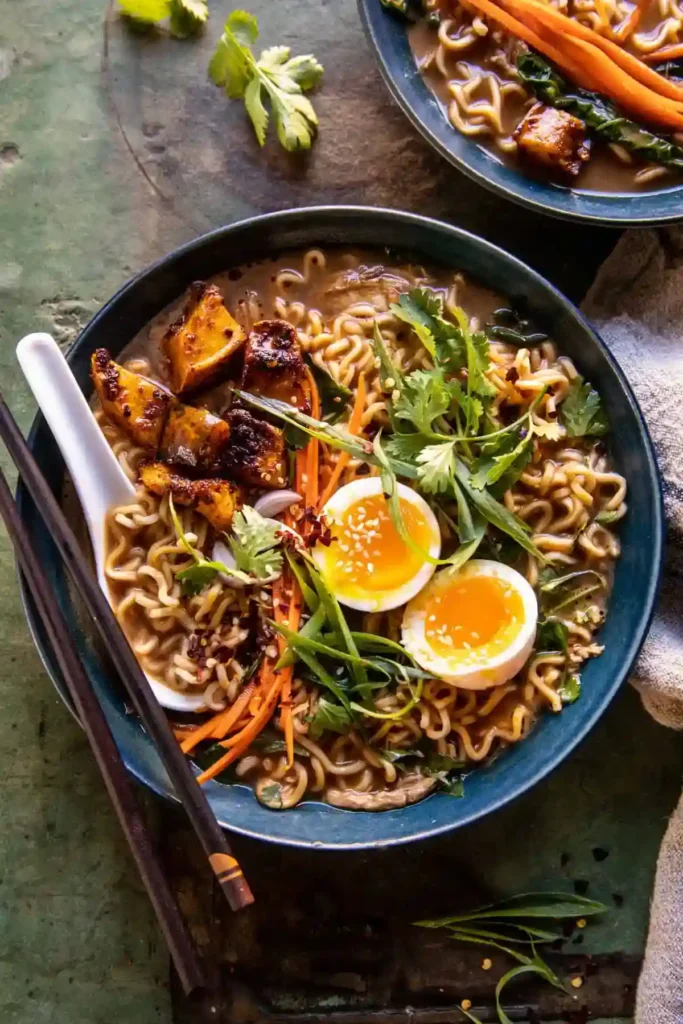
A good bowl of chicken ramen noodles isn’t just soup + noodles. It’s about contrast:
- Noodles at the bottom
- Broth poured over
- Sliced chicken on top
- Vegetables (bok choy or spinach) for crunch
- Soft‑boiled egg for richness
- Toppings: sesame seeds, nori, extra green onions
- Optional heat: chili crisp or sriracha
This layering means every bite has texture, warmth, and balance.
Pro Tips for Next‑Level Flavor
1. Add Layered Aromatics
A little extra ginger and garlic never hurts. You can strain them or leave them in for stronger flavor.
2. Use Low‑Sodium Stock
Control salt levels. You can always add more later, but you can’t take it out.
3. Add Fat Wisely
A drop of sesame oil at the end intensifies aroma without being greasy.
4. Bone Broth Upgrade Option
For deeper umami, substitute part of the chicken stock with bone broth.
Alternatives & Variations (Users Actually Search For)
Low‑Carb Version: Replace ramen noodles with spiralized zucchini or shirataki noodles.
Spicy Chicken Ramen: Stir chili garlic sauce into the broth and add jalapeño slices.
Vegetarian Twist: Use mushroom broth and tofu instead of chicken.
Creamy Tonkotsu‑Style Ramen: Add a splash of coconut milk and simmer longer for creamier texture.
Also Read This Blog: Egg Noodles Recipes: 22 Delicious Ways to Enjoy Comfort Food
Common Problems (and Quick Solutions)
| Problem | Fix |
| Broth tastes flat | Add extra soy sauce or a splash of mirin |
| Chicken dry | Don’t overcook; rest before slicing |
| Noodles soggy | Cook separately and rinse |
| Ramen too salty | Add water or unsalted broth |
Storage & Reheating (Real User Value)
- Broth: Store up to 4 days in the fridge
- Cooked chicken: 3–4 days
- Noodles: Best fresh, but leftovers can be warmed in the microwave with broth to maintain texture
- Best reheating: Gently simmer broth and add noodles/chicken until warmed through
Nutrition Snapshot (Helpful Detail)
Per Serving (Approximate)
- Calories: 420 kcal
- Protein: 28g
- Carbohydrates: 52g
- Fat: 14g
- Fiber: 3g
- Sodium: 780mg
- Sugar: 6g
Why This Chicken Ramen Recipe Beats Takeout (And Competitors)
✔ Uses real aromatics for deeper flavor
✔ Separates noodle cooking for perfect texture
✔ Includes velveting‑style chicken seasoning for tenderness
✔ Balances salt, sweetness, and umami
✔ Offers troubleshooting and variations
✔ Includes nutrition & storage tips
Most recipe posts give ingredients and steps — but don’t explain why things matter. This article does both. It’s not just a recipe — it’s a learning experience.
Conclusion
Chicken ramen noodles don’t have to be intimidating. With the right broth base, perfectly cooked chicken, and clean noodle technique, you can make a bowl that feels savory, comforting, and satisfying — every time.
This recipe isn’t just about eating dinner; it’s about confidence in the kitchen, understanding technique, and turning a simple dish into something extraordinary.
Now grab your ingredients, prep that broth, and enjoy a bowl of homemade chicken ramen noodles that’s truly better than takeout.