Long Kitchen Layout: 14 Smart Ideas to Make It Feel Balanced and Beautiful
A long kitchen layout can feel like a blessing or a challenge. On one hand, you have generous wall space and room to move. On the other, it can easily feel narrow, disconnected, or awkwardly stretched.
The good news is that a long kitchen can be incredibly functional and elegant when designed thoughtfully. With the right layout decisions, lighting, and storage strategy, you can turn that “hallway effect” into a space that feels intentional and inviting. Let’s start with the first half of smart, practical ideas.
1. Break the Space into Functional Zones
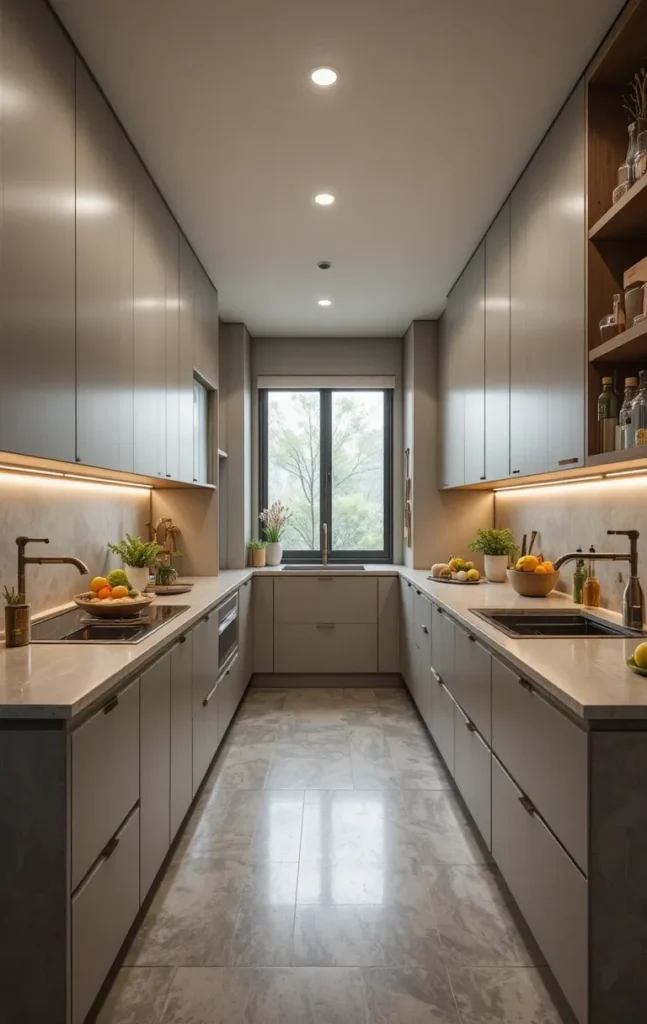
In a long kitchen layout, everything tends to line up in a straight row. Instead of treating it as one continuous stretch, divide it into zones — prep, cooking, cleaning, and storage.
This works because it creates rhythm and prevents the space from feeling endless. For example, place the sink in the middle, stove on one end, and pantry on the other.
Tip: Use lighting or slight material changes to define each zone.
Mistake to avoid: Placing everything randomly without considering workflow.
2. Add Visual Breaks Along the Cabinets
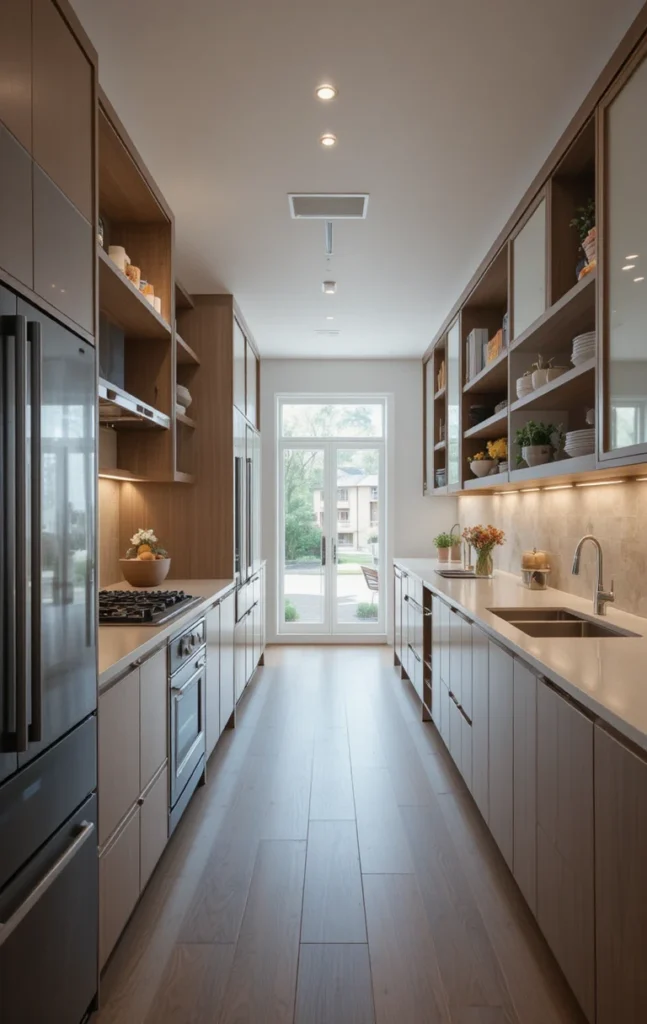
A long run of identical cabinets can feel overwhelming. Breaking it up with open shelving, glass-front cabinets, or a different finish keeps the eye moving.
This adds depth and prevents the “bowling alley” effect.
Tip: Insert a section of wood shelves between upper cabinets for warmth.
Mistake to avoid: Overdoing contrast — too many changes can look chaotic instead of balanced.
3. Consider a Galley Layout for Efficiency
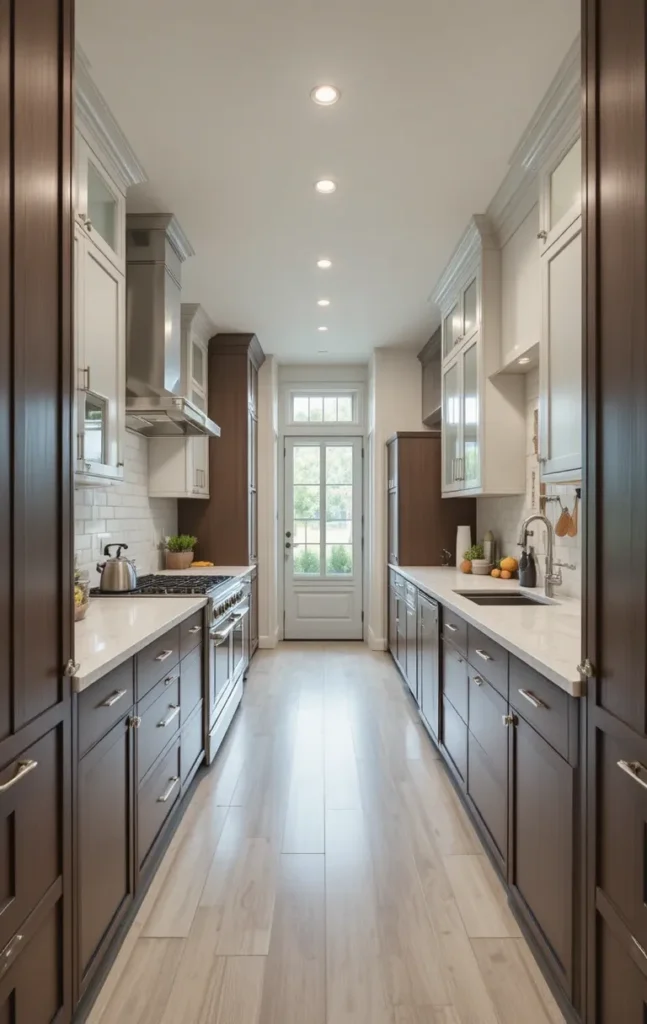
Many long kitchens naturally lend themselves to a galley layout, with cabinets on both sides. When done right, this can be incredibly efficient.
Everything is within arm’s reach, making cooking smooth and practical.
Tip: Maintain at least 36–42 inches between both sides for comfort.
Mistake to avoid: Making the walkway too narrow — it quickly feels cramped.
4. Use the Far End as a Feature
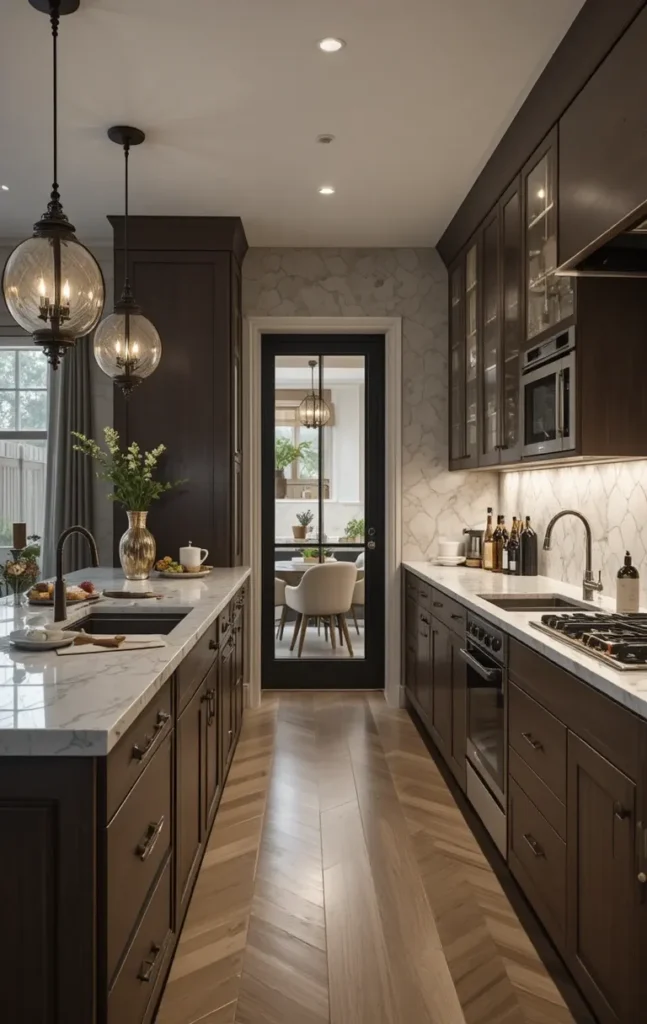
In a long kitchen layout, the far wall often feels forgotten. Turning it into a feature — like a pantry wall, coffee station, or bold backsplash — creates a visual destination.
This works because it draws the eye forward, making the room feel intentional.
Tip: Add artwork or a contrasting cabinet color at the end.
Mistake to avoid: Leaving the end wall blank and lifeless.
5. Install Continuous Flooring to Elongate Elegantly
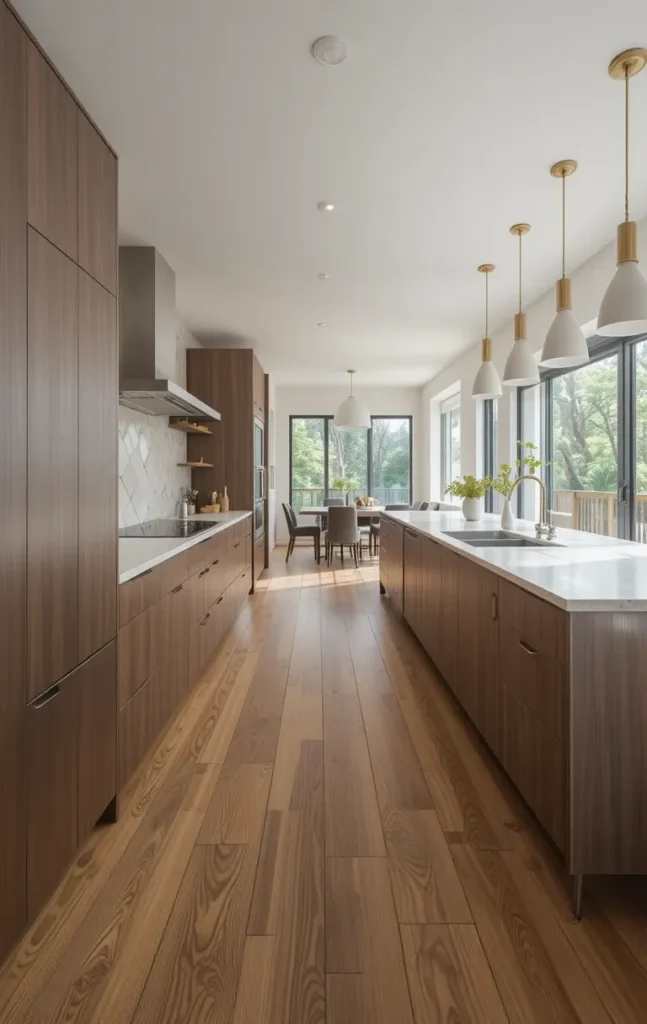
Flooring plays a big role in how a long kitchen feels. Continuous flooring without abrupt transitions keeps the layout cohesive.
Running planks lengthwise enhances flow, especially in open-plan homes.
Tip: Choose medium-tone flooring to avoid making the space feel too narrow or too dark.
Mistake to avoid: Using busy patterns that exaggerate the tunnel effect.
Also Read This Blog: 15 Bead Board Backsplash Kitchen Ideas That Add Charm Without Overdoing It
6. Keep Upper Cabinets Light and Airy
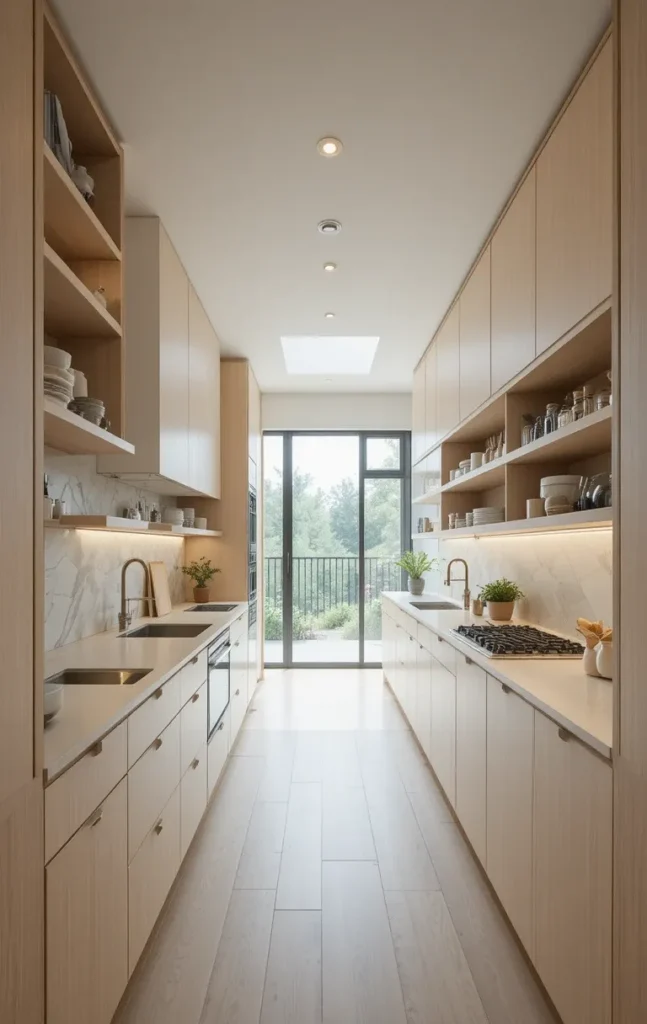
Too many heavy upper cabinets along one long wall can feel suffocating. Light colors, slim profiles, or even fewer uppers can make a big difference.
This balances the vertical weight of the room.
Tip: Combine closed cabinets with open shelves for breathing space.
Mistake to avoid: Removing all uppers without planning storage — clutter will follow.
7. Introduce an Island If Space Allows
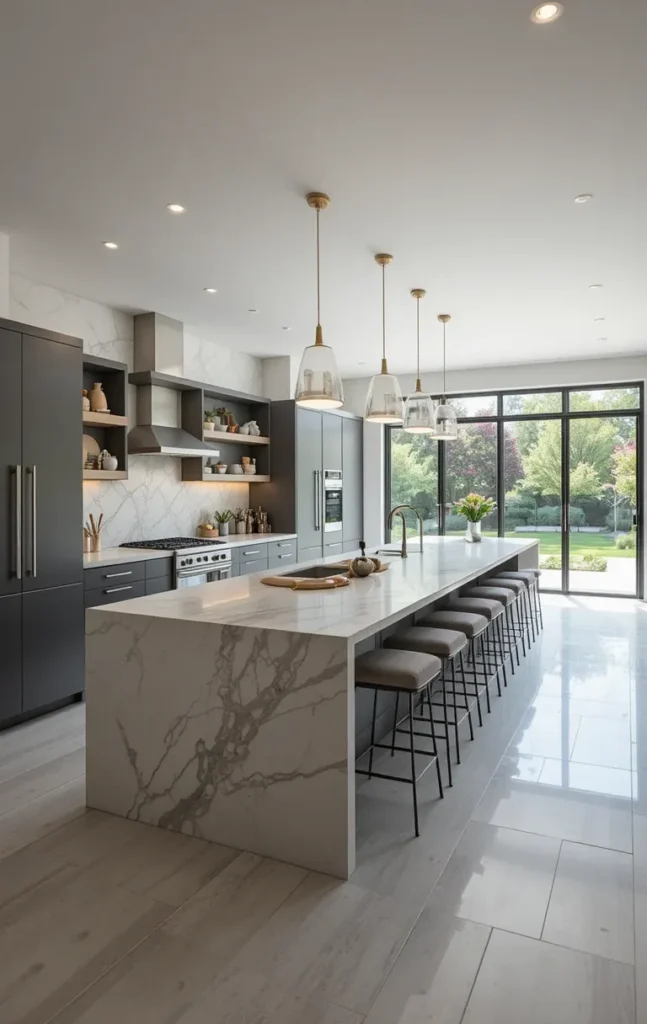
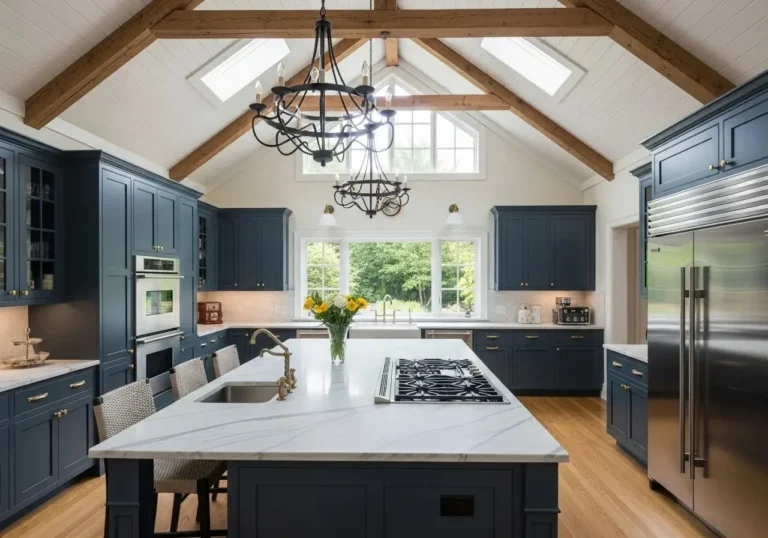
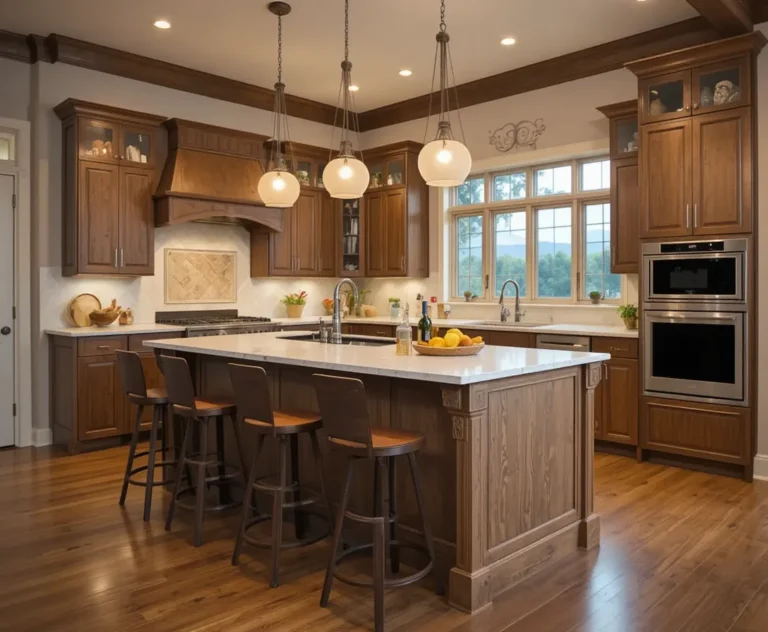
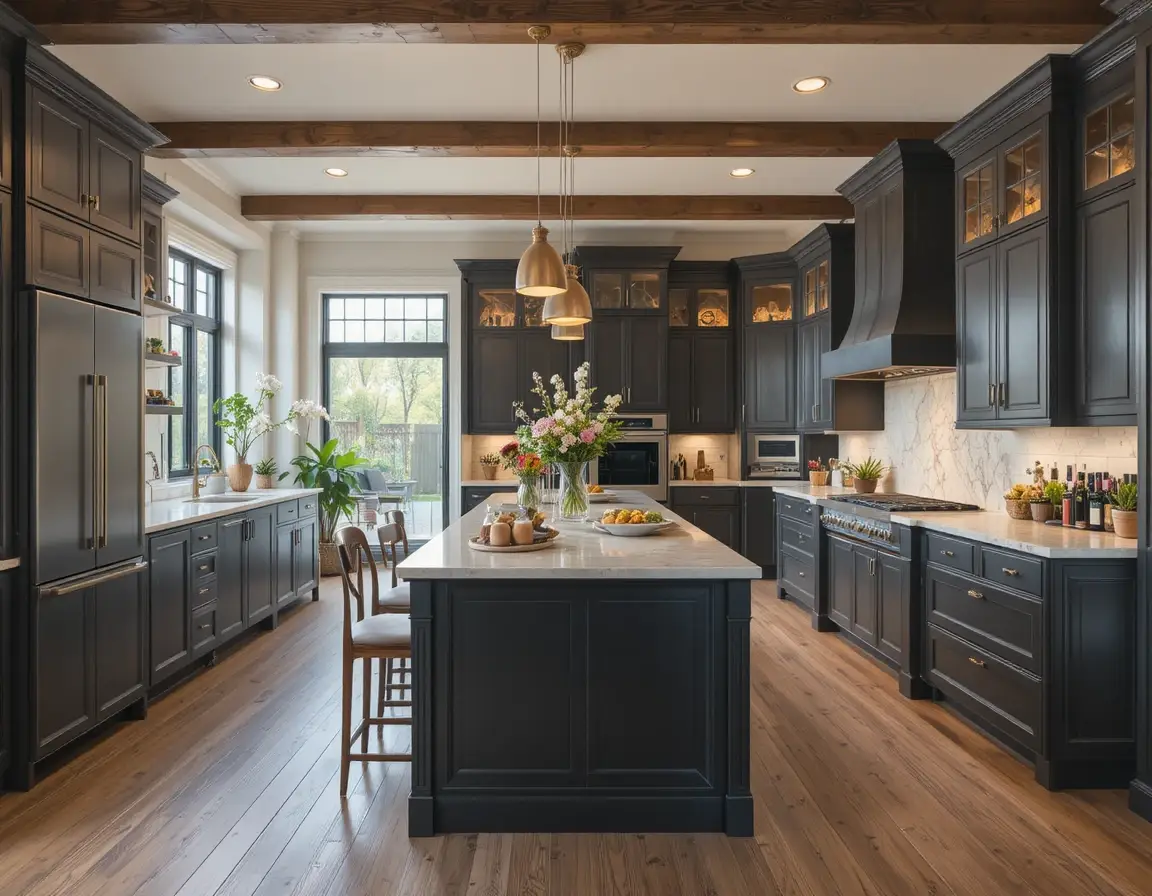
If your long kitchen has enough width, adding an island transforms the layout completely. It adds prep space, seating, and a natural break in the linear design.
The island shortens the visual length and creates balance.
Tip: Ensure at least 36 inches of clearance on all sides.
Mistake to avoid: Forcing an oversized island into a tight space.
8. Use Lighting to Create Depth, Not Just Brightness
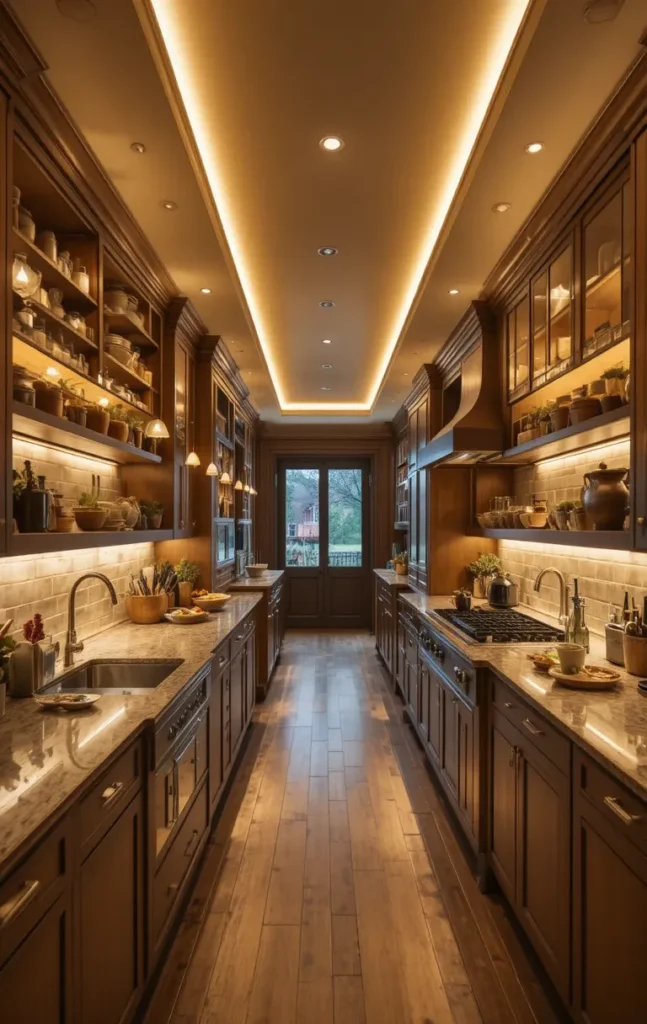
In a long kitchen layout, lighting should guide the eye — not just illuminate the room. Layered lighting (ceiling lights, under-cabinet strips, and pendants) adds dimension and prevents the space from feeling flat.
For example, under-cabinet lighting along one wall creates warmth and shadow contrast.
Tip: Install dimmers to adjust the mood from cooking to evening gatherings.
Mistake to avoid: Relying on one central light, which exaggerates the narrow feel.
Also Read This Blog: 14 Kitchen Ideas for Small Spaces That Actually Work
9. Balance Both Sides Visually
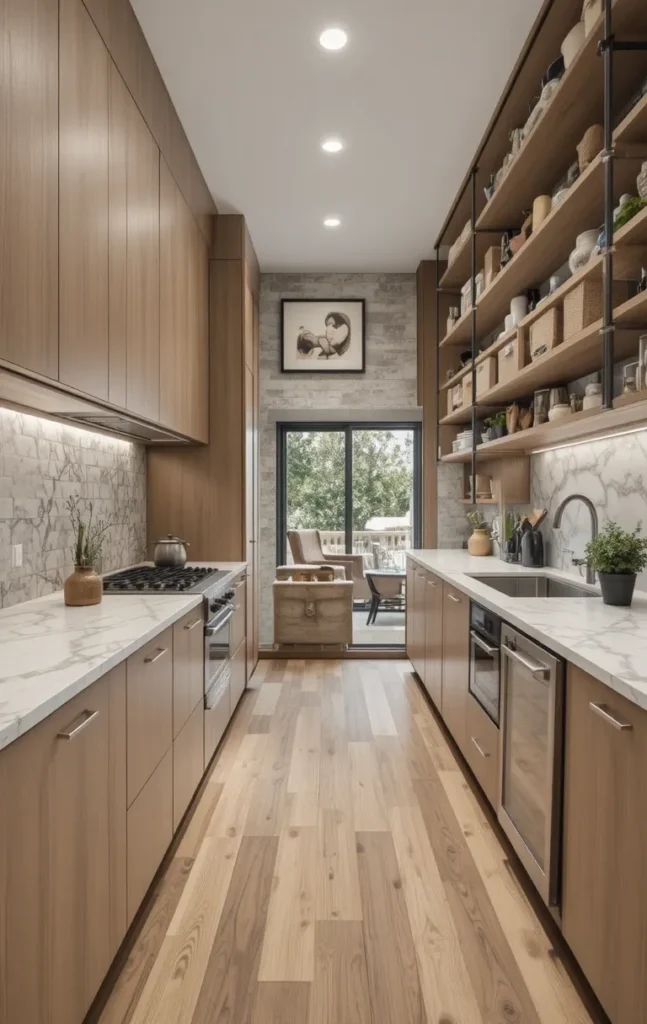
If your long kitchen has cabinets on only one side, the opposite wall can feel empty. If both sides are built out, one may feel heavier than the other.
Balance doesn’t mean symmetry — it means visual weight feels even.
Tip: If one wall has tall cabinets, keep the opposite side lighter with art or open shelving.
Mistake to avoid: Making one side too dominant, creating a lopsided effect.
10. Create a Seating Nook at One End
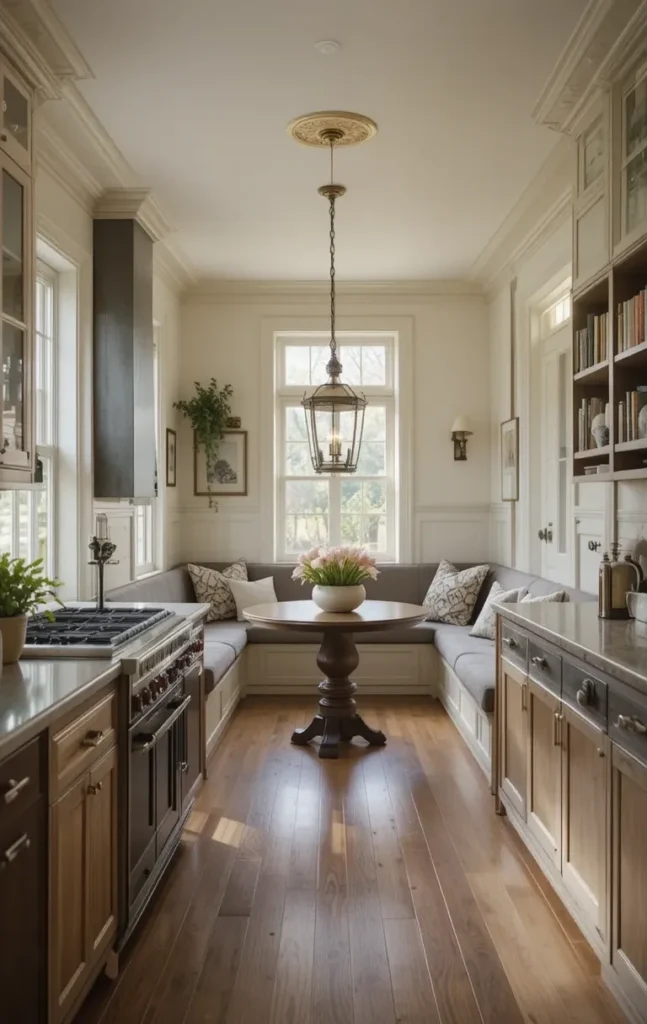
A small breakfast nook or built-in bench at the end of a long kitchen softens the layout and makes it feel welcoming.
This works because it turns the final stretch into a destination rather than a dead end.
Tip: Add a round table to contrast the straight lines of the room.
Mistake to avoid: Blocking walkways with oversized furniture.
Also Read This Blog: 15 Bar Stools Kitchen Island Ideas: Stylish & Functional Seating for Your Home
11. Choose the Right Cabinet Color Strategy
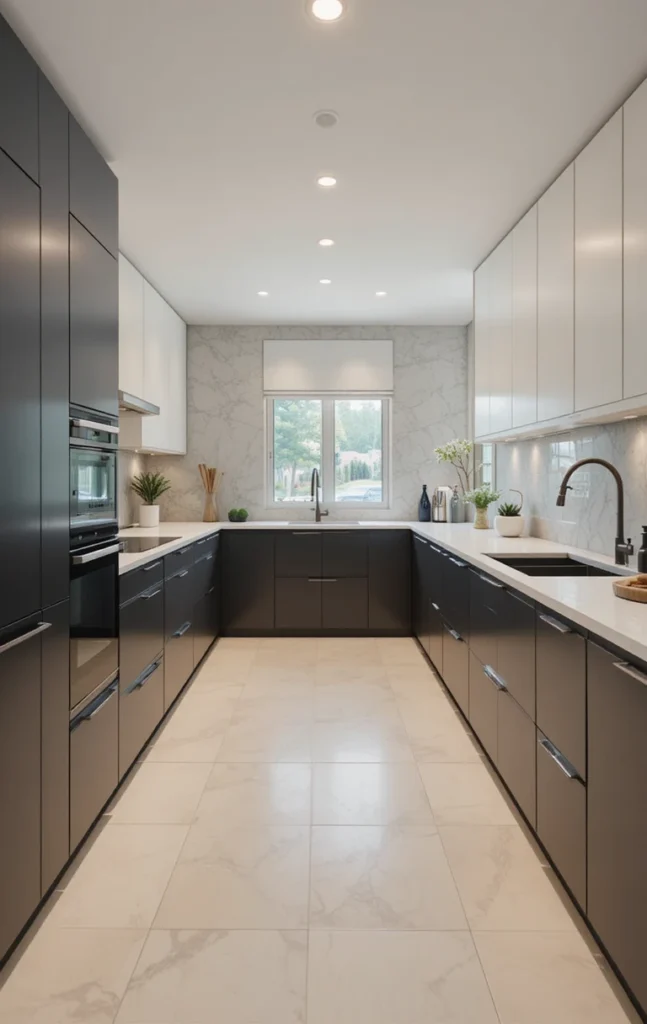
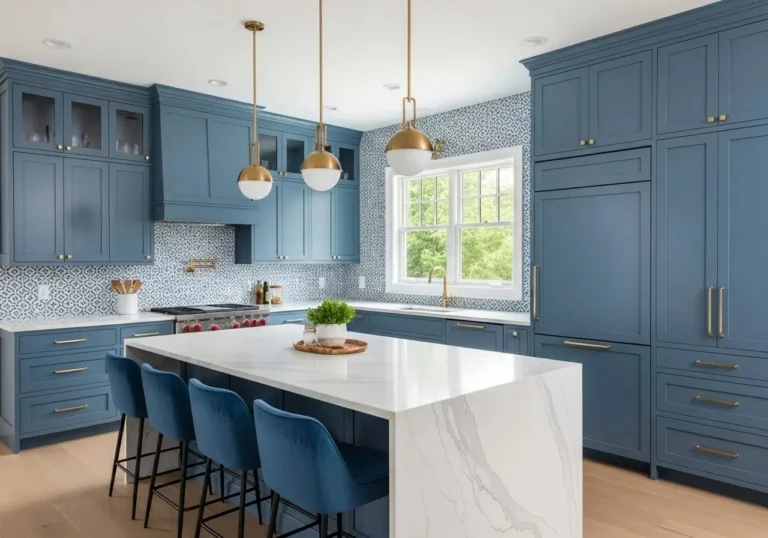
Color has a big impact in a long kitchen layout. Light colors can make the space feel wider, while darker tones add drama and grounding.
A two-tone approach — lighter uppers, darker lowers — often works beautifully here.
Tip: Test paint samples in natural and artificial light before committing.
Mistake to avoid: Going too dark on both sides without proper lighting support.
12. Incorporate a Runner for Warmth and Softness
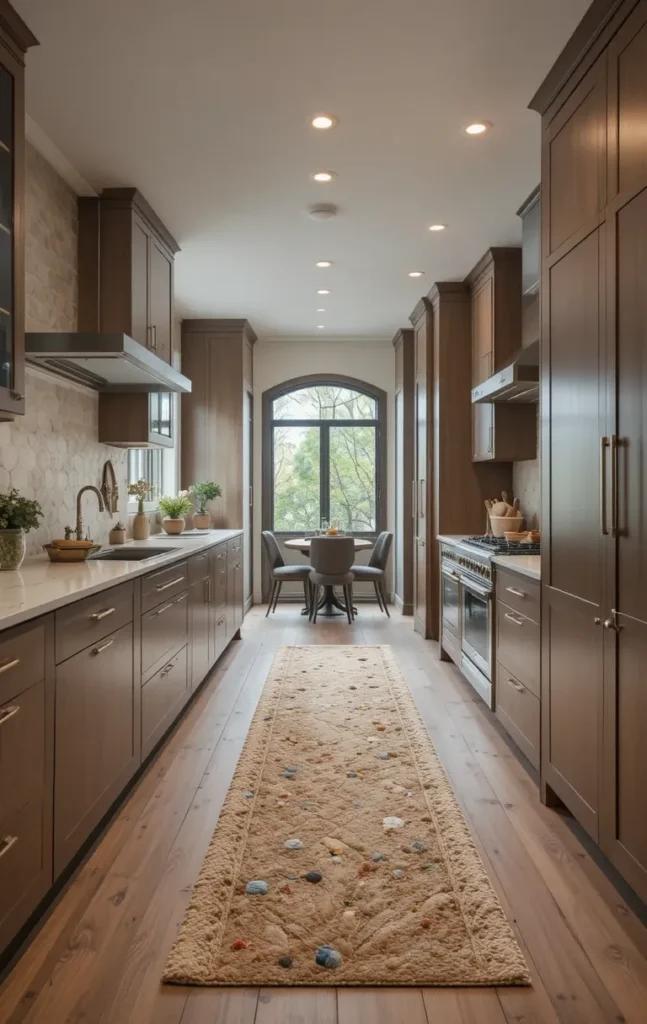
Long kitchens naturally suit runners. A well-chosen runner softens hard surfaces and visually breaks up the floor.
It also makes standing at the sink or stove more comfortable.
Tip: Choose a washable, low-pile runner for easy maintenance.
Mistake to avoid: Picking a rug that’s too short — it should anchor the central workspace.
Also Read This Blog: L-Shaped Kitchen with Island: Transform Your Kitchen with Style and Functionality
13. Keep the Workflow Compact
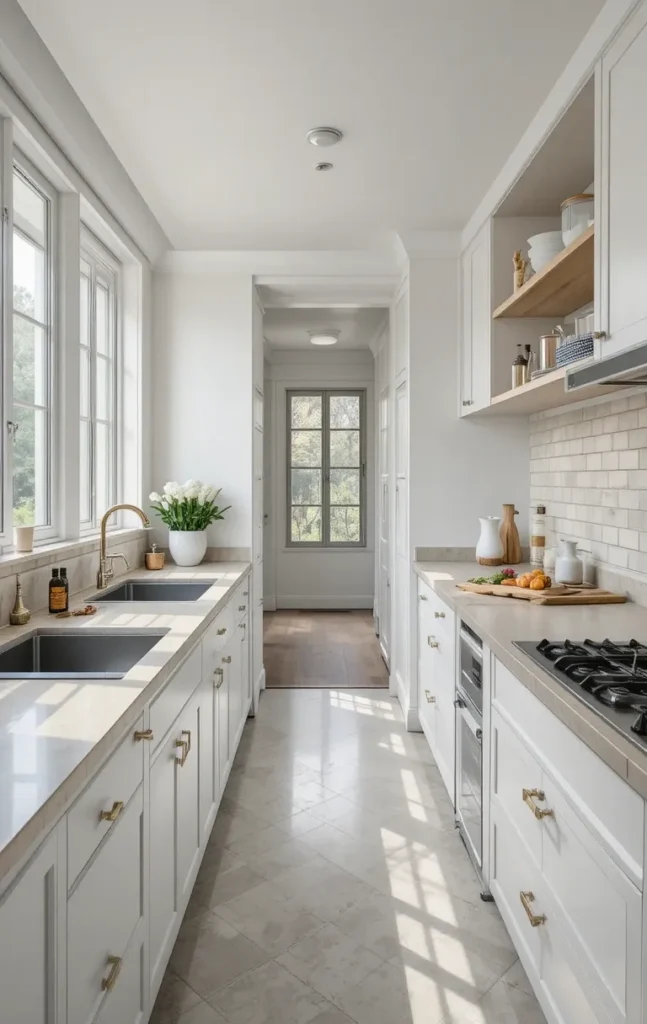
Because the space is long, it’s tempting to spread appliances far apart. But long walking distances quickly become tiring.
Try to cluster sink, stove, and prep areas relatively close together.
Tip: Store cooking tools near the stove and prep items near the sink.
Mistake to avoid: Placing the refrigerator at the extreme end of the kitchen.
14. Add Personality Without Adding Clutter
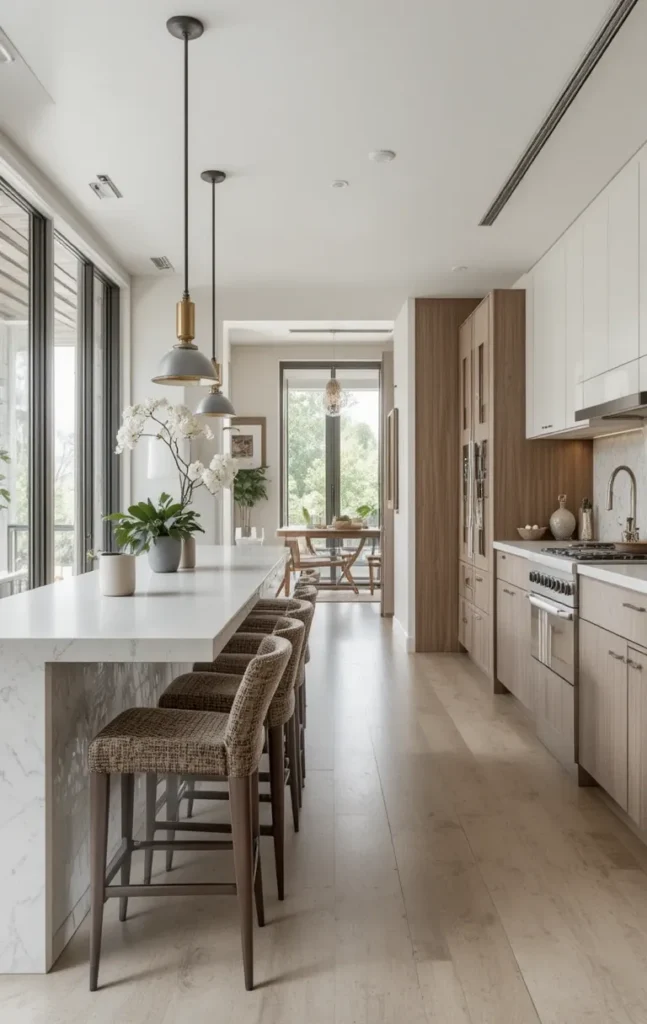
A long kitchen can feel sleek but sterile if everything is uniform. Thoughtful décor — framed art, plants, or textured bar stools — adds life.
The key is intentional placement.
Tip: Add greenery near the window or end wall to soften the lines.
Mistake to avoid: Decorating every inch of counter space, which defeats the clean look.
Conclusion
A long kitchen layout doesn’t have to feel like a hallway. With careful zoning, balanced design choices, and smart lighting, it can feel organized, elegant, and highly functional.
Focus on flow first — then layer in warmth and personality. Break up long stretches visually, keep walking distances practical, and create a destination at one end. When thoughtfully designed, a long kitchen becomes not just efficient, but genuinely inviting — a space that works beautifully for everyday living.