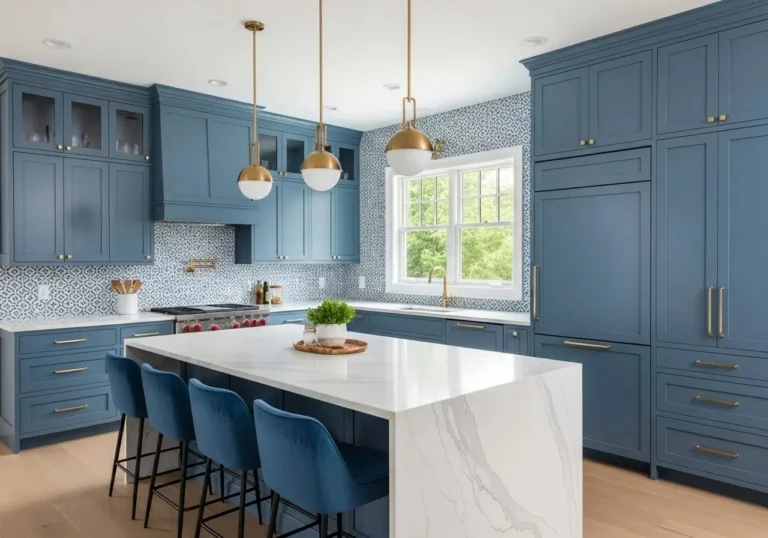
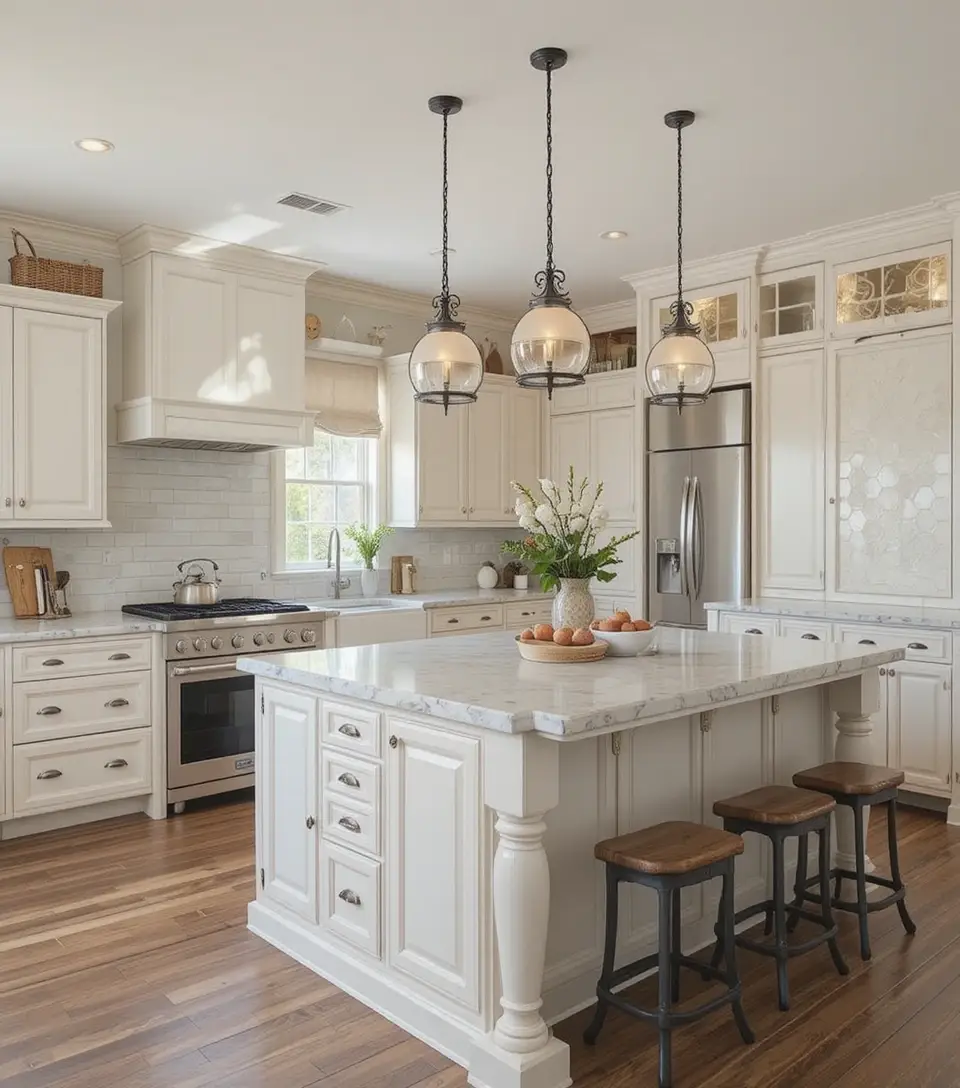
Kitchen Layout Ideas with Island: 15 Tips for Function and Style
A kitchen island isn’t just a trend—it’s a practical powerhouse. It can provide extra workspace, storage, seating, and even a focal point in your layout. But an island needs to be carefully planned to fit your kitchen size, workflow, and lifestyle. These 15 Kitchen Layout Ideas with Island will help you design a kitchen that balances function, flow, and style, making cooking, dining, and gathering effortless and enjoyable.
1. Choose the Right Size for Your Space
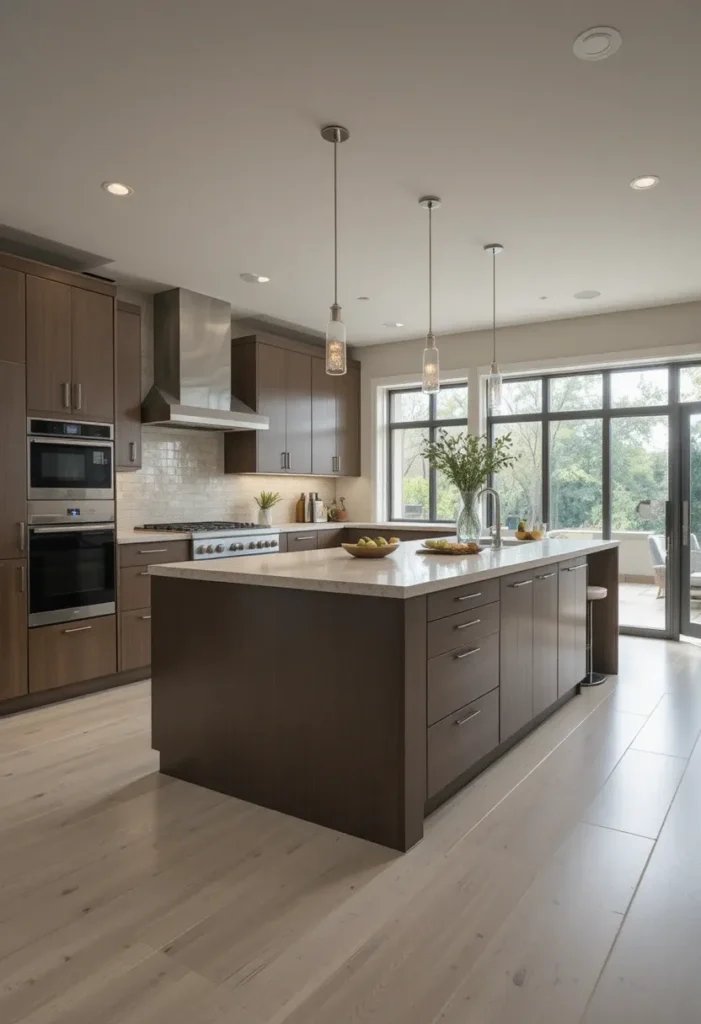
The size of your island should reflect your kitchen dimensions. A small kitchen benefits from a compact island, while a larger space can handle a longer, multifunctional piece.
Tip: Leave at least 36–42 inches around the island for comfortable movement.
Common mistake: Oversizing the island. Too big, and it blocks traffic flow, making cooking and entertaining frustrating.
2. Include Built-In Storage
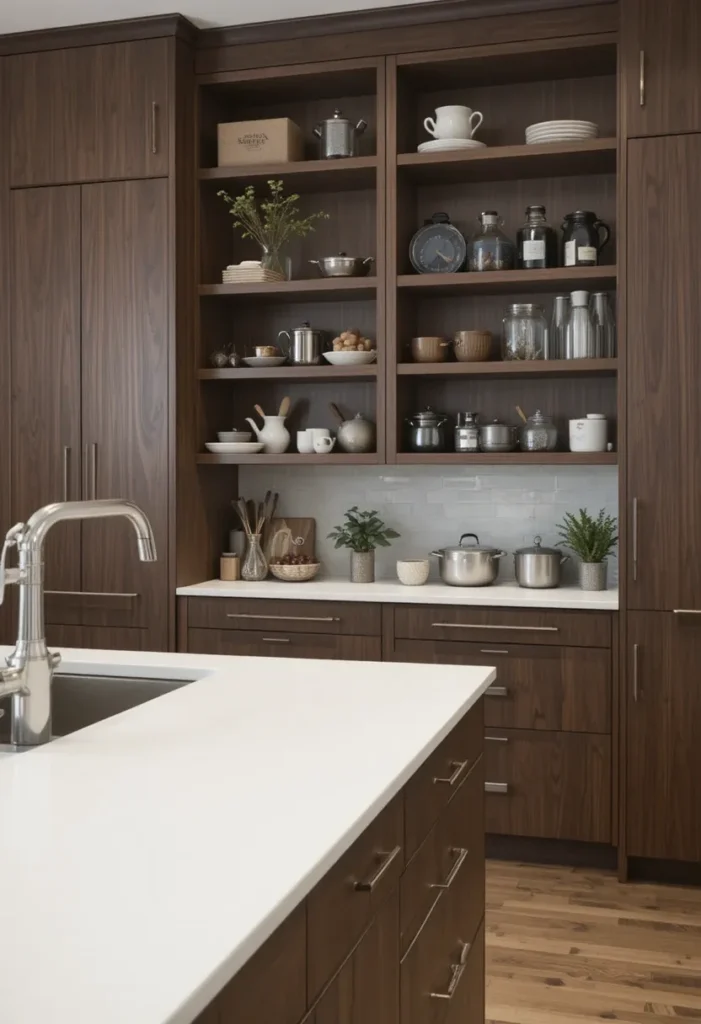
Integrating drawers, cabinets, or shelves into your island maximizes functionality. Extra storage reduces countertop clutter and keeps essentials within reach.
Tip: Use deep drawers for pots and pans or open shelving for frequently used items.
Common mistake: Adding too much open shelving—it can look messy. Keep it minimal and organized.
3. Add Seating for Casual Dining
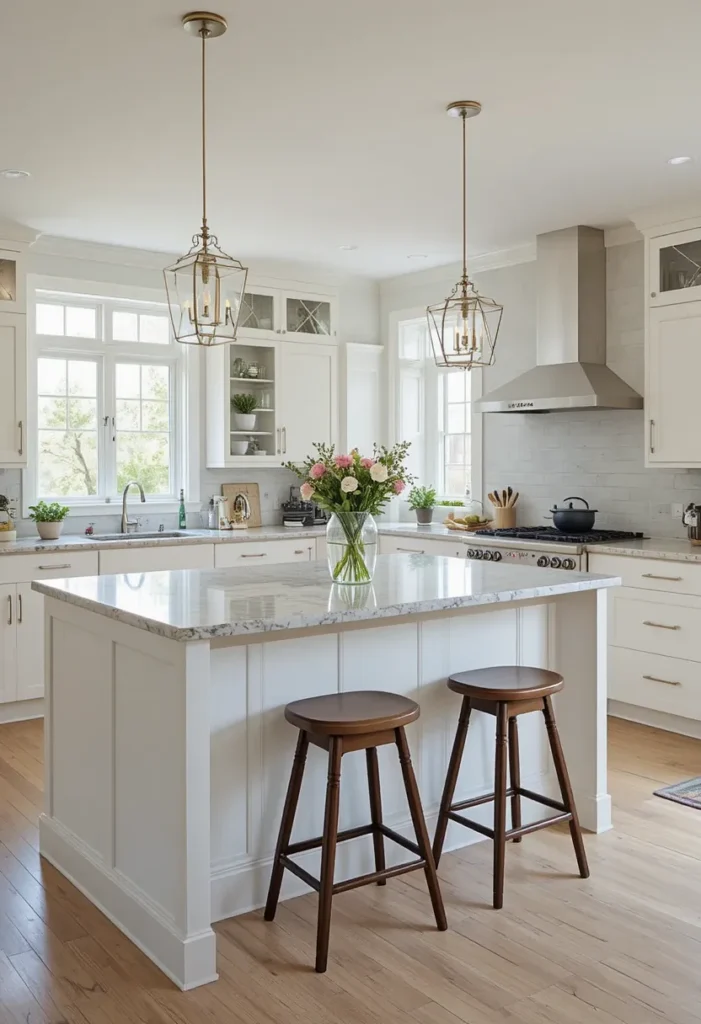
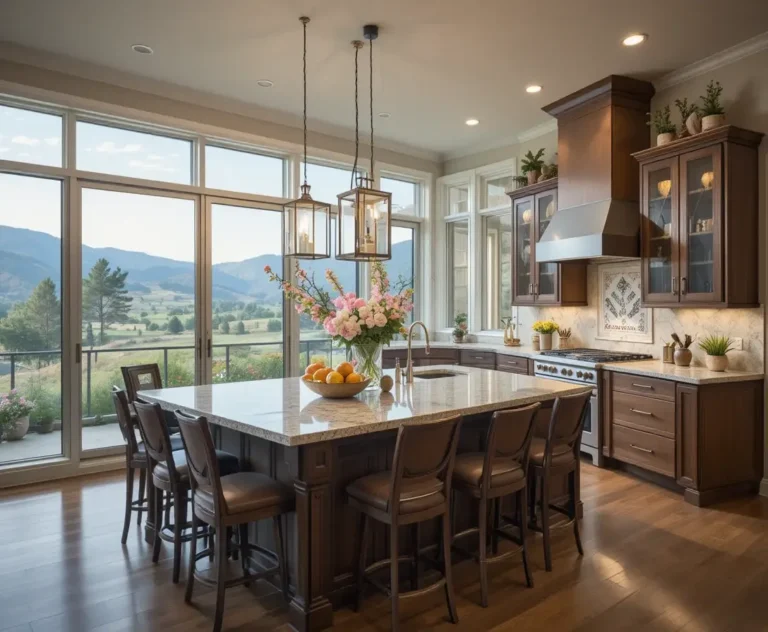
An island can double as a breakfast bar or casual dining space. Stools or benches make it ideal for meals, homework, or socializing.
Tip: Allow at least 24 inches per seat and 12 inches of knee space under the counter.
Common mistake: Underestimating space—cramped seating makes the island uncomfortable for everyday use.
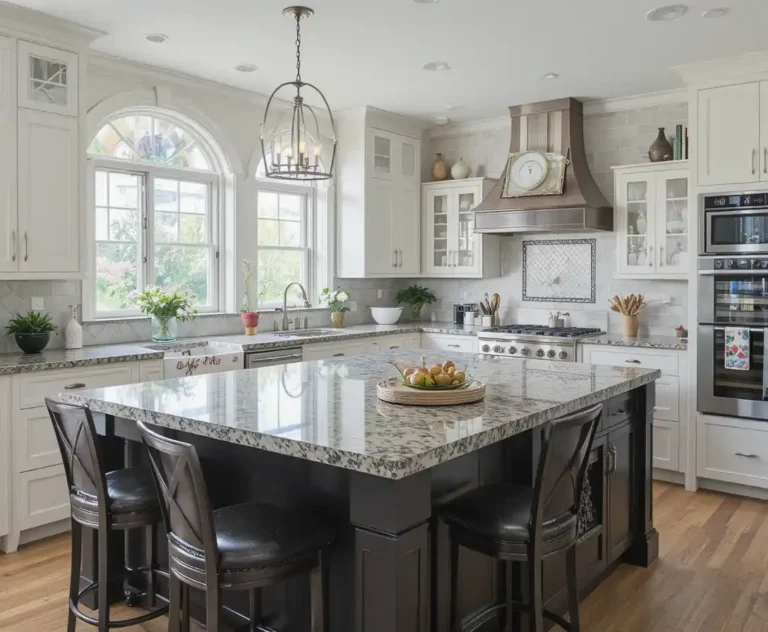
4. Use Contrasting Countertops for Visual Interest
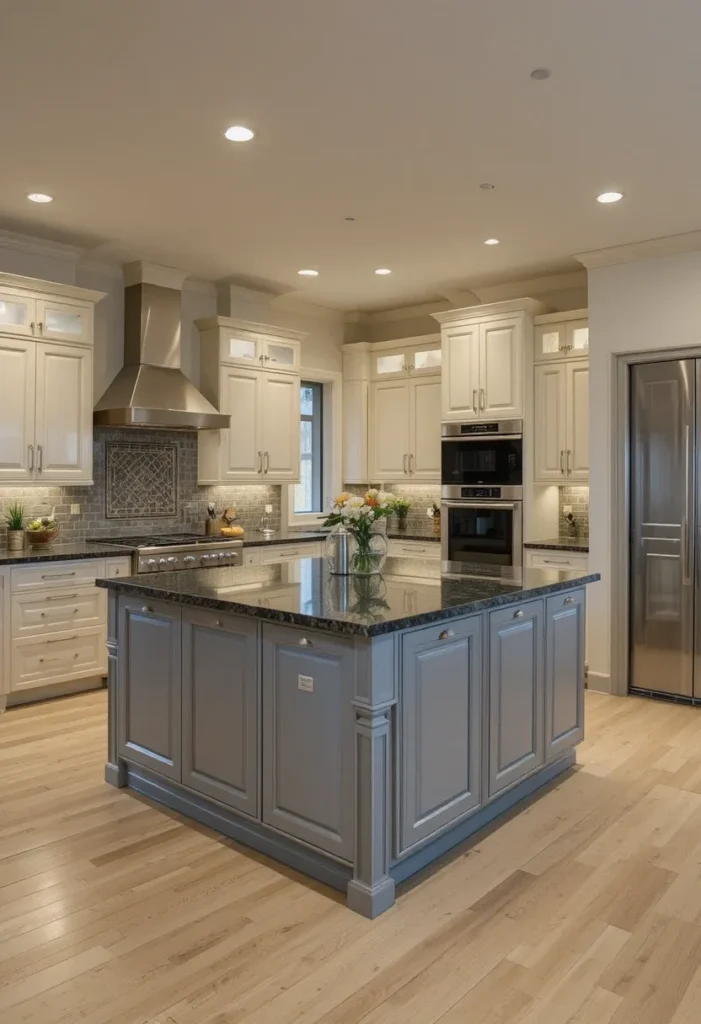
A contrasting countertop on the island adds depth and style to your kitchen layout. Dark stone on a light base, or wood on white cabinets, creates a statement.
Tip: Choose durable materials that complement the main counters and withstand heavy use.
Common mistake: Using the same countertop everywhere—it can make the space feel flat and uninspired.
Also Read This Blog: 15 Kitchen Cabinet Color Ideas to Elevate Your Space in 2026
5. Incorporate Task Lighting Above the Island
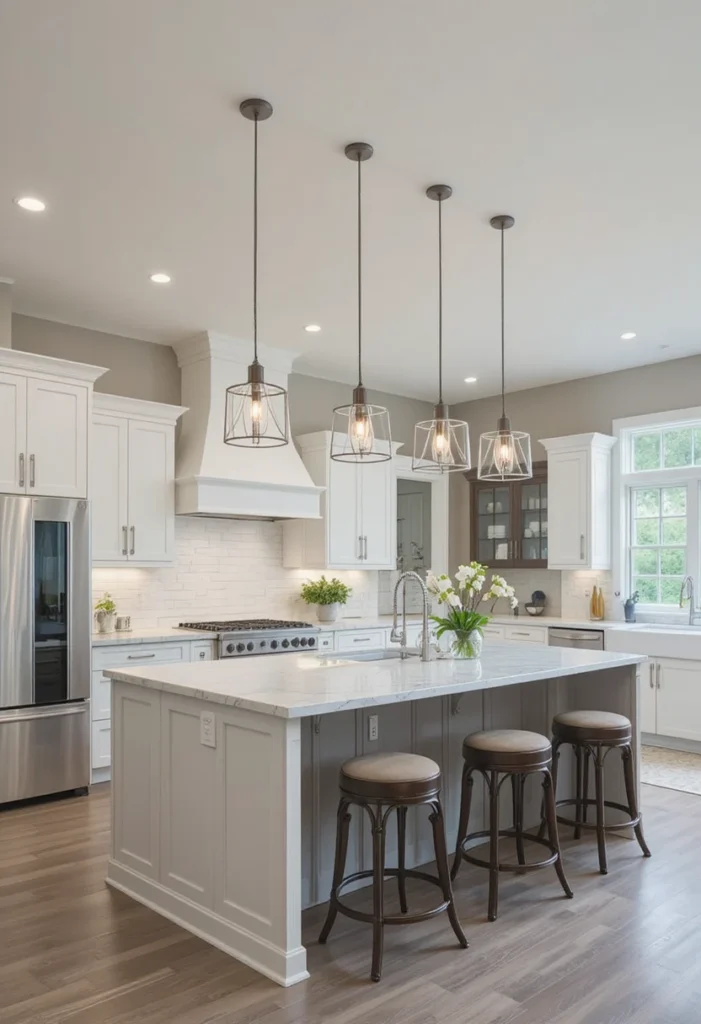
Pendant lights or track lighting above your island improve functionality and add aesthetic appeal. Layered lighting makes cooking and prep easier while creating a warm ambiance.
Tip: Hang pendants 28–34 inches above the countertop for ideal illumination.
Common mistake: Using oversized or low-hanging lights that obstruct view or bump your head.
6. Plan for Workflow Efficiency
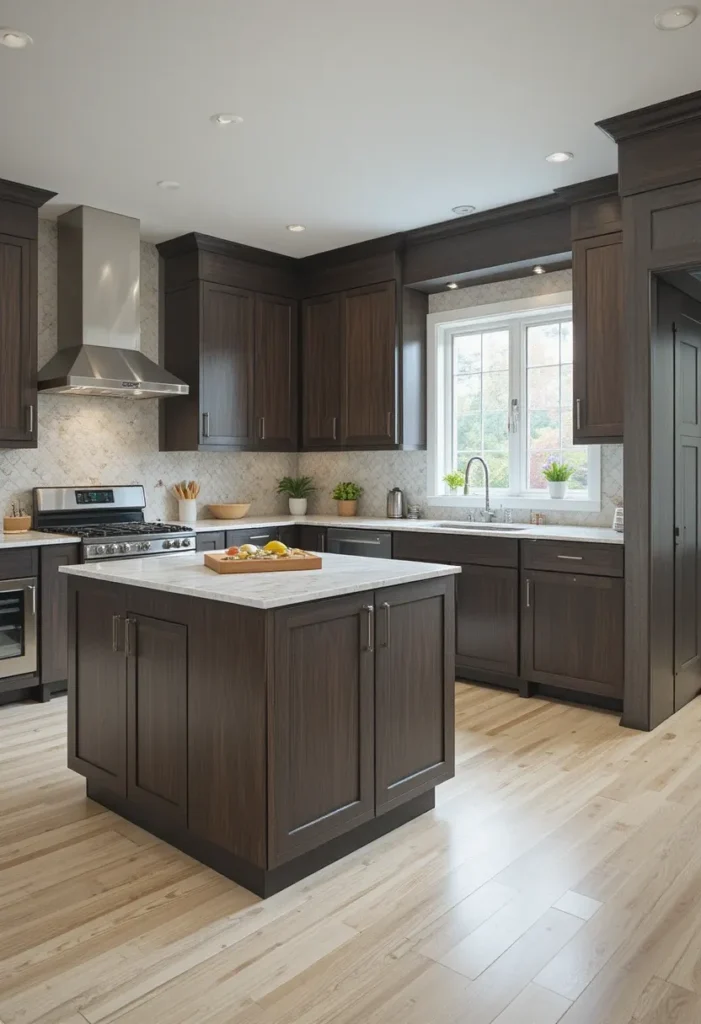
The island should enhance your kitchen workflow. Keep prep, cooking, and cleanup zones in mind when designing placement.
Tip: Position the island near the sink or stove to streamline meal prep.
Common mistake: Placing the island too far from appliances. Disconnected islands can interrupt workflow rather than improve it.
Also Read This Blog: 18 Smart Designs White Kitchen Ideas That Actually Work in Real Homes
7. Add a Multi-Purpose Countertop
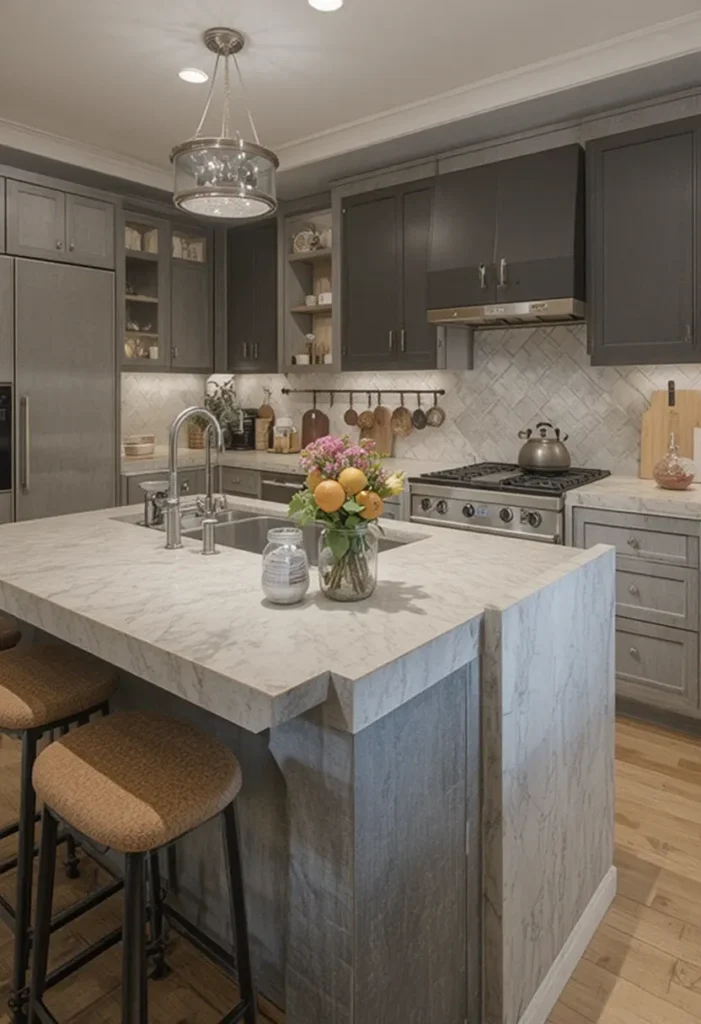
Your island countertop can serve multiple functions: prep space, buffet station, and serving area. Durable, easy-to-clean surfaces like quartz or granite are ideal.
Tip: Leave at least one side free for prepping or serving meals without crowding.
Common mistake: Overcrowding with appliances or décor. Too many items reduce usable workspace and make the island less practical.
8. Incorporate a Prep Sink for Convenience

Adding a small prep sink on the island makes cooking more efficient. It’s perfect for washing vegetables, rinsing dishes, or filling pots while keeping the main sink available.
Tip: Position the prep sink near chopping boards and prep zones for smooth workflow.
Common mistake: Installing a sink too close to seating—water splashes can make stools wet and uncomfortable. Keep a small gap between prep and seating areas.
9. Add an Under-Counter Refrigerator or Wine Cooler
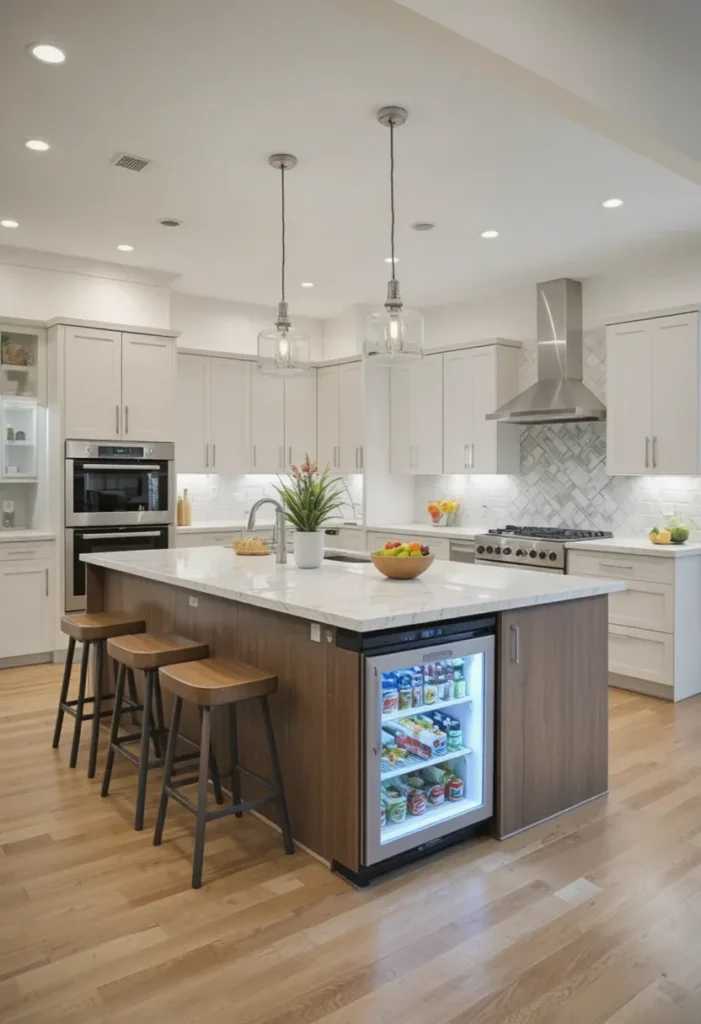
Including an under-counter fridge, wine cooler, or beverage station enhances functionality without taking up extra kitchen space. It’s especially handy for entertaining.
Tip: Place it near the seating side of the island so guests can access drinks without walking through prep zones.
Common mistake: Overcrowding the island with appliances. Avoid placing multiple large appliances that reduce countertop space for prep.
Also Read This Blog: 18 Kitchen Island Lighting Ideas That Actually Work
10. Choose Durable, Easy-to-Clean Materials
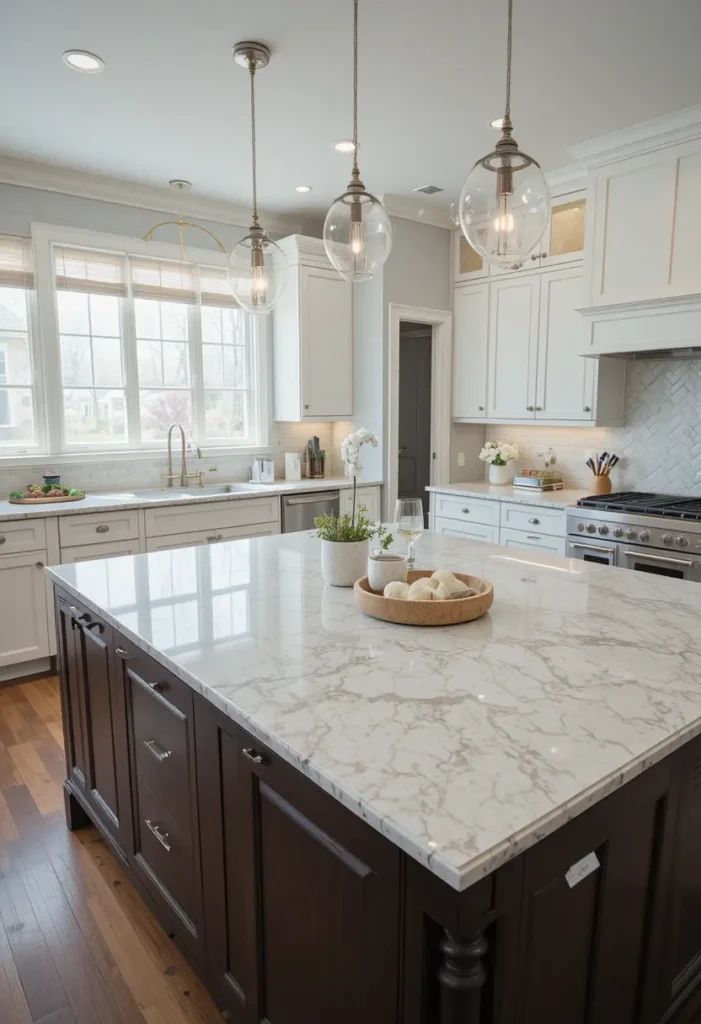
Kitchen islands see heavy use—from cutting and cooking to kids doing homework. Choose surfaces that are resilient and low-maintenance.
Tip: Quartz, granite, or solid-surface countertops withstand daily wear while looking polished. Consider a soft-close finish for drawers to maintain quiet functionality.
Common mistake: Selecting porous or delicate surfaces. Materials like marble or untreated wood may stain or scratch easily and require constant upkeep.
11. Create Visual Balance with Lighting and Decor
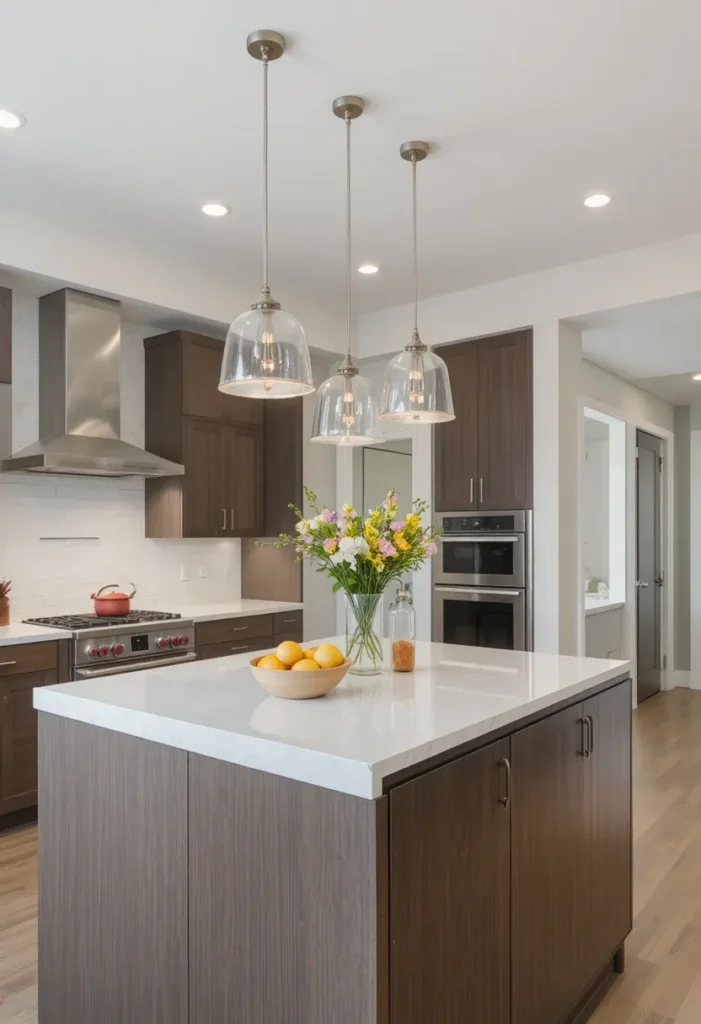
Your island can serve as a visual centerpiece, but balance is key. Coordinate pendant lights, stool colors, and minimal décor to avoid visual clutter.
Tip: Add a small bowl of fruit, a vase, or a simple tray—less is more.
Common mistake: Overdecorating the island with multiple objects. Too many items distract from the island’s functionality and make the kitchen feel cramped.
Also Read This Blog: 15 Kitchen Sink Ideas That Make Everyday Cooking Easier and More Stylish
12. Consider a Movable or Rolling Island
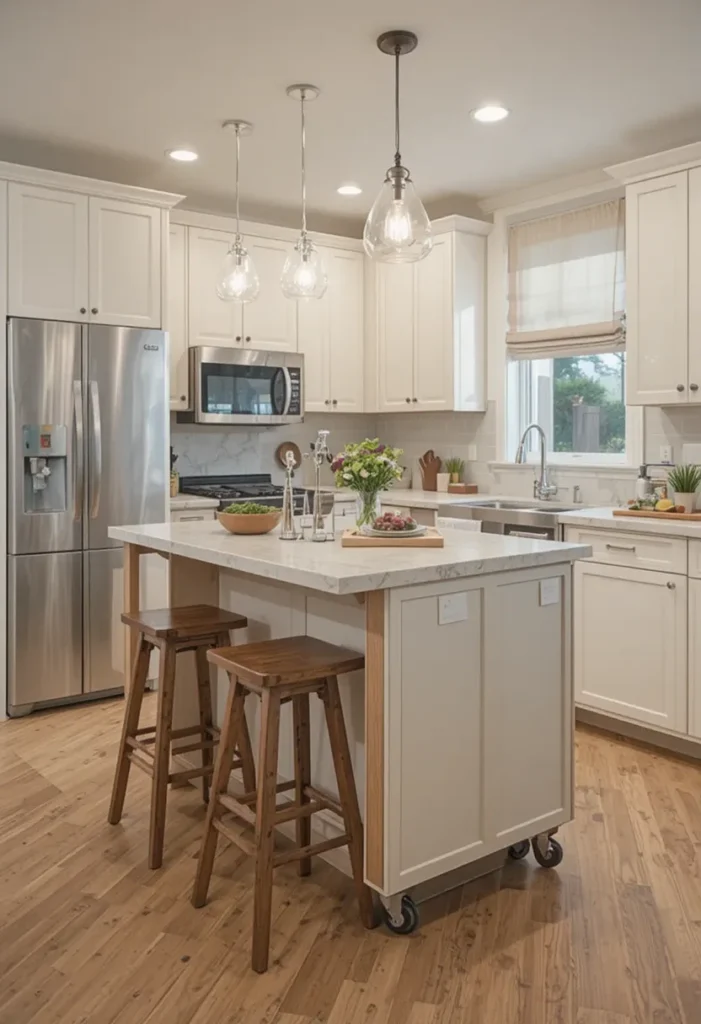
For smaller kitchens, a movable island provides flexibility. It can act as prep space, a serving station, or be tucked away when extra floor space is needed.
Tip: Choose a unit with locking wheels for stability while prepping or chopping.
Common mistake: Using a lightweight or unstable rolling island without locks—it can tip or slide during use.
13. Add Open Shelving for Display and Access
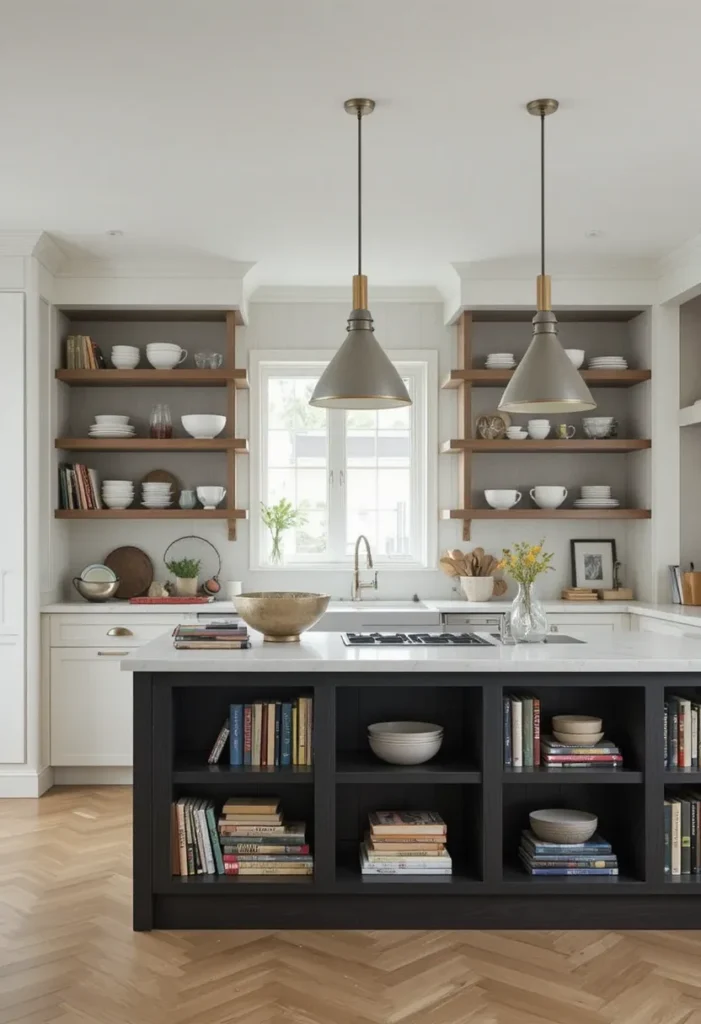
Open shelves on the sides of an island can provide quick access to frequently used items or display decorative pieces. They make your kitchen feel more open and airy.
Tip: Keep only essential or beautiful items on display—like cookbooks, bowls, or small plants.
Common mistake: Overloading shelves. Too many items create visual chaos and reduce the clean, organized look of the kitchen.
Also Read This Blog: 15 Bead Board Backsplash Kitchen Ideas That Add Charm Without Overdoing It
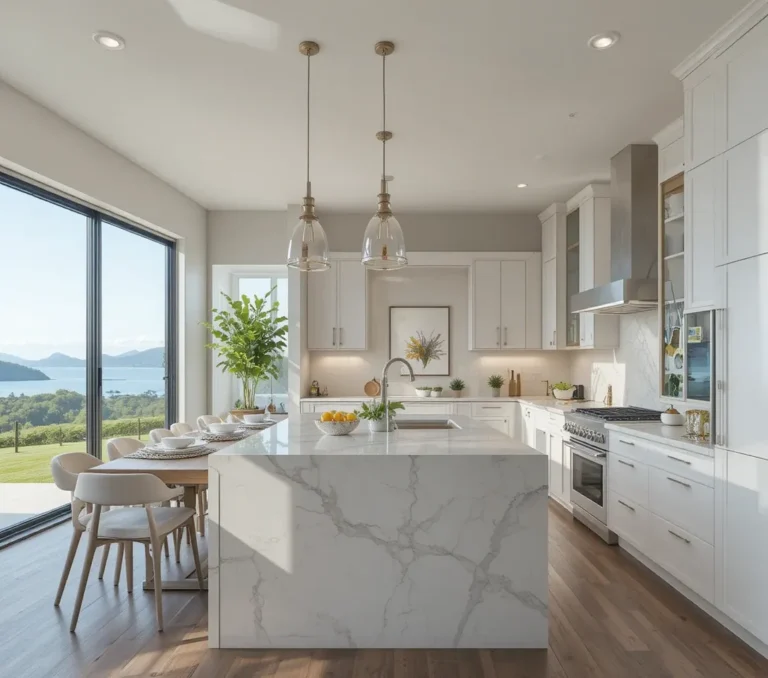
14. Use the Island to Define Zones in Open-Concept Kitchens
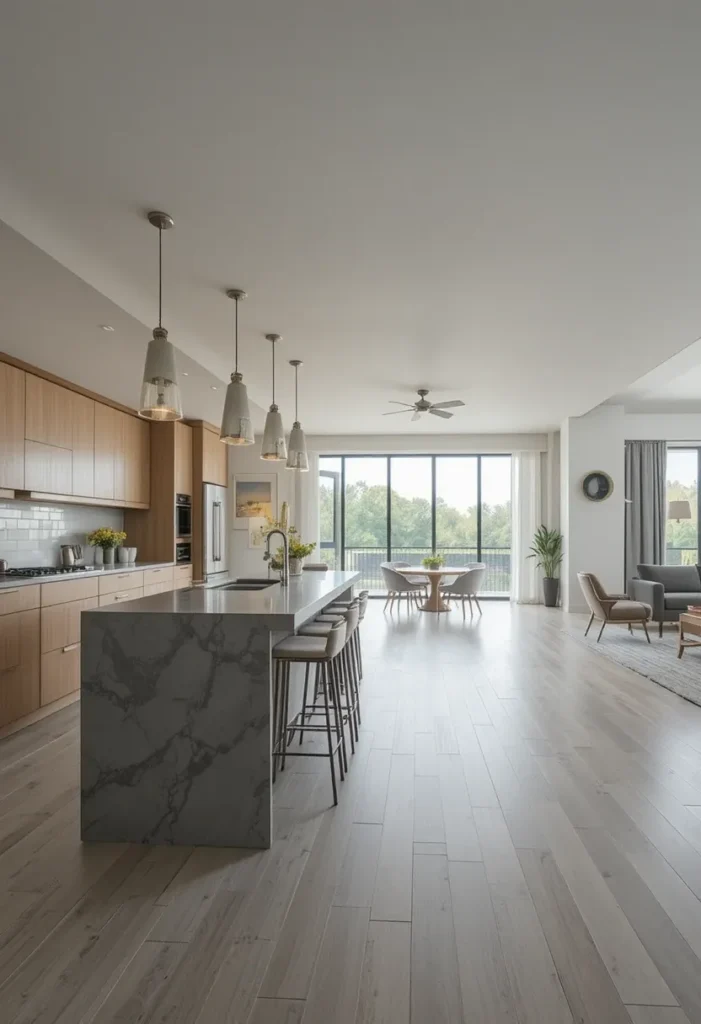
In open-concept homes, the island acts as a subtle divider between the kitchen, dining, or living areas. It maintains flow while marking boundaries.
Tip: Align lighting and flooring to visually connect the kitchen with other zones while keeping the island as the focal point.
Common mistake: Using bulky islands in small open spaces. It can obstruct traffic flow and make the room feel cramped.
15. Add Personal Touches with Style and Function
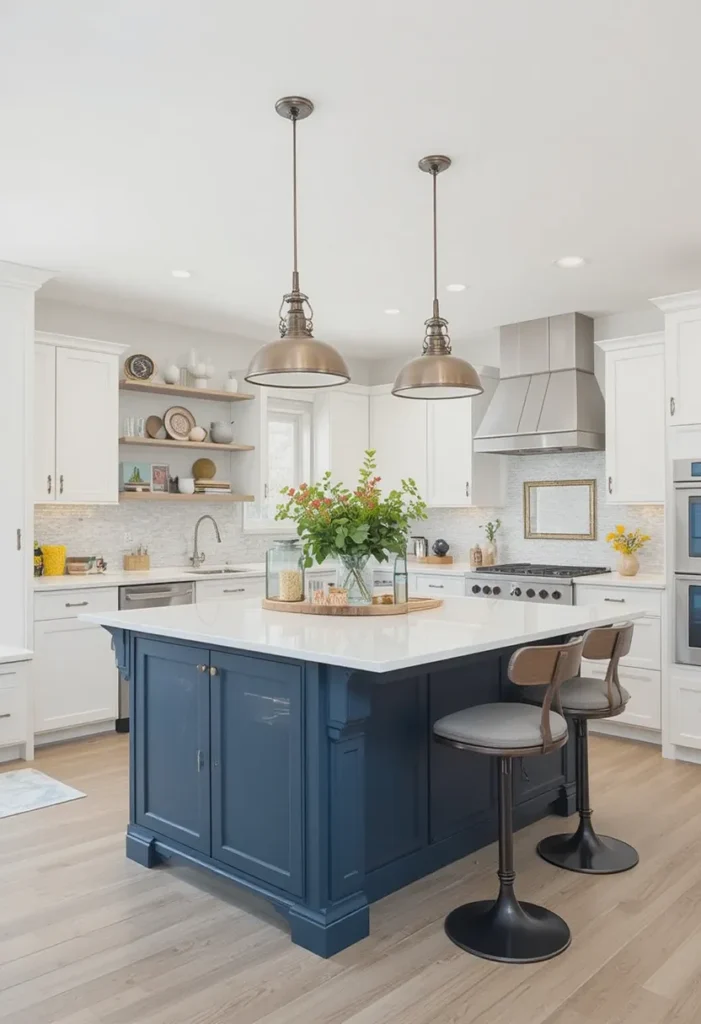
Finally, your island can reflect personality and enhance daily use. Incorporate a few functional and stylish elements like a decorative fruit bowl, chic bar stools, or a cutting board with a design element.
Tip: Rotate seasonal décor or swap stools for color accents to refresh the look.
Common mistake: Overloading the island with items that aren’t practical. Keep it intentional and minimal to maintain openness and usability.
Conclusion
A kitchen island can transform a space, blending practicality and style. By choosing the right size, adding storage, incorporating seating, and layering lighting, you can create an island that supports cooking, entertaining, and daily life. Thoughtful placement, durable materials, and personal touches ensure it’s functional and beautiful. Start with one or two strategic upgrades and let the island guide the flow, balance, and efficiency of your kitchen.